
People always ask, “What is your favorite whiskey?” and I always respond, “That’s like asking a parent to pick their favorite child.” It’s flippant but also kind of true. A parent will tell you they love all their children, but there’s always one that the spend more time with. In the bourbon world that child for me is the Preacher: Elijah Craig. But as the Nobel Laureate once said, “The times they are a-changin’.”
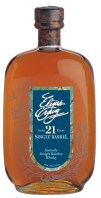
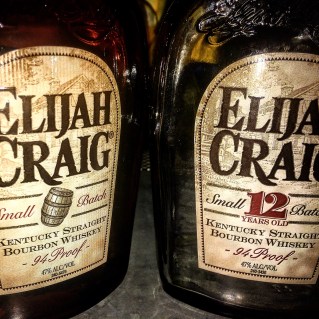
It’s gotten incredibly obvious over the past year with the old standard 12 year dropping its age statement and a major bottle design overhaul, but the first sign of change came nearly 5 years ago when they discontinued the original iteration of the Elijah Craig 18 Year Old Single Barrel.
As the Nobel Laureate once said, “The times they are a-changin’.”
The Bourbon was, without a doubt, one of my favorite things I’ve ever put in my mouth. Massive, oaky, creamy and not overpowering. It’s a prime example of the quality of the older whiskies that fed into and eventually led to the Pappy Van Winkle craze, and at $45 bucks a bottle it was something everyone could enjoy. It was an entry point into the bigger, wider world of Bourbon. And they had to take it away from us for two reasons: 1) We drank all of it. 2) The Heaven Hill fire.
In the mid 90s a fire started at on of the Heaven Hill distillery rickhouses, most likely from a lightning strike. Ironic in light of the old marketing story that Elijah Craig became the father of Bourbon when a lightning strike burned his barn to the ground, but being a frugal man he saved the barrels stored there and used them to store whiskey, becoming the first to use charred barrels and thus the first to make modern bourbon. The story is complete myth of course.
But this actual fire spread through the warehouses like, well like fire through alcohol. It followed the wind and the terrain and set fire to the distillery itself. Other distilleries banded together to help them continue production until they purchased the Bernheim distillery a few years later but with the loss of stock and production ability sacrifices had to be made and the 18 year was put on that altar.
 As a cons
 olation prize in the following years Heaven Hill released a 20, 21, 22 and 23 year old version of the single barrel. Some with varying success but as the age on the bottles ticked up so did the price on the bottles, riding right along the crest of the Bourbon Craze. Then the 18 Year came flaming back last year.
Still a Single Barrel, but now a once a year release, I was excited to taste it and felt warm inside as it slid down my throat just like I remembered. Rich, deep, dark yet still lively. But with a price tag 3.5 times what it used to be the entry point was gone. No longer was this something to share with newcomers and aficionados alike. Now this was for the connoisseur. And yes, now this means that you actually might have a chance of finding a bottle on the shelf. Of having something to share in those special moments, but with the bottle change and the loss of the 12 year age statement from the Preacher’s Small Batch bottles I’m left wondering where that entry point is going. So, tonight I’m going to raise a glass because I want to. And because I can. For now.
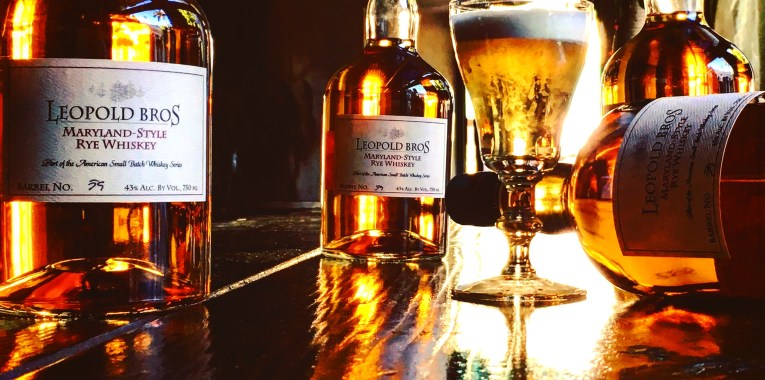
 careful distillation and selection of yeast strains to create a wholly unique product. They’ve even had an old time compound still made exclusively for them, and are working with local farmers to grow late 1800’s style rye, which has a completely different flavor and starch content than it’s modern descendant.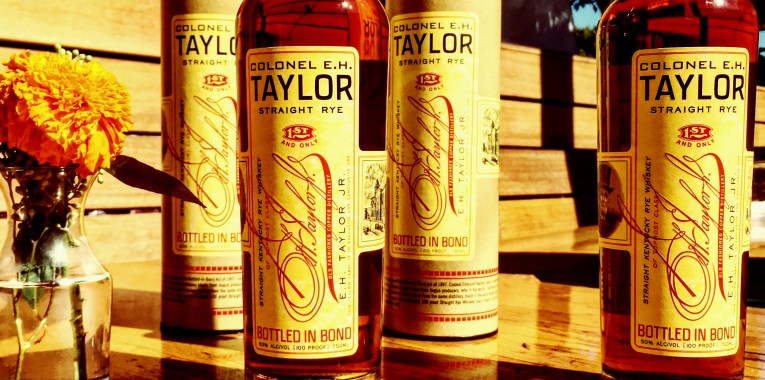
 presidents, Taylor purchased a small distillery that he named O.F.C. He modernized the facility with copper stills and climate controlled aging warehouses that are still in use today. Not content there, Taylor was also pushing through one of my favorite pieces of government legislation: the Bottled-In-Bond Act of 1897. It was like the Pure Food and Drug act, but a decade earlier and for booze. The government would guarantee the whiskey met certain minimum quality controls and in return the distillers agreed to a new tax structure. It’s still in effect today but what it mostly means for us now is that the spirit meets all the legal requirements for that type of whiskey, is a minimum of four years old, and bottled at 100 proof. Quality control.
 Back to the present. How does the new release match up? The spice is still there, laced with cinnamon, clove and baking spices. The apple is less predominate and it seems to lack the deeper, warmer through line that made it such a surprise last year. It’s a subtle thing and it’s hard to tell if it’s an actual difference or just a trick of the mind influenced by expectations. Either way it’s still a delightful dram. And when your competition is yourself how can you lose?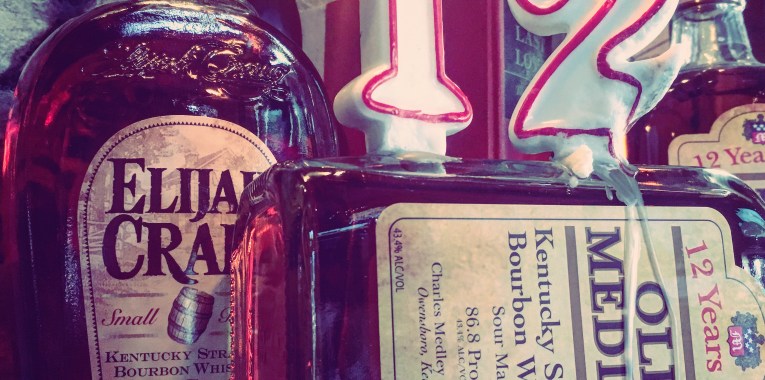
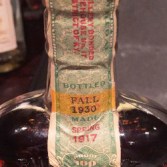 The whiskey was only getting older because no one was drinking it, which means no one was buying it, which means they weren’t making money. So, corners were cut, quality went down, even less whiskey was bought and what was just kept getting older. To keep the whiskey that was ‘past its prime’ from going to waste in was blended into younger stock, creating better whiskey and, as the young barrels caught up, added up to the big fat number on your bottle. Better whiskey means more people start drinking it until the young-uns aren’t keeping pace and we’re right back where we started.
 these “pre-prohibition’ spirits are so proud of. Quality that’s clearly being appreciated, which means more production and more quality in the future. We’re in a mix up the old and the new which is always a difficult time. But don’t let the past, and the age blind you to the present.
 Bottled In Bond LA