Whiskey Wednesday: Willett Of The Past

Age adds value.

That doesn’t just mean a dollar value, I personally own dozens of books, papers, and social media accounts that only still exist because they’ve essentially become a time capsule. They’re important simply because they’ve survived.

Before NDP, Non-Distilling Producer, was short hand for overblown marketing these producers were some of the most celebrated.

I started collecting whiskey when I got back into bartending in 2011. I suddenly found myself with income surplus for the first time in years and set about recreating the back bar I had at work in my tiny Venice apartment. I ended up with more whiskey then I conceivably drink on my own, which leads directly to the fact that I have dozens of bottles in my overblown collection that are there because anytime I pick them up I think to myself, “I can’t drink that! I’ve had it forever.”

This is directly antithetical to my belief that all whiskey is for drinking, not hoarding. So I thought it was high time to revive that spirit and open some “old” spirits.

Before NDP, Non-Distilling Producer, was short hand for overblown marketing these producers were some of the most celebrated. And none have reached the cult status of the Willet Distillery.
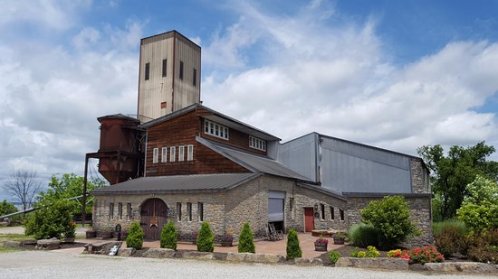
willett-distillery.jpg

Officially know as the Kentucky Bourbon Distillers the distillery is most closely associated with it’s Willet Family Reserve line of premium whiskies. And that’s not marketing. The distillery was founded in 1935 by the Willet family as the Old Bardstown Distillery, which produced its first bourbon in March of 1936. Flash forward to 2016 and the old distillery is still family owned and some of the first whiskey distilled on site rolled down the line all over again.

How do you do something for the first time twice? You stop producing whiskey in the 70’s to make ethanol during the fuel shortage. Then the fuel prices drop, the bottom falls out from under the market, and you’re left flat footed.

From the 1980’s until about 2012 the “distillery” was just in fact an independent bottler, a NDP. They began by relying on the back stock of their own product that was still aging and began to source excess whiskey from neighbor distilleries. Most notably they were sourcing from Heaven Hill, which is so close you could roll a Bourbon barrel down the hill and hit a rickhouse. During this time Willet/KBD continued to produce award winning whiskies like Noah’s Mill, Rowan’s Creek, the formerly eponymous Old Bardstown, and turned the Willet brand into a coveted line of old, premium, single barrel whiskies.

While they may not have been producing liquid in-house the team at Willet showed

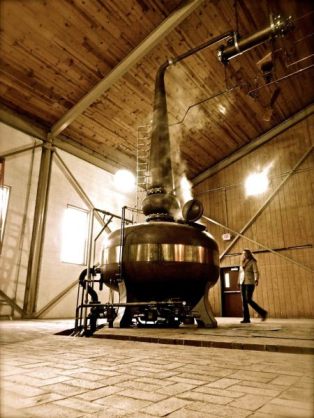
The Willet Pot Still…was incidentally also how I thought anyone who sat in front of my bar for years about what a “Pot Still” looked like.

remarkable skill in aging. The single barrels and older expressions of whiskey that they put together have long stood out as some of the best bottlings of the past two decades. But as the Bourbon boom ramped up the writing was on the wall for people trying to source whiskey. More was going to the in house brands and in 2012 KBD fired up its own set of stills and now 6 years later we are seeing bottles of old brands with new juice.

But lets get back in the way back machine to right before these stills started producing to when I bought this bottle of Willet Pot Still Bourbon.

The Willet line was already well established as a premium category but they were also pricey. The Willet Pot Still, introduced in 2008, was a non-age statement variation that could introduce people to the line with out breaking the bank. It was incidentally also how I thought anyone who sat in front of my bar for years about what a “Pot Still” looked like.

This bottle is a Single Barrel versus its modern counterpart, which is simple a “small batch.” Bottled at 94 proof, 47% alcohol, this whiskey has nearly as many awards for its packaging as it does for the Bourbon itself. So, after 7 years how does it taste?
Willett_Distillery20_ff71ed32-5056-a36f-2340837825148b38.jpg

On the nose is a sweet corn, yet dusty oak presence. The alcohol burn is larger than I would expect for something bottle at 94 proof, and for something that’s been in the bottle for three quarters of a decade. But under that burn is a touch of coffee and toffee.

On the palette the alcohol is much les noticeable. A large oak, vanilla, and slight char carry all the way through the dram with some darker fruit, a touch of cherry and almost blackberry, before giving sway to a musty, earthy, barn house sense.

The finish is light fades quickly leaving the oak on the tongue and the alcohol on the sides of the mouth.

It’s a good whiskey, something I wouldn’t be upset picking up off the shelf and drinking today but it’s not transcendent on its own. What is transcendent is the act of opening the bottle, pouring, and reminiscing as I sip on where I was at in my life when I bought this bottle and on all the events that have transpired since.

Nothing is precious on its own, the spirit we imbue it with verifies that value. And for something to have value it must have some use. So let’s raise a glass and reminisce.
Whiskey Wednesday: Nikka From The Barrel and to the US

 One of the best things about traveling is seeing what is out there in the world that can’t be seen from home.

When it comes to spirits traveling abroad often means encountering ex-pat style spirits; bottlings like Blanton’s Straight From The Barrel, an Early Times bottled at 37.1 Proof, or the Wild Turkey 13 Year. These are intriguing because they’re both familiar yet unattainable but they don’t fill a void or represent something new. Their appeal is mostly just that they can’t be had at home.

Despite what the name might imply, the whisky itself is not a single barrel expression.

More frustrating to me are those spirits that I discover but have no recourse to obtain at home. These are products that are fundamentally different from the familiar yet still incredibly appealing and often made by companies that already have products in the States. Products like the Giffard Melon, the Etter Apricot Eau-de Vie, and, until this past month, the Nikka From The Barrel Japanese Whisky numbered among them.

At this point it should be very apparent that Japanese whisky is the soup du jour of the whisky world, but instead of talking about the loss of an age statement or product line being discontinued for once we’re actually seeing an expansion of a product. And not a wholly new formulation specifically designed for a market, just an honest to god expansion of availability.

I first came across the Nikka From The Barrel when traveling to France a couple years ago. Not only was I struck but how incredibly flavorful it was but by how ubiquitous it was. I erroneously assumed it was a specialty release only to hear from the bartenders that it was their mixing Japanese whisky.  Keep in mind that this was pre-Toki when the prices were rising and stock plummeting and the ability to make cocktails with Japanese whisky was dwindling. Yet here was an over-proof, affordable, mixable Japanese whisky.  And I couldn’t have it.

Despite what the name might imply, the whisky itself is not a single barrel expression. It is instead a blend, remember the Japanese whisky makers consider themselves more blenders then distillers. This is Single Malts from Nikka’s Yoichi and Miyagikyo Distilleries, as well as grain whisky from Miyagikyo that has been rested and married in an oak barrel for 3-6 months. It is coming from the blending  barrel not a single barrel.

The extra aging allows the whiskies to marry and evolve together before being bottled at near cask strength, a powerful 102.8 proof. This power of proof and flavor is what made the whisky such an amazing value. There is just so much packed into its little bottle. And the bottle is little. Designed to be reminiscent of a “small lump of whisky” to visualize the concentrated power inside the bottle it is packed as 500ml. This is a bottle size so far outside the allowable norms for US production that I think this more than anything is what kept it from our shores for so long.

With its Stateside release, Nikka kept the same bottle design but simply scaled it to a 750ml size. Not quite as elegant and evocative but it’s always been what’s inside the bottle that counts.

So, what’s inside the bottle? The same blend of malt and grain married for 3-6

It’s also proof that global expansion and demand can be gracious and bring you new experiences and treasures, instead of putting up artificial boundaries.

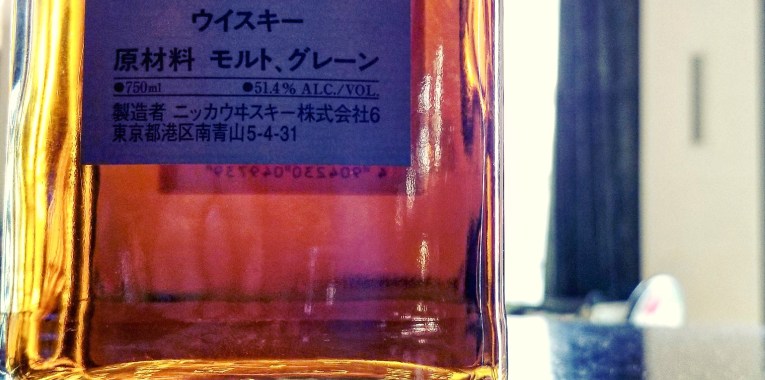
months in oak casks. Still bottled at 51.4% alcohol this is a big hitter.

The Nose carries a hint of fresh, green fruit, with a baking spice overlay and of course a discernable oak note. The alcohol vapors can accidently overpower some of the more subtle notes if you inhale too deeply on the first sniff.

On the palate is a big, full bodied whiskey. The dark baking spice notes leap to the front. Brown sugar, caramel, and the fruit stays fresh and a touch more citrusy than expected from the nose. The distillate is incredibly clean and dry.

The finish is long, drawn out, and the oak lingers after the alcohol has burned off. A few drops of water really does help mellow this whisky and expand the range of flavor.

What’s truly great about this whisky to me is that it’s simultaneously an entry level whisky and yet not. It’s something the evolves over time, much like the person drinking it.

It’s also proof that global expansion and demand can be gracious and bring you new experiences and treasures, instead of putting up artificial boundaries.

Whiskey Wednesday: The Declaration of Jim Beam’s 200th Anniversary.

“We hold these truths to be self-evident, that all men are created equal, that they are endowed by their Creator with certain unalienable Rights, that among these are Life, Liberty and the pursuit of Happiness. — That to secure these rights, Governments are instituted among Men, deriving their just powers from the consent of the governed, — That whenever any Form of Government becomes destructive of these ends, it is the Right of the People to alter or to abolish it, and to institute new Government, laying its foundation on such principles and organizing its powers in such form, as to them shall seem most likely to effect their Safety and Happiness.”

There are some words, some achievements, that are worth celebrating, even if their modern iteration doesn’t live up to its ideals in the popular imagination. It’s hard to find a more iconic American brand than Jim Beam. It’s the #1 selling Bourbon in the world and in many ways the Beam story, both that of the family and of the whiskey, parallels the story of America.

download-3.jpgThe story begins with members of the Böhm family, German immigrants who would latter change the spelling of their name to “Beam,” settled in the Kentucky territory in the late 18th century. The family patriarch, Johannes “Reginald” Beam, was a farmer. And like many farmers of the time he started producing corn whiskey as a way of preserving crops. This side venture lead to the first Beam whiskey to start flowing from the Old Tub Distillery in 1795.

Known as Old Jake Beam Sour Mash, this whiskey proved successful enough that when David Beam took over the family business not only was he able to expand the distribution he was also able to construct a new distillery in Nelson County in 1854. This move came amidst an industrial boom in the country which allowed for modernization of production, and the move to Nelson County allowed for greater use of the massively expanding rail system in the States.

The eponymous James Beauregard Beam over saw the family business both before and after the Great Failed American Experiment of Prohibition. Prohibition interrupted the family production but James was able to rebuild the distillery in 1933 in Clermont, Kentucky in a mere 120 days. It was at this point where “Jim Beam” entered the international lexicon and a member of the Beam family has been at the still, and half the other whiskey stills in the country, ever since.

download-2.jpg

The Beam family has spearheaded this spirit for over 220 years now. However, the actual company hasn’t been owned by a Beam since 1945 when it was purchased by Harry Blum, a Chicago Spirits Merchant. It’s changed hands several times throughout the decades but currently it is a subsidiary of Suntory Holdings known as Beam Suntory. The most American of products is now owned by the second largest international beverage corporation in the world.

Flash back to the mid 90’s. Bourbon wasn’t the hip, award winning, auction breaking behemoth that its turned into today, yet it was still worth celebrating. In 1995 Beam released a 200th anniversary edition decanter and it’s like a little time capsule of Bourbon Past crossed with where Bourbon Future.

Decanters used to be the industry gimmick. When no one wanted to drink Bourbon you made the bottle so irresistible that you had to snatch it up. Compare that to the specialty releases of today where a warehouse surviving a tornado is cause for an award winning bottling.

It was a unique bottling. Bottled at 95 Proof and aged for 75 months, also known as 6.25 years. A higher than standard proof and emphasize on aging, albeit in an archaic ,confusing way. Yet ,the most interesting difference is that there is almost no information about this bottle online. No mashbill info, no tasting notes, and only a smattering of secondary market offerings.

We can assume this was the standard Beam mashbill, which puts us at something like a 76% Corn, 12% Rye, 10% Malted Barley with a #4 Barrel Char.

On the nose there is a farm house quality, along with a dusty oak and touch of sweet caramel. The palette gives way to a familiar barrel char, dark stone fruit, and a lively backbone. The liquid is still very much alive even after 20 years in the bottle. The finish is clean and lingers for just an extra moment and leaves the yeasty, dusty feel that, to me at least, is an indelible part of the Beam DNA. In the end this is a bottle that simply, and eloquently, celebrates the style of whiskey that Jim Beam made, makes, and continues to make.

The Declaration of Independence was a larger enough summer blockbuster that it will inevitably get a sequel. And I hope that this time we truly do mean all humankind are created equal, and that the casting is colorblind.

This is a whiskey made by a family of immigrants, who traveled to a new country, set down roots and became synonymous with one of the most iconic, and living, pieces of Americana to ever exist. A hometown hero on the international stage. I just returned from a trip to the Cook Islands which is in the middle of nowhere South Pacific and they had one bourbon: Jim Beam. Yet, this All American Bourbon isn’t even American owned. To me this doesn’t take away from it’s Americanness, in fact in just speaks to how tightly we are tied to the rest of the world. No matter how much we fight it, there is no “Us” and “Them” any more. We’re all in this together.

As I sit sipping this whiskey musing on the fireworks, hot dogs, and pool side celebrations I can’t help but think that the Declaration of Independence was a larger enough summer blockbuster that it will inevitably get a sequel. And I hope that this time we truly do mean all humankind are created equal, and that the casting is colorblind.