
Inertia can have its benefits. I’ve been running the bar at Areal for 4 years now which means that these days the bar is essentially an extension of my personal tastes over the years. It also means that I am spoiled. On average I get to taste 3-6 new spirits a week. Which honestly isn’t surprising considering there are over 1200 craft distilleries operating in the United States as of 2016. And everyone of them has a gin that they want to sell you and most of them are making a whiskey. You could stock an entire bar with the mediocre spirits being pumped out and consumed because of their “localness” or their “craft” appeal. Just because something is local and small, doesn’t mean that it’s any good. Just like being big and global doesn’t necessarily negate your quality and attention to detail. Everyone wants to start a distillery these days and I’ve got one piece of advice for you: wait. The quality of product being produced right now can’t support the number of “craft” products being produced and in about five years there’s going to be a glut of distilling equipment available for pennies on the dollar.
So, in this world
of abundance what actually marks a good product? I hate to say it but it’s time. Increasingly what I see is that people who take the time, whether it’s in learning the craft before starting a distillery, letting something fully age in full size barrels, perfecting a recipe before rushing a product to the market, investing in the future like the team at Leopold Brothers, or if we’re being honest just starting out at the right time. Open your distillery today and you’ve already missed the boat. If you started up six or more years ago though you’re now sitting golden. Just ask the team at Tuthilltown Spirits with their Hudson whiskies. The pricing and quality they went to market with would never cut the mustard today.
Where does FEW sit in all of this? I’m going to say well over the hump of the bell curve. They’ve been in the game for years now so they’ve got that inherent leg up. And while they produce a wide range of products (including at least 5 gins to clutter your back bar) the product that brought them to my attention years ago, and that still seems to be the winner for most people is their Rye.
 FEW has always had a delightful self awareness about the fact that they’re just making booze. The distillery name gives rise to a myriad of word play about having a FEW drinks, etc. But it’s also a nod to the distilleries home in Evanston, right out side of Chicago, which was a major staging ground for the Woman’s Christian Temperance Movement and the home of woman’s suffragist and prohibitionist France Elizabeth Willard. That playfulness carries over into their rye.
FEW encapsulates what I like to call the “New American Whiskey” flavor. These are young whiskies that have a lot of breadlines, a heavy oak presence and a fire to make any cowboy sit up and take notice. Most never find a balance to actually make them drinkable. There is a spice and a caraway to the FEW that has always helped tip it into drinkable fire for me though. They’re also the first distillery in four years to say, sure we’ll sell you a barrel of rye.
Rye, if you’ve been living under a rock, is currently the old school David Bowie of the American Whiskey world. And no one was making it. Nearly everyone who’s selling you a rye bought that rye from someone else. You’ll know they didn’t make it themselves if they can afford a national marketing campaign to support the brand. And the people who actually do make a rye have been hoarding it because demand far outstrips supply. But here we have the definition of new school distiller opening it’s vault with an unadulterated offering that is bright green apple, spice, caraway with a toasted breadlines and just a dash of almost crunchy peanut butter.
FEW, and this barrel, are far from perfect but they are to me an example of how to move forward. It’s time. It’s time placed in your product. Time placed in your methods. Time placed in the barrel. And time set aside to plan for more time in the future
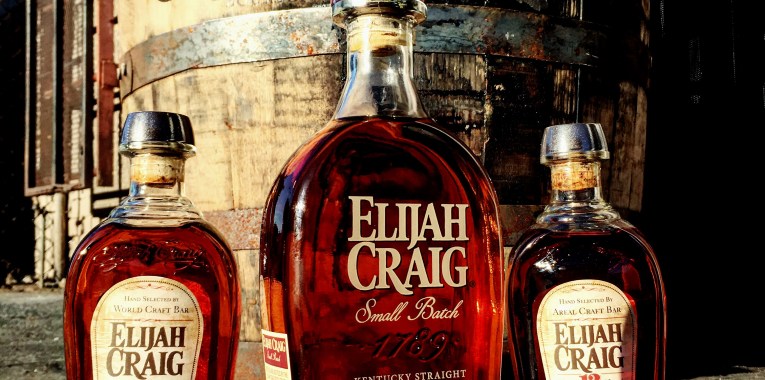
 After the war he helped lay out and plan the city of Lebanon, Virginia which eventually became Georgetown, Kentucky as the state lines and city names changed to reflect a growing country and their pride in their first President. Our Preacher founded some of the first mills west of the Appalachian Mountains that produced cloth and paper. He was also a big proponent of education. Founding the first classical school in Kentucky in 1787, which was than linked to the Rittenhouse Academy in 1798 with the help of land donated by Craig. Rittenhouse eventually morphed into Georgetown College, not to be confused with Georgetown University. He also happened to found a distillery.
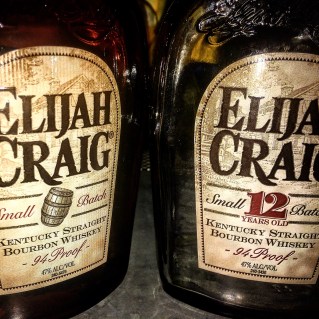
 amed and marketed after the dubious claim of our good Preacher as the Father of Bourbon, the whiskey was nevertheless damn good. While “small batch” has never been a regulated term Heaven Hill has always stood by the fact that their Elijah Craig brand is never more than a 200 barrel dump per batch, which is more than most distilleries can actually distill but at least there is a number to the claim. It was also always 12 years old, which put it actual years ahead of most of it’s premium competitors.
 12 years blasted out large on the label gave it a gravitas and a certain definitiveness in what the benchmark of flavor should be. Heaven Hill insists that the new “Small Batch” Elijah will always be a blend of 8-12 year old bourbon and that the change allows them to maintain the Barrel Proof at 12 years old and eventually increase supply of the highly lucrative and delicious 18 and 23 year old single barrel variations, but it still feels like a loss.
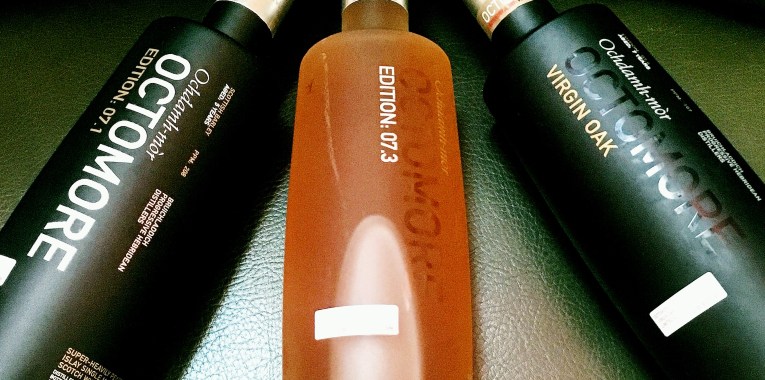
 The Octomore line sails in from the shores of Islay and the Bruichladdich distillery. Bruichladdich is old history with a new face with that spirit of this spirit running right back to its earliest days. When the distillery was founded in 1881 it was the height of modernity. A state of the art facility, especially when compared the distilleries on Islay at the time which were often just converted farm houses. Built right on the shore with uniquely tall and narrow necked stills the distillery managed to survive when many others failed. At least until 1994 when it was mothballed for being ‘surplus to requirements’.
 The Octomores are some of the most heavily peated whiskies in the world. Their phenol content (the scientific way to measure peat) have been as high as 238 but even in their “standard” range they are three times as peated as a Laphroig. Yet, even with all this smoke, and being bottled at cask strength, they avoid being one dimensional. They are sea salt air tinged with smoke and a threat of rain in the air once the sun has set while I’m reading by the fire.
 ted Distillers became a part of Diageo in 1997 when Guinness merged with Grand Metropolitan they seemed rather interested in divesting themselves of the American whiskey holdings, going so far as to sell their only active distillery, the Bernheim Distillery, to Heaven Hill in 1999. Yet they held onto a massive amount of stock that they continued to age, selling it out on contract and in bulk but not making any personal use of it. They were seemingly content to let it get older and older.
 consumers are expressing greater interest in the origin of their spirits, what the mash BILL is, how it’s aged, all of the nitty gritty details- here comes a brand actively hiding its history. Even the names them selves, Old Blowhard, Gifted Horse, Rhetoric, seemed to be thumbing their noses at people who ask too many questions.

 As a cons
 olation prize in the following years Heaven Hill released a 20, 21, 22 and 23 year old version of the single barrel. Some with varying success but as the age on the bottles ticked up so did the price on the bottles, riding right along the crest of the Bourbon Craze. Then the 18 Year came flaming back last year.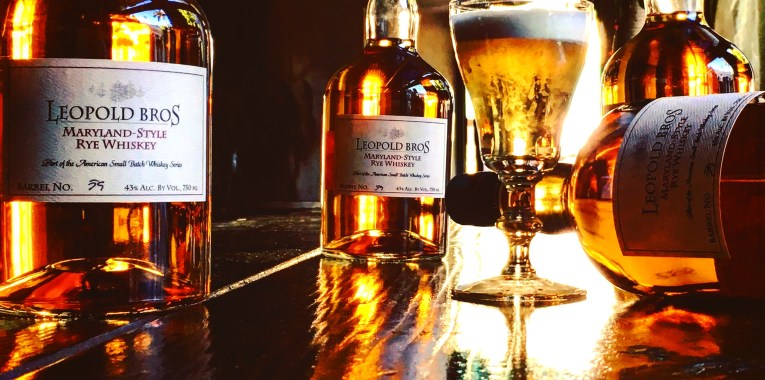
 careful distillation and selection of yeast strains to create a wholly unique product. They’ve even had an old time compound still made exclusively for them, and are working with local farmers to grow late 1800’s style rye, which has a completely different flavor and starch content than it’s modern descendant.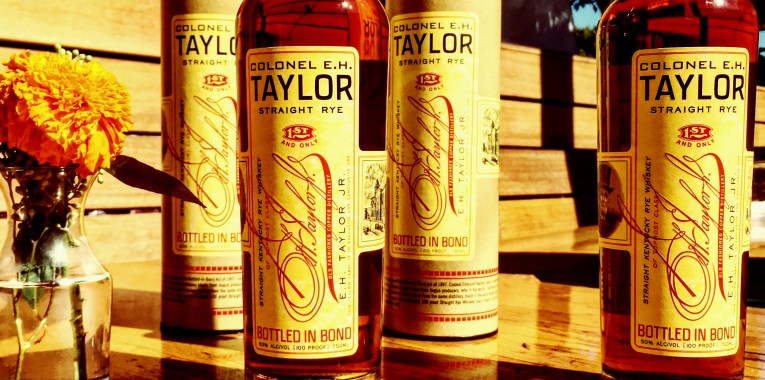
 presidents, Taylor purchased a small distillery that he named O.F.C. He modernized the facility with copper stills and climate controlled aging warehouses that are still in use today. Not content there, Taylor was also pushing through one of my favorite pieces of government legislation: the Bottled-In-Bond Act of 1897. It was like the Pure Food and Drug act, but a decade earlier and for booze. The government would guarantee the whiskey met certain minimum quality controls and in return the distillers agreed to a new tax structure. It’s still in effect today but what it mostly means for us now is that the spirit meets all the legal requirements for that type of whiskey, is a minimum of four years old, and bottled at 100 proof. Quality control.
 Back to the present. How does the new release match up? The spice is still there, laced with cinnamon, clove and baking spices. The apple is less predominate and it seems to lack the deeper, warmer through line that made it such a surprise last year. It’s a subtle thing and it’s hard to tell if it’s an actual difference or just a trick of the mind influenced by expectations. Either way it’s still a delightful dram. And when your competition is yourself how can you lose?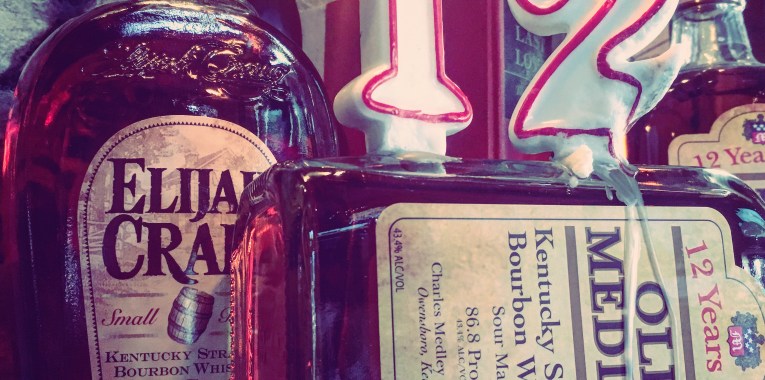
 The whiskey was only getting older because no one was drinking it, which means no one was buying it, which means they weren’t making money. So, corners were cut, quality went down, even less whiskey was bought and what was just kept getting older. To keep the whiskey that was ‘past its prime’ from going to waste in was blended into younger stock, creating better whiskey and, as the young barrels caught up, added up to the big fat number on your bottle. Better whiskey means more people start drinking it until the young-uns aren’t keeping pace and we’re right back where we started.
 these “pre-prohibition’ spirits are so proud of. Quality that’s clearly being appreciated, which means more production and more quality in the future. We’re in a mix up the old and the new which is always a difficult time. But don’t let the past, and the age blind you to the present.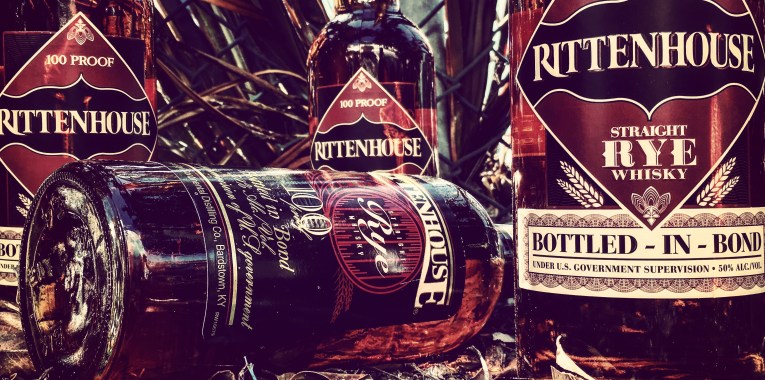
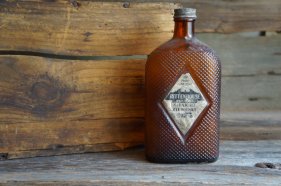 Prohibition as Rittenhouse Square Rye. Over the years it evolved. The whiskey got older and was eventually released as Bottled-In-Bond in the 40’s putting the governments quality control stamp on every drop you drank. But the decades were not kind and a World War, the collapse of the American Whiskey industry, and the rise of Vodka tried to push the brand down. It was kept alive by leaving it’s Pennsylvania birthplace and started rolling of the production lines at Heaven Hill in the heart of Bourbon country Kentucky.
 Bottled In Bond LA