Hey it’s time to talk about two of my favorite things again. Privately selected single barrels and, less enthusiastically, change!
Let’s take this arrival of a brand new 10 year old single barrel of Elijah Craig to look at just how much things have, or haven’t changed.
First things that clearly haven’t.
A bit of history:
Elijah Craig was a fascinating man. Born in 1738 in Virginia, he was a Baptist preacher arrested at least twice for preaching without a license from the Anglican Church. The Baptists at the time were given a bit of a hard time for their stance on slavery (they were against it) and he worked with James Madison and Patrick Henry to help preserve the right of religious freedom at a federal level after the Revolutionary War.
 After the war he helped lay out and plan the city of Lebanon, Virginia which eventually became Georgetown, Kentucky as the state lines and city names changed to reflect a growing country and their pride in their first President. Our Preacher founded some of the first mills west of the Appalachian Mountains that produced cloth and paper. He was also a big proponent of education. Founding the first classical school in Kentucky in 1787, which was than linked to the Rittenhouse Academy in 1798 with the help of land donated by Craig. Rittenhouse eventually morphed into Georgetown College, not to be confused with Georgetown University. He also happened to found a distillery.
“If virtue consists in being useful to our fellow citizens, perhaps there were few more virtuous men than Mr. Craig”
In 1789…ish, Elijah Craig founded a distillery which, despite all his other accomplishments, is the reason any of us are talking about him today. According to almost all whiskey historians, and there are a surprising number of them, there is no reason to believe the Preacher was making anything other that the typical style of corn-based spirit being made by 100’s of other farmers at the time. By the time Bourbon County was formed in 1785, two years after the first registered distillery in Kentucky, people were already trying to find a way to distinguish between the corn based Kentucky style and the rye based style that predominated on the other side of the mountains.
Despite lack of evidence, Elijah Craig is first mentioned without citation as the inventor of Bourbon in 1874, nearly 70 years after his death. And most Bourbon aficionados can tell you the charming tale of his magical discovery of charring barrels to create Bourbon. After a lightning bolt set fire to one of his farm houses the good Preacher was too frugal to throw away some burnt barrels that he deemed perfectly suitable and the whiskey stored in these barrels emerged from “a process that gives the bourbon its reddish color and unique taste.” This story completely ignores the fact that barrels have been used for storage for millennia and they were valuable. Being reused to store anything from fish, to hardware, to whiskey. And they only way to truly clean out a wooden container after it’s stored salted fish: setting it on fire. Charring the inside. Bourbon was an evolution, not an invention.
So why are we still talking about the “Father of Bourbon”
Enter Heaven Hill. Founded as soon as the money could be pulled together after the end of Prohibition, Heaven Hill is the only remaining family owned distillery in Kentucky, The largest family owned and operated producer and distributer of distilled spirits in the US, the seventh largest alcohol supplier in the US and the second largest holder of Bourbon in the world. They’re lagging slightly behind Jim Beam, which almost feels appropriate with the number of Beam they’ve had as Master Distiller. Their very first distiller was Jim Beams 1st Cousin, he was eventually followed by Jim Beam’s nephew and even the current Master distiller’s, Parker and Craig, carry the Beam family name. There is history everywhere. And in 1986 Heaven Hill first released the Elijah Craig 12 Year Small Batch Straight Bourbon.
N amed and marketed after the dubious claim of our good Preacher as the Father of Bourbon, the whiskey was nevertheless damn good. While “small batch” has never been a regulated term Heaven Hill has always stood by the fact that their Elijah Craig brand is never more than a 200 barrel dump per batch, which is more than most distilleries can actually distill but at least there is a number to the claim. It was also always 12 years old, which put it actual years ahead of most of it’s premium competitors.
But times change.
Due to the success of the super-aged version of Elijah Craig, the Barrel Proof Editions, a massive, debilitating fire in the mid 90’s that literally destroyed a distillery, and a massive uptick in the call for good bourbon this stalwart brand has had to make some interesting calls in the past few years.
The biggest being the fact that it’s dropped it’s age statement. For nearly 30 years Elijah Craig has been the benchmark for old bourbon.  12 years blasted out large on the label gave it a gravitas and a certain definitiveness in what the benchmark of flavor should be. Heaven Hill insists that the new “Small Batch” Elijah will always be a blend of 8-12 year old bourbon and that the change allows them to maintain the Barrel Proof at 12 years old and eventually increase supply of the highly lucrative and delicious 18 and 23 year old single barrel variations, but it still feels like a loss.
We in the bourbon world are sometimes overly obsessed with the idea of “the past” and “tradition” so much so that the marketing stories overtake the liquid even when they’re pretty blatantly misleading. The old tales of the Preacher Elijah Craig are mild compared to most brands. We resist change. But especially with the new, and in my opinion terrible, bottle redesign I can’t help but feel like something is being lost in translation.
Part of what always stood out for me with Elijah Craig was that it was an introduction to the wider world. It wasn’t a well whiskey, it wasn’t a call and it certainly wasn’t expected. It had all the right ingredients: amazing quality, an age statement that puts almost anything to shame, and a price point that let you experience something new without stress. It was the key that turned the lock on your palette. It’s bourbon and had all those necessary parts but added up to so much more. And as so many parts move, so rapidly, I can’t help but feel they might not be getting the combination to the lock right any more.
But maybe I’m just getting old.
I certainly wouldn’t have bought a barrel of it if I didn’t think it was worth it. This 10 year is the third generation in my personal selections of the Preacher and it is more lively and kicking than most standard issues I’ve had, with a deep oak backbone supporting a brighter stone fruit and peach note before finishing dry and tannic.
The future is wedded to the past and after all that Elijah Craig has been to me both personally and as something to share with customers I feel the need to do something we should all do more of, challenge our preconceptions and keep an open mind.
Elijah Craig had,been and is, one of my stalwart companions,- but I can’t help but feel there might be something subtly gleaned from the preacher’s actual obituary, “He possessed a mind extremely active and, as his whole property was expended in attempts to carry his plans to execution, he consequently died poor. If virtue consists in being useful to our fellow citizens, perhaps there were few more virtuous men than Mr. Craig”


 any good. Just like being big and global doesn’t necessarily negate your quality and attention to detail. Everyone wants to start a distillery these days and I’ve got one piece of advice for you: wait. The quality of product being produced right now can’t support the number of “craft” products being produced and in about five years there’s going to be a glut of distilling equipment available for pennies on the dollar.
 FEW has always had a delightful self awareness about the fact that they’re just making booze. The distillery name gives rise to a myriad of word play about having a FEW drinks, etc. But it’s also a nod to the distilleries home in Evanston, right out side of Chicago, which was a major staging ground for the Woman’s Christian Temperance Movement and the home of woman’s suffragist and prohibitionist France Elizabeth Willard. That playfulness carries over into their rye.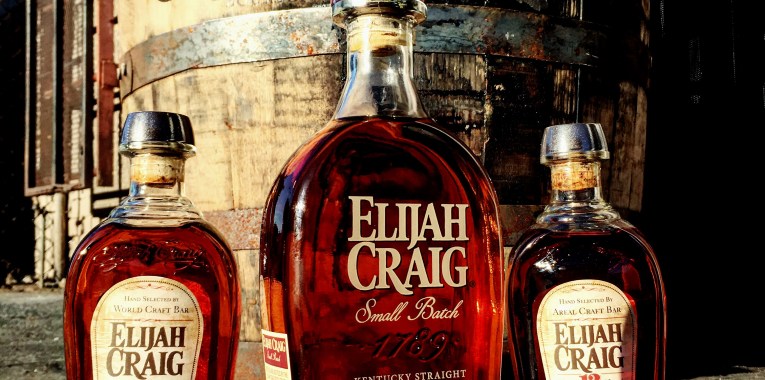
 Bottled In Bond LA