
Rhetoric:
-language designed to have a persuasive or impressive effect on its audience but often regarded as lacking sincerity or meaningful content.
Let’s say you’re a major spirits company. Let’s even say you’re the largest in the world in fact, and in the late 90’s you divest yourself of all of you major American whiskey holdings. Why wouldn’t you? American whiskey is the pits and no one is drinking it. Canadian whiskey however…
Jump a head a couple decades and Bourbon and rye is outstripping demand and you find yourself without an American Whiskey distiller but you do have a massive amount of super aged Bourbon still languishing in your warehouses. What would you do? If you’re Diageo you market the hell out of it.
After Uni ted Distillers became a part of Diageo in 1997 when Guinness merged with Grand Metropolitan they seemed rather interested in divesting themselves of the American whiskey holdings, going so far as to sell their only active distillery, the Bernheim Distillery, to Heaven Hill in 1999. Yet they held onto a massive amount of stock that they continued to age, selling it out on contract and in bulk but not making any personal use of it. They were seemingly content to let it get older and older.
ted Distillers became a part of Diageo in 1997 when Guinness merged with Grand Metropolitan they seemed rather interested in divesting themselves of the American whiskey holdings, going so far as to sell their only active distillery, the Bernheim Distillery, to Heaven Hill in 1999. Yet they held onto a massive amount of stock that they continued to age, selling it out on contract and in bulk but not making any personal use of it. They were seemingly content to let it get older and older.Even when they founded a new flagship American brand in the form of Bulleit, a brand who’s history is only as deep as the ink on the paper it’s printed on, they made no use of it. Instead they relied on their remaining contract with Four Roses for the to fulfill the flavor profile they needed.
Then in 2014 the Orphan Barrel landed with a thud. The Orphan Barrel “Distillery” had found a “limited” number of “forgotten” and “abandoned” barrels. Who knows where they came from! But we do know that right as all the old whiskey seems to be drying up that these are super old. Some are even 28 years old! That’s a lot of quotation and excitation points.
The bottles were given evocative names and flashy old fashioned- style bottles but these weren’t orphans, more like children dressed up for family photos. They look fancy but you know who they really are.
Take the Rhetoric line up. We know that these we distilled at Bernheim in the early 90s by United Distillers which became Diageo and then aged in the warehouses of the now defunct, legendary Stitzel-Weller which ARE now owned by Diageo. That’s some amazing Bourbon heritage right there and it’s 20 years old. That’s a great story! These aren’t orphans. These are children who’s parents are going through an identity crisis.
And just personally I’ve always kind of felt an arrogance from the lineup. Right as  consumers are expressing greater interest in the origin of their spirits, what the mash BILL is, how it’s aged, all of the nitty gritty details- here comes a brand actively hiding its history. Even the names them selves, Old Blowhard, Gifted Horse, Rhetoric, seemed to be thumbing their noses at people who ask too many questions.
consumers are expressing greater interest in the origin of their spirits, what the mash BILL is, how it’s aged, all of the nitty gritty details- here comes a brand actively hiding its history. Even the names them selves, Old Blowhard, Gifted Horse, Rhetoric, seemed to be thumbing their noses at people who ask too many questions.But it wasn’t just “enthusiasts” that pushed back. Turns out the consumers meant it when they said they wanted all these “unnecessary” details. So, begrudgingly a little bit was let out. But not enough to overtake the marketing. Or to give the whole story. And that is incredibly puzzling. There’s actual, interesting history here and even a little mystery. Let’s face it you just a don’t see American whiskey this old. Why was it left to age so long?
But instead of talking about the whiskey here we are still talking about all that marketing ink..
So what about the whiskey? Well, they are old. In the case of the Rhetoric they’re dusty, dry, tannic and soft. My personal taste craves something a little more lively but if you like all the super oak it’s here for you.
Premium old whiskey makes a buzz anytime it’s released, yet interestingly the “Orphan” Barrels seem to be making less of a splash each time. Maybe the marketing put people off. Maybe the price did. Or maybe it was just the whiskey itself. Either way we don’t know what the future holds for the rest of the orphans. Maybe a few more will plop on to your shelves. Maybe now that their parents contracts with Four Roses and Jim Beam have expired they’ll be blended in with their cousin Bulleit, though that seems unlikely. Or maybe it’ll be something completely different. But for now this is where these orphans have found their homes.


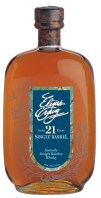 As a cons
 olation prize in the following years Heaven Hill released a 20, 21, 22 and 23 year old version of the single barrel. Some with varying success but as the age on the bottles ticked up so did the price on the bottles, riding right along the crest of the Bourbon Craze. Then the 18 Year came flaming back last year.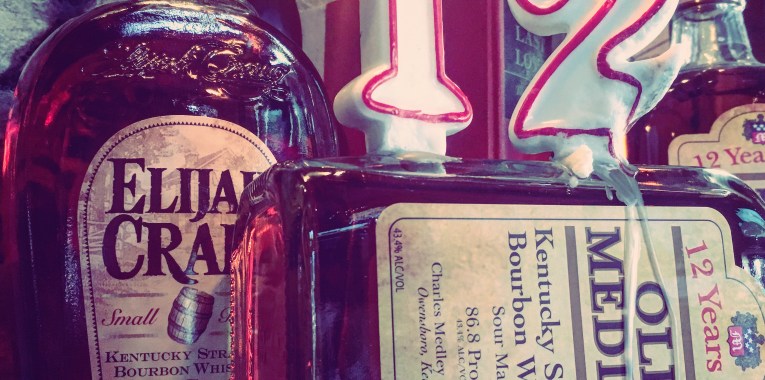
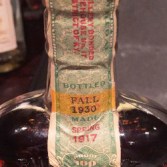 The whiskey was only getting older because no one was drinking it, which means no one was buying it, which means they weren’t making money. So, corners were cut, quality went down, even less whiskey was bought and what was just kept getting older. To keep the whiskey that was ‘past its prime’ from going to waste in was blended into younger stock, creating better whiskey and, as the young barrels caught up, added up to the big fat number on your bottle. Better whiskey means more people start drinking it until the young-uns aren’t keeping pace and we’re right back where we started.
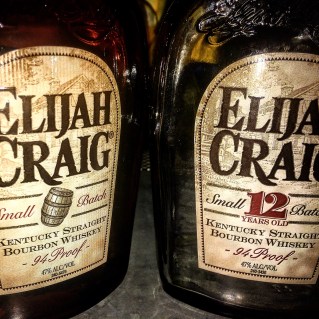 these “pre-prohibition’ spirits are so proud of. Quality that’s clearly being appreciated, which means more production and more quality in the future. We’re in a mix up the old and the new which is always a difficult time. But don’t let the past, and the age blind you to the present.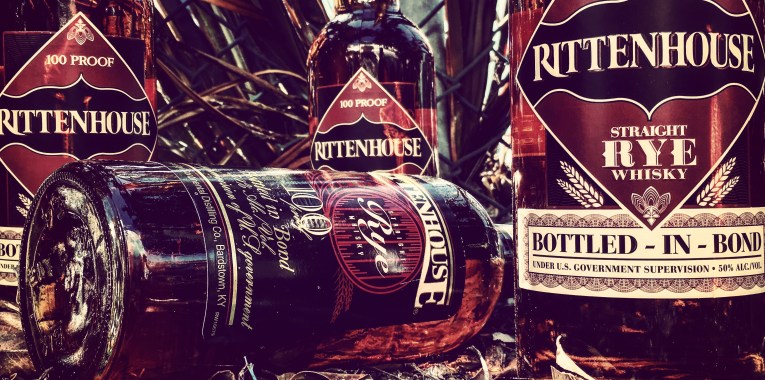
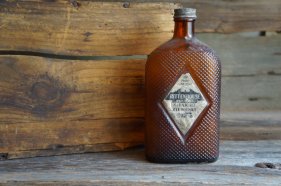 Prohibition as Rittenhouse Square Rye. Over the years it evolved. The whiskey got older and was eventually released as Bottled-In-Bond in the 40’s putting the governments quality control stamp on every drop you drank. But the decades were not kind and a World War, the collapse of the American Whiskey industry, and the rise of Vodka tried to push the brand down. It was kept alive by leaving it’s Pennsylvania birthplace and started rolling of the production lines at Heaven Hill in the heart of Bourbon country Kentucky.
 Bottled In Bond LA