Bourbon is an old tradition, dating back hundreds of years to our rugged frontier forefathers and foremothers who proved their American spirit by making a distinct product using brilliant recipes and methods that they would pass down unchanged to us to be poured into a glass for our drinking pleasure today. At least according to the marketing materials it is… the truth is a bit more complicated.
Although the term “Bourbon” is associated with whiskey as early as the 1820s, “Bourbon” was only declared the native spirit of the United States by Congress 53 years ago with the passing of a 1964 resolution. And the definition of “Whiskey” as a spirit distilled from grain, and Bourbon as a spirit distilled from 51% corn is only 108 years old. President William Howard Taft put the definition in place in 1909 as part of the Safe Food and Drug Administration Act of 1906. Yes, it took him three years to come up with the definition of “Bourbon whiskey.” But with the start of Prohibition a mere 11 years away its questionable how many people would have enjoyed whiskey that lived up to these new regulations. Think about that the next time someone tells you their whiskey is “Pre-Prohibition Style.”
All of this is to say that tradition is long and constantly changing and in the adjusted timeline some landmarks are bigger than they appear at first. Like, for instance, Knob Creek’s 25th Anniversary.

Knob Creek was the whiskey child of Booker Noe, grandson of Jim Beam who tookover as Head Distiller of his grandfather’s distillery in 1965. Booker, along with Elmer T. Lee and Jimmy Russell, is credited with the revitalization of the Bourbon market at the end of the 80s with the introduction of now iconic brands of Bourbon. Booker first released Booker’s Bourbon in 1988 to much acclaim, and this was quickly followed up with Baker’s, then Basil Hayden’s and Knob Creek in 1992. These are the heart and soul of the Jim Beam Small Batch collection, which led the way in many respects for the premiumization of Bourbon. None of these have survived to their 25th year with out some alteration.
Knob Creek is named after the stream that ran alongside Abraham Lincoln’s childhood home in Kentucky and is Booker’s take on “Pre-Prohibition Style” whiskey. A term that we can now see is as nebulous as those early definitions of whiskey.
In this case it meant a Bourbon whiskey bottled at 100 proof and carrying an age statement of 9 years. Traditional Knob Creek is a deep caramel color, with a nose that carries a lot of oak, along with a touch of maple and baking spice, a super vanilla, white pepper, and dark cherry palette with a earthiness and dustiness that I can only associate with Jim Beam yeast, and a gripping, dry finish that is a bit bracing at 100 proof. It’s iconic. Immutable.
Except it wasn’t. In 2001 Booker, who had continued to oversee the brand well into his 70’s, passed the torch to his son Fred. And shortly after the Bourbon boom that Booker had helped create hit full force.
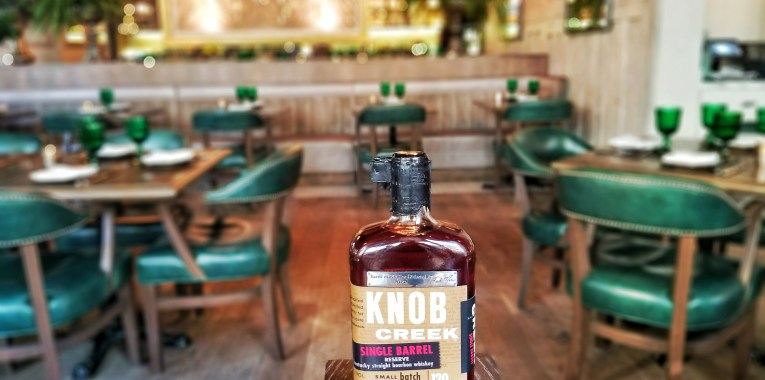
Knob Creek expanded. In 2010 Knob Creek Single Barrel hit the market. It was a natural expansion, still 9 years old but bottled at 120 proof from a single barrel. Then they began releasing a non age statement Knob Creek Rye in 2012, followed in 2013 by  the Knob Creek Smoked Maple, a bourbon flavored liquor bottled at 90 proof. Then camethe inevitable. In 2016, just shy of 25 years, Beam Suntory announced that Knob Creek would be dropping its age statement. That same year the Knob Creek 2001 was released; a 13 year, Cask Strength release comprised of the last barrel that Booker Noe laid down before passing the torch to his son.
Jim Beam has followed up with a 25th Anniversary release appropriately named Knob Creek 25thAnniversary. It’s a limited release of 300 barrels, all between 12-13 years old and bottled between 120-125 proof that is exactly what it sounds like: bigger, more intense, Knob Creek.
Whether you’re going by the centuries old “traditional” definition or adhering to a more modern practice twenty five years is still a milestone worth celebrating in the midst of so much change. Hell, maybe a few more milestones like this will help us truly appreciate that some change is as much a part of Bourbon heritage as all those pre-Prohibition style ways of making it are.
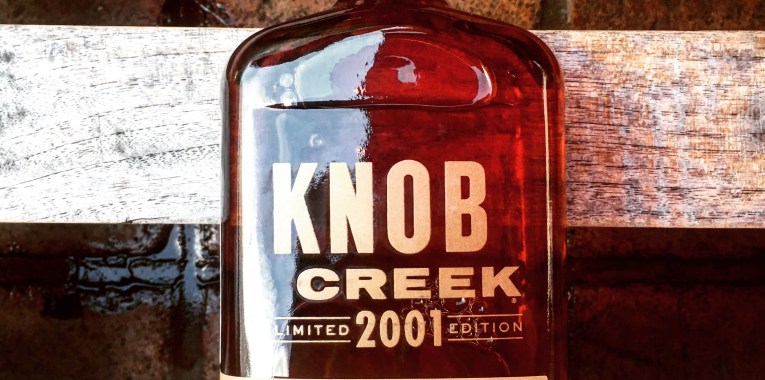
 Named after the stream that ran along Abraham Lincoln’s childhood home in Kentucky, the bottle was modeled after turn of the century apothecary bottles with the label inspired by the tradition of wrapping bottles in newspaper at the distillery. Knob Creek was originally an age stated 9 Year Old bourbon bottled at 100 proof. The age statement has been dropped in the past few years but the brand still claims extra aging compared to the companies other small batch whiskies. So in this case pre-Prohibition style would seem to mean longer aged and higher proof, which is almost the exact opposite of what those early whiskies would have been.
 What set the Booker’s Rye apart was the age and a unique mashbill. The Knob Creek 2001 certainly has the age, at 14 years old it clocks in a good five years older than the old 9 year, but there’s no variation on the mashbill, simply different batches. This leaves a through line connecting it to the standard issue Knob Creek because no matter what batch you pick up all of these bottles are unmistakably Knob Creek: powerful, with pistachio, walnut, sweet oak and that unmistakable Jim Beam yeast.
 Bottled In Bond LA