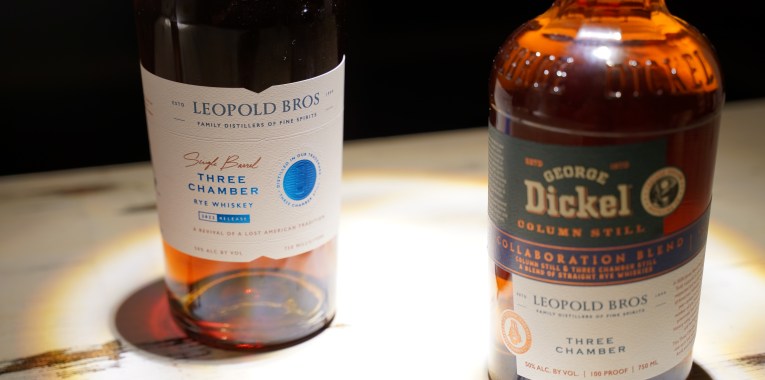
Alright, let’s get this out of the way: I am a Leopold Brothers fan, I’ve been a fan of their work for years. They are one of the best examples of what a mid-sized distillery can offer to the larger spirits world. They’re not trying to grow beyond their capacity and that capacity is often defined by quality standards, not production goals. They once said that what they make is liquid food, and their products back it up.
But with all of those standards and expectations comes a pressure to deliver. Especially when it comes to the Three Chamber Rye.
The Three Chamber Rye journey is one that I have followed for years, for at least as long as I’ve been writing Bottled-In-Bond, LA. In fact it was something that I was able to taste right off the three-chambered still before it had ever been bottled. The pressure of those years since tasting the white dog on my expectations has been enormous but to truly understand why we need a history lesson.
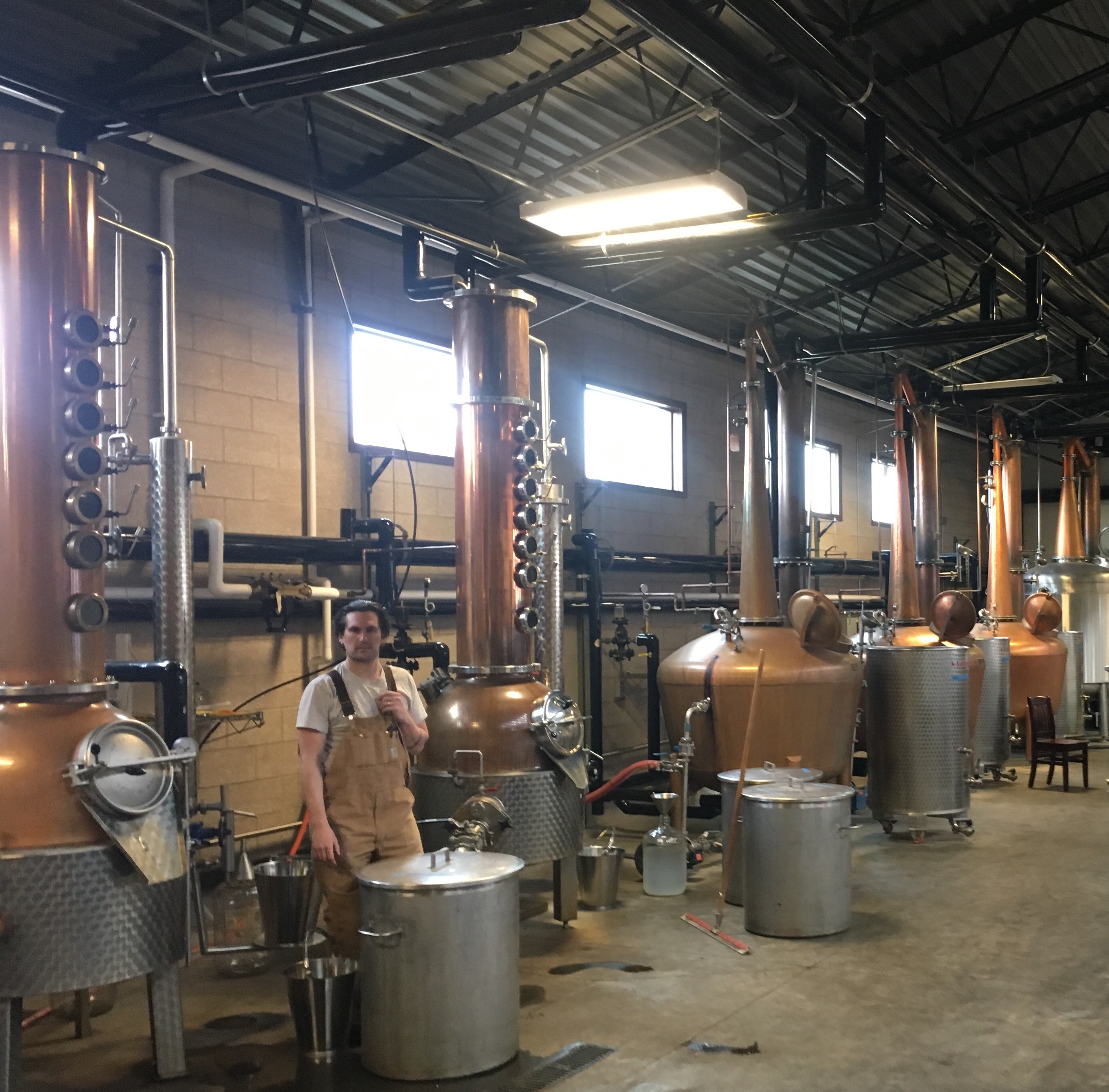
The Three Chamber Rye takes its name from the still used to produce it. While many people these days are familiar with the difference between a pot still and a continuous still, chances are they’ve never heard of a three chamber still. That’s because the last one was decommissioned just after the end of Prohibition.
But before Prohibition the three chambered still was the tool for making rye whiskey in the United States. We know this because of the Crampton and Tolman papers. These were two reports commissioned by the IRS after the passing of the Bottled In Bond Act of 1897. These papers would become the basis for the standards of identity for what would define a bourbon, a rye, or other spirits aged in wood in the US. Every distillery that was surveyed that produced rye whiskey, except one, used a chamber still.
The three chamber still works much like its name suggests, there are three chambers stacked on top of each other. Each chamber is separated by a valve to prevent wash from each chamber from flowing into the other. The best way to understand how it works though is to start at the end with the third chamber.
This is where the mash from the last run will have ended up as the last stop of the process. Stripped of almost all alcoholic content and essentially stillage, this spent mash is pumped out of the chamber.
The valves on the other chambers are opened one by one and the mash from chamber two flows down into the third by gravity, the mash from chamber one flows into chamber 2 and the first chamber is refilled from the pre-heating chamber.
Once all of the chambers are filled the steam valve is opened. It rises through the bottom (third) chamber, extracting oils and flavors, passes up into the middle (second) chamber, extracts alcohol and more flavor, continues up into the first chamber continuing its extraction before passing into a heat exchange in the preheater charger to warm the waiting mash without interacting before the vapor passes into a thumper and condenser to become new make.
Each of these chambers operates at its own temperature, pressure, time, and inefficiencies. Each extracts different flavors and compounds.
If you’re familiar with how a continuous still works this may sound like a more difficult, less efficient version of that. And for many years that’s how this still was considered: as a transitory technology between the pot still and the continuous still.
Todd Leopold’s research into this forgotten technology however, led him to an article about the Hiriam Walker distillery in the 30’s. At the time this distillery was the largest distillery in the world and rather than instill another continuous still the very deliberately had a three chamber still limiting their production numbers. This told Todd that this still must have been producing a whiskey of such a unique flavor that the average consumer would notice its absence. And this led the team at Leopold Bros to commissioning Vendome to make the first Three Chamber Still in 100 years.
I don’t think Vendome would have agreed to make this still for any other distiller, as it was the first still they ever made that they couldn’t guarantee would work, or even not explode. Yet once it was functional and paired with Todd Leopold’s skill as a distiller it became clear that the resulting whiskey, even before being aged, was incredibly unique. The Chamber still essentially worked as an oil extractor.
By the time the mash hits the third, bottom chamber almost all of the alcohol has been stripped from it. This means that the steam is extracting oils, flavors, and other compounds that it carries into the other chambers that are then slowly mixed with the alcohol being pulled from those chambers before being passed into the condenser to be collected. This allows a lot of time for compounds to interact and to add in compounds that don’t usually have time to exist in more familiar distillations.
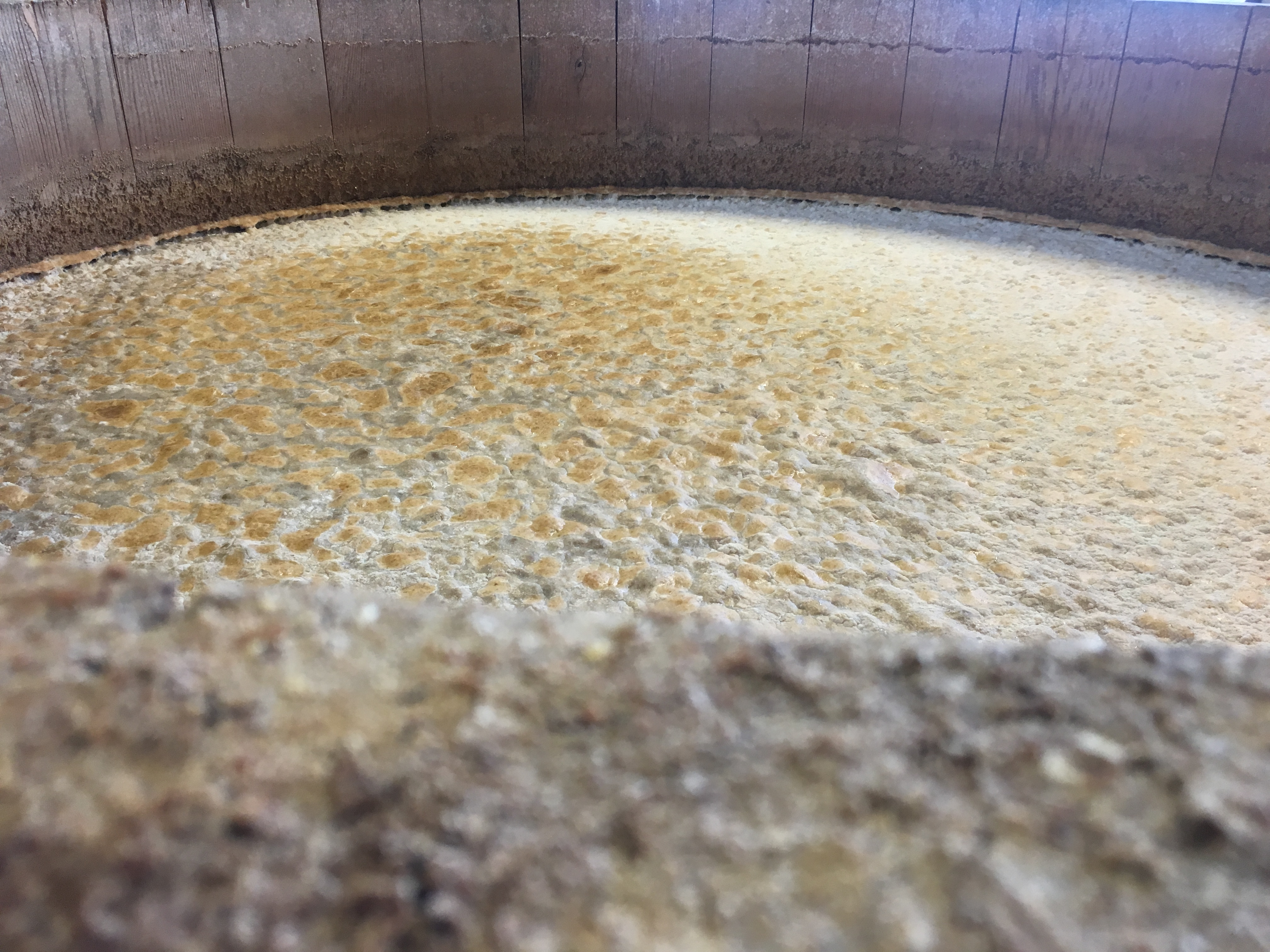
The production goes beyond just the technology though. When you look back at production in the late 1800’s you quickly realize that the grains grown then are drastically different from the grains grown now. Over the past 150 years we’ve bred grains to produce more yield, meaning more starch. This is efficiency at the cost of flavor.
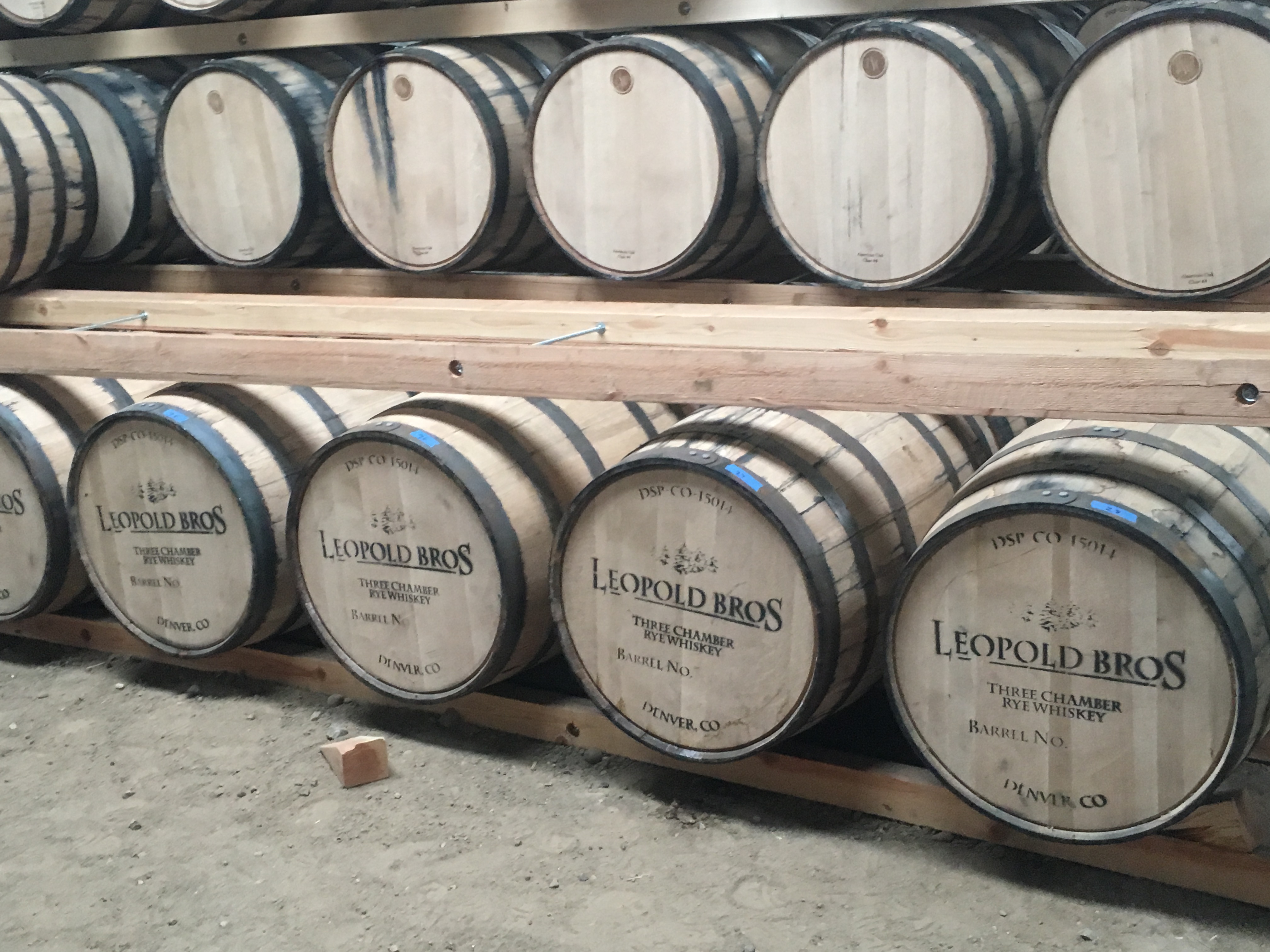
To solve this, Leopold Brothers worked with local Colorado farmers to start growing essentially extinct Abruzzi Rye grain. This rye has a starch content of about 60-65% which is much lower than the 75-80% starch content of modern, comercial rye. This unlocked yet another key to the flavor of this bygone whiskey. Add this to the fact that it’s distilled to 100 proof, goes into the barrel at 100 proof, and five years later comes out at 100 proof and you have a whiskey that hasn’t been tasted in literal generations.
I’ve now been fortunate enough to taste this whiskey as a new make straight off the still in the first year of its operation, to be able to taste the first bottled release, and now the first single barrel release. It has a unique character worthy of the wait; floral, fruity, bready, unctious, and heavy.
That term heavy is important because it leads us to the next stage of the conversation. That’s right, we aren’t done yet! While doing more research, and examining the blueprints laid out by the Crampton and Tulman papers, as well as the flow charts of the Hiram Walker Distillery it became clear that this Three Chamber whiskey, this “heavy” whiskey, was a component. Just a part of the standard bottle of rye. It would be blended with “light” whiskey to create a completely separate flavor.
This “light” whiskey would now be what we consider rye whiskey distilled on a continuous still. To truly recreate pre-Prohibition Rye the Three Chamber Rye would have to be blended with a continuous still rye.
Without a Continuous Still of his own, Todd reached out to Nicole Austin of Cascade hollow, formerly George Dickel. If you haven’t heard of Nicole or her work at Cascade Hollow go Google her now. She deserves her own full breakdown for her innovation and creativity as she’s doing for a macro distillery what Todd has done for an independent distillery. (Which is why she happened to have a four year old, experimental, column distilled rye already on hand.)
The two were able to collaborate. Not just as individual distillers, but as a mid-sized distillery working with the largest liquor company in the world. They produced a collaboration bottling that equally featured the work of both distillers while recreating a historic flavor profile.
The result is one of the best, most versatile rye whiskeys I’ve ever tasted. It is bright, spicy, weighty, fruity, delicate, and slightly floral. While this is a whiskey to sip it is probably one of the best cocktail Ryes I’ve ever worked with. A Manhattan or Sazerac with the Collaboration Rye is stellar.
*If only the price were.
As you can imagine recreating a century old style of whiskey, and doing it right, doesn’t come cheap. Getting a bottle of the single barrel Three Chamber Rye is a couple hundred dollars. And depending on where you live getting a bottle of the Collaboration is 100+.
I absolutely believe that the price is worth it for experienced whiskey drinkers. They both explore something new, unexpected, and delicious. I want to open that door to appreciate the complexity of this whiskey to more people. And the easiest way for that is with cocktails. But the price point, for now, is aspirational rather than available.
Leopold Bros might think they’re making liquid food, but with the Three Chamber Rye they’ve made a whole meal.
TASTING NOTES:
Leopold Brothers Three Chamber Single Barrel Rye
NOSE: Malt, Baking Spice, Light Oak, Herbs
PALETTE: Stone fruit, oily, lavender, bright spice, bready
FINISH: Long, floral, roasted peach, tobacco, oak
Dickel and Leopold Bros. Collaboration Rye
NOSE: Dried fruit, citrus zest, rye spice, vanilla
PALETTE: oak, caramelized pear, floral, stone fruit, dill, baking spice
FINISH: Long, honied, spiced apple
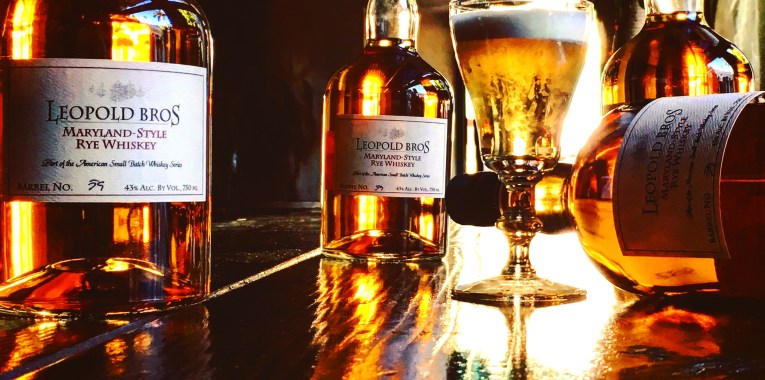
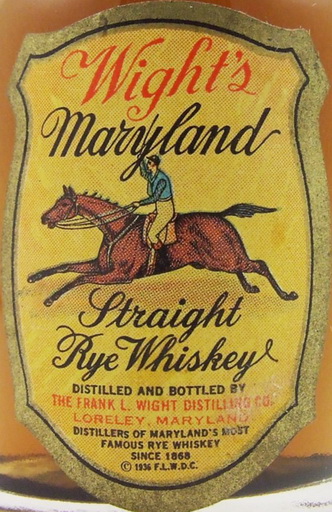 careful distillation and selection of yeast strains to create a wholly unique product. They’ve even had an old time compound still made exclusively for them, and are working with local farmers to grow late 1800’s style rye, which has a completely different flavor and starch content than it’s modern descendant.
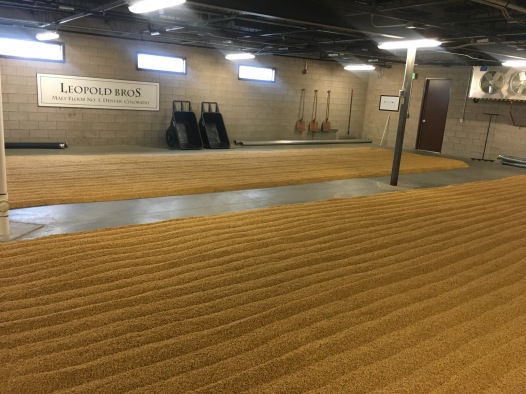
 In distilling history isn’t a simple straight line from the old school pot stills to the modern industrial column/continuous stills used in most major distilleries today. One of the most notable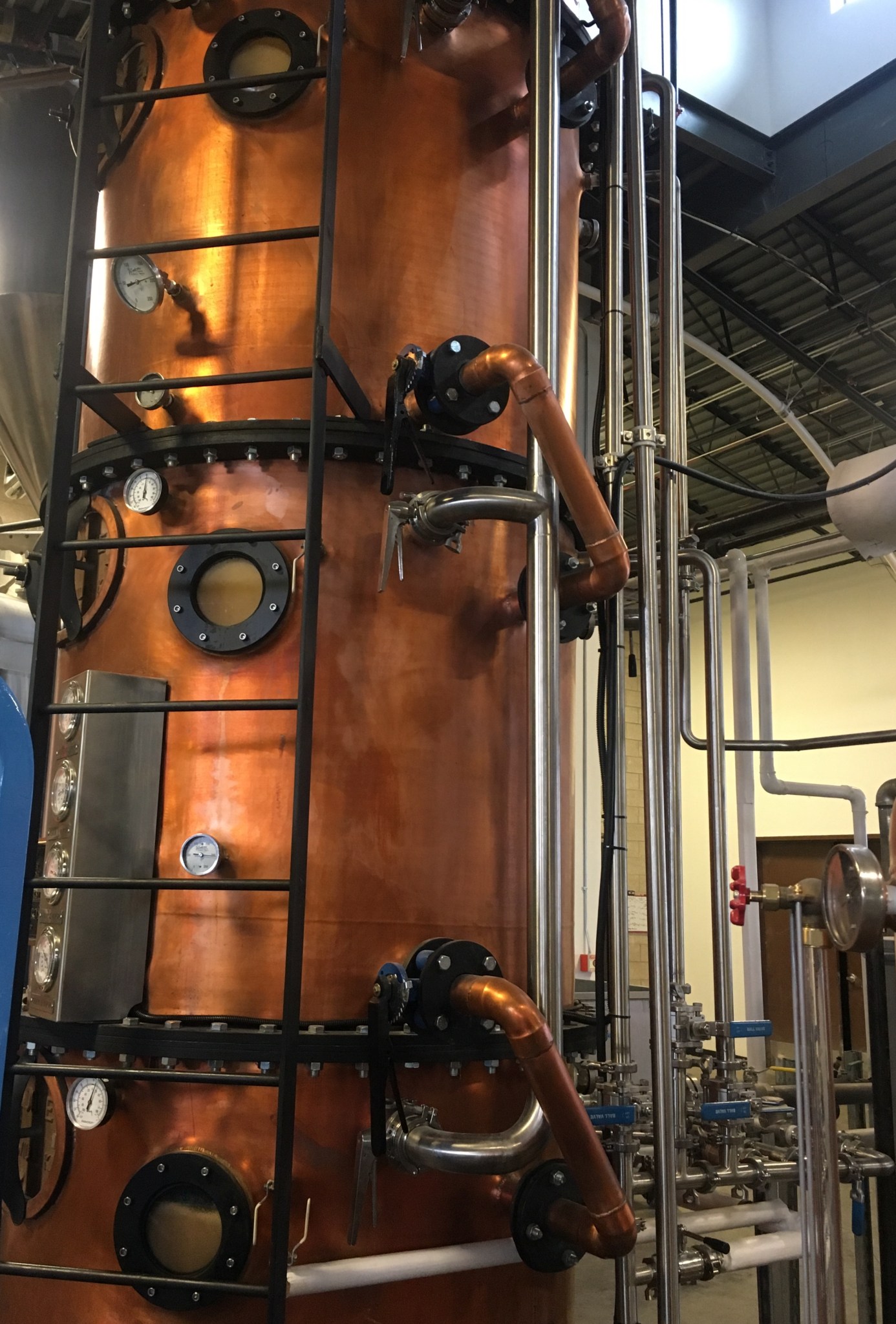
 Their standard barrel entry proof
 Bottled In Bond LA