
From no Turkey to a Turkey a month it really does seem like I’m filling that Wild Turkey hole. I promise I’m not repeating myself or selling out. I like exploring things I don’t know and I love sharing experiences.
I’ve talked several times in the past about house single barrels, and I’m sure I will many more times in the future. In case you’re unfamiliar with the concept of a what a house single barrel of whiskey is, it’s exactly what it sounds like. It’s an entire barrel of whiskey that has been bottled, labeled, and sold to a single bar or store. Most bottles of whiskey are a batch of a couple dozen to a couple thousand barrels of whiskey depending on the brand. Each barrel of whiskey ages differently, aging is an organic process after all. The time spent interacting with the oak, where in the warehouse, what the weather was like over the years, all of these contribute to the flavor of the barrel. To create a consistent product these different barrels and flavors are batched together. Single barrels on the other hand celebrate those individual differences.
It’s also a collaborative effort. Sharing the barrel and story with the customer helps them build the story of their evening out on the town, while the actual selection process is a collaboration between the distillers and the account. The distillers have already narrowed down your choices to a mere handful of barrels before you start tasting anything. They’ve already passed the distillers/brands personal taste test and now it’s about trying to match that to not only what you as the buyer likes, but what you think your customers will enjoy. It’s an ever growing relationship.
And if I’m honest it is a way to keep myself and the other bartenders interested behind the bar. It’s a way to make things more personal and break up the monotony of the 369th Old Fashioned order of the week. But anything can become predictable if do it enough, even barrel picks. That’s exactly why this barrel of Russell’s Reserve caught my attention; it had a funk and an tannic note that I wasn’t expecting.
I reached out to Bruce Russell, grandson of the eponymous Jimmy Russell of Russell’s Reserve, as to why that might be and he had this to say, “The thing that I found interesting about your barrel is the fact thatit moved from the bottom floors (floor 2) of warehouse B up to floor 6 (and right by a window on the edge) after about 6 years. It’s the reason why I think your barrel has such a funky, unique flavor profile. Generally if we move barrels it is down in the warehouse. We do that if we find whiskey we really love because moving it down slows down maturation and will keep the whiskey from changing a lot. Moving it up in the warehouse will speed up the process and is usually done early on in maturation to fix a whiskey that didn’t age very much after 2-3 years. I honestly don’t know why they moved your barrel (or the other dozen or so that got moved) when they did. But it definitely gave it a palate that I haven’t seen in any other of the single barrels this year.”
So even the barrels personal journey was a unique story and it certainly seems to have left an imprint on the flavor of the whiskey. Bottled at 110 proof and non chill filtered, the nose is slightly hot, as you’d expect at 110 proof but it also has a dark chocolate and earthy note that carries into the mid palette. Once on the tongue the whiskey displays dark stone fruit, a rich brown sugar quality and a touch of nutmeg, while the finish is all of that vanilla and a hint of white pepper. It definitely has that Wild Turkey funk but it also has its own undeniable off kilter character.

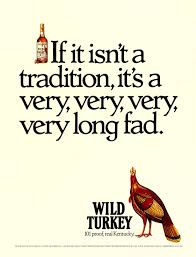 y as a brand was said to originate in the 1940’s when an Austin Nichols executive, Thomas McCarthy, brought some choice whiskey along on a wild turkey hunting trip in South Carolina. Enamored with the samples he brought his friends kept asking for more of “that wild turkey bourbon.” More likely it was a marketing approach to appeal to hunters and the rugged, rustic type but every whiskey loves a mythical origin story.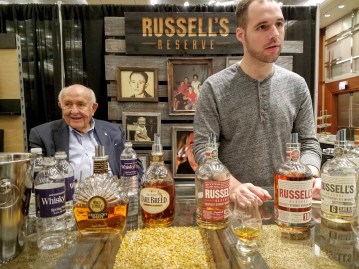

 Bottled In Bond LA