Orphans. Orphans as far as the eye can see.

Rhetoric:
-language designed to have a persuasive or impressive effect on its audience but often regarded as lacking sincerity or meaningful content.
Let’s say you’re a major spirits company. Let’s even say you’re the largest in the world in fact, and in the late 90’s you divest yourself of all of you major American whiskey holdings. Why wouldn’t you? American whiskey is the pits and no one is drinking it. Canadian whiskey however…
Jump a head a couple decades and Bourbon and rye is outstripping demand and you find yourself without an American Whiskey distiller but you do have a massive amount of super aged Bourbon still languishing in your warehouses. What would you do? If you’re Diageo you market the hell out of it.
After Uniimgres.jpgted Distillers became a part of Diageo in 1997 when Guinness merged with Grand Metropolitan they seemed rather interested in divesting themselves of the American whiskey holdings, going so far as to sell their only active distillery, the Bernheim Distillery, to Heaven Hill in 1999. Yet they held onto a massive amount of stock that they continued to age, selling it out on contract and in bulk but not making any personal use of it. They were seemingly content to let it get older and older.
Even when they founded a new flagship American brand in the form of Bulleit, a brand who’s history is only as deep as the ink on the paper it’s printed on, they made no use of it. Instead they relied on their remaining contract with Four Roses for the to fulfill the flavor profile they needed.
Then in 2014 the Orphan Barrel landed with a thud. The Orphan Barrel “Distillery” had found a “limited” number of “forgotten” and “abandoned” barrels. Who knows where they came from! But we do know that right as all the old whiskey seems to be drying up that these are super old. Some are even 28 years old! That’s a lot of quotation and excitation points.
The bottles were given evocative names and flashy old fashioned- style bottles but these weren’t orphans, more like children dressed up for family photos. They look fancy but you know who they really are.
Take the Rhetoric line up. We know that these we distilled at Bernheim in the early 90s by United Distillers which became Diageo and then aged in the warehouses of the now defunct, legendary Stitzel-Weller which ARE now owned by Diageo. That’s some amazing Bourbon heritage right there and it’s 20 years old. That’s a great story! These aren’t orphans. These are children who’s parents are going through an identity crisis.
And just personally I’ve always kind of felt an arrogance from the lineup. Right as Old-Blowhard-Lo-Res.jpgconsumers are expressing greater interest in the origin of their spirits, what the mash BILL is, how it’s aged, all of the nitty gritty details- here comes a brand actively hiding its history. Even the names them selves, Old Blowhard, Gifted Horse, Rhetoric, seemed to be thumbing their noses at people who ask too many questions.
But it wasn’t just “enthusiasts” that pushed back. Turns out the consumers meant it when they said they wanted all these “unnecessary” details. So, begrudgingly a little bit was let out. But not enough to overtake the marketing. Or to give the whole story.  And that is incredibly puzzling. There’s actual, interesting history here and even a little mystery. Let’s face it you just a don’t see American whiskey this old. Why was it left to age so long?
But instead of talking about the whiskey here we are still talking about all that marketing ink..
So what about the whiskey? Well, they are old. In the case of the Rhetoric they’re dusty, dry, tannic and soft. My personal taste craves something a little more lively but if you like all the super oak it’s here for you.
Premium old whiskey makes a buzz anytime it’s released, yet interestingly the “Orphan” Barrels seem to be making less of a splash each time. Maybe the marketing put people off. Maybe the price did. Or maybe it was just the whiskey itself. Either way we don’t know what the future holds for the rest of the orphans. Maybe a few more will plop on to your shelves. Maybe now that their parents contracts with Four Roses and Jim Beam have expired they’ll be blended in with their cousin Bulleit, though that seems unlikely. Or maybe it’ll be something completely different. But for now this is where these orphans have found their homes.

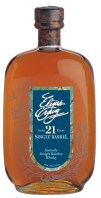
Son of a Preacher Man: Elijah Craig 18 Year Single Barrel

People always ask, “What is your favorite whiskey?” and I always respond, “That’s like asking a parent to pick their favorite child.” It’s flippant but also kind of true. A parent will tell you they love all their children, but there’s always one that the spend more time with. In the bourbon world that child for me is the Preacher: Elijah Craig. But as the Nobel Laureate once said, “The times they are a-changin’.”

It’s gotten incredibly obvious over the past year with the old standard 12 year dropping its age statement and a major bottle design overhaul, but the first sign of change came nearly 5 years ago when they discontinued the original iteration of the Elijah Craig 18 Year Old Single Barrel.

As the Nobel Laureate once said, “The times they are a-changin’.”

The Bourbon was, without a doubt, one of my favorite things I’ve ever put in my mouth. Massive, oaky, creamy and not overpowering. It’s a prime example of the quality of the older whiskies that fed into and eventually led to the Pappy Van Winkle craze, and at $45 bucks a bottle it was something everyone could enjoy. It was an entry point into the bigger, wider world of Bourbon. And they had to take it away from us for two reasons: 1) We drank all of it. 2) The Heaven Hill fire.bourbon.jpg

In the mid 90s a fire started at on of the Heaven Hill distillery rickhouses, most likely from a lightning strike. Ironic in light of the old marketing story that Elijah Craig became the father of Bourbon when a lightning strike burned his barn to the ground, but being a frugal man he saved the barrels stored there and used them to store whiskey, becoming the first to use charred barrels and thus the first to make modern bourbon. The story is complete myth of course.

But this actual fire spread through the warehouses like, well like fire through alcohol. It followed the wind and the terrain and set fire to the distillery itself. Other distilleries banded together to help them continue production until they purchased the Bernheim distillery a few years later but with the loss of stock and production ability sacrifices had to be made and the 18 year was put on that altar.

368291375969919360.jpgAs a consimgres.jpgolation prize in the following years Heaven Hill released a 20, 21, 22 and 23 year old version of the single barrel. Some with varying success but as the age on the bottles ticked up so did the price on the bottles, riding right along the crest of the Bourbon Craze. Then the 18 Year came flaming back last year.
 

Still a Single Barrel, but now a once a year release, I was excited to taste it and felt warm inside as it slid down my throat just like I remembered. Rich, deep, dark yet still lively. But with a price tag 3.5 times what it used to be the entry point was gone. No longer was this something to share with newcomers and aficionados alike. Now this was for the connoisseur. And yes, now this means that you actually might have a chance of finding a bottle on the shelf. Of having something to share in those special moments, but with the bottle change and the loss of the 12 year age statement from the Preacher’s Small Batch bottles I’m left wondering where that entry point is going. So, tonight I’m going to raise a glass because I want to. And because I can. For now.

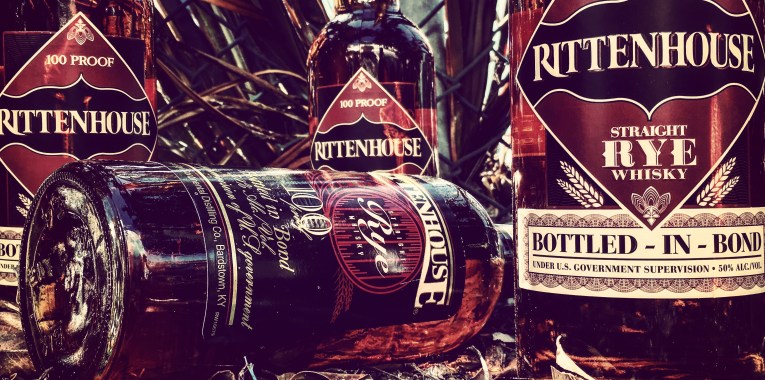
Rittenhouse Square’s Hometown Rye

I’ve been thinking a lot about home lately. I’m not much of a vagabond but I’ve also never put down deep roots. I’m from Pennsylvania, but despite my family still living there it’s not a place that inspires excessive nostalgia. I’ve been in LA for 7 years but I’d but up a healthy fight with anyone who called me an ‘Angelino. When I think of home I don’t think of places. I think of moments. Walking through the grape vines in the fall back in Pennsylvania. The marathon parties at Syracuse in college. And of course, drinking whiskey with friends. Rittenhouse has been along for the ride for many of those nights, and its home is also a collection of its experiences.

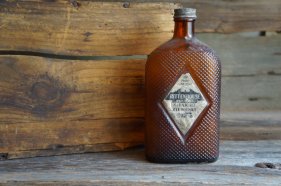
In many ways Rittenhouse is the quintessential Pennsylvania style rye. Hell, it takes its name from Rittenhouse Square in Philadelphia and was originally introduced after il_570xN.607407696_7clx.jpgProhibition as Rittenhouse Square Rye. Over the years it evolved. The whiskey got older and was eventually released as Bottled-In-Bond in the 40’s putting the governments quality control stamp on every drop you drank. But the decades were not kind and a World War, the collapse of the American Whiskey industry, and the rise of Vodka tried to push the brand down. It was kept alive by leaving it’s Pennsylvania birthplace and started rolling of the production lines at Heaven Hill in the heart of Bourbon country Kentucky.
But even there it had trouble finding its place in the world. Rye was not the hot commodity it is now and a massive fire at the Heaven Hill distillery meant that they no longer had the production capability to produce the white dog spirit on their own stills. So, they reached an agreement with friends from Brown-Forman to contract time on the stills at the Early Times distillery to distill rye. Just like the rest of us transplants this spirit was given life and character from one home but mellowed and gained maturity at another.

This is where most of us met and fell in love with Rittenhouse. But about 6 years ago Heaven Hill had recovered from the fire and moved production back to their own stills and once that juice reached the proper age the slapped an updated label, interestingly meant to evoke the label from the long gone Rittenhouse Square bottles, and another change in home and flavor rolled along.

To me Rittenhouse feels like home. It’s changed even in the short time that it’s been a part of my story but then again so have I. It’s never going to blow my mind the way it did when I was young and inexperienced but it is warm and spicy, and carries enough heat to console me when I’m down, to celebrate the victories, or just sit with me at night and watch the world go by. But just because something is familiar doesn’t mean it’s bad. It’s so easy to overlook, because who misses home while you can still go back?imgres.jpg

Barrell Bourbon’s Barrel Strength Bourbon

Sourced whiskey has developed a bad reputation in the American Whiskey World. It’s often associated with fanciful marketing stories of the far off past, but scarce on any details about where and how the actual stuff inside the bottle is made. Almost the opposite of the independent bottlers you see in Scotland, which often have as large of a reputation as the powerhouse distilleries.

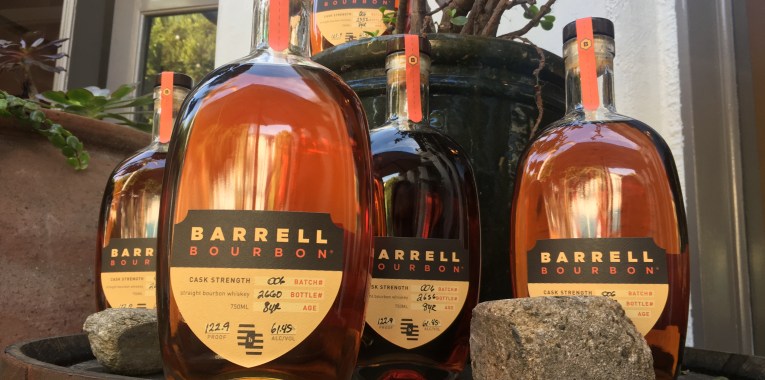
Enter Joe Beatrice and Barell Bourbon. Transparency is the name of the game here. He is completely open about the fact that he is just a blender and bottler. The goal is to create a unique product that stands on its own, just like those Independent Bottlers. And in a world where age statements are dropping dramatically from labels left and right, the age statement is front and center and keeps climbing. And he keeps winning awards.

No sense in bottling it if the whiskey isn’t any good.

Though each batch varies there are two constants. Each bottle is Barrel Strength. This is whiskey straight out of the Barrel uncut by water. High Proof Spirits. The second is the quality. No sense in bottling it if the whiskey isn’t any good. Everything else they can tell you they will.

Batch 6 is 8-year-old Bourbon distilled in Tennessee and aged in Kentucky, which already makes it unique. Joe can’t legally tell you where it’s distilled but with only two large scale distilleries in the state and a mashbill of 70% corn, 25% Rye and 5% barley it’s probably being made at George Dickel. And He recently moved all of their aging to the warehouses at the Old Taylor Distillery, which is different from the old Taylor brand which the distillery doesn’t own the right to. The Bourbon world is weird.

So we’ve got a big ballsy bourbon that has coated ripe dark cherries with a layer of dusty, earthy nuttiness reminiscent of some of the best stuff from Willet and Heaven Hill. It’s a massive flavor that drinks far more mellow than it’s 122.9 Proof would suggest. It’s a great reminder that there’s more to the magic of a spirit than marketing and who owns the still. Sometimes, there’s a magic that needs that outside touch. As long as you’re honest about it.

Alexander Murray and Friends

“Good friends, good books, and sleepy conscience: this is the ideal life.” ~ Mark Twain

I’d personally add good booze into that mix but starting with Twain is never a bad idea, he weaves a good story. But the problem lies in what kind of story are you trying to tell with your whisky? Are we telling a historic tale? That would start with the founding of the Caol Ila Distillery in 1846.  But that’s a little dry.

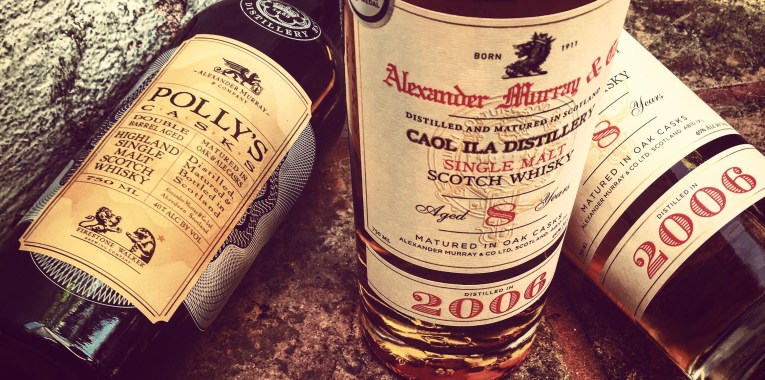
It could be a business biography. That starts in 2004 with the creation of Alexander Murray. An essential newborn in the world of independent Scotch bottlers they took a different tact. instead of focusing on small, rare bottlings they focusedIMG_0783.jpg on volume. If you’ve ever noticed that the hosue labeled Scotch whisky at Trader Joe’s and Costco was surprisingly good, that’s because it came from these guys. But business is so impersonal.

Except it’s not. While moving volume, and checking history the gang at Alexander Murray made friends. And that allowed them to grow and bring out more quality under their own label. Take their 8 Year Old Caol Ila. Some may argue that it’s an unnecessary bottling with the quality the standard issue 12 year has. But they’re like two small town friends who move away to different cities. Same underling base, but a heavier oak presence gives this a more NYC feeling bite versus the original delicate, seaside village feel that Caol Ila usually has. But even more than that’s it’s opened their eyes to larger collaborations.

Yet another friend is David Walker, of Firestone Walker Beer. Working together they took 60 barrels used for aging the Firestone DBA and finished 6-8 year old single malt in them for another 3 months to a year. The resulting ‘Polly’s Cask’ is a complex melding of friendships, even just in the character of the whisky. Beer and Whisky are natural friends, and the barrels linking them here started as ex-Bourbon, turned into beer, and then finally into Scotch barrels. If that’s not a sharing between friends I don’t know what is. The result is an exceptionally nutty malt.

Both are a great example of the best times with friends. An everyday encounter, and a special occasion, too. And as I tell my friends all the time, I don’t care what you drink as long as you drink it with me. 

Auchentoshan Three Wood Single Malt Scotch Whisky

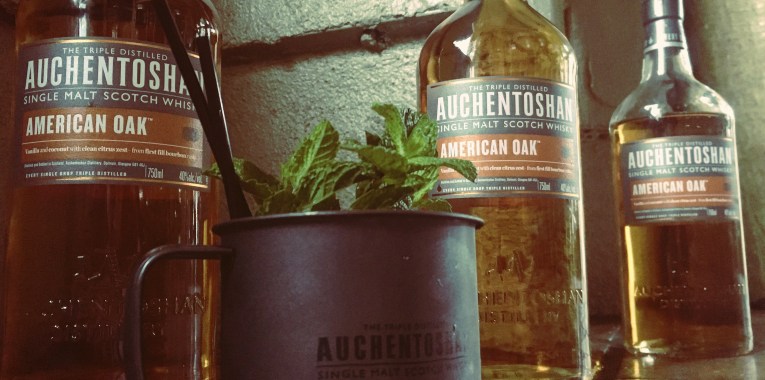
Happy accidents are all around us. They often start simple. You wander into a bar, look around, find yourself presented with better than average options, and end up with a glass full of Auchentoshan, which is surprisingly light and delicate, but with enough complexity to be no accident.

Then there are the not so simple accidents. Like the quirks of history that created the style of whisky now swirling in your glass.  Auchentoshan is one of the last remaining Lowland distilleries in Scotland, a region with a style as unique as it’s Speyside and Islay cousins, yet wholly unusual in scotch making and is fully created by the accident of it’s location. Founded in 1823 by Irish refugees on the outskirts of Glasgow it’s seen the city rise into an industrial complex, the bygone glory days of it’s shipbuilding and engineering prowess, and is still tucked away in it ‘corner of the field’ watching the trade city grow more
cosmopolitan. All of these pieces come together. The shipping and trade gave massive Clyde-Shipping-Glasgow1.jpgaccess to barrels of all kind for excellent aging but more importantly the whisky itself was primed for bigger barrel interaction by the influence of those Irish refugees and their tradition of Triple Distillation. Coming off the stills at a higher proof leaves the raw spirit lighter and more ready to soak in the plethora of barrels floating in and out of the port city.

And then there are the literal accidents. Years ago, the Head Distiller Jeremy Stevens was working on a batch of sherry finished malt. It had already spent time in ex-Bourbon barrels, and had been aging in Olorosso Sherry casks. After the initial dump he felt it need some more time in the sherry wood, ordered the malt to be rebarreled and left for a trip out of the country. When he came back he found that instead of Olorosso it had gone into Pedro Ximenez sherry barrels.Rather than losing his job the distillery discovered one of their most popular expressions: The three wood..

So, the accidents of place, time, history, barrels and communication have granted you a glass of delicate, rich toffee, with candied plums, blackcurrents and a hint of hazelnut. So let’s raise a glass to accidents. May they be few and happy.


Buffalo Trace and Pants

Why do we leave the house? Between digital streaming and the sharing economy everything you could ever want is right there or can be delivered at the push of a button. Human socializing has been digitized and depersonalized. Entertainment can, and will, cater specifically to you, and the Internet will connect you to anyone in the world. So, why go out?

I personally like to believe it has to do with experiencing the world. That to bring back a true story to the digital marketplace enriches yourself and the people you’re sharing with. It still doesn’t explain why we gather to drink fermented beverages, laugh, talk, and be merry. Some things are just for fun. But they should still be an experience.

I like to call it the, “You Put On Pants” Philosophy. For whatever reason you decided to get up of the couch, put on pants, and come to the bar instead of watching Game of Thrones reruns. Let’s make it worth your while. Let’s get you something that can’t be delivered straight to your doorstep. In this case with a whiskey you can’t get anywhere else.

“You Put On Pants Damn It”

Buffalo Trace isn’t hard to come by. Even though the brand was only created in 1999 the Bourbon Boom and the fact that it is a quality whiskey has made it a nearly ubiquitous bottle. What makes this ‘pants worthy’ is its single barrel nature. After tasting through several samples we bought all of the whiskey inside of the barrel. The only way to taste this version of Buffalo Trace is right here with us. It has the familiar backbone but with a massive dollop of orange marmalade, a spicier pop and super rich vanilla.

It’s not an earth shattering difference but it’s enough to stay interesting. Both for you leaving the house and us coming into work. This isn’t our first barrel and it’s by no means our last. So, we’ll hopefully being seeing you through several pairs of pants.

Sazerac Straight Rye Whiskey

What’s in a name? A Sazerac by any other names is a…rye? A cocktail? A Coffee House? A long defunct cognac? Language is a funny thing.

When we say ‘cocktail’ these days it tends to be as a catchall for ‘mixed drink’ but that’s essentially the equivalent of calling all steaks fillets. A cocktail is a very specific type of drink made from spirit, sugar, bitters and water, usually in the form of ice. Or as it’s often called today: an Old Fashioned.sazerac.jpeg

And just like today where you may call for a Elijah Craig Old Fashioned, you would have called for a Sazerac Cocktail, made with cognac from Sazerac-du-Forge et Fils which was imported by the Sazerac House in New Orleans. Being very French the New Orleans drinkers loved to ‘improve’ up their cocktails with just a dash of absinthe and Bam! A Sazerac Cocktail.

But at the turn of the century the phylloxera plaque struck Europe wiping out old vineyards laying waste to innumerable wine and cognac house. As the supply of cognac dwindled, New Orleans drinkers turned to what was readily available to them: Rye Whiskey and gave birth to the Zazerac. Yes, Zazerac with a Z. Language is fun, and by distinguishing the proper names drinkers could quickly indicated whether they wanted the brandy or the whiskey version. Confused? You’re probably not the only one. In the Artistry of Mixing Drinks by Frank Meir published in 1934 he says, “Note. – there is much confusion between the ‘Sazerac’ brandy cocktail and the ‘Zazerac’ cocktail originally made in New Orleans.” So the ‘Zazerac’ name gathers dust while the actual drink gathers steam.

“Note. – there is much confusion between the ‘Sazerac’ brandy cocktail and the ‘Zazerac’ cocktail originally made in New Orleans.”

Time passes and a new Sazerac house rises, this time an American Liquor Company named that owns and distills Buffalo Trace and a myriad of other bourbons, but also an Eponymous Rye Whiskey named: Sazerac. And it’s damn good. Bright, crisp apple, dry rye spice, with a touch of that southern air on the nose. But is it Sazerac? In name only.

In honor of the spirit of the spirit, share a few Sazerac Zazeracs tonight