Quarantine Bottle Kill #9: Elijah Craig 12 Year (From Long Ago In The Before Time)

There’s a sense of static in the air these past few weeks of quarantine. Not of any sense of normal but certainly of familiarity. A sense of sameness and of the world outside the familiar walls drifting away. But also there’s that electrical charge like anything can and could happen at any moment.

The world seems to be looking for answers and I’m sitting here working my way through old booze and writing about it.

It is a way to help keep my sanity. Beyond it being something from the Great Before that I enjoyed it’s also been an avenue for self reflection and rumination.

It’s mental travel.

Placing myself in the place, time, and person that I was when this bottle joined the collection. No spirit allows me to check in with myself and chart my trajectory more than Elijah Craig.

Elijah Craig 12 Year Bourbon was my first true Bourbon love. I’m not going to say that it “got me into whiskey” but it certainly helped expand my understanding of what good Bourbon could be. When I started buying barrels for my program Elijah Craig was the first barrel I bought. And I kept buying barrels. Even after the aged statement was dropped. It is a benchmark Bourbon and the numerous barrels arriving over the years have given me an excuse to examine the years as they pass.

But as time goes on and the age has changed and after so many barrel selections I forgot what old school Elijah tasted like. Was it inflated in my mind? Was the memory of who I was when I discovered it altering the actual liquid? Am I drinking nostalgia flavored whiskey?

So how fortunate was I to discover a bottle of standard issue  Elijah Craig 12 Year Old from 2012 hiding in my closet. This bottle is from when my career shifted from being a bartender to a Bar Manager and when so many of my early influences and opinions crystallized. Here is a liquid opportunity to examine the past.

NOSE: Caramel, Oak, Apricot, Tilled Soil
PALETE: Toffee, Vanilla, Baked Apples, Baking Spices, Earthy and Deep
FINISH: Long, clean, spicy with a hint of white pepper. Drying to a lingering woodyness

This dram is deep and powerful. It is what I have idolized for years. While the NAS Elijah Craig is a very good Bourbon this old 12 Year has a maturity, for lack of a better word, that its descendant does not. 

And while the Elijah Craig Barrel Proof releases are still 12 Years old the much higher proof gives an edge that here is softer and more nuanced.

This is a dram for deep thoughts and late night conversations. It’s also a perfect example that things don’t stay static forever. Eventually all things change.
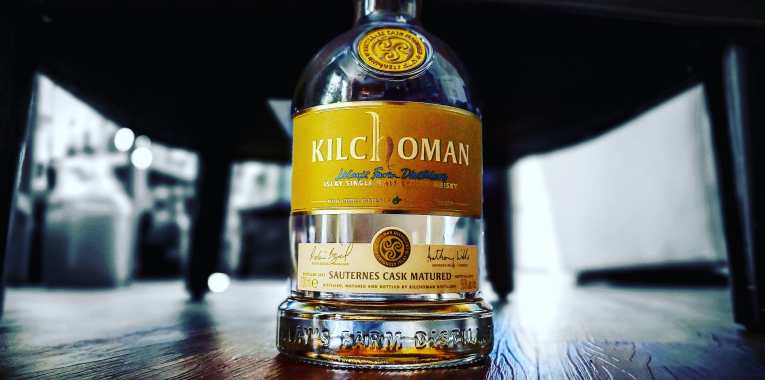
Quarantine Bottle Kill #8: Kilchoman Sauternes Cask Matured (2016)

It feels like the quarantine weeks are quickly going up in smoke. That’s probably because half of the home bar is Islay Whisky right now. Is that a forced transition? You bet it is.

I thoroughly enjoy heavily peated whisky. I often use Octomore as an example of just how good a Scotch Whisky can be and it doesn’t get any peatier, or more over proof, than that. Yet for all my love of the smoke finishing a bottle of heavily peated whisky rarely shows up on my list of achievements. That’s because drinking an Islay is a state of mind.

Drinking a good Islay transports me to rocky ocean beach in the evening. The campfire has just sputtered out and there’s a hint of rain in the air. But for now I can see the stars and wonder about my place in the universe.

Unlike its Highland brothers the island of Islay firmly embraces the one trait most people claim to hate about Scotch: the peat. Being aggressively peated, Islay Whiskies have an earned reputation of being an acquired taste. Sipping on a truly great peated whisky cause the taste buds to expand, the mind to slow, and an introspective nature to descend on the evening. At least it does for me.

Millions of drinkers across the globe have acquired this taste which have given Islay Scotch a cult like following. They are devoted but it does make it hard to break into the old boys club.

Enter Kilchoman. The first new distillery on Islay in 124 years this distillery, and its whiskies, came out of the barrel swinging. They began production in December of 2005 with their inaugural three year old whisky released in 2009. Since then they have racked up an impressive reputation and managed to take a seat at the clichy Islay table. They are also one of only a handful os Scotch distilleries using traditional floor malting on site as well as growing all of their barley on Islay at local farms.

One of the nice things about being the new kid in the old club is there is no tradition that you must adhere to. This gives Kilchoman a lot of room for experimentation. Like with their Sauterns Cask release. There have been a few different release but this was from their first offering in 2016.

Distilled in 2011 and bottled in 2016 this this 5 year old malt was completely aged in ex-Sauternes wine casks. Now, I clearly have a thing for malts that are finished in wine casks. So, how does a fully wine cask matured malt measure up?

NOSE: Buttery, with a hint of dried oranges and a misting of peat and sea salt
PALETE: Sweet apricot, caramel, honeysuckle, baking spices, and a salinity melding with a wonderfully balanced smoke
FINISH: Lingering, long clean, with a touch of sweet exhaling into a mouthful of smoke

This is a beautiful dram that is again an adventure and an experience. It transports while drinking. The experience also takes me back to when this bottle was purchased. 

It was 2016 on my first ever trip to Europe with my brand new partner who has stayed with me all these years. So much has happened since then but as the last drops slide from this bottle after four years I will cherish every experience this dram has given me and every moment between purchase and completion.

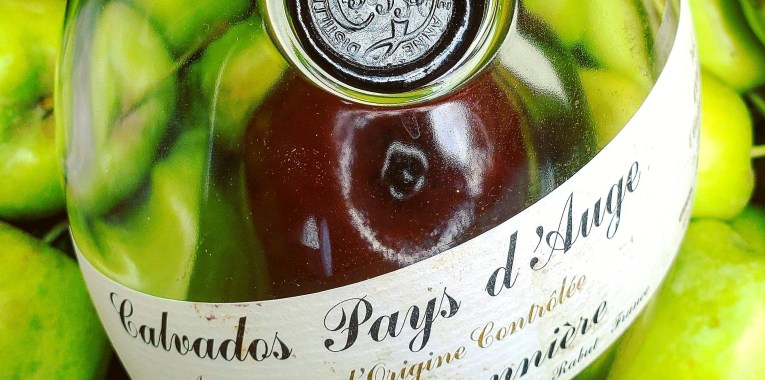
Quarantine Bottle Kill #7: Drouin Pomme Prisonnière

I think the biggest thing people feel they have lost from this whole quarantine is time.

Time lost on their career. Time lost to spend with loved ones. Even the time to simply plan. The future looks so uncertain that it filters back into the present spreading a malaise over each individual moment. And while there are many people hopefully planning for the future, bookings for cruises this fall are up 600%, there is certainly a sense of mourning for the past few months. Of time lost.

The dirty secret is of course that we never had time. Entropy constantly moves us along time’s arrow with the past ever distant and the future never truly more fixed than it is at this moment. All we ever hold in our hands is the present moment with hope and memory creating the expanse.

That’s why physical reminders of the past resonate with us so hard. And for me why spirits and open bottles have so much poetry. I can watch time pass in liquid form behind glass. And when it’s at its end I can reflect on the beginning and everything in between.

Take this bottle of Christian Drouin Calvados Pomme Prisonnière. It’s the perfect example time in a bottle. And this goes beyond the standard “aged spirit” metaphor.

It starts with an apple tree in spring.

Pink and white flowers cover the trees feeling the spring fever and hoping to be among the lucky 5% that are fertilized and grow into full, ripe, plump apples. During this time is when the carefully trained eyes of the Drouin and Alleaume families place 10-20,000 glass carafes over these budding flowers. Over the next several months the apple grows inside of its prison until in the fall the are harvested, cleaned, and filled with calvados.

Timing here is key. Put the bottle on too early and the flower won’t become fertilized. Put it on too late and you risk the new fruit being too large for the neck of the bottle. And that’s even before the mishaps that can happen during the months of growth. Even with nearly 40 years of experience spread across three generations only about 40% of the bottles are successful, and that’s a marked increase from the 5% success rate from their first attempts.

After that time marches on and the calvados in the bottle evolves and melds with its prisoner. The liquid evolves over time and the apple changes with a life time spent maturing inside a bottle and preserved in Calvados.

All of these facts combine for a pretty remarkable encapsulation of how a spirit, and a bottle, can capture time. But metaphors are truly meaningful when they become personal. No matter how fascinating the process of its creation is, it is its connection to my personal growth that has the true meaning.

This bottle was purchased nearly two years ago on an impromptu vacation in France. My well documented love of apple brandy led us to spend a night in Normandie specifically in Trueville and Deauville, mirror cities with mirror casinos. We had been connected with Herve Pellerin at Christian Drouin who picked us up from the train station on a rainy afternoon, drove us to the distillery and left us in the hands of Guillaume, third-generation Drouin and the brand’s current head distiller. We spent hours talking about distillation, harvest, bottling, and of course Pomme Prisonniere. 

This bottle isn’t a list of facts. It’s an experience. An experience that lead to my first professional gig as a writer by crafting an article for The Daily Beast about this Calvados experience.

So, I will savor the last drops of this bottle while examining these moments of time trapped under memory, while trapped in my home by an unseen virus, and contemplate how to free this Pomme Prisonniere from its glass prison.

NOSE: Cinnamon, apple, clove,
PALETE: Apple, apricot, honey, baking spice, oak
FINISH: Medium, semi-sweet, and a touch floral

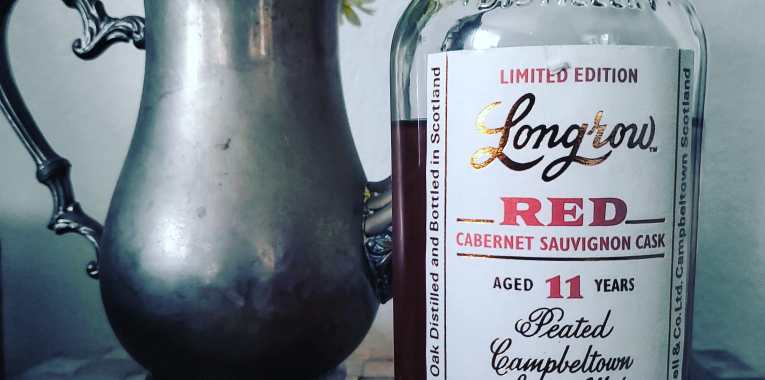
Quarantine Bottle Kill #5: Longrow Red 11 Year Cabernet Sauvignon Cask

Just because we’re in quarantine doesn’t mean that there can’t be a theme. Aside from sparking joy by eliminating bottles from the booze cart that is. So next up on the quarantine bottle list is the cousin to the last, the Longrow 11 Year Red: Cabernet Sauvignon Cask.

For all single malts produced in Scotland the brand must be identified with the distillery. Hence the Macallan whiskey being made at the Macallan distillery, the Jura at Jura, Laphroaig at Laphroaig, and so on. This seems intuitive yet it’s absolutely not how things are done here in the US. While there are a few eponymous distilleries most of them produce dozens of other brands as well. For example, Jim Beam not only produces Jim Beam but Bookers, Knob Creek, Basil Hayden, Old Overholt, and the many variations there of. 

This makes Longrow rather unique as it’s brand but not a distillery. Part of the reason this is allowed under Scottish law is that the brand is intrinsically understood to be produced at Springbank Distillery and the name of the distillery appears on every bottle. Larged embossed letters proudly proclaim “Springbank” above every label. But also, the style of Longrow is drastically different than its cousin allowing for a true separation and not just a label change on the same liquid.

Longrow, unlike Springbank, is heavily peated. There is actually a scientific way to measure the “peatiness” of a Scotch. It’s called Parts Per Million, or PPM, and is used to determine the phenol level after kilning but before distillation. Essentially the longer the malted barley is exposed to the peat fire during kilning the higher the peat and PPM. Longrow clocks in at 50 PPM which means it’s technically even peatier than the notorious peat bomb, Laphroaig which clocks in at 40 PPM.

So, here is a heavily peated Campbeltown Single Malt with less than a hundred casks produced every year at a non eponymous distillery. If that’s not enough to peak your interest then the Cabernet Sauvignon Cask will. Every Longrow Red release spends some of its formative years in a red wine cask, similar to the recently emptied Springbank Burgundy. For this release it spent the first seven years in ex-Bourbon barrels and the last four in a Cabernet Sauvignon cask.

To cap it all off the Red is bottled at Cask Strength clocking in at a whopping 104 proof meaning none of those big flavors are lost.

NOSE: Assertive smoke, raspberry, cherry,
PALETE: Leather, sea salt, smoke, darker fruit, blackberry, a touch of sweetness and a strong tannic backbone
FINISH: Long and dry yet juicy. Reminiscent of sea air with those red fruits returning.

This is a complex little dram. There’s a beautiful salinity that provides the throughline for Longrow while the tannin and the fruit lent from the Cabernet Sauvignon cask shines through at almost every level without being overwhelming. Surprisingly, I actually enjoy this one with a little water in it. The high proof gets in the way of some of the more delicate flavors that I really enjoyed in the Springbank Burgundy that are also present here.

All in all, this bottle actually feels like a perfect quarantine metaphor: subtle yet aggressive, complex yet needing a bit of hydration, and packing a hell of a punch.

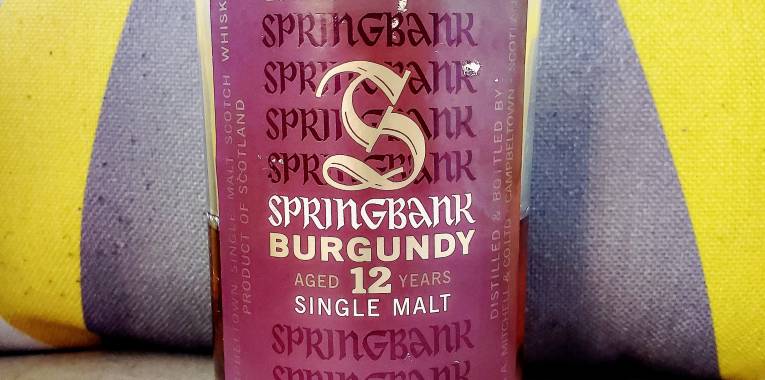
Quarantine Bottle Kill #3: Springbank 12 Year Cask Strength Burgundy

Springbank has always been a fascinating distillery to me. I intellectually love them. They are one of the last great Campbeltown distilleries. Located on Kintyre Peninsula, Campbeltown was once known as “the whisky capital of the world” with 28 distilleries packed into its borders. Today a measly three remain with one of them, Glengyle which produces Kilkerran, only releasing a single malt again starting in 2012.

All of this is to say that there is no Campbeltown “style” but when people refer Campbeltown style they are almost inevitably referring to the Springbank style. Especially since Springbank produces three distinct single malt brands: Longrow (peated), Hazelburn (triple distilled), and the eponymous Springbank.

What’s interesting to me is that the standard Springbank Single Malt isn’t particularly interesting to me. Love the history of the region and I love the nuances that make it a distinct malt but it’s never something I needed to keep a bottle of on the shelf. The Wine Cask finishes however are a different story.

Springbank releases a special edition 12 year old cask strength once or twice a year. These are usually met with great acclaim but the ones that truly peak my taste buds are their wine cask finished releases. The subtly and creaminess of the standard Springbank style plays wonderfully with the tannin and juiciness added from a used wine barrel. There’s also less of the sweetness that is associated with sherry or port cask finishes. Where sherry and port can often become the defining characteristic of a malt, here the red wine melds into the base flavors creating something larger than the sum of its parts while not overwhelming any part of it. 

These bottles tend to sit on my shelves begging for a special occasion and now every night ends up as a special occasion so let’s pour out this 12 Year Old Burgundy Cask.

This special release was bottled in 2016 at 107 proof after being aged in 1st Fill Burgundy Barrels and is everything I love about these style of releases from Springbank.

NOSE: Golden Raisin, Raspberries, Black Currant, Vanilla

PALETE: Plum, Apricot, Sea Salt, Leather, Honey, with a massively creamy mouthfeel

FINISH: Long, dry, slightly peppery, and a lingering oak

This is a truly breathtaking bottle. Literally, the proof, the flavors, the mouthfeel take my breath away on the first sip everytime I come back to it. And now it’s time to take the bottle away. Another sacrifice to social distancing.

Quarantine Bottle Kill #2: Woodford Reserve Rare Rye

The next victim of the Quarantine Bottle Count is the Woodford Reserve Master’s Collection Rare Rye twins from 2011. Yes, I’ve been sitting on two open 375ml bottles for nine years. Don’t judge me.

Let’s put this into context. Nine years ago rye whiskey was just becoming the hot item after decades of obscurity. And then here lands a pair of Woodford Ryes for $100. It was one of many signals that not only was Rye moving from the bargain category but that distillers and distilleries had been contemplating the move for a while.

The distillate is 100% Rye, probably a blend of malted and unmalted, triple distilled on the Woodford Pot stills and bottled at 92.4 proof. The only stated difference between the bottles is that one was aged in freshly charged new oak, just like Bourbon or American Rye legally must be, and the other is aged in reused Bourbon barrels. This technically makes it a rye “spirit” and not a whiskey.

What’s interesting to me though is that the New Cask is labeled as “Straight Rye Whiskey” with no age statement. Legally, this means that the “New Cask Rye” is a minimum of four years old. And as Woodford clearly says the only difference between the two bottles is the maturation process that means the “Aged Cask” is also four years old. 

Whiskey makers are accustomed to think in the long term. Production is measured in years if not decades but even then it seems a risky move to have distilled a 100% Rye in 2006-2007 even if it was meant to be a limited release. But the demand for rye has only gotten stronger in the past decade, clearly evidenced in Woodford having a dedicated Rye as part of it’s core line up in 2020.

As interesting as all of that backstory is, how does the whiskey actually taste?

AGED CASK RYE
NOSE: Grassy, Bready, with a touch of green apple
PALETTE:  Bright rye, a hint of vanilla and orange, honey
FINISH: Surprisingly Long, with a hint of mint and cinnamon, dry

NEW CASK RYE
NOSE: Tobacco, Honey, Vanilla, and oak
PALETTE: Cinnamon, deep baking spices, ripe apple, and leather
FINISH: Sweet, with a lingering oak and white pepper

Overall, these bottles are an fantastic example of the impact a barrel has on a distillate. The New Cask is 100% a rich, fully embodied rye while the Aged Cask is still young and fiery. It reminds me a lot of Mellow Corn, a personal favorite, but it could benefit from more time letting the flavors integrate.

They both unmistakably taste like Woodford. I’ve talked about this before but to me there is always a slightly undefinable, yet incredibly identifiable, characteristic to Woodford that I can only imagine comes from their Pot Stills. Both of these ryes carry that DNA.

Nine years after their release I’m not as excited by either of these bottles as I was when they first came out. But the world is a different place, the whiskey market is a different place, and I’m a different person.

While they’re not mind blowing whiskies on their own the weight of time evidenced in the aging and the drinking sits heavily with me as the last drops pour from the bottle.

Whiskey Wednesday: Take Off of Taketsuru

Continuing this month’s conversation about Nikka comes the news that Nikka will be discontinuing the Taketsuru 17, 21, and 25 Year old expressions as of March of 2020. While some stocks will remain under “heavy allocation” all three marks will no longer be listed by the company. The Nikka Taketsuru Pure Malt, a Non-Age Statement (NAS) edition that replaced the 12 Year old Taketsuru several years ago, will also be discontinued.  

While the loss of the age statements is lamentable, it falls neatly into the familiar story of aged stocks not being able to keep up with current demand for high end whisky. But the loss of the NAS Taketsuru Pure Malt comes as a bit of a shock. The NAS was originally released in late 2015 and was meant to address the supply issue. Then in 2019 it won Jim Murray’s Japanese Whiskey Of The Year. Add to this the discontinued Nikka Miyagikyo and Yoichi Single Malts in 2015 and the temporary interruption in supply of their Coffey Malt and Grain in early 2019 and the picture of a company struggling to match pace with demand while also seeking to define its core identity emerges. 

So, what exactly is being lost with the Taketsuru’s? 

The Taketsuru line was named after the company founder Masetaka Taketsuru. They have been the core of the Nikka line up for as long as I’ve been familiar with the brand.  They’re also incredibly representative of the Japanese blending style. Every bottle is the Taketsuru line is a Pure Malt which is an old term for Blended Malts. Not to be confused with a Blended Whisky. A Blended Whisky is made up of both single malt and grain whiskey. A Blended Malt is comprised only of Single Malts. In this case the Taketsuru’s are made from a blend of malts distilled at the Yoichi and Miyagikyo distilleries. 

Japanese Whisky makers often think of themselves more as blenders than distillers. They look to layer flavor by creating a blend of whiskies to create consistent and nuanced bottling. Take the Hibiki’s as a prime example. Suntory has repeatedly said that they consider the Hibiki to be the perfect representation of their art, both in terms of distillation but more as a blend. But while the Hibiki contains a fair amount of grain whiskey the Taketsuru line is comprised of big single malts.  

One of the advantages of the centuries old whisky tradition in Scotland is 100s of distilleries that are relatively friendly with each other. This means that if a distiller wanted to make a Blended Malt with a style of malt they didn’t distill themselves there was always another distiller that did who would be willing to sell or trade. When Masataka founded Nikka in 1934 as the Dai Nippon Kaju, Co. there was no one to barter with so if he wanted different styles to create a blend he had to distill them himself. 

This eventually lead to the creation of Nikka’s second distillery, Miyagikyo, outside on Sendai in 1969. This allowed for a greater depth of flavors for blending as well as over doubling the company’s production capability. Miyagikyo is much further south than its sibling Yoichi Distillery granting a different character as the whisky ages. We can expect to see more of this style of whisky from Nikka in the future as a planned expansion on Miyagikyo should be finished in 2021 with production expected to expand by 40%. 

As for the present, the Nikka Taketsuru 17 Year Pure Malt. Award the Best Blended Malt Award by the World Whiskey Awards in 2014 it’s a blend of single malts from both the Yoichi and Miyagikyo distilleries. Aged for a minimum of 17 years this is a powerful whisky. 

NOSE:  Fresh fruit, Cedarwood, Honey
PALETTE: White Pepper, Dried Fruits, Oolong Tea, A hint of smoke
FINISH: Medium to long, rounded smoke and with dark chocolate and leather

The Taketsuru line represents NIkka’s history. It pays homage to its founding father as well as combining the art of both of the company’s distinct distilleries. The loss of the Taketsuru line is the loss of a piece of history but it does open a future. Whisky, and in particular Japanese Whisky, is having an incredibly large moment. Bit even if whisky distilled 25 years ago is being depleted left and right the world, and the flavor, that whisky represents is gone. The challenge now is to find the way to create the spirit that fills the barrel to be bottled in 25 years while still keeping the lights on in the years between. 

Whiskey Wednesday: Nikka Days of Our Lives

I love a good story and Nikka Whisky certainly has a good story. A story of both an excellently crafted whiskey but also a phenomenal story in the life of the company’s founder, Masataka Taketsuru. The month of January is especially important to the story of Taketsuru and his redheaded Scottish wife, Rita. So I thought I’d take some time and look at a few of Nikka’s offerings for the rest of January. 

In 1918 Masataka Taketsuru was sent to Scotland by the Settsu Shuzo company to learn how to make whisky from the Scottish master craftsmen. The goal was to learn from the best, return home, and create a Japanese whiskey that would be on par with the best whiskies being produced in the world. The unexpected consequence was Taketsuru meeting Jessie Roberta Cowan, known as Rita, while teaching Judo to her brother Ramsay. 

In a time when “international” marriages were rare the two fell in love. Takatsuru proposed in September of 1919 and the two were married on January 8, 1920, exactly 100 years ago. After the marriage the two moved to Campbelltown where Taketsusru completed his apprenticeship. The two returned to Japan in November of 1920, partially due to Rita’s encouragement. Taketsuru had expressed a desire to stay in Scotland with his marriage to Rita but she disagreed. “We should not stay in Scotland, she said, “We should head to Japan. Masataka-san is living a big dream, a dream to make whisky in Japan. I want to live your dream together.” 

Upon their return to Scotland the landscape had changed. The post World War II depression had set in and the Settsu Shuzo company was no longer financially able to invest in new projects, like whisky making. When he left the company in 1922 he found a job, through a friend of Rita’s, as a science teacher. The following year he was offered a job at Kotobukiya to make whisky. 

The name Kotobukiya may not be familiar to Western ears but the company it grew into, Suntory, certainly is. While Masataka helped them produce their first whiskies from the brand new Yamazaki Distillery his first wide spread release was essentially a failure and Masataka parted way after fulfilling his ten year contract. 

In 1934 the couple founded the Dai Nippon Kaju, Co., literally the “Great Japanese Juice Company, in Yoichi, Hokkaido. The two said the Yoichi, more than any other place in Japan, reminded them most of Scotland. This endeavor was made possible by investors who were introduced to Taketsuru through Rita. Both of the primary investors had family that had taken private English lessons from Rita. With the help of these investors, and the production of many apple products in the early years, Taketsuru was eventually able to release his own whisky in 1940 winning much acclaim over the years and the company formally being renamed as Nikka Distilling in 1952. 

Sadly, on January 17, 1961 Rita passed away at the age of 64. She was buried on a hill overlooking the Yoichi Distillery and Taketsuru engraved both of their names on the tombstone promising they’d be together forever. 

As much as I love a good whisky making love story, I also love duty free shopping. There is always something unique and quirky to be found. But in a world where Japanese Whisky is in ultra-high demand, and age stated malts are disappearing daily even the unique duty-free offerings are drying up. Which is why, on a recent international trip, I was so surprised to find a bottle I had never seen before, the Nikka Days. 

The Nikka Days was released in 2018 and seems to be a response to all of the factors above that are pressing in on stocks of Japanese Malt. It is a blended whiskey made of lightly peated malt and grain whiskies from both the Yoichi and Miyagikyo distilleries. 

The brand says that it has always stood at the crossroads of between East and West, tradition and innovation. Saying that each day is a journey and an opportunity to learn from previous days, and that this whisky embodies that mentality. Hence the name. 

The whiskey is certainly result of the current journey of the whisky world. So how does it taste? 

NOSE: Apple, Orange Blossom, Vanilla, Melon 
PALETTE: White Chocolate, Toffee, Citrus, a touch of smoke, and fresh apples 
FINISH: Slightly sweet, bright, with a touch of creaminess 

It is certainly fitting that apples are so prominent on the nose and palette of this whisky. Ultimately this is a very serviceable whisky but it stands in the shadow of its history and the massive malts that Nikka is known for. The price point also makes it hard to justify as a day to day sipper but it is worth the journey to spend a few days with if you are traveling. 

Whiskey Wednesday: Blood Oath Pact #5

A couple of months ago I was graciously sent a sample of the new release of Blood Oath Bourbon. Between competitions, menu flips, leaving a job, and much needed vacation travel after leaving said job the sample unfortunately fell by the wayside. But with Halloween nearly upon us I figure it would be appropriate to crack open a little Blood Oath and see what it was about. 

Blood Oath is a brand owned by Luxco, Inc. a beverage producer and marketer based out of St. Louis. In addition to Blood Oath Luxco also produces Ezra Brooks, Rebel Yell, and distributes Yellowstone for Limestone Branch Distillery. While Luxco has sold bourbon for years they’re personal bourbon distillery, Lux Row Distillers, didn’t start production until January of 2018. Although their first year of production outpaced projections none of the whiskey they’ve distilled is old enough to be used for any of their brands meaning the Blood Oath is a sourced whiskey. 

Now, sourced isn’t a dirty word and while I wish Luxco was open about where they sourced the whiskey they at least are open about the fact that Blood Oath is sourced and blended. In fact, Blood Oath boldly claims that they are “loyal to no one family, favoring no one distillery, and bound by no one philosophy.” The cynic in me wants to say that’s marketing speak for “we can’t guarantee a source” but blending is an art form that can produce some spectacular bottlings so let’s take the idea at face value. The Blood Oath isn’t trying to create a consistent bottling but rather a unique, limited, yearly offering. So, what’s in the Blood Oatch Pact this year? 

Pact 5 is a blend of three whiskies a 13 year old rye Bourbon, an 11 year old wheated bourbon, and an 8 year old rye bourbon finished in Caribbean rum barrels. Bottled at 98.6 proof (the temperature of the human body) we don’t know the distilleries or the proportions of the blend but given Luxco’s working relationships it’s not too much, of a leap to assume that a lot of the whiskey comes from Heaven Hill. Also, considering the current state of aged whiskey it’s probably also fair to assume the bulk of the blend is the 8 year. This is noteworthy because it is this rum finish that really sets the Pact 5 apart from the previous four releases of Blood Oath.  

NOSE: Vanilla, Red Apple, Cherry, Brown Sugar

PALETTE: Wet oak, molasses, earthy, candied citrus peel, clove, and a touch of hogo

FINISH: Short to medium, orange, pepper, and oak 

The rum finish is surprisingly apparent once your mind is keyed to look for it. There’s a hint of that funk and brown sugar but without knowing it was a rum barrel I would have thought this was a slightly over oaked release. 

It’s a touch sweet, a little aggressive, and surprisingly oaky all around. It’s a style that’s leaning into heavily oaked, older American whiskies which is certainly on trend. People are looking for flavors that are unique, big, bold, and a heavy barrel influence can make a spirit pop out of the more mellow distillates. 

While the blend is interesting, I personally couldn’t justify the price point. At a suggested MMRP of $99.99 but often appearing on shelves at north of $110 I don’t know that it’s interesting enough to justify the “special occasion” pour of the price tag. This is something I’d rather sip, compare, and enjoy rather than store and dole out during the justifiable times that a 100+ dollar bottle usually enjoys. 

I ultimately find myself wishing I had more context for the Blood Oath. There’s nothing bad with the Pact 5, aside from my hesitation on the price, but I don’t see a through line. I’ve had several of the previous Blood Oath’s and can’t connect the dots between the Pacts. While it’s all well and good to not have a “favorite” I would love to see a point of view that makes this whiskey more than an experiment. 

Whiskey Wednesday: Four Roses’ New Selection

Conservatively, I would say that 87% of the Four Roses Single Barrel depletions at any bar I work at are due to it ending up in my mouth.

Conversely, my Partner-In-Bars, Dave Purcell, would rather sit in the pool with a bottle of the Four Roses Small Batch. I’ve sourced Four Roses Barrel Strength Single Barrels and have dived into the history of the distillery in the past. All of this is to say that I am a big fan of Four Roses and became very excited when they announced their first permanent product line extension in over 12 years. And immediately became wary when they announced that it would be called the Small Batch Select. 

Four Roses is one of the two great modern distilleries to emerge from the collapse of the old Seagram’s Empire. While Four Roses languished as a bottom tier blended whiskey for the later half of the 20th century it quickly became a staple of the new Bourbon Boom in the ‘00s when the distillery was purchased by the Japanese beverage conglomerate Kirin. Under the leadership of Master Distiller Jim Rutledge Four Roses became one of the most sought after Bourbon’s in the world. This was in part due to the process that Four Roses uses to make their whiskey.

Four Roses makes 10 different Bourbon recipes. And they’re all coded so you can tell what whiskey is being used in every bottle. For every code there are four letters, the first and the third will always be the same. The first letter will always be ‘O’, signifying that it was made at the Four Roses Distillery in Lawrenceburg, KY and the third letter will always be “S” meaning that it is Straight Bourbon. 

 The second letter will then signify that mash bill. Four Roses utilizes two different mash bills:

Mash bill E, which is 75% corn, 20% rye, and 5% malted barley
Mash bill B, which is 60% corn, 35% rye, and 5% malted barley. 

These mash bills are then fermented with one of five unique yeast strains, which is designated by the fourth letter: 

K – rich in spiciness, full bodied 
O – floral, spicy, medium bodied 
Q – slightly fruity, spicy, medium bodied 
F – herbal
V -delicate fruit 

The Single Barrel is always OBSV, high rye and delicate fruit. The Small Batch is a blend of four: OBSK, OESK, OBSO, OESO, and the standard Yellow Label is a blend of all ten. Special releases throughout the years have used different mash bills in different amounts. 

My initial hesitation upon hearing about the Small Batch Select was two fold. I’m just not as big of a fan of the Small batch as the Single Barrel and I didn’t know if it would be different enough from the Small Batch to warrant a new extension. So, what makes it different?

First up is the proof. Bottled at 104 Proof and Non-Chill Filtered the Small Batch Select is hotter than the Single Barrel which comes in at 100 Proof. Second, while there is no age statement Four Roses has said that it is a blend of 6-7 year old Bourbons. Lastly, that blend is a blend of six of the recipes: OBSV, OBSK, OBSF, OESV, OESK, and OESF. We still don’t know the proportions, but this brings in distinctly different flavors from the standard Small Batch. 

NOSE: Baking Spice, red fruit, and oak 

PALETTE: Vanilla, apricot, cinnamon, oak, and dark chocolate 

FINISH: Medium and dry, tobacco and leather 

This fourth Four Roses is truly distinct from its siblings. Enough to warrant its entry to the family. My initial skepticism came from the name yet upon further research and tasting its clear that this new entry is vastly different from the established small batch while still being a technical small batch. 

It’s also important to note that this is new Master Distiller Brent Elliott’s first permanent edition to the Four Roses line up since taking over in 2015.  Coupled with previous limited releases like the Al Young 50th Anniversary and the 130th Anniversary Small Batch I think we’re getting a sense of how Brent’s palette differs from Jim’s. 

While this won’t replace the Single Barrel for me it is a worthy addition that fans of Four Roses will love but is also a great introduction for new comers to the brand.