
I’m told my generation, (I refuse to say ‘Millennial’) values experience over material possessions. That a memory formed, or an adventure had is more important than the shiny new car. My intense desire for a Tesla would be my argument to that hypothesis but this experiential mentality is appealing and you can see it leaking into almost everything, including booze. There is definitely a trend towards one off releases and in the scotch world more small producers are creating blends not with the idea of creating decades long consistency but of constantly evolving smaller bottlings, aiming for consistent quality if not consistent flavor.
In the scotch world more small producers are creating blends not with the idea of creating decades long consistency but of constantly evolving smaller bottlings, aiming for consistent quality not consistent flavor.
Don Sutcliffe, of Sutcliffe and Sons, along with Willie Phillips, the former managing director of The Macallan, created The Exceptional Whiskies with this experiential philosophy at the forefront of mind. They say it outright. They’re not looking to create year-in, year-out consistency. They want each edition to be ‘individual’, ‘distinct’ and ‘memorable’. Since 2013 they’ve released 2 editions of the blended grain and their blended malt, and now they’ve got the first edition of their own blended scotch to add to the line up.
It follows in the same philosophical vein and draws on decades of experience and relationships. It takes grain whiskies from North British, Strathclyde and a 33 year old Cameron Bridge and blends them with single malts from seemingly all of Speyside including: Glenfarclas, Ben Nevis, Balvenie, Kininvie, Glen ddich, Alt- a’Bhainne, Auchroisk, Glenallachie,Westport, Speyside and a splash of 30 year old Macallan. Then all of that is finished in first fill Olorosso Sherry barrels. The result is fruity, rich, very light up front, with a honeycomb sweetness and a definite herbal nose.
So what’s the result? It’s good whisky. But is it any more than that?
 The cynic in me wants to say that the whole ‘unique experience’ is marketing talk for ‘we can’t get the ingredients to make this anymore.’ That it’s just another way to cash in on the whiskey boom. But looking at how long Don and Willie have been doing this it looks more like to men tired of doing the same thing day in and day out. It has the feel of wanting to find something new, to experience and share it. So what does the millennial in me say? That it’s not a generational thing. That it’s just a human thing.
 have that in common. But unlike myself Burns pursued poetry, and love, with uncommon zeal. The first collection of his poems was published by subscription in 1786. While writing most of these poems in 1785 he also fathered the first of his 14 children. He was a busy man. As his biographer DeLancey Ferguson said of him, “it was not so much that he was conspicuously sinful as that he sinned conspicuously.”
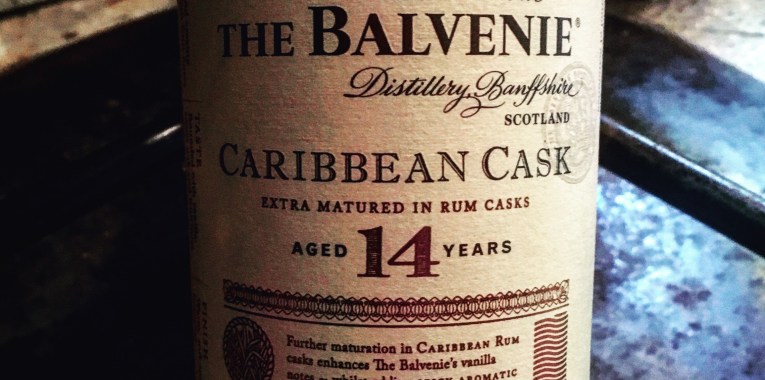
 Ninety years later, on the opposite side of Scotland, another farmer was setting out to form his own legacy in a distinctly Scottish way: by quitting his job. William Grant had just quit his job as a bookkeeper at the Mortlach Distillery and purchased the land and equipment to start his own distillery. On Christmas day in 1887 the first whisky flowed from the still of the Glenfiddich distillery. Glenfiddich essentially created the Single Malt category in the 60’s and 70’s, often using ads that created a cult of personality of around the whisky and that of Sandy Grant Gordon, William’s great grandson. The company has always been incredibly savvy and it’s no wonder that they are the number one selling single malt in the world.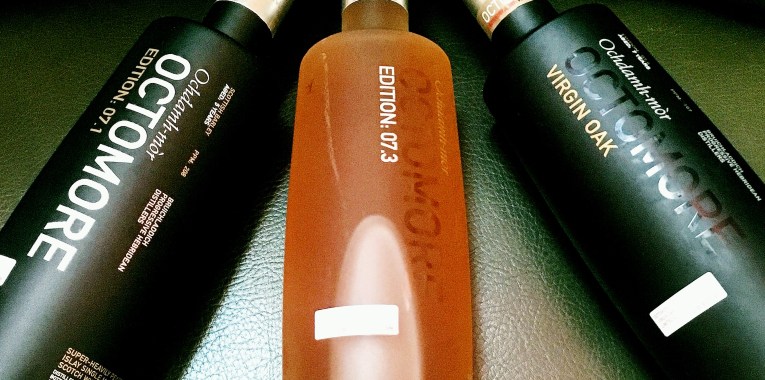
 The Octomore line sails in from the shores of Islay and the Bruichladdich distillery. Bruichladdich is old history with a new face with that spirit of this spirit running right back to its earliest days. When the distillery was founded in 1881 it was the height of modernity. A state of the art facility, especially when compared the distilleries on Islay at the time which were often just converted farm houses. Built right on the shore with uniquely tall and narrow necked stills the distillery managed to survive when many others failed. At least until 1994 when it was mothballed for being ‘surplus to requirements’.
 The Octomores are some of the most heavily peated whiskies in the world. Their phenol content (the scientific way to measure peat) have been as high as 238 but even in their “standard” range they are three times as peated as a Laphroig. Yet, even with all this smoke, and being bottled at cask strength, they avoid being one dimensional. They are sea salt air tinged with smoke and a threat of rain in the air once the sun has set while I’m reading by the fire.
 on volume. If you’ve ever noticed that the hosue labeled Scotch whisky at Trader Joe’s and Costco was surprisingly good, that’s because it came from these guys. But business is so impersonal.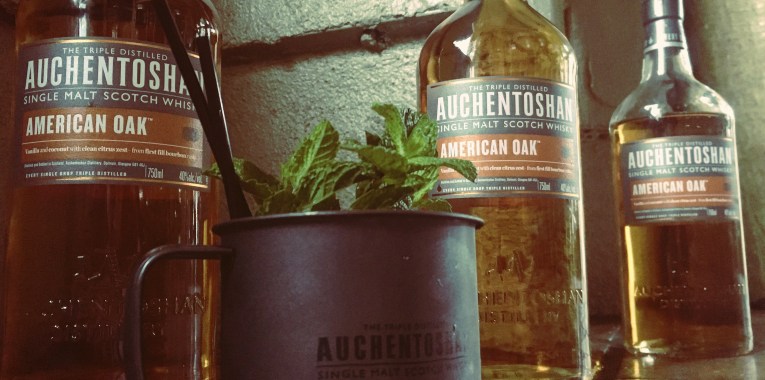
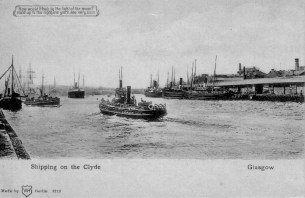 access to barrels of all kind for excellent aging but more importantly the whisky itself was primed for bigger barrel interaction by the influence of those Irish refugees and their tradition of Triple Distillation. Coming off the stills at a higher proof leaves the raw spirit lighter and more ready to soak in the plethora of barrels floating in and out of the port city.
 Bottled In Bond LA