Welcome to Burns Night. The annual celebration of the life and death of Robert Burns, the National Bard of Scotland and has an almost cult like following as a cultural folk hero. Not a bad legacy for a man born a poor Scottish farmer and who only lived to the age of 37.
Burns was born in 1759 and wrote his first poem after falling in love at the age of 15. He and I  have that in common. But unlike myself Burns pursued poetry, and love, with uncommon zeal. The first collection of his poems was published by subscription in 1786. While writing most of these poems in 1785 he also fathered the first of his 14 children. He was a busy man. As his biographer DeLancey Ferguson said of him, “it was not so much that he was conspicuously sinful as that he sinned conspicuously.”
Burns was immediately lauded through out England and Scotland as a “peasant-poet” and he took that success and used it to celebrate and preserve Scottish culture. Most of his poems are all written in Scots and document traditional Scottish culture. He also preserved folk songs. You can blame ol’ Rabbie Burns for why you know the words to “Auld Lange Syne” even if you don’t know the meaning. The song, which is about remembering friends from the past and not letting those times be forgotten actually has nothing to do with the holidays but is a perfect example Burns’ work. He celebrated life, love, friendship and drink all with humor and sympathy. His legacy is writ all over Scottish culture. Bobby Burns is as distinctly Scottish as the countries whisky.
 Ninety years later, on the opposite side of Scotland, another farmer was setting out to form his own legacy in a distinctly Scottish way: by quitting his job. William Grant had just quit his job as a bookkeeper at the Mortlach Distillery and purchased the land and equipment to start his own distillery. On Christmas day in 1887 the first whisky flowed from the still of the Glenfiddich distillery. Glenfiddich essentially created the Single Malt category in the 60’s and 70’s, often using ads that created a cult of personality of around the whisky and that of Sandy Grant Gordon, William’s great grandson. The company has always been incredibly savvy and it’s no wonder that they are the number one selling single malt in the world.
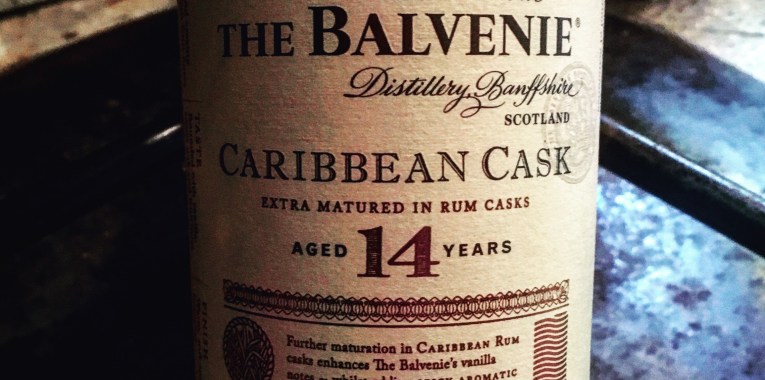
But when you are that large its hard to say that you truly have a cult following. That status today falls to Glenfiddich’s younger distillery sibling, Balvenie. Founded by William Grant a mere five years after Glenfiddich, Balvenie has always been the more experimental of the children. Balvenie is still 100% traditionally floor malted, and just like Glenfiddich they still have a Coppersmith and Coopers on site on site to keep the whole process in house. But I know people who would never touch a bottle of Glenfiddich perk right up at the mere mention of Balvenie, especially if we’re talking about the 14 year old Caribbean Cask.
The Caribbean Cask is a 14 year old single malt that has been aged in traditional oak casks, primarily ex-Bourbon, and then finished in casks that once held Caribbean Rum. These rum casks are American Oak casks that have been filled with a blend of West Indian Rums crafted by Malt Master David Stewart. Once Stewart deems the casks to be correctly seasoned the rum is dumped and the 14 year old malt whisky is added to receive its finishing touches. How long exactly is a “finish’? Well, until it’s finished, but generally about 6 months.
The result is a whisky that is massively vanilla and oaky with an evolving fruitiness and just an edge of the hobo funk that you find in truly great rums. It is flavorful without being overpowering and adds a sweetness that livens up that heavy malt that turns many people off of Scotch whisky. This whisky feels right at home in that ultimate of Burns Night celebrations: the Burns Supper.
Burns Suppers range from strenuously formal gatherings of esthetes and scholars to uproariously informal rave-ups of drunkards and louts. I’ll give you one guess as to which category I fall into. Most end up right in the middle and will follow the time honored form which includes the eating of a traditional Scottish meal, the drinking of Scotch whisky, the Toast to the Lassies, the responding Toast to the Laddies, and the recitation of works by, about, and in the spirit of the Burns.
Tonight I will be providing you with the whisky, but my brother will be providing you with the poetry. I don’t know if he wrote his first poem after a lovelorn night at the tender age of 15, but he certainly pens a verse worthy of raising a glass:
For Wintergreen Gorge
Once, illegally, on a train track bridge,
We sat with a handle a whiskey and three
Water bottles a gin, and I watched a gall midge
Land on your cheek and watched you brush it free
with your hand. Now what’s the use in holding
When we can sip and we can sit with our
Laughter and the iron and the wood to
Water sinking? Your hands get lost in folding,
Smoothing, and re-creasing the small flower
On the hem of your dress, and then you lower
Your eyes to wonder what we could do.
~Jacob Fournier


 personally disagree.
 ld Grand Dad’s mashbill in an effort to make it taste and feel like those ‘old style’ distillers in an effort to appeal to the new drinkers.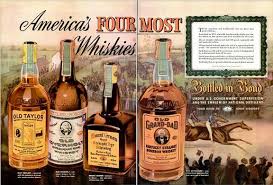

 e did have keys to a bonded warehouse where they aged whiskey and was known to “sample” barrels. Sample- read: pilfered. Despite his acts of theft being well known Fitzgerald kept his job. In fact, the company started calling particularly good barrels “Fitzgeralds” and ended up naming a brand after him, all bottled from only the best barrels. After Prohibition the brand was sold to Pappy Van Winkle where it became his flagship brand at Stitzel-Weller.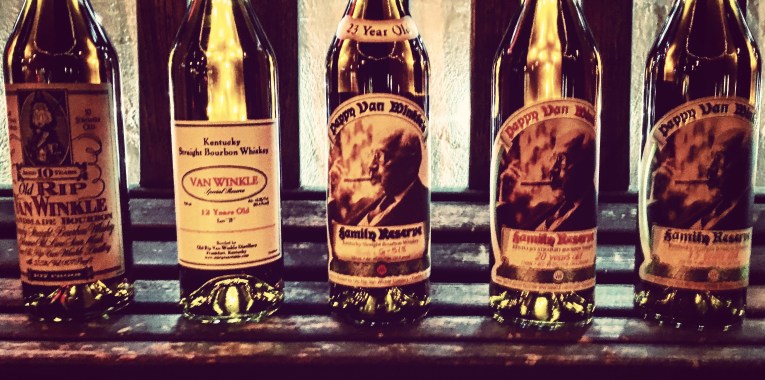
 Julian “Pappy” Van Winkle was a real man. He was involved in the whiskey business well before prohibition. He and his partner, Alex Farnsley purchased a controlling stake in W.L. Weller and Sons in 1908. At the time Weller and sons was strictly a bottler. They distilled nothing themselves but worked very closely with the Stitzel Distillery.
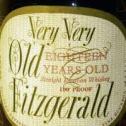 Pappy’s flagship brand was Old Fitzgerald. His biggest contribution to his namesake Bourbons is his “whisper of wheat.” Every brand that came out of Stizel-Weller was a “Wheated” Bourbon as opposed to the standard mash of corn, rye, and barley. To many this produces a rounder, softer bourbon with more dark fruit and cherry.
 In the end, the cold hard fact about why Pappy Van Winkle is considered the best Bourbon in the world is because people keep saying it is. And because people keep making money off of saying it is. Those who don’t learn from history are doomed to repeat it. Think about that the next time you see it listed on someone’s menu for $150+ a pour, and maybe find a bartender you trust to help you drink your next history lesson.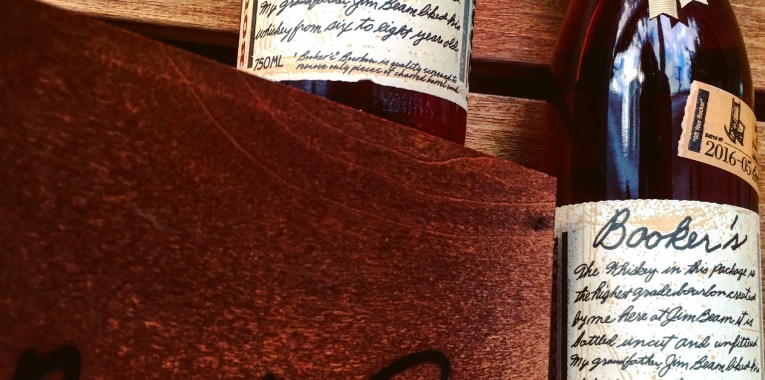

 any good. Just like being big and global doesn’t necessarily negate your quality and attention to detail. Everyone wants to start a distillery these days and I’ve got one piece of advice for you: wait. The quality of product being produced right now can’t support the number of “craft” products being produced and in about five years there’s going to be a glut of distilling equipment available for pennies on the dollar.
 FEW has always had a delightful self awareness about the fact that they’re just making booze. The distillery name gives rise to a myriad of word play about having a FEW drinks, etc. But it’s also a nod to the distilleries home in Evanston, right out side of Chicago, which was a major staging ground for the Woman’s Christian Temperance Movement and the home of woman’s suffragist and prohibitionist France Elizabeth Willard. That playfulness carries over into their rye.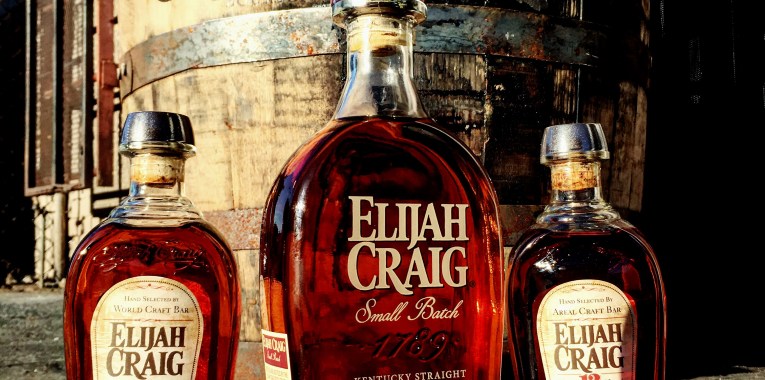
 After the war he helped lay out and plan the city of Lebanon, Virginia which eventually became Georgetown, Kentucky as the state lines and city names changed to reflect a growing country and their pride in their first President. Our Preacher founded some of the first mills west of the Appalachian Mountains that produced cloth and paper. He was also a big proponent of education. Founding the first classical school in Kentucky in 1787, which was than linked to the Rittenhouse Academy in 1798 with the help of land donated by Craig. Rittenhouse eventually morphed into Georgetown College, not to be confused with Georgetown University. He also happened to found a distillery.
 amed and marketed after the dubious claim of our good Preacher as the Father of Bourbon, the whiskey was nevertheless damn good. While “small batch” has never been a regulated term Heaven Hill has always stood by the fact that their Elijah Craig brand is never more than a 200 barrel dump per batch, which is more than most distilleries can actually distill but at least there is a number to the claim. It was also always 12 years old, which put it actual years ahead of most of it’s premium competitors.
 12 years blasted out large on the label gave it a gravitas and a certain definitiveness in what the benchmark of flavor should be. Heaven Hill insists that the new “Small Batch” Elijah will always be a blend of 8-12 year old bourbon and that the change allows them to maintain the Barrel Proof at 12 years old and eventually increase supply of the highly lucrative and delicious 18 and 23 year old single barrel variations, but it still feels like a loss.

 ted Distillers became a part of Diageo in 1997 when Guinness merged with Grand Metropolitan they seemed rather interested in divesting themselves of the American whiskey holdings, going so far as to sell their only active distillery, the Bernheim Distillery, to Heaven Hill in 1999. Yet they held onto a massive amount of stock that they continued to age, selling it out on contract and in bulk but not making any personal use of it. They were seemingly content to let it get older and older.
 consumers are expressing greater interest in the origin of their spirits, what the mash BILL is, how it’s aged, all of the nitty gritty details- here comes a brand actively hiding its history. Even the names them selves, Old Blowhard, Gifted Horse, Rhetoric, seemed to be thumbing their noses at people who ask too many questions.
 Bottled In Bond LA