Let’s get meta.
I run a blog, which you’re currently reading, called Bottled In Bond, LA. I write about bartending, cocktails and spirits, primarily whiskey but occasionally not. I’ve been doing this for a few years now and occasionally old articles will suddenly get a few more views because someone Googled a bottled in bond product that doesn’t exist. You would not believe how many people are looking for a bonded Chartreuse.
About a year ago, I noticed a huge spike in an old article about Woodford Reserve. It was getting a Google search almost daily for a month. I became curious, did my own googling, and found a single Reddit post about a Woodford Bottled-In-Bond but not much else.
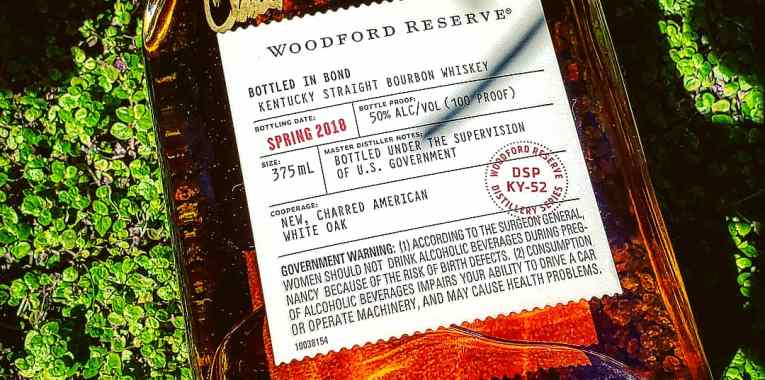
After asking around with no clear answers my friend Luke Ford, who works for Woodford, returned from a visit to Kentucky with a .375ml bottle signed by Woodford Master Distiller Chris Morris. A distillery only release of Woodford Reserve Bottled In Bond.
My natural hoarding instincts took over, it went on the shelf and remained unopened for the past year. But why? I’ve always maintained that whiskey is meant to be drank, to be experienced, and after all the curiosity that lead to me actually receiving a bottle shouldn’t I be curious about what the whiskey actually tastes like? So, I opened it.
NOSE: Super oak, straw, light stone fruit
PALETTE: Caramel, cinnamon, baked peach pie, with a touch of the metallic pie tin
FINISH: Bright, quick, and surprisingly light for the extra proof
This bottle tastes exactly like what I would expect a Bonded Woodford to taste like and that is incredibly interesting to me because by all right’s it shouldn’t.
The Bottled In Bond Act of 1897 states that to be bottled in bond a product must be produced by one distiller at one distillery within in one 6-month distillation “season.” It must also be aged in a federally bonded warehouse for a minimum of four years and bottled at 100 proof.
It’s the one distillery requirement that makes this interesting. The traditional bottle of Woodford is made up of spirit from two different distilleries. Column Still distillate from the Brown Foreman Distillery in Shively, KY and Pot Still distillate from the Woodford Distillery in Versailles, KY. This bottle only caries the DSP Number, essentially the distillery address, for the Woodford Distillery. Meaning this should legally be only the pot still whiskey. Which to me says there should be a bigger flavor difference. In a way it’s almost impressive that this really does just taste like Woodford.
Part of what I love about Bonded whiskey is how clear cut it is. You always know the exact distillery, proof, and process whenever a product is bottled in bond. It strips out a lot of the mystery and marketing from a brand. It was an often overlooked mark of quality on affordable whiskey. And yes, the category is seeing a resurgence and premiumization in the past few years, however these are often just upscaled versions of existing brands. They aren’t bad but they are a sign of the times and they are familiar.
This Woodford Bottled In Bond clearly falls into this ongoing trend but this bottle also raises questions for me. Is the labeling on this very small run inaccurate or have I always overestimated the impact of the column stills on the final Woodford profile? It’s made me think about Woodford in a way that I honestly haven’t in years. I don’t have an answer to these questions but at least it’s something to ponder over the next glass.
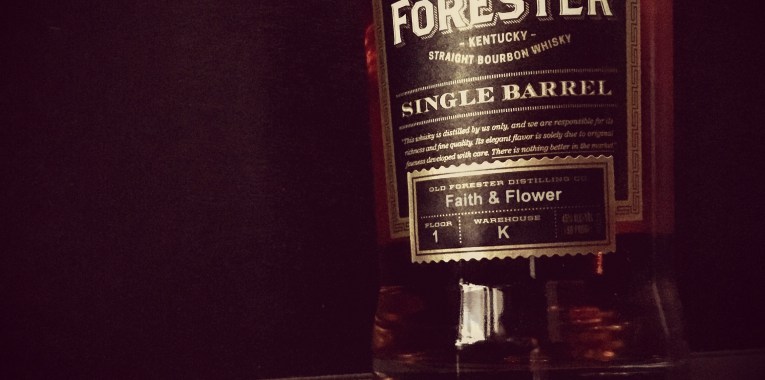

 The single barrel offerings are at a solid 90 proof, one of the things that set them apart from the standard bottles, but the color scheme on the new label is an almost complete palate swap. Where the normal Whiskey Row bottles harken back to the old white/cream style labels of the brands history the new single barrel is jet black with silver lettering. And clearly looking to scratch the whiskey intelligentsia’s need to know everything the rickhouse and floor where the barrel aged are large and center.
 Let me explain. Despite not carrying standard Woodford I’ve always been interested in the Master’s Collection (and the rye but that’s a story for another time). The Master’s Collection is an ongoing series that first began in 2005. It is a once a year release that is always something experimental. It doesn’t always qualify as a bourbon, the mashbill might not meet the required limits or the barrel finishes might be outside the strict bourbon law, but they are always ambitious. And more interestingly they are supposedly whiskey produced only from the pot stills at the prime Woodford Distillery in Versailles, KY.
 I’m in love with the idea of all of these yet on the actual liquid hasn’t always lived up to those expectations. But those expectations aren’t always fair. The Woodford name can sometimes influence what you expect to be tasting. For instance, Brown-Forman used to distill the Rittenhouse Rye for Heaven Hill while their production was limited due to a distillery fire in the 90’s. Yet once Heaven Hill moved production back to their own distillery and Woodford released a rye that is pretty obviously a continuation of that Rittenhouse heritage I judged it more harshly simply because of that Woodford name.
 Bottled In Bond LA