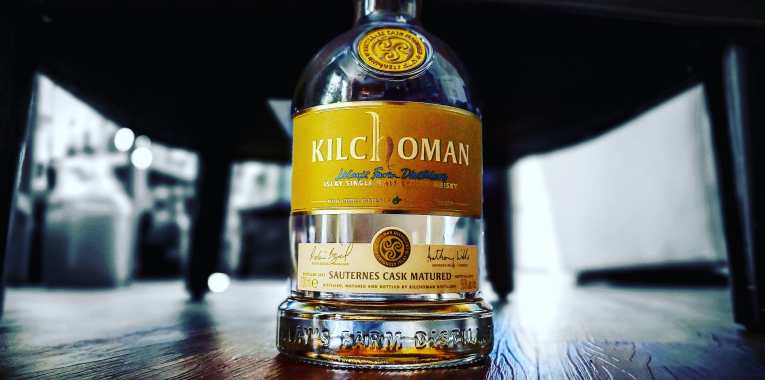
Quarantine Bottle Kill #8: Kilchoman Sauternes Cask Matured (2016)

It feels like the quarantine weeks are quickly going up in smoke. That’s probably because half of the home bar is Islay Whisky right now. Is that a forced transition? You bet it is.

I thoroughly enjoy heavily peated whisky. I often use Octomore as an example of just how good a Scotch Whisky can be and it doesn’t get any peatier, or more over proof, than that. Yet for all my love of the smoke finishing a bottle of heavily peated whisky rarely shows up on my list of achievements. That’s because drinking an Islay is a state of mind.

Drinking a good Islay transports me to rocky ocean beach in the evening. The campfire has just sputtered out and there’s a hint of rain in the air. But for now I can see the stars and wonder about my place in the universe.

Unlike its Highland brothers the island of Islay firmly embraces the one trait most people claim to hate about Scotch: the peat. Being aggressively peated, Islay Whiskies have an earned reputation of being an acquired taste. Sipping on a truly great peated whisky cause the taste buds to expand, the mind to slow, and an introspective nature to descend on the evening. At least it does for me.

Millions of drinkers across the globe have acquired this taste which have given Islay Scotch a cult like following. They are devoted but it does make it hard to break into the old boys club.

Enter Kilchoman. The first new distillery on Islay in 124 years this distillery, and its whiskies, came out of the barrel swinging. They began production in December of 2005 with their inaugural three year old whisky released in 2009. Since then they have racked up an impressive reputation and managed to take a seat at the clichy Islay table. They are also one of only a handful os Scotch distilleries using traditional floor malting on site as well as growing all of their barley on Islay at local farms.

One of the nice things about being the new kid in the old club is there is no tradition that you must adhere to. This gives Kilchoman a lot of room for experimentation. Like with their Sauterns Cask release. There have been a few different release but this was from their first offering in 2016.

Distilled in 2011 and bottled in 2016 this this 5 year old malt was completely aged in ex-Sauternes wine casks. Now, I clearly have a thing for malts that are finished in wine casks. So, how does a fully wine cask matured malt measure up?

NOSE: Buttery, with a hint of dried oranges and a misting of peat and sea salt
PALETE: Sweet apricot, caramel, honeysuckle, baking spices, and a salinity melding with a wonderfully balanced smoke
FINISH: Lingering, long clean, with a touch of sweet exhaling into a mouthful of smoke

This is a beautiful dram that is again an adventure and an experience. It transports while drinking. The experience also takes me back to when this bottle was purchased. 

It was 2016 on my first ever trip to Europe with my brand new partner who has stayed with me all these years. So much has happened since then but as the last drops slide from this bottle after four years I will cherish every experience this dram has given me and every moment between purchase and completion.
Quarantine Bottle Kill #3: Springbank 12 Year Cask Strength Burgundy

Springbank has always been a fascinating distillery to me. I intellectually love them. They are one of the last great Campbeltown distilleries. Located on Kintyre Peninsula, Campbeltown was once known as “the whisky capital of the world” with 28 distilleries packed into its borders. Today a measly three remain with one of them, Glengyle which produces Kilkerran, only releasing a single malt again starting in 2012.

All of this is to say that there is no Campbeltown “style” but when people refer Campbeltown style they are almost inevitably referring to the Springbank style. Especially since Springbank produces three distinct single malt brands: Longrow (peated), Hazelburn (triple distilled), and the eponymous Springbank.

What’s interesting to me is that the standard Springbank Single Malt isn’t particularly interesting to me. Love the history of the region and I love the nuances that make it a distinct malt but it’s never something I needed to keep a bottle of on the shelf. The Wine Cask finishes however are a different story.

Springbank releases a special edition 12 year old cask strength once or twice a year. These are usually met with great acclaim but the ones that truly peak my taste buds are their wine cask finished releases. The subtly and creaminess of the standard Springbank style plays wonderfully with the tannin and juiciness added from a used wine barrel. There’s also less of the sweetness that is associated with sherry or port cask finishes. Where sherry and port can often become the defining characteristic of a malt, here the red wine melds into the base flavors creating something larger than the sum of its parts while not overwhelming any part of it. 

These bottles tend to sit on my shelves begging for a special occasion and now every night ends up as a special occasion so let’s pour out this 12 Year Old Burgundy Cask.

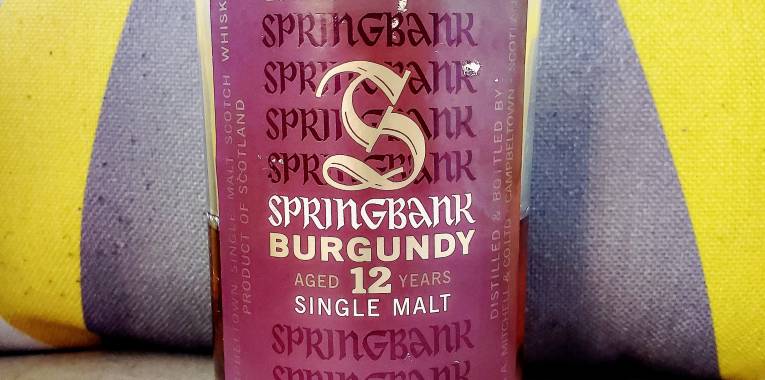
This special release was bottled in 2016 at 107 proof after being aged in 1st Fill Burgundy Barrels and is everything I love about these style of releases from Springbank.

NOSE: Golden Raisin, Raspberries, Black Currant, Vanilla

PALETE: Plum, Apricot, Sea Salt, Leather, Honey, with a massively creamy mouthfeel

FINISH: Long, dry, slightly peppery, and a lingering oak

This is a truly breathtaking bottle. Literally, the proof, the flavors, the mouthfeel take my breath away on the first sip everytime I come back to it. And now it’s time to take the bottle away. Another sacrifice to social distancing.

Whiskey Wednesday: Take Off of Taketsuru

Continuing this month’s conversation about Nikka comes the news that Nikka will be discontinuing the Taketsuru 17, 21, and 25 Year old expressions as of March of 2020. While some stocks will remain under “heavy allocation” all three marks will no longer be listed by the company. The Nikka Taketsuru Pure Malt, a Non-Age Statement (NAS) edition that replaced the 12 Year old Taketsuru several years ago, will also be discontinued.  

While the loss of the age statements is lamentable, it falls neatly into the familiar story of aged stocks not being able to keep up with current demand for high end whisky. But the loss of the NAS Taketsuru Pure Malt comes as a bit of a shock. The NAS was originally released in late 2015 and was meant to address the supply issue. Then in 2019 it won Jim Murray’s Japanese Whiskey Of The Year. Add to this the discontinued Nikka Miyagikyo and Yoichi Single Malts in 2015 and the temporary interruption in supply of their Coffey Malt and Grain in early 2019 and the picture of a company struggling to match pace with demand while also seeking to define its core identity emerges. 

So, what exactly is being lost with the Taketsuru’s? 

The Taketsuru line was named after the company founder Masetaka Taketsuru. They have been the core of the Nikka line up for as long as I’ve been familiar with the brand.  They’re also incredibly representative of the Japanese blending style. Every bottle is the Taketsuru line is a Pure Malt which is an old term for Blended Malts. Not to be confused with a Blended Whisky. A Blended Whisky is made up of both single malt and grain whiskey. A Blended Malt is comprised only of Single Malts. In this case the Taketsuru’s are made from a blend of malts distilled at the Yoichi and Miyagikyo distilleries. 

Japanese Whisky makers often think of themselves more as blenders than distillers. They look to layer flavor by creating a blend of whiskies to create consistent and nuanced bottling. Take the Hibiki’s as a prime example. Suntory has repeatedly said that they consider the Hibiki to be the perfect representation of their art, both in terms of distillation but more as a blend. But while the Hibiki contains a fair amount of grain whiskey the Taketsuru line is comprised of big single malts.  

One of the advantages of the centuries old whisky tradition in Scotland is 100s of distilleries that are relatively friendly with each other. This means that if a distiller wanted to make a Blended Malt with a style of malt they didn’t distill themselves there was always another distiller that did who would be willing to sell or trade. When Masataka founded Nikka in 1934 as the Dai Nippon Kaju, Co. there was no one to barter with so if he wanted different styles to create a blend he had to distill them himself. 

This eventually lead to the creation of Nikka’s second distillery, Miyagikyo, outside on Sendai in 1969. This allowed for a greater depth of flavors for blending as well as over doubling the company’s production capability. Miyagikyo is much further south than its sibling Yoichi Distillery granting a different character as the whisky ages. We can expect to see more of this style of whisky from Nikka in the future as a planned expansion on Miyagikyo should be finished in 2021 with production expected to expand by 40%. 

As for the present, the Nikka Taketsuru 17 Year Pure Malt. Award the Best Blended Malt Award by the World Whiskey Awards in 2014 it’s a blend of single malts from both the Yoichi and Miyagikyo distilleries. Aged for a minimum of 17 years this is a powerful whisky. 

NOSE:  Fresh fruit, Cedarwood, Honey
PALETTE: White Pepper, Dried Fruits, Oolong Tea, A hint of smoke
FINISH: Medium to long, rounded smoke and with dark chocolate and leather

The Taketsuru line represents NIkka’s history. It pays homage to its founding father as well as combining the art of both of the company’s distinct distilleries. The loss of the Taketsuru line is the loss of a piece of history but it does open a future. Whisky, and in particular Japanese Whisky, is having an incredibly large moment. Bit even if whisky distilled 25 years ago is being depleted left and right the world, and the flavor, that whisky represents is gone. The challenge now is to find the way to create the spirit that fills the barrel to be bottled in 25 years while still keeping the lights on in the years between. 

Whiskey Wednesday: Nikka Days of Our Lives

I love a good story and Nikka Whisky certainly has a good story. A story of both an excellently crafted whiskey but also a phenomenal story in the life of the company’s founder, Masataka Taketsuru. The month of January is especially important to the story of Taketsuru and his redheaded Scottish wife, Rita. So I thought I’d take some time and look at a few of Nikka’s offerings for the rest of January. 

In 1918 Masataka Taketsuru was sent to Scotland by the Settsu Shuzo company to learn how to make whisky from the Scottish master craftsmen. The goal was to learn from the best, return home, and create a Japanese whiskey that would be on par with the best whiskies being produced in the world. The unexpected consequence was Taketsuru meeting Jessie Roberta Cowan, known as Rita, while teaching Judo to her brother Ramsay. 

In a time when “international” marriages were rare the two fell in love. Takatsuru proposed in September of 1919 and the two were married on January 8, 1920, exactly 100 years ago. After the marriage the two moved to Campbelltown where Taketsusru completed his apprenticeship. The two returned to Japan in November of 1920, partially due to Rita’s encouragement. Taketsuru had expressed a desire to stay in Scotland with his marriage to Rita but she disagreed. “We should not stay in Scotland, she said, “We should head to Japan. Masataka-san is living a big dream, a dream to make whisky in Japan. I want to live your dream together.” 

Upon their return to Scotland the landscape had changed. The post World War II depression had set in and the Settsu Shuzo company was no longer financially able to invest in new projects, like whisky making. When he left the company in 1922 he found a job, through a friend of Rita’s, as a science teacher. The following year he was offered a job at Kotobukiya to make whisky. 

The name Kotobukiya may not be familiar to Western ears but the company it grew into, Suntory, certainly is. While Masataka helped them produce their first whiskies from the brand new Yamazaki Distillery his first wide spread release was essentially a failure and Masataka parted way after fulfilling his ten year contract. 

In 1934 the couple founded the Dai Nippon Kaju, Co., literally the “Great Japanese Juice Company, in Yoichi, Hokkaido. The two said the Yoichi, more than any other place in Japan, reminded them most of Scotland. This endeavor was made possible by investors who were introduced to Taketsuru through Rita. Both of the primary investors had family that had taken private English lessons from Rita. With the help of these investors, and the production of many apple products in the early years, Taketsuru was eventually able to release his own whisky in 1940 winning much acclaim over the years and the company formally being renamed as Nikka Distilling in 1952. 

Sadly, on January 17, 1961 Rita passed away at the age of 64. She was buried on a hill overlooking the Yoichi Distillery and Taketsuru engraved both of their names on the tombstone promising they’d be together forever. 

As much as I love a good whisky making love story, I also love duty free shopping. There is always something unique and quirky to be found. But in a world where Japanese Whisky is in ultra-high demand, and age stated malts are disappearing daily even the unique duty-free offerings are drying up. Which is why, on a recent international trip, I was so surprised to find a bottle I had never seen before, the Nikka Days. 

The Nikka Days was released in 2018 and seems to be a response to all of the factors above that are pressing in on stocks of Japanese Malt. It is a blended whiskey made of lightly peated malt and grain whiskies from both the Yoichi and Miyagikyo distilleries. 

The brand says that it has always stood at the crossroads of between East and West, tradition and innovation. Saying that each day is a journey and an opportunity to learn from previous days, and that this whisky embodies that mentality. Hence the name. 

The whiskey is certainly result of the current journey of the whisky world. So how does it taste? 

NOSE: Apple, Orange Blossom, Vanilla, Melon 
PALETTE: White Chocolate, Toffee, Citrus, a touch of smoke, and fresh apples 
FINISH: Slightly sweet, bright, with a touch of creaminess 

It is certainly fitting that apples are so prominent on the nose and palette of this whisky. Ultimately this is a very serviceable whisky but it stands in the shadow of its history and the massive malts that Nikka is known for. The price point also makes it hard to justify as a day to day sipper but it is worth the journey to spend a few days with if you are traveling. 

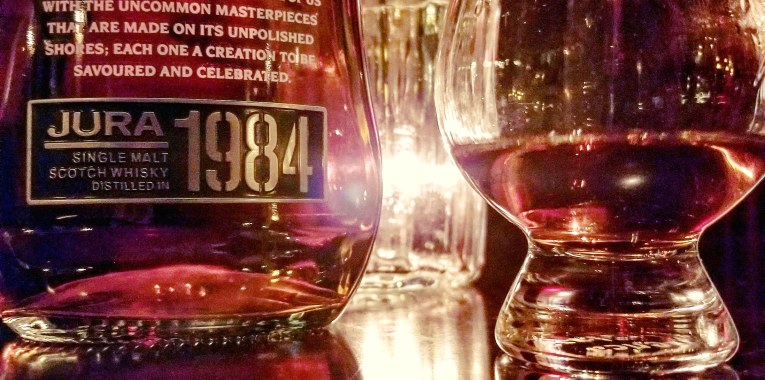
Open Bottle: Nineteen Eighty-Four JURA

“Who controls the past controls the future. Who controls the present controls the past.”

Released in 1949 George Orwell’s masterpiece Nineteen Eighty-Four often feels as alive and resonant as it must have when it was first published. Reading the headlines it feels like doublespeak, Big Brother, and New Speak have leapt from the lexicon of the theoretical into the mundanely of reality.

What was once meant as a cautionary tale has instead become the blueprint for how entire organizations operate.

The world has become vastly interconnected since 1984 and people are starting to realize how small a piece of the global whole they actually are. Some have risen to the challenge and sought to make their corner of that cold, distant expanse warm and welcoming. The seek to grow their communities.

Others, however, have become jealous of their small portion and rather than growing they shrink. They shrink from responsibility, from compassion and not only do they personally shrink they seek to diminish the world around them. To force the world to be smaller, leaving no room for those that are different or for those who seek an equal share in the world in which we must cohabitate.

Not exactly light, whisky sipping, thinking but these are thoughts that are constantly on my mind these days and were brought into sharp focus when presented with a dram of Jura’s 1984 Edition.

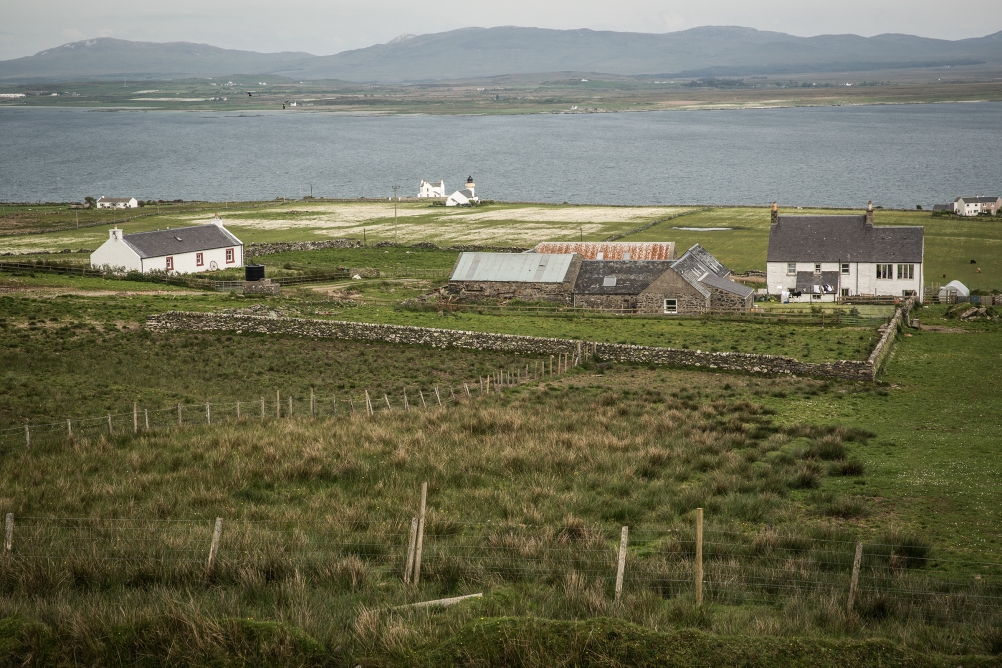
The Isle of Jura lies off the North-East shore of Islay, has one road, one pub and one distillery, the eponymous Jura. Orwell described the island as “extremely unget-at-able” which remains very true to this day. It was at the “unget-at-able” locale that Orwell wrote the bulk of Nineteen Eighty-Four while incredibly ill with tuberculosis fro 1947-1948. It’s this act of creative output that Jura is honoring with the 1984 Edition.

Casked in 1984 and bottled in 2014 this 30-year-old single malt was aged in ex-Bourbon, Amoroso (cream) sherry, and Apostoles Oloroso sherry casks. Only 1,984 bottles were released world wide making it a rather limited release. This is a lot of attention to detail to pay homage to an event that happened when the distillery didn’t exist.

The distillery was built in 1810 but fell into disrepair at the end of the 19th century. It wasn’t rebuilt and operational again until 1963. So there is clearly a bit of a marketing gimmick tied into this release, which is nothing new to the spirits world, and unlike most gimmicks this whisky is a phenomenal product.

NOSE: The nose is rich, redolent in those sherry aromas with nutmeg, dark dried fruit, raisins, and a noticeable touch of the sweet.

PALETTE: Deep cherry and candied orange peel. There’s also a hint of roasted peaches with a large dollop of honey and, of course, oloroso sherry.

FINISH: The dram has a medium finish that lingers with a surprising amount of spice for how sweet it starts, leaving the dry baking spices and a touch of dessert.

I don’t care what your marketing angle is as long as it’s true and the product is good. And this product is exceptional. The story being crafted is a bit forced but it is also clearly the result of a small community taking pride in its past and continuing to build for its future.

It is perhaps unfortunate that Orwellian thoughts float through my mind while sipping on this malt but then again the age that we live in requires us to be active participants in the world around us, even when just sipping on a whiskey.

Education is the best tool we have to enact change and I, for one, would not have known that George Orwell wrote Nineteen Eight-Four on Jura with out this bottle. With out this bottle I wouldn’t have spent a week researching and reflecting on the themes of a book I haven’t read since high school. Not only was I researching but I was also reexamining these themes in the light of the modern world and my adult experiences.

We must stand up, we must think for ourselves and not simply walk the party line. We must not become orthodox for, “Orthodoxy means not thinking–not needing to think. Orthodoxy is unconsciousness.”


P.S. VOTE

Whiskey Wednesday: Islay Barley

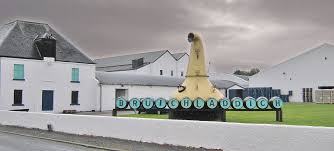
When you think of whisky and what gives it it’s flavor what springs to mind? Is it the mashbill, the barrel type, the aging location and length? Chances are good terrior didn’t spring to mind but the team at Bruichladdich would like to change that.

images-1.jpg

Bruichladdich is a distillery that blends history and modernity. Founded in 1881 the distillery was, at the time, the most modern distillery on the island of Islay. It wafted in and out of popularity until the distillery was mothballed in 1994 for being “surplus to requirements.” It gained new life in 2000 when it was purchased by a group of private investors who dismantled and revamped the entire distillery once again making it one of the most modern distilleries on the island. They also brought with them a lot of experience in the wine world including a deep reverence for terrior, a reverence that has survived the distilleries sale to Remy Cointreau.. They also made two great decisions in their early days 1) hiring the legend Jim McEwan to be their master distiller and 2) deciding to actually grow barley on the island of Islay.

Scotch does not require the barley to be Scotch. To be Scotch that barley needs be distilled in Scotland not grown there. This is very reflective of the mentality that terrior doesn’t matter in whiskey. It’s not that distillers don’t care about the quality of the barley but rather that with so many other factors effecting the final product the terrior was way down the scale of importance, especially once the economics of scale set in.         download-1.jpg

The early days of whisky making were a local affair. A farmer had excess crops, they distilled them to preserve the grain, and sometimes managed to sell some of the spirit for extra profit. Many of these farm distilleries were successful enough to grow into commercial affairs but most did not survive the true industrialization of the spirit industry in the early 19th century. This was when improvements in technology and more interconnected trade allowed whisky making to become a large scale, commercial endeavor.

While there is some evidence that there was barley being grown on Islay before this time the advent of these large distilleries made in commercially unviable. These new distilleries were also all on the coast where they had their own piers or shallows where a flat-bottomed boat could dock. This made it more economic for these distilleries to import cheap grain from the mainland and export whisky.

As these distilleries continued to grow they also out grew the ability of the island to grow enough barley for them. There just simply isn’t enough land to supply all the barley these industrial distilleries need, so the farmers stopped growing the barley and turned to more economically advantageous pursuits.

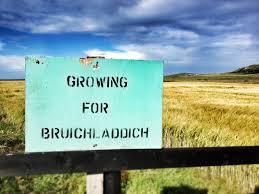
Bruichladdich changed all of this in 2004 when they partnered with a local farmer named Raymond Stewart at Kentraw Farm on Richard Macaeire’s Foreland Estate on the Rhines. Raymond grew barley and Bruichladdich distilled it. The first release of the Bruichladdich Islay Barley was released in 2010. Each release is dated with the year of the barley’s harvest and labeled with which farm it called home.

Some of these releases have been stunners, the 2007 Rockside Farm is something I wish I’d squirreled away a few bottles of, but growing barley on the island of Islay is extremely finicky. The 2009 and 2010 releases of Islay Barley were blends of several farms. Still distinctly labeled but you can’t help but feel that the strong idea of terrior is running into the old problem of supply.

This blend of farms may be a temporary hiccup as the Islay Barley series has expanded. Bruichladdich divides its products into three core lines: Bruichladdich (unpeated whiskey), Port Charlotte (heavily peated whisky), and the Octomore (experimental, cask strength, super heavily peated whisky). The Port Charlotte is also utilizing a blend of farms but the Octomore is not. But then again the Octomore has always been a unique case with all of its barley coming from the farm of Octomore a mere 2 miles from the distillery.

bruichladdich-islay-whisky-_X2A5266.jpg

In the end, these are whiskies that are still evolving. Not just with different bottlings from year to year but also in terms of the process of making the whisky. And they are hit or miss. Barring the previously mentioned Rock Hill Farm the Bruichladdich Islay Barley releases have been interesting at least but the Port Charlotte’s have always fallen flat for me. I’m inclined to think that it’s because of the peat adding one more layer of obfuscation between the original barley and the finished whisky. The Octomore Islay barley however is a stunning beauty of a whisky with a layered elegance and subtle floral quality the belies its status as a cask strength monster and is one of the most heavily peated whiskies in the world.

Bruichladdich is the first Scottish distillery to put such a laser sharp focus on the terrior. They are experimenting and finding new boundaries inside of one of the most heavily defined spirits in the world and for that they should be applauded. Whether this experiment continues to grow and leave its own terrior on the whisky world or if it succumbs to the economics of industrial scale production has yet to be seen.


Whiskey Wednesday: The Art of Kavalan

If the Scots are the craftsman of the whisky world, passing down tradition and technique year after year because it works, then the Japanese are the engineers, dissecting and reassembling each component part. The Taiwanese are the artists, free willing and experimental; it’s insane that we can even make that analogy because there is only one distillery in Taiwan and it’s barely into its Tween years.

6a00e553b3da20883401b8d1223916970c-580wi

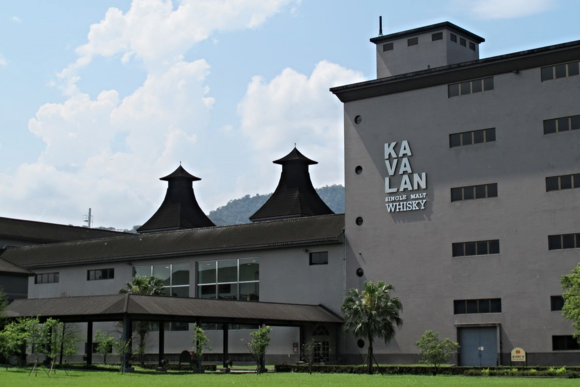
After Taiwan joined the WTO in 2002 Mr. Tien-Tsai Lee, founder of the KingCarbeverage conglomerate, was finally able to enter the whisky world and established the Kavalan distillery in 2005. The distillery takes it’s name from the Taiwanesse aboriginal ethnic group that originally inhabited Yilan county where the distillery is located in northeastern Taiwan. The distillery is built with classic Scottish pot stills and massive technological steps were taken to protect the fermentation and the distillation from the Taiwanese heat. Rather than adhere to how things are done traditionally they have worked to embrace the natural elements of Taiwan, most notably climate, to create something unique in the increasingly crowded whisky landscape.

The distilleries first new make flowed from the stills in early 2006 and the distilleries first whisky, the Kavalan Classic Single Malt, was released in December of 2008. That is a massively fast turn around for a new single malt. For the Scotch and the Japanese you can’t even legally call a product whisky until its aged for a minimum of three years and most distillers in those countries would call a three year old far too immature and unripe for release. This brings us back to the climate.

download.jpg            Almost every year, as reliable as new iPhone releases, someone touts a new aging process that’s a breakthrough that allows for rapid aging, creating the equivalent of a 12-year old scotch in a fraction of the time. In every case the whisky produced by these methods either never materializes or falls vastly short of it’s lofty goals. I’d be just as skeptical of the claims that once the team at Kavalan stopped resisting the humidity and heat of the sub-Tropical Taiwanese environment they were able to rapidly age their product if the whisky in the bottle wasn’t so damn good. As their Master Blender Ian Chang says, “We think of our heat as a sandpaper and our newly made spirit as a rock with edges,”

But it’s not just the unique climate. Kavalan is also exceptionally good at cask management. This cask management truly shines in their Soloist series.

The Soloist series is a lineup of Single Cask, Cask Strength, and Single Malt whiskies and it is these releases that made drinkers sit up and take notice. It is called the Soloist line because every release is like a soloist in a concert where their classic series is the whole orchestra. These releases quickly gained notoriety until in 2015, a mere ten years after breaking ground on the distillery, one of these releases, the Vinho Barrique, won “World’s Best Single Malt” in the World Whiskies Awards.

The Vinho Barrique harnesses the climate and marries it with excellent cask IMG_4520selection. The casks use a shave, toast, and re-char process on old Portuguese wine casks that creates a heavy oak influenced whisky. But rather than produce the heavily tannic, overly woody notes we often see in American quarter casks, instead it’s a finely tuned balance with rich dark berries, plum, and tropical fruit dancing along the edges of the oak’s vanilla and tannin while swimming in the traditional malt backbone of a well aged whisky. Being bottled at cask strength cuts through what could have been a cloying sweetness to instead add a spice note that allows the finish to linger long into the night.


This award and bottling blew the roof off of Kavalan and their prices soon followed. In fact, many of the Soloist series had to be turned into standard issue, non-cask strength releases for the U.S. to keep up with demand even with the distillery expanding in 2015 to become the 9th largest single malt distillery in the world. They’re still experimenting and utilizing that climate and those casks with a new series of single barrel, cask strength, sherry and port cask releases that you’ll probably never casually encounter without a starting price tag of $400+ per bottle.

So what are you likely to encounter? Well, with the Soloists taking a quick intermission the concert continues with the Kavalan Classic that we mentioned before. Keep in mind this is a young distillery, no matter what accolades they’ve accrued, and they’re still playing with their formula. Point in fact, the Classic is an 80 proof bottling for most of the world but to appeal to American palates and American fans of the overproof work, here it’s bottled at a slightly bigger 86 proof.

A blend of ex-Bourbon, ex-sherry, and ex-wine casks all about 4-4.5 years old it doesn’t drink like a young whisky and has a lighter complexion. Stone fruit, a touch of floral sherry, and vanilla with a distinctive toasted malt are all present. But it doesn’t hold a candle to the bonfire that is the Vinho Barrique or really any of the Soloist single barrels. Which is a shame because those bottles are quickly becoming unicorns.

In the end it comes back to our craftsman vs. engineers vs. artists. The artists at Kavalan have produced a few shining masterpieces but they haven’t quite mastered the skill that sets the craftsmen and the engineers apart: blending. The Japanese have been able to set themselves apart by truly understanding and controlling every drop of whisky to blend it together to create art and the Scots have years of tradition that makes it seem a natural talent. Kavalan is just dipping its brush into the wider world of consistency.

Just as the Taiwanese heat seems to speed their whisky more swiftly to maturity, Kavalan itself has sped right into all the major touch stones of the modern whisky world: craft distilling, underdog appeal, rapid growth and awards, price hikes and shortages. No matter where it goes from here there is no denying that Kavalan is true global player.

353da3ccccedcc82-_DSC9542Edit.jpg

Whiskey Wednesday: Compass Box Directions

There are things that I love and there are things that I intellectually love. There’s a Venn Diagram where these two worlds merge but the edges are blurry and unscientific. Compass Box falls squarely in the grey area of these circles.

Over the past 17 years Compass Box has certainly marketed themselves as the hip, bad boys of the Scotch world while simultaneously pushing for greater education, transparency, and innovation in the category. As in so many things these days, the nerds have become the cool kids.

Founded in 2000 by former Johnie Walker marketing director and fellow American, John Glasser, Compass Box labels themselves as ‘whiskymakers’ a term the fully admit they made up. To them a whiskymaker is someone who “feels a need and an obligation to make things better – to ask questions, to challenge, to experiment.” In a traditional sense what they are is a blending house, not dissimilar to Johnnie Walker. They source whisky, both grain and single malt, from various distilleries throughout Scotland and then blend them together to create something, hopefully, unique and larger than the sum of its parts. Where Compass Box excels though is putting their own spin on the process. However, this personal spin often causes friction with the Scotch powers that be.

In 2005 they were forced to discontinue one of their “Signature Range” blends, the Oak Cross because of the aging process used to create it. Compass box was aging the blend with flat, French Oak staves placed inside the barrel to produce a different flavor, not dissimilar to what Maker’s Mark is doing with Maker’s 46. The Scotch Whisky Association, the trade organization that functions as the defacto Scotch whisky government, felt that this aging process

violated the Scotch Whisky Regulations and in the face of legal action the Spice Tree was discontinued. It was later revived by aging the blend in barrels that had be recoopered to included French Oak barrel heads, instead of barrel inserts. This helped give them an early reputation for innovation, and for standing up to the traditional, closed of Scotch makers.

getimage.jpg

This reputation was solidified in 2015 when they locked horns with the ScotchWhisky Association again, this time over transparency.  Compass Box had been shipping informational cards with their blends fully disclosing the source, style, age, and percentages of all of the component whiskies for their blends. The SWA felt that this violated both UK and EU laws, which state that a whisky may only list the age of the youngest whisky in the blend no matter the proportions. According to the SWA if you add a cupful of three year old whisky to a barrel of 50 year old whisky you now must label that as a three year old whisky. This is why blends like Johnnie Walker Blue will hint that there is 30 year old whisky in the bottle but you’ll never find that number actually on the packaging. Compass Box and John Glasser said, that fine will call it three year old whisky but drinkers want transparency and we want to be able to tell them exactly what makes up our bottle.

In another compromise, Compass Box has backed down from mailing out these images.jpginserts, but still makes them available online and they started the Scotch Whisky Transparency Campaign, which outlines their goals and what exactly they would like to see changed in the regulations.

None of this would be possible with out the whisky though. And John Glasser and Compass Box are excellent blenders. Take the Compass Box Asyla from their Signature Range. “Asyla” is plural for asylum and is a blended whisky, comprised of both grain and malt whiskey. Specifically, 50% Grain Whisky from Cameron bridge aged in first fill bourbon barrels, 5 % Malt whisky from Glen Elgin aged in refill hogshead, 23% malt from Teaninich aged in first fill American and 22% malt from Linkwood aged in First Fill American. Can you see how much the nerd it me loves having that information to pick apart?! The final product ends up leading with a light vanilla fruit from the predominant grain whisky with a floral, grassy, and stone fruit character added from the supporting malts. It’s an immensely approachable everyday whisky that I personally recommend for drinkers of Johnnie Walker almost every time I’m behind the bar and I have been for years. That’s part of the problem though, as I see it at least.

Despite years of bartenders recommending the product, and the whisky nerds geeking out I don’t know who’s actually drinking the whiskey. I can’t recall anyone ever calling for it by name. I often wonder if I’ve bought into what amounts to a marketing gimmick of transparency and rebel attitude. It comes into starker focus when you look at their limited releases. They’re clearly thumbing their noses at the SWA with their “Three Year Extravaganza” release which feature less than 1% of a three year old whisky blended into a malt whisky of “undisclosed age” and their recent “Double Single” flips the traditional blenders script of including only a single rain whisky and a single malt whisky blended together. They’re interesting experiments, and clearly push at limitations but it still feels like they’re exploiting the system.

Compass-Box-Header.jpg

They get to be the white night. Championing for greater transparency and new regulations while a vat amount of the whiskies for their blends from Diageo, the largest liquor conglomerate in the world who has a vested interest in the status quo. Brag to your customers that you’re fighting for their interests, knowing that it’ll probably never happen, and then thumb your nose at the establishment with cheeky releases while charging establishment specialty prices.

But none of this takes away from the fact that I genuinely enjoy their blends. But I’m still not sure where they fall on the Venn Diagram. Because when there’s so much to be said about a whisky company and a mere 5% of it is about the actual liquid in the bottle maybe that’s why I don’t experience calls for specific Compass Box whiskies. Maybe we’re having the wrong conversation.