Quarantine Bottle Kill #2: Woodford Reserve Rare Rye

The next victim of the Quarantine Bottle Count is the Woodford Reserve Master’s Collection Rare Rye twins from 2011. Yes, I’ve been sitting on two open 375ml bottles for nine years. Don’t judge me.

Let’s put this into context. Nine years ago rye whiskey was just becoming the hot item after decades of obscurity. And then here lands a pair of Woodford Ryes for $100. It was one of many signals that not only was Rye moving from the bargain category but that distillers and distilleries had been contemplating the move for a while.

The distillate is 100% Rye, probably a blend of malted and unmalted, triple distilled on the Woodford Pot stills and bottled at 92.4 proof. The only stated difference between the bottles is that one was aged in freshly charged new oak, just like Bourbon or American Rye legally must be, and the other is aged in reused Bourbon barrels. This technically makes it a rye “spirit” and not a whiskey.

What’s interesting to me though is that the New Cask is labeled as “Straight Rye Whiskey” with no age statement. Legally, this means that the “New Cask Rye” is a minimum of four years old. And as Woodford clearly says the only difference between the two bottles is the maturation process that means the “Aged Cask” is also four years old. 

Whiskey makers are accustomed to think in the long term. Production is measured in years if not decades but even then it seems a risky move to have distilled a 100% Rye in 2006-2007 even if it was meant to be a limited release. But the demand for rye has only gotten stronger in the past decade, clearly evidenced in Woodford having a dedicated Rye as part of it’s core line up in 2020.

As interesting as all of that backstory is, how does the whiskey actually taste?

AGED CASK RYE
NOSE: Grassy, Bready, with a touch of green apple
PALETTE:  Bright rye, a hint of vanilla and orange, honey
FINISH: Surprisingly Long, with a hint of mint and cinnamon, dry

NEW CASK RYE
NOSE: Tobacco, Honey, Vanilla, and oak
PALETTE: Cinnamon, deep baking spices, ripe apple, and leather
FINISH: Sweet, with a lingering oak and white pepper

Overall, these bottles are an fantastic example of the impact a barrel has on a distillate. The New Cask is 100% a rich, fully embodied rye while the Aged Cask is still young and fiery. It reminds me a lot of Mellow Corn, a personal favorite, but it could benefit from more time letting the flavors integrate.

They both unmistakably taste like Woodford. I’ve talked about this before but to me there is always a slightly undefinable, yet incredibly identifiable, characteristic to Woodford that I can only imagine comes from their Pot Stills. Both of these ryes carry that DNA.

Nine years after their release I’m not as excited by either of these bottles as I was when they first came out. But the world is a different place, the whiskey market is a different place, and I’m a different person.

While they’re not mind blowing whiskies on their own the weight of time evidenced in the aging and the drinking sits heavily with me as the last drops pour from the bottle.

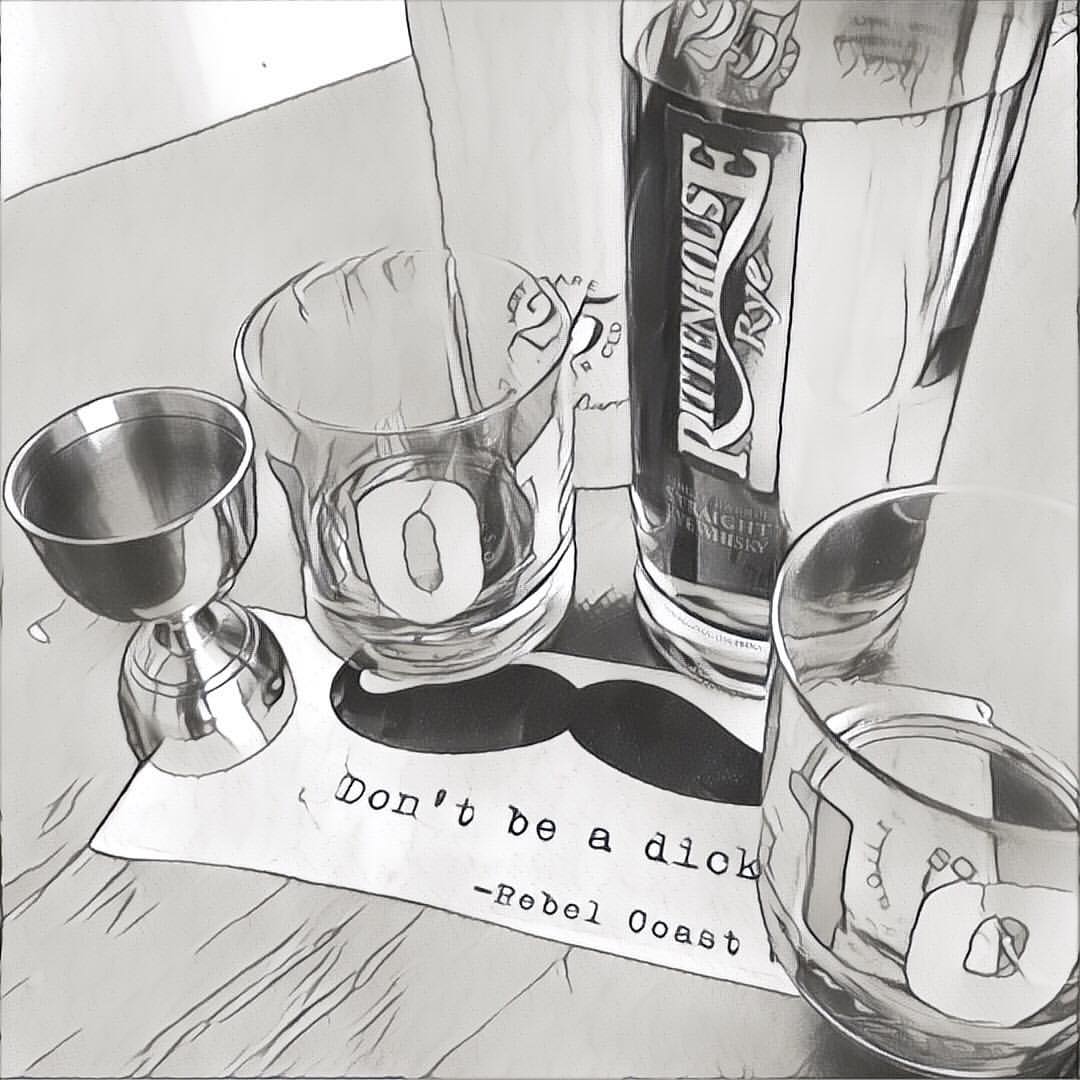
Open Bottle: Rittenhouse Very Rare 25 Year Straight Rye Whiskey

Today I’m either turning 33 or 37, depending on whether you believe my birth certificate or my girlfriend’s mathematical skills.

I’ve been in the service industry since I was 16, been bartending since I was 20, and have been a “craft bartender” and bar manager since I was 25. In a lot of ways my experience behind the bar has shaped me as a person, helped define my personality, and at times threatened to completely consume my life. And it all happened by accident.

While I was out manning an NBC desk the bar world had changed. The Cocktail Revolution was well underway.

It’s easy to look back on that stretch of years and see it as an inevitable progression but it never felt that way. I started waiting tables as a way to make easy cash in high school. From the moment I started taking drink orders I knew I’d rather be taking those orders from behind the bar and making the drinks; bartenders were just inherently cooler. I completely blame early viewing of Roadhouse and Cocktail for this gross misconception, but even when I started doing my best Tom Cruise impression it wasn’t a career. I was just finding a way to pay my bills in college while I figured out what I was really going to do when I grew up.

Skip ahead a few years and my Brian Flannagan impression had been traded for a blend of Aaron Sorkin and Kenneth from 30 Rock. Needless to say that wasn’t a combination that seemed to be working out so when I found myself between jobs I decided to start bartending again until I found what came next. Turned out what came next was bartending.

While I was out manning an NBC desk the bar world had changed. The Cocktail Revolution was well underway and suddenly there was a wealth of information, spirits, techniques, and books that transformed slinging drinks from a job into a profession. Similarly, some health issues transformed my youthful sense of invulnerability into an inevitable sense of my own mortality.

This profession and vulnerability coalesced into the first major purchase of my soon to be overwhelming liquor collection: The Rittenhouse 25 Year Old Straight Rye Whiskey.

Rittehouse25B&W.jpg

I was still reeling from the debt that having a “Real Job” had bestowed but I was alive, financially stable and wanted a bottle of spirit that was older than I was so that I could raise a glass in celebration for hopefully years to come. I had no idea what I was doing when I walked into that BevMo, but thankfully my naiveté was matched by the fact that Pappy Mania hadn’t yet transformed the whiskey world into a wasteland of unattainable whales and unicorns. This perfect confluence meant that a bottle that now goes for north of $1000 had multiples sitting on the shelf at a Santa Monica BevMo for less than $150 each. It was such a crazy time that I turned down buying a bottle for the bar because it was “too expensive” and “would never sell.” I wish I had a time machine to go back and snap up a 6-pack.

As I begin my inevitable transformation into Doug Coughlin I’m going to sit with another dram.

The third release of a series, the 25 Year Old, was preceded by a 21 and 23 year old Single Barrel release. All three releases come from rye distilled in October of 1984, aged on the lowest floors of Rickhouse OO, and were all bottled as 100 proof, non-chill filtered single barrels.

 
NOSE: There’s a touch of spice but it’s mostly a candied walnut, dried fruits and a waft of cedar mixed with the oak.

PALETTE: On the tongue there is a deep nougat, a sense of brûléed fruit, and a massive bag of baking spices. It is surprisingly sweet for a rye but carries a sophistication and stateliness. This is one of those old whiskies that rather than tasting old and oaky, tastes mature and aged.

FINISH: The finish is long and warm. The spice finally finds it’s footing as the rest of the flavors evaporate and evolve.

This is quite simply one of the best bottles of rye I’ve ever had. And what’s amazing is that as my palette, experience, and collection has grown I return to this bottle for a simple pour every year and still feel the same way.

Though to be fair it’s not really about what’s in the glass. This is the prime example of my philosophy that whiskey is meant for drinking. The experiences the led to buying the bottle and the accumulation of everyday until the next pour adds to the poetry in the glass.

As I begin my inevitable transformation into Doug Coughlin I’m going to sit with another dram and share it with those that I can. I may have started this journey by accident but the feeling of growth and community is what’s kept me here.

That and the booze.

And the tips.

But mostly the booze.

Whiskey Wednesday: Overholt’s Bond

Bottled in Bond has jumped the shark. Before what’s sure to be Jack Daniel’s latest premium priced bottled in bond hits Duty Free shelves worldwide let’s look back to a much more innocent time when a BiB release truly excited me. A time known as six months ago…

Before we jump in the Short Way Back Machine what exactly does Bottled-In-Bond mean? Well, here’s a link to a video of some fools talking about it, but here’s a quick refresher. The Bottled in Bond Act of 1897 was spearheaded by a group of distillers, lead by Col. E.H. Taylor, to instate a form of quality control on products calling themselves whiskey, as well as to give consumers the confidence that whiskey sold in this new contraption known as a mass produced glass bottle was reliable and un-tampered with.

Working with the U.S. Government they came up with a list of regulations to be labeled as Bottled-In Bond.

  • The spirit must meet all the legal requirements for that spirit.
  • It must be the product of a single distillery in a single distilling season.
  • It must be aged for a minimum of 4 years in a government bonded warehouse.
  • It must be bottled at 100 Proof
  • Every bottle must list the DSP (the distillery identification number) for both the location of distillation and location of bottling.

Follow all these rules and you get a tax break and US government slaps its seal of approval on the bottle in the form of a tax stamp to show that the liquid has not been tampered with after it was bottled.

The bonded warehouse is an interesting thing to note. In the olden days this meant that the warehouse was physically locked and could only be accessed by a tax assessor (see the above tax breaks, to ensure that there was no “unauthorized removal.” This Tax Man had the keys to the warehouse and it could only be opened with their help, which is how we end up with such delightful stories as that of Old Fitzgerald.

Bottled in Bond began to thrive. It was a mark of quality, and a mark of the distiller’s skill. However, after prohibition when stocks and profits were low distillers looked for ways to stretch out the remaining supply and to reduce costs. See: blended whiskey and applejack. The required aging and proof of bottled in bond raised the quality but also the price, and being unable to blend across distilling seasons meant there was less ability to utilize backstock. Brands that were once proudly Bottled-in-Bond began reducing proof and age and slowly disappeared. Most of those that survived have been consolidated under the ownership of Heaven Hill but also lost their premium status and became your “Granddad’s Whiskey” which despite what the current whiskey boom will tell you used to be an incredibly uncool thing to say.

On the flip side, the current whiskey and cocktail boom has reinvigorated interest in Bottled In Bond as a mark of quality and in mixing. This has lead to a rash of reintroduction of Bottled In Bond products but often at a steep mark up, which I believe misses the point and utility of Bottled In Bond. They’re meant to be versatile and approachable. One of the rereleases that got this right was Old Overholt.

Old Overholt is owned by Beam Suntory, which is the parent company of the largest Bourbon producer in the world, Jim Beam. And while Overholt is truly an old brand it doesn’t usually stand out for me.

It’s a barely legal rye, meaning it’s 51% rye in the mashbill, which isn’t necessarily a bad thing. Rittenhouse Rye is also barely legal and is a bottle I can’t live without. But bottled at 80 proof I’ve often found the Overholt to be oily and incredibly earthy. However, this past January Beam Suntory added a Bottled In Bond version of the Overholt, so lets see how it stacks up.

On the nose it smells definitively like a Jim Beam product. I associate this smell with the Jim Beam yeast strains. There is a woodsy, yeasty, nutty quality that carries through almost everything in the Jim Beam lineup. There is also an oakiness and dark wood scent that lingers.

On the palette the oiliness is still very much present, but it’s cut through with a heavy alcohol burn that dries out a vanilla and caramel while complimenting the rye natural spiciness. The finish is surprisingly short, leaving an alcohol tingle and a touch of green apple.

This new Overholt is a vast improvement over the old Overholt. However, this new bottle is undeniably a whiskey drinker’s whiskey. It is mean and uncompromising and honestly tastes a lot like what I would get if I blended the 80 proof Overholt with a bottle of Rittenhouse. Its price point makes it incredibly versatile as well. The new proof boost lets it stand up in cocktails while offering a flavor profile the is unique enough to justify including it on the back bar. Bottled in Bond is clearly becoming a hip term and producing a bonded version of a known branded may help boost sales, but that boost doesn’t mean it has to come with an inflated price tag or loss of character.

Just remember, not every reboot is terrible. And while something may jump the shark it doesn’t negate the quality of everything that came before the leap.