Quarantine Bottle Kill #2: Woodford Reserve Rare Rye

The next victim of the Quarantine Bottle Count is the Woodford Reserve Master’s Collection Rare Rye twins from 2011. Yes, I’ve been sitting on two open 375ml bottles for nine years. Don’t judge me.

Let’s put this into context. Nine years ago rye whiskey was just becoming the hot item after decades of obscurity. And then here lands a pair of Woodford Ryes for $100. It was one of many signals that not only was Rye moving from the bargain category but that distillers and distilleries had been contemplating the move for a while.

The distillate is 100% Rye, probably a blend of malted and unmalted, triple distilled on the Woodford Pot stills and bottled at 92.4 proof. The only stated difference between the bottles is that one was aged in freshly charged new oak, just like Bourbon or American Rye legally must be, and the other is aged in reused Bourbon barrels. This technically makes it a rye “spirit” and not a whiskey.

What’s interesting to me though is that the New Cask is labeled as “Straight Rye Whiskey” with no age statement. Legally, this means that the “New Cask Rye” is a minimum of four years old. And as Woodford clearly says the only difference between the two bottles is the maturation process that means the “Aged Cask” is also four years old. 

Whiskey makers are accustomed to think in the long term. Production is measured in years if not decades but even then it seems a risky move to have distilled a 100% Rye in 2006-2007 even if it was meant to be a limited release. But the demand for rye has only gotten stronger in the past decade, clearly evidenced in Woodford having a dedicated Rye as part of it’s core line up in 2020.

As interesting as all of that backstory is, how does the whiskey actually taste?

AGED CASK RYE
NOSE: Grassy, Bready, with a touch of green apple
PALETTE:  Bright rye, a hint of vanilla and orange, honey
FINISH: Surprisingly Long, with a hint of mint and cinnamon, dry

NEW CASK RYE
NOSE: Tobacco, Honey, Vanilla, and oak
PALETTE: Cinnamon, deep baking spices, ripe apple, and leather
FINISH: Sweet, with a lingering oak and white pepper

Overall, these bottles are an fantastic example of the impact a barrel has on a distillate. The New Cask is 100% a rich, fully embodied rye while the Aged Cask is still young and fiery. It reminds me a lot of Mellow Corn, a personal favorite, but it could benefit from more time letting the flavors integrate.

They both unmistakably taste like Woodford. I’ve talked about this before but to me there is always a slightly undefinable, yet incredibly identifiable, characteristic to Woodford that I can only imagine comes from their Pot Stills. Both of these ryes carry that DNA.

Nine years after their release I’m not as excited by either of these bottles as I was when they first came out. But the world is a different place, the whiskey market is a different place, and I’m a different person.

While they’re not mind blowing whiskies on their own the weight of time evidenced in the aging and the drinking sits heavily with me as the last drops pour from the bottle.
Whiskey Wednesday: Woodford Reserve Bottled-In-Bond

Let’s get meta. 

I run a blog, which you’re currently reading, called Bottled In Bond, LA. I write about bartending, cocktails and spirits, primarily whiskey but occasionally not. I’ve been doing this for a few years now and occasionally old articles will suddenly get a few more views because someone Googled a bottled in bond product that doesn’t exist. You would not believe how many people are looking for a bonded Chartreuse

About a year ago, I noticed a huge spike in an old article about Woodford Reserve. It was getting a Google search almost daily for a month. I became curious, did my own googling, and found a single Reddit post about a Woodford Bottled-In-Bond but not much else. 

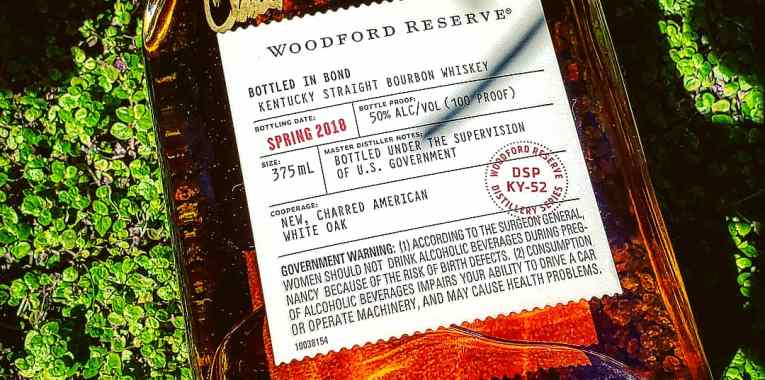
After asking around with no clear answers my friend Luke Ford, who works for Woodford, returned from a visit to Kentucky with a .375ml bottle signed by Woodford Master Distiller Chris Morris. A distillery only release of Woodford Reserve Bottled In Bond. 

My natural hoarding instincts took over, it went on the shelf and remained unopened for the past year. But why? I’ve always maintained that whiskey is meant to be drank, to be experienced, and after all the curiosity that lead to me actually receiving a bottle shouldn’t I be curious about what the whiskey actually tastes like? So, I opened it. 

NOSE: Super oak, straw, light stone fruit
PALETTE: Caramel, cinnamon, baked peach pie, with a touch of the metallic pie tin
FINISH: Bright, quick, and surprisingly light for the extra proof 

This bottle tastes exactly like what I would expect a Bonded Woodford to taste like and that is incredibly interesting to me because by all right’s it shouldn’t. 

The Bottled In Bond Act of 1897 states that to be bottled in bond a product must be produced by one distiller at one distillery within in one 6-month distillation “season.” It must also be aged in a federally bonded warehouse for a minimum of four years and bottled at 100 proof. 

It’s the one distillery requirement that makes this interesting. The traditional bottle of Woodford is made up of spirit from two different distilleries. Column Still distillate from the Brown Foreman Distillery in Shively, KY and Pot Still distillate from the Woodford Distillery in Versailles, KY. This bottle only caries the DSP Number, essentially the distillery address, for the Woodford Distillery. Meaning this should legally be only the pot still whiskey. Which to me says there should be a bigger flavor difference. In a way it’s almost impressive that this really does just taste like Woodford. 

Part of what I love about Bonded whiskey is how clear cut it is. You always know the exact distillery, proof, and process whenever a product is bottled in bond. It strips out a lot of the mystery and marketing from a brand. It was an often overlooked mark of quality on affordable whiskey. And yes, the category is seeing a resurgence and premiumization in the past few years, however these are often just upscaled versions of existing brands. They aren’t bad but they are a sign of the times and they are familiar. 

This Woodford Bottled In Bond clearly falls into this ongoing trend but this bottle also raises questions for me. Is the labeling on this very small run inaccurate or have I always overestimated the impact of the column stills on the final Woodford profile? It’s made me think about Woodford in a way that I honestly haven’t in years. I don’t have an answer to these questions but at least it’s something to ponder over the next glass. 

Whiskey Wednesday: The Old Forester’s New Clothes

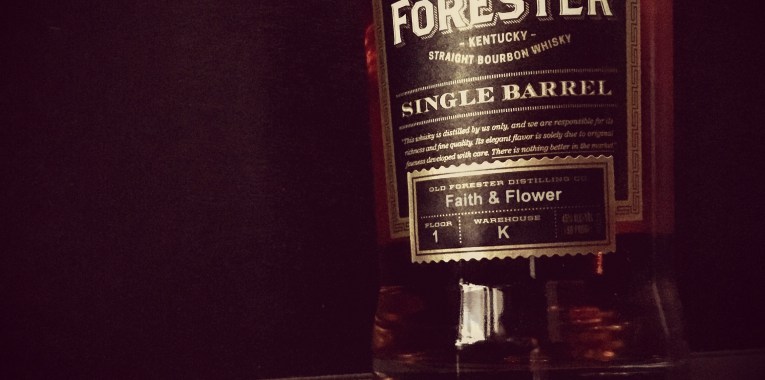
It’s time for the same old song and dance but with a brand new look. The first entry in a new chapter of house single barrels with the first Faith and Flower edition single barrel of Old Forester.

download.jpg

Old forester is an old brand, introduced by Gavin Brown in 1870 as the first bourbon brand sold exclusively in sealed bottles. Being sealed gave consumers assurance that the product hadn’t been tampered with or adulterated which made it the fan favorite of pharmacists who stocked it for its “medicinal qualities”. This reputation probably helped with Old Forester being granted one of six legal licenses to produce medicinal whiskey throughout Prohibition.

Unfortunately, over the century and a half of its existence Old Forester has been over shadowed by the Brown-Forman corporations other whiskies, like Jack Daniels or Forester’s mashbill twin Woodford Reserve. But recently the company has been trying to inject some new life into the old horse.

To kick things off the new Old Forester distillery is slated to open in downtown Louisville this year, And a few years back Old Forester was made the official bourbon for mint juleps at the Kentucky Derby (replacing Brown-Forman’s Early Times whiskey which is not technically a Bourbon) and around the same time they started rolling out their Whiskey Row Collection. The Whiskey Row is a series of Old Forester Bourbons meant to highlight milestones in Old Foresters history and the style of whiskey being made at that point in time. The Whiskey Row series are hence named with a date and a style like the 1870 “Original Batch” or the 1920 “Prohibition Style” and they also came with fancy new bottles and labels that set them apart from the classic Old Forester bottlings. And now all that fancy bottle and label goodness has found its way to the single barrel.

The Old Forester Single Barrel has always been a bit of a rare breed and been at least marginally separated off from the main bottles so it makes sense to align it more closely with its Whiskey Row brethren. The bottle is sleek, black, and just a little sexy.

510BA05C-43B6-4957-BAD0-F3DB91AEA44B.JPG  The single barrel offerings are at a solid 90 proof, one of the things that set them apart from the standard bottles, but the color scheme on the new label is an almost complete palate swap. Where the normal Whiskey Row bottles harken back to the old white/cream style labels of the brands history the new single barrel is jet black with silver lettering. And clearly looking to scratch the whiskey intelligentsia’s need to know everything the rickhouse and floor where the barrel aged are large and center.
 

But packaging doesn’t improve the whiskey in the bottle. So what about the actual whiskey? This inaugural Faith and Flower barrel comes from the first floor of Warehouse K. It’s the classic Old Forester/Woodford

mashibill 78% corn, 12% Rye, 10% barley that can too easily come off as a sweet corn bomb, but here it’s taken on a darker tone. Deep, red, ripe cherry winds its way through the middle of the palette while cinnamon, nutmeg, and woody sweetness lingers on the nose. The finish is medium yet weighty leaving the rough edge of the barrel mingled with the caramel sweetness.

Seeing this single barrel dressed up and tasting like this is like seeing a old friend the you’ve long felt to be predictable suddenly dressed to the nines and just dripping with an heretofore unseen sex appeal. The bones are the same but it’s a reminder that everything, and everyone, has a unexpected side that can make you sit up and take notice.

Mastering Some Woodford Reserve

It’s easy to write things off, whether it’s because of bad experience, ancillary influences or even just outright familiarity. I haven’t always been as even tempered as I am these days, and there was definitely a time in my career where if I was 10 people deep at the bar and you asked for a big name product I sure as hell didn’t want to sell you that product because haven’t you seen everything else on the bar?! There are so many options and that’s what you’re going with? And because the bar was 10 people deep, and 90% of people don’t care about obscure spirit education, I just stopped carrying those products in an effort to force you to buy what I thought you should be drinking. Woodford somehow ended up in that category.

I’m not quite sure how it ended up there either. Woodford isn’t an old brand name by bourbon standards. It was first released in 1996 by Brown-Forman after they repurchased the mothballed Labrot and Graham Distillery (formally the Old Oscar Pot Distillery) in 1993. Brown-Forman had previously sold off this distillery in 1971 at the beginning of the great bourbon drought where national interest in spirits veered sharply away from what is now so hip. This makes it a brand a good 10 years younger than Blanton’s, Elijah Craig, or even Evan William’s Single Barrel so it doesn’t feel like an issue of over familiarity. If anything it’s just more visible marketing.

For a while I thought it was the rumors that Old Forester and Woodford were the same product. And on a personal level I prefer Old Forester Signature to the Woodford Distillers Select. Both share the same mashbill (72% corn, 18% rye, 10% malted barley) and Brown-Forman is open about the fact that a portion of Woodford is made up of honey barrels from the Shively distillery batched with the 100% pot stilled distillate from the Woodford Distillery, though how much each distillate contributes is unknown. Tasting Old Forester and Woodford side by side there is a clear difference in taste. Old Forester has more of a corn sweetness while there is a metallic quality to Woodford that I’ve always associated, right or wrong, with their pot stills. But this doesn’t hold weight because despite my personal preference for Elmer T. Lee and Rock Hill Farm I’ve never tried to cut Blanton’s out of the line up. I’ve recently come to suspect that the thing I thought was turning me off of Woodford might actually be the thing I actually enjoy: the pot stills.

imgres.jpg            Let me explain. Despite not carrying standard Woodford I’ve always been interested in the Master’s Collection (and the rye but that’s a story for another time). The Master’s Collection is an ongoing series that first began in 2005. It is a once a year release that is always something experimental. It doesn’t always qualify as a bourbon, the mashbill might not meet the required limits or the barrel finishes might be outside the strict bourbon law, but they are always ambitious. And more interestingly they are supposedly whiskey produced only from the pot stills at the prime Woodford Distillery in Versailles, KY.

They might not be everyday whiskies but here has always been some
thing that makes them interesting. This year’s was a brandy cask finish that dialed up the dried fruit. Last year’s was more interesting. Dubbed the 1838 Style White Corn it rather obviously subs in white corn for the more standard yellow corn which ends up creating a softer shortbread cookie, layered under a light lemon with that distinctive metallic Woodford note underneath. And the year before that was a Sonoma-Cutrer Pinot Noir barrel finish that grants a massive tannic, cherry, earthy note.

images.jpg            I’m in love with the idea of all of these yet on the actual liquid hasn’t always lived up to those expectations. But those expectations aren’t always fair. The Woodford name can sometimes influence what you expect to be tasting. For instance, Brown-Forman used to distill the Rittenhouse Rye for Heaven Hill while their production was limited due to a distillery fire in the 90’s. Yet once Heaven Hill moved production back to their own distillery and Woodford released a rye that is pretty obviously a continuation of that Rittenhouse heritage I judged it more harshly simply because of that Woodford name.

So what are we drinking tonight? The standard Woodford Reserve Distiller’s Select. It sits very heavy on the tongue with a rich sense of dry leather, a bit of dark cocoa, definitely vanilla and a hint of cherry. The oak also plays a massive roll lingering on the finish. We’ll stack it up next to a few of the Master’s Collection and see if we can pick out those pot still notes.

Yet if we take all of these experiments side by side with the standard Woodford we can see a distillery, and a whiskey, in a state of constant internal reflection. Despite at one time being the official bourbon of the Kentucky Derby Woodford is not stagnant. And while I might have forgotten about it for a time, it is certainly not something to write off. Rather a piece of the puzzle, another tool that leads to what I truly want from any patron at my bar: genuine curiosity and a desire to explore.