Drinking Poetic (on a Wednesday): Highballs

I’m a whiskey purist. Bourbon, Scotch, Japanese, Barrel Strength, it doesn’t matter, I drink it neat. For years I was determined that not even a drop of water would come between myself and my sweet, sweet barrel aged nectar. What’s changed me? The highball.
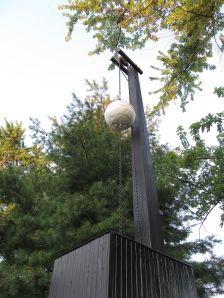
Highball_Signal_Jun_12      The highball is nothing new. It’s a simple class of drinks: a shot of spirit diluted with several ounces of a carbonated beverage on ice. My favorite rationale for where the term “highball” originated from comes from the old railroad days. Along the rail tracks there were “highball” signals where a ball would be hoisted out of a barrel signaling that the track ahead was clear and the trains could travel full speed ahead. A “highball” drink was at the time served in a highball glass with a single lump of ice. As the soda was added to the glass the ice would rise just like the highball signal telling drinkers they could dive in at full speed as well as quickly down the remainder of the drink when their train pulled in.

Like most classic it was simple, easy, and was much abused during the 70s, 80s and 90s becoming barely recognizable but it’s still a class of drinks that people still know the name for.  But the highball that interests me, the undiluted purist, is a straight whiskey soda.

My first highball in Japan was out of a can.

Ask for a Whiskey Highball in the U.S.A and there’s a good chance you’re going to end up with a whiskey and ginger and even this combo wasn’t enough for the sugar loving American palette and has been vastly over shadowed by its cousin the Jack and Coke. But in Japan the Whisky Highball has been elevated to an art form. I had heard the hype but it wasn’t until I visited Tokyo this year that I finally understood.

My first highball in Japan was out of a can.  I would never even consider getting a canned mixed drink from a 7/11 in the States but when you cross the international date line and land in the future and your hotel room isn’t ready for another 7 hours what else are you supposed to do while walking through the city?

From the moment that can touched my lips all I drank for the rest of that trip was highballs. And what struck me everywhere was the balance and the quality.

It was expected in Ginza. It was a random bar that we didn’t know the name of. The bartender knew maybe a handful of English words but when we ordered Suntory Highballs he enthusiastically pulled every Suntory whisky he had from the back bar to try and walk us through which one we actually wanted, and then thoughtfully poured the whisky over hand carved ice, stirred, and topped with soda before continuing on to casually brulee half of a passion fruit for the garnish of another customers drink. But when the highball at the chain ramen shop where you have lunch is just as elegant you know there’s something special happening.

It’s an attention to detail and a respect for the process. Each person who poured me a highball had respect for the process in their own way. Its easy to see, and taste, why highballs are a cultural force in Japan. And with the rise of Japanese Whisky across the world the Japanese are trying to export their highball ethos as well.

Suntory and Nikka have both made moves to position themselves in the highball world. Suntory has even released the Suntory Toki in the states, a blend specifically designed for the taste profile, and price point, of a highball. But the problem for me with the Highball in the States is the soda. Doesn’t matter how good or finally designed your whisky is the moment it is smothered by carbonated water from the gun, or drowned with a bottle of Canada Dry it’s lost it’s edge. There’s just simply a difference in the quality of bubbles.

Its odd to call a machine thoughtful but all good bartending has a certain degree of prep that happens behind closed doors.

Enter the Toki Highball machine. My first thought on hearing about this highball machine was why the hell would I need a machine to make the simplest drink on the planet?! But after my eyes were opened in the Land of The Rising Sun I approached the machine in a new light.

The design and execution of this machine are thoughtful. Suntory was aware of the problems of trying to export their highball style and worked to eliminate as many roadblocks as possible. Not only does the machine have the necessary refillable whisky tank, but also a separate water cooling system. It then carbonates with amazing specificity and will dispense the sparkling water independent of the whisky. My bubbles problem was solved.

It also adds a measure of thoughtfulness back into the process. Its odd to call a machine thoughtful but all good bartending has a certain degree of prep that happens behind closed doors. Whether it’s batching, technique training, or infusion,s a good portion of our job is doing the work out of sight so that the customer can sit at the bar and enjoy a seamless, delightful night out on the town. And the behind the scenes work has definitely been done to bring these highballs from Tokyo to LA.

So rejoice! Tonight is the unveiling of the Toki Highball machine at Faith and Flower. Come see exactly what I mean.

Drinking Poetic: The Ship of Theseus


I compete in a lot of bartender competitions. Not only is it a great tool for advancing my career I also just find it fun. Like really fun. I love the whole shebang. I have a background in theater so I spend a lot of time crafting the oration and spectacle of the presentation trying to meld the drink with the competition performance. But ultimately, those 6-8 minutes presenting make up a fraction of the work that goes into competing. Because it doesn’t matter how great your soliloquy is if the drink doesn’t match up.

IMG_3469

The R&D is where the true spirit, and fun, of these competitions lay. I’m incredibly fortunate to have an amazing collaborator in the form of my lovely, talented, and extremely patient girlfriend and some, if not all, of my best drinks have come out of R&D with her for these competitions. A lot of ideas end up on the cutting room floor only to find themselves resurrected for a cocktail menu down the line. Or sometimes ideas that have been kicking around your head find the absolute perfect outlet in a competition prompt.

That was the serendipitous case with The Ship of Theseus.

One of the cocktail prompts for Heaven Hill’s Bartender of the Year 2017 was to submit a drink based on a classic cocktail. This isn’t an unusual prompt but its one that’s always been difficult for me because, in my experience, drinks based on classics are really just classics with a part replaced. Can those really be called original cocktails?

This problem of identity is something that I would think about late night, several whiskies in while closing the bar and when it came up for the competition my late night musing immediately turned my thoughts to “the Ship of Theseus.”

The original Ship of Theseus isn’t a drink but a philosophical conundrum that has been debated for centuries And it goes like this: Theseus, the classic Greek hero who slew the minotaur, has a ship. On that much everyone can agree. But after slaying the minotaur Theseus returns to port needing a few repairs on the ship and a few replacement crewmembers. He then returns to adventuring and doing more hero things. This of course leads to more repairs and replacements. This time the mast, next time the rudder, this time a first mate that foolishly headed the siren’s call. Eventually every last plank, rivet and crew member of the ship has been replaced. With none of it’s original components intact is this still the ship of Theseus? And if it’s not when did it stop being that original ship? After the first repair? After the 31st?

Let’s make it even more complicated. Lets say the shipwrights doing the repairs saved all of the pieces they replaced and built another ship out of them and the two ships now float side by side in the harbor. Which one is the original and which one is merely ‘inspired by’?

71zCI-rBVbL

While giving this long winded explanation to my girlfriend (have I mentioned how patient she is?) she casually asked if there were any ship based classic drinks which immediately brought up one of my least favorite drinks, the Remember The Maine. It first appears in Charles H. Baker’s 1939 book the Gentleman’s Companion and traditionally looks like this:

2 oz Rye Whiskey

.75 oz Sweet Vermouth

.25 oz Cherry Herring

Dash of Absinthe

Stir on ice and serve up.


Named after the U.S.S. Maine, a battleship sunk under suspicious circumstances of the coast of Cuba who’s sinking was used to insight the Spanish-American War with the battle cry “Remember the Maine, to Hell with Spain.” The drink has always fell flat for me so it seemed like the ideal ship to hit with a few “repairs.”

LWF-Feb-08.jpg

First, the Maine isn’t a true cocktail because it doesn’t contain any bitters so a few dashes of orange bitters were added. Next, the Cherry Herring in the Maine is one of my least favorite ingredients. I find it overly sweet and muddled, so I subbed it out for Kirschwasser, true cherry brandy. This made the drink brighter, more fruit forward and drier. This allowed the vermouth to be swapped to a Chinato style that added in an extra bittersweet quality to balance out the kirsch. Then the base remained rye whiskey, after all you need certain key features to be a ship, but using Rittenhouse BiB adds a depth and a back bone that is more specific than calling out for a “rye.” The drink ended up with an elegance and subtly that the absinthe in the original would have destroyed so the absinthe was dropped in favor of a chartreuse rinse on the glass to lend those floral, herbal notes with out disrupting the ships internal balance.

The new recipe looks like this:

IMG_4524.JPG

1.5 oz Rittenhouse BiB Rye

.5 oz Kirchwasser

.5 oz Alessio Chinato Vermouth

2 dash of Angostura Orange Bitters.

Stir on ice. Strain into a cocktail glass rinsed with

Green Chartreuse.

Garnish with a marasca cherry

Identity Crisis Optional

Both ships now get to float side by side completely distinct. The Ship of Theseus is clearly no longer just a variation of the Remember the Maine but I’d be hard pressed to tell you when that change over happened. It’s a conundrum that deserves a drink of mythic proportions and I think I might have just the perfect one for it.

download.jpg

Whiskey Wednesday: Islay Barley

When you think of whisky and what gives it it’s flavor what springs to mind? Is it the mashbill, the barrel type, the aging location and length? Chances are good terrior didn’t spring to mind but the team at Bruichladdich would like to change that.

images-1.jpg

Bruichladdich is a distillery that blends history and modernity. Founded in 1881 the distillery was, at the time, the most modern distillery on the island of Islay. It wafted in and out of popularity until the distillery was mothballed in 1994 for being “surplus to requirements.” It gained new life in 2000 when it was purchased by a group of private investors who dismantled and revamped the entire distillery once again making it one of the most modern distilleries on the island. They also brought with them a lot of experience in the wine world including a deep reverence for terrior, a reverence that has survived the distilleries sale to Remy Cointreau.. They also made two great decisions in their early days 1) hiring the legend Jim McEwan to be their master distiller and 2) deciding to actually grow barley on the island of Islay.

Scotch does not require the barley to be Scotch. To be Scotch that barley needs be distilled in Scotland not grown there. This is very reflective of the mentality that terrior doesn’t matter in whiskey. It’s not that distillers don’t care about the quality of the barley but rather that with so many other factors effecting the final product the terrior was way down the scale of importance, especially once the economics of scale set in.         download-1.jpg

The early days of whisky making were a local affair. A farmer had excess crops, they distilled them to preserve the grain, and sometimes managed to sell some of the spirit for extra profit. Many of these farm distilleries were successful enough to grow into commercial affairs but most did not survive the true industrialization of the spirit industry in the early 19th century. This was when improvements in technology and more interconnected trade allowed whisky making to become a large scale, commercial endeavor.

While there is some evidence that there was barley being grown on Islay before this time the advent of these large distilleries made in commercially unviable. These new distilleries were also all on the coast where they had their own piers or shallows where a flat-bottomed boat could dock. This made it more economic for these distilleries to import cheap grain from the mainland and export whisky.

As these distilleries continued to grow they also out grew the ability of the island to grow enough barley for them. There just simply isn’t enough land to supply all the barley these industrial distilleries need, so the farmers stopped growing the barley and turned to more economically advantageous pursuits.

Bruichladdich changed all of this in 2004 when they partnered with a local farmer named Raymond Stewart at Kentraw Farm on Richard Macaeire’s Foreland Estate on the Rhines. Raymond grew barley and Bruichladdich distilled it. The first release of the Bruichladdich Islay Barley was released in 2010. Each release is dated with the year of the barley’s harvest and labeled with which farm it called home.

Some of these releases have been stunners, the 2007 Rockside Farm is something I wish I’d squirreled away a few bottles of, but growing barley on the island of Islay is extremely finicky. The 2009 and 2010 releases of Islay Barley were blends of several farms. Still distinctly labeled but you can’t help but feel that the strong idea of terrior is running into the old problem of supply.

This blend of farms may be a temporary hiccup as the Islay Barley series has expanded. Bruichladdich divides its products into three core lines: Bruichladdich (unpeated whiskey), Port Charlotte (heavily peated whisky), and the Octomore (experimental, cask strength, super heavily peated whisky). The Port Charlotte is also utilizing a blend of farms but the Octomore is not. But then again the Octomore has always been a unique case with all of its barley coming from the farm of Octomore a mere 2 miles from the distillery.

bruichladdich-islay-whisky-_X2A5266.jpg

In the end, these are whiskies that are still evolving. Not just with different bottlings from year to year but also in terms of the process of making the whisky. And they are hit or miss. Barring the previously mentioned Rock Hill Farm the Bruichladdich Islay Barley releases have been interesting at least but the Port Charlotte’s have always fallen flat for me. I’m inclined to think that it’s because of the peat adding one more layer of obfuscation between the original barley and the finished whisky. The Octomore Islay barley however is a stunning beauty of a whisky with a layered elegance and subtle floral quality the belies its status as a cask strength monster and is one of the most heavily peated whiskies in the world.

Bruichladdich is the first Scottish distillery to put such a laser sharp focus on the terrior. They are experimenting and finding new boundaries inside of one of the most heavily defined spirits in the world and for that they should be applauded. Whether this experiment continues to grow and leave its own terrior on the whisky world or if it succumbs to the economics of industrial scale production has yet to be seen.


Whiskey Wednesday: The Art of Kavalan

If the Scots are the craftsman of the whisky world, passing down tradition and technique year after year because it works, then the Japanese are the engineers, dissecting and reassembling each component part. The Taiwanese are the artists, free willing and experimental; it’s insane that we can even make that analogy because there is only one distillery in Taiwan and it’s barely into its Tween years.

6a00e553b3da20883401b8d1223916970c-580wi

After Taiwan joined the WTO in 2002 Mr. Tien-Tsai Lee, founder of the KingCarbeverage conglomerate, was finally able to enter the whisky world and established the Kavalan distillery in 2005. The distillery takes it’s name from the Taiwanesse aboriginal ethnic group that originally inhabited Yilan county where the distillery is located in northeastern Taiwan. The distillery is built with classic Scottish pot stills and massive technological steps were taken to protect the fermentation and the distillation from the Taiwanese heat. Rather than adhere to how things are done traditionally they have worked to embrace the natural elements of Taiwan, most notably climate, to create something unique in the increasingly crowded whisky landscape.

The distilleries first new make flowed from the stills in early 2006 and the distilleries first whisky, the Kavalan Classic Single Malt, was released in December of 2008. That is a massively fast turn around for a new single malt. For the Scotch and the Japanese you can’t even legally call a product whisky until its aged for a minimum of three years and most distillers in those countries would call a three year old far too immature and unripe for release. This brings us back to the climate.

download.jpg            Almost every year, as reliable as new iPhone releases, someone touts a new aging process that’s a breakthrough that allows for rapid aging, creating the equivalent of a 12-year old scotch in a fraction of the time. In every case the whisky produced by these methods either never materializes or falls vastly short of it’s lofty goals. I’d be just as skeptical of the claims that once the team at Kavalan stopped resisting the humidity and heat of the sub-Tropical Taiwanese environment they were able to rapidly age their product if the whisky in the bottle wasn’t so damn good. As their Master Blender Ian Chang says, “We think of our heat as a sandpaper and our newly made spirit as a rock with edges,”

But it’s not just the unique climate. Kavalan is also exceptionally good at cask management. This cask management truly shines in their Soloist series.

The Soloist series is a lineup of Single Cask, Cask Strength, and Single Malt whiskies and it is these releases that made drinkers sit up and take notice. It is called the Soloist line because every release is like a soloist in a concert where their classic series is the whole orchestra. These releases quickly gained notoriety until in 2015, a mere ten years after breaking ground on the distillery, one of these releases, the Vinho Barrique, won “World’s Best Single Malt” in the World Whiskies Awards.

The Vinho Barrique harnesses the climate and marries it with excellent cask IMG_4520selection. The casks use a shave, toast, and re-char process on old Portuguese wine casks that creates a heavy oak influenced whisky. But rather than produce the heavily tannic, overly woody notes we often see in American quarter casks, instead it’s a finely tuned balance with rich dark berries, plum, and tropical fruit dancing along the edges of the oak’s vanilla and tannin while swimming in the traditional malt backbone of a well aged whisky. Being bottled at cask strength cuts through what could have been a cloying sweetness to instead add a spice note that allows the finish to linger long into the night.
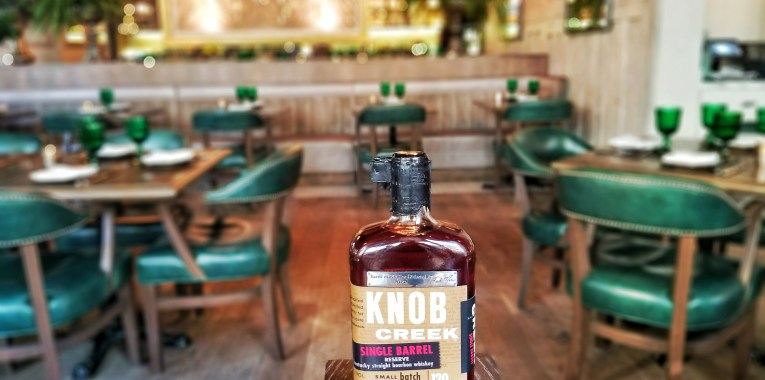
 

This award and bottling blew the roof off of Kavalan and their prices soon followed. In fact, many of the Soloist series had to be turned into standard issue, non-cask strength releases for the U.S. to keep up with demand even with the distillery expanding in 2015 to become the 9th largest single malt distillery in the world. They’re still experimenting and utilizing that climate and those casks with a new series of single barrel, cask strength, sherry and port cask releases that you’ll probably never casually encounter without a starting price tag of $400+ per bottle.

So what are you likely to encounter? Well, with the Soloists taking a quick intermission the concert continues with the Kavalan Classic that we mentioned before. Keep in mind this is a young distillery, no matter what accolades they’ve accrued, and they’re still playing with their formula. Point in fact, the Classic is an 80 proof bottling for most of the world but to appeal to American palates and American fans of the overproof work, here it’s bottled at a slightly bigger 86 proof.

A blend of ex-Bourbon, ex-sherry, and ex-wine casks all about 4-4.5 years old it doesn’t drink like a young whisky and has a lighter complexion. Stone fruit, a touch of floral sherry, and vanilla with a distinctive toasted malt are all present. But it doesn’t hold a candle to the bonfire that is the Vinho Barrique or really any of the Soloist single barrels. Which is a shame because those bottles are quickly becoming unicorns.

In the end it comes back to our craftsman vs. engineers vs. artists. The artists at Kavalan have produced a few shining masterpieces but they haven’t quite mastered the skill that sets the craftsmen and the engineers apart: blending. The Japanese have been able to set themselves apart by truly understanding and controlling every drop of whisky to blend it together to create art and the Scots have years of tradition that makes it seem a natural talent. Kavalan is just dipping its brush into the wider world of consistency.

Just as the Taiwanese heat seems to speed their whisky more swiftly to maturity, Kavalan itself has sped right into all the major touch stones of the modern whisky world: craft distilling, underdog appeal, rapid growth and awards, price hikes and shortages. No matter where it goes from here there is no denying that Kavalan is true global player.

353da3ccccedcc82-_DSC9542Edit.jpg

Whiskey Wednesday: Knob Creek 25th Anniversary

Bourbon is an old tradition, dating back hundreds of years to our rugged frontier forefathers and foremothers who proved their American spirit by making a distinct product using brilliant recipes and methods that they would pass down unchanged to us to be poured into a glass for our drinking pleasure today. At least according to the marketing materials  it is… the truth is a bit more complicated.

Although the term “Bourbon” is associated with whiskey as early as the 1820s, “Bourbon” was only declared the native spirit of the United States by Congress 53 years ago with the passing of a 1964 resolution. And the definition of “Whiskey” as a spirit distilled from grain, and Bourbon as a spirit distilled from 51% corn is only 108 years old. President William Howard Taft put the definition in place in 1909 as part of the Safe Food and Drug Administration Act of 1906. Yes, it took him three years to come up with the definition of “Bourbon whiskey.” But with the start of Prohibition a mere 11 years away its questionable how many people would have enjoyed whiskey that lived up to these new regulations. Think about that the next time someone tells you their whiskey is “Pre-Prohibition Style.”

All of this is to say that tradition is long and constantly changing and in the adjusted timeline some landmarks are bigger than they appear at first. Like, for instance, Knob Creek’s 25th Anniversary.

images

Knob Creek was the whiskey child of Booker Noe, grandson of Jim Beam who tookover as Head Distiller of his grandfather’s distillery in 1965. Booker, along with Elmer T. Lee and Jimmy Russell, is credited with the revitalization of the Bourbon market at the end of the 80s with the introduction of now iconic brands of Bourbon. Booker first released Booker’s Bourbon in 1988 to much acclaim, and this was quickly followed up with Baker’s, then Basil Hayden’s and Knob Creek in 1992. These are the heart and soul of the Jim Beam Small Batch collection, which led the way in many respects for the premiumization of Bourbon.  None of these have survived to their 25th year with out some alteration.

Knob Creek is named after the stream that ran alongside Abraham Lincoln’s childhood home in Kentucky and is Booker’s take on  “Pre-Prohibition Style” whiskey. A term that we can now see is as nebulous as those early definitions of whiskey.

In this case it meant a Bourbon whiskey bottled at 100 proof and carrying an age statement of 9 years. Traditional Knob Creek is a deep caramel color, with a nose that carries a lot of oak, along with a touch of maple and baking spice, a super vanilla, white pepper, and dark cherry palette with a earthiness and dustiness that I can only associate with Jim Beam yeast, and a gripping, dry finish that is a bit bracing at 100 proof. It’s iconic. Immutable.

Except it wasn’t. In 2001 Booker, who had continued to oversee the brand well into his 70’s, passed the torch to his son Fred. And shortly after the Bourbon boom that Booker had helped create hit full force.

Knob Creek expanded. In 2010 Knob Creek Single Barrel hit the market. It was a natural expansion, still 9 years old but bottled at 120 proof from a single barrel. Then they began releasing a non age statement Knob Creek Rye in 2012, followed in 2013 by ae008e3717aca1adfe229d4d561643efthe Knob Creek Smoked Maple, a bourbon flavored liquor bottled at 90 proof. Then camethe inevitable. In 2016, just shy of 25 years, Beam Suntory announced that Knob Creek would be dropping its age statement. That same year the Knob Creek 2001 was released; a 13 year, Cask Strength release comprised of the last barrel that Booker Noe laid down before passing the torch to his son.

Jim Beam has followed up with a 25th Anniversary release appropriately named Knob Creek 25thAnniversary. It’s a limited release of 300 barrels, all between 12-13 years old and bottled between 120-125 proof that is exactly what it sounds like: bigger, more intense, Knob Creek.

Whether you’re going by the centuries old “traditional” definition or adhering  to a more modern practice twenty five years is still a milestone worth celebrating in the midst of so much change. Hell, maybe a few more milestones like this will help us truly appreciate that some change is as much a part of Bourbon heritage as all those pre-Prohibition style ways of making it are.