
I feel a certain kinship with Hemingway. I’d like to think it’ because we both have an affinity with words but there’s no denying that the legend of Hemingway has been at least as influential as the man himself. And just like the man himself the truth is always more complicated.
Hemingway was, like most people of his time, an equal opportunity drinker. While in contemporary imagination he’s associated with whatever the masculine drink of the time is, his own writing talks about him drinking absinthe, brandy, champagne, wine, beer, and whatever else the local drink of choice was. But to modern day bartenders Hemingway equals rum.
In his later days Hemingway became synonymous with Cuba, Havana, and La Floradita. If you believe bartending myth La Floridita may have been the first bar to serve a Frozen Daiquiri but it is with out doubt the first place to serve the Papa Doble. Which is a drink better known as the Hemingway Daiquiri

Hemingway was convinced he was diabetic, though it was probably a larger underlying health issue, and insisted on his drinks being sans sugar. He also insisted on them being quite stiff to counteract the pain caused by the same underling condition. In an effort to accommodate the prolific drinking of the Nobel Laureate the Papa Doble was created. Crafted with a double shot of rum per Hemingway’s request, subbing in Maraschino Liqueur for the sweetener, and adding grapefruit juice to make the concoction more palatable. Hemingway probably drank it with Bacardi at the time so we know it was with light rum and the pretty standard recipe these days goes as follows:

2 oz Light Rum
1 oz Fresh Grapefruit
.5 oz Maraschino
.5 oz Fresh Lime
.25 oz Simple Syrup
Shake with ice, Double Strain into a stemmed cocktail glass.
For many who do see Hemingway as the pinnacle of the uber-masculine this drink doesn’t jive with their expectations. The drink is citrus and fruit, it’s served up, and despite the adjustments still has a certain sweetness. Also, it ignores the fact the citrus in Cuba is simply different than what we get in the States.
I think this juxtaposition comes from the never-ending misconception that somehow drinks have gender, as well as a misunderstanding of masculinity. In addition it shows a lack of experience with how drinks can have a time and place. They’re not a one-size fits all occasion. I believe it also ties into a basic misunderstanding of rum itself.
“The chief fuddling they make in the island is Rumbullion, alias Kill-Divil, and this is made of sugar canes distilled, a hot, hellish, and terrible liquor.”
Unlike spirits like whiskey, tequila, or cognac the rules for making rum are wide and varied. Rum can also literally be made anywhere. New England used to be the rum capitol of America for Christ sake. So from island to island, distillery to distillery, and drinker to drinker “rum” means something different.
Let’s start with the basic misunderstanding of color as a classification. For much of the world rum is Light, Dark, or Gold. But that doesn’t actually tell us anything about the process being used to make the rum. A much better, but equally challenging, classification can be made using history.
The history of rum is in many ways the history of the sugar trade in the Caribbean, which also ties it deeply to the slave trade. The Triangle Trade would bring slaves to work the sugar plantations in the Caribbean, take sugar and molasses to the colonies, and return to Europe loaded with rum and tobacco ready to start the process all over again.
The life of slaves in the Caribbean was truly torturous. Life expectancy on the plantations was a mere 7-9 years after being abducted. Harvesting and refining sugar cane was an extremely dangerous proposition so who would blame someone trapped in that kind of life for take this by-product, this molasses, and starting to ferment and distilling it. Anything to take the edge off, even if the end result was that, “The chief fuddling they make in the island is Rumbullion, alias Kill-Divil, and this is made of sugar canes distilled, a hot, hellish, and terrible liquor.”
As the trade grew, sailors, and yes this included pirates, had a need for spirits for their journeys and this “Rumbullion” started to become more refined as the disparate cultures brought their own distillation traditions and practices to the islands they controlled. This styles roughly correlate to what islands were colonized by the English, The French, and the Spanish.
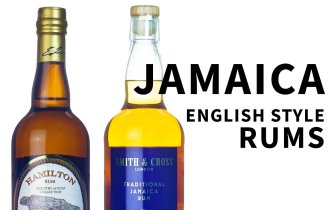
The English style is often labeled as “traditional.” This are the rums made from molasses fermented for 2-3 days and distilled using pot stills. These pot stills are inefficient, meaning they don’t distill to as high a proof as modern column/industrial stills, but they also strip out less flavor leaving behind a lot of the “hugo” or rum funk that is incredibly noticeable in Jamaican style rums. These are typically big, powerful, funky, full flavor rums and many are left at a higher proof.
In contrast, the Spanish style can always be described as “light rum.” And this is where that confusion comes into play because the use of the word “light” here has nothing to do with color, it’s all about the flavor. “Light rum” is a rum that is lighter in flavor than a traditional pot still rum. Still molasses based but with a shorter fermentation time, often times only a scant 24 hours, and then continuously distilled on column stills. This was a style that was developed in Cuba in the late 19th century and is the style still practiced by Havana Club and Bacardi. These are the majority of the rums on the market. They’re easier and cheaper to make it bulk. But because they carry less flavor it doesn’t matter what color they are or how long you age them they will always be light rum.

Then there’s the French. Always doing things their own way. The French style of Rhum Agricole developed as mainland France moved away from importing sugar due to events like the Haitian slave rebellion and the English navy making the process too problematic. So, they began refining sugar from sugar beets on the mainland. This left the French controlled Caribbean islands with less reason to refine their sugar cane nectar and they began distilling it instead. This results in a grassier, greener spirit that has more in common with Brazilian cacchaca than its traditional or light rum island cousins.
And these are just the baseline styles of traditionally made rums. We haven’t even gotten into blended rums, heavy rums, or god forbid Inlander Rum. Confusion is almost inevitable.
Back to the Papa Doble, when you take into account the fact that this was being made with the Cuban style light rum the double shot request seems less the demands of an alcoholic, and more the demands for more flavor from a man used to massive flavors. The same can be said for the substitution of maraschino for the sweet and the grapefruit juice, all of this meant to soften the edges of that fiery Rumbullion and results in a drink that is flavorful yet relatively dry.
Trust a nerd to use science to try to get drunk like their literary hero.
You’ll notice that the modern recipe above adds back in a touch of sugar. This probably happened to address modern palettes but also as an attempt to balance the inconsistencies of the fresh juice being used. Balancing bright, fresh squeezed lime and grapefruit is always a different story than balancing day old juice. This is where my problems with the drink start to emerge from the literary shadows. Honestly I find it a sugary mess. Maraschino liqueur has a funk of it’s own, but is also relatively sweet and wars with the grapefruit in my opinion. I also find that for a drink that was designed to be dry it comes often comes out too sweet with the balance of the grapefruit and lime often not being balanced. My solution? Kirschwasser.
A true, traditional German Style Kirschwasser grants all of the cherry flavor but none of the extra sweetness of the Maraschino making it an easier drink to balance. Kitschwasser was also another favorite tipple of Hemingway so it keeps it all in the family. I also like something a little punchier so I like to add a splash of a more traditional pot still rum to the mix. My standard recipe for this is:
1 oz Light Rum
.5 oz Over Proof Jamaican
.5 oz Kirschwasser
1 oz Fresh Grapefruit
.5 oz Fresh Lime
.25 oz Cane Syrup
Shake with ice. Double Strain and serve up.
The cane syrup adds just that touch of sweet to balance what is truly a very dry, very funky little sour now.
But being the nerd I am I can’t stop there. While trying to correct the balance issues of the drink I’ve made it more complicated to make in the moment. And it can still be thrown off by one person solera aging your juice bottles so I solved the problem like I solve all problems these days, by throwing a centrifuge at it.
Well, technically it’s clarifying the day old grapefruit juice, creating a cordial out of it and then acid correcting it to lime strength. This means balancing the acids inherent in grapefruit juice to the same as lime juice which balances out at 4g citric and 2g malic acid per liter of juice. This way the balance of sweet to the sour is always exactly what I want it to be, and has the bright consequence of turning this light rum drink into a light looking drink. In this form the Jamaican rum becomes a bit overpowering so the last tweak is subbing in some high proof agricole for a more floral punch.
Trust a nerd to use science to try to get drunk like their literary hero:
1 oz Light Rum
.5 oz Rhum J.M. 100 Proof
.5 oz Kirschwasser
1 oz clarified, lime strength grapefruit cordial
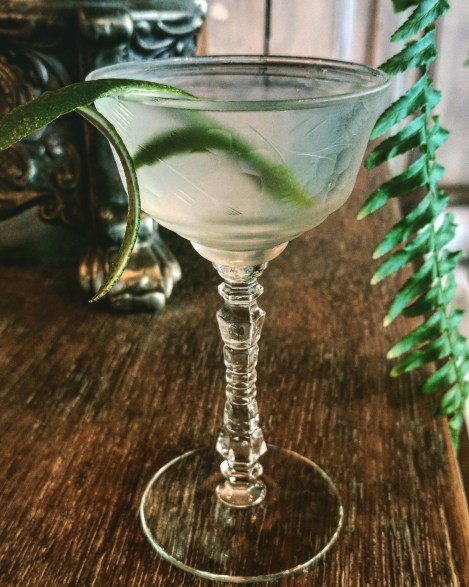
Stir with ice. Strain Up and serve with a Lime Twist.


 The packaging and labeling are fantastic. It’s like seeing an old friend after the divorce now that they’ve started working out and gotten a haircut. It still looks like them but a cleaner, fitter, more attractive version of them.
 Bottled In Bond LA