Reinvention is the key to longevity. No matter how often you hear something being touted as “Old Fashioned” chances are it’s actually an update on an old technique or just straight up marketing. We are constant victims of nostalgia, even the term “Old Fashioned” implies a dissatisfaction with the modern. Yet as much as we glorify the past the only way to truly stand the test of time is by constantly changing.
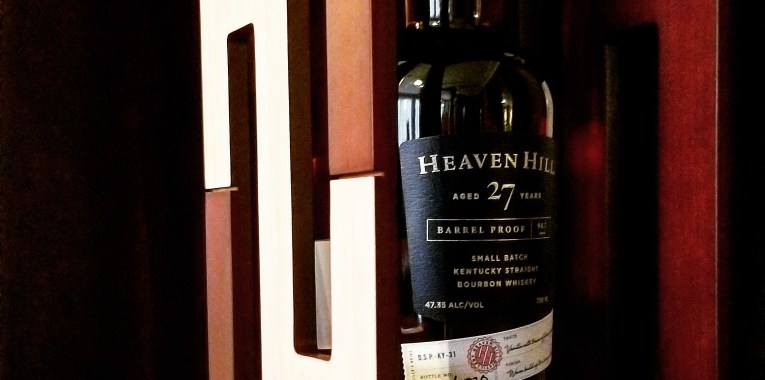
Take Heaven Hill’s new premium, limited edition release: the eponymous Heaven Hill 27 Year Old Barrel Strength Straight Kentucky Bourbon. Those are a lot of buzz words that add up to a lot of the old being new, just slightly different.
Let’s start at the top.
Unless you’re from Kentucky, Heaven Hill probably isn’t a brand you’re familiar with. But if you drink Bourbon it’s a distillery that permeates the very fabric of the category. Founded in 1935, Heaven Hill is the 7th largest alcohol supplier in the US, has the second largest inventory of American whiskey in the country, and is the largest, independent, family owned marketer and producer of spirits in the United States.
In an industry that’s built around the cult of personality and legends of the past (Jim Beam, Pappy Van Winkle, Jack Daniel’s, etc.) Heaven Hill built their name on other people’s legends: Elijah Craig, Evan Williams, and Henry McKenna. Hell, their master distiller since the founding of the distillery has always been a member of the Beam family.
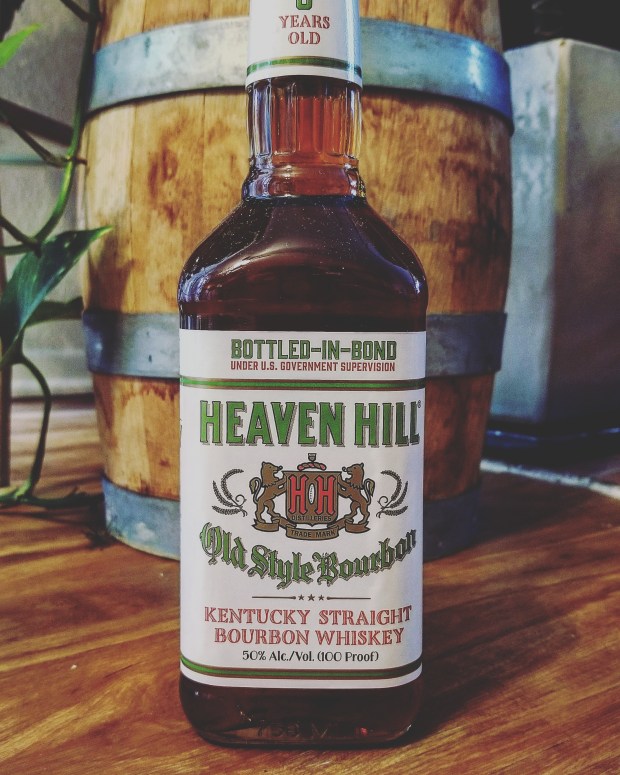
However, they’ve never had that flagship, namesake bottle. Outside of a few specialty releases named after William Heavehill, the farmer who owned the land the distillery was built on, the only true bottling to carry the Heaven Hill name is a 6 year old, bottled in bond, Kentucky exclusive. And this bottle perfectly encapsulates the company in my mind.

Heaven Hill kept the bottled in bond designation alive when no one cared and can be directly credited to it’s resurgence with products like Rittenhouse Bottled In Bond Rye. It’s also a 6 year old, straight Bourbon whiskey that ran for $12 dollars a bottle. It is quality at an incredibly affordable price, which is something that Heaven Hill has done well for so long. It also isn’t what the whiskey world is about anymore. These days it’s all about limited, old and rare so it should be no surprise that this little gem has been discontinued in favor of creating a more premium line up.
Which brings us to the age statement.
American whiskies, almost as a rule, don’t get this old. The oldest, most consistent age statement caps out at the yearly release of the Pappy Van Winkle and Elijah Craig 23 Year Olds, the latter also being produced by Heaven Hill. Because of the law requiring Bourbon to be aged in brand new oak barrels Bourbon this old just doesn’t taste that good, because it’s often over oaked or overly tannic. There’s also the catch that the Angel’s Share steals a percentage every year meaning there’s less to sell and that’s not taking into account the unpredictable acts of nature. A lot can happen in 27 years.
At 27 Years Old this batch of a mere 41 barrels were all aged on the 1st or 2nd floors of the Heaven Hill rickhouses where the Angel’s Share is arguably at its most minimal; but with only 2,820 bottles produced that’s still a loss of 75% of the juice.
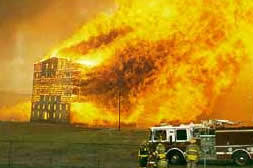
This whiskey can also never be replicated due to an act of god. In 1996, the Old Heaven Hill Springs Distillery burnt to the ground taking hundreds of barrels, and gallons upon gallons of aging whiskey with it. These 41 barrels were not only produced at a destroyed distillery, they survived an inferno that took much of its cousin spirit with it. This isn’t just rare because of its age, it’s both rare in addition to its age.
The Barrel Strength designation is where things get really weird. There is no legal definition for what “barrel strength” means. In fact the TTB is currently working on a new set of regulations specifically about that designation, but in colloquial use barrel strength is generally expected to mean that the whiskey is bottled at the proof it comes out of the barrel at which is usually well north of 100 proof. It is shocking then to see this barrel proof listed at a measly 94.7.
This goes back to those 41 barrels on the 1st and 2nd floor. The lower flowers generally allow for more mellow aging that reduces the Angel’s share lost. However, it also creates a naturally lower ABV as the alcohol evaporates faster than the water. This literal loss of alcohol is another reason why you don’t see whiskey this old from Kentucky. One of the perks of not having a template though was that these barrels weren’t selected with the idea of creating consistent flavor profile like most standard bottling. Instead these were the barrels left standing. After everything that was over oaked, overly tannic, too harsh, too soft, etc only 41 barrels were left and when batched together the naturally occurring ABV was 47.35, resulting in a technical Barrel Strength whiskey at an incredibly drinkable 94.7 proof.
The rest of the words we know. Straight Kentucky Bourbon means that it’s legally 51% corn whiskey, made in the state of Kentucky, aged for a minimum of 2 year in brand new, freshly charred, white oak barrels with no added coloring or flavors.
That’s a lot to take in for a single bottle. And it’s surprisingly alive. Heaven Hill has released a lot of one-off older whiskies. They’ve got deep, deep store houses yet in my opinion a lot of them have fallen flat. There was always something just off about them whether they were over oaked, or they felt thin because of the proof point. Whatever that missing puzzle piece was they seem to have found it with this bottling.
And in the end this is less about of a single bottle and more a culmination of Heaven hill’s journey over the past three decades. Bourbon has gone from the unwanted step-child of the spirit world to a global commodity and the Heaven Hill brands have evolved to keep pace. They’ve gone from affordable work horse whiskies into some of the most awarded and sought after bottlings in the world. And with this pivot Heaven Hill may have finally found a brand to highlight the gems that are sleeping in those Kentucky hills. I just hope we don’t have to wait another 27 years to see them.
NOSE: The Oak leaps out of the glass, there is a seasoned cedar wood quality with only a mild hint of the vanilla often expected.
PALETTE: Tannic, with a dried orange, and deep baking spice note. The caramel takes a major back seat only slipping out towards the end while the mid a palette is all about that earthy, savory oakyness.
FINISH: Incredibly dry, and a lingering mélange of everything that reminds you of your grandfather: tobacco, cigars, and leather that lasts longer that it’s proof would suggest.

 Bottled In Bond LA