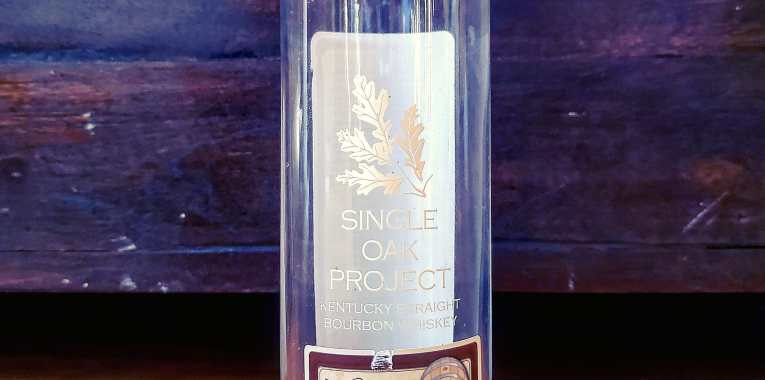
Quarantine Bottle Kill #4: Single Oak Project #156

I’m trying to cut down on the quarantine drinking so today’s bottle is a single 375 of Buffalo Trace Single Oak Project.

The Single Oak Project was a massive Bourbon experiment that was begun by Buffalo Trace in 2011. The goal was to break down the very DNA of Bourbon and be able to catalogue exactly what element imparts what flavor on the final product. It was the Human Genome Project of American Whiskey.

As the name implies the major variable that affects the final flavor of a whiskey is the process of oak aging. And more importantly how the oak interacts with the spirit over time. Ever tree and every barrel is different so the first variable that needed to be controlled was the oak.

Buffalo Trace carefully selected 96 American Oak trees with special attention paid to the grain and growth rings of each tree. These were then turned into oak staves and separated into staves from the top of the tree versus the bottom of the tree. They then varied the seasoning time of the staves. Half were seasoned for 6 months the others for 12 months.

Barrels were assembled using only staves that had been prepared in the exact same way. This produced 192 unique barrels.  These barrels then received either a #3 or a #4 char, the char essentially being how long the interior of the barrel was lit on fire and how deep it penetrated the staves.

They didn’t stop there though. Once the barrels were completed there were a few variables about what they were filled with. The mashbill of the whiskey varied (either a wheated or a rye Bourbon), the entry proof varied (105 or 125 proof) and then the style of ricks they were aged in varied (concrete or wood). 

By their own calculations this produced 1,396 taste combinations spread between 192 bottles. And over the course of four years they released all of these bottles to the public and opened a website where everyone could catalogue their tasting notes. At the end of the project all of the ratings, scores, and tasting notes would be gathered and a “winner” would be declared. Seeing how the project saw it’s final release in 2016 we know that the “winner” was Barrel #80 which has gone into production and will be released after reaching proper maturity in 2025, if we’re all still around by then. 

Barrel 80 was from the bottom half of the tree with an average grain size, seasoned for 12 months, and given a #4 char. The spirit was a rye Bourbon mashbill that entered the barrel at 125 proof and aged in a concrete rick. This is honestly very similar to traditional Buffalo Trace and it makes sense that a crowd source tasting would select something that is similar to an already popular flavor profile.

But of course the real winner of this project is the breadth of knowledge and flavor demonstrated by controlling the minutiae of every aspect of the whiskey making process. And with that in mind it’s still worth finding bottles and tasting through to see what those changes produce.

This bottle of Single Oak Barrel 156 has been on the booze shelf for years which completely defeats its purpose. So lets dive in.

This is another barrel from the bottom half of a tree with coarse grain, staves seasoned for 12 months, and given a #4 char. The spirit was a rye Bourbon base, entered the barrel at 105 proof and aged in a wooden rick. Now, after all that nerdiness here’s what it actually tastes like:

NOSE: Vanilla, Cherry, Heavy Oak, Pepper
PALETE: White Pepper, Tobacco, Leather, Stone Fruit, Rye Spice
FINISH: Dry, Spice, Medium, Earthy

I love the Single Oak Project because I love the minutia and variation.While I can wish that something on one of the more extreme ends of the bell curve had one out for wide production but the wealth of knowledge generated is worth a dram or a bottle.
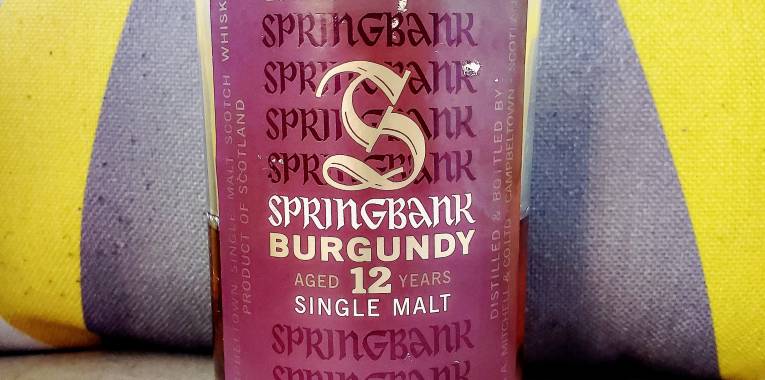
Quarantine Bottle Kill #3: Springbank 12 Year Cask Strength Burgundy

Springbank has always been a fascinating distillery to me. I intellectually love them. They are one of the last great Campbeltown distilleries. Located on Kintyre Peninsula, Campbeltown was once known as “the whisky capital of the world” with 28 distilleries packed into its borders. Today a measly three remain with one of them, Glengyle which produces Kilkerran, only releasing a single malt again starting in 2012.

All of this is to say that there is no Campbeltown “style” but when people refer Campbeltown style they are almost inevitably referring to the Springbank style. Especially since Springbank produces three distinct single malt brands: Longrow (peated), Hazelburn (triple distilled), and the eponymous Springbank.

What’s interesting to me is that the standard Springbank Single Malt isn’t particularly interesting to me. Love the history of the region and I love the nuances that make it a distinct malt but it’s never something I needed to keep a bottle of on the shelf. The Wine Cask finishes however are a different story.

Springbank releases a special edition 12 year old cask strength once or twice a year. These are usually met with great acclaim but the ones that truly peak my taste buds are their wine cask finished releases. The subtly and creaminess of the standard Springbank style plays wonderfully with the tannin and juiciness added from a used wine barrel. There’s also less of the sweetness that is associated with sherry or port cask finishes. Where sherry and port can often become the defining characteristic of a malt, here the red wine melds into the base flavors creating something larger than the sum of its parts while not overwhelming any part of it. 

These bottles tend to sit on my shelves begging for a special occasion and now every night ends up as a special occasion so let’s pour out this 12 Year Old Burgundy Cask.

This special release was bottled in 2016 at 107 proof after being aged in 1st Fill Burgundy Barrels and is everything I love about these style of releases from Springbank.

NOSE: Golden Raisin, Raspberries, Black Currant, Vanilla

PALETE: Plum, Apricot, Sea Salt, Leather, Honey, with a massively creamy mouthfeel

FINISH: Long, dry, slightly peppery, and a lingering oak

This is a truly breathtaking bottle. Literally, the proof, the flavors, the mouthfeel take my breath away on the first sip everytime I come back to it. And now it’s time to take the bottle away. Another sacrifice to social distancing.

Quarantine Bottle Kill #2: Woodford Reserve Rare Rye

The next victim of the Quarantine Bottle Count is the Woodford Reserve Master’s Collection Rare Rye twins from 2011. Yes, I’ve been sitting on two open 375ml bottles for nine years. Don’t judge me.

Let’s put this into context. Nine years ago rye whiskey was just becoming the hot item after decades of obscurity. And then here lands a pair of Woodford Ryes for $100. It was one of many signals that not only was Rye moving from the bargain category but that distillers and distilleries had been contemplating the move for a while.

The distillate is 100% Rye, probably a blend of malted and unmalted, triple distilled on the Woodford Pot stills and bottled at 92.4 proof. The only stated difference between the bottles is that one was aged in freshly charged new oak, just like Bourbon or American Rye legally must be, and the other is aged in reused Bourbon barrels. This technically makes it a rye “spirit” and not a whiskey.

What’s interesting to me though is that the New Cask is labeled as “Straight Rye Whiskey” with no age statement. Legally, this means that the “New Cask Rye” is a minimum of four years old. And as Woodford clearly says the only difference between the two bottles is the maturation process that means the “Aged Cask” is also four years old. 

Whiskey makers are accustomed to think in the long term. Production is measured in years if not decades but even then it seems a risky move to have distilled a 100% Rye in 2006-2007 even if it was meant to be a limited release. But the demand for rye has only gotten stronger in the past decade, clearly evidenced in Woodford having a dedicated Rye as part of it’s core line up in 2020.

As interesting as all of that backstory is, how does the whiskey actually taste?

AGED CASK RYE
NOSE: Grassy, Bready, with a touch of green apple
PALETTE:  Bright rye, a hint of vanilla and orange, honey
FINISH: Surprisingly Long, with a hint of mint and cinnamon, dry

NEW CASK RYE
NOSE: Tobacco, Honey, Vanilla, and oak
PALETTE: Cinnamon, deep baking spices, ripe apple, and leather
FINISH: Sweet, with a lingering oak and white pepper

Overall, these bottles are an fantastic example of the impact a barrel has on a distillate. The New Cask is 100% a rich, fully embodied rye while the Aged Cask is still young and fiery. It reminds me a lot of Mellow Corn, a personal favorite, but it could benefit from more time letting the flavors integrate.

They both unmistakably taste like Woodford. I’ve talked about this before but to me there is always a slightly undefinable, yet incredibly identifiable, characteristic to Woodford that I can only imagine comes from their Pot Stills. Both of these ryes carry that DNA.

Nine years after their release I’m not as excited by either of these bottles as I was when they first came out. But the world is a different place, the whiskey market is a different place, and I’m a different person.

While they’re not mind blowing whiskies on their own the weight of time evidenced in the aging and the drinking sits heavily with me as the last drops pour from the bottle.

Quarantine Bottle Kill #1: Heaven Hill 7 Year Bottled In Bond Bourbon

Sheltering in place has led to a massive spike in booze sales across the United States a the days are now divided into “Coffee Hours” and “Alcohol Hours.” Being forcefully unemployed by the pandemic I’m unable to contribute to that spike and have had to reexamine my hoarding tendencies. My reluctance to open bottles, let alone finish them, has been overtaken by my belief that whiskey is meant to be enjoyed. And if not now, when?

So, join me as I work my way through my bar cart with the great Quarantine Bottle Kill of 2020.

First up is a relative newcomer: Heaven Hill Bottled In Bond 7 Year Old Bourbon. Not to be confused with the Heaven Hill Bottled In Bond 6 Year Old Bourbon which was only available in Kentucky and was discontinued in 2018. One year later this 7 Year hit shelves with an updated label, an extra year of age, and a boosted price tag.

I’ve made no qualms about Heaven Hill being one of my favorite distilleries but their lack of an eponymous bourbon certainly means they have much less name recognition as a distillery than say Jim Beam. The old Heaven Hill 6 Year was one of my favorite bottles to bring back from a Kentucky trip and at $12 was an absurd steal.

Now, what exactly does an extra year and a new label and bottle taste like?

NOSE: Chestnut, dusty leather, vanilla, and oak

PALETTE: Earthy with a strong oak presence. A dusting of baking spices and a hint of tobacco. There’s a slight woodsy quality to it with a surprisingly light punch for a bonded whiskey.

FINISH: Medium and dry with a touch of stone fruit and capped with the oak and vanilla from the nose.

This is quintessential Heaven Hill. In fact, if you told me this was the 6 Year Old bottle I would believe you. Which makes sense as it’s the exact same mashbill only a year older and released a year after the 6 Year was discontinued. You can do the math. And that’s my only real con with this bottle: the math.

$12 would be an absurd price for any quality Bourbon these days.  However, at $40 it enters a very crowded field of more household names like Eagle Rare, Woodford Reserve, and Knob Creek. While this is solid bourbon I’d personally pick up a bottle of Elijah Craig from the same distillery for a lower price tag. 

I am happy to see it on the shelves though if only to help spread the Heaven Hill name. Though if it was still at the old price point I might have been able to stock up for the quarantine instead of having to finish the bottle.