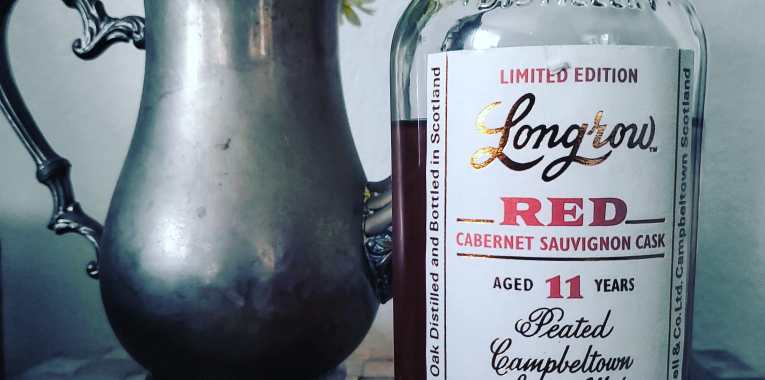
Just because we’re in quarantine doesn’t mean that there can’t be a theme. Aside from sparking joy by eliminating bottles from the booze cart that is. So next up on the quarantine bottle list is the cousin to the last, the Longrow 11 Year Red: Cabernet Sauvignon Cask.
For all single malts produced in Scotland the brand must be identified with the distillery. Hence the Macallan whiskey being made at the Macallan distillery, the Jura at Jura, Laphroaig at Laphroaig, and so on. This seems intuitive yet it’s absolutely not how things are done here in the US. While there are a few eponymous distilleries most of them produce dozens of other brands as well. For example, Jim Beam not only produces Jim Beam but Bookers, Knob Creek, Basil Hayden, Old Overholt, and the many variations there of.
This makes Longrow rather unique as it’s brand but not a distillery. Part of the reason this is allowed under Scottish law is that the brand is intrinsically understood to be produced at Springbank Distillery and the name of the distillery appears on every bottle. Larged embossed letters proudly proclaim “Springbank” above every label. But also, the style of Longrow is drastically different than its cousin allowing for a true separation and not just a label change on the same liquid.
Longrow, unlike Springbank, is heavily peated. There is actually a scientific way to measure the “peatiness” of a Scotch. It’s called Parts Per Million, or PPM, and is used to determine the phenol level after kilning but before distillation. Essentially the longer the malted barley is exposed to the peat fire during kilning the higher the peat and PPM. Longrow clocks in at 50 PPM which means it’s technically even peatier than the notorious peat bomb, Laphroaig which clocks in at 40 PPM.
So, here is a heavily peated Campbeltown Single Malt with less than a hundred casks produced every year at a non eponymous distillery. If that’s not enough to peak your interest then the Cabernet Sauvignon Cask will. Every Longrow Red release spends some of its formative years in a red wine cask, similar to the recently emptied Springbank Burgundy. For this release it spent the first seven years in ex-Bourbon barrels and the last four in a Cabernet Sauvignon cask.
To cap it all off the Red is bottled at Cask Strength clocking in at a whopping 104 proof meaning none of those big flavors are lost.
NOSE: Assertive smoke, raspberry, cherry, PALETE: Leather, sea salt, smoke, darker fruit, blackberry, a touch of sweetness and a strong tannic backbone FINISH: Long and dry yet juicy. Reminiscent of sea air with those red fruits returning.
This is a complex little dram. There’s a beautiful salinity that provides the throughline for Longrow while the tannin and the fruit lent from the Cabernet Sauvignon cask shines through at almost every level without being overwhelming. Surprisingly, I actually enjoy this one with a little water in it. The high proof gets in the way of some of the more delicate flavors that I really enjoyed in the Springbank Burgundy that are also present here.
All in all, this bottle actually feels like a perfect quarantine metaphor: subtle yet aggressive, complex yet needing a bit of hydration, and packing a hell of a punch.
Reinvention is the key to longevity. No matter how often you hear something being touted as “Old Fashioned” chances are it’s actually an update on an old technique or just straight up marketing. We are constant victims of nostalgia, even the term “Old Fashioned” implies a dissatisfaction with the modern. Yet as much as we glorify the past the only way to truly stand the test of time is by constantly changing.
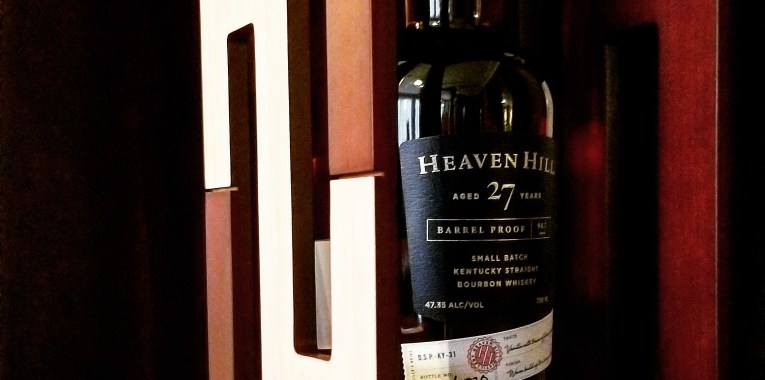
Take Heaven Hill’s new premium, limited edition release: the eponymous Heaven Hill 27 Year Old Barrel Strength Straight Kentucky Bourbon. Those are a lot of buzz words that add up to a lot of the old being new, just slightly different.
Let’s start at the top.
Unless you’re from Kentucky, Heaven Hill probably isn’t a brand you’re familiar with. But if you drink Bourbon it’s a distillery that permeates the very fabric of the category. Founded in 1935, Heaven Hill is the 7th largest alcohol supplier in the US, has the second largest inventory of American whiskey in the country, and is the largest, independent, family owned marketer and producer of spirits in the United States.
In an industry that’s built around the cult of personality and legends of the past (Jim Beam, Pappy Van Winkle, Jack Daniel’s, etc.) Heaven Hill built their name on other people’s legends: Elijah Craig, Evan Williams, and Henry McKenna. Hell, their master distiller since the founding of the distillery has always been a member of the Beam family.
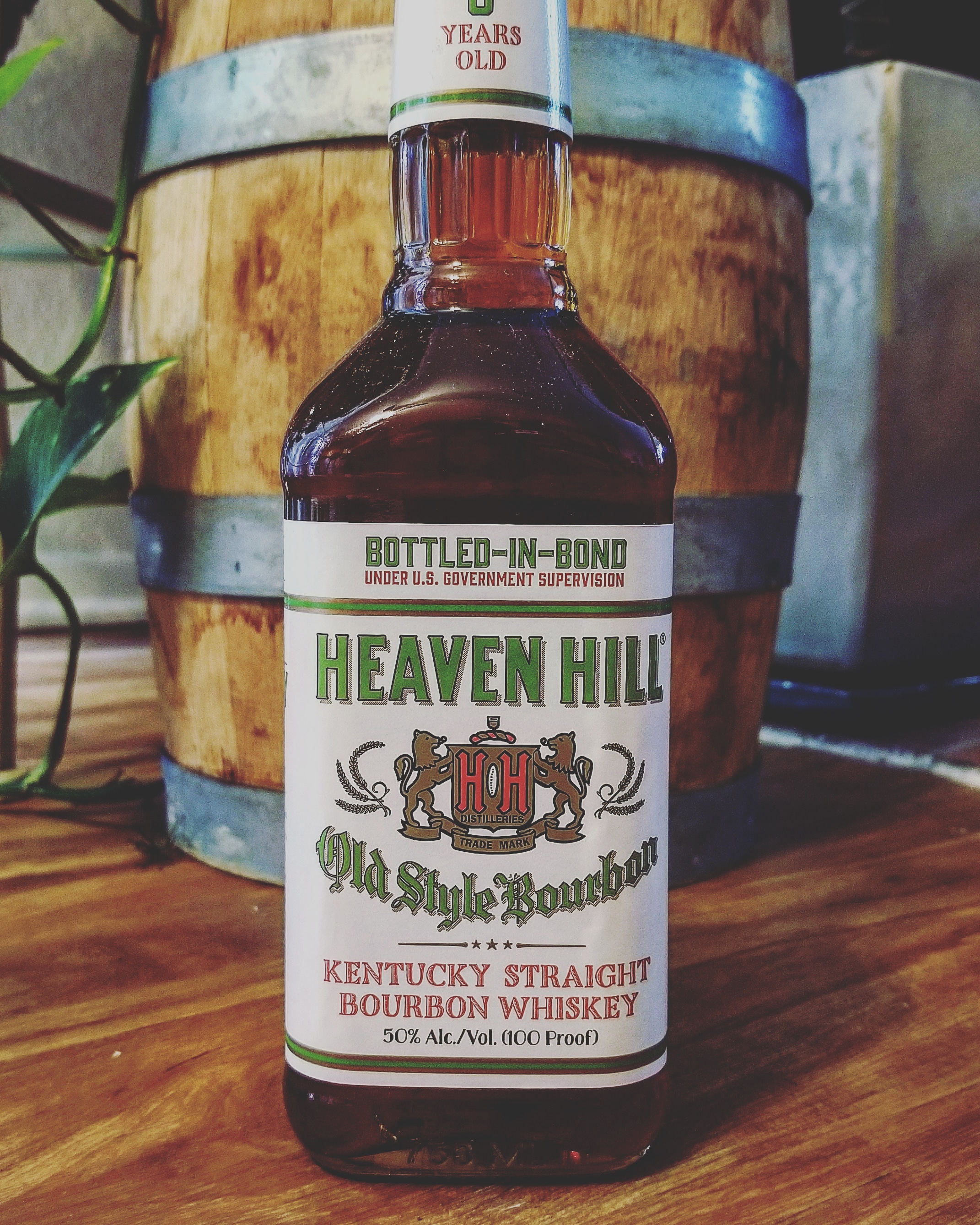
However, they’ve never had that flagship, namesake bottle. Outside of a few specialty releases named after William Heavehill, the farmer who owned the land the distillery was built on, the only true bottling to carry the Heaven Hill name is a 6 year old, bottled in bond, Kentucky exclusive. And this bottle perfectly encapsulates the company in my mind.
Heaven Hill kept the bottled in bond designation alive when no one cared and can be directly credited to it’s resurgence with products like Rittenhouse Bottled In Bond Rye. It’s also a 6 year old, straight Bourbon whiskey that ran for $12 dollars a bottle. It is quality at an incredibly affordable price, which is something that Heaven Hill has done well for so long. It also isn’t what the whiskey world is about anymore. These days it’s all about limited, old and rare so it should be no surprise that this little gem has been discontinued in favor of creating a more premium line up.
Which brings us to the age statement.
American whiskies, almost as a rule, don’t get this old. The oldest, most consistent age statement caps out at the yearly release of the Pappy Van Winkle and Elijah Craig 23 Year Olds, the latter also being produced by Heaven Hill. Because of the law requiring Bourbon to be aged in brand new oak barrels Bourbon this old just doesn’t taste that good, because it’s often over oaked or overly tannic. There’s also the catch that the Angel’s Share steals a percentage every year meaning there’s less to sell and that’s not taking into account the unpredictable acts of nature. A lot can happen in 27 years.
At 27 Years Old this batch of a mere 41 barrels were all aged on the 1st or 2nd floors of the Heaven Hill rickhouses where the Angel’s Share is arguably at its most minimal; but with only 2,820 bottles produced that’s still a loss of 75% of the juice.
This whiskey can also never be replicated due to an act of god. In 1996, the Old Heaven Hill Springs Distillery burnt to the ground taking hundreds of barrels, and gallons upon gallons of aging whiskey with it. These 41 barrels were not only produced at a destroyed distillery, they survived an inferno that took much of its cousin spirit with it. This isn’t just rare because of its age, it’s both rare in addition to its age.
Heaven Hill goes up in flame.
The Barrel Strength designation is where things get really weird. There is no legal definition for what “barrel strength” means. In fact the TTB is currently working on a new set of regulations specifically about that designation, but in colloquial use barrel strength is generally expected to mean that the whiskey is bottled at the proof it comes out of the barrel at which is usually well north of 100 proof. It is shocking then to see this barrel proof listed at a measly 94.7.
This goes back to those 41 barrels on the 1st and 2nd floor. The lower flowers generally allow for more mellow aging that reduces the Angel’s share lost. However, it also creates a naturally lower ABV as the alcohol evaporates faster than the water. This literal loss of alcohol is another reason why you don’t see whiskey this old from Kentucky. One of the perks of not having a template though was that these barrels weren’t selected with the idea of creating consistent flavor profile like most standard bottling. Instead these were the barrels left standing. After everything that was over oaked, overly tannic, too harsh, too soft, etc only 41 barrels were left and when batched together the naturally occurring ABV was 47.35, resulting in a technical Barrel Strength whiskey at an incredibly drinkable 94.7 proof.
The rest of the words we know. Straight Kentucky Bourbon means that it’s legally 51% corn whiskey, made in the state of Kentucky, aged for a minimum of 2 year in brand new, freshly charred, white oak barrels with no added coloring or flavors.
That’s a lot to take in for a single bottle. And it’s surprisingly alive. Heaven Hill has released a lot of one-off older whiskies. They’ve got deep, deep store houses yet in my opinion a lot of them have fallen flat. There was always something just off about them whether they were over oaked, or they felt thin because of the proof point. Whatever that missing puzzle piece was they seem to have found it with this bottling.
And in the end this is less about of a single bottle and more a culmination of Heaven hill’s journey over the past three decades. Bourbon has gone from the unwanted step-child of the spirit world to a global commodity and the Heaven Hill brands have evolved to keep pace. They’ve gone from affordable work horse whiskies into some of the most awarded and sought after bottlings in the world. And with this pivot Heaven Hill may have finally found a brand to highlight the gems that are sleeping in those Kentucky hills. I just hope we don’t have to wait another 27 years to see them.
NOSE: The Oak leaps out of the glass, there is a seasoned cedar wood quality with only a mild hint of the vanilla often expected.
PALETTE: Tannic, with a dried orange, and deep baking spice note. The caramel takes a major back seat only slipping out towards the end while the mid a palette is all about that earthy, savory oakyness.
FINISH: Incredibly dry, and a lingering mélange of everything that reminds you of your grandfather: tobacco, cigars, and leather that lasts longer that it’s proof would suggest.
It’s been an interesting few months for the “Beam” portion of Beam Suntory.
Back in October the had a full worker strike at Jim Beam, it only lasted a single week before both sides reconciled their differences but it also happened to be the same week that Booker’s Rye was named Jim Murray’s World Whiskey of the Year.
The prestige of that super allocated release, as well as the price tag, seemed to add fuel to Beam’s announcement at the end of last year that standard issue Booker’s Bourbon was going to see a production cut and double in price in 2017. This announcement was met with such backlash that the company quickly back tracked, now saying that the price would more gradually increase over the year with only a $20 increase to start off the year. This about face has left many people disgruntled, feeling that they were some how manipulated into snatching up bottles. As if they were forced into buying the whiskey by the announcement.
Add this to the Maker’s Mark brushfire in 2013 where the same company announced that they’d be cutting the proof of Maker’s Mark to increase supply only to quickly change their tune due to community pushback and you seem to have a company with an inte
rnal struggle between the accountants and the physical producers.
Amidst this kerfuffle yet another beloved friend has bit the dust with out much fanfare: the Grand Dad 114. The lack of a dustup might be proof that the company was right to discontinue this expression of Old Grand Dad but I personally disagree.
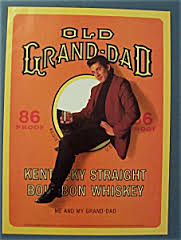
Old Grand Dad is old. Not as in an age statement but in terms a brand. And even if you don’t think you’re familiar with the brand you’re wrong. You just know him by another name: Basil Hayden.
Basil Hayden was part of a great migration into the heart of modern day Bourbon Country. He was, like almost everyone else, a farmer first. He distilled to preserve excess grain, just like his neighbors did, with little thought to mashbill or long term aging.
After the civil war whiskey went industrial and around 1882 Basil’s grandson, Raymond, founded a distillery and named it after his Old-Grand Dad and slapped a portrait of him on the label.
After Hayden’s death the distillery passed into the hands of the Wathen’s who made medicinal Old Grand Dad through-out Prohibition and their company, American Medicinal Spirits, became the backbone for National Distillers after repeal which was one of the largest and most influential bourbon makers in American History.
After Prohibition, when whiskey stocks were nearly non-existent, a higher rye content was added to Old Grand Dad’s mashbill in an effort to make it taste and feel like those ‘old style’ distillers in an effort to appeal to the new drinkers.
Flash forward to the late 80’s, National Distillers merged with Jim Beam and amazingly, the mashbill for Old Grand Dad has seemingly been left unaltered. And they even added to the family by introducing Basil Hayden’s in 1992.
I’ve always loved the 114. 114 proof (duh) it is spicy, powerful, dusty leather and a nutty presence that leaves your mouth bone dry, hunting for more. And even if the claim that Basil was known for making bourbon “with a high rye content” is completely unsubstantiated it is still damn good whiskey.
By now Basil Hayden’s far outshines its older iteration, at least in terms of press and sales. And with supply unable to keep up with demand a family sacrifice has been made. So good by 114.
That’s the history, but what about the future of Old Grand Dad? Well, let’s look back at the little ol’ Maker’s mark fiasco and Booker’s Rye awards.
A few months after Beam Suntory announced that the would in fact not be lowering the proof of Maker’s Mark the suddenly released Maker’s Mark Cask Strength. The release was originally very limited and sold exclusively in small format but proved so successful that it’s a full time release now, for a majorly popular brand that carries a higher price tag and slightly more prestige.
Add that to the success, and price tag, they’re having with super limited releases of major brands like Booker’s it’s hard not to see the super allocated Cask Strength Basil Hayden’s wait in the pipeline. And to not see the massive price tag it’ll carry on the shelves and even more gargantuan one it’ll have on the secondary market.
This is the dark side of the whiskey boom. What helped fuel this boom was availability and price. Bourbon was unpretentious and everyone could afford a great bottle. Now, value is harder to find and more of the fans are being priced out of something they love. If we’re lucky they’ll go the Maker’s Mark route on this one and turn it into a permanent line extension but who can say? The company itself seems to have a hard time making up its mind.
I can’t tell if the glass is half full or half empty but, for tonight at least, it’s filled with Old Grand Dad 114
There is an idea that new adaptations of old work, work that inspired countless imitators, will tend to resemble the imitators more than the original. Think of how the Frankenstein Monster has become a shambling, mute zombie thanks to the 1930s movies despite the original character being verbose, intelligent, and vicious.
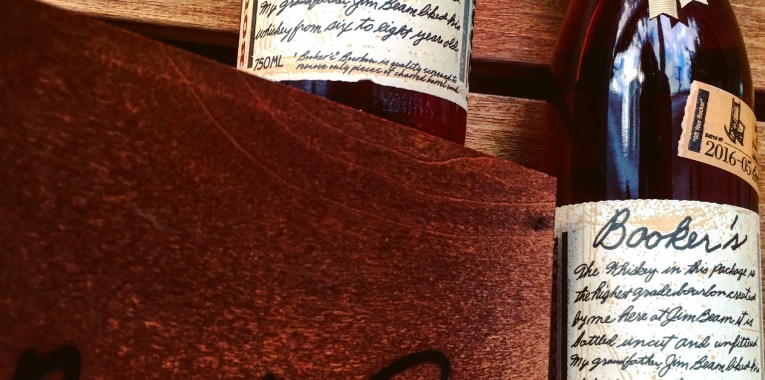
Booker’s is an old school classic of the Bourbon world but it’s not an ancient brand. Named for and started by the legendary grandson of Jim Beam, Booker Noe, the brand started out as a gift from Booker to close friends in the late 80s. It proved to be such a hit that it was released to the public in 1992 and it hit all of the right buzz words: Cask Strength, Non-Chill Filtered, Small Batch, 6-8 year old, Straight Bourbon Whiskey.
Except that in 1992 none of these were buzzwords, because bourbon was not buzz worthy. It was barely drinkable in most people’s eyes so this undiluted, turbo-charged whiskey emerging onto the shelves with a $40+ price tag must have seemed like madness. But people fell in love with it. Each batch offered something familiar yet different, all variations on a theme. It didn’t hurt that Booker Noe was one of the first “Celebrity” Distillers. It was the force of his personality and vision that made the brand a success.
Fast forward twenty-five years later and Barrel Strength whiskey is the hot commodity. Booker, the brand and the distiller, was a trend setter. Any bartender or whiskey enthusiast that came of age in the past 20 years has had Booker’s. But in this world of seemingly endless new options most don’t keep a place on the back bar for it. The premiumization of whiskey has driven bartenders and collectors to the next hot commodity, or name, or special release.
Now the trailblazer is reimagining itself in the image of what came after. Starting in the New Year Booker’s Bourbon is going to be nearly doubling in retail price with the number of batches being released annually being reduced from six to four. That’s a massive and immediate shakeup for a long established brand. It’s also following in the path of its imitators by increasing price and reducing supply.
On the one hand, it’s easy to understand this thought process from the higher ups at Beam Suntory. They see younger brands, many of them simply sourced whiskey, going for double or triple the price of Booker’s and want to position themselves against that. There’s also the desire to differentiate their owns brands. Their Small Batch Bourbon Collection (Knob Creek, Basil Hayden, Baker’s and Booker’s) all sit comfortably next to each other in price so there’s no drive towards one brand or the other. All of that makes sound business sense but the cynical view is equally as easy to see. The Booker’s Rye sold out immediately at $300 and won more awards than the Booker’s line has seen in years so it’s hard to not feel like Beam Suntory isn’t just seeing dollar signs.
The real question ends up being, is Booker’s a $90-$100 bottle? If it sells at the price it sure is. The problem is that Booker’s ubiquity also makes it forgettable. Like most of the mainline Beam offerings there’s nothing that makes it stand out. Even from the other members of the Beam family. Jim Beam Whiskey always tastes like Jim Beam Whiskey, no matter what label name they slap on the bottle. And that’s a great positive or negative depending on your point of view. That’s what gave Booker’s its edge, the raw unadulterated flavor of Beam. The last batch of the year “Noe Hard Times” is Booker through and through. Huge oak, vanilla, a massive heat at 127.8 proof, a toasted nuttiness, and that unmistakable bready Jim Beam yeast. It’s a great Beam Bourbon but I’d be hard pressed to call it a $100 bottle.
But while I can, as this incredibly trying year of 2016 draws to a close, I’m going to raise a glass of the past to toast the future. An act that I seem to repeat with more regularity, because change it isn’t a comin’, change has done come.
Maybe it’s like becoming one with the cigar. You lose yourself in it; everything fades away: your worries, your problems, your thoughts. They fade into the smoke, and the cigar and you are at peace.
Raul Julia
Smoke is indelibly linked to water for me. Years of camping with my family have sealed the sound of the waves in the night with the scent of smoke hanging in the air. The Octomore encapsulates that in the deep black of its bottle; the fact that it’s massively over proof really helps out right about now.
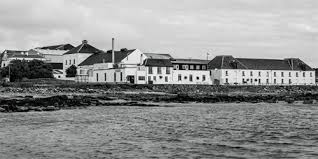
The Octomore line sails in from the shores of Islay and the Bruichladdich distillery. Bruichladdich is old history with a new face with that spirit of this spirit running right back to its earliest days. When the distillery was founded in 1881 it was the height of modernity. A state of the art facility, especially when compared the distilleries on Islay at the time which were often just converted farm houses. Built right on the shore with uniquely tall and narrow necked stills the distillery managed to survive when many others failed. At least until 1994 when it was mothballed for being ‘surplus to requirements’.
But it was resurrected in 2000 when a group of private investors purchased the distillery, dismantled and reassembled the whole shebang. Having missed out on all the modernization in the 90’s the original machinery was still in place making it one of the few distilleries to have no computers in use for production.
The new owners did make two major changes though. 1) They turned their focus to the province of their barley. They wanted the local character of the barley to shine through as much as the barrel and aging. They shifted to using all Scottish barley, something somewhat surprisingly not required for Scotch, and started growing barley on the actual island of Islay. All of their whiskies now have both a Scottish and Islay barley version with their own DNA. 2) They hired Jim McEwen as their Master Distiller.
Jim McEwen is a whisky legend. He started working at Bowmore when he was 15 and Islay Whisky may as well literally run in his veins. He ran the stills with skill but he also started producing peated whiskey for the traditionally unpeated Bruchladdich. These peated whiskies have become the Port Charlotte line up, and in it’s super peated forms the Octomores.
The Octomores are some of the most heavily peated whiskies in the world. Their phenol content (the scientific way to measure peat) have been as high as 238 but even in their “standard” range they are three times as peated as a Laphroig. Yet, even with all this smoke, and being bottled at cask strength, they avoid being one dimensional. They are sea salt air tinged with smoke and a threat of rain in the air once the sun has set while I’m reading by the fire.
With the distillery now owned by Remy Cointreau and Jim McEwen no longer at the helm though it’ll be interesting to see where that leaves the Octomores as the years, and the memories, roll on
Sourced whiskey has developed a bad reputation in the American Whiskey World. It’s often associated with fanciful marketing stories of the far off past, but scarce on any details about where and how the actual stuff inside the bottle is made. Almost the opposite of the independent bottlers you see in Scotland, which often have as large of a reputation as the powerhouse distilleries.
Enter Joe Beatrice and Barell Bourbon. Transparency is the name of the game here. He is completely open about the fact that he is just a blender and bottler. The goal is to create a unique product that stands on its own, just like those Independent Bottlers. And in a world where age statements are dropping dramatically from labels left and right, the age statement is front and center and keeps climbing. And he keeps winning awards.
No sense in bottling it if the whiskey isn’t any good.
Though each batch varies there are two constants. Each bottle is Barrel Strength. This is whiskey straight out of the Barrel uncut by water. High Proof Spirits. The second is the quality. No sense in bottling it if the whiskey isn’t any good. Everything else they can tell you they will.
Batch 6 is 8-year-old Bourbon distilled in Tennessee and aged in Kentucky, which already makes it unique. Joe can’t legally tell you where it’s distilled but with only two large scale distilleries in the state and a mashbill of 70% corn, 25% Rye and 5% barley it’s probably being made at George Dickel. And He recently moved all of their aging to the warehouses at the Old Taylor Distillery, which is different from the old Taylor brand which the distillery doesn’t own the right to. The Bourbon world is weird.
So we’ve got a big ballsy bourbon that has coated ripe dark cherries with a layer of dusty, earthy nuttiness reminiscent of some of the best stuff from Willet and Heaven Hill. It’s a massive flavor that drinks far more mellow than it’s 122.9 Proof would suggest. It’s a great reminder that there’s more to the magic of a spirit than marketing and who owns the still. Sometimes, there’s a magic that needs that outside touch. As long as you’re honest about it.


 personally disagree.
 ld Grand Dad’s mashbill in an effort to make it taste and feel like those ‘old style’ distillers in an effort to appeal to the new drinkers.
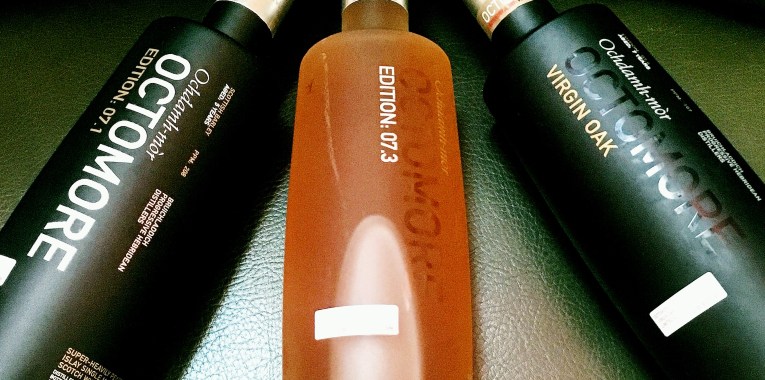
 The Octomore line sails in from the shores of Islay and the Bruichladdich distillery. Bruichladdich is old history with a new face with that spirit of this spirit running right back to its earliest days. When the distillery was founded in 1881 it was the height of modernity. A state of the art facility, especially when compared the distilleries on Islay at the time which were often just converted farm houses. Built right on the shore with uniquely tall and narrow necked stills the distillery managed to survive when many others failed. At least until 1994 when it was mothballed for being ‘surplus to requirements’.
 The Octomores are some of the most heavily peated whiskies in the world. Their phenol content (the scientific way to measure peat) have been as high as 238 but even in their “standard” range they are three times as peated as a Laphroig. Yet, even with all this smoke, and being bottled at cask strength, they avoid being one dimensional. They are sea salt air tinged with smoke and a threat of rain in the air once the sun has set while I’m reading by the fire.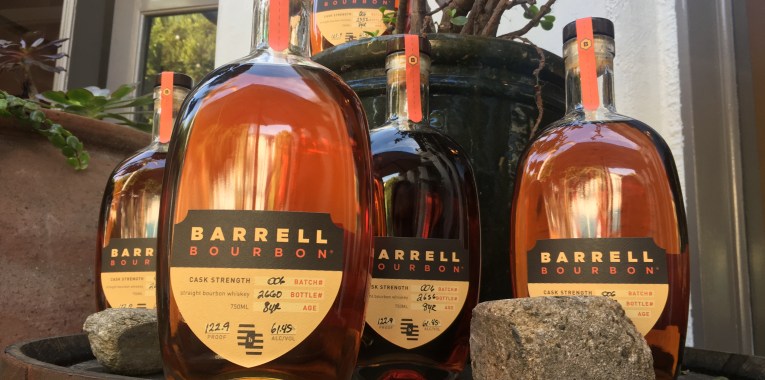
 Bottled In Bond LA