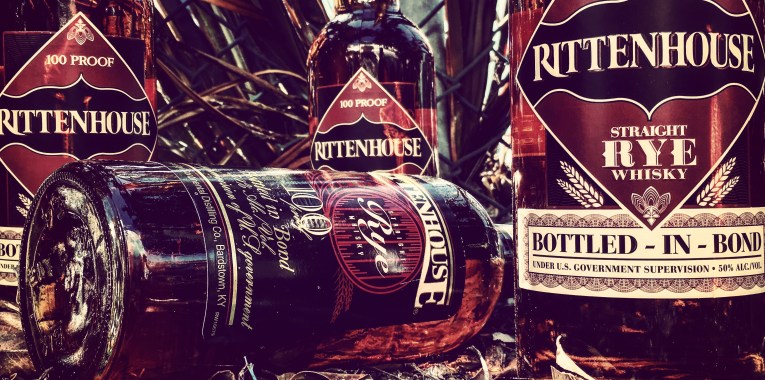
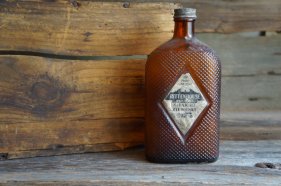
Open Bottle: Rittenhouse Very Rare 25 Year Straight Rye Whiskey

Today I’m either turning 33 or 37, depending on whether you believe my birth certificate or my girlfriend’s mathematical skills.

I’ve been in the service industry since I was 16, been bartending since I was 20, and have been a “craft bartender” and bar manager since I was 25. In a lot of ways my experience behind the bar has shaped me as a person, helped define my personality, and at times threatened to completely consume my life. And it all happened by accident.

While I was out manning an NBC desk the bar world had changed. The Cocktail Revolution was well underway.

It’s easy to look back on that stretch of years and see it as an inevitable progression but it never felt that way. I started waiting tables as a way to make easy cash in high school. From the moment I started taking drink orders I knew I’d rather be taking those orders from behind the bar and making the drinks; bartenders were just inherently cooler. I completely blame early viewing of Roadhouse and Cocktail for this gross misconception, but even when I started doing my best Tom Cruise impression it wasn’t a career. I was just finding a way to pay my bills in college while I figured out what I was really going to do when I grew up.

Skip ahead a few years and my Brian Flannagan impression had been traded for a blend of Aaron Sorkin and Kenneth from 30 Rock. Needless to say that wasn’t a combination that seemed to be working out so when I found myself between jobs I decided to start bartending again until I found what came next. Turned out what came next was bartending.

While I was out manning an NBC desk the bar world had changed. The Cocktail Revolution was well underway and suddenly there was a wealth of information, spirits, techniques, and books that transformed slinging drinks from a job into a profession. Similarly, some health issues transformed my youthful sense of invulnerability into an inevitable sense of my own mortality.

This profession and vulnerability coalesced into the first major purchase of my soon to be overwhelming liquor collection: The Rittenhouse 25 Year Old Straight Rye Whiskey.
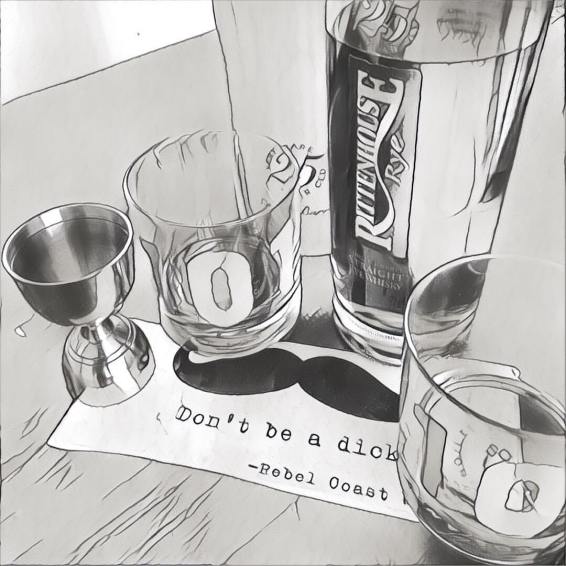
Rittehouse25B&W.jpg

I was still reeling from the debt that having a “Real Job” had bestowed but I was alive, financially stable and wanted a bottle of spirit that was older than I was so that I could raise a glass in celebration for hopefully years to come. I had no idea what I was doing when I walked into that BevMo, but thankfully my naiveté was matched by the fact that Pappy Mania hadn’t yet transformed the whiskey world into a wasteland of unattainable whales and unicorns. This perfect confluence meant that a bottle that now goes for north of $1000 had multiples sitting on the shelf at a Santa Monica BevMo for less than $150 each. It was such a crazy time that I turned down buying a bottle for the bar because it was “too expensive” and “would never sell.” I wish I had a time machine to go back and snap up a 6-pack.

As I begin my inevitable transformation into Doug Coughlin I’m going to sit with another dram.

The third release of a series, the 25 Year Old, was preceded by a 21 and 23 year old Single Barrel release. All three releases come from rye distilled in October of 1984, aged on the lowest floors of Rickhouse OO, and were all bottled as 100 proof, non-chill filtered single barrels.

 
NOSE: There’s a touch of spice but it’s mostly a candied walnut, dried fruits and a waft of cedar mixed with the oak.

PALETTE: On the tongue there is a deep nougat, a sense of brûléed fruit, and a massive bag of baking spices. It is surprisingly sweet for a rye but carries a sophistication and stateliness. This is one of those old whiskies that rather than tasting old and oaky, tastes mature and aged.

FINISH: The finish is long and warm. The spice finally finds it’s footing as the rest of the flavors evaporate and evolve.

This is quite simply one of the best bottles of rye I’ve ever had. And what’s amazing is that as my palette, experience, and collection has grown I return to this bottle for a simple pour every year and still feel the same way.

Though to be fair it’s not really about what’s in the glass. This is the prime example of my philosophy that whiskey is meant for drinking. The experiences the led to buying the bottle and the accumulation of everyday until the next pour adds to the poetry in the glass.

As I begin my inevitable transformation into Doug Coughlin I’m going to sit with another dram and share it with those that I can. I may have started this journey by accident but the feeling of growth and community is what’s kept me here.

That and the booze.

And the tips.

But mostly the booze.
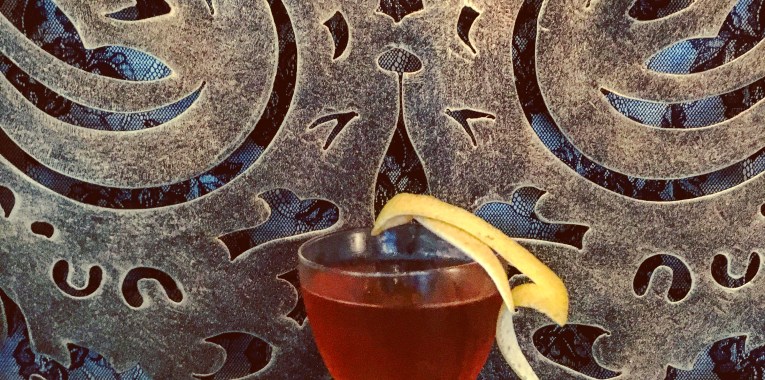
Drinking Poetic: West of Brooklyn

I’m sentimental in my head. I say head because I’m less emotionally sentimental and more intellectually sentimental, meaning that I hold on to things because I feel like I’m supposed to. This often means I find myself with collections of stuff that sometimes seem to stick around simply because it’s already stuck around.

Enter The West of Brooklyn, a drink that is now pushing its 6th consecutive year on my cocktail menus.

It certainly wasn’t planned that way and if you had asked me five years ago what drink of mine I’d still be making half a decade later it wouldn’t have been this one. I was young(er) and getting super into bespoke cocktails and was currently working my way through the Neighborhood Series and thought, “I want in on that.”

The Neighborhood Series was lineup of drinks from the Milk & Honey family and friends in New York that gave us some modern classics like the Cobble Hill, The Green Point, and the Red Hook. All of these drinks grew out of one simple fact: The Brooklyn Cocktail is terrible.

The classic Brooklyn Cocktail was first printed in 1910 in Jack’s Manual and is often modernly interpreted as:

2 oz Rye Whiskey (Preferably a Bottled-In-Bond)

.5 oz Dry Vermouth

.25 oz Maraschino

.25 oz Amer Picon

Looking at this you can see that it’s not the Brooklyn’s Fault that it’s terrible. Today we’re missing a vital ingredient: old school Amer Picon.

Amer Picon is a classic bitter orange French liqueur that also has notes of gentian, cinchona, and quinine that is no longer available in the States. But even if you were to get your hands on a bottle of it from France the recipe was changed in the 1970’s reducing the proof and making it sweeter. This means it doesn’t make the same drink. I’ve been fortunate to have classic Amer Picon and a classic Brooklyn thank to Andrew Willet over at Elemental Mixology and it’s a damn tasty drink. And for what it’s worth Andrew believes that CioCiaro makes a Brooklyn that more closely matches the classic.

Looking at this family of drinks and personally loving stirred drinks that add a subtle element of citrus or fruit I set about to add my own Neighborhood Cocktail.

At the time I was just getting started at Areal a mere block from the Pacific Ocean and was living in Venice Beach. I had moved West instead of to NYC where I would have more than likely settled in Brooklyn so before I started I already had a name: The West of Brooklyn. It was only later that I realized that Manhattan is also ‘West of Brooklyn’ but I will retroactively take credit for being that clever.

My base was clearly going to be Rittenhouse BIB Rye but knowing I was never going to get my hands on pre-70s Picon I looked for a more readily available substitute. Bigalett’s China-China had just hit the market so I pulled out a bottle of that and started mixing. I was enamored of Blanc Vermouth at the time so that joined the Bigalett and being in California and also being rather disparaging of maraschino, I looked around for a orange liqueur and ended up with a bottle of Solerno Blood Orange and thought, “That’ll do.”

That pretty much sums up my mentality about this whole drink with this first pass. I didn’t put enough thought into it. It looked like this:

2 oz Rittenhouse BIB Rye

.5 oz Bigalett China-China

.25 oz Blanc Vermouth

.25 oz Solerno Blood Orange

Stir. Served up with a Lemon Zest.

It ended up being a bit of an aggressively blunt instrument but it went on the menu and people seemed to enjoy it. It fit the bitter and stirred category and I let it be. I replaced it on the next printed menu but we had a cocktail board in the bar at Areal with drawings for every drink and our artist had been so pleased with her artwork that she wanted to leave it on the wall. I shrugged and gave it no thought.

809EA2AE-9EF9-4512-98CE-2400E3B9704C

People would continue to order the drink but it wasn’t until I had a customer come in and tell me that he had been in several times over the past months just for the drink because he liked it so much that I realized I had been making the drink for two years. I felt like I should revisit it.

I found the Bigallet was completely taking over the drink, but any attempt to dial it down just caused it to be lost. So I went back to the drawing board looking for a Grand Bitters to take its place and I started playing with the Clementi China Antica. The Clemanti focuses more on the bitter quinine notes without the orange which turned out to be perfect for the drink since I was adding the orange notes with the Solerno. But again any attempt to use less than a half ounce caused it to be lost when butting heads with the power of Rittenhouse so the drink remained a blunt instrument, albeit a drier more whiskey-focused one.

I left it at that an ended up leaving that bar. I honestly thought that would be the end of the drink. But as we were doing R&D for my first menu at Faith and Flower my friend Ryan Wainwright and I were doing an event at Seven Grand LA celebrating the Manhattan and lo and behold the drink came up. The night was being sponsored by Buffalo Trace and Sazerac Rye and suddenly the drink clicked.

In the years since I first got into the LA bar scene Sazerac Rye was highly allocated so trying to use it in a featured menu drink was a touchy proposition and that mentality stuck with me even as the rye became more available. Sazerac is a lighter, less aggressive rye than Rittenhouse with more of a green apple spice, and edges that bleed into ripe fruit. Switching out Sazerac allowed me to dial down the Clemanti Antica and bring up the blanc vermouth making it more true to its family of drinks while leaving it elegant, with a white pepper spice tied with a subtle fruit that has a perceived sweetness before drying on the palette. It now looked like:

2 oz Sazerac Rye Whiskey

.5 oz Dolin Blanc Vermouth

.25 oz Clemanti China Antica

.25 oz Solerno Blood Orange

Stir with ice. Strain into a Nic and Nora glass with a lemon zest.

The drink perfectly fit the summer time Manhattan vibe we were looking for the menu and it was resurrected. And as I sit here doing R&D for the Fall/Winter menu it finally looks like the drink will truly come off the menu for the first time in five years. Until I change it again…

Drinking Poetic: The Ship of Theseus


I compete in a lot of bartender competitions. Not only is it a great tool for advancing my career I also just find it fun. Like really fun. I love the whole shebang. I have a background in theater so I spend a lot of time crafting the oration and spectacle of the presentation trying to meld the drink with the competition performance. But ultimately, those 6-8 minutes presenting make up a fraction of the work that goes into competing. Because it doesn’t matter how great your soliloquy is if the drink doesn’t match up.

IMG_3469

The R&D is where the true spirit, and fun, of these competitions lay. I’m incredibly fortunate to have an amazing collaborator in the form of my lovely, talented, and extremely patient girlfriend and some, if not all, of my best drinks have come out of R&D with her for these competitions. A lot of ideas end up on the cutting room floor only to find themselves resurrected for a cocktail menu down the line. Or sometimes ideas that have been kicking around your head find the absolute perfect outlet in a competition prompt.

That was the serendipitous case with The Ship of Theseus.

One of the cocktail prompts for Heaven Hill’s Bartender of the Year 2017 was to submit a drink based on a classic cocktail. This isn’t an unusual prompt but its one that’s always been difficult for me because, in my experience, drinks based on classics are really just classics with a part replaced. Can those really be called original cocktails?

This problem of identity is something that I would think about late night, several whiskies in while closing the bar and when it came up for the competition my late night musing immediately turned my thoughts to “the Ship of Theseus.”

The original Ship of Theseus isn’t a drink but a philosophical conundrum that has been debated for centuries And it goes like this: Theseus, the classic Greek hero who slew the minotaur, has a ship. On that much everyone can agree. But after slaying the minotaur Theseus returns to port needing a few repairs on the ship and a few replacement crewmembers. He then returns to adventuring and doing more hero things. This of course leads to more repairs and replacements. This time the mast, next time the rudder, this time a first mate that foolishly headed the siren’s call. Eventually every last plank, rivet and crew member of the ship has been replaced. With none of it’s original components intact is this still the ship of Theseus? And if it’s not when did it stop being that original ship? After the first repair? After the 31st?

Let’s make it even more complicated. Lets say the shipwrights doing the repairs saved all of the pieces they replaced and built another ship out of them and the two ships now float side by side in the harbor. Which one is the original and which one is merely ‘inspired by’?

71zCI-rBVbL

While giving this long winded explanation to my girlfriend (have I mentioned how patient she is?) she casually asked if there were any ship based classic drinks which immediately brought up one of my least favorite drinks, the Remember The Maine. It first appears in Charles H. Baker’s 1939 book the Gentleman’s Companion and traditionally looks like this:

2 oz Rye Whiskey

.75 oz Sweet Vermouth

.25 oz Cherry Herring

Dash of Absinthe

Stir on ice and serve up.


Named after the U.S.S. Maine, a battleship sunk under suspicious circumstances of the coast of Cuba who’s sinking was used to insight the Spanish-American War with the battle cry “Remember the Maine, to Hell with Spain.” The drink has always fell flat for me so it seemed like the ideal ship to hit with a few “repairs.”

LWF-Feb-08.jpg

First, the Maine isn’t a true cocktail because it doesn’t contain any bitters so a few dashes of orange bitters were added. Next, the Cherry Herring in the Maine is one of my least favorite ingredients. I find it overly sweet and muddled, so I subbed it out for Kirschwasser, true cherry brandy. This made the drink brighter, more fruit forward and drier. This allowed the vermouth to be swapped to a Chinato style that added in an extra bittersweet quality to balance out the kirsch. Then the base remained rye whiskey, after all you need certain key features to be a ship, but using Rittenhouse BiB adds a depth and a back bone that is more specific than calling out for a “rye.” The drink ended up with an elegance and subtly that the absinthe in the original would have destroyed so the absinthe was dropped in favor of a chartreuse rinse on the glass to lend those floral, herbal notes with out disrupting the ships internal balance.

The new recipe looks like this:

IMG_4524.JPG

1.5 oz Rittenhouse BiB Rye

.5 oz Kirchwasser

.5 oz Alessio Chinato Vermouth

2 dash of Angostura Orange Bitters.

Stir on ice. Strain into a cocktail glass rinsed with

Green Chartreuse.

Garnish with a marasca cherry

Identity Crisis Optional

Both ships now get to float side by side completely distinct. The Ship of Theseus is clearly no longer just a variation of the Remember the Maine but I’d be hard pressed to tell you when that change over happened. It’s a conundrum that deserves a drink of mythic proportions and I think I might have just the perfect one for it.

download.jpg

Rittenhouse Square’s Hometown Rye

I’ve been thinking a lot about home lately. I’m not much of a vagabond but I’ve also never put down deep roots. I’m from Pennsylvania, but despite my family still living there it’s not a place that inspires excessive nostalgia. I’ve been in LA for 7 years but I’d but up a healthy fight with anyone who called me an ‘Angelino. When I think of home I don’t think of places. I think of moments. Walking through the grape vines in the fall back in Pennsylvania. The marathon parties at Syracuse in college. And of course, drinking whiskey with friends. Rittenhouse has been along for the ride for many of those nights, and its home is also a collection of its experiences.

In many ways Rittenhouse is the quintessential Pennsylvania style rye. Hell, it takes its name from Rittenhouse Square in Philadelphia and was originally introduced after il_570xN.607407696_7clx.jpgProhibition as Rittenhouse Square Rye. Over the years it evolved. The whiskey got older and was eventually released as Bottled-In-Bond in the 40’s putting the governments quality control stamp on every drop you drank. But the decades were not kind and a World War, the collapse of the American Whiskey industry, and the rise of Vodka tried to push the brand down. It was kept alive by leaving it’s Pennsylvania birthplace and started rolling of the production lines at Heaven Hill in the heart of Bourbon country Kentucky.

But even there it had trouble finding its place in the world. Rye was not the hot commodity it is now and a massive fire at the Heaven Hill distillery meant that they no longer had the production capability to produce the white dog spirit on their own stills. So, they reached an agreement with friends from Brown-Forman to contract time on the stills at the Early Times distillery to distill rye. Just like the rest of us transplants this spirit was given life and character from one home but mellowed and gained maturity at another.

This is where most of us met and fell in love with Rittenhouse. But about 6 years ago Heaven Hill had recovered from the fire and moved production back to their own stills and once that juice reached the proper age the slapped an updated label, interestingly meant to evoke the label from the long gone Rittenhouse Square bottles, and another change in home and flavor rolled along.

To me Rittenhouse feels like home. It’s changed even in the short time that it’s been a part of my story but then again so have I. It’s never going to blow my mind the way it did when I was young and inexperienced but it is warm and spicy, and carries enough heat to console me when I’m down, to celebrate the victories, or just sit with me at night and watch the world go by. But just because something is familiar doesn’t mean it’s bad. It’s so easy to overlook, because who misses home while you can still go back?imgres.jpg