Drinking Poetic: The Panic Order

I’m terrible at Vodka drinks. 

It sounds elitist, snobbish, and very hipster bartender of me but it’s a fact of life. I think the problem is twofold.  

1) Stylistically, I gravitate towards stirred, booze forward drinks that include some sort of odd characteristic. I go through phases: stirred citrus, clarified everything, fruit infused sherries, etc. I essentially want to turn everything into a stirred cocktail in a Nic and Nora 

2) I’m an elitist, snobbish, pseudo hipster bartender. 

 I’m often inspired by a base flavor and then continually layer, subtract, and accentuate characteristics until an equilibrium, or deliberate imbalance, is reached. Vodka by its very nature is designed to be clean, neutral, and mostly flavorless which doesn’t often provide that spark of flavor inspiration that sends me down the path. 

Alternatively, I’m also good at “concept cocktails.” These are drinks that start as a thought experiment with a definitive theme. Combine all of the above and you have the starting seeds of the Panic Order. 

We had a couple of factors (issues) to consider. We needed a new Vodka drink for the menu. Something that was lighter, refreshing, more spring and summer in style. We also needed something that was quick and efficient to execute. Labor costs are a real issue and when planning the current menu for NoMad LA we had to account for not only the efficiency of making the drink in the moment but also the amount of labor that could go into prep hours.  

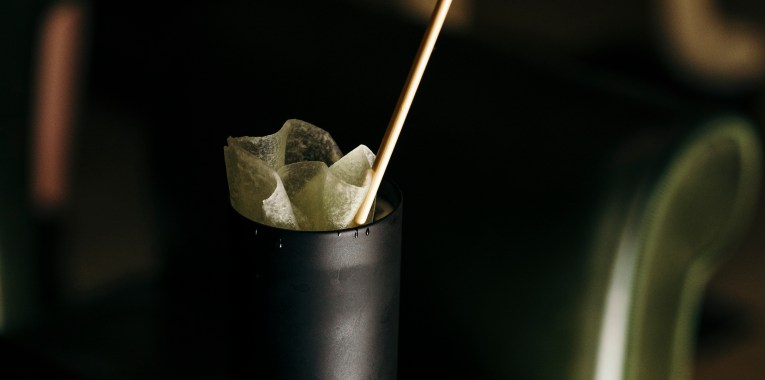
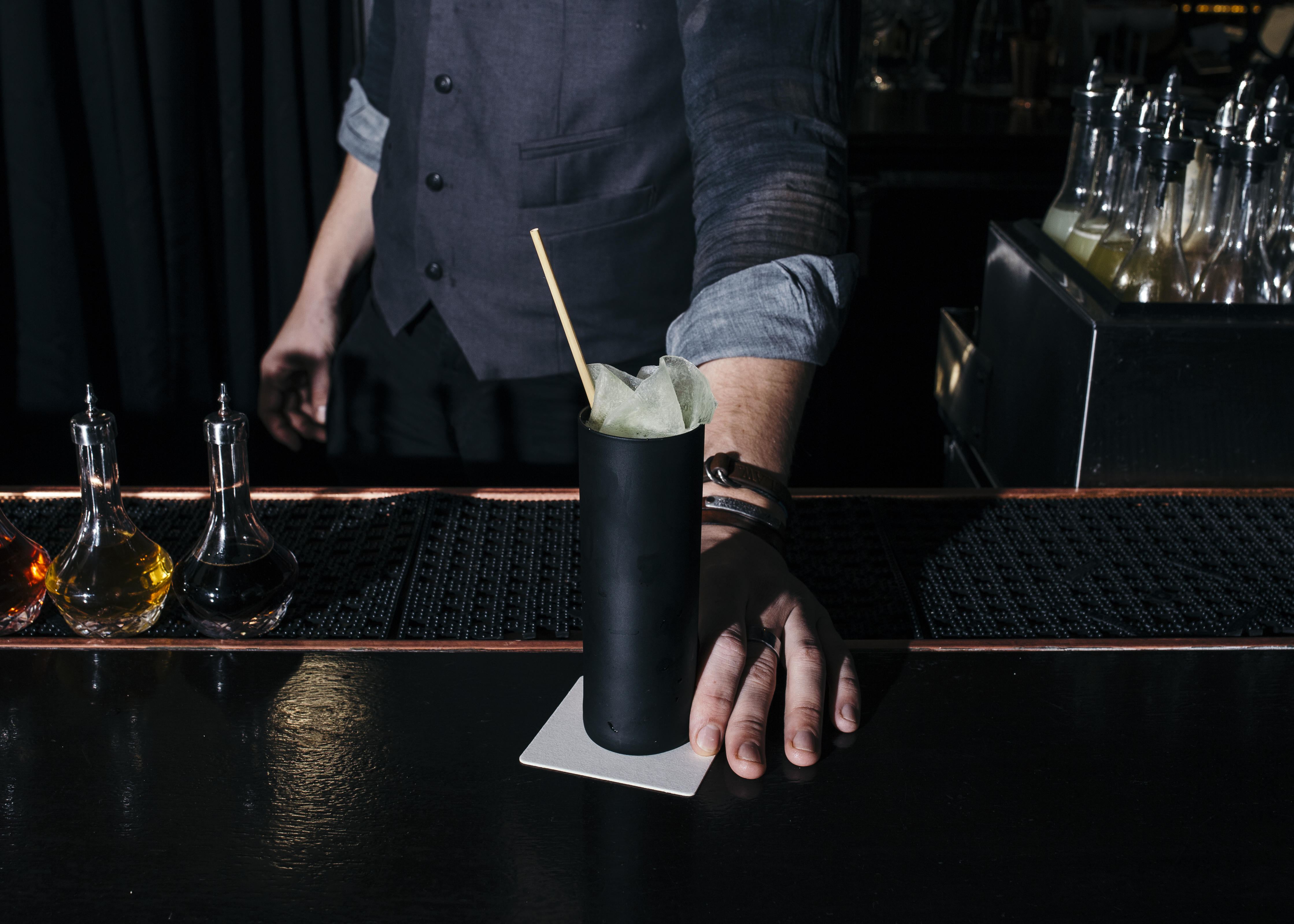
We also had a surplus of these beautiful black highball glasses that were sourced when we first opened. They were for a drink that was cut from the opening menu and during a heavy events season my fellow Bar Manager, Dave Purcell, and I started to joke that we could solve our glassware shortage by putting all of our vodka sodas into these highballs and let everyone panic order them as they walked across the floor to alleviate service.

This got the gears turning. What would be vodka soda in style, more culinarily driven, and quintessentially L.A.? The answer was clearly Kombucha. 

I spent some time talking with the fermentation nerds that are our sous chefs and put together a kombucha base made from a blend of Assam black tea and Jasmine Pearl green tea. This base sits with the mother scobe for a week eating all those delicious sugars. After that week the fruit juices are added and it’s allowed to bottle ferment for another week. This is an incredibly versatile base that allows us to build out flavors in a lot of unique ways. 

Because I was thinking of labor costs and efficiency, I wanted to create a kombucha that had a lot of complexity that could ideally be kegged and turn this into a two-step drink: pour vodka and top with kombucha. I started with a base flavor that felt very spring and refreshing, honeydew melon. To add a complimentary complexity to this I added one of my favorite secret ingredients: bitter melon. 

Bitter Melon is actually a gourd that is used in a lot of eastern cooking and because of its intense bitterness is thought to have cancer fighting properties. This intense vegetal, green bitterness also plays incredibly well in cocktails, especially as a bitters for stirred citrusy drinks. In this case it helped balance the natural sweetness of the melon and ties in the tannins from the tea. To round everything out and add just a touch more acidity some fresh lime juice was also added to the mix. 

Kombucha modeling.

In my younger years this would have been where the drink stopped. It was fine, it fit the slot on the menu, wham bam let’s move along. But part of the process that I’ve grown to enjoy over the years is the collaboration and once this drink entered the R&D tasting with Dave, Leo Robitschek, and I it evolved dramatically.

After having worked with Leo for a year and a half what I’ve learned is that our minds work very different stylistically. I’ll often present a drink with an ingredient that he finds tantalizing, he then pulls it out of the drink, and then start building from the ground up again. In this case I was essentially presenting an ingredient masquerading as a full drink. To him the kombucha was fascinating as an ingredient but not as a drink on its own so we began breaking it down and started utilizing it like we would for a beer cocktail or other collins style drink with just a few ounces to finish the drink. 

We knew we had a vodka base so we started there. We then needed a touch of sweet to balance the whole concoction and this is the place that we were hung up on the longest. Basic syrups became too cloying, fruit liqueurs were overpowering the bitter melon, and the floral notes of St. Germain completely overtook the drink at even a half ounce. We eventually settled on Dolin Genepy which complimented the bitter undertones while adding a just a touch of sweet.

We now wanted to bump the vegetal notes so we added a cucumber to the tin for the shake, and lemon juice to compliment a traditional sour base. This made the drink distinctly more green but now the fruit notes were not as strong. We tried out a few drier fruit options and ended up with a quarter ounce of apricot brandy to round out the mouthfeel while also making the fruit shine. 

Throughout all these additions though the nice acidity of the kombucha was lost. To add that back in we turned to a few dashes each of two of the classic NoMad ingredients: yuzu and white balsamic. All it needed now was a garnish. I went back to the kitchen for some technical help and we started slicing honeydew melon in to wonderful ribbons that roll up and act as a melon flower growing out of the black highball. When the new menu went live the drink was at the top of the page on the right hand side so if you’re at the bar and don’t know what to get the Panic Order is ready and waiting for you. 

This, however, isn’t the end of the story. Things are constantly changing and evolving, one of the core tenants of the NoMad is “Constant Reinvention”, and this means constantly retasting drinks. On a recent whirl wind visit Leo was secretly ordering drinks for quality control. He loved the feel of the menu but felt that the Panic Order was too dry. We went though a mini R&D process again trying different basses ultimately ending up simply adding a teaspoon of agave. This makes the drink much rounder and balanced with a negligent increase in sweetness. Though as I sit here typing this I wonder what would have happened if we tried a half ounce of Green Chartreuse instead of the genepy… 

But, for now, our Panic Order is: 

1 cucumber slice
5 dashes of White Balsamic
5 Dashes of Yuzu
Tsp Agave
.25 oz Apricot Brandy 
.5 oz Dolin Genepy
.5 oz Fresh Lemon Juice
1 oz Absolut Elyx 

Combine all ingredients in a cocktail shaker. Whip Shake and double strain over Kold Draft ice in a black highball. 

Top with Bitter Melon-Honeydew Kombucha, garnish with a Honeydew Melon Ribbon, and Keep Calm.

Bitter Melon-Honeydew Kombucha Recipe 

15g Assam Tea 
15 g Jasmine Pearl Green Tea 
1650ml Hot Water 

Steep each tea individually for 5 minutes each for a total brew time of 10 minutes.
Add another 1500ml water and 300g of sugar.
Mix Until sugar is fully dissolved.
Let this sweet tea cool then add the mother scobe.
Cover the container in cheesecloth and store in a cool, dry place for one week.
After a week gently remove the scobe and store in a clean container with 200ml of the mother vinegar.

To the kombucha base add:

250ml honeydew melon juice
100ml bitter melon juice
50 ml fresh lime juice

Bottle ferment in a cool, dry place for an additional week. 
Hand made and hand presented.


Drinking Poetic (on a Wednesday): The Los Angeles Sour

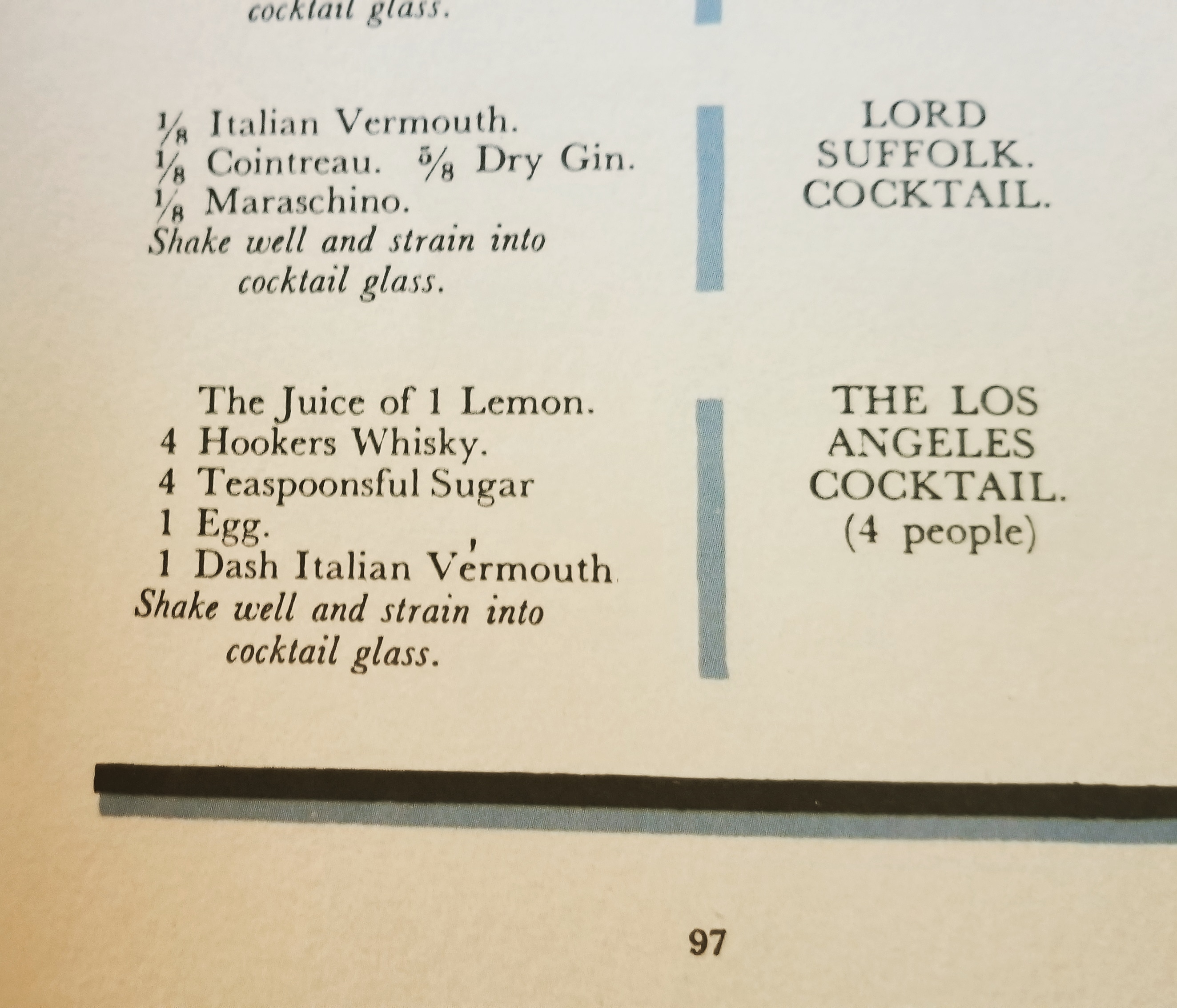
The Los Angeles Cocktail is terrible and is a perfect example of a bad drink that survives because it’s old. 

Buried within the pages of the Savoy Cocktail book, one of the quintessential drink tomes of the Golden and Modern cocktail age, is a drink that reads like a New Yorker describing their “totally real” visit to L.A. There are so many things that irritate me about this drink, the very first of which is that it’s not a damn cocktail!

A irreparably irritating recipe

Despite being listed alphabetically in the “cocktail” section there’s nothing about this drink that ties it to the traditional “cocktail” family of drinks. It contains no bitters and has enough citrus to dilute the base spirit beyond recognition. Apart from that the drink is described as serving four people, uses blended whiskey, powdered sugar, a whole egg, and only a “splash” of vermouth. It’s just a worse version of a New York Sour. While L.A. may have once been the subpar New York City that is certainly not the case any more and I think that’s what makes this drink stick in my craw.  

There are so many little things that are off about this drink that it’s stuck in my head for years. I’ve lived in LA for a decade now and I feel like I’ve earned the right to call myself an Angeleno, so if a drink is going to be named after our city it should be damn good drink. 

The first thing that I wanted to do to adapt this drink was scale it down. A drink designed for only four people is not efficient for service, though considering that L.A. often rolls twelve deep I can’t blame them for trying. Scaled down from four hookers (a measure of 2.5 ozs) to the standard 2 oz jigger of booze, a classic proportion of sour to sweet, and using an egg white instead of the whole egg creates a palatable, if completely forgettable, sour.  

This adjusted recipe reads: 

  • 2oz Whiskey 
  • 1 oz Fresh Lemon Juice
  • .75 oz Simple Syrup
  • 1 Egg White
  • 25 oz Vermouth 
  • Combine all ingredients in a mixing tin. Dry Shake. Shake With Ice. Double Strain. 

The next sticking point is that there’s nothing about this drink that actually says “L.A.” And while the same can be said about the New York Sour, which may have actually originated in Chicago, if we’re going to improve a drink why not make it more representative? With this in mind the inoffensively mediocre powdered sugar was swapped out for a 50 brix Piloncillo syrup. Pilconcillo, or panela, is an unrefined, whole cane sugar typical of Latin America. It is made from the boiling and evaporation of sugar cane juice. It is commonly used in Mexico and has more flavor than brown sugar which is often white sugar with a little added molasses. This gives the drink a richer texture while also tying it into the Latino heritage of Los Angeles. 

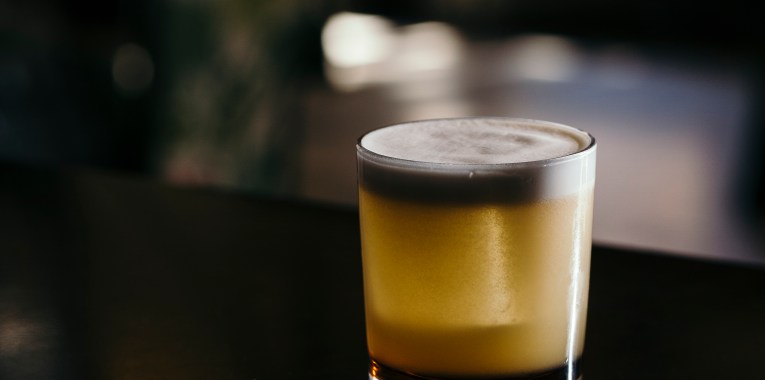
Elijah Craig and Dubonnet Improved Los Angeles Sour

Next up was the spirit base. The richer piloncillo syrup completely overwhelmed lighter whiskies so I turned to my trusty baseline: Elijah Craig Straight Kentucky Bourbon. This added a delightful tannin and vanilla note but was not playing nice with the vermouth and lemon. So, I traded the vermouth for the recently reconstructed American version of  Dubonnet Rouge. Served over a large rock with a float of the Dubonet the flavors were able to develop over time and the extra bitterness from the quina in the Dubonet helped tie the drink together. I actually used this drink for the regionals of the Heaven Hill Bartender of the Year competition this year and it’s absolutely delightful.

L.A. Sour: 

  • 1.5 oz Elijah Craig Small Batch 
  • .75 oz Piloncillo Syrup (50 Brix) 
  • .75 oz Fresh Lemon Juice 
  • 1 Egg White 
    • Dry Shake. Double Strain over one large ice cube. 
  • Float .75 oz Dubonnet Rouge  

There’s no practical need to go further than this. The drink is delightfully crowd pleasing, recognizable, and recreateable. I highly recommend making this version of the drink yourself.I couldn’t set the drink down though. It kept burrowing through my brain begging for attention. 

I have a natural disregard for “blended” whiskies. I find them light and forgettable but that doesn’t have to be the case. There are some beautiful blended malts  and grain whiskies on the market, and not all of them are Japanese. So, I broke down the components and built up a house whiskey blend to complement the flavors.  

It starts with an ounce of Bushmill’s 10 Year Single Malt. Irish Malt is lighter and fruiter than the more familiar Scotch malts while being more affordable than the Japanese counterparts. The Bushmills 10 also grants a solid barrel note and the vanilla that was coming from the Elijah Craig. Next, I wanted some spice and proof without overwhelming the delicate Irish malt so I added a half ounce of Old Overholt Bottled In Bond Rye. This added an oiliness, viscosity, and tannin that helped dry out the drink. 

Finally, to lengthen out the blend, a half ounce of grain whiskey was added. The Nikka Coffey Grain would have worked wonderfully, but the pricing and recent announcement that it was being discontinued shut that experiment down. Though I have recently heard that it is only discontinued in Japan with plenty of stock in the U.S. remaining so it may be worth revisiting. In the mean time I headed back to the Emerald Isle where the Teeling Single Grain offered a compliment to both the Bushmill’s Malt and the Overholt Rye bite.

This house blend was delightfully robust but the Dubonnet, instead of being a unifying factor, was now coming across as thin, just like the vermouth in the original spec. The drink needed something richer while still maintaining that vermouth bitterness and acid. It needed to be concentrated. With that in mind I turned to my favorite toy, the rotovap. Running Dolin Rouge through the rotovap produced two wonderful products.  

First a clear, concentrated vermouth flavored distillate. Second, a concentrated vermouth syrup that was left behind as the more volatile compounds were syphoned off. Both of these products are lovely, especially the syrup. However, I couldn’t imagine using this process to produce enough to maintain the volume of service that we do at NoMad LA so I went back to the drawing board. 

With this concentrated Vermouth reduction as a benchmark we found that a traditional stove top reduction with 50% sugar by weight produced a vermouth syrup that was, as my father would say, “Good enough for government work.”  

All the elements were now in place. Here was a drink that payed homage to its vintage roots, added in elements of the city it’s named for, and incorporated modern techniques, culinary thoughtfulness, and contemporary palettes and drinking styles. I’m also incredibly proud of the fact that this is the only drink I’ve ever put in front of our Bar Director Leo Robitschek that he had no tweaks for.  

The Los Angeles Sour now reads on the menu at NoMad LA as: 

  • 1 oz Bushmill’s 10 Year Single Malt 
  • .5 oz Old Overholt Bottled In Bond Rye Whiskey 
  • .5 oz Teeling Single Grain Irish Whiskey 
  • .75 oz 50 Brix Piloncillo Syrup 
  • .75 oz Fresh Lemon Juice 
  • 1 Egg White 
    • Dry Shake. Shake with Kold Draft Ice. Double Strain over one large Ice Cube
  • Float .75 oz Dolin Rouge Vermouth Reduction 

I do have to admit I’m cheating for the sake of a story. Leo did have one critique. I originally pitched the drink with aquafaba, (a vegan egg white substitute made from beans), instead of egg white because lord knows L.A. loves its dietary restrictions. Both versions of the drink past muster but the egg white variation felt more robust. But because of this original thematic pitch, and aa cheeky nod to L.A. drinkers, the Los Angeles Sour will always available “vegan upon request.”