Open Bottle: A.H Hirsch Reserve 16 Year Straight Bourbon Whiskey

I’m absurdly lucky in my line of work. I get to taste things that are often considered legends and even more exciting get to stock them at the bar occasionally. Most of these bottles are outside the scope of being able to feature them on a typical Whiskey Wednesday but they all have a story, and all of them are open. So, I’m going to take advantage of this abundance of good fortune and drink my way through them and let you vicariously drink through me.

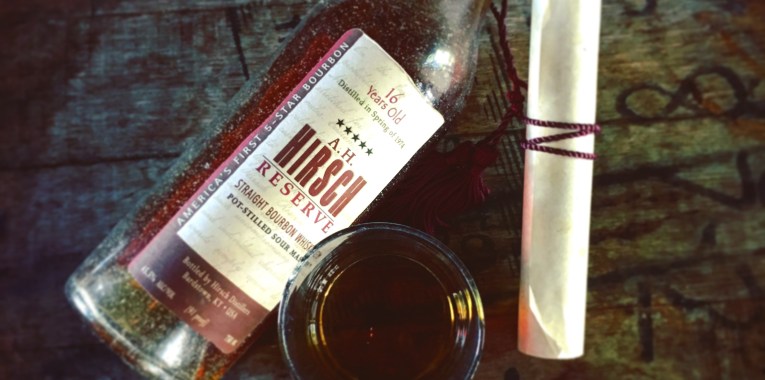
For our first go around we got a real unicorn of a bottle: the A.H. Hirsch 16 Year Straight Bourbon whiskey. This bottle, along with the original Pappy Van Winkle releases, are what kicked off the super premium Bourbon trend. There’s a great book about its full story called The Best Bourbon You’ll Never Taste by Chuck Cowdry so we’ll do the abridged version here.

Our story begins in a small farm outside of SchaferstowMichter's Ruins.pngn, PA in 1753. John Sheck was doing what most farmers did at the time and was simply distilling as a way to maximize his harvest and make a little extra cash from excess grain. There was no formula to it. But over the next 163 the family grew this small operation into a full blown distillery until they were forced to close the doors in 1919 due to the beast that was Prohibition.
During Prohibition the distillery and farm was sold to a local farmer who more than likely kept the stills warm with a few runs despite Prohibition and after repeal distilling commenced in full force yet again. The distillery changed hands several times in the next few years before being bought by the Schenley Corporation. Schenley was to the American spirits world of the 1940’s what Diageo is to world spirits today. Which is appropriate since Schenley was sold to Guinness in 1986 and Guiness’ merger with Grand Metropolitan in 1997 was the birth of Diageo.

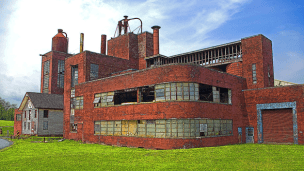
But well before then the distillery had changed hand yet again, this time to Pennco Distillers, and was now know as the Michter’s Distillery. They had new owners, a new IMG_1970.JPGbrand, and Charles Everett Beam, of the Beam family fame, as master distiller. They were ready to rock and roll. Yet despite having limited success with the Michter’s Sour Mash Whiskey (which may or may not have been pot stilled) and being named a National Historic Landmark in 1980 the demand for Bourbon just wasn’t there. What may have been the oldest distillery in the United States closed its doors for good in 1989 and is now just a collection of abandoned buildings.
What does any of this have to do with Hirsch? In the spring of 1974 A.H. Hirsch was one of the major investors in the distillery. And as you may have heard the ‘70s were not a good time for American whiskey and the distillery was strapped for cash. Rather than invest more money into the distillery Hirsch commissioned Charles Everett Beam to make him a whiskey. It was a different mashbill than the sour mash Michter’s was making at the time. It was a true Bourbon and the run produced a measly 400 barrels. This commission did two things: it gave the distillery a quick influx of cash and gave Hirsch an investment that he could sell no matter what happened to the distillery in the future.

14555129485_c0f8ededa1_b.jpg                  And Hirsch never cashed that investment in. Oddly he left it aging in the warehouses, paying taxes on all 400 barrels until the distillery shuttered. Now sitting at a solid 16 years old, ancient by Bourbon standards at the time, Hirsch finally took position and sold of the stock.

The new owners transferred the whiskey to stainless steel tanks to prevent further aging and started bottling the whiskey, naming it in honor of A.H. Hirsch himself. And in another quirk of the incredibly small whiskey world some of the first bottlings were done by Julian Van Winkle III at the same bottling plant he would latter start bottling another famous whiskey named after his Pappy.

The whiskey hit the shelves at around $50 a bottle, again astronomically high for the time, but it turns out it was damn good. Deep leather and tobacco, with nougat  and dried cherry and orange. It’s literally history in a glass. It can never be recreated. The moment in time, and even the distillery are long gone. Unlike your Pappy Van Winkle’s or George T. Stagg’s this piece of Americana will never come around again.

People loved it. It’s a prime example of the excellence that can come from extra aged American whiskey. The bottle became a legend and definitely fueled the love for old Bourbons, and their price tags.
Once, Preiss Imports discovered the following for Hirsch they pulled the last remaining bottles and repacked them in a massive collectors edition with a more massive price tag. It was still possible to order A.H. Hirsch for your bar. If you were willing to shell out for it.

So does it live up to the hype? It’s impossible to say. This bottle is so wrapped up in its history that I can taste it right there next to the oak and vanilla. Despite Chuck’s claim that it’s the best you’ll never taste it’s still out there. And you should taste the history. But, don’t cling to the past. A.H. Hirsch had it’s moment in time. The next moment is out there.

Old Grand Dad’s Goodbye

It’s been an interesting few months for the “Beam” portion of Beam Suntory.

Back in October the had a full worker strike at Jim Beam, it only lasted a single week before both sides reconciled their differences but it also happened to be the same week that Booker’s Rye was named Jim Murray’s World Whiskey of the Year.

The prestige of that super allocated release, as well as the price tag, seemed to add fuel to Beam’s announcement at the end of last year that standard issue Booker’s Bourbon was going to see a production cut and double in price in 2017. This announcement was met with such backlash that the company quickly back tracked, now saying that the price would more gradually increase over the year with only a $20 increase to start off the year. This about face has left many people disgruntled, feeling that they were some how manipulated into snatching up bottles. As if they were forced into buying the whiskey by the announcement.

Add this to the Maker’s Mark brushfire in 2013 where the same company announced that they’d be cutting the proof of Maker’s Mark to increase supply only to quickly change their tune due to community pushback and you seem to have a company with an inte
rnal struggle between the accountants and the physical producers.

Amidst this kerfuffle yet another beloved friend has bit the dust with out much fanfare: the Grand Dad 114. The lack of a dustup might be proof that the company was right to discontinue this expression of Old Grand Dad but I images.jpgpersonally disagree.

Old Grand Dad is old. Not as in an age statement but in terms a brand. And even if you don’t think you’re familiar with the brand you’re wrong. You just know him by another name: Basil Hayden.

Basil Hayden was part of a great migration into the heart of modern day Bourbon Country. He was, like almost everyone else, a farmer first. He distilled to preserve excess grain, just like his neighbors did, with little thought to mashbill or long term aging.

After the civil war whiskey went industrial and around 1882 Basil’s grandson, Raymond, founded a distillery and named it after his Old-Grand Dad and slapped a portrait of him on the label.

After Hayden’s death the distillery passed into the hands of the Wathen’s who made medicinal Old Grand Dad through-out Prohibition and their company, American Medicinal Spirits, became the backbone for National Distillers after repeal which was one of the largest and most influential bourbon makers in American History.

After Prohibition, when whiskey stocks were nearly non-existent, a higher rye content was added to Oimages-1.jpgld Grand Dad’s mashbill in an effort to make it taste and feel like those ‘old style’ distillers in an effort to appeal to the new drinkers.
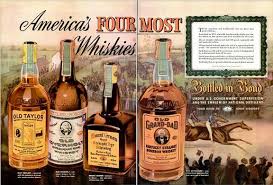
Flash forward to the late 80’s, National Distillers merged with Jim Beam and amazingly, the mashbill for Old Grand Dad has seemingly been left unaltered. And they even added to the family by introducing Basil Hayden’s in 1992.

I’ve always loved the 114. 114 proof (duh) it is spicy, powerful, dusty leather and a nutty presence that leaves your mouth bone dry, hunting for more. And even if the claim that Basil was known for making bourbon “with a high rye content” is completely unsubstantiated it is still damn good whiskey.

By now Basil Hayden’s far outshines its older iteration, at least in terms of press and sales. And with supply unable to keep up with demand a family sacrifice has been made. So good by 114.

That’s the history, but what about the future of Old Grand Dad? Well, let’s look back at the little ol’ Maker’s mark fiasco and Booker’s Rye awards.

A few months after Beam Suntory announced that the would in fact not be lowering the proof of Maker’s Mark the suddenly released Maker’s Mark Cask Strength. The release was originally very limited and sold exclusively in small format but proved so successful that it’s a full time release now, for a majorly popular brand that carries a higher price tag and slightly more prestige.

Add that to the success, and price tag, they’re having with super limited releases of major brands like Booker’s it’s hard not to see the super allocated Cask Strength Basil Hayden’s wait in the pipeline. And to not see the massive price tag it’ll carry on the shelves and even more gargantuan one it’ll have on the secondary market.images-2.jpg

This is the dark side of the whiskey boom. What helped fuel this boom was availability and price. Bourbon was unpretentious and everyone could afford a great bottle. Now, value is harder to find and more of the fans are being priced out of something they love. If we’re lucky they’ll go the Maker’s Mark route on this one and turn it into a permanent line extension but who can say? The company itself seems to have a hard time making up its mind.

I can’t tell if the glass is half full or half empty but, for tonight at least, it’s filled with Old Grand Dad 114

Just A Little Larceny

Larceny is not theft.

Let’s draw an analogy: Marketing is selling. False marketing is theft.

It’s theft of your time, your ability to make informed decisions and ultimately your money. It’s spending those things with the expectation of one product and getting something at best tangentially related. The liquor world is awash with claims that straddle this divide. American whiskey is the major culprit these days.

The whiskey world is obsessed with authenticity, real or manufactured. We want the 264 year old history of your brand, even though it was just started three years ago. Preferably in convenient sound byte form, downloaded instantly so that when we buy your $50+ bottle we can rest assured that despite it being made in a factory in Indiana we know that you found the recipe in your great grand aunt’s attic.

There are dozens of examples of brands doing it wrong but they get enough ink spent on them. Instead let’s talk about people doing it well and say again: Larceny is not theft.

So, what is Larceny?

It’s a story. A perfect marketing story. Before Prohibition there was a man named John E. Fitzgerald. He never distilled a drop and he never had a distillery. Himgres-1.jpge did have keys to a bonded warehouse where they aged whiskey and was known to “sample” barrels. Sample- read: pilfered. Despite his acts of theft being well known Fitzgerald kept his job. In fact, the company started calling particularly good barrels “Fitzgeralds” and ended up naming a brand after him, all bottled from only the best barrels. After Prohibition the brand was sold to Pappy Van Winkle where it became his flagship brand at Stitzel-Weller.
But as you know from our talk about Pappy last week, Stitzel-Weller closed in 1992. The brand, and some aging whiskey, transferred to Heaven Hill where they created a heated mash bill to keep “Old Fitzgerald” consistent. That is until 2012, when Heaven Hill removed Old Fitz from almost every market and presented us with Larceny. Same juice, but named for the crime. Not the man.

What does this have to do with the whiskey?

Not a damn thing.

It’s all marketing. All a story. John E. Fitzgerald’s Larceny has no more connection to the purported original act of theft than it does to the whiskey made at Stizel-Weller or the whiskey sold before Prohibition. But it’s a story we all tell, something that gets us talking about this bottle.

And it’s still the spirit of Old Fitz. It’s still the same whiskey they were making before the name change. It’s the same mashbill inside the bottle, different proof, no age statement and still nutty, slightly rough around the edges with a dark, dark cherry note ringing through the center. But tasting notes aren’t enough on their own.Tasting notes don’t sell, history does.

And Heaven Hill has history in abundance, what they don’t have is a brand. Jim Beam has a brand. Four Roses has a brand. Heaven Hill has stories: Evan Williams, Elijah Craig, John E. Fitzgerald, and they are very successful stories. Evan Williams is the number two selling Bourbon in the world, so how do you get to number one? Marketing.

In the end is the Larceny a theft?. No, it’s just a fresh coat of paint on a well worn Kentucky barn. It’s still the same whiskey inside.

Your “Pappy’s” History

Pappy is history. Literally and figuratively.

Figuratively, the time when the whiskey was equal to the hype is long gone. The search and endless discussion of the search for Pappy Van Winkle has become a bigger story then the actual whiskey itself. But for most people it’s still just a name. Rather than focus on the ephemeral qualities that may have lead to Pappy’s preeminent status let’s talk some cold hard historical facts that lead to where we are now.

Pappy Van Winkle is a line of Premium Bourbons that in recent years have become the hot ticket item with bottles going for thousands of dollars at auctions and on the secondary whiskey market. The label includes a 15, 20 and 23 year old Bourbon all called “Pappy” as well as several younger variations referred to as “Old Rip Van Winkle” as well as a 13 year old Rye. All of the Bourbons are currently known to be “wheated” Bourbon, meaning that their mashbill is composed of corn, wheat, and barley and as of 2010 all of the whiskey in the bottles has been distilled at the Buffalo Trace Distillery. That wasn’t always the case.

images-2.jpgJulian “Pappy” Van Winkle was a real man. He was involved in the whiskey business well before prohibition. He and his partner, Alex Farnsley purchased a controlling stake in W.L. Weller and Sons in 1908. At the time Weller and sons was strictly a bottler. They distilled nothing themselves but worked very closely with the Stitzel Distillery.
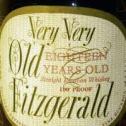
After Prohibition Pappy, ever the shrewd business man, managed to acquire the Stizel Distillery, merged the two operations into the Stizel-Weller Distillery and opened the new distillery on Derby Day in 1935. They begin production on many purchased pre-Prohibition brands including Cabin Still, Rebel Yell and most notably: Old Fitzgerald.

images.jpgPappy’s flagship brand was Old Fitzgerald. His biggest contribution to his namesake Bourbons is his “whisper of wheat.” Every brand that came out of Stizel-Weller was a “Wheated” Bourbon as opposed to the standard mash of corn, rye, and barley. To many this produces a rounder, softer bourbon with more dark fruit and cherry.

Pappy passed away in 1965 when all the cigars and Bourbon caught up to him at the far too young age of 90. His son, Julian Van Winkle, Jr. inherited the business but in 1972 he was forced by stockholders to sell the distillery and brands. He still maintained a bottling plant and resurrected yet another pre-Prohibition brand “OldRip Van Winkle.” No family relation. He continued producing the label sourcing whiskey from what had been the family distillery.

images-1.jpg
Flash forward to 1992, Julian Van Winkle III is now in charge of the family company and the Stizel-Weller Distillery is completely shuttered. The remaining brands and whiskey stocks are sold off (the flagship Old Fitzgerald fell into the hands of Heaven Hill) and Julian II continues to use old stock for new bottlings. Old Rip Van Winkle 15 year was released in 1989 but the first mention of “Pappy Van Winkle Bourbon” appears along with the first edition of the 20 year old in 1995.

However, many of these early bottlings are not Stizel-Weller whiskey. Julian II was back where Pappy had started, as a non-distilling producer. A bottler. He was sourcing whiskey and many of the initial offerings of the “Pappy” lineup, like the first edition of Pappy 23 in 1998 are actually high-rye Bourbon from the Barton Distillery.

But the Van Winkle’s never let facts get in the way of a good story and Pappy began getting rave reviews in the late 90s by picking up steam as the Bourbon revival does. In 2002 the Van Winkle’s partner with the Buffalo Trace Distillery and secure a continuous source for their brands.

In the end, the cold hard fact about why Pappy Van Winkle is considered the best Bourbon in the world is because people keep saying it is.

And In 2007 the New York Times puts the Pappy 20 at the top of their list of
premium and super-premium Bourbons leading the revival of the industry. By the time Anthony Bourdain tweets that he’s considering getting a “full pappy back tattoo” in 2011 Pappy-mania is swinging into fifth gear.

Now when most people ask how they can get a bottle of this coveted whiskey gold the answer is, you can’t. Yet people are still getting bottles, often at massive price hikes. So it’s not that you can’t get a bottle, it’s just that someone else is willing to pay more. To the Van Winkle and Buffalo Trace’s credit they haven’t seized upon the Pappy craze to drastically raise prices but the people they sell the bottles to have. Pappy Van Winkle not only helped fuel the Bourbon Revival but also the secondary Bourbon trading market where bottles are traded and sold, technically illegally, online. That’s a lot for one small whiskey to carry on its shoulders.

but_always_fine.jpgIn the end, the cold hard fact about why Pappy Van Winkle is considered the best Bourbon in the world is because people keep saying it is. And because people keep making money off of saying it is. Those who don’t learn from history are doomed to repeat it. Think about that the next time you see it listed on someone’s menu for $150+ a pour, and maybe find a bartender you trust to help you drink your next history lesson.
Booker’s: Lost In Imitation

Lost in Imitation.

There is an idea that new adaptations of old work, work that inspired countless imitators, will tend to resemble the imitators more than the original. Think of how the Frankenstein Monster has become a shambling, mute zombie thanks to the 1930s movies despite the original character being verbose, intelligent, and vicious.

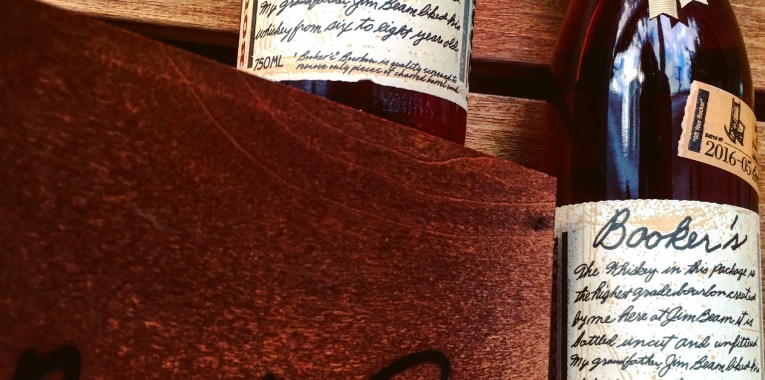
Booker’s is an old school classic of the Bourbon world but it’s not an ancient brand. Named for and started by the legendary grandson of Jim Beam, Booker Noe, the brand started out as a gift from Booker to close friends in the late 80s. It proved to be such a hit that it was released to the public in 1992 and it hit all of the right buzz words: Cask Strength, Non-Chill Filtered, Small Batch, 6-8 year old, Straight Bourbon Whiskey.

Except that in 1992 none of these were buzzwords, because bourbon was not buzz worthy. It was barely drinkable in most people’s eyes so this undiluted, turbo-charged whiskey emerging onto the shelves with a $40+ price tag must have seemed like madness. But people fell in love with it. Each batch offered something familiar yet different, all variations on a theme. It didn’t hurt that Booker Noe was one of the first “Celebrity” Distillers. It was the force of his personality and vision that made the brand a success.

Fast forward twenty-five years later and Barrel Strength whiskey is the hot commodity. Booker, the brand and the distiller, was a trend setter. Any bartender or whiskey enthusiast that came of age in the past 20 years has had Booker’s. But in this world of seemingly endless new options most don’t keep a place on the back bar for it. The premiumization of whiskey has driven bartenders and collectors to the next hot commodity, or name, or special release.

Now the trailblazer is reimagining itself in the image of what came after. Starting in the New Year Booker’s Bourbon is going to be nearly doubling in retail price with the number of batches being released annually being reduced from six to four. That’s a massive and immediate shakeup for a long established brand. It’s also following in the path of its imitators by increasing price and reducing supply.

On the one hand, it’s easy to understand this thought process from the higher ups at Beam Suntory. They see younger brands, many of them simply sourced whiskey, going for double or triple the price of Booker’s and want to position themselves against that. There’s also the desire to differentiate their owns brands. Their Small Batch Bourbon Collection (Knob Creek, Basil Hayden, Baker’s and Booker’s) all sit comfortably next to each other in price so there’s no drive towards one brand or the other. All of that makes sound business sense but the cynical view is equally as easy to see. The Booker’s Rye sold out immediately at $300 and won more awards than the Booker’s line has seen in years so it’s hard to not feel like Beam Suntory isn’t just seeing dollar signs.

The real question ends up being, is Booker’s a $90-$100 bottle? If it sells at the price it sure is. The problem is that Booker’s ubiquity also makes it forgettable. Like most of the mainline Beam offerings there’s nothing that makes it stand out. Even from the other members of the Beam family. Jim Beam Whiskey always tastes like Jim Beam Whiskey, no matter what label name they slap on the bottle. And that’s a great positive or negative depending on your point of view. That’s what gave Booker’s its edge, the raw unadulterated flavor of Beam. The last batch of the year “Noe Hard Times” is Booker through and through. Huge oak, vanilla, a massive heat at 127.8 proof, a toasted nuttiness, and that unmistakable bready Jim Beam yeast. It’s a great Beam Bourbon but I’d be hard pressed to call it a $100 bottle.

But while I can, as this incredibly trying year of 2016 draws to a close, I’m going to raise a glass of the past to toast the future. An act that I seem to repeat with more regularity, because change it isn’t a comin’, change has done come.

Whiskey Wednesday: The Preacher Just Keeps Getting Younger

Hey it’s time to talk about two of my favorite things again. Privately selected single barrels and, less enthusiastically, change!

Let’s take this arrival of a brand new 10 year old single barrel of Elijah Craig to look at just how much things have, or haven’t changed.

First things that clearly haven’t.

A bit of history:

Elijah Craig was a fascinating man. Born in 1738 in Virginia, he was a Baptist preacher arrested at least twice for preaching without a license from the Anglican Church. The Baptists at the time were given a bit of a hard time for their stance on slavery (they were against it) and he worked with James Madison and Patrick Henry to help preserve the right of religious freedom at a federal level after the Revolutionary War.

imgres-1.jpg            After the war he helped lay out and plan the city of Lebanon, Virginia which eventually became Georgetown, Kentucky as the state lines and city names changed to reflect a growing country and their pride in their first President. Our Preacher founded some of the first mills west of the Appalachian Mountains that produced cloth and paper. He was also a big proponent of education. Founding the first classical school in Kentucky in 1787, which was than linked to the Rittenhouse Academy in 1798 with the help of land donated by Craig. Rittenhouse eventually morphed into Georgetown College, not to be confused with Georgetown University. He also happened to found a distillery.

“If virtue consists in being useful to our fellow citizens, perhaps there were few more virtuous men than Mr. Craig”

In 1789…ish, Elijah Craig founded a distillery which, despite all his other accomplishments, is the reason any of us are talking about him today. According to almost all whiskey historians, and there are a surprising number of them, there is no reason to believe the Preacher was making anything other that the typical style of corn-based spirit being made by 100’s of other farmers at the time. By the time Bourbon County was formed in 1785, two years after the first registered distillery in Kentucky, people were already trying to find a way to distinguish between the corn based Kentucky style and the rye based style that predominated on the other side of the mountains.

Despite lack of evidence, Elijah Craig is first mentioned without citation as the inventor of Bourbon in 1874, nearly 70 years after his death. And most Bourbon aficionados can tell you the charming tale of his magical discovery of charring barrels to create Bourbon. After a lightning bolt set fire to one of his farm houses the good Preacher was too frugal to throw away some burnt barrels that he deemed perfectly suitable and the whiskey stored in these barrels emerged from “a process that gives the bourbon its reddish color and unique taste.” This story completely ignores the fact that barrels have been used for storage for millennia and they were valuable. Being reused to store anything from fish, to hardware, to whiskey. And they only way to truly clean out a wooden container after it’s stored salted fish: setting it on fire. Charring the inside. Bourbon was an evolution, not an invention.

So why are we still talking about the “Father of Bourbon”

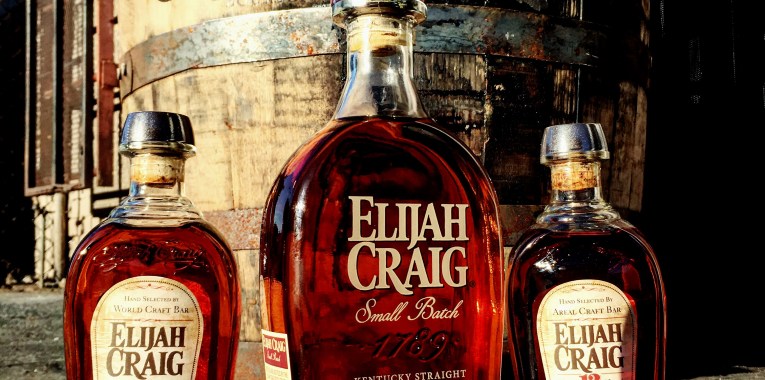
Enter Heaven Hill. Founded as soon as the money could be pulled together after the end of Prohibition, Heaven Hill is the only remaining family owned distillery in Kentucky, The largest family owned and operated producer and distributer of distilled spirits in the US, the seventh largest alcohol supplier in the US and the second largest holder of Bourbon in the world. They’re lagging slightly behind Jim Beam, which almost feels appropriate with the number of Beam they’ve had as Master Distiller. Their very first distiller was Jim Beams 1st Cousin, he was eventually followed by Jim Beam’s nephew and even the current Master distiller’s, Parker and Craig, carry the Beam family name. There is history everywhere. And in 1986 Heaven Hill first released the Elijah Craig 12 Year Small Batch Straight Bourbon.

Nimgres-2.jpgamed and marketed after the dubious claim of our good Preacher as the Father of Bourbon, the whiskey was nevertheless damn good. While “small batch” has never been a regulated term Heaven Hill has always stood by the fact that their Elijah Craig brand is never more than a 200 barrel dump per batch, which is more than most distilleries can actually distill but at least there is a number to the claim. It was also always 12 years old, which put it actual years ahead of most of it’s premium competitors.

But times change.

Due to the success of the super-aged version of Elijah Craig, the Barrel Proof Editions, a massive, debilitating fire in the mid 90’s that literally destroyed a distillery, and a massive uptick in the call for good bourbon this stalwart brand has had to make some interesting calls in the past few years.

The biggest being the fact that it’s dropped it’s age statement. For nearly 30 years Elijah Craig has been the benchmark for old bourbon. images.jpg12 years blasted out large on the label gave it a gravitas and a certain definitiveness in what the benchmark of flavor should be. Heaven Hill insists that the new “Small Batch” Elijah will always be a blend of 8-12 year old bourbon and that the change allows them to maintain the Barrel Proof at 12 years old and eventually increase supply of the highly lucrative and delicious 18 and 23 year old single barrel variations, but it still feels like a loss.

We in the bourbon world are sometimes overly obsessed with the idea of “the past” and “tradition” so much so that the marketing stories overtake the liquid even when they’re pretty blatantly misleading. The old tales of the Preacher Elijah Craig are mild compared to most brands. We resist change. But especially with the new, and in my opinion terrible, bottle redesign I can’t help but feel like something is being lost in translation.

Part of what always stood out for me with Elijah Craig was that it was an introduction to the wider world. It wasn’t a well whiskey, it wasn’t a call and it certainly wasn’t expected. It had all the right ingredients: amazing quality, an age statement that puts almost anything to shame, and a price point that let you experience something new without stress. It was the key that turned the lock on your palette. It’s bourbon and had all those necessary parts but added up to so much more. And as so many parts move, so rapidly, I can’t help but feel they might not be getting the combination to the lock right any more.

But maybe I’m just getting old.

I certainly wouldn’t have bought a barrel of it if I didn’t think it was worth it. This 10 year is the third generation in my personal selections of the Preacher and it is more lively and kicking than most standard issues I’ve had, with a deep oak backbone supporting a brighter stone fruit and peach note before finishing dry and tannic.

The future is wedded to the past and after all that Elijah Craig has been to me both personally and as something to share with customers I feel the need to do something we should all do more of, challenge our preconceptions and keep an open mind.

Elijah Craig had,been and is, one of my stalwart companions,- but I can’t help but feel there might be something subtly gleaned from the preacher’s actual obituary, “He possessed a mind extremely active and, as his whole property was expended in attempts to carry his plans to execution, he consequently died poor. If virtue consists in being useful to our fellow citizens, perhaps there were few more virtuous men than Mr. Craig”

Back In The Alley 6

The craft distillery and spirits movement wasn’t born yesterday but it sure feels like it.  In 2011 there were a mere 200 “craft” distilleries running spirit off their stills. By 2014 that number had literally tripled to over 600 and now there are estimated to be over 1200. That’s a massive jump in in 5 years. That’s a shift from about  700,000 cases a year to over 3.5 million.

I hate to throw around rather abstract numbers, but I feel that in this case we have to because that change is simply staggering. There is literally too many craft spirits being made to even support the great ones let alone the good ones. I know I personally came of age as a bartender during this boom. I’ve watched brands I’ve discovered and lovingly hand sold instead of the Big Labels come of age and actually stand on their own merits on shelves across the country. No longer needing to be propped up by some random bartender over eager to share.

And then I’ve watched those brands be bought up by the Big Labels, seen the love fade and then there’s yet another new kid in town knocking on your door and the cycle starts all over again.

The cycle has ramped up into hyperspeed now and there’s a new kid knocking on the door before it’s fully swung shut from the last one.

Or maybe that’s just because I’m more involved in the process these days.

Alley 6 distillery  was founded in Sonoma County in 2012 by Jason and Krystle Jorgensen and it sounds like the quintessential definition of a “craft” distillery.  A venture by a loving couple that does everything – milling the grain, mashing, fermenting distilling, barreling and bottling – on site. The have a 500l Alembic Pot Still nick named “Horton” and they have a unique mashbill drawing influence and flavor from aromatic barley. Aromatic Barley is actually the name of the type of berley and is very predominent in France and Belgium. With a mashbill of 78% rye and 22% aromatic malted barley they were aiming for a big malty back bone and rye spice.

The first, incredibly small, batch hit the shelves in late 2015 and a rep who was very excited to have a new whiskey to sell to me brought around a sample immediately. I remember thinking it was well made rye, not overwhelmingly exciting and with a rather hefty price point it got lost in the crowd.

A few months later a regular at the bar brought me in a bottle of whiskey to taste from a new distillery his friends were running up in Sonoma County. This whiskey tasted so drastically different that it took me a few minutes to realize that it was the same Alley 6 that I had had months before. It struck me enough that I filled it away as something to examine down the line.

Well here we are at the end of 2016 and we’re looking at batch no 6 of Alley 6. The whiskey is certainly more complex than batch 1 with a hefty dose of dry rye spice, a hefty bready back bone and a dark cocao and coffee. Again, interesting but not amazingly mind blowing. But what is interesting is watching the growth of this distiller.

Because that’s what we’re experiencing right now with these craft distillers: their growing pains. The Big Labels went through their’s years ago and their brands are the result of decades of experience. Over a 1000 of these new kids have less than four years under their belts. If history is any indication there are a lot of them that won’t survive the growth spurt, but I for one intend to enjoy the journey.

Orphans. Orphans as far as the eye can see.

Rhetoric:
-language designed to have a persuasive or impressive effect on its audience but often regarded as lacking sincerity or meaningful content.
Let’s say you’re a major spirits company. Let’s even say you’re the largest in the world in fact, and in the late 90’s you divest yourself of all of you major American whiskey holdings. Why wouldn’t you? American whiskey is the pits and no one is drinking it. Canadian whiskey however…
Jump a head a couple decades and Bourbon and rye is outstripping demand and you find yourself without an American Whiskey distiller but you do have a massive amount of super aged Bourbon still languishing in your warehouses. What would you do? If you’re Diageo you market the hell out of it.
After Uniimgres.jpgted Distillers became a part of Diageo in 1997 when Guinness merged with Grand Metropolitan they seemed rather interested in divesting themselves of the American whiskey holdings, going so far as to sell their only active distillery, the Bernheim Distillery, to Heaven Hill in 1999. Yet they held onto a massive amount of stock that they continued to age, selling it out on contract and in bulk but not making any personal use of it. They were seemingly content to let it get older and older.
Even when they founded a new flagship American brand in the form of Bulleit, a brand who’s history is only as deep as the ink on the paper it’s printed on, they made no use of it. Instead they relied on their remaining contract with Four Roses for the to fulfill the flavor profile they needed.
Then in 2014 the Orphan Barrel landed with a thud. The Orphan Barrel “Distillery” had found a “limited” number of “forgotten” and “abandoned” barrels. Who knows where they came from! But we do know that right as all the old whiskey seems to be drying up that these are super old. Some are even 28 years old! That’s a lot of quotation and excitation points.
The bottles were given evocative names and flashy old fashioned- style bottles but these weren’t orphans, more like children dressed up for family photos. They look fancy but you know who they really are.
Take the Rhetoric line up. We know that these we distilled at Bernheim in the early 90s by United Distillers which became Diageo and then aged in the warehouses of the now defunct, legendary Stitzel-Weller which ARE now owned by Diageo. That’s some amazing Bourbon heritage right there and it’s 20 years old. That’s a great story! These aren’t orphans. These are children who’s parents are going through an identity crisis.
And just personally I’ve always kind of felt an arrogance from the lineup. Right as Old-Blowhard-Lo-Res.jpgconsumers are expressing greater interest in the origin of their spirits, what the mash BILL is, how it’s aged, all of the nitty gritty details- here comes a brand actively hiding its history. Even the names them selves, Old Blowhard, Gifted Horse, Rhetoric, seemed to be thumbing their noses at people who ask too many questions.
But it wasn’t just “enthusiasts” that pushed back. Turns out the consumers meant it when they said they wanted all these “unnecessary” details. So, begrudgingly a little bit was let out. But not enough to overtake the marketing. Or to give the whole story.  And that is incredibly puzzling. There’s actual, interesting history here and even a little mystery. Let’s face it you just a don’t see American whiskey this old. Why was it left to age so long?
But instead of talking about the whiskey here we are still talking about all that marketing ink..
So what about the whiskey? Well, they are old. In the case of the Rhetoric they’re dusty, dry, tannic and soft. My personal taste craves something a little more lively but if you like all the super oak it’s here for you.
Premium old whiskey makes a buzz anytime it’s released, yet interestingly the “Orphan” Barrels seem to be making less of a splash each time. Maybe the marketing put people off. Maybe the price did. Or maybe it was just the whiskey itself. Either way we don’t know what the future holds for the rest of the orphans. Maybe a few more will plop on to your shelves. Maybe now that their parents contracts with Four Roses and Jim Beam have expired they’ll be blended in with their cousin Bulleit, though that seems unlikely. Or maybe it’ll be something completely different. But for now this is where these orphans have found their homes.

Son of a Preacher Man: Elijah Craig 18 Year Single Barrel

People always ask, “What is your favorite whiskey?” and I always respond, “That’s like asking a parent to pick their favorite child.” It’s flippant but also kind of true. A parent will tell you they love all their children, but there’s always one that the spend more time with. In the bourbon world that child for me is the Preacher: Elijah Craig. But as the Nobel Laureate once said, “The times they are a-changin’.”

It’s gotten incredibly obvious over the past year with the old standard 12 year dropping its age statement and a major bottle design overhaul, but the first sign of change came nearly 5 years ago when they discontinued the original iteration of the Elijah Craig 18 Year Old Single Barrel.

As the Nobel Laureate once said, “The times they are a-changin’.”

The Bourbon was, without a doubt, one of my favorite things I’ve ever put in my mouth. Massive, oaky, creamy and not overpowering. It’s a prime example of the quality of the older whiskies that fed into and eventually led to the Pappy Van Winkle craze, and at $45 bucks a bottle it was something everyone could enjoy. It was an entry point into the bigger, wider world of Bourbon. And they had to take it away from us for two reasons: 1) We drank all of it. 2) The Heaven Hill fire.bourbon.jpg

In the mid 90s a fire started at on of the Heaven Hill distillery rickhouses, most likely from a lightning strike. Ironic in light of the old marketing story that Elijah Craig became the father of Bourbon when a lightning strike burned his barn to the ground, but being a frugal man he saved the barrels stored there and used them to store whiskey, becoming the first to use charred barrels and thus the first to make modern bourbon. The story is complete myth of course.

But this actual fire spread through the warehouses like, well like fire through alcohol. It followed the wind and the terrain and set fire to the distillery itself. Other distilleries banded together to help them continue production until they purchased the Bernheim distillery a few years later but with the loss of stock and production ability sacrifices had to be made and the 18 year was put on that altar.

368291375969919360.jpgAs a consimgres.jpgolation prize in the following years Heaven Hill released a 20, 21, 22 and 23 year old version of the single barrel. Some with varying success but as the age on the bottles ticked up so did the price on the bottles, riding right along the crest of the Bourbon Craze. Then the 18 Year came flaming back last year.
 

Still a Single Barrel, but now a once a year release, I was excited to taste it and felt warm inside as it slid down my throat just like I remembered. Rich, deep, dark yet still lively. But with a price tag 3.5 times what it used to be the entry point was gone. No longer was this something to share with newcomers and aficionados alike. Now this was for the connoisseur. And yes, now this means that you actually might have a chance of finding a bottle on the shelf. Of having something to share in those special moments, but with the bottle change and the loss of the 12 year age statement from the Preacher’s Small Batch bottles I’m left wondering where that entry point is going. So, tonight I’m going to raise a glass because I want to. And because I can. For now.

Leopold Brothers Maryland Style Rye

Alright nerds, here’s a good one for you today. Maryland Style Rye.
Before the advent of the ‘Great Experiment’ that was Prohibition there were two dominant styles of American Rye Whiskey. The Pennsylvania Style (spicy, dry, and oaky) and Maryland Style, which was more floral, fruit forward and less aggressive. Among the many great things that Prohibition destroyed, Maryland Style Rye was one of them.

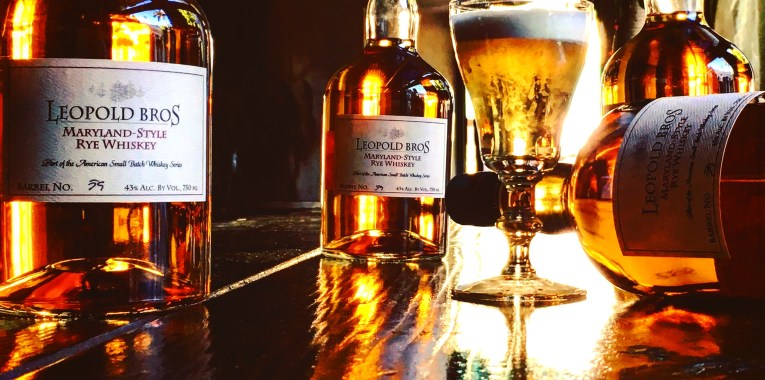
But the boys at Leopold Brothers, are fighting the good fight and trying to recreate the style in the only way they know how: with exceptional quality and attention to detail. While ye olden Maryland Ryes often achieved their more mellow nature and fruit flavors from additives and prune juice, the brothers are following their eco-distilling nature and recreating the flavors throughWight'sMarylandRye3.jpg careful distillation and selection of yeast strains to create a wholly unique product. They’ve even had an old time compound still made exclusively for them, and are working with local farmers to grow late 1800’s style rye, which has a completely different flavor and starch content than it’s modern descendant.

While we’re still waiting on the first batches off the new still, the current bottling shouldn’t be ignored. Young, but light and green. Green as in like biting into a huge green apple, apricot, and stone fruit. All supported by a rich chocolate malt rounding out to a juicy and more mellow finish than your more familiar ryes.

And I’m feeling inspired recently so lets bust out some old tricks with The Santa Anas: Leopold Maryland Rye,Chai Infused Cocchi, Dry Vermouth, Homemade Apricot Bitters and a Smoked Orange Foam.