Quarantine Bottle Kill #5: Longrow Red 11 Year Cabernet Sauvignon Cask

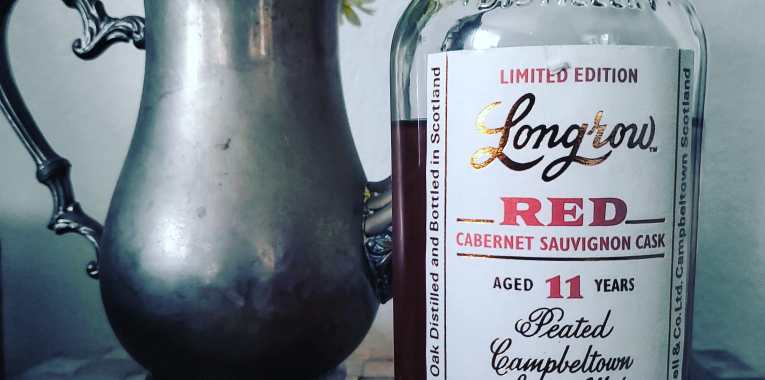
Just because we’re in quarantine doesn’t mean that there can’t be a theme. Aside from sparking joy by eliminating bottles from the booze cart that is. So next up on the quarantine bottle list is the cousin to the last, the Longrow 11 Year Red: Cabernet Sauvignon Cask.

For all single malts produced in Scotland the brand must be identified with the distillery. Hence the Macallan whiskey being made at the Macallan distillery, the Jura at Jura, Laphroaig at Laphroaig, and so on. This seems intuitive yet it’s absolutely not how things are done here in the US. While there are a few eponymous distilleries most of them produce dozens of other brands as well. For example, Jim Beam not only produces Jim Beam but Bookers, Knob Creek, Basil Hayden, Old Overholt, and the many variations there of. 

This makes Longrow rather unique as it’s brand but not a distillery. Part of the reason this is allowed under Scottish law is that the brand is intrinsically understood to be produced at Springbank Distillery and the name of the distillery appears on every bottle. Larged embossed letters proudly proclaim “Springbank” above every label. But also, the style of Longrow is drastically different than its cousin allowing for a true separation and not just a label change on the same liquid.

Longrow, unlike Springbank, is heavily peated. There is actually a scientific way to measure the “peatiness” of a Scotch. It’s called Parts Per Million, or PPM, and is used to determine the phenol level after kilning but before distillation. Essentially the longer the malted barley is exposed to the peat fire during kilning the higher the peat and PPM. Longrow clocks in at 50 PPM which means it’s technically even peatier than the notorious peat bomb, Laphroaig which clocks in at 40 PPM.

So, here is a heavily peated Campbeltown Single Malt with less than a hundred casks produced every year at a non eponymous distillery. If that’s not enough to peak your interest then the Cabernet Sauvignon Cask will. Every Longrow Red release spends some of its formative years in a red wine cask, similar to the recently emptied Springbank Burgundy. For this release it spent the first seven years in ex-Bourbon barrels and the last four in a Cabernet Sauvignon cask.

To cap it all off the Red is bottled at Cask Strength clocking in at a whopping 104 proof meaning none of those big flavors are lost.

NOSE: Assertive smoke, raspberry, cherry,
PALETE: Leather, sea salt, smoke, darker fruit, blackberry, a touch of sweetness and a strong tannic backbone
FINISH: Long and dry yet juicy. Reminiscent of sea air with those red fruits returning.

This is a complex little dram. There’s a beautiful salinity that provides the throughline for Longrow while the tannin and the fruit lent from the Cabernet Sauvignon cask shines through at almost every level without being overwhelming. Surprisingly, I actually enjoy this one with a little water in it. The high proof gets in the way of some of the more delicate flavors that I really enjoyed in the Springbank Burgundy that are also present here.

All in all, this bottle actually feels like a perfect quarantine metaphor: subtle yet aggressive, complex yet needing a bit of hydration, and packing a hell of a punch.

Whiskey Wednesday: Take Off of Taketsuru

Continuing this month’s conversation about Nikka comes the news that Nikka will be discontinuing the Taketsuru 17, 21, and 25 Year old expressions as of March of 2020. While some stocks will remain under “heavy allocation” all three marks will no longer be listed by the company. The Nikka Taketsuru Pure Malt, a Non-Age Statement (NAS) edition that replaced the 12 Year old Taketsuru several years ago, will also be discontinued.  

While the loss of the age statements is lamentable, it falls neatly into the familiar story of aged stocks not being able to keep up with current demand for high end whisky. But the loss of the NAS Taketsuru Pure Malt comes as a bit of a shock. The NAS was originally released in late 2015 and was meant to address the supply issue. Then in 2019 it won Jim Murray’s Japanese Whiskey Of The Year. Add to this the discontinued Nikka Miyagikyo and Yoichi Single Malts in 2015 and the temporary interruption in supply of their Coffey Malt and Grain in early 2019 and the picture of a company struggling to match pace with demand while also seeking to define its core identity emerges. 

So, what exactly is being lost with the Taketsuru’s? 

The Taketsuru line was named after the company founder Masetaka Taketsuru. They have been the core of the Nikka line up for as long as I’ve been familiar with the brand.  They’re also incredibly representative of the Japanese blending style. Every bottle is the Taketsuru line is a Pure Malt which is an old term for Blended Malts. Not to be confused with a Blended Whisky. A Blended Whisky is made up of both single malt and grain whiskey. A Blended Malt is comprised only of Single Malts. In this case the Taketsuru’s are made from a blend of malts distilled at the Yoichi and Miyagikyo distilleries. 

Japanese Whisky makers often think of themselves more as blenders than distillers. They look to layer flavor by creating a blend of whiskies to create consistent and nuanced bottling. Take the Hibiki’s as a prime example. Suntory has repeatedly said that they consider the Hibiki to be the perfect representation of their art, both in terms of distillation but more as a blend. But while the Hibiki contains a fair amount of grain whiskey the Taketsuru line is comprised of big single malts.  

One of the advantages of the centuries old whisky tradition in Scotland is 100s of distilleries that are relatively friendly with each other. This means that if a distiller wanted to make a Blended Malt with a style of malt they didn’t distill themselves there was always another distiller that did who would be willing to sell or trade. When Masataka founded Nikka in 1934 as the Dai Nippon Kaju, Co. there was no one to barter with so if he wanted different styles to create a blend he had to distill them himself. 

This eventually lead to the creation of Nikka’s second distillery, Miyagikyo, outside on Sendai in 1969. This allowed for a greater depth of flavors for blending as well as over doubling the company’s production capability. Miyagikyo is much further south than its sibling Yoichi Distillery granting a different character as the whisky ages. We can expect to see more of this style of whisky from Nikka in the future as a planned expansion on Miyagikyo should be finished in 2021 with production expected to expand by 40%. 

As for the present, the Nikka Taketsuru 17 Year Pure Malt. Award the Best Blended Malt Award by the World Whiskey Awards in 2014 it’s a blend of single malts from both the Yoichi and Miyagikyo distilleries. Aged for a minimum of 17 years this is a powerful whisky. 

NOSE:  Fresh fruit, Cedarwood, Honey
PALETTE: White Pepper, Dried Fruits, Oolong Tea, A hint of smoke
FINISH: Medium to long, rounded smoke and with dark chocolate and leather

The Taketsuru line represents NIkka’s history. It pays homage to its founding father as well as combining the art of both of the company’s distinct distilleries. The loss of the Taketsuru line is the loss of a piece of history but it does open a future. Whisky, and in particular Japanese Whisky, is having an incredibly large moment. Bit even if whisky distilled 25 years ago is being depleted left and right the world, and the flavor, that whisky represents is gone. The challenge now is to find the way to create the spirit that fills the barrel to be bottled in 25 years while still keeping the lights on in the years between. 

Whiskey Wednesday: Nikka Days of Our Lives

I love a good story and Nikka Whisky certainly has a good story. A story of both an excellently crafted whiskey but also a phenomenal story in the life of the company’s founder, Masataka Taketsuru. The month of January is especially important to the story of Taketsuru and his redheaded Scottish wife, Rita. So I thought I’d take some time and look at a few of Nikka’s offerings for the rest of January. 

In 1918 Masataka Taketsuru was sent to Scotland by the Settsu Shuzo company to learn how to make whisky from the Scottish master craftsmen. The goal was to learn from the best, return home, and create a Japanese whiskey that would be on par with the best whiskies being produced in the world. The unexpected consequence was Taketsuru meeting Jessie Roberta Cowan, known as Rita, while teaching Judo to her brother Ramsay. 

In a time when “international” marriages were rare the two fell in love. Takatsuru proposed in September of 1919 and the two were married on January 8, 1920, exactly 100 years ago. After the marriage the two moved to Campbelltown where Taketsusru completed his apprenticeship. The two returned to Japan in November of 1920, partially due to Rita’s encouragement. Taketsuru had expressed a desire to stay in Scotland with his marriage to Rita but she disagreed. “We should not stay in Scotland, she said, “We should head to Japan. Masataka-san is living a big dream, a dream to make whisky in Japan. I want to live your dream together.” 

Upon their return to Scotland the landscape had changed. The post World War II depression had set in and the Settsu Shuzo company was no longer financially able to invest in new projects, like whisky making. When he left the company in 1922 he found a job, through a friend of Rita’s, as a science teacher. The following year he was offered a job at Kotobukiya to make whisky. 

The name Kotobukiya may not be familiar to Western ears but the company it grew into, Suntory, certainly is. While Masataka helped them produce their first whiskies from the brand new Yamazaki Distillery his first wide spread release was essentially a failure and Masataka parted way after fulfilling his ten year contract. 

In 1934 the couple founded the Dai Nippon Kaju, Co., literally the “Great Japanese Juice Company, in Yoichi, Hokkaido. The two said the Yoichi, more than any other place in Japan, reminded them most of Scotland. This endeavor was made possible by investors who were introduced to Taketsuru through Rita. Both of the primary investors had family that had taken private English lessons from Rita. With the help of these investors, and the production of many apple products in the early years, Taketsuru was eventually able to release his own whisky in 1940 winning much acclaim over the years and the company formally being renamed as Nikka Distilling in 1952. 

Sadly, on January 17, 1961 Rita passed away at the age of 64. She was buried on a hill overlooking the Yoichi Distillery and Taketsuru engraved both of their names on the tombstone promising they’d be together forever. 

As much as I love a good whisky making love story, I also love duty free shopping. There is always something unique and quirky to be found. But in a world where Japanese Whisky is in ultra-high demand, and age stated malts are disappearing daily even the unique duty-free offerings are drying up. Which is why, on a recent international trip, I was so surprised to find a bottle I had never seen before, the Nikka Days. 

The Nikka Days was released in 2018 and seems to be a response to all of the factors above that are pressing in on stocks of Japanese Malt. It is a blended whiskey made of lightly peated malt and grain whiskies from both the Yoichi and Miyagikyo distilleries. 

The brand says that it has always stood at the crossroads of between East and West, tradition and innovation. Saying that each day is a journey and an opportunity to learn from previous days, and that this whisky embodies that mentality. Hence the name. 

The whiskey is certainly result of the current journey of the whisky world. So how does it taste? 

NOSE: Apple, Orange Blossom, Vanilla, Melon 
PALETTE: White Chocolate, Toffee, Citrus, a touch of smoke, and fresh apples 
FINISH: Slightly sweet, bright, with a touch of creaminess 

It is certainly fitting that apples are so prominent on the nose and palette of this whisky. Ultimately this is a very serviceable whisky but it stands in the shadow of its history and the massive malts that Nikka is known for. The price point also makes it hard to justify as a day to day sipper but it is worth the journey to spend a few days with if you are traveling. 

Whiskey Wednesday: Hitting Johnnie Green’s Stride

Johnnie Walker is a striding behemoth, straddling the world as the number one selling Scotch whisky brand. It’s so popular that “What makes Johnnie Walker Blue the best?” is a Google search autocomplete. It’s so popular that due to knockoffs and literal bootlegs there are more bottles of Johnnie Walker Black Label sold in India every year than are actually produced for the entire world.

            With this level of popularity the level of disdain and outright backlash for Johnnie Walker that abounds is almost inevitable. Something so popular could never actually be good. Yet, amongst its vast palette of labels there abides a quality and constancy that’s earned its place on back bars across the globe. It also contains one of my all time favorite colors and bottles: Green.

            Johnnie Walker, the Scotch Whisky, began its long walk in the 1819 when the father of John Walker, the actual Scotsman, died. The family sold their farm and invested in a grocery in Kilmarnock, Scotland in 1820. Grocery stores were a different breed in the 1800’s and many grocers would make their own house blends of whisky. This became much more prominent after the Excise Act of 1823 deregulated many of the laws on the distillation of whisky and more importantly greatly reduced the taxes on distilling and selling. In short order the teetotaling John Walker was selling his own blended malt whisky called Walker’s Kilmarnock Whisky. John passed away in 1857 leaving the company to his son Alexander Walker who would usher in the beginnings of the company’s global dominance.

This rise in popularity began with another act completely outside of Alexander’s control, the Spirit Act of 1860. For the first time it was now legal to blend malt and grain whiskies together, thus creating the blended whisky style that is the core of Johnnie Walker, as well as the vast majority of worldwide Scotch sales.

Alexander also took advantage of the newly arrived railroad to make connections with shipping captains to create a larger distribution network. This expanded shipping reach combined with a more approachable, lighter style of Scotch whisky literally made inroads with new drinkers.

            The increase in global shipping also led to the development of the iconic square bottle in 1860. The square shape allowed more bottles to fit in the standard shipping containers as well as greatly reduced breakage during transit. Alexander was also responsible for tilting the label at its jaunty angle across the bottle allowing for larger print as well as making the bottle more recognizable from a distance.

            It was the Third Generation of Walkers that added the final touch with a rebranding in 1909 that first saw the “Striding Man” added to the labels. They also had the companies three blended whiskies officially renamed to White Label, Red Label, and Black Label. The White Label was dropped during World War I but the Red and Black remain the core of Johnnie Walker to this day.

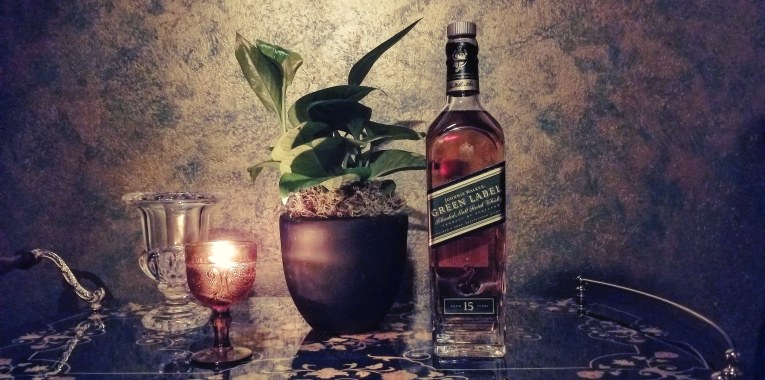
            With demand for Johnnie Walker Scotch spread across 120 countries the company began purchasing single malt distilleries to ensure  consistent supply and blends.  Beginning with Cardhu in 1893, they followed it up with the Coleburn Distillery, The Clynish Distillery and Talisker, before capping it off with the legendary Mortlach Distillery in 1923. Then in 1925 the company joined Distiller’s Company, which was purchased by Guinness in 1986, which then merged with Grand Metropolitan in 1997 to form Diageo, the largest liquor conglomerate in the world. 1997 is also an important year because it marks the reintroduction of Blended Malt Whisky to the Johnnie line up. Originally called Johnnie Walker Pure Malt my favorite bottle received its chromatic designation as Green Label in 2004.

            In a lot of ways the Green Label is a return to that very first John Walker blend. Being a blended malt it is comprised of completely single malt whiskies, which means none of the grain whisky that Alexander introduced and the helped spread the brand across the globe. Diageo is vague on the specific details, listing it as a blend of malts from the Speyside, Highland, Lowland, and Scottish Isle malts which is essentially saying it’s made up of Scotch from Scotland. But digging deeper you can find the names Cragganmore, Linkwood, Caol Ila and Talisker as the primary malts. It also carries a 15 year age statement, meaning the minimum age of every malt in the blend is at least 15 years old, making it one of the oldest constantly available Johnnie Walker blends.

            In a lot of ways this blend is at the root of Johnnie Walker’s history which is why it’s so surprising to me that it’s always felt like the redheaded stepchild of the family. It was “discontinued” in the Western markets around 2012 with plans to focus the brand in Asia. A massive shift in Chinese regulations brought the brand back globally in 2016. Yet it is still often passed over, ironically, because it isn’t as ubiquitous as the Black and Blue.

            Or maybe it’s a victim of Johnnie’s success. The sun never sets on the empire of Johnnie Walker yet it is an empire built on that addition of grain whisky to its single malt base. It’s a lighter style with more mellow flavor and the Green is rich and almost overly opulent in comparison. Someone who enjoys Black label might not find the Green to be their cup of tea. On the flip side the type of drinker that would truly love an aged-stated, blended malt is probably also the kind to turn up their noses at the mere mention of Johnnie’s name.

            Or maybe it’s that people still don’t truly understand what a blended malt is. It’s a misunderstood style just like Green Label is a misunderstood bottle. But the fact that it is so misunderstood and overlooked just makes it all the more endearing to me. I’ll gladly quaff a dram when I can find it.

NOSE: A light touch of seaside smoke, vanilla, dry oak and baking spices

PALETTE: Decadent and rich. Raisins, dried plums with a touch of that seaside air and a whiff of sherry. Slightly nutty, with a bright mid palette.

FINISH: A relatively quick, clean finish that leaves a lighter impression that the rest of the experience. It ends with lingering oaky sweetness mixed with a hint of smoke.

Open Bottle: Nineteen Eighty-Four JURA

“Who controls the past controls the future. Who controls the present controls the past.”

Released in 1949 George Orwell’s masterpiece Nineteen Eighty-Four often feels as alive and resonant as it must have when it was first published. Reading the headlines it feels like doublespeak, Big Brother, and New Speak have leapt from the lexicon of the theoretical into the mundanely of reality.

What was once meant as a cautionary tale has instead become the blueprint for how entire organizations operate.

The world has become vastly interconnected since 1984 and people are starting to realize how small a piece of the global whole they actually are. Some have risen to the challenge and sought to make their corner of that cold, distant expanse warm and welcoming. The seek to grow their communities.

Others, however, have become jealous of their small portion and rather than growing they shrink. They shrink from responsibility, from compassion and not only do they personally shrink they seek to diminish the world around them. To force the world to be smaller, leaving no room for those that are different or for those who seek an equal share in the world in which we must cohabitate.

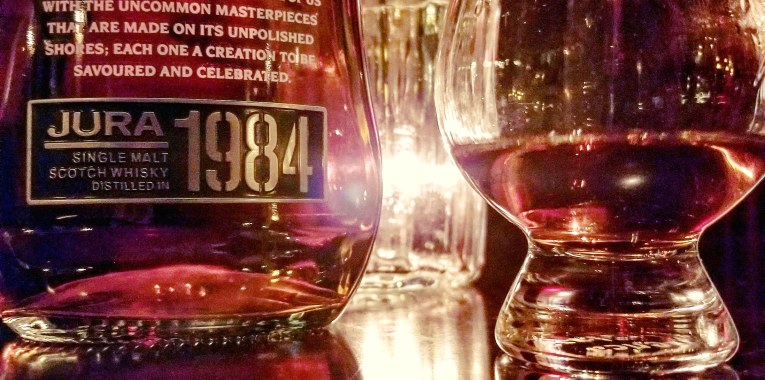
Not exactly light, whisky sipping, thinking but these are thoughts that are constantly on my mind these days and were brought into sharp focus when presented with a dram of Jura’s 1984 Edition.

The Isle of Jura lies off the North-East shore of Islay, has one road, one pub and one distillery, the eponymous Jura. Orwell described the island as “extremely unget-at-able” which remains very true to this day. It was at the “unget-at-able” locale that Orwell wrote the bulk of Nineteen Eighty-Four while incredibly ill with tuberculosis fro 1947-1948. It’s this act of creative output that Jura is honoring with the 1984 Edition.

Casked in 1984 and bottled in 2014 this 30-year-old single malt was aged in ex-Bourbon, Amoroso (cream) sherry, and Apostoles Oloroso sherry casks. Only 1,984 bottles were released world wide making it a rather limited release. This is a lot of attention to detail to pay homage to an event that happened when the distillery didn’t exist.

The distillery was built in 1810 but fell into disrepair at the end of the 19th century. It wasn’t rebuilt and operational again until 1963. So there is clearly a bit of a marketing gimmick tied into this release, which is nothing new to the spirits world, and unlike most gimmicks this whisky is a phenomenal product.

NOSE: The nose is rich, redolent in those sherry aromas with nutmeg, dark dried fruit, raisins, and a noticeable touch of the sweet.

PALETTE: Deep cherry and candied orange peel. There’s also a hint of roasted peaches with a large dollop of honey and, of course, oloroso sherry.

FINISH: The dram has a medium finish that lingers with a surprising amount of spice for how sweet it starts, leaving the dry baking spices and a touch of dessert.

I don’t care what your marketing angle is as long as it’s true and the product is good. And this product is exceptional. The story being crafted is a bit forced but it is also clearly the result of a small community taking pride in its past and continuing to build for its future.

It is perhaps unfortunate that Orwellian thoughts float through my mind while sipping on this malt but then again the age that we live in requires us to be active participants in the world around us, even when just sipping on a whiskey.

Education is the best tool we have to enact change and I, for one, would not have known that George Orwell wrote Nineteen Eight-Four on Jura with out this bottle. With out this bottle I wouldn’t have spent a week researching and reflecting on the themes of a book I haven’t read since high school. Not only was I researching but I was also reexamining these themes in the light of the modern world and my adult experiences.

We must stand up, we must think for ourselves and not simply walk the party line. We must not become orthodox for, “Orthodoxy means not thinking–not needing to think. Orthodoxy is unconsciousness.”


P.S. VOTE

Open Bottle: Yamazaki 18 Year Single Malt Mizunara Cask

In today’s edition of things you’ll never get to taste: Yamazaki 50 Year Old!

            On Friday August 17th 2018 a bottle of 1st edition Yamazaki 50 Year Old, one of only 50 bottles to exist, sold at auction for $312, 519.87. This is now the most expensive bottle of Japanese whisky ever sold at auction, beating the previous record set a mere three months earlier with the sale of bottle of 52-year old Karuizawa and blowing the previous record for Yamazaki set in 2016 out of the water.

But none of these can touch the record for most expensive bottle ever sold at auction, also set in May of 2018, for a bottle of MaCallan 60 Year old. The malt was distilled in 1926, bottled in 1986, featured a label created by Valerio Adami, is one of only 12 bottles in existence, and sold for $1.1 million USD.

Thirsty yet? Wish you could taste what must be the Elixir of Youth? Well, you can’t so lets talk about something absurd that you still might be able to put in your mouth: The Yamazaki Mizunara Cask.

To many drinkers and collectors Yamazaki is the quintessential Japanese whiskey. You can read more about their specific history, here, here, and here. Yet something that’s even more quintessentially Japanese than Yamazaki, kaiju, and anime is mizunara wood.

download-1
Quercus mongolica

Scientifically known as Quercus mongolica, this is a species of oak native to Japan, central and northern China, Korea, eastern Mongolia, and eastern Siberia. The infancy of the Japanese whiskey industry butted up against the outbreak of World War 2 and while imports of European and American oak barrels for aging were drying up whisky consumption was on the rise and became the main drink consumed by the Japanese army. Barrels were needed so the distillers turned to their native oak.

Up until then mizunara had been used primarily in the manufacturing high end furniture and when transferring to whisky making the distillers ran into a few problems. First up, it takes a good 200 years for a mizunara oak to fully mature for a good cask, and it doesn’t grow straight, making it difficult to form proper staves. On top of that, Japanese oak has a higher moisture content than it’s cousins making it more difficult to work with. It’s also more porous meaning the casks are more susceptible to leaking.

Despite all these setbacks it turns out what mizunara really needs to shine is the thing that it’s hardest to give: time. The true flavors of mizunara really start to shine after prolonged ageing. This has lead to it being an essential player in the blended/pure malts that Japanese producers are so found of but also rocketed it into the stratosphere of some of the most sought after style of aged Japanese whisky in the world.

As the world of rare whisky comes to mirror more and more the world of fine art and bottles are becoming collectors pieces to be admired but never enjoyed it’s worthwhile to be reminded that the true joy of a dram is in the drinking and the sharing.

Due to the maturation time needed and the problems of working with the wood itself there aren’t many whiskies that are fully aged in exclusively mizunara but the allure and price tag of whiskies aged in mizunara have led to multiple producers releasing mizunara seasoned releases that carry the name but not the refinement that is so readily apparent in the older Yamazaki releases.

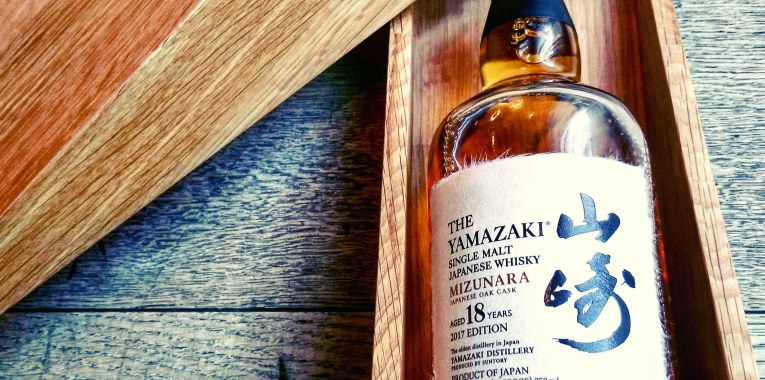
Take for instance their 2017 Yamazaki Mizunara release. The 2017 release is an 18 year old single malt aged exclusively in mizunara oak. Their Chief Blender, Shinji Fukuyo, tasted through hundreds of mizunara aged whiskies and put together this malt that may legally only be only 18 years but is stated to contain at least a small portion of 50 year old malt. Bottled at 96 proof and with a price tag slightly north of $1000 this is certainly not an everyday whisky- but can it clue us into the hype and auction fees of its unobtainable brethren?

NOSE: The nose is rich, fragrant and has a touch of sandal wood and greenery. An undertone of fresh baking spice is also present. The mizunara is already making itself known.

PALATE: A silky texture, with dry red fruit, coconut, citrus marmalade, a sweetness of caramel and a rich texture that is reminiscent of condensed milk with out the heavy feeling.

FINISH: It ends with a decisive spiciness, it’s reminiscent of Japanese incense, the lighter wood notes from the nose return and linger with the baking spice as you exhale.

This is a truly elegant pour of whisky. It is a prime example of how much patience is needed to truly coax the beauty of the mizunara out of the cask and into the glass. When I drink this I understand why Suntory is scouring Japan for old mizunara furniture to turn into more barrels.

I’ll probably never know how this stacks up to the most expensive Japanese whisky ever sold but it will always have something more noteworthy about it than that auction bottle ever will: I can actually drink it. As the world of rare whisky comes to mirror more and more the world of fine art and bottles are becoming collectors pieces to be admired but never enjoyed it’s worthwhile to be reminded that the true joy of a dram is in the drinking and the sharing.

This bottle is by no means commonplace and the price is nothing to scoff at but I can think of at least four places around Los Angeles where this is a bottle that can transport your evening and remind you that patience is sometimes its own reward.

And if you ask nicely I might even tell you where those places are before I drink it all myself.

Whiskey Wednesday: Nikka From The Barrel and to the US

 One of the best things about traveling is seeing what is out there in the world that can’t be seen from home.

When it comes to spirits traveling abroad often means encountering ex-pat style spirits; bottlings like Blanton’s Straight From The Barrel, an Early Times bottled at 37.1 Proof, or the Wild Turkey 13 Year. These are intriguing because they’re both familiar yet unattainable but they don’t fill a void or represent something new. Their appeal is mostly just that they can’t be had at home.

Despite what the name might imply, the whisky itself is not a single barrel expression.

More frustrating to me are those spirits that I discover but have no recourse to obtain at home. These are products that are fundamentally different from the familiar yet still incredibly appealing and often made by companies that already have products in the States. Products like the Giffard Melon, the Etter Apricot Eau-de Vie, and, until this past month, the Nikka From The Barrel Japanese Whisky numbered among them.

At this point it should be very apparent that Japanese whisky is the soup du jour of the whisky world, but instead of talking about the loss of an age statement or product line being discontinued for once we’re actually seeing an expansion of a product. And not a wholly new formulation specifically designed for a market, just an honest to god expansion of availability.

I first came across the Nikka From The Barrel when traveling to France a couple years ago. Not only was I struck but how incredibly flavorful it was but by how ubiquitous it was. I erroneously assumed it was a specialty release only to hear from the bartenders that it was their mixing Japanese whisky.  Keep in mind that this was pre-Toki when the prices were rising and stock plummeting and the ability to make cocktails with Japanese whisky was dwindling. Yet here was an over-proof, affordable, mixable Japanese whisky.  And I couldn’t have it.

Despite what the name might imply, the whisky itself is not a single barrel expression. It is instead a blend, remember the Japanese whisky makers consider themselves more blenders then distillers. This is Single Malts from Nikka’s Yoichi and Miyagikyo Distilleries, as well as grain whisky from Miyagikyo that has been rested and married in an oak barrel for 3-6 months. It is coming from the blending  barrel not a single barrel.

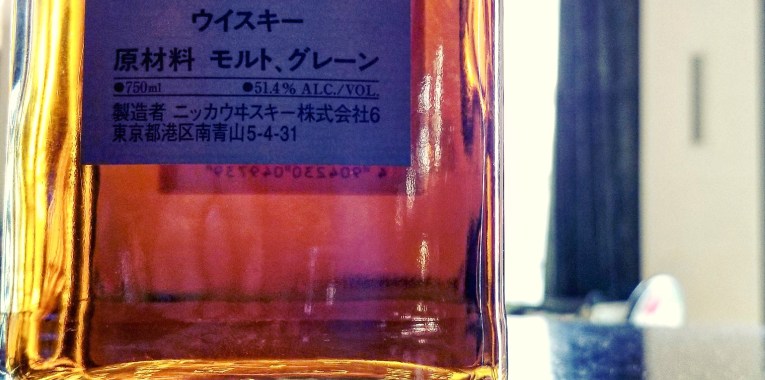
The extra aging allows the whiskies to marry and evolve together before being bottled at near cask strength, a powerful 102.8 proof. This power of proof and flavor is what made the whisky such an amazing value. There is just so much packed into its little bottle. And the bottle is little. Designed to be reminiscent of a “small lump of whisky” to visualize the concentrated power inside the bottle it is packed as 500ml. This is a bottle size so far outside the allowable norms for US production that I think this more than anything is what kept it from our shores for so long.

With its Stateside release, Nikka kept the same bottle design but simply scaled it to a 750ml size. Not quite as elegant and evocative but it’s always been what’s inside the bottle that counts.

So, what’s inside the bottle? The same blend of malt and grain married for 3-6

It’s also proof that global expansion and demand can be gracious and bring you new experiences and treasures, instead of putting up artificial boundaries.

months in oak casks. Still bottled at 51.4% alcohol this is a big hitter.

The Nose carries a hint of fresh, green fruit, with a baking spice overlay and of course a discernable oak note. The alcohol vapors can accidently overpower some of the more subtle notes if you inhale too deeply on the first sniff.

On the palate is a big, full bodied whiskey. The dark baking spice notes leap to the front. Brown sugar, caramel, and the fruit stays fresh and a touch more citrusy than expected from the nose. The distillate is incredibly clean and dry.

The finish is long, drawn out, and the oak lingers after the alcohol has burned off. A few drops of water really does help mellow this whisky and expand the range of flavor.

What’s truly great about this whisky to me is that it’s simultaneously an entry level whisky and yet not. It’s something the evolves over time, much like the person drinking it.

It’s also proof that global expansion and demand can be gracious and bring you new experiences and treasures, instead of putting up artificial boundaries.

Whiskey Wednesday: Hibiki’s Resonant Disappearance

Despite being a self avowed fanatic of American whiskey the thing I’ve
found myself writing about and drinking the most recently has been
Japanese whisky.  The last time we spoke way back in December I was
drinking poetic about the Hakushu malts and the fact that though they often seem
to be in the shadow of their Yamazaki counterparts the excellence
of their design meant that it wouldn’t be long before they too
disappeared into a puff of Unicorn smoke.

That opinion seems to have be prophetic with the recent announcement
by Beam Suntory of the “partial” discontinuation of both the Hakushu
12 year and the Hibiki 17 year expressions. While the products will
only be officially discontinued in Japan they will only have “limited
availability in the next few years.” This announcement came as a bit
of a surprise to me with the Hakushu because I haven’t seen it have
the same name recognition and brand power as the Yamazaki does in the
States. But when your distillery is only 45 years old its easy to see
how your supply of 12 year old single malt could be tight.

But the real surprise to me was the Hibiki 17.

The house of Suntory have always considered themselves to be blenders
above all else. While the Single Malts may be the high priced auction
house darling the Hibiki line has always been the jewel in Suntory’s
eye.

Meaning “resonance,” the Hibiki line was first released in 1989, 5
years after the first release of Yamazaki 12 year. Originally
comprised of just the 17-year and the 21-year, a 30-year expression
was released in 1997 and the much missed 12-year was introduced in
2009 before being announced as discontinued in 2015.

Think about that for a moment. The Hibiki 12-year appeared on the
market, soared in popularity, became a staple of the bar world, and
then completely vanished all in the space of 6 years. That’s an insane
trajectory for any brand and is perfect evidence that Japanese whisky
is a truly global product at this point.

The Non-Age Statement Hibiki Harmony hit the market slightly before
the disappearance of the 12-year and despite everyone crying, “Foul!”
many of us were willing to give Beam Suntory the benefit of the doubt
for two reasons: 1) the Hibiki 12-year was the only expression to
utilize whisky that was aged in plum wine casks. They hadn’t
projected for the popularity of the expression, so they discontinued it
because 2) the Harmony wasn’t a replacement for the 12-year. It is
meant to be a more accessible version of the 17-year.

The Hibiki line has always been a blend of whiskies from all three
of the Suntory distilleries: Yamazaki, Hakushu, and
Chita. To them it is the confluence of every unique facet of their
operation. It is meant to represent the ideal of the harmony between
people and nature. The 24 facets of the bottle represent the 24
seasons of the Japanese calendar and invoke the comparison of this
balance to the balance of the malt and grain whiskies in the Hibiki
blend that resides inside the bottle.

This attention to detail is part of what has always set the Hibiki
line apart from my disdain of other blends. And yes, you would have
had to be a real prophet 20 years ago to predict the explosive growth
of the segment, and yes, it’s a real shortage. Bars in Japan are
pouring the Harmony just like we are over here. And yes, the rise of
shochu and decrease in whisky drinking in the 80’s led to lower
production. But the line was introduced in the late 80’s when this
downturn was happening and while the 17-year is being officially
discontinued in Japan it’s “limited availability” will continue to
limp on in the United States. This speaks to the power and demand for
premium aged Japanese whisky in the US, but also can’t help but lend
a tinge of cynicism to the disappearance of the 17-year. Its as if stocks
are being pulled at a younger age to go into blends like the Harmony
to cash in on the popularity wave now versus risking a drop in demand
later.  And if that’s true who could blame them?

In Beam Suntory’s defense, the Harmony is still damn delicious and
their quality has not dropped. They have also consistently stated that
they are ramping up production and that this will be a temporary
hiccup, but how many temporary hiccups have we seen come with a flashy
return and a price hike? (I’m looking at you Old Fitz.)

None of this denies the fact that the Hibiki 17 Year is an amazingly
delicious dram. The nose is full and rich, distinct notes of honey,
with some roasted pear, a touch of smoke and ume plum.

The palette offers a touch of sweetness to go along with the initial
scents with the addition of raisin, oak, and a pithy citrus zest that
carries on to a long finish that turns into an darker
amontillado sherry note with a touch of cacao.

It’s easy to see why this blend is the crown jewel of the Hibiki line,
it’s easy to see how we drank it all out of stock, it’s easy to see
why they may have discontinued this expression to protect the more
award winning 21-year expression, and it’s easy to see why we should
all raise a glass and drink to this resonant whisky and to its equally
evocative moment in time.

Whiskey Wednesday: A Bitter-Sweet Hakushu

Life is a bittersweet balance. I’ve been hosting Whiskey Wednesday for going on six years now. It’s exposed me to more bottles and drams than I can count, constantly challenged me to stretch my creative muscles, and introduced me to some of the most delightful nerds/people that I’ve ever met.  I’ve grown as a person, a bartender, a writer and a insufferable know it all.

I never would have thought six years ago that these Wednesdays would be something that I would still be doing, let alone have my thoughts and notes for them become so expansive that they would undergo a biogenesis into a blog that people actually read. I also wouldn’t have survived all these years with some semblance of my sanity intact if things had stayed stagnant. Change, experimentation, and misplaced passion have kept me going.

And now it’s time for another change. After today, Whiskey Wednesday continues but it’ll become more abstract. Less about every scattered soul flocking to the bar once a week for a drink, and more about raising a glass from where ever we might be. So, for my last night behind the stick for the foreseeable future lets combine the past and the future and pour some Hakushu.

The Hakushu Distillery was found in 1973, 50 years after Yamazaki, it often seems to live in the shadow of its older sibling. It also lives in the shadow Mt. Kaikoma in the Japanese Southern Alps. This was a deliberate choice made by Keizo Saji, the company’s second Master Blender. He chose the site primarily because of the quality of the water. The naturally granite filtered water leant a subtlety and effervescence to the distillate but the site also offered a distinct microclimate with the surrounding forest and with it sitting at 700m above sea level its definitely one of the highest elevations for whisky distillation in the world. For comparison Scotland’s two highest distilleries, Dalwhinnie and Braeval, both sit around 355 meters above sea level.

All of this combines to create a spirit that is lighter, more delicate, and often more mellow than its Yamazaki counter points. Also, unlike Yamazaki, Hakushu utilizes peated malt. When combined with the distillery and terrior this peat takes on more of recently extinguished early morning, mountainside cooking fire than more maritime and often aggressive smokes of the Scots.

The distillery also takes to heart the Japanese respect for nature. It strives for harmony with its surroundings right down to its aging warehouses. Built into the mountain itself they utilize earthquake safe, single story tacks that are about 13 levels high. This kind of aging space, combined with the high elevation has allowed them to mature a spirit with relatively low barrel influence, especially for the age of the whiskey.

As for the whiskey itself, both Hakushu and Yamazaki import their barley, both the peated and unpeated barley. However, they do grind, mash and ferment on site. They have six pairs of stills at Hakushu with at least 4 different shapes. They then utilize five different type of aging casks while primarily focusing on ex-Bourbon and hogsheads. All of this diversity in barley, stills and barrels allows them to create what they call a combination of 40 different styles of whisky. Keep in mind Suntory’s primary craft, as they see it, is blending. And unlike Scotland where even rivals will trade barrels back and forth to get unique flavors for blends, Suntory was essentially trying to build a category from scratch. If they wanted diversity they had to make it themselves. And 44 years later it feels like Hakushu is finally coming into its own.

It may seem odd to call a 44-year-old operation “young” but when your primary marks are a 12 year and 18 year old single malt a 44 year old distillery may not be an infant but its still most certainly a toddler.  Hell, the first release of Hakushu 12 wasn’t until 1994, a solid 10 years after the release of Yamazaki 12 year. And while the Yamazaki has the experience and the award that come with it the Hakushu is certainly flexing it’s muscle.

Both the 12 year and the 18 year are primarily composed of three styles of distillate: unpeated distillate aged in sherry buts, unpeated distillate aged in hogsheads, and peated distillate aged in ex-Bourbon. These truly show off the complexity and depth of the distillery creating a whiskey that is light, yet powerful. The aroma of smoked pears wafts over a palette that is green, with a touch of citrus and smoke. The 18 draws out more of the stone fruit qualities while adding a touch more sweetness from the extra oak.

In short, Hakushu also knows what they’re doing and while it may stay in the shadows of its mountain forest home it won’t be in the shadows of its Yamazaki brethren.

So, come share a glass with me because it won’t be long before Hakushu catches up to the Yamazaki awards and it disappears like a forest mist of rarity and also because who knows where we’ll both be the next time we can.

Whiskey Wednesday: The Darkest (Bowmore) Timeline

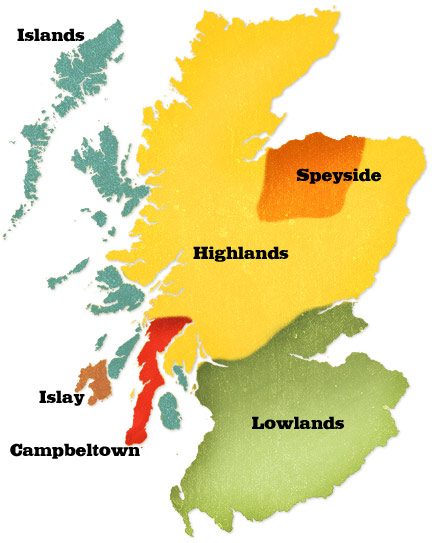
Remember when the regions of Scotland were a thing?  Highlands, Lowlands, Islands, Campbelltown, Speyside, and Islay? For years brand ambassadors and whisky makers preached the golden gospel of the distinct styles of the six regions of Scotland.

ey-region-map

The first problem a lot of people see with this list is that three of the regions are technically just small regions of the other three. Speyside is part of the Highlands, Campbelltown is part of the Lowlands, and Islay is very much an Island. If these three places can have their own unique style why can’t the plot of land down the road have its own style? The truth of the matter is that style is more about the distiller and blender than anything to do with the arbitrary geographical location.

Let’s look at Islay, quite possibly the most distinct and memorable Scotch style. The mere mention of the word Islay causes people’s tastes buds to shiver at the onslaught of peat, smoke, and saltiness of the most famously peated Scotch’s in the world. Yet many of the whiskies coming off the island are completely unpeated. Bunnahabhin is very famously unpeated. Everything coming out of the Bruichladdich distillery that is bottled as “Bruichladdich” is currently unpeated. They have to save up all that smoke for the Octomore. Even amongst the “peat bombs” there is a massive variety of style for such a tiny island.

Lagavulin is like a misty, damp marshland while Laphroig is like a dusty campfire and The Octomore is like smoke gently resting on the briny salt air. And then somewhere in the middle of all this is Bowmore.

Founded in 1779 the Bowmore distillery has been in continual operation except for a brief pause in the World War II to host the RAF Costal Command. It’s never risen to the same height of fame as say, a Laphroig, but they consistently put out great whiskey that seems to walk the line between the styles and practices other distilleries are doing with more flash.

They’re sourcing a good portion of their barley from Islay, similar to Bruichladdich, and they’re giving a the whisky a healthy dose of peat, just like the island island is known for, but they’re also throwing in a fair amount of Sherry barrel aging which is more commonly associated with those Speyside malts on the other side of the country. The Bowmore 15 “The Darkest” hits all these notes perfectly.

It is a 15 year old single malt aged in ex-Bourbon and Sherry barrels for 12 years. The malt is then married together for three years in Olorosso sherry cask that imparts a deep color and melds a gentle smoke together with raisins, dried cherry, and stone fruit with a touch of saltiness and a note of bitter chocolate on the finish. It’s a bottle that can be enjoyed by lovers of peat and lovers of Sherry. Or by lover of Islay or lovers of Speyside malts.

We like easy boxes and categories to help define what we like and don’t like. But just like any complex creation style isn’t about where you come from. It’s about what you make of yourself.