Whiskey Wednesday: The Yamazaki Price

What would you do with $130,000? Buy a house? A Tesla? Travel the world? Or maybe you decide screw it and go for the most expensive bottle of whisky ever sold: the Yamazaki 50 year old single malt 2005 release.

In October of 2016 one of the 250 bottles of Yamazaki distilled in the mid-1950s claimed the Guinness World record for the most expensive standard size bottle of whisky ever sold for $129,186. That’s a nearly 1300% increase over the original sticker price of $9,500. That’s a massive return on investment, even for 50 year old whisky, but it’s made even more impressive when you consider that the Yamazaki distillery itself is less than 100 years old and the first Yamazaki single malt wasn’t released until 1984.

caption.jpgSuntory founder and first master blender, Shinjiro Torii and Masataka Taketsuru, “The Father of Japanese Whisky”, founded the Yamazaki distillery in 1923. Taketsuru had studied organic chemistry in Glasgow and was found by Torii after he made inquiries to Scotland looking for a whisky expert. Torii was told there was already one fully qualified in his own country and the two worked closely to build the Yamazaki distillery. However, the first whisky produced by the new company, dubbed the Suntory Shirofuda was a resounding failure. The Japanese drinkers preference for lighter, blended whiskies was blamed as well as Taketsuru’s fixation on doing things the “Scottish way.” Taketsuru was shunted away from the distillery to a beer factory where he served out the remainder of his ten year contract before leaving to start the Nikka distilling company, Suntory’s biggest rival.

Despite these early set backs the Suntory company pressed on, releasing the Kakubin in 1937 and after being postponed by WWII, the Suntory Old Whisky in 1950. In 1961 the company send the first Japanese Whisky imports to the United States and Torii’s son Keizo Saji took over as president and Master Blender. The next few years were full of experimentation including opening the Chita Distillery in 1972, the Hakushu Distillery in 1973, and the release of Midori in the United States in 1978. The next big shift for the company comes in 1984 when Saji moved the company away from it’s focus on blends with the very first release of Suntory Single Malt Whisky Yamazaki.

The 80’s proved to be a pivotal time for Suntory not only because of the new focus on single malts but because the other distilleries opened in the 70s allowed them to produce more varied styles of whisky culminating in the first release of the Hibiki Blended Whisky in 1989. The Suntory Single Malts may be carry the highest price tags but Suntory still considers themselves to be a blending house and the Hibiki’s are what they consider to be the pinnacle of their art.

All the pieces were in place yet as you may have heard the 90’s were not the most hospitable of decades to brown spirits. It took a new millennium as well as a series of rapid-fire rewards to rocket Japanese whisky from niche good to internationally coveted whisky.

The Yamazaki is caught between a rock and a hard place; soaring success chased by the rising struggle to support the base of that success.

In 2003 Suntory’s Yamazaki Single Malt 12 year won it’s first Gold Award at the International Spirits Challenge in the UK followed relatively quickly by Suntory becoming the first Japanese whisky producer to be awarder “Distiller of the Year” by the same ISC in 2010.

The Yamazaki Distillery expanded in 2013 with the addition of four stills, bringing the imgp9795.jpgtotal to 12, which increased capacity about 40%. The added capacity didn’t prevent them from releasing the Non-Age Statement Yamazaki and Hakushu Distiller’s Reserve the following year just as talk of the worldwide whisky shortage began to surface. Also in 2014, Suntory purchased Beam, Inc. (home of the eponymous Jim Beam Bourbon) for $16 billion forming Beam Suntory, the third largest spirit producer in the world. This acquisition greatly expanded Suntory’s distribution lines spreading the already thin stocks of Yamazaki even thinner.

The final nail in the Japanese Whisky hype train was also driven home in 2014 when the Yamazaki Sherry Cask 2013 won the coveted Jim Murray “World Whiskey of the Year” award. With that the path is set and we’re barreling towards the inevitable $130,000 bottle.

Yet with all this focus on the mythical, never to be seen bottles that dominate the headlines, what has become of the mythical, occasionally glimpsed bottles that built the reputation of Yamazaki and Suntory in the first place?

The Yamazaki 12 Year is still liquid gold in a bottle. The whisky is aged in a combination of American ex-Bourbon, Spanish Sherry, and Japanese Mizunara oak cask. It is, you guessed it, a minimum of 12 years old and bottled at 86 proof. What has always struck me about this whisky is the amount of fruit on the nose. Ripe peach, with a touch of grapefruit and orange, followed by a rich lingering mid palette that leaves an almost toasted bread note before disappearing into a long finish that is edged with dark baking spices.
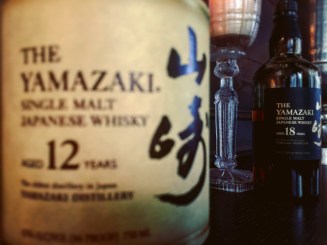
IMG_4145.JPGWhile the 12 year was once the perfect introduction to Japanese malt, before the price and the hype got in the way, it was the Yamazaki 18 year that always stirred my soul. This time roughly 80% Sherry casks with ex-Bourbon and Mizunara making up the other 20%. Here the promise of the 12 year has evolved into a stately elegance. The fruit dries out, turning to raison and apricot with dark chocolate and berries on the tongue with a touch of spice on the long march to the finish.

In the end these spirits are deserving of every award they’ve had draped around their bottles necks, yet I can’t help but feel like they are victims of their own success. The price on these bottles has steadily climbed while availability has dropped. Drinkers are driven to seek these “more available” bottles every time a headline splashes a story bottle of Yamazaki selling for more than the median household income of a small family only to be disgruntled when they turn up empty handed. Products like the Yamazaki Distillers Select, the Hibiki Harmony, or the Nikka Pure Malt may help bridge that gap in the category, but no matter how vehemently the companies talk about these products being “different” and “not replacements for age stated products” seasoned drinkers can’t help but feel that their old toys are being taken away while they’re charged more. It’s a story they see time and time again as the trend sweeps through whisk(e)y brands across the globe.

The Yamazaki is caught between a rock and a hard place; soaring success chased by the rising struggle to support the base of that success. It’s a good problem to have and one without an easy answer but it is a debate that certainly is helped with a glass of liquid gold in hand while you have it.

Whiskey Wednesday: The Chivas Brothers

Some things seem so ubiquitous, so omnipresent that they become nearly invisible. All of the work, all of the marketing, but most importantly all of the quality that must be present to get them to that pervasive point becomes overlooked and it all just fades into the background. That had been my experience of Chivas Regal until recently.

images.png

No matter how much we preach the gospel of Single Malt Scotch, Blended Whisky is the true king. And if Johnny Walker sits upon the Iron Throne, Chivas Brothers is the King in the North. With the now iconic 12 year blend the market leader in Europe and Asia and over 4.4 million cases of Chivas Regal shipped world wide it’s easy to see how Chivas can be lost in the whisky sea. When everyone is clamoring for the rarest, the newest and the most unique bottlings how could something that sits on nearly every back bar in the world be anything special?

However the history of the brand shows one of evolution, experimentation, massive growth and success.

Chivas traces its roots all the way back to 1801 and small grocery store started by John Forrest in the town of Aberdeen. The Chivas family first became involved in 1836 with James Chivas joining the growing company and by the 1850’s they had responded to demand for luxury whiskey and were bottling their first blends under the name Royal Glen Dee.

Chivas Regal first found a home and an identity in the United States in 1909 with the launch of Chivas Regal 25 year old. The blend became the world’s first true luxury blended whiskey and it was an immediate hit with the New York high society. The brand rode high for several years until WW1 which limited shipping and then the disaster that was Prohibition struck. Almost more devastating to the brand than these events was the selling of the company and offloading its massive whisky stocks, in 1936.

When Chivas Regal was relaunched in the US in 1939 it was introduced as a 12 Year old in an attempt to preserve stocks. The company was then sold again, this time to Seagram’s in 1949. The next year Seagram’s purchased the Milton distillery, renamed Strathisla, which remains the primary malt and spiritual home of Chivas to this day.

Seagram’s took over the Glenlivet Group in 1977 and when Seagram’s went under in 2001 Chivas and the Glenlivet were purchased by Pernod Ricard which consolidated all of their whisky interests, including the Aberlour distillery that was already in their portfolio, under the Chivas Brother’s banner.

The brand has massive stocks to draw on and throughout it’s history hasn’t shied away from experimentation and innovation. For instance, The Royal Salute line was introduced in 1953 to celebrate the coronation of Queen Elizabeth II and is the only line of blended Scotch whiskey that starts at 21 years of age. I’ve been fortunate enough to have the 38 Year Old ‘Stone of Destiny’, named after the legendary coronation stone of the Scottish Kings. It’s full of dark chocolate, dried fruit and a rich finish that rivals many of the high end malts that I’ve had.

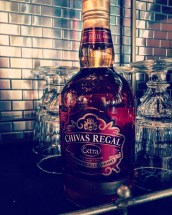
IMG_4029.JPG     On a more approachable scale they’ve started producing the Chivas Regal Extra, a Non Age Statement blend designed to recreate the flavors of the original Chivas Regal 25 Year Blend that relies heavily on Olorosso Sherry aging. Then there is the new Mizunara.

The Mizunara is a 12 Year Old blend, but not THE Chivas 12 Year blend, that is finished in Japanese Mizunara Oak. It’s currently a Japanese exclusive but the Chivas Brothers have plans to take it to the global market. Think about that for a moment. Mizunara is some of the most sought after wood in the world right now and Chivas has enough clout and influence to be able to age enough whisky in mizunara casks that their biggest problem with getting into the United States is the difference in bottle sizes between the US and the rest of the world. With all this innovation and history why does it seem to fade into the background of the whiskey drinking consciousness?

download-1.jpg

In a way I think their own history is getting in their way. The whiskey nerds and “trend setters” are all fighting to battle for transparency and in depth disclosure of aging and blend components. Just look at John Glasser and how often Compass Box is chastised for disclosing too much information. Finding information on what actually goes into a bottle of Chivas Regal is impossibly frustrating. And while this lack of information might keep that bottle of Chivas from standing out in an increasingly crowded forest, but it doesn’t stop the liquid in the bottle from being of a quality and taste that has earned its iconic place on that back bar.

Whiskey Wednesday: Changing A Pig’s Nose

Consolidation is the name of the game. Every week there is another story of a small or independent distillery being purchased by a bigger player. Most recently Bacardi purchased a minority stake in Teeling Irish Whiskey, Diageo paid nearly a billion dollars for George Clooney’s Casa Migos Tequila, and Pernod Ricard got into the mescal game with Del Maguey. No matter who the players are it always means some sort of change.

It’s not just a story of international conglomerates snapping up fast rising names either. Look at the recent merger of Spencerfield Spirits and Ian Macleod Distillers. Spencerfield was the brain child of Alex Nicol, the former marketing director of Glenmorangie. The company was built on solid, old school blended whiskey labels, like Sheep Dip and Pig’s Nose. They’ve been having explosive success with its Edinburgh Gins, which have become the #1 craft gin in all of Scotland. Alex had close ties with Ian Macleod, the makers of Tamdhu and Glengoyne, sourcing much of the whiskey for the Pig’s Nose and Sheep Dip blends and using their bottling facilities for their brands. As Spencerfield grew a more formal partnership seemed inevitable.

Compared to the massive deals mentioned above this merger is still a small player but it’s a great case study in what this kind of deals can yield. The Spencerfield Brands gain more direct, consistent access to primary ingredients for their brands, while also gaining access to a larger distribution and marketing network. Ian Macleod then expects the brands to continue to show an increase in performance to justify the money spent bringing them into the fold. And that means increased sales. Which means grabbing the attention of new consumers. Which means change.

The most dramatic example is Pig’s Nose. The brand was originally started in the 1970’s but was revitalized by Alex Nicol and is proof that good whiskey doesn’t need to be expensive, or carry a massive age statement. It just has to be made with care. Bottled at 80 proof and made up of a blend of 40% single malts to 60% grain whiskey, the Pig’s Nose has a massively high malt content for a “non-craft” blended whiskey. It’s name comes from the whiskey being “as soft as a pig’s nose” and is a great workhorse (or work pig) in the bar world. The whiskey has a subtle fruitiness that lends a extra layer onto the malty, butterscotch middle while the whole dram remains round and soft. It’s a great cocktail backbone while still enjoyable on its own. And on top of that it was always affordable. It’s a phenomenal sleeper, an unassumingly delightful whiskey.

However, its biggest struggle has always been that it is unassuming. The packagingimages.jpg reflected the nature of the whiskey with a mellow, retro 70’s design. Simple. Clean, but not terribly exiting. And that’s where the change is happening to Pig’s Nose. The packaging is being aggressively overhauled to turn a few more heads. Nothing inside the bottle is changing, but with new liter bottles and a label that still looks classic yet undeniably more hip. It may seem like a small change but it is one that will get people to look past the outside to actually try the whiskey on the inside and ends up being the first label change in a long time that I actually enjoy.
These small changes happen with every brand purchase and merger. What the change is varies from brand to brand and company to company but over time they accumulate, slowly altering the brand until it’s no longer what it was. Sometimes, like with Pig’s Nose, it’s a positive face lift. Other times, it’s a slow loss of quality, or of personality that leads to the brands identity completely shifting. It’s an ever evolving world of spirits but by watching these changes we can see where to throw support and where to abandon ship because they tides they are always a’ changin’.


download.jpg

Whiskey Wednesday: A’bunadh, Aberlour A’bunadh

Bigger is always better right? Just like the old fashioned way is the best way. Or at least that’s what Aberlour has been banking on the past two decades with their A’bunadh releases.

Despite a history stretching back nearly 140 years Aberlour still feels relatively unknown to the wider world. The distillery was founded in 1879 by James Fleming who built an extremely modern distillery for the time powered by a waterwheel driven by the Lour river . Aberlour literally means “the mouth of the chattering burn” and was supposedly named for the ancient Druids belief that the river actually spoke to them. The water for the distillery is drawn from St. Drostan’s Well, which only adds to the mythic nature of the Aberlour’s waters as the well is named after the 6th century Columbian Monk who supposedly used it as a baptismal site. So, like many Scotch distilleries there is a lot of history, myth, and legend involved.

James Fleming operated the distillery until his death 1895 and then the distillery changed hands over the years, being acquired by S. Campbell & Sons in 1945, before being sold to Pernod Ricard in 1974, who updated and expanded the distillery the following year, finally merging  the former Campbell Distilleries with the Chivas Brothers in 2001.

Aberlour is quintessentially Speyside in style and is double cask matured. Unlike the more well known Balvenie line, the Aberlour line isn’t finished in a second style of oak. Instead, the malt is fully matured in ex-bourbon or Olorosso Sherry barrels and once they are finished aging these different barrel styles are batched together. The proportion varies depending on the interation. The 12 Year is 75% Ex-Bourbon, the 16 year is 50/50, and the A’bunadh is 100% Sherry. And while the general line up of Aberlour might be less known the A’bunadh definitely has a cult following. Though it was first released in 2000 the A’bunadh story actually begins with that distillery expansion brought on by their purchase by Pernod Ricard in 1975.

During construction some workers stumbled upon some an 1898 newspaper with a story about the distillery fire that year, wrapped around a bottle of Aberlour from 1898. The workers who discovered the bottle finished off most of the bottle before guilt kicked in and they turned the bottle over to the master distiller, who immediately sent the remainder off to the laboratory for analysis. The A’bunadh is an attempt to recreate the whiskey in that bottle.

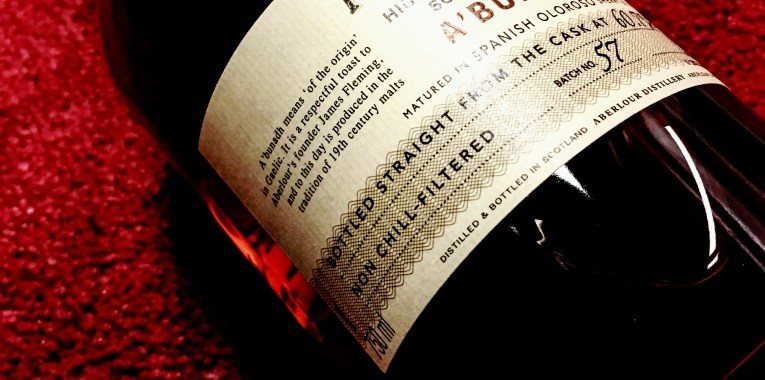
“A’bunadh” means “the original” in Gaelicand if the above story is to be believed this is the style of malt the distillery was making before it’s catastrophic fire in the late 1900s. There is no age statement, each batch is blended together from malts ranging from 5 – 25 years old, is non chill filtered, and bottled at cask strength. It is 100% Olorosso Sherry barrel aged and though there is no age statement , each batch is uniquely numbered allowing whiskey connoisseurs, otherwise known as nerds, to easily track the “best” batches.

2017 saw the release of Batch 58 but I’ve still got a few bottles of the 57 hanging around and it lives up to its predecessors. There is a massive amount of all spice and caramelized orange on the nose. There is a massive amount of that Sherry sweetness, melded with orange, dark fruit, a little bitter chocolate and heavy malt. The finish is long and sustained and with Batch 57 coming in at solid 11.42 proof the mouth is left dry and clean afterwards.

Whether or not the A’bunadh actually is like the original malt distilled at Aberlour is rather irrelevant at this point. It has certainly earned its place in the Single Malt hierarchy and deserves a little more love from those of us not constantly dreaming about our next dram.

Whiskey Wednesday: The Harmonious Hibiki Harmony

In recent years Japan, traditionally the Land of the Rising Sun could easily be called the Land of the Rising Whisky. And while that is a terrible turn of phrase, it is nevertheless true.

Ever since Glenfiddich started promoting their Single Malt in the States in 1963 whiskey drinkers- especially malt whiskey drinkers, have been hammered with the idea that Single Malts and age statements are the mark of quality. And across the globe the
Japanese were quietly and efficiently sticking with the old school blending mentality and fine tuning all of the nuts and bolts. Ten years ago it seemed like no one knew that the Japanese even made whiskey and now they are some of the rarest unicorns on the market.

mj-618_348_bill-murray-suntory-whiskey-tktktktk.jpg
Suntory Time

The big Japanese whisky houses are suffering from the same shortages and price inflation we’re seeing in the rest of the whiskey world.  With them it seems more noticeable because they only reached the mainstream consciousness here in the US so recently. But it’s not an artificial shortage. I just got back from a trip to Tokyo and even there the ol’ standards we came to rely on were nowhere to be seen.

They are moving to address this imbalance, and that’s part of the benefit of Suntory seeing themselves as a blending house as well; they have an internal system that allows them to adapt. In the US they’ve released Suntory Toki (which you can read more about here) to address our need for a Japanese Whiskey for cocktails. But the big shift for most people was discontinuing the Hibiki 12 and introducing the Hibiki Harmony.

The Hibiki’s have always been the ones that Suntory considers to be the highest form of their art and is meticulous in its attention to detail. The name Hibiki means “resonance” and is meant to represent the Suntory philosophy of living in harmony with people and nature. The goal is to create a harmonious balance between the malt and grain whiskies that make up the blend. Even the bottle is meant to represent that natural harmony. The bottle has 24 facets meant to represent the 24 seasons of the traditional Japanese calendar. This attention to detail and the quality of Hibiki didn’t go unnoticed and the 12 year especially became a fan favorite. But pricing and stocks have buried the 12 year and soon after it’s demise along comes the Hibiki Harmony.

IMG_3196.JPG
Shortage Be Damned, Hibiki 17 Minis

Beam Suntory is quick to point out that the Harmony is not meant to be a replacement for the 12 Year. The Hibiki 12 Year was actually unique among the Hibiki blends in that it utilized a small amount of whiskey aged in plum wine casks. With rising demand, depleting stock, and this blending element only being used for this one bottling the decided to just stop making the 12 Year.

The Harmony is actually meant to be a more affordable available version of the Hibiki 17 Year with its hint of Mizunara (Japanese Oak) aging.  The Hibiki blends pulls whiskey from all three Suntory distilleries: Yamazaki, Hakushu, and Chita. The Harmony utilizes Chita Light grain whiskey with Yamazaki American Oak aged whiskey as the primary malt. The supporting players are Spanish Oak and that Hint of Mizunara with Hakushu Heavily peated malt for flavoring. The result on the Harmony is a very floral nose, with a hint of tart fruit and herb. The mid palate is rich, rich honey with a confectionary note but the touch of Mizunara is what brings it home with a touch of spice that lingers. It is a great introduction to the wider world of Japanese whiskey.

And again, this isn’t an artificial shortage. The bars in Tokyo were using the Harmony just as we are here in the states.  And I can appreciate the effort to simulate the 17 Year old. It’s always been expressed to me that the pinnacle of the House of Suntory style is the Hibiki 17 Year Blend, just as the Nikka “Yoichi” 15 Year Old Malt was the perfect expression of the Nikka style. As a side note, the former is now incredibly allocated and expensive while the later has been discontinued due to supply. Take that for what it’s worth.

IMG_3176.JPG            But in a world of vanishing age statements and soaring prices  I feel it’s hard for the general consumer to not see this as a replacement of a beloved bottle by a younger whiskey at a higher price. That’s not a problem with the Harmony though. That’s just the reality of the whiskey world we now live in.
A Balvenie Burns Night

Welcome to Burns Night. The annual celebration of the life and death of Robert Burns, the National Bard of Scotland and has an almost cult like following as a cultural folk hero. Not a bad legacy for a man born a poor Scottish farmer and who only lived to the age of 37.

Burns was born in 1759 and wrote his first poem after falling in love at the age of 15. He and I imgres-1.jpghave that in common. But unlike myself Burns pursued poetry, and love, with uncommon zeal. The first collection of his poems was published by subscription in 1786. While writing most of these poems in 1785 he also fathered the first of his 14 children. He was a busy man. As his biographer DeLancey Ferguson said of him, “it was not so much that he was conspicuously sinful as that he sinned conspicuously.”

Burns was immediately lauded through out England and Scotland as a “peasant-poet” and he took that success and used it to celebrate and preserve Scottish culture. Most of his poems are all written in Scots and document traditional Scottish culture. He also preserved folk songs. You can blame ol’ Rabbie Burns for why you know the words to “Auld Lange Syne” even if you don’t know the meaning. The song, which is about remembering friends from the past and not letting those times be forgotten actually has nothing to do with the holidays but is a perfect example Burns’ work. He celebrated life, love, friendship and drink all with humor and sympathy. His legacy is writ all over Scottish culture. Bobby Burns is as distinctly Scottish as the countries whisky.

mMcg5wXN6S-SFgDpBbkWkRQ.jpg            Ninety years later, on the opposite side of Scotland, another farmer was setting out to form his own legacy in a distinctly Scottish way: by quitting his job. William Grant had just quit his job as a bookkeeper at the Mortlach Distillery and purchased the land and equipment to start his own distillery. On Christmas day in 1887 the first whisky flowed from the still of the Glenfiddich distillery. Glenfiddich essentially created the Single Malt category in the 60’s and 70’s, often using ads that created a cult of personality of around the whisky and that of Sandy Grant Gordon, William’s great grandson. The company has always been incredibly savvy and it’s no wonder that they are the number one selling single malt in the world.
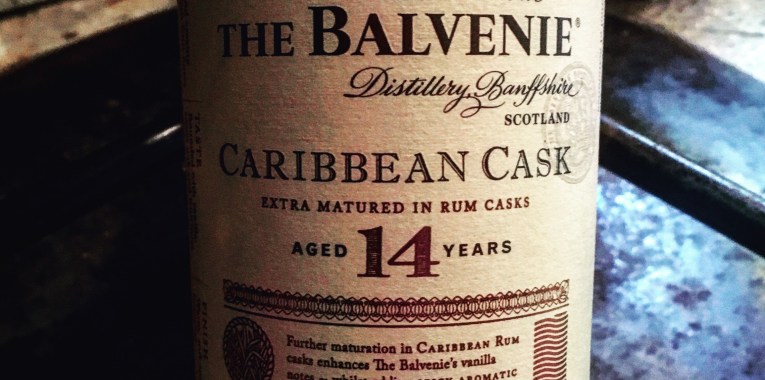
But when you are that large its hard to say that you truly have a cult following. That status today falls to Glenfiddich’s younger distillery sibling, Balvenie. Founded by William Grant a mere five years after Glenfiddich, Balvenie has always been the more experimental of the children. Balvenie is still 100% traditionally floor malted, and just like Glenfiddich they still have a Coppersmith and Coopers on site on site to keep the whole process in house. But I know people who would never touch a bottle of Glenfiddich perk right up at the mere mention of Balvenie, especially if we’re talking about the 14 year old Caribbean Cask.

The Caribbean Cask is a 14 year old single malt that has been aged in traditional oak casks, primarily ex-Bourbon, and then finished in casks that once held Caribbean Rum. These rum casks are American Oak casks that have been filled with a blend of West Indian Rums crafted by Malt Master David Stewart. Once Stewart deems the casks to be correctly seasoned the rum is dumped and the 14 year old malt whisky is added to receive its finishing touches. How long exactly is a “finish’? Well, until it’s finished, but generally about 6 months.

The result is a whisky that is massively vanilla and oaky with an evolving fruitiness and just an edge of the hobo funk that you find in truly great rums. It is flavorful without being overpowering and adds a sweetness that livens up that heavy malt that turns many people off of Scotch whisky. This whisky feels right at home in that ultimate of Burns Night celebrations: the Burns Supper.

Burns Suppers range from strenuously formal gatherings of esthetes and scholars to uproariously informal rave-ups of drunkards and louts. I’ll give you one guess as to which category I fall into. Most end up right in the middle and will follow the time honored form which includes the eating of a traditional Scottish meal, the drinking of Scotch whisky, the Toast to the Lassies, the responding Toast to the Laddies, and the recitation of works by, about, and in the spirit of the Burns.

Tonight I will be providing you with the whisky, but my brother will be providing you with the poetry. I don’t know if he wrote his first poem after a lovelorn night at the tender age of 15, but he certainly pens a verse worthy of raising a glass:

For Wintergreen Gorge

Once, illegally, on a train track bridge,

We sat with a handle a whiskey and three

Water bottles a gin, and I watched a gall midge

Land on your cheek and watched you brush it free

with your hand. Now what’s the use in holding

When we can sip and we can sit with our

Laughter and the iron and the wood to

Water sinking? Your hands get lost in folding,

Smoothing, and re-creasing the small flower

On the hem of your dress, and then you lower

Your eyes to wonder what we could do.

~Jacob Fournier


Give Me More of that Octomore

Maybe it’s like becoming one with the cigar. You lose yourself in it; everything fades away: your worries, your problems, your thoughts. They fade into the smoke, and the cigar and you are at peace.
Raul Julia

Smoke is indelibly linked to water for me. Years of camping with my family have sealed the sound of the waves in the night with the scent of smoke hanging in the air. The Octomore encapsulates that in the deep black of its bottle; the fact that it’s massively over proof really helps out right about now.

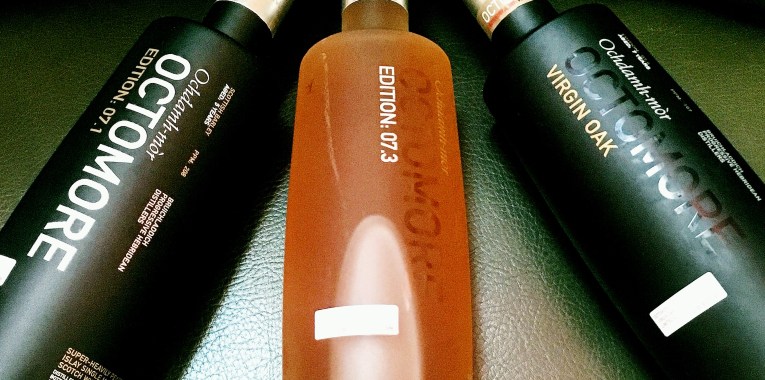
Bruichladdich_Logo.png The Octomore line sails in from the shores of Islay and the Bruichladdich distillery. Bruichladdich is old history with a new face with that spirit of this spirit running right back to its earliest days. When the distillery was founded in 1881 it was the height of modernity. A state of the art facility, especially when compared the distilleries on Islay at the time which were often just converted farm houses. Built right on the shore with uniquely tall and narrow necked stills the distillery managed to survive when many others failed. At least until 1994 when it was mothballed for being ‘surplus to requirements’.

But it was resurrected in 2000 when a group of private investors purchased the distillery, dismantled and reassembled the whole shebang. Having missed out on all the modernization in the 90’s the original machinery was still in place making it one of the few distilleries to have no computers in use for production.

The new owners did make two major changes though. 1) They turned their focus to the province of their barley. They wanted the local character of the barley to shine through as much as the barrel and aging. They shifted to using all Scottish barley, something somewhat surprisingly not required for Scotch, and started growing barley on the actual island of Islay. All of their whiskies now have both a Scottish and Islay barley version with their own DNA. 2) They hired Jim McEwen as their Master Distiller.

Jim McEwen is a whisky legend. He started working at Bowmore when he was 15 and Islay Whisky may as well literally run in his veins. He ran the stills with skill but he also started producing peated whiskey for the traditionally unpeated Bruchladdich. These peated whiskies have become the Port Charlotte line up, and in it’s super peated forms the Octomores.

url.jpg The Octomores are some of the most heavily peated whiskies in the world. Their phenol content (the scientific way to measure peat) have been as high as 238 but even in their “standard” range they are three times as peated as a Laphroig. Yet, even with all this smoke, and being bottled at cask strength, they avoid being one dimensional. They are sea salt air tinged with smoke and a threat of rain in the air once the sun has set while I’m reading by the fire.
With the distillery now owned by Remy Cointreau and Jim McEwen no longer at the helm though it’ll be interesting to see where that leaves the Octomores as the years, and the memories, roll on

Alexander Murray and Friends

“Good friends, good books, and sleepy conscience: this is the ideal life.” ~ Mark Twain

I’d personally add good booze into that mix but starting with Twain is never a bad idea, he weaves a good story. But the problem lies in what kind of story are you trying to tell with your whisky? Are we telling a historic tale? That would start with the founding of the Caol Ila Distillery in 1846.  But that’s a little dry.

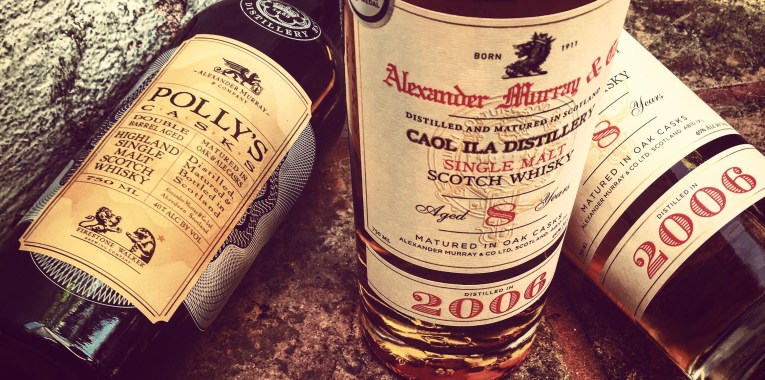
It could be a business biography. That starts in 2004 with the creation of Alexander Murray. An essential newborn in the world of independent Scotch bottlers they took a different tact. instead of focusing on small, rare bottlings they focusedIMG_0783.jpg on volume. If you’ve ever noticed that the hosue labeled Scotch whisky at Trader Joe’s and Costco was surprisingly good, that’s because it came from these guys. But business is so impersonal.

Except it’s not. While moving volume, and checking history the gang at Alexander Murray made friends. And that allowed them to grow and bring out more quality under their own label. Take their 8 Year Old Caol Ila. Some may argue that it’s an unnecessary bottling with the quality the standard issue 12 year has. But they’re like two small town friends who move away to different cities. Same underling base, but a heavier oak presence gives this a more NYC feeling bite versus the original delicate, seaside village feel that Caol Ila usually has. But even more than that’s it’s opened their eyes to larger collaborations.

Yet another friend is David Walker, of Firestone Walker Beer. Working together they took 60 barrels used for aging the Firestone DBA and finished 6-8 year old single malt in them for another 3 months to a year. The resulting ‘Polly’s Cask’ is a complex melding of friendships, even just in the character of the whisky. Beer and Whisky are natural friends, and the barrels linking them here started as ex-Bourbon, turned into beer, and then finally into Scotch barrels. If that’s not a sharing between friends I don’t know what is. The result is an exceptionally nutty malt.

Both are a great example of the best times with friends. An everyday encounter, and a special occasion, too. And as I tell my friends all the time, I don’t care what you drink as long as you drink it with me. 

Auchentoshan Three Wood Single Malt Scotch Whisky

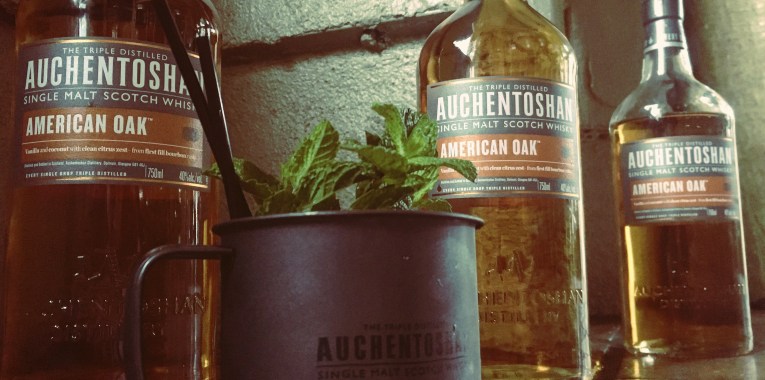
Happy accidents are all around us. They often start simple. You wander into a bar, look around, find yourself presented with better than average options, and end up with a glass full of Auchentoshan, which is surprisingly light and delicate, but with enough complexity to be no accident.

Then there are the not so simple accidents. Like the quirks of history that created the style of whisky now swirling in your glass.  Auchentoshan is one of the last remaining Lowland distilleries in Scotland, a region with a style as unique as it’s Speyside and Islay cousins, yet wholly unusual in scotch making and is fully created by the accident of it’s location. Founded in 1823 by Irish refugees on the outskirts of Glasgow it’s seen the city rise into an industrial complex, the bygone glory days of it’s shipbuilding and engineering prowess, and is still tucked away in it ‘corner of the field’ watching the trade city grow more
cosmopolitan. All of these pieces come together. The shipping and trade gave massive Clyde-Shipping-Glasgow1.jpgaccess to barrels of all kind for excellent aging but more importantly the whisky itself was primed for bigger barrel interaction by the influence of those Irish refugees and their tradition of Triple Distillation. Coming off the stills at a higher proof leaves the raw spirit lighter and more ready to soak in the plethora of barrels floating in and out of the port city.

And then there are the literal accidents. Years ago, the Head Distiller Jeremy Stevens was working on a batch of sherry finished malt. It had already spent time in ex-Bourbon barrels, and had been aging in Olorosso Sherry casks. After the initial dump he felt it need some more time in the sherry wood, ordered the malt to be rebarreled and left for a trip out of the country. When he came back he found that instead of Olorosso it had gone into Pedro Ximenez sherry barrels.Rather than losing his job the distillery discovered one of their most popular expressions: The three wood..

So, the accidents of place, time, history, barrels and communication have granted you a glass of delicate, rich toffee, with candied plums, blackcurrents and a hint of hazelnut. So let’s raise a glass to accidents. May they be few and happy.