Whiskey Wednesday: A Little Russell In Faith

From no Turkey to a Turkey a month it really does seem like I’m filling that Wild Turkey hole. I promise I’m not repeating myself or selling out. I like exploring things I don’t know and I love sharing experiences.

I’ve talked several times in the past about house single barrels, and I’m sure I will many more times in the future. In case you’re unfamiliar with the concept of a what a house single barrel of whiskey is, it’s exactly what it sounds like. It’s an entire barrel of whiskey that has been bottled, labeled, and sold to a single bar or store.  Most bottles of whiskey are a batch of a couple dozen to a couple thousand barrels of whiskey depending on the brand. Each barrel of whiskey ages differently, aging is an organic process after all. The time spent interacting with the oak, where in the warehouse, what the weather was like over the years, all of these contribute to the flavor of the barrel. To create a consistent product these different barrels and flavors are batched together. Single barrels on the other hand celebrate those individual differences.

It’s also a collaborative effort. Sharing the barrel and story with the customer helps them build the story of their evening out on the town, while the actual selection process is a collaboration between the distillers and the account. The distillers have already narrowed down your choices to a mere handful of barrels before you start tasting anything. They’ve already passed the distillers/brands personal taste test and now it’s about trying to match that to not only what you as the buyer likes, but what you think your customers will enjoy. It’s an ever growing relationship.

And if I’m honest it is a way to keep myself and the other bartenders interested behind the bar. It’s a way to make things more personal and break up the monotony of the 369th Old Fashioned order of the week. But anything can become predictable if do it enough, even barrel picks. That’s exactly why this barrel of Russell’s Reserve caught my attention; it had a funk and an tannic note that I wasn’t expecting.

I reached out to Bruce Russell, grandson of the eponymous Jimmy Russell of Russell’s Reserve, as to why that might be and he had this to say, “The thing that I found interesting about your barrel is the fact thatit moved from the bottom floors (floor 2) of warehouse B up to floor 6 (and right by a window on the edge) after about 6 years. It’s the reason why I think your barrel has such a funky, unique flavor profile. Generally if we move barrels it is down in the warehouse. We do that if we find whiskey we really love because moving it down slows down maturation and will keep the whiskey from changing a lot. Moving it up in the warehouse will speed up the process and is usually done early on in maturation to fix a whiskey that didn’t age very much after 2-3 years. I honestly don’t know why they moved your barrel (or the other dozen or so that got moved) when they did. But it definitely gave it a palate that I haven’t seen in any other of the single barrels this year.”

So even the barrels personal journey was a unique story and it certainly seems to have left an imprint on the flavor of the whiskey. Bottled at 110 proof and non chill filtered, the nose is slightly hot, as you’d expect at 110 proof but it also has a dark chocolate and earthy note that carries into the mid palette. Once on the tongue the whiskey displays dark stone fruit, a rich brown sugar quality and a touch of nutmeg, while the finish is all of that vanilla and a hint of white pepper. It definitely has that Wild Turkey funk but it also has its own undeniable off kilter character.

Whiskey Wednesday: Ancient Age

I tend to live my life with a fair amount of snark and irony wrapped around the place where most people keep an actual personality. As such it sometimes becomes hard for me to tell when I stopped ironically appreciating something and start genuinely liking it. Or if that change ever happened.

Example A: Ancient Age.

Ancient Age is a low level or “value” brand. I remember drinking handles of it inAncient-Age.jpg college not because it was phenomenal stuff, but because it was affordable. I moved on as a slight increase in disposable income allowed me to try other things yet here I am unabashedly keeping it in a decanter of honor on my back bar. And I’m not the only one, Ancient Age has a massive cult following for its affordability and quality, at least its quality in comparison to its price. But why?

The brand is relatively old as far as Bourbon brands go. The brand was first introduced in 1946 by Schenley Industries, and has been made at the same distillery for the brands entire life. Both the brand and the distillery have changed hands many times but Ancient Age has always been made at what we now know as the Buffalo Trace Distillery. It is not, however, owned by Buffalo Trace. It is owned by a company known as Age International which is one of those incredibly interesting corners of the Bourbon world that is rarely talked about.

In the 80’s things were not good for brown spirits. Consolidation, shut downs, and sell offs were happening everywhere. Especially if you weren’t really a booze company, like say Nabisco. At the time Nabisco had a subsidiary called Standard Brands, which included Fleischmann’s Distilling. In 1983 Standard Brands was sold to Grand Metropolitan, which a few years later would merge with Guinness to become the behemoth Diageo.

Knowing that Grand Metropolitan already had a successful drinks arm Ferdie Falk and Bob Baranaskas, the CEO and President of Fleischmann’s respectively, resigned and started their own company. Having previous relation with Schenley, Falk approached them and the pair were soon the proud owners of the Ancient Age brand and its home distillery.

The new company was dubbed Age International and they believed that the future success of Bourbon lay outside the U.S., hence the ‘international’. Their interest in foreign markets led them to work with Elmer T. Lee to create Blanton’s Single Barrel, which was originally designed for a Japanese market and just happened to be released in the States as well. This focus on over seas markets is also why there are so many variations of Blanton’s available around the world that aren’t available here at home.

In 1992 Falk and Baranaskas sold the remainder of their shares in the company to their Japanese partners, Takara Shuzo who immediately turned around and sold the distillery to Sazerac while maintaining control of Age International and its brands.

Sazerac continues to distill Blanton’s, Ancient Age, and the other Age International Brands which lead them to develop a separate mashbill to create their own proprietary brands, like the distilleries eponymous Buffalo Trace. So while Buffalo Trace does distill Ancient Age the two Bourbons sit on different branches of the Bourbon Family Tree.

Over the decades there have been several different variations of Ancient Age, my personal favorite being Ancient Ancient Age 10 Year Old for the name alone, but the whiskey shortage has even effected value brands so you’re most likely to come across just standard 80 proof Ancient Age these days.

images.jpg

The bourbon itself is fiery. Despite its name it is a young whiskey where the grains are more predominant that in many of its older siblings. It’s more cereal with the vanilla and caramel taking a backseat with the barrel presence being much less refined. Honestly, this is the kind of whiskey an Old Fashioned Cocktail was designed for. It’s a whiskey that benefits from having its edges softened and it’s hot heart rounded.

In the end, I just like this whiskey. It is what it is and I just have to accept that it’s essentially the Pabst Blue Ribbon of the Bourbon world. Except people aren’t proudly drinking Ancient Age at their back yard hipster BBQs. Though to be fair I can’t remember the last time I actually saw someone drink a Pabst these days. Everything is cyclical. So I’m going to circle it back around and keep pretending I’m fancy even if it’s just Ancient Age in my decanter.

The Beast Arises

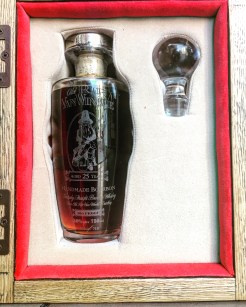
Open Bottle: Old Rip Van Winkle 25 Year Old Straight Bourbon Whiskey


Pappy Mania has struck early this year and for the first time in years even I’m feeling a bit of hype.

The early onset of this yearly bourbon malady is the amazing limited release of an Old Rip Van Winkle 25 Year Old Kentucky Straight Bourbon. What makes it hype worthy is that fact that like the A.H. Hirsch 16 Year Special Reserve this bottle is a piece of history. A gussied up, fancy decanter of liquid history.

My feelings on Pappy and the bottle hunting that surrounds it are pretty well documented,  but unlike the yearly release of what you could now call the standard Van Winkle’s this bottle is something different. This is actual Stitzel-Weller Bourbon.

Distilled in the Spring and Fall of 1989, the 11 barrels that comprise this release were aged on the lower floors of the metal clad warehouses at Stitzel-Weller that shut

download.jpg
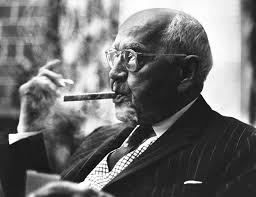
No one has ever seen him look to the right.

down in 1992. But just because the distillery stopped making spirit doesn’t mean the whiskey stopped aging. Leftover stocks continued to rest at the warehouse with some being sold off and some being bottled for various brands but these barrels stayed in the family. In 2002 they were transferred to Buffalo Trace where they aged for another 12 years on the lower floors of one of Buffalo Traces brick warehouses. In 2014 the whiskey was dumped into steel tanks. This isn’t an uncommon practice with older whiskies, the past few releases of Sazerac 18 Year Old Rye have been steel tanked, and it simply halts the oak aging process.  Oxidation can still happen but this is certainly not an aging experiment, nor can it legally be considered aged in steel tanks. It is simply an attempt to keep the whiskey from becoming over oaked and undrinkable.

So what were they doing with the whiskey for the next 2.5 years? They were figuring out how to sell it. Whiskey this old is a massive expense in time, labor, and lost product so it needs to have an appropriate price tag, but you also need to convince people that it’s worth the price tag. It doesn’t seem like that would be a problem with a bottle of Pappy Van Winkle but they pulled out all the stops for this release.

The massive box each of the 710 bottles comes in is made out of the oak staves from the 11 barrels the whiskey aged in. The Glencairn Crystal Studio designed a bespoke decanter, every bottle is signed by Julian Van Winkle, III and it comes with a parchment sheet with the short version of the whisky’s story. It’s a production.

At a mere 710 bottles, the secondary market for this bottle is literally drooling. But what’s interesting to me is that Buffalo Trace, and the Van Winkles, seem to be making steps to try and curb the flipping of this bottle. From what I’m told 9 bottles hit Los Angeles with maybe 30 for the whole state of California. But not a single bottle of those went to an Off Premise Liquor store. Every bottle was sent to a bar, with each bottle number being carefully recorded so that if a bottle does emerge on the Secondary Market they’ll be able to track it back to its source and supposedly punish the seller. While I appreciate the attempt to keep the bottles from becoming mere commodity trading with the secondary market already willing to pay $15,000 I can’t see these bottles actually staying on the shelves of all the bars they were allocated to.

But that’s the story ABOUT the whiskey, what about the whiskey itself? Bottled at IMG_3766.JPG25 years old and 100 proof this Bourbon carries serious weight. The nose is of dried oak, dark coffee, and just a touch of stone fruit. The finish is almost nonexistent but it doesn’t matter because the mid-palette travels for hours. White pepper, caramelized oranges, deep ripe cherry, of course a vanilla and caramel note but what’s interesting is how well this walks the line massive oak flavor without being over oaked. Right when I was expecting it to dive into wet wood and raisins it instead let the pepper burn for another moment before evaporating completely on the tongue. This whiskey is better aged than the standard 23, and I’d say it’s at least as lively as the 20 year old.
I think bottling at 100 proof made a huge difference on the final product. The burn and the massive presence of the mid-palette flavors solved almost all of the complaints I had with the Old Fitzgerald 20 Year Old, which was also Stitzel-Weller whiskey that finished it’s aging at Heaven Hill. There were 12 barrels for that release and the finish was also nonexistent but in comparison the Old Fitz just seemed flabbier. Those extra proof points and the Van Winkle name come with a much heftier price tag though.

In the end, it’s hard for me to separate the whiskey from the history. When I pick up this bottle, when I sell this bottle at the bar, when I manage to sneak a sip of this bottle it’s not the whiskey I’m talking about. It’s the history. The liquid time that is carried over the tongue adds volumes to the value but is it enough added value? I’m not sure, but for the first time in a long time I find myself agreeing with a massive price tag on a massive whiskey. At least at the retail level. But if you have a spare $15,000 hanging around I know someone who might be accepting bribes…

Whiskey Wednesday: The Old Forester’s New Clothes

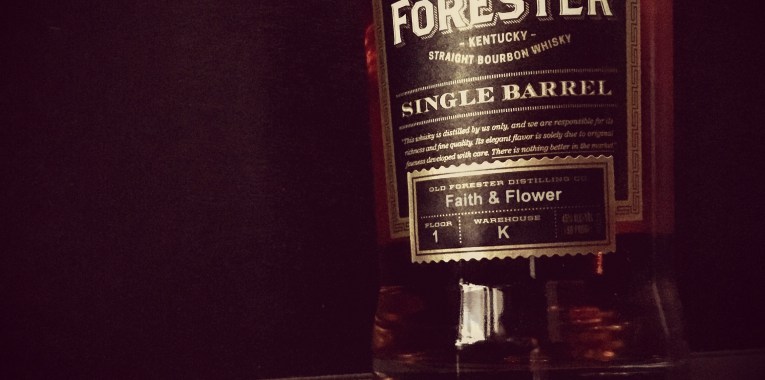
It’s time for the same old song and dance but with a brand new look. The first entry in a new chapter of house single barrels with the first Faith and Flower edition single barrel of Old Forester.

download.jpg

Old forester is an old brand, introduced by Gavin Brown in 1870 as the first bourbon brand sold exclusively in sealed bottles. Being sealed gave consumers assurance that the product hadn’t been tampered with or adulterated which made it the fan favorite of pharmacists who stocked it for its “medicinal qualities”. This reputation probably helped with Old Forester being granted one of six legal licenses to produce medicinal whiskey throughout Prohibition.

Unfortunately, over the century and a half of its existence Old Forester has been over shadowed by the Brown-Forman corporations other whiskies, like Jack Daniels or Forester’s mashbill twin Woodford Reserve. But recently the company has been trying to inject some new life into the old horse.

To kick things off the new Old Forester distillery is slated to open in downtown Louisville this year, And a few years back Old Forester was made the official bourbon for mint juleps at the Kentucky Derby (replacing Brown-Forman’s Early Times whiskey which is not technically a Bourbon) and around the same time they started rolling out their Whiskey Row Collection. The Whiskey Row is a series of Old Forester Bourbons meant to highlight milestones in Old Foresters history and the style of whiskey being made at that point in time. The Whiskey Row series are hence named with a date and a style like the 1870 “Original Batch” or the 1920 “Prohibition Style” and they also came with fancy new bottles and labels that set them apart from the classic Old Forester bottlings. And now all that fancy bottle and label goodness has found its way to the single barrel.

The Old Forester Single Barrel has always been a bit of a rare breed and been at least marginally separated off from the main bottles so it makes sense to align it more closely with its Whiskey Row brethren. The bottle is sleek, black, and just a little sexy.

510BA05C-43B6-4957-BAD0-F3DB91AEA44B.JPG  The single barrel offerings are at a solid 90 proof, one of the things that set them apart from the standard bottles, but the color scheme on the new label is an almost complete palate swap. Where the normal Whiskey Row bottles harken back to the old white/cream style labels of the brands history the new single barrel is jet black with silver lettering. And clearly looking to scratch the whiskey intelligentsia’s need to know everything the rickhouse and floor where the barrel aged are large and center.


But packaging doesn’t improve the whiskey in the bottle. So what about the actual whiskey? This inaugural Faith and Flower barrel comes from the first floor of Warehouse K. It’s the classic Old Forester/Woodford

mashibill 78% corn, 12% Rye, 10% barley that can too easily come off as a sweet corn bomb, but here it’s taken on a darker tone. Deep, red, ripe cherry winds its way through the middle of the palette while cinnamon, nutmeg, and woody sweetness lingers on the nose. The finish is medium yet weighty leaving the rough edge of the barrel mingled with the caramel sweetness.

Seeing this single barrel dressed up and tasting like this is like seeing a old friend the you’ve long felt to be predictable suddenly dressed to the nines and just dripping with an heretofore unseen sex appeal. The bones are the same but it’s a reminder that everything, and everyone, has a unexpected side that can make you sit up and take notice.