
There are things that I love and there are things that I intellectually love. There’s a Venn Diagram where these two worlds merge but the edges are blurry and unscientific. Compass Box falls squarely in the grey area of these circles.
Over the past 17 years Compass Box has certainly marketed themselves as the hip, bad boys of the Scotch world while simultaneously pushing for greater education, transparency, and innovation in the category. As in so many things these days, the nerds have become the cool kids.
Founded in 2000 by former Johnie Walker marketing director and fellow American, John Glasser, Compass Box labels themselves as ‘whiskymakers’ a term the fully admit they made up. To them a whiskymaker is someone who “feels a need and an obligation to make things better – to ask questions, to challenge, to experiment.” In a traditional sense what they are is a blending house, not dissimilar to Johnnie Walker. They source whisky, both grain and single malt, from various distilleries throughout Scotland and then blend them together to create something, hopefully, unique and larger than the sum of its parts. Where Compass Box excels though is putting their own spin on the process. However, this personal spin often causes friction with the Scotch powers that be.
In 2005 they were forced to discontinue one of their “Signature Range” blends, the Oak Cross because of the aging process used to create it. Compass box was aging the blend with flat, French Oak staves placed inside the barrel to produce a different flavor, not dissimilar to what Maker’s Mark is doing with Maker’s 46. The Scotch Whisky Association, the trade organization that functions as the defacto Scotch whisky government, felt that this aging process
violated the Scotch Whisky Regulations and in the face of legal action the Spice Tree was discontinued. It was later revived by aging the blend in barrels that had be recoopered to included French Oak barrel heads, instead of barrel inserts. This helped give them an early reputation for innovation, and for standing up to the traditional, closed of Scotch makers.

This reputation was solidified in 2015 when they locked horns with the ScotchWhisky Association again, this time over transparency. Compass Box had been shipping informational cards with their blends fully disclosing the source, style, age, and percentages of all of the component whiskies for their blends. The SWA felt that this violated both UK and EU laws, which state that a whisky may only list the age of the youngest whisky in the blend no matter the proportions. According to the SWA if you add a cupful of three year old whisky to a barrel of 50 year old whisky you now must label that as a three year old whisky. This is why blends like Johnnie Walker Blue will hint that there is 30 year old whisky in the bottle but you’ll never find that number actually on the packaging. Compass Box and John Glasser said, that fine will call it three year old whisky but drinkers want transparency and we want to be able to tell them exactly what makes up our bottle.
In another compromise, Compass Box has backed down from mailing out these  inserts, but still makes them available online and they started the Scotch Whisky Transparency Campaign, which outlines their goals and what exactly they would like to see changed in the regulations.
None of this would be possible with out the whisky though. And John Glasser and Compass Box are excellent blenders. Take the Compass Box Asyla from their Signature Range. “Asyla” is plural for asylum and is a blended whisky, comprised of both grain and malt whiskey. Specifically, 50% Grain Whisky from Cameron bridge aged in first fill bourbon barrels, 5 % Malt whisky from Glen Elgin aged in refill hogshead, 23% malt from Teaninich aged in first fill American and 22% malt from Linkwood aged in First Fill American. Can you see how much the nerd it me loves having that information to pick apart?! The final product ends up leading with a light vanilla fruit from the predominant grain whisky with a floral, grassy, and stone fruit character added from the supporting malts. It’s an immensely approachable everyday whisky that I personally recommend for drinkers of Johnnie Walker almost every time I’m behind the bar and I have been for years. That’s part of the problem though, as I see it at least.
Despite years of bartenders recommending the product, and the whisky nerds geeking out I don’t know who’s actually drinking the whiskey. I can’t recall anyone ever calling for it by name. I often wonder if I’ve bought into what amounts to a marketing gimmick of transparency and rebel attitude. It comes into starker focus when you look at their limited releases. They’re clearly thumbing their noses at the SWA with their “Three Year Extravaganza” release which feature less than 1% of a three year old whisky blended into a malt whisky of “undisclosed age” and their recent “Double Single” flips the traditional blenders script of including only a single rain whisky and a single malt whisky blended together. They’re interesting experiments, and clearly push at limitations but it still feels like they’re exploiting the system.

They get to be the white night. Championing for greater transparency and new regulations while a vat amount of the whiskies for their blends from Diageo, the largest liquor conglomerate in the world who has a vested interest in the status quo. Brag to your customers that you’re fighting for their interests, knowing that it’ll probably never happen, and then thumb your nose at the establishment with cheeky releases while charging establishment specialty prices.
But none of this takes away from the fact that I genuinely enjoy their blends. But I’m still not sure where they fall on the Venn Diagram. Because when there’s so much to be said about a whisky company and a mere 5% of it is about the actual liquid in the bottle maybe that’s why I don’t experience calls for specific Compass Box whiskies. Maybe we’re having the wrong conversation.

 in tradition, both its own and the Scotch Whisky tradition that gave birth to it, so change comes slowly. And while whiskey history is littered with mythological founding fathers modern Japanese Whisky owes it’s life and it’s tradition, to one man: Masataka Taketsuru.
 (over objections from both families) and in May of that same year Taketsuru began an apprentice at Hazelburn distillery where he gained a greater understanding of blending whiskey as well as distilling. He and Rita returned to Japan that November with plans to help the Settsu Shozo Company set up the first Japanese Whisky distillery. These plans never came to fruition.


 had spent more hours than I know how to count stressing over, had closed its doors over night. No warning. Just an email to the staff over their scheduling system.
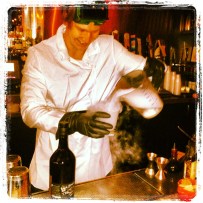 I set to work and was miraculously given free reign from my GM Mark Becker to do whatever the hell I wanted. He liked that the bar was striving towards something different. It also became clear to me that despite knowing a lot and being good with numbers there was still a lot I had left to learn. (Not the least of which was how to deal with people.) How do you win over someone who just wants a bud light to drink a craft pilsner, and how do you convince someone who wants a Jack and Coke that they might really like this Old Fashioned cocktail that’s on your Happy Hour? Whiskey
  simply because I knew a lot and could make a drink. But I found that the more I shared stories, whether with regulars that sat alone at the bar because there were no other customers or with staff at

 Although the eau de vies are still a major part of the distillery, the portfolio has expanded to include such wide sprawling products as a California Agricole Rum, an Absinthe Verte (which became the first commercially available American Absinthe after the lifting of the 1912 ban), as well as numerous gins and the Hangar One vodkas which were sold to Proximo in 2010. St. George first entered the whiskey game in 1996 when Jorg hired Lance Winters, a former nuclear scientist and brewer, for a one-month trial. Twenty years later Lance is still experimenting and Jorg is delightfully retired.
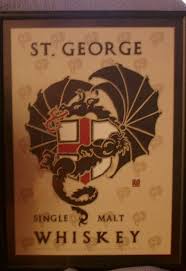 Malt Whiskey.” Technically, according to the American government there is no legal definition of what constitutes an ”American Single Malt.” However, this lack of consensus didn’t stop drink giant Remy Cointreau from purchasing the American Malt makers at Westland Distillery in December of 2016. Whether that speaks to a growing awareness of the category, or to an international audience more familiar and accepting of products labeled “Single Malt” remains to be seen.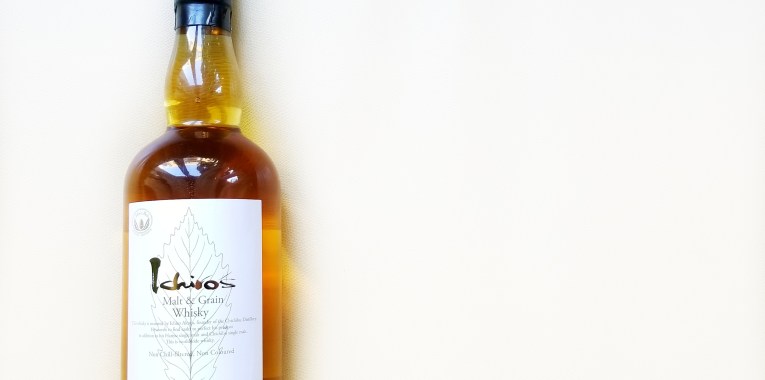
 Where most of the master blenders and distillers in the Japanese whisky world are rather unassuming and reserved, every interview and Google search for Ichiro is required to use the word ‘rock star’ to describe him. The Akuto family had been making sake in Chichibu since 1626 and transitioned into the sochu and whisky world in 1941 when Ichiro’s grandfather opened the Hanyu distillery. The distillery ended up enjoying considerable success during Japan’s postwar whisky boom.
 Nearly 10 years later there was a complete deck of 52 “Cards” complete with two Jokers. According to interviews Ichiro never meant to release a complete deck. The idea was to originally release four single casks and working with a friend of his, who was also a designer, they struck upon the idea that playing cards had four suits, and so a legend was born.(A legend that sold as a complete set at auction in 2015 for $400,000.) Not as impressive as the individual bottle price of the Yamazaki 50 but still amazing for a collection of whisky that was so unwanted a mere 15 before the sale that the distillery that produced it had shuttered its doors.
 The first Chichibu whisky debuted in 2011, a mere three years after the distillery started operation. Adding to his ‘Whisky Rock God’ persona every bottle that rolls out of Chichibu is labeled as an “Ichiro’s Malt Chichibu” with a sub name describing the release. This first release is appropriately dubbed, “The First”, and the whisky was aged in a combination of ex-Bourbon and Japanese Mizunara oak. Only 2,040 bottles were made available and it cemented Ichiro, and Chichibu, as a major player not just in the history of Japanese Whisky but also in its future. I remember drinking this whisky and being blown away by the delicacy and elegance it presented at a mere three years and at 118 proof. There were nectarines, vanilla, a touch of cinnamon as well as an earthiness, and green apple that fed into the maltiness.
 orange weaving through a light sweetness which leads into a large roasted nut, vanilla, white pepper feel, then a touch of tobacco and gingerbread on the tongue that leaves dried tropical fruit and vanilla as it disappears into a medium length finish.
 Bottled In Bond LA