Bonded Blog

Whiskey Wednesday: Repeal Day

With all the excitement, food, and celebrations that are crammed into the space between Thanksgiving and New Year’s Day you can be excused for not noticing that noted scoundrel and always bartender Jeffrey Morgenthaler managed to squeeze a completely new holiday in there: December 5th, Repeal Day.

Repeal Day is the Hallmark Card Holiday of the booze world.

Repeal Day marks the anniversary of the passing of the 21st Amendment to the U.S. Constitution on December 5th, 1933. The 21st Amendment acknowledged that the previous 13 years of alcohol prohibition were in fact a terrible idea. It reinstated the constitutional right of every man and woman (of legal drinking age) in these United States to raise a glass in celebration, in mourning, or simply because its Happy Hour damn it. Wander into any “serious” cocktail bar on December 5th and odds are you’ll find a whole Repeal Day cocktail menu.

But here’s the thing, Repeal Day is the Hallmark Card Holiday of the booze world.

Hindsight, even when drinking, is still 20/20. Through the lens of history it is easy to see that Prohibition was an outright failure but its repeal brought its own host of issues that still reverberate 85 years later.

According to proponents like Molly Hatchet, Prohibition was going to reduce drinking, reduce domestic violence against women and children, reduce crime AND cut government spending. That’s a tall glass that never got filled.

Spending, taxes, and crime, especially organized crime, all took an uptick. People actively flaunted their lawlessness to the point that a wealthy Prohibitionist by the name of Delcevare King sponsored a contest to create an appropriate word to describe these “lawless drinkers.” The winning word was independently submitted by two different people and the term Scofflaw was born followed shortly thereafter by a mixed drink of the same name.

Prohibition broke bartending…And then even worse for the profession of bartending, Prohibition ended.

Prohibition also indirectly gave birth the Federal Income Tax. Before Prohibition 30-40% of the Federal budget was generated from taxes on alcohol. A Federal Income Tax was technically un-Constitutional and needed a Constitutional Amendment to make it legal. The 16th Amendment legalizing the Federal Income tax was passed in 1913 with direct help from Prohibitionists.

I also feel like it caused a cultural disconnect. Every civilization has learned to ferment and distill eventually developed their own native spirit and their own drinking traditions to go with that spirit. These traditions are passed from parent to child and a respect for alcohol becomes a part of everyday life. Prohibition pushed alcohol into the dark, demonized it yet also made in alluring. You can still see this destructive relationship play out in our modern binge drinking habits.

On the other hand, we are a nation of immigrants. A hodgepodge, mish mash of different cultures and booze. Maybe Prohibition just sped up the naturally occurring separation. The Italians know how to drink amaro, the French know how to drink brandy, and the Scandinavians know how to drink aquavit but what the hell does the English colonist do with any of those? The art of mixing drinks is a distinctly American art and I’ve always believed it had it’s roots in the Irish barman having no idea what to do with the Dutch Genever and the French Vermouth so fuck it, let’s mix it together until it’s delicious.

Which leads naturally into Prohibitions effect on the craft of tending bar. Prohibition broke bartending. While popular culture glorifies the idea of the speakeasy and the great mixed drinks of Prohibition the truth was that while people drank gallons at speakeasies what they drank was terrible.

Before Prohibition bartending was a skilled and respected trade. Bartenders would apprentice and learn their craft just like any other skilled tradesman. Now and entire profession was made illegal and those that knew how to bartend moved overseas and taught the rest of the world how to mix drinks.

For 13 years the trade languished with no one to train the next generation and basic skills and knowledge was lost. And then even worse for the profession of bartending, Prohibition ended.

Scofflaw:

2 oz Rye Whiskey

.5 oz Dry Vermouth

.5 oz Grenadine

.5 oz Lemon

2 Dash Orange Bitters.

Shake with Ice, Double strain into a Sour Glass

The moment selling booze was legal again everyone wanted to open a bar, which means you need bartenders. The old skilled tradesman had moved on. There were no young professionals so it became a job for amateurs. The end of Prohibition was arguably the worse thing that could have happened to the American “mixology” tradition. 80+ years later and the professionalism that was taken for granted is still viewed as aloof or fussy today.

And all of this is before we even get into the how the disruption in alcohol production eventually to lead watered down, blended whiskies and eventually the rise of gin and then vodka over the US’s own native spirit: Bourbon. A cascade effect that changed how an entire culture drank. Prohibition and the compromises that needed to be made to for its repeal still shape how, where, and what we drink to this day. (Not to mention the abhorrent three-tiered system.)

Yet, because of Repeal Day I’ve had steady, good employment for most of my adult life and have gotten to travel the world all because I can but booze in a glass in a way that makes other people want to drink it.

So, should we be celebrating? Absolutely. But when you find yourself saddled up to the bar this December 5th ask yourself, are you celebrating some mythological golden age through boozed tinted glasses? Or are you celebrating the triumph of personal freedom and rational thinking? Either way, once you’re done with the inevitable brand-sponsored Old Fashioned throw the barkeep a curve ball and see how good a Scofflaw they can make.
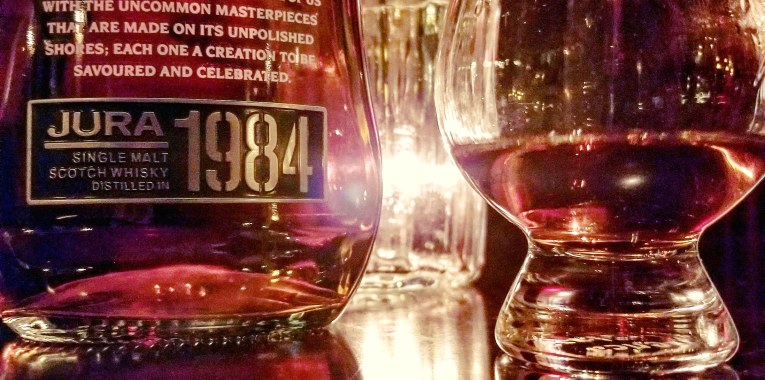
Open Bottle: Nineteen Eighty-Four JURA

“Who controls the past controls the future. Who controls the present controls the past.”

Released in 1949 George Orwell’s masterpiece Nineteen Eighty-Four often feels as alive and resonant as it must have when it was first published. Reading the headlines it feels like doublespeak, Big Brother, and New Speak have leapt from the lexicon of the theoretical into the mundanely of reality.

What was once meant as a cautionary tale has instead become the blueprint for how entire organizations operate.

The world has become vastly interconnected since 1984 and people are starting to realize how small a piece of the global whole they actually are. Some have risen to the challenge and sought to make their corner of that cold, distant expanse warm and welcoming. The seek to grow their communities.

Others, however, have become jealous of their small portion and rather than growing they shrink. They shrink from responsibility, from compassion and not only do they personally shrink they seek to diminish the world around them. To force the world to be smaller, leaving no room for those that are different or for those who seek an equal share in the world in which we must cohabitate.

Not exactly light, whisky sipping, thinking but these are thoughts that are constantly on my mind these days and were brought into sharp focus when presented with a dram of Jura’s 1984 Edition.

The Isle of Jura lies off the North-East shore of Islay, has one road, one pub and one distillery, the eponymous Jura. Orwell described the island as “extremely unget-at-able” which remains very true to this day. It was at the “unget-at-able” locale that Orwell wrote the bulk of Nineteen Eighty-Four while incredibly ill with tuberculosis fro 1947-1948. It’s this act of creative output that Jura is honoring with the 1984 Edition.

Casked in 1984 and bottled in 2014 this 30-year-old single malt was aged in ex-Bourbon, Amoroso (cream) sherry, and Apostoles Oloroso sherry casks. Only 1,984 bottles were released world wide making it a rather limited release. This is a lot of attention to detail to pay homage to an event that happened when the distillery didn’t exist.

The distillery was built in 1810 but fell into disrepair at the end of the 19th century. It wasn’t rebuilt and operational again until 1963. So there is clearly a bit of a marketing gimmick tied into this release, which is nothing new to the spirits world, and unlike most gimmicks this whisky is a phenomenal product.

NOSE: The nose is rich, redolent in those sherry aromas with nutmeg, dark dried fruit, raisins, and a noticeable touch of the sweet.

PALETTE: Deep cherry and candied orange peel. There’s also a hint of roasted peaches with a large dollop of honey and, of course, oloroso sherry.

FINISH: The dram has a medium finish that lingers with a surprising amount of spice for how sweet it starts, leaving the dry baking spices and a touch of dessert.

I don’t care what your marketing angle is as long as it’s true and the product is good. And this product is exceptional. The story being crafted is a bit forced but it is also clearly the result of a small community taking pride in its past and continuing to build for its future.

It is perhaps unfortunate that Orwellian thoughts float through my mind while sipping on this malt but then again the age that we live in requires us to be active participants in the world around us, even when just sipping on a whiskey.

Education is the best tool we have to enact change and I, for one, would not have known that George Orwell wrote Nineteen Eight-Four on Jura with out this bottle. With out this bottle I wouldn’t have spent a week researching and reflecting on the themes of a book I haven’t read since high school. Not only was I researching but I was also reexamining these themes in the light of the modern world and my adult experiences.

We must stand up, we must think for ourselves and not simply walk the party line. We must not become orthodox for, “Orthodoxy means not thinking–not needing to think. Orthodoxy is unconsciousness.”


P.S. VOTE

Whiskey Wednesday: Elijah Craig: NoMad Edition

I sat down and did this almost exactly a year ago and it’s time again for the annual arrival of a privately selected Elijah Craig Barrel. This one, like all of them, is special because it is a 100% unique bottling but it’s also the culmination of an insane year.

Elijah Craig is the whiskey I’ve probably written about the most so I’ll skip the folklore and brand history, you can read about those here. Instead I want to get personal and talk about the time since the last barrel rolled into my hands.

I started buying single barrels of whiskey years ago.  Elijah Craig was the first barrel I bought and it lit a fever in me. It was pretty easy to track where I had been working using this as a metric. As time went on as the list of “House Single Barrels” would balloon seemingly overnight. Last year was full of first for me. This year has been about constant change.

20180102_170727
Training Tome

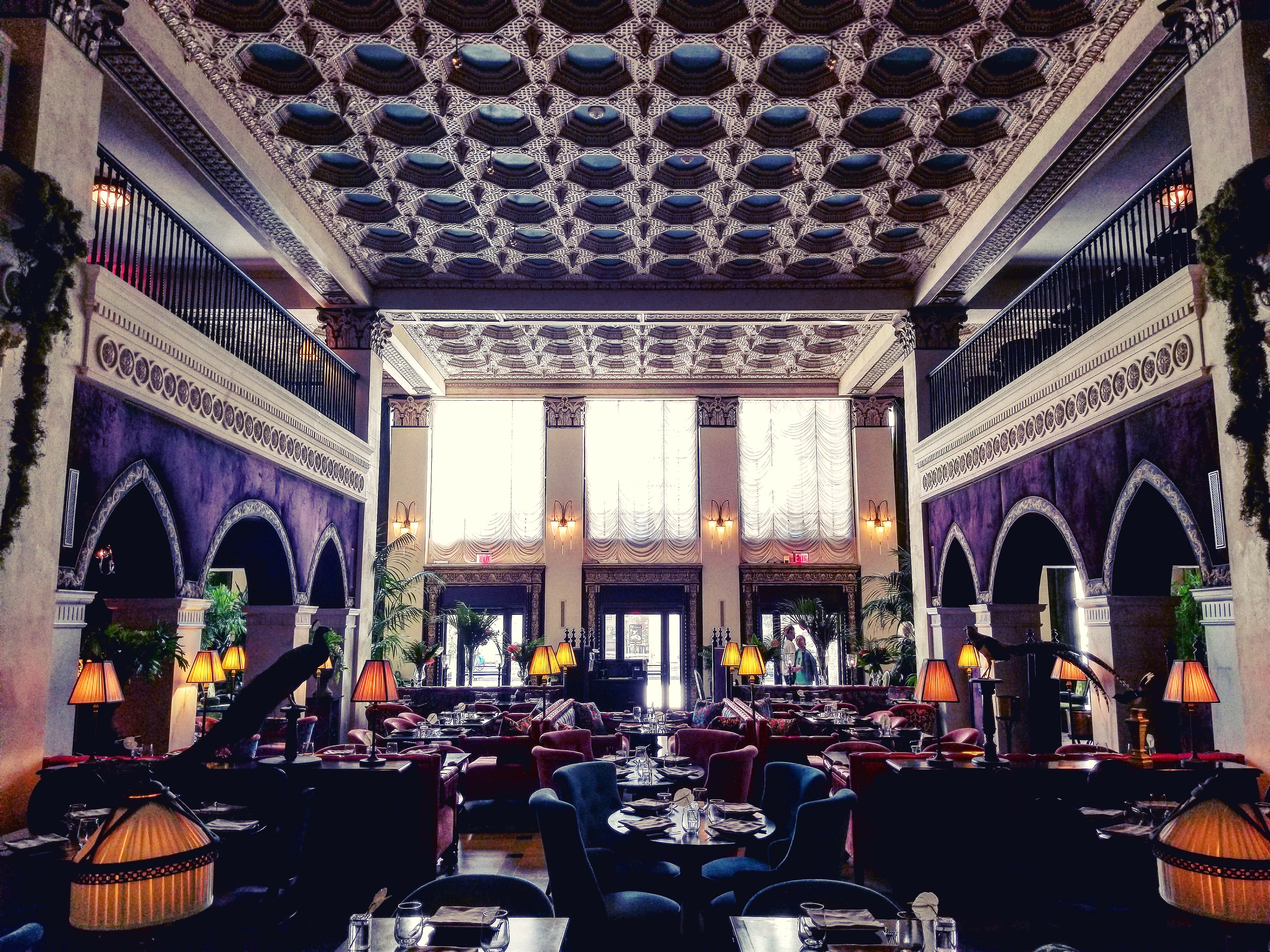
When the last barrel of Elijah Craig showed up to Faith & Flower I already new that in a few months I would be leaving it behind and traveling blocks away to the corner of 7th and Olive as one of the opening bar managers for NoMad Los Angeles. What I didn’t know was what that really meant.

I knew that I was joining a well-established,well-regarded, restaurant and bar team. I knew Leo Robitschek mostly by reputation and I knew the program; Pietro Collina, Nathan O’Neil and the rest of the team in NYC had built one of the most impressive bar programs not just in the country but the world. I knew it was going to be a lot of pressure and an immeasurable amount of work. What I didn’t know was how I fit into the equation.

My partner-in-bar Dave Purcell had already been a part of the team for months before I was brought on and given my crash course in everything NoMad. Three weeks after I started training I had pivoted learning to teaching. We were now training a barstaff that was 55 people large on an opening cocktail menu that was nearly 60+ drinks (not counting house specs on classic drinks) spread across four bars and not enough back bar space.

Every single member of that opening team was a goddamn rockstar and every member of our team, nearly a year later, is a member of that opening squad. It speaks to their professionalism and skill that they have risen above and beyond as the restaurant has constantly changed around them. Constant Reinvention is one of our guiding principles after all.

IMG_20180122_021945_794.jpg
A lot of late night exits.

Our Head Bartenders, who moved across the country from to be a part of this project, are some of the hardest working, most dedicated hospitality professionals I have ever met and I couldn’t imagine a better crew to get this beast off the ground with.

But even after opening I still didn’t know where I fit in. I wasn’t behind the bar and the Head Bartenders embodied the program and the culture so much more deeply than I felt that I did. They had simply been living with it for longer then I had. As far as I could tell I was here to herd a pack of wild bartenders and to help make the NoMad more LA. The first inkling of what that might actually mean happened when the team at Heaven Hill approached me about buying another barrel this year.

I immediately leapt at the idea and pitched it to Dave and Leo. After some debate, and extended tasting sessions, we settled on this bottle that now sits before me. An Eight Year Old Elijah Craig Single Barrel aged on the 6th Floor of Rickhouse “S” outside the Heaven Hill bottling plant in Bardstown, KY.

It has a heavy caramel nose and an upfront sweetness yet also a delightful earthiness and tannic finish that allows it to be sipped on it’s own but also to be built into cocktails which are surely the lifeblood of any NoMad bar.

Elijah Craig has been an integral part of the history of NoMad. The only drink to have never left the menu at NoMad is the Start Me Up, a Whiskey Sour variation with ginger, honey, Strega, rum and of course Elijah Craig. Using this barrel really drives home those whiskey notes in this drink. Here was something that I could contribute to the NoMad lexicon that was still wholly the NoMad and also intrinsically me.

This year also had it’s fair amount of travel, back to Pennsylvania for my Grandmother’s 90th birthday, a trip to the Cook Island’s (look it up it’s a real place) and a chance to return to France with my always more intelligent than me girlfriend.

There were less competitions, opening four bars in less than three months eats up a lot of free time, but I now have a rotovap as part of my tool set and know more about working with sherry than I could have ever imagined. As I sit here sipping this whiskey I am incredibly proud to see the NoMad symbol on its label.

Last year I declared I hate change and this year I find myself wondering if the new norm is constant change. I don’t have an answer to the question but I do look forward to what next year’s barrel of Elijah Craig brings.

IMG_20180706_210048_991.jpg
NoMad Los Angeles

Drinking Poetic: The Old Fashioned

“I prefer things the Old Fashioned Way!” said every generation ever as things changed around them.

The Old Fashioned is my favorite cocktail. It appeals to me on such a deeply intellectual level that it rivals the psychic imprint that Lord of the Rings had on me in the third grade. And the imprint this simple drink has had on the world of cocktails is just as deep. But what exactly is an Old Fashioned?

Due to the past 15 years of the Cocktail Resurgence and the dissemination of information on the Internet, most bartenders outside of Wisconsin will tell you that an Old Fashioned is a basic cocktail comprised of Spirit, sugar, bitters, and water/dilution. If they’re particularly good they might ask if you have a preference on Bourbon or Rye but most would balk at the idea of making it with a different spirit or, god forbid!, serving it up instead of on the rocks. Yet all of these are part of the innumerable variables that are a part of the drink’s history.

Over the past 200 years the drink has survived, thrived, been basterdized, been reinvented, reimagined and misunderstood. But why does it work?

An Old Fashioned is quite simply the Ur-Cocktail. The original, OG, never to be replicated, cocktail. Once upon a time, when words and facts still meant something, a cocktail was just one of many mixed drinks families that each had their own rules and regulations for entrance to the family retreats.

The original definition of “cocktail” first appears in a newspaper in Hudson, New York on May 13th, 1806. In answer to the question, “What is a cocktail?” editor Harry Croswell responds, “Cock-tail is a stimulating liquor, composed of spirits of any kind, sugar, water, and bitters—it is vulgarly called bittered sling, and is supposed to be an excellent electioneering potion, in as much as it renders the heart stout and bold, at the same time that it fuddles the head. It is said, also to be of great use to a democratic candidate: because a person, having swallowed a glass of it, is ready to swallow any thing else.” Sounds familiar doesn’t it?

While later generations of bartenders would claim the drink was invented at The Pendennis Club in the 1880s the etymological roots of the drink have always been more believable to me. As you may imagine drinks were made very differently in the early 1800s from how they are now, no matter how “pre-Prohibition” a place claims to be deep down we know it’s not the same. Now imagine that you actually did know what it used to be like and all these new changes, changes like plentiful ice and clean water for making simple syrup, are ruining your favorite drink. So instead of getting it done with all these new age techniques you would ask for your cocktail “the old fashioned way.”

It all starts with that base spirit. Forevermore this drink will be linked to whiskey but it works with any base spirit, any at all.

Over the past 200 years the drink has survived, thrived, been basterdized, been reinvented, reimagined and misunderstood. But why does it work? Why has this drink lasted through the centuries why so many others have disappeared to never be drunk again? This is what triggers my intellectual arousal.

What this drink does is trick our brains. It takes basic tools, and basic culinary science, and polishes the rough edges off of a spirit allowing the heart and magic that is the core of it’s flavor. Unlike a sour or a daisy that seeks to fully incorporate a wide range of flavors into one cohesive whole, essentially masking the alcohol, this seeks to enhance the elements that are already there. It highlights the spirit.

n-POURING-WHISKY-large570.jpg

It all starts with that base spirit. Forevermore this drink will be linked to whiskey but it works with any base spirit, any at all. Into the glass goes a fiery, untamed, uncultured pour of pure unadulterated water of life in what ever form you please. The base is laid and everything that emerges from this drink is birthed from this primordial ethanol ocean.

Bitters.jpgNext is added a few short dashes of bitters. Bitter is an interesting flavor. Science still debates why exactly we taste bitter but the general consensus is that we evolved the capacity as a way to detect poisonous plants. This is also why a little bitter goes such a long way. Our brains are hardwired to recognize the bitter before anything else. It doesn’t matter how mouthwatering delicious something is if it’s going to ultimately kill you. Now couple this with the fact that pure alcohol is actually poison but doesn’t actually taste like anything. What we often recognize as “alcohol” is really just the upfront burn. This touch of bitter is a stage magician. We’re so focused on the bitter that we don’t notice the alcoholic burn that it just slipped past our taste buds.
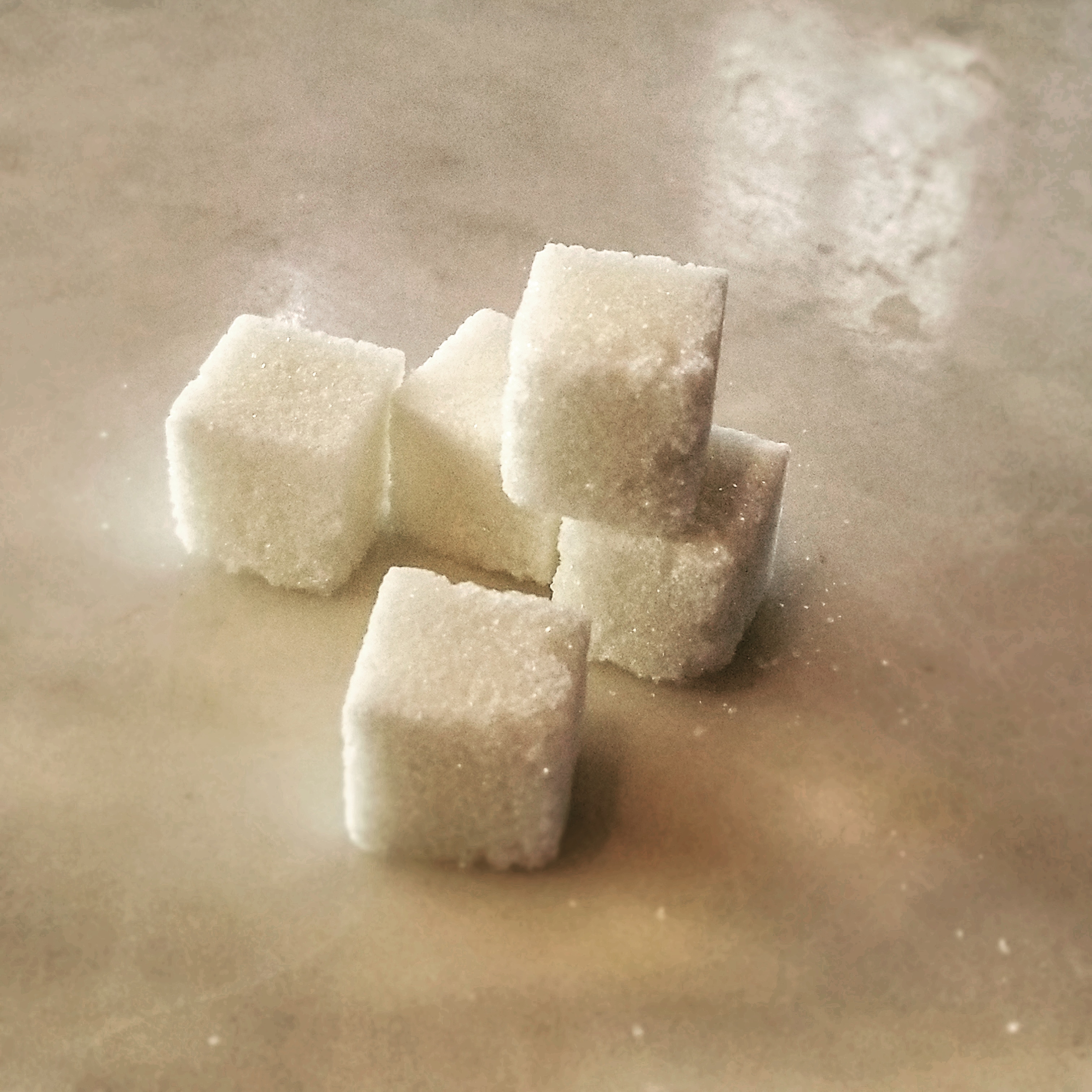
Sugar.jpg

But bitter tastes are unpleasant and while it only takes a splash to fool our monkey brains the end drink shouldn’t taste bitter. This is where a spoonful of sugar helps the medicine go down. A touch of sweetener rebalances the added bitter element. It should not be sweet, it should not be cloying, it should be just enough to balance the flavor scales.

Ice.jpgNext up is dilution. While alcohol itself has no flavor it acts as a great transport for flavor. Ethanol caries those flavors molecules in a magical solution but it keeps them locked up tightly. A little dilution opens those locks and lets the heart, the true flavor burst through.
Then the drink is finished the same way it’s started with a touch of aromatic, these days in the form of expressed citrus oils to enhance the newly awakened flavors but in the drinks proto-form nutmeg was also used. The idea is once again to sneak past that alcohol burn, except this time we’re pulling a fast one on our olfactory sense.

All of this combines for the perfect cocktail. All of the parts are interchangeable. Change the sugar for vermouth and you end up with a Manhattan or a martini. Swap the dash of bitters for a grand bitter like Campari, a bottled form of that bittersweet, and you end up with a negroni or a boulevardier. Or simply take the sugar, turn it into a simple syrup, fully dilute the cocktail and serve it up and you end up with a New Fashioned Cocktail. The very process and innovation that the first drinker shook their fist at and declared that they wanted an Old Fashioned with their muddled sugar cube and ice IN the glass.

So, after all that how do I drink my Old Fashioneds? Intellectually.

But also with a small brown sugar cube soaked with Angostura bitters, just enough to saturate the cube, then dropped into the bottom of a rocks glass. Add a splash of soda water, just enough to allow the bitters soaked sugar to be easily and fully muddled. Add two ounces of Bonded Rye whiskey, a large ice cube, stir, and then express the oil from a small slice of lemon and of orange over the top. Sip, drain, and repeat until the dawn comes.

Open Bottle: Rittenhouse Very Rare 25 Year Straight Rye Whiskey

Today I’m either turning 33 or 37, depending on whether you believe my birth certificate or my girlfriend’s mathematical skills.

I’ve been in the service industry since I was 16, been bartending since I was 20, and have been a “craft bartender” and bar manager since I was 25. In a lot of ways my experience behind the bar has shaped me as a person, helped define my personality, and at times threatened to completely consume my life. And it all happened by accident.

While I was out manning an NBC desk the bar world had changed. The Cocktail Revolution was well underway.

It’s easy to look back on that stretch of years and see it as an inevitable progression but it never felt that way. I started waiting tables as a way to make easy cash in high school. From the moment I started taking drink orders I knew I’d rather be taking those orders from behind the bar and making the drinks; bartenders were just inherently cooler. I completely blame early viewing of Roadhouse and Cocktail for this gross misconception, but even when I started doing my best Tom Cruise impression it wasn’t a career. I was just finding a way to pay my bills in college while I figured out what I was really going to do when I grew up.

Skip ahead a few years and my Brian Flannagan impression had been traded for a blend of Aaron Sorkin and Kenneth from 30 Rock. Needless to say that wasn’t a combination that seemed to be working out so when I found myself between jobs I decided to start bartending again until I found what came next. Turned out what came next was bartending.

While I was out manning an NBC desk the bar world had changed. The Cocktail Revolution was well underway and suddenly there was a wealth of information, spirits, techniques, and books that transformed slinging drinks from a job into a profession. Similarly, some health issues transformed my youthful sense of invulnerability into an inevitable sense of my own mortality.

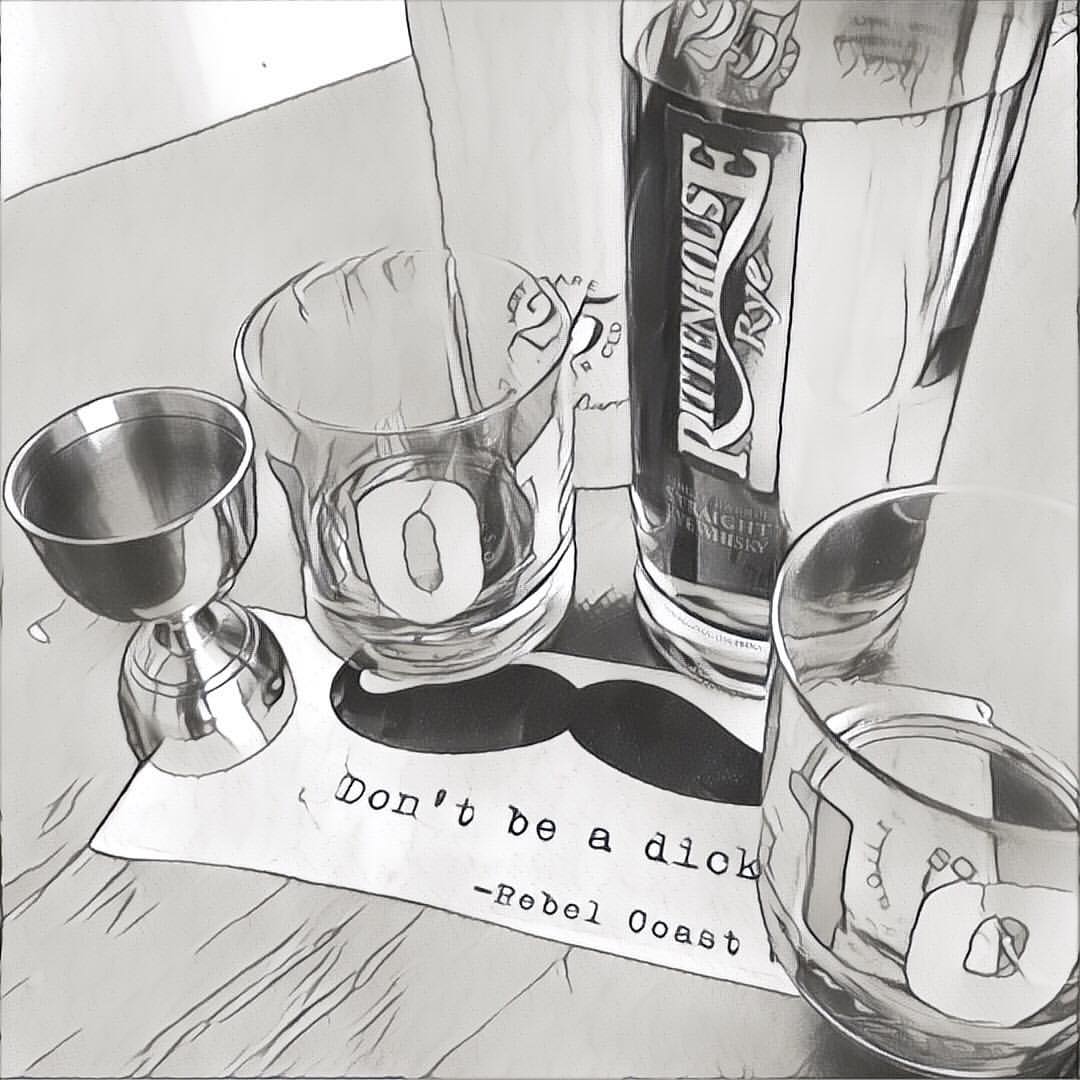
This profession and vulnerability coalesced into the first major purchase of my soon to be overwhelming liquor collection: The Rittenhouse 25 Year Old Straight Rye Whiskey.

Rittehouse25B&W.jpg

I was still reeling from the debt that having a “Real Job” had bestowed but I was alive, financially stable and wanted a bottle of spirit that was older than I was so that I could raise a glass in celebration for hopefully years to come. I had no idea what I was doing when I walked into that BevMo, but thankfully my naiveté was matched by the fact that Pappy Mania hadn’t yet transformed the whiskey world into a wasteland of unattainable whales and unicorns. This perfect confluence meant that a bottle that now goes for north of $1000 had multiples sitting on the shelf at a Santa Monica BevMo for less than $150 each. It was such a crazy time that I turned down buying a bottle for the bar because it was “too expensive” and “would never sell.” I wish I had a time machine to go back and snap up a 6-pack.

As I begin my inevitable transformation into Doug Coughlin I’m going to sit with another dram.

The third release of a series, the 25 Year Old, was preceded by a 21 and 23 year old Single Barrel release. All three releases come from rye distilled in October of 1984, aged on the lowest floors of Rickhouse OO, and were all bottled as 100 proof, non-chill filtered single barrels.

 
NOSE: There’s a touch of spice but it’s mostly a candied walnut, dried fruits and a waft of cedar mixed with the oak.

PALETTE: On the tongue there is a deep nougat, a sense of brûléed fruit, and a massive bag of baking spices. It is surprisingly sweet for a rye but carries a sophistication and stateliness. This is one of those old whiskies that rather than tasting old and oaky, tastes mature and aged.

FINISH: The finish is long and warm. The spice finally finds it’s footing as the rest of the flavors evaporate and evolve.

This is quite simply one of the best bottles of rye I’ve ever had. And what’s amazing is that as my palette, experience, and collection has grown I return to this bottle for a simple pour every year and still feel the same way.

Though to be fair it’s not really about what’s in the glass. This is the prime example of my philosophy that whiskey is meant for drinking. The experiences the led to buying the bottle and the accumulation of everyday until the next pour adds to the poetry in the glass.

As I begin my inevitable transformation into Doug Coughlin I’m going to sit with another dram and share it with those that I can. I may have started this journey by accident but the feeling of growth and community is what’s kept me here.

That and the booze.

And the tips.

But mostly the booze.

Open Bottle: Yamazaki 18 Year Single Malt Mizunara Cask

In today’s edition of things you’ll never get to taste: Yamazaki 50 Year Old!

            On Friday August 17th 2018 a bottle of 1st edition Yamazaki 50 Year Old, one of only 50 bottles to exist, sold at auction for $312, 519.87. This is now the most expensive bottle of Japanese whisky ever sold at auction, beating the previous record set a mere three months earlier with the sale of bottle of 52-year old Karuizawa and blowing the previous record for Yamazaki set in 2016 out of the water.

But none of these can touch the record for most expensive bottle ever sold at auction, also set in May of 2018, for a bottle of MaCallan 60 Year old. The malt was distilled in 1926, bottled in 1986, featured a label created by Valerio Adami, is one of only 12 bottles in existence, and sold for $1.1 million USD.

Thirsty yet? Wish you could taste what must be the Elixir of Youth? Well, you can’t so lets talk about something absurd that you still might be able to put in your mouth: The Yamazaki Mizunara Cask.

To many drinkers and collectors Yamazaki is the quintessential Japanese whiskey. You can read more about their specific history, here, here, and here. Yet something that’s even more quintessentially Japanese than Yamazaki, kaiju, and anime is mizunara wood.

download-1
Quercus mongolica

Scientifically known as Quercus mongolica, this is a species of oak native to Japan, central and northern China, Korea, eastern Mongolia, and eastern Siberia. The infancy of the Japanese whiskey industry butted up against the outbreak of World War 2 and while imports of European and American oak barrels for aging were drying up whisky consumption was on the rise and became the main drink consumed by the Japanese army. Barrels were needed so the distillers turned to their native oak.

Up until then mizunara had been used primarily in the manufacturing high end furniture and when transferring to whisky making the distillers ran into a few problems. First up, it takes a good 200 years for a mizunara oak to fully mature for a good cask, and it doesn’t grow straight, making it difficult to form proper staves. On top of that, Japanese oak has a higher moisture content than it’s cousins making it more difficult to work with. It’s also more porous meaning the casks are more susceptible to leaking.

Despite all these setbacks it turns out what mizunara really needs to shine is the thing that it’s hardest to give: time. The true flavors of mizunara really start to shine after prolonged ageing. This has lead to it being an essential player in the blended/pure malts that Japanese producers are so found of but also rocketed it into the stratosphere of some of the most sought after style of aged Japanese whisky in the world.

As the world of rare whisky comes to mirror more and more the world of fine art and bottles are becoming collectors pieces to be admired but never enjoyed it’s worthwhile to be reminded that the true joy of a dram is in the drinking and the sharing.

Due to the maturation time needed and the problems of working with the wood itself there aren’t many whiskies that are fully aged in exclusively mizunara but the allure and price tag of whiskies aged in mizunara have led to multiple producers releasing mizunara seasoned releases that carry the name but not the refinement that is so readily apparent in the older Yamazaki releases.

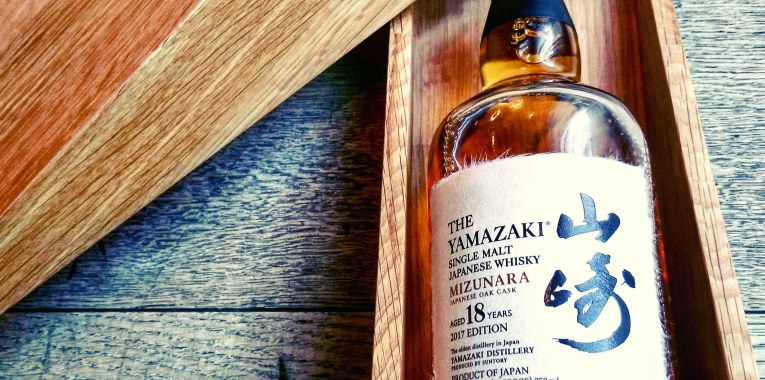
Take for instance their 2017 Yamazaki Mizunara release. The 2017 release is an 18 year old single malt aged exclusively in mizunara oak. Their Chief Blender, Shinji Fukuyo, tasted through hundreds of mizunara aged whiskies and put together this malt that may legally only be only 18 years but is stated to contain at least a small portion of 50 year old malt. Bottled at 96 proof and with a price tag slightly north of $1000 this is certainly not an everyday whisky- but can it clue us into the hype and auction fees of its unobtainable brethren?

NOSE: The nose is rich, fragrant and has a touch of sandal wood and greenery. An undertone of fresh baking spice is also present. The mizunara is already making itself known.

PALATE: A silky texture, with dry red fruit, coconut, citrus marmalade, a sweetness of caramel and a rich texture that is reminiscent of condensed milk with out the heavy feeling.

FINISH: It ends with a decisive spiciness, it’s reminiscent of Japanese incense, the lighter wood notes from the nose return and linger with the baking spice as you exhale.

This is a truly elegant pour of whisky. It is a prime example of how much patience is needed to truly coax the beauty of the mizunara out of the cask and into the glass. When I drink this I understand why Suntory is scouring Japan for old mizunara furniture to turn into more barrels.

I’ll probably never know how this stacks up to the most expensive Japanese whisky ever sold but it will always have something more noteworthy about it than that auction bottle ever will: I can actually drink it. As the world of rare whisky comes to mirror more and more the world of fine art and bottles are becoming collectors pieces to be admired but never enjoyed it’s worthwhile to be reminded that the true joy of a dram is in the drinking and the sharing.

This bottle is by no means commonplace and the price is nothing to scoff at but I can think of at least four places around Los Angeles where this is a bottle that can transport your evening and remind you that patience is sometimes its own reward.

And if you ask nicely I might even tell you where those places are before I drink it all myself.

Whiskey Wednesday: Early Times Proof of Concept

I’ve talked about it before but I’m really into traveling. Travel opens our eyes to new things, it also shines a new light on the familiar and common place. While most people filter this experience through art or culture being a bartender and a boozehound I end up seeing it through the glass at the bottom of a bottle.

Proof is often erroneously conflated with quality

Spirits nerds, especially us whiskey focused ones, love to talk about “the rules.” Your spirit can’t be a Scotch if it isn’t made in Scotland, your spirit can’t be whiskey unless it’s made from some type of grain, your corn whiskey can’t be Bourbon unless it uses a brand new, freshly charred barrel, etc., etc,. We love these rules because they help us clearly delineate the teams and offer an offer a definitive right vs. wrong answer in any debate.

These rules also offer consumer protection. Ever wonder why most spirits in the US are bottled at 80 proof (40% ABV)? It’s because that’s the legal minimum. In the EU that minimum is 37.5% so you will see products, even ones that are traditionally 40%, packaged at the lower threshold. Why? The answer as it so often is, is taxes.

Proof is often erroneously conflated with quality. While the higher the alcohol content the more intense the intrinsic flavors of the sprit will be this is not the sole indicator of quality. If it was Everclear would be the number one premium spirit in the world. But it is true that spirits used to be sold at much higher alcohol content. The old standard of “proof” used to be if gunpowder soaked in the spirit would still light on fire. This ensured that rum rations on ships wouldn’t interfere with the firing of it’s canons but also that the spirit hadn’t been watered down. This proof point is 57%.

All of these taxes, traditions, and experiences coalesced over the years until it was finally turned into law with the double whammy of the Bottled in Bond Act of 1897 and the Safe Food and Drug Act of 1906

57% being proof is slightly intellectually irritating though so for ease of use in the US the scale was reduced to 50%=100 proof for easier conversions for, you guessed it, tax purposes. And before you could simply buy a prepackaged bottle of booze from the store you used to take an empty bottle to the store and fill it up directly from the barrel. Diluting the spirit to 40% again made the math easier. A 26oz bottle filled with 40% alcohol will always contain 10oz of alcohol so you always know exactly how much to pay in taxes. But why settle on 40% instead of 50%? That’s the ABV strength where ethanol mixed with water lights on fire at room temperature.

All of these taxes, traditions, and experiences coalesced over the years until it was finally turned into law with the double whammy of the Bottled in Bond Act of 1897 and the Safe Food and Drug Act of 1906 which finally legally defined all of the nefarious white lightning, applejack, and whiskies floating around the American country side. And while this does a wonderful job of maintain a threshold of quality, and safety, it ends up excluding flavors and drinking traditions that fall outside these norms.

For instance, The EU ended up with a lower proof point to respect many of the Eastern European vodka makers, and it should be noted that most international councils, like Scotch and Cognac, have their own rules and minimums that have to be met. And in one of my favorite anecdotes Elmer T. Lee, one of the Father’s of Modern Bourbon, supposedly only drank his Bourbon at 60 proof because he felt that was the perfect point where the alcohol burn didn’t get in the way of the flavor. The guy knew a few things so lets take a look at something that falls outside of almost all of these rules.

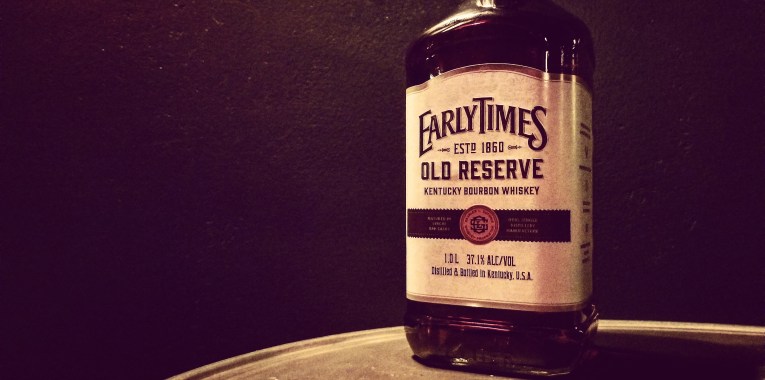
On a recent trip to the Cook Islands (look it up) in the second Duty Free store in an airport with only two gates I came across this bottle of Early Times. Now Duty Free is often a testing grounds for new products, premium bottlings, and a place to dump large amounts of product that aren’t moving.

Despite what the label says this bottle of Early Times is not a Bourbon, at least not in the United States. And this is where confusion comes in, does it follow the rest of the Bourbon laws? I have no idea so let’s assume it’s produced exactly the way regular Early Times is.

Regular Early Times is also not a Bourbon. It is produced in Kentucky by the Brown-Forman Corporation at the same distillery that produces Old Forester, which is a Bourbon. What separates the two is the barrel. Early Times is aged in reused Bourbon barrels so already it’s legally “just” a whiskey. But it’s packaged below the EU threshold of spirits at 37.1%, which means that this bottle isn’t even legally a whiskey. For the sake of novelty and the equivalent of nine American dollars I brought this bad boy across the ocean, through customs, and back home to the United States.

images.jpg

The reused barrels effect on the whiskey is immediately obvious as it’s color is lighter, more straw and hay than a full aged Bourbon that has those deep dark barrel influences.

On the nose there are all of those traditional whiskey aromas: vanilla, caramel, and a touch of stone fruit but they’re less intense due to the barrel. The spirits corn base is readily apparent even on the nose.

On the palette is sweet corn, a hint of spice, a touch of caramel, and not much else. It meats the flavor points of whiskey.

The finish is short but inoffensive. This isn’t terrible whiskey, but it is exactly the kind of whiskey an Old Fashioned cocktail was designed to enhance. Though it this case it would require a delicate touch because everything about this is so light that it would be easy to overwhelm the spirit with just a hair heavy dash of bitters.

I picked this bottle up because the proof point was amusing to me but in the end do those 2.9% points really make a difference? Yes, but there’s so much else going on with Early Times that they’re not going to make or break this spirit. It is putting in the minimum effort.

Ultimately, that’s why people look down on these bare minimum bottlings. It doesn’t feel special. They’re offering an experience that is just meeting a requirement. But sometimes all it takes is crossing an ocean for a requirement to transform into an unique, glass bottomed lens and let you see things in a new light.

Whiskey Wednesday: Overholt’s Bond

Bottled in Bond has jumped the shark. Before what’s sure to be Jack Daniel’s latest premium priced bottled in bond hits Duty Free shelves worldwide let’s look back to a much more innocent time when a BiB release truly excited me. A time known as six months ago…

Before we jump in the Short Way Back Machine what exactly does Bottled-In-Bond mean? Well, here’s a link to a video of some fools talking about it, but here’s a quick refresher. The Bottled in Bond Act of 1897 was spearheaded by a group of distillers, lead by Col. E.H. Taylor, to instate a form of quality control on products calling themselves whiskey, as well as to give consumers the confidence that whiskey sold in this new contraption known as a mass produced glass bottle was reliable and un-tampered with.

Working with the U.S. Government they came up with a list of regulations to be labeled as Bottled-In Bond.

  • The spirit must meet all the legal requirements for that spirit.
  • It must be the product of a single distillery in a single distilling season.
  • It must be aged for a minimum of 4 years in a government bonded warehouse.
  • It must be bottled at 100 Proof
  • Every bottle must list the DSP (the distillery identification number) for both the location of distillation and location of bottling.

Follow all these rules and you get a tax break and US government slaps its seal of approval on the bottle in the form of a tax stamp to show that the liquid has not been tampered with after it was bottled.

The bonded warehouse is an interesting thing to note. In the olden days this meant that the warehouse was physically locked and could only be accessed by a tax assessor (see the above tax breaks, to ensure that there was no “unauthorized removal.” This Tax Man had the keys to the warehouse and it could only be opened with their help, which is how we end up with such delightful stories as that of Old Fitzgerald.

Bottled in Bond began to thrive. It was a mark of quality, and a mark of the distiller’s skill. However, after prohibition when stocks and profits were low distillers looked for ways to stretch out the remaining supply and to reduce costs. See: blended whiskey and applejack. The required aging and proof of bottled in bond raised the quality but also the price, and being unable to blend across distilling seasons meant there was less ability to utilize backstock. Brands that were once proudly Bottled-in-Bond began reducing proof and age and slowly disappeared. Most of those that survived have been consolidated under the ownership of Heaven Hill but also lost their premium status and became your “Granddad’s Whiskey” which despite what the current whiskey boom will tell you used to be an incredibly uncool thing to say.

On the flip side, the current whiskey and cocktail boom has reinvigorated interest in Bottled In Bond as a mark of quality and in mixing. This has lead to a rash of reintroduction of Bottled In Bond products but often at a steep mark up, which I believe misses the point and utility of Bottled In Bond. They’re meant to be versatile and approachable. One of the rereleases that got this right was Old Overholt.

Old Overholt is owned by Beam Suntory, which is the parent company of the largest Bourbon producer in the world, Jim Beam. And while Overholt is truly an old brand it doesn’t usually stand out for me.

It’s a barely legal rye, meaning it’s 51% rye in the mashbill, which isn’t necessarily a bad thing. Rittenhouse Rye is also barely legal and is a bottle I can’t live without. But bottled at 80 proof I’ve often found the Overholt to be oily and incredibly earthy. However, this past January Beam Suntory added a Bottled In Bond version of the Overholt, so lets see how it stacks up.

On the nose it smells definitively like a Jim Beam product. I associate this smell with the Jim Beam yeast strains. There is a woodsy, yeasty, nutty quality that carries through almost everything in the Jim Beam lineup. There is also an oakiness and dark wood scent that lingers.

On the palette the oiliness is still very much present, but it’s cut through with a heavy alcohol burn that dries out a vanilla and caramel while complimenting the rye natural spiciness. The finish is surprisingly short, leaving an alcohol tingle and a touch of green apple.

This new Overholt is a vast improvement over the old Overholt. However, this new bottle is undeniably a whiskey drinker’s whiskey. It is mean and uncompromising and honestly tastes a lot like what I would get if I blended the 80 proof Overholt with a bottle of Rittenhouse. Its price point makes it incredibly versatile as well. The new proof boost lets it stand up in cocktails while offering a flavor profile the is unique enough to justify including it on the back bar. Bottled in Bond is clearly becoming a hip term and producing a bonded version of a known branded may help boost sales, but that boost doesn’t mean it has to come with an inflated price tag or loss of character.

Just remember, not every reboot is terrible. And while something may jump the shark it doesn’t negate the quality of everything that came before the leap.

Whiskey Wednesday: Willett Of The Past

Age adds value.

That doesn’t just mean a dollar value, I personally own dozens of books, papers, and social media accounts that only still exist because they’ve essentially become a time capsule. They’re important simply because they’ve survived.

Before NDP, Non-Distilling Producer, was short hand for overblown marketing these producers were some of the most celebrated.

I started collecting whiskey when I got back into bartending in 2011. I suddenly found myself with income surplus for the first time in years and set about recreating the back bar I had at work in my tiny Venice apartment. I ended up with more whiskey then I conceivably drink on my own, which leads directly to the fact that I have dozens of bottles in my overblown collection that are there because anytime I pick them up I think to myself, “I can’t drink that! I’ve had it forever.”

This is directly antithetical to my belief that all whiskey is for drinking, not hoarding. So I thought it was high time to revive that spirit and open some “old” spirits.

Before NDP, Non-Distilling Producer, was short hand for overblown marketing these producers were some of the most celebrated. And none have reached the cult status of the Willet Distillery.

willett-distillery.jpg

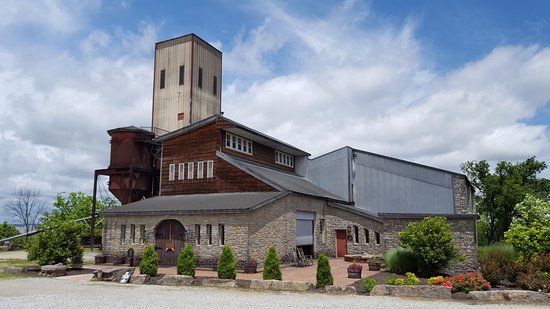
Officially know as the Kentucky Bourbon Distillers the distillery is most closely associated with it’s Willet Family Reserve line of premium whiskies. And that’s not marketing. The distillery was founded in 1935 by the Willet family as the Old Bardstown Distillery, which produced its first bourbon in March of 1936. Flash forward to 2016 and the old distillery is still family owned and some of the first whiskey distilled on site rolled down the line all over again.

How do you do something for the first time twice? You stop producing whiskey in the 70’s to make ethanol during the fuel shortage. Then the fuel prices drop, the bottom falls out from under the market, and you’re left flat footed.

From the 1980’s until about 2012 the “distillery” was just in fact an independent bottler, a NDP. They began by relying on the back stock of their own product that was still aging and began to source excess whiskey from neighbor distilleries. Most notably they were sourcing from Heaven Hill, which is so close you could roll a Bourbon barrel down the hill and hit a rickhouse. During this time Willet/KBD continued to produce award winning whiskies like Noah’s Mill, Rowan’s Creek, the formerly eponymous Old Bardstown, and turned the Willet brand into a coveted line of old, premium, single barrel whiskies.

While they may not have been producing liquid in-house the team at Willet showed

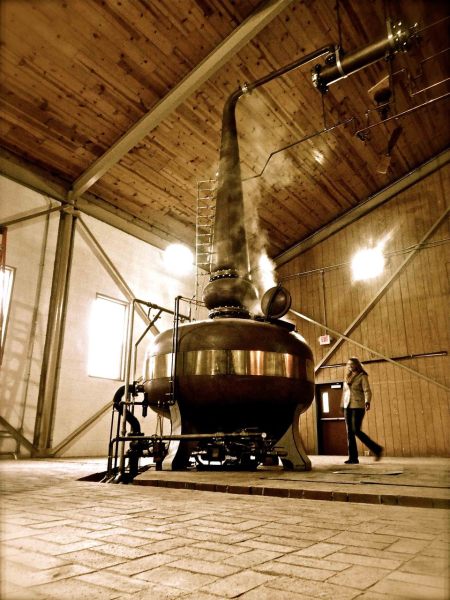
The Willet Pot Still…was incidentally also how I thought anyone who sat in front of my bar for years about what a “Pot Still” looked like.

remarkable skill in aging. The single barrels and older expressions of whiskey that they put together have long stood out as some of the best bottlings of the past two decades. But as the Bourbon boom ramped up the writing was on the wall for people trying to source whiskey. More was going to the in house brands and in 2012 KBD fired up its own set of stills and now 6 years later we are seeing bottles of old brands with new juice.

But lets get back in the way back machine to right before these stills started producing to when I bought this bottle of Willet Pot Still Bourbon.

The Willet line was already well established as a premium category but they were also pricey. The Willet Pot Still, introduced in 2008, was a non-age statement variation that could introduce people to the line with out breaking the bank. It was incidentally also how I thought anyone who sat in front of my bar for years about what a “Pot Still” looked like.

This bottle is a Single Barrel versus its modern counterpart, which is simple a “small batch.” Bottled at 94 proof, 47% alcohol, this whiskey has nearly as many awards for its packaging as it does for the Bourbon itself. So, after 7 years how does it taste?

Willett_Distillery20_ff71ed32-5056-a36f-2340837825148b38.jpg

On the nose is a sweet corn, yet dusty oak presence. The alcohol burn is larger than I would expect for something bottle at 94 proof, and for something that’s been in the bottle for three quarters of a decade. But under that burn is a touch of coffee and toffee.

On the palette the alcohol is much les noticeable. A large oak, vanilla, and slight char carry all the way through the dram with some darker fruit, a touch of cherry and almost blackberry, before giving sway to a musty, earthy, barn house sense.

The finish is light fades quickly leaving the oak on the tongue and the alcohol on the sides of the mouth.

It’s a good whiskey, something I wouldn’t be upset picking up off the shelf and drinking today but it’s not transcendent on its own. What is transcendent is the act of opening the bottle, pouring, and reminiscing as I sip on where I was at in my life when I bought this bottle and on all the events that have transpired since.

Nothing is precious on its own, the spirit we imbue it with verifies that value. And for something to have value it must have some use. So let’s raise a glass and reminisce.

Whiskey Wednesday: Nikka From The Barrel and to the US

 One of the best things about traveling is seeing what is out there in the world that can’t be seen from home.

When it comes to spirits traveling abroad often means encountering ex-pat style spirits; bottlings like Blanton’s Straight From The Barrel, an Early Times bottled at 37.1 Proof, or the Wild Turkey 13 Year. These are intriguing because they’re both familiar yet unattainable but they don’t fill a void or represent something new. Their appeal is mostly just that they can’t be had at home.

Despite what the name might imply, the whisky itself is not a single barrel expression.

More frustrating to me are those spirits that I discover but have no recourse to obtain at home. These are products that are fundamentally different from the familiar yet still incredibly appealing and often made by companies that already have products in the States. Products like the Giffard Melon, the Etter Apricot Eau-de Vie, and, until this past month, the Nikka From The Barrel Japanese Whisky numbered among them.

At this point it should be very apparent that Japanese whisky is the soup du jour of the whisky world, but instead of talking about the loss of an age statement or product line being discontinued for once we’re actually seeing an expansion of a product. And not a wholly new formulation specifically designed for a market, just an honest to god expansion of availability.

I first came across the Nikka From The Barrel when traveling to France a couple years ago. Not only was I struck but how incredibly flavorful it was but by how ubiquitous it was. I erroneously assumed it was a specialty release only to hear from the bartenders that it was their mixing Japanese whisky.  Keep in mind that this was pre-Toki when the prices were rising and stock plummeting and the ability to make cocktails with Japanese whisky was dwindling. Yet here was an over-proof, affordable, mixable Japanese whisky.  And I couldn’t have it.

Despite what the name might imply, the whisky itself is not a single barrel expression. It is instead a blend, remember the Japanese whisky makers consider themselves more blenders then distillers. This is Single Malts from Nikka’s Yoichi and Miyagikyo Distilleries, as well as grain whisky from Miyagikyo that has been rested and married in an oak barrel for 3-6 months. It is coming from the blending  barrel not a single barrel.

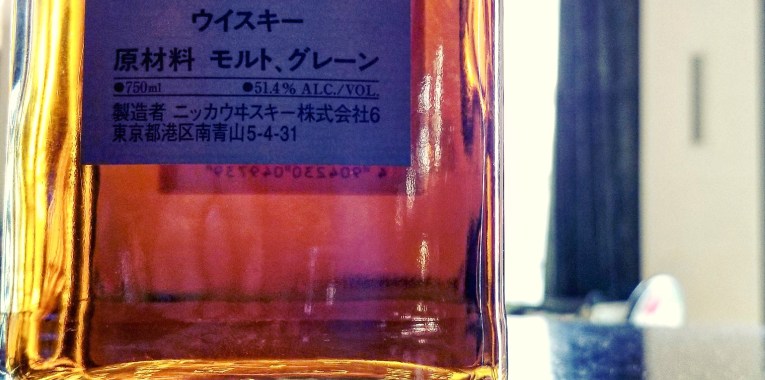
The extra aging allows the whiskies to marry and evolve together before being bottled at near cask strength, a powerful 102.8 proof. This power of proof and flavor is what made the whisky such an amazing value. There is just so much packed into its little bottle. And the bottle is little. Designed to be reminiscent of a “small lump of whisky” to visualize the concentrated power inside the bottle it is packed as 500ml. This is a bottle size so far outside the allowable norms for US production that I think this more than anything is what kept it from our shores for so long.

With its Stateside release, Nikka kept the same bottle design but simply scaled it to a 750ml size. Not quite as elegant and evocative but it’s always been what’s inside the bottle that counts.

So, what’s inside the bottle? The same blend of malt and grain married for 3-6

It’s also proof that global expansion and demand can be gracious and bring you new experiences and treasures, instead of putting up artificial boundaries.

months in oak casks. Still bottled at 51.4% alcohol this is a big hitter.

The Nose carries a hint of fresh, green fruit, with a baking spice overlay and of course a discernable oak note. The alcohol vapors can accidently overpower some of the more subtle notes if you inhale too deeply on the first sniff.

On the palate is a big, full bodied whiskey. The dark baking spice notes leap to the front. Brown sugar, caramel, and the fruit stays fresh and a touch more citrusy than expected from the nose. The distillate is incredibly clean and dry.

The finish is long, drawn out, and the oak lingers after the alcohol has burned off. A few drops of water really does help mellow this whisky and expand the range of flavor.

What’s truly great about this whisky to me is that it’s simultaneously an entry level whisky and yet not. It’s something the evolves over time, much like the person drinking it.

It’s also proof that global expansion and demand can be gracious and bring you new experiences and treasures, instead of putting up artificial boundaries.