Quarantine Bottle Kill #1: Heaven Hill 7 Year Bottled In Bond Bourbon

Sheltering in place has led to a massive spike in booze sales across the United States a the days are now divided into “Coffee Hours” and “Alcohol Hours.” Being forcefully unemployed by the pandemic I’m unable to contribute to that spike and have had to reexamine my hoarding tendencies. My reluctance to open bottles, let alone finish them, has been overtaken by my belief that whiskey is meant to be enjoyed. And if not now, when?

So, join me as I work my way through my bar cart with the great Quarantine Bottle Kill of 2020.

First up is a relative newcomer: Heaven Hill Bottled In Bond 7 Year Old Bourbon. Not to be confused with the Heaven Hill Bottled In Bond 6 Year Old Bourbon which was only available in Kentucky and was discontinued in 2018. One year later this 7 Year hit shelves with an updated label, an extra year of age, and a boosted price tag.

I’ve made no qualms about Heaven Hill being one of my favorite distilleries but their lack of an eponymous bourbon certainly means they have much less name recognition as a distillery than say Jim Beam. The old Heaven Hill 6 Year was one of my favorite bottles to bring back from a Kentucky trip and at $12 was an absurd steal.

Now, what exactly does an extra year and a new label and bottle taste like?

NOSE: Chestnut, dusty leather, vanilla, and oak

PALETTE: Earthy with a strong oak presence. A dusting of baking spices and a hint of tobacco. There’s a slight woodsy quality to it with a surprisingly light punch for a bonded whiskey.

FINISH: Medium and dry with a touch of stone fruit and capped with the oak and vanilla from the nose.

This is quintessential Heaven Hill. In fact, if you told me this was the 6 Year Old bottle I would believe you. Which makes sense as it’s the exact same mashbill only a year older and released a year after the 6 Year was discontinued. You can do the math. And that’s my only real con with this bottle: the math.

$12 would be an absurd price for any quality Bourbon these days.  However, at $40 it enters a very crowded field of more household names like Eagle Rare, Woodford Reserve, and Knob Creek. While this is solid bourbon I’d personally pick up a bottle of Elijah Craig from the same distillery for a lower price tag. 

I am happy to see it on the shelves though if only to help spread the Heaven Hill name. Though if it was still at the old price point I might have been able to stock up for the quarantine instead of having to finish the bottle.

Whiskey Wednesday: Woodford Reserve Bottled-In-Bond

Let’s get meta. 

I run a blog, which you’re currently reading, called Bottled In Bond, LA. I write about bartending, cocktails and spirits, primarily whiskey but occasionally not. I’ve been doing this for a few years now and occasionally old articles will suddenly get a few more views because someone Googled a bottled in bond product that doesn’t exist. You would not believe how many people are looking for a bonded Chartreuse

About a year ago, I noticed a huge spike in an old article about Woodford Reserve. It was getting a Google search almost daily for a month. I became curious, did my own googling, and found a single Reddit post about a Woodford Bottled-In-Bond but not much else. 

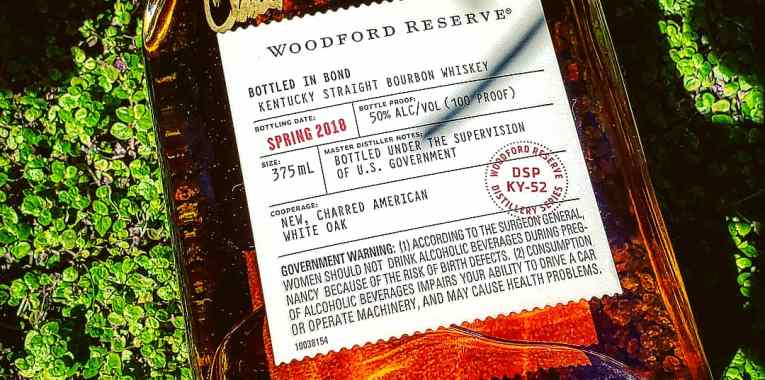
After asking around with no clear answers my friend Luke Ford, who works for Woodford, returned from a visit to Kentucky with a .375ml bottle signed by Woodford Master Distiller Chris Morris. A distillery only release of Woodford Reserve Bottled In Bond. 

My natural hoarding instincts took over, it went on the shelf and remained unopened for the past year. But why? I’ve always maintained that whiskey is meant to be drank, to be experienced, and after all the curiosity that lead to me actually receiving a bottle shouldn’t I be curious about what the whiskey actually tastes like? So, I opened it. 

NOSE: Super oak, straw, light stone fruit
PALETTE: Caramel, cinnamon, baked peach pie, with a touch of the metallic pie tin
FINISH: Bright, quick, and surprisingly light for the extra proof 

This bottle tastes exactly like what I would expect a Bonded Woodford to taste like and that is incredibly interesting to me because by all right’s it shouldn’t. 

The Bottled In Bond Act of 1897 states that to be bottled in bond a product must be produced by one distiller at one distillery within in one 6-month distillation “season.” It must also be aged in a federally bonded warehouse for a minimum of four years and bottled at 100 proof. 

It’s the one distillery requirement that makes this interesting. The traditional bottle of Woodford is made up of spirit from two different distilleries. Column Still distillate from the Brown Foreman Distillery in Shively, KY and Pot Still distillate from the Woodford Distillery in Versailles, KY. This bottle only caries the DSP Number, essentially the distillery address, for the Woodford Distillery. Meaning this should legally be only the pot still whiskey. Which to me says there should be a bigger flavor difference. In a way it’s almost impressive that this really does just taste like Woodford. 

Part of what I love about Bonded whiskey is how clear cut it is. You always know the exact distillery, proof, and process whenever a product is bottled in bond. It strips out a lot of the mystery and marketing from a brand. It was an often overlooked mark of quality on affordable whiskey. And yes, the category is seeing a resurgence and premiumization in the past few years, however these are often just upscaled versions of existing brands. They aren’t bad but they are a sign of the times and they are familiar. 

This Woodford Bottled In Bond clearly falls into this ongoing trend but this bottle also raises questions for me. Is the labeling on this very small run inaccurate or have I always overestimated the impact of the column stills on the final Woodford profile? It’s made me think about Woodford in a way that I honestly haven’t in years. I don’t have an answer to these questions but at least it’s something to ponder over the next glass. 

Whiskey Wednesday: Decanting Old Fitzgerald Bottled In Bond

Growing old is an interesting proposition.

It’s right there in our language. We GET older, we GROW up whether we like it or not. But these phrases imply a gift. The imply that it is a privilege to age and that we are constantly changing and growing.

Contrast that with the utter fear of aging that our culture exhibits. It’s also right there in our language. We don’t just develop. We deteriorate, mellow, and mature. And at every point along the journey we can’t help but express disbelief at how many chronological ticker marks we’ve accrued. Our own experience is that we are always the oldest that we have ever been, so exclamations like, “I can’t believe 90’s kids can legally drink!” or “Holy Shit, it’s been nearly five years since Old Fitzgerald Bottled-In-Bond was discontinued!” make us feel old and make those older than us roll their eyes at the young ‘uns.

Even in whiskey we want our spirits older, but not too old. Age at a certain point becomes a novelty act, reacting to a new release almost as if to your great-great aunts 97th Birthday, “A 27 Year old Bourbon you say? That’s adorable.” Yet we bemoan the loss of every single age statement, and doubly so when it’s a rocksteady brand that’s stood the test of time yet is still dropped in favor of something new, young, and millennial.

The loss of the Old Fitzgerald Bottled-In-Bond was a loss I felt personally and deeply. While never technically discontinued the Old Fitz was removed from most markets over the past five years in favor of it’s cousin Larceny. Same liquid inside, even still has the Fitzgerald name on the bottle still. It’s technically John E. Fitzgerald’s Larceny, referring to the legend that the original brand was named for.

In short, this tastes like Old Fitzgerald, which is a blessing and a curse

John E. Fitzgerald was a tax bondsman for the U.S. government, which meant that he was one of two people on site at the Old Judge Distillery to have keys to the bonded warehouse. This ensured that there was no theft, since no one could enter the warehouse with out him, and that the government was properly collecting it’s taxes on the whiskey production. However, the workers kept noticing certain honey barrels, the especially tasty ones, were coming up short and that Old Fitz always seemed to have some extra tasty liquid on hand. These barrels became known as “Fitzgeralds” and a brand of whiskey was eventually named after the man and his harmless acts of larceny.

The brand went on to become a working class hero. Bourbon Legend says that the brand was originally sold only to steamships, rail workers, and private clubs. After Prohibition the brand was purchased by Stitzel-Weller, the famed distillery owned by the notorious Pappy Van Winkle. In fact, during his tenure at the Stizel-Weller Distillery Pappy didn’t sell any Pappy. He sold Old Fitzgerald and it was by far their most successful brand. Like all the whiskies made at Stitzel-Weller Old Fitz had that “whisper of wheat” in the mashbill that made their whiskey so unique at the time.

old_fitzgerald_bottled_in_bond_bourbon_large.jpg

During the whiskey dark ages of the 70’s and 80’s the brand was purchased by United Distillers, which through several mergers and acquisitions eventually became the behemoth that is Diageo. United Distillers/Diageo closed the Sitzel-Weller distillery in 1994, moved production of Old Fitzgerald to the Bernheim Distillery. Then in 1999 they sold the Bernheim Distillery, and the Old Fitzgerald brand, to Heaven Hill. Heaven Hill continues to make wheated bourbon and releases it under the Old Fitzgerald name to this day.

ftcyrn5wmsfx.jpg

The story hasn’t changed. The whiskey hasn’t changed. But the age, the label, and the price certainly have. While Larceny is still a very reasonably priced bottle of whiskey it doesn’t carry the massive bang for your buck that the old Bottled-In-Bond did. And by freeing up the Fitzgerald name from a bargain priced Bottled-In-Bond the team at Heaven Hill have been able to make attempts to push the premiumization of the brand. Some of them more successful than others.

They tested the waters with the one off release of John E. Fitzgerald’s 20 Year Old Bourbon which was some of the last whiskey actually distilled at Stizel-Weller which was released to mixed reviews. And now comes the release of the long awaited Fitzgerald Bottled-In-Bond Decanter Series.

The series will be a limited release each Spring and Fall for the next few years. The throw back to the old label name also comes with a throw back to another old Bourbon tradition: fancy decanters. More important than the glassware though is that this is a Bottled-In-Bond whiskey, it’s 11 years old, and it’s got the price tag to prove it with a suggested retail price of $110.

So how does it stack up?
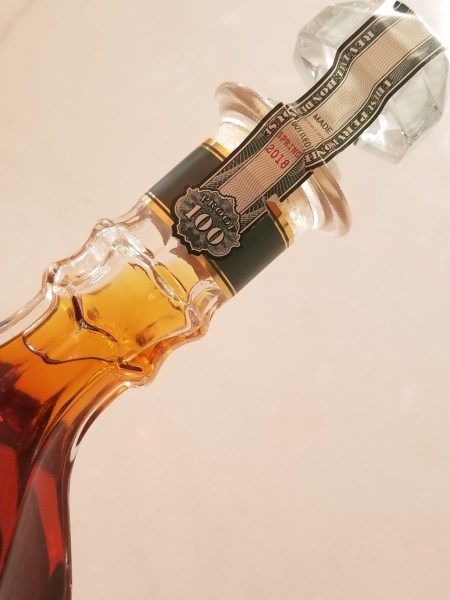
20180602_164023The packaging and labeling are fantastic. It’s like seeing an old friend after the divorce now that they’ve started working out and gotten a haircut. It still looks like them but a cleaner, fitter, more attractive version of them.

The nose has all the oak you’d expect from an 11-year old, but also a touch of apricot and butter. On the mid palette is black pepper, stone fruit, a hint of nuttiness and a slightly thin caramel which leads into an aggressively woody finish that lingers hot and with a slight exhalation of cherry.

In short, this tastes like Old Fitzgerald, which is a blessing and a curse.

On the one hand I’m incredibly happy to have something that tastes like my old timey Bottled-In-Bond back but at the rarity prices it’s not something I would necessarily pick up off the shelf, and it’s certainly not an every day drinker like it used to be. The extra aging has made the product deeper and mellower but it’s also made it richer and pricier. Much like your recently divorced friend it doesn’t seem interested with hanging out with the same crowd it used to.

In the end I’m happy to see the return of Old Fitzgerald in a semi regular release but it does feel like the difference between hanging out with your college buddies and your great-great aunt. The one you want to see every weekend, the other you’ll drop in on at the holidays. Maybe. If the plane tickets aren’t too expensive.

Whiskey Wednesday Adjacent: Pick Your Apple Poison

You can always tell what a bar manager’s secret passion is. You’ll look at the backbar and no matter how well curated it is there will always be a collection of bottles that are out of place, an odd amount of variety in an esoteric category. For me, that guilty pleasure is apple brandy.

Bourbon may have become the United States Native Spirit through Congressional Resolution in 1964 but Apple brandy, that New Jersey Lightning, is the real first spirit of the colonies. In the cold New England winters colonists would leave cider outside overnight allowing it to freeze. Since alcohol doesn’t freeze what was left over after this rudimentary distilling, or “jacking”, process was a more concentrated alcoholic apple beverage.

This proto-brandy became known as Applejack and had as large a reputation for causing blindness from poor ‘distilling’ as it did for getting the drinker drunk. But it wasn’t long before industrious businessmen started cleaning things up. Robert Laird was a Continental Soldier who served under George Washington during the Revolutionary War. There are records of Washington requesting Laird’s family recipe for “cyder spirits” which has lead to the claim that Laird supplied Applejack to the Continental Army. After the war Laird founded a distillery in Scobeyville, NJ and which is now the oldest licensed distillery in the United States, receiving License Number 1 from the U.S. Treasury in 1780. But the “cyder spirits” and their hard cider cousins did not fair well under prohibition.

Prior to Prohibition most of the apple orchards in the colonies were not the juicy, edible fruit that we think of today. They were in fact the hard, bitterly sour variety that make excellent cider. Apples are what are known as extreme heterozygotes. Essentially, the latent genetic diversity of the actual seeds means that a tree grown from a seed will bare almost no resemblance to the varietal of the parent tree and more often than not will be completely inedible. These types of apples are known as “spitters.” To create consistent apple varieties a process known as grafting, where a budding branch of the parent tree is implanted into existing rootstock essentially cloning the original tree. There were a few issues with getting active graft to the New World in those early Colonial days which meant that most attempts at growing apple trees were from seeds. And while these spitters were terrible for eating they were perfect for cider.

On the frontier, Cider was actually safer to drink than the water so settlers again turned to cider orchards. And many of these orchards were in fact planted by John Chapman, or as he’s better known, Johnny Appleseed. John Chapman was a real man who bares an actual resemblance to his folkhero self. He did wander the frontier planting apples from seeds, but Chapman was more a shrewd businessman than a carefree vagabond.

Starting in 1872, the Ohio Company of Associates promised potential settlers 100 acres of land if they could prove they had made a permanent homestead in the wilderness beyond Ohio’s first permanent settlement. To prove their homesteads were permanent the settlers were required to plant 50 apple trees and 20 peach trees in three years. This proved they were sticking around because an average apple tree took ten years to bear fruit.

Chapman realized that if he stayed just ahead of the settlers, doing the difficult orchard planting he could sell them for profit to the incoming frontiersmen. And being a member of the Swedenborgian Church his belief system explicitly forbade grafting because the thought it caused unnecessary suffering for the plants. Thus his orchards were grown from seeds and unfit for eating but perfect for cider.

Unfortunately, most of Chapman’s orchards were cut down during Prohibition when FBI officers were targeting cider productions and orchards helping hasten the downfall of America’s cider tradition. Meanwhile, the apple brandy world had consolidated with Laird’s being the only game in town. The drinking populace’s tastes also changed looking for lighter, less flavorful options like vodka and blended whiskey which transformed Applejack into a blend of apple brandy and grain neutral spirit. By 1970 Laird’s had shrunk from three distilleries to its single plant in New Jersey. They even ceased production for several years as the stocks on had were more than sufficient for demand.

Flash forward to 2017 and Apple Brandy and cider are riding a resurgent wave. Craft cider producers have expanded the category and given it respectability. Apple brandy got to come along for the ride and also got it’s own boost from the Cocktail Renaissance. Many classic drinks called for “applejack” and I know personally it helped be ease many drinkers off of drinks calling for “apple pucker.”

The variety of apple brandy these days is rather astounding. From classic French Calvados, to Laird’s New Jersey Bottled-In-Bond, to Germain Robin’s French style California apple brandy, to Copper and Kings new wave distinctly American Apple Brandy made right in the heart of Bourbon Country. They are all as unique as the seeds that they sprang from. Which is why I need so much shelf space for them.

Whiskey Wednesday: McKenna’s Patience

Bourbon is full of history, tradition, and ancient family recipes.

Except when it’s not. (which is pretty much all the time.)

This call back to the golden days of our frontier forbearers is meant to impart some sort of permanence, stability, and a patriotic appeal to what is actually a relatively new spirit. Bourbon wasn’t defined as a unique product of the United States until the 1950’s. As far as the United States government was concerned the term “whiskey” wasn’t even defined until almost 1907. So, while the “Founding Father’s” of Bourbon were certainly making whiskey, they were following their own rules by making what felt like a good product to them. Most of the regulation like the Bottled In Bond Act were spearheaded by the distillers themselves looking for tighter control and quality of their products.

In the worst case this clarion call to the past is meant to mislead consumers, but even the best intentioned creates a consumer base deathly averse to change. This is antithetical to the alcohol industry needing to be an ever-evolving marketplace.

633175116783425504.jpg
Why would you ever change this glorious label?!

I still remember my first gut reaction of, “Why the hell would you do that” in the modern whiskey world. It was the label change on Henry McKenna Bottled-In-Bond.

Henry McKenna is a name that harkens back to the early days of the Kentucky distilling world. In some circles he’s as highly regarded as George T. Stagg and William Larue Weller, (very well regarded indeed).

McKenna was an Irish immigrant that moved to the Kentucky territory in 1838. Like many Irish immigrants at the time Henry worked on the railroads helping build the country’s early infrastructure. Also like many other immigrants he went into less backbreaking work as soon as he could.

He settled with his wife in Nelson County and by 1855 was a partner in a flour mill. Looking to make use of the spent grains they soon purchased a farm and soon after that were distilling about a barrel a day from the leftovers from the gristing process.

These early whiskies were almost assuredly all wheat but by 1858 the whiskey was had proved popular enough to hire a fulltime distillery manager and had begun distilling corn as well.

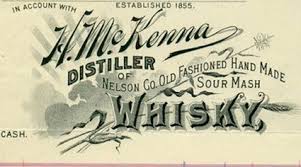
images.jpgThe whiskey produced at McKenna’s Nelson County distillery never carried the name ‘Bourbon’ but it was regarded to be of the highest quality. Newspaper at the time noted that McKenna never sold a drop that wasn’t at least three years old. There was even a bill introduced to Congress in 1892 asking for unlimited bond period on aging whiskey to prevent tax penalties on whiskey aging beyond the bond. This bill was known as “The McKenna Bill.” The next year McKenna passed away at the age of 75.

He left the business to his sons who had grown up in the distilling world. They managed the company until the advent of Prohibition forced them to mothball the distillery. But following Repeal James McKenna, a ripe 79, reopened the distillery with a distiller trained by his father’s original distillery manager supposedly keeping the family recipe intact.

James died in 1940 and the family sold the distillery to Seagrams, but not the original recipe. Seagrams marketed and produced Henry McKenna for decades until they dismantled the original distillery in 1976 and sold the brand to Heaven Hill in the early 90’s.

Under Heaven Hill two versions of McKenna are still on the shelves. The 80 proof Henry McKenna and the Henry McKenna 10 Year Bottled In Bond Single Barrel. You get one guess which one I love.

Not only does the Bottled-In-Bond meet all of the bonded regulations, it’s also 10 years old which is ancient in this shifting whisky scene AND it’s a single barrel so there is the possibility that each bottle you dive into will be different, a new variation upon the McKenna theme.

I’m spoiled and was able to purchase to Private Single Barrel a few years ago and haven’t tasted a regularly available bottling in a while. So, how does it stack up to all of that history?

l-s1yona3oobf95c.jpg

The nose is redolent of salted caramel, and the mid palette is all pistachio and pecan drizzled with vanilla and a dry, oaky, tannic finish. There is still a heat, and a rough around the edges quality from the its 100 Proof nature that hasn’t been fully tamed by its ten years in the barrel. It’s a whiskey that you can sip on but feels like it loves to be tossed around in a mixing glass as well, with plenty to offer a cocktail while not losing its identity.

This is most assuredly NOT the whiskey that Henry McKenna was making when he first set out to Kentucky nearly 200 years ago, but it is good modern whiskey. The label change I originally hated has grown on me and I’m sure that its updated look helped introduce it to a modern audience. Trying to stand on tradition alone can often leave us unable to see over the crowd, but perching on it’s shoulders can help show us the stage set for the future.

Old Grand Dad’s Goodbye

It’s been an interesting few months for the “Beam” portion of Beam Suntory.

Back in October the had a full worker strike at Jim Beam, it only lasted a single week before both sides reconciled their differences but it also happened to be the same week that Booker’s Rye was named Jim Murray’s World Whiskey of the Year.

The prestige of that super allocated release, as well as the price tag, seemed to add fuel to Beam’s announcement at the end of last year that standard issue Booker’s Bourbon was going to see a production cut and double in price in 2017. This announcement was met with such backlash that the company quickly back tracked, now saying that the price would more gradually increase over the year with only a $20 increase to start off the year. This about face has left many people disgruntled, feeling that they were some how manipulated into snatching up bottles. As if they were forced into buying the whiskey by the announcement.

Add this to the Maker’s Mark brushfire in 2013 where the same company announced that they’d be cutting the proof of Maker’s Mark to increase supply only to quickly change their tune due to community pushback and you seem to have a company with an inte
rnal struggle between the accountants and the physical producers.

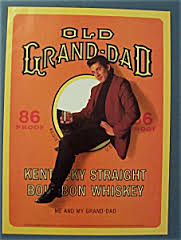
Amidst this kerfuffle yet another beloved friend has bit the dust with out much fanfare: the Grand Dad 114. The lack of a dustup might be proof that the company was right to discontinue this expression of Old Grand Dad but I images.jpgpersonally disagree.

Old Grand Dad is old. Not as in an age statement but in terms a brand. And even if you don’t think you’re familiar with the brand you’re wrong. You just know him by another name: Basil Hayden.

Basil Hayden was part of a great migration into the heart of modern day Bourbon Country. He was, like almost everyone else, a farmer first. He distilled to preserve excess grain, just like his neighbors did, with little thought to mashbill or long term aging.

After the civil war whiskey went industrial and around 1882 Basil’s grandson, Raymond, founded a distillery and named it after his Old-Grand Dad and slapped a portrait of him on the label.

After Hayden’s death the distillery passed into the hands of the Wathen’s who made medicinal Old Grand Dad through-out Prohibition and their company, American Medicinal Spirits, became the backbone for National Distillers after repeal which was one of the largest and most influential bourbon makers in American History.

After Prohibition, when whiskey stocks were nearly non-existent, a higher rye content was added to Oimages-1.jpgld Grand Dad’s mashbill in an effort to make it taste and feel like those ‘old style’ distillers in an effort to appeal to the new drinkers.
Flash forward to the late 80’s, National Distillers merged with Jim Beam and amazingly, the mashbill for Old Grand Dad has seemingly been left unaltered. And they even added to the family by introducing Basil Hayden’s in 1992.

I’ve always loved the 114. 114 proof (duh) it is spicy, powerful, dusty leather and a nutty presence that leaves your mouth bone dry, hunting for more. And even if the claim that Basil was known for making bourbon “with a high rye content” is completely unsubstantiated it is still damn good whiskey.

By now Basil Hayden’s far outshines its older iteration, at least in terms of press and sales. And with supply unable to keep up with demand a family sacrifice has been made. So good by 114.

That’s the history, but what about the future of Old Grand Dad? Well, let’s look back at the little ol’ Maker’s mark fiasco and Booker’s Rye awards.

A few months after Beam Suntory announced that the would in fact not be lowering the proof of Maker’s Mark the suddenly released Maker’s Mark Cask Strength. The release was originally very limited and sold exclusively in small format but proved so successful that it’s a full time release now, for a majorly popular brand that carries a higher price tag and slightly more prestige.

Add that to the success, and price tag, they’re having with super limited releases of major brands like Booker’s it’s hard not to see the super allocated Cask Strength Basil Hayden’s wait in the pipeline. And to not see the massive price tag it’ll carry on the shelves and even more gargantuan one it’ll have on the secondary market.images-2.jpg

This is the dark side of the whiskey boom. What helped fuel this boom was availability and price. Bourbon was unpretentious and everyone could afford a great bottle. Now, value is harder to find and more of the fans are being priced out of something they love. If we’re lucky they’ll go the Maker’s Mark route on this one and turn it into a permanent line extension but who can say? The company itself seems to have a hard time making up its mind.

I can’t tell if the glass is half full or half empty but, for tonight at least, it’s filled with Old Grand Dad 114

What’s behind Warehouse ‘C’? E.H. Taylor

One of my favorite surprises from last year was the E.H. Taylor Bottled-in-Bond Rye.  Not a new brand by any means but revisiting it last year the whiskey stars had aligned and a spice bomb full of deep apple, cherry and a crackling white pepper leapt out of the liquid.  I wasn’t the only one to notice, people drank it up. Literally. And the whiskey devils of supply and demand meant that this years release was in even smaller supply. So, lets go back and revisit again. But first, the history lesson!

Col. E.H. Taylor is an actual whiskey making legend. The descendent of two different l107.jpgpresidents, Taylor purchased a small distillery that he named O.F.C. He modernized the facility with copper stills and climate controlled aging warehouses that are still in use today. Not content there, Taylor was also pushing through one of my favorite pieces of government legislation: the Bottled-In-Bond Act of 1897. It was like the Pure Food and Drug act, but a decade earlier and for booze. The government would guarantee the whiskey met certain minimum quality controls and in return the distillers agreed to a new tax structure. It’s still in effect today but what it mostly means for us now is that the spirit meets all the legal requirements for that type of whiskey, is a minimum of four years old, and bottled at 100 proof. Quality control.

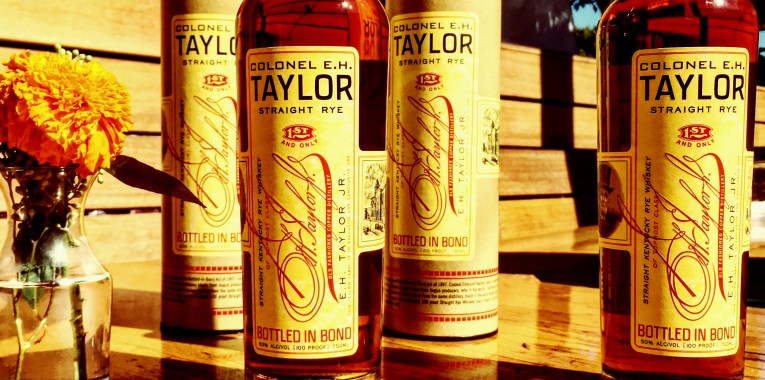
Taylor sold the distillery to George T. Stagg in 1904 and the whiskey brand named after him bounced around in the decades after prohibition until in 2009 it was brought home to O.F.C., now known as Buffalo Trace. They repacked the whole line up as Bottled-In-Bond whiskies in homage to its namesake and it’s all aged in Warehouse C, one of the Warehouses built by Taylor in the 1890s. The rye goes even further and is made from a different mashbill than the regular Buffalo Trace rye. It drops the corn completely and is made from 65% rye and 35% barley  which is why it was such a major spice bomb.

imagesBack to the present. How does the new release match up? The spice is still there, laced with cinnamon, clove and baking spices. The apple is less predominate and it seems to lack the deeper, warmer through line that made it such a surprise last year.  It’s a subtle thing and it’s hard to tell if it’s an actual difference or just a trick of the mind influenced by expectations. Either way it’s still a delightful dram. And when your competition is yourself how can you lose?