Drinking Poetic: The Ship of Theseus


I compete in a lot of bartender competitions. Not only is it a great tool for advancing my career I also just find it fun. Like really fun. I love the whole shebang. I have a background in theater so I spend a lot of time crafting the oration and spectacle of the presentation trying to meld the drink with the competition performance. But ultimately, those 6-8 minutes presenting make up a fraction of the work that goes into competing. Because it doesn’t matter how great your soliloquy is if the drink doesn’t match up.

IMG_3469

The R&D is where the true spirit, and fun, of these competitions lay. I’m incredibly fortunate to have an amazing collaborator in the form of my lovely, talented, and extremely patient girlfriend and some, if not all, of my best drinks have come out of R&D with her for these competitions. A lot of ideas end up on the cutting room floor only to find themselves resurrected for a cocktail menu down the line. Or sometimes ideas that have been kicking around your head find the absolute perfect outlet in a competition prompt.

That was the serendipitous case with The Ship of Theseus.

One of the cocktail prompts for Heaven Hill’s Bartender of the Year 2017 was to submit a drink based on a classic cocktail. This isn’t an unusual prompt but its one that’s always been difficult for me because, in my experience, drinks based on classics are really just classics with a part replaced. Can those really be called original cocktails?

This problem of identity is something that I would think about late night, several whiskies in while closing the bar and when it came up for the competition my late night musing immediately turned my thoughts to “the Ship of Theseus.”

The original Ship of Theseus isn’t a drink but a philosophical conundrum that has been debated for centuries And it goes like this: Theseus, the classic Greek hero who slew the minotaur, has a ship. On that much everyone can agree. But after slaying the minotaur Theseus returns to port needing a few repairs on the ship and a few replacement crewmembers. He then returns to adventuring and doing more hero things. This of course leads to more repairs and replacements. This time the mast, next time the rudder, this time a first mate that foolishly headed the siren’s call. Eventually every last plank, rivet and crew member of the ship has been replaced. With none of it’s original components intact is this still the ship of Theseus? And if it’s not when did it stop being that original ship? After the first repair? After the 31st?

Let’s make it even more complicated. Lets say the shipwrights doing the repairs saved all of the pieces they replaced and built another ship out of them and the two ships now float side by side in the harbor. Which one is the original and which one is merely ‘inspired by’?

71zCI-rBVbL

While giving this long winded explanation to my girlfriend (have I mentioned how patient she is?) she casually asked if there were any ship based classic drinks which immediately brought up one of my least favorite drinks, the Remember The Maine. It first appears in Charles H. Baker’s 1939 book the Gentleman’s Companion and traditionally looks like this:

2 oz Rye Whiskey

.75 oz Sweet Vermouth

.25 oz Cherry Herring

Dash of Absinthe

Stir on ice and serve up.


Named after the U.S.S. Maine, a battleship sunk under suspicious circumstances of the coast of Cuba who’s sinking was used to insight the Spanish-American War with the battle cry “Remember the Maine, to Hell with Spain.” The drink has always fell flat for me so it seemed like the ideal ship to hit with a few “repairs.”

LWF-Feb-08.jpg

First, the Maine isn’t a true cocktail because it doesn’t contain any bitters so a few dashes of orange bitters were added. Next, the Cherry Herring in the Maine is one of my least favorite ingredients. I find it overly sweet and muddled, so I subbed it out for Kirschwasser, true cherry brandy. This made the drink brighter, more fruit forward and drier. This allowed the vermouth to be swapped to a Chinato style that added in an extra bittersweet quality to balance out the kirsch. Then the base remained rye whiskey, after all you need certain key features to be a ship, but using Rittenhouse BiB adds a depth and a back bone that is more specific than calling out for a “rye.” The drink ended up with an elegance and subtly that the absinthe in the original would have destroyed so the absinthe was dropped in favor of a chartreuse rinse on the glass to lend those floral, herbal notes with out disrupting the ships internal balance.

The new recipe looks like this:

IMG_4524.JPG

1.5 oz Rittenhouse BiB Rye

.5 oz Kirchwasser

.5 oz Alessio Chinato Vermouth

2 dash of Angostura Orange Bitters.

Stir on ice. Strain into a cocktail glass rinsed with

Green Chartreuse.

Garnish with a marasca cherry

Identity Crisis Optional

Both ships now get to float side by side completely distinct. The Ship of Theseus is clearly no longer just a variation of the Remember the Maine but I’d be hard pressed to tell you when that change over happened. It’s a conundrum that deserves a drink of mythic proportions and I think I might have just the perfect one for it.

download.jpg

Open Bottle: Chartreuse V.E.P and #1605

If you haven’t noticed America is a little odd. We like doing a lot of things backwards. Like our current administration- or how in most of the world writes the date as day/month/year, which helps explain why May 16, or 16.05, is world Chartreuse Day.

IMG_3595.JPG

If you’re unfamiliar, Chartreuse is a liqueur made by the Carthusian Monks in the French Alps and is often considered bottled magic by many in bartending community. It’s a thing of myth, medicine, and history. It’s history starts in the year 1605.

The Carthusian Monks are an order of working monks, which means that rather then devoting themselves to missionary work they devote themselves to contemplation, prayer, and solitude and maintain that lifestyle by working.  Since the order was founded in 1084 they’ve made many things but the one they have been world famous for making for centuries is Chartreuse.

The production of Chartreuse carries all the mystery you would expect from an organization a thousand years old and devoted to quiet prayer and meditation. The recipe is based on a manuscript thought to be gifted to the monks by Francois Hann

IMG_3613.JPG
Élixir Végétal de la Grande-Chartreuser

ibal d’ Estrées, a cousin of the king at that time, which supposedly contained the recipe for “the Elixir of Long Life.” It was the high time of alchemy and the monks went to work decoding the manuscript of 130 herb and botanicals, yet the first Élixir Végétal de la Grande-Chartreuse didn’t appear until 1737. This seems like quite a gap but keep in mind the world wasn’t as connected as it is these days. Ingredients listed in the manuscript weren’t all native to the French Alps, and once the spice trade brought many of them into circulation it wasn’t a simple matter of following a tried and tested recipe. It was a lot of “a pinch of this” and a “bag of that” things that required balance.

The first Elixir, at nearly 140 proof, was sold as medicine, and is still available in French drugstores as such, and was sold from the back of mules in very limited supplies to the villages around Grande-Chartreuse. However, despite limited availability it proved so popular that the monks set about to create a more “mild” drinkable version. A liqueur of green color, at a mere 110 proof, began to be sold in 1764 and its legend grew from there. A yellow version was introduced in 1838, a defunct “white Chartreuse” was sold from 1886-1900, the monks were forced to flee post

StGermain.JPG
The O.G. St. Germain Cocktail: Green Chartreuse, Grafruit, Lemon, and Egg White

Revolution France and moved operations  to Tarragona for several years before returning to France, and then the V.E.P. (“Viellissement Exceptionnellement Prolongé”) was released in 1963. And this doesn’t account for the varieties available overseas that aren’t available in the United States. Most of which aren’t available because the F.D.A. wants to know what goes into Chartreuse and the monks are understandably closed lipped about a 400 year old recipe. The sales of Chartreuse fund all of the Carthusian Monasteries across the world and the U.S. is the second largest market for Chartreuse in the world. Understandably the company in charge of selling Chartreuse for the monks didn’t want theTTB to pull the product so they have a stalemate. The TTB grandfathered the Yellow, Green, and V.E.P.s into the country with the understanding no other Chartreuse iterations would be imported.

But what makes Chartruese so compelling in the first place? First, is the romance. Who doesn’t love a product made based on an ancient manuscript, containing 130 different botanicals, from a recipe known by only two monks who have taken a vow of silence? It’s the Coca-Cola of the booze world. But, also it’s the complexityIMG_3610.JPG of the spirit.

Chartreuse is made from 130 different botanicals. The Green uses a sugar beet base distillate while the Yellow uses a grape- spirit base (the Yellow also lowers the proof to 80, and uses more saffron and distilled honey as a sweetener). These herbs and botanicals grant a natural complexity but because Chartreuse is created by distillation and maceration it is the only spirit in the world to continue to evolve inside the bottle. Those ingredients continue to interact in unknown ways making old bottles truly unique and sought after.

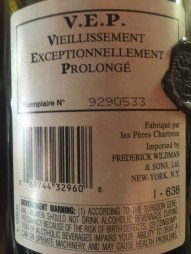
Standard Chartreuse is aged for 3-5 years in the largest liqueur aging cellar in the world (read: ONLY liqueur aging cellar in the world)  The V.E.P.s are aged from 11-20 years and while they carry no age statement you can determine a least the date of the bottling by adding 1084 to the first three digits of the numbered code on the back of the bottle.


IMG_3614.JPG
929 + 1084 = 2013

While the Yellow V.E.P. tends to be the fan favorite (a good friend once described it as “liquid space honey”) I’ve always been partial to the Green, probably because it is 108 proof. My open bottle was released in 2013 and is noticeably richer than the standard Green. Not because there’s a larger oak presence, the barrels are essentially neutral containers at this point, but because the botanicals have had more time to mature. The menthol quality takes a back seat as the warm baking spices ride along the pine and gentian notes to end on a dark, baked fruit note that leaves a sense of weight to the inside of your mouth. Drinking the Green V.E.P. is what I imagine history tastes like: bitter-sweet, earthy, slightly spicy, and heavy with the weight of time.

Chartreuse remains interesting today not just because of it’s history, or because it’s the father of an entire categorization of spirits but because of it’s complexity. And it’s impressive that the spirit can be so well understood and utilized in mixed drinks despite the lack of knowledge of how it’s produced. Sometimes the mystery is the magic and some times that magic creates complexity.

But my absolute favorite thing in the long tale of Chartreuse is that the spirit was so popular and recognizable that the color Chartreuse is actually named after the spirit. That is cultural impact at its finest.


Whiskey Wednesday: The Harmonious Hibiki Harmony

In recent years Japan, traditionally the Land of the Rising Sun could easily be called the Land of the Rising Whisky. And while that is a terrible turn of phrase, it is nevertheless true.

Ever since Glenfiddich started promoting their Single Malt in the States in 1963 whiskey drinkers- especially malt whiskey drinkers, have been hammered with the idea that Single Malts and age statements are the mark of quality. And across the globe the
Japanese were quietly and efficiently sticking with the old school blending mentality and fine tuning all of the nuts and bolts. Ten years ago it seemed like no one knew that the Japanese even made whiskey and now they are some of the rarest unicorns on the market.

mj-618_348_bill-murray-suntory-whiskey-tktktktk.jpg
Suntory Time

The big Japanese whisky houses are suffering from the same shortages and price inflation we’re seeing in the rest of the whiskey world.  With them it seems more noticeable because they only reached the mainstream consciousness here in the US so recently. But it’s not an artificial shortage. I just got back from a trip to Tokyo and even there the ol’ standards we came to rely on were nowhere to be seen.

They are moving to address this imbalance, and that’s part of the benefit of Suntory seeing themselves as a blending house as well; they have an internal system that allows them to adapt. In the US they’ve released Suntory Toki (which you can read more about here) to address our need for a Japanese Whiskey for cocktails. But the big shift for most people was discontinuing the Hibiki 12 and introducing the Hibiki Harmony.

The Hibiki’s have always been the ones that Suntory considers to be the highest form of their art and is meticulous in its attention to detail. The name Hibiki means “resonance” and is meant to represent the Suntory philosophy of living in harmony with people and nature. The goal is to create a harmonious balance between the malt and grain whiskies that make up the blend. Even the bottle is meant to represent that natural harmony. The bottle has 24 facets meant to represent the 24 seasons of the traditional Japanese calendar. This attention to detail and the quality of Hibiki didn’t go unnoticed and the 12 year especially became a fan favorite. But pricing and stocks have buried the 12 year and soon after it’s demise along comes the Hibiki Harmony.

IMG_3196.JPG
Shortage Be Damned, Hibiki 17 Minis

Beam Suntory is quick to point out that the Harmony is not meant to be a replacement for the 12 Year. The Hibiki 12 Year was actually unique among the Hibiki blends in that it utilized a small amount of whiskey aged in plum wine casks. With rising demand, depleting stock, and this blending element only being used for this one bottling the decided to just stop making the 12 Year.

The Harmony is actually meant to be a more affordable available version of the Hibiki 17 Year with its hint of Mizunara (Japanese Oak) aging.  The Hibiki blends pulls whiskey from all three Suntory distilleries: Yamazaki, Hakushu, and Chita. The Harmony utilizes Chita Light grain whiskey with Yamazaki American Oak aged whiskey as the primary malt. The supporting players are Spanish Oak and that Hint of Mizunara with Hakushu Heavily peated malt for flavoring. The result on the Harmony is a very floral nose, with a hint of tart fruit and herb. The mid palate is rich, rich honey with a confectionary note but the touch of Mizunara is what brings it home with a touch of spice that lingers. It is a great introduction to the wider world of Japanese whiskey.

And again, this isn’t an artificial shortage. The bars in Tokyo were using the Harmony just as we are here in the states.  And I can appreciate the effort to simulate the 17 Year old. It’s always been expressed to me that the pinnacle of the House of Suntory style is the Hibiki 17 Year Blend, just as the Nikka “Yoichi” 15 Year Old Malt was the perfect expression of the Nikka style. As a side note, the former is now incredibly allocated and expensive while the later has been discontinued due to supply. Take that for what it’s worth.

IMG_3176.JPG            But in a world of vanishing age statements and soaring prices  I feel it’s hard for the general consumer to not see this as a replacement of a beloved bottle by a younger whiskey at a higher price. That’s not a problem with the Harmony though. That’s just the reality of the whiskey world we now live in.

Whiskey Wednesday: Kentucky Spirit Soars Like A Wild Turkey

Let’s do something different, different for me at least, and talk Wild Turkey and about a single barrel not chosen by me.

Gathering together all of my Whiskey Wednesday posts, my personal whiskey collection, and the bottles I routinely stock at the bar a pretty glaring hole starts to emerge, and that hole is shaped like a damn Turkey. I couldn’t tell you why it’s there either. Wild Turkey seems like it should check all of the high proof, rough around the edges, old school bourbon boxes for me. And it’s made by Jimmy Russell! And yet it’s never close at hand for me. Let’s shake that up.

Wild Turkey was born as a Non-Distilling Producer in 1942. Austin Nichol’s & Co. were a New York based grocery wholesaler. They finally purchased the Ripy Brothers Distillery (then kimgres.jpgnown as the Boulevard Distillery) in 1971 and renamed it the Wild Turkey Distillery. This purchase made sense since the Ripy distillery was where most of the Wild Turkey Whiskey was coming from but it was terrible timing as “white goods” started gaining steam and the bourbon market tanked. The brand and distillery, were purchased by Pernod Ricard in 1980 and then sold to Gruppo Campari in 2009. But through out all of those changes Jimmy Russell has been there, making whiskey.

Jimmy’s career has lasted over 60 years; he started at
the Wild Turkey distillery well before it was the Wild Turkey distillery. In fact,

jimmy-basketball.jpg
Pictured: Jimmy Russell’s mad skills.

his tenure at wild Turkey began 10 years before the 1964 act of Congress that declared Bourbon to be a “distinctive spirit of the United States.” He was named Master Distiller in the late 60’s and is the last living Elder Statesman of Bourbon. He, along with Booker Noe and Elmer T. Lee, were the first generation of rock star distillers. These were distillers that were forcibly evicted from the seat in front of the stills to go travel and spread the good word of Bourbon. And even into his 80s he’s still traveling and distilling. And it’s a family business these days, his son Eddie is the new kid on the block with only 30+ years of distilling experience.

Jimmy Russell is essentially old school Bourbon personified. Yet he doesn’t take himself seriously and no matter who his employers are he makes no qualms about who he is or his opinions. For the past several years when doing tastings and traveling Jimmy would tell everyone at the tastings that he didn’t like low proof young whiskey, while pouring them Wild Turkey’s low proof young whiskies. Guess what Wild Turkey doesn’t mimgres-1.jpgake anymore? Seeing the Wild Turkey 101 Rye return with a vengeance was transcendent moment amidst all of these brands lowering proof and dropping age statements. Yet for all of my love of Jimmy, and his rye, when I drink the Bourbon it’s usually me trying to figure out why I don’t drink the Bourbon.

So naturally the first time Ryan Wainwright plopped this single Barrel of Wild Turkey Kentucky Spirit in front of me at Terrine (now The Ponte) my eyebrow rose skeptically. At 101 proof the Kentucky Spirit is essentially single barrel W

IMG_1854.JPG
Original Drop

ild Turkey 101 Bourbon- so I was expecting an incredibly earthy, slightly musty, hard oak. Instead, it turned out to be a spice bomb of a bourbon, with a dark baking spice, a dark, overripe cherry, with a farm house quality the I feel is coming from the Wild Turkey yeast. The oak and caramel in the barrel are supporting players rather than the main attraction and the proof sits right where it should granting all of the flavor with very little burn. I was genuinely surprised.

But I don’t think I should have been. This barrel taste’s like Jimmy’s bourbon philosophy, chosen by a bartender with a very specific palette. What this barrel says to me is that although Wild Turkey is quite frankly in a slump there is still liquid gold in its warehouses. There is experience, and skill, and craftsmanship that seem to be producing a sometimes muddled bourbon, but when the sun breaks through, damn, does it shine.

Redbreast and the Irish Behemoth

For all the talk of the growth of Japanese whisky and the revival of American Bourbon and Rye the words “explosive growth” can only truly apply to Irish whiskey. This trend shows no sign of slowing down with sales expected to double by 2020. Those are some staggering gains so why doesn’t it get the same kind of geeky love that, say, a Yamazaki does? I’d say it’s because for many of us Irish whiskey isn’t a category. It’s just Jameson.

Irish whiskey has traditionally lived and died with the American market. American Prohibition was so devastating that 400 brands made by over 160 distilleries turned into essentially three brands and a whopping four distilleries. And while you may have heard of John Power and Cork Distilleries what you’ve drunk is Jameson.

You’ve drunk a lot of it. In 2014 Jameson sold nearly 18 million liters in the U.S. alone. It’s closest competitor, Bushmills, sold a paltry 1.3 million. Jameson accounts for 63% of the global Irish whiskey market. It’s a behemoth.

You may be asking, if Jameson is such a monster and there are only four distilleries cranking out all of this liquid then where are all these craft Irish whiskies coming from? The answer is Jameson. Or more accurately Irish Distillers who are the massive Irish whiskey conglomerate.

While on this side of the pond growth is being fueled by the proliferation of “craft” distilleries creating a wide range of diverse products, in the Irish segments growth and innovation is being by the big boys. And let’s not kid ourselves it’s a business decision. Premium and super-premium Irish whiskey sales have grown by nearly 600% since 2002. Which is a much more impressive way of saying no one drank it at all and now they drink it a little. They’re creating their own market, and they’re not doing it for the little guys.

That doesn’t mean it’s bad whiskey by any means. In fact I truly believe that there are Irish whiskies that can measure up to the best in the world. Look at Redbreast. It’s an example of understated elegance. The brand goes back to possibly 1903 but certainly 1912 where it was bottled by Gilbey’s using whiskey sourced from the Bow Street Distillery in Dublin, which was, you guessed it, the home of Jameson Irish Whiskey.

In the 1971 Irish Distillers decided to close all of their Dublin distilleries and consolidate their operations at a New Midleton Distillery in Cork. This lead to a disruption in supply and eventually Gilbey’s sold the rights to Redbreast to Irish Distillers in 1986. It seemed like the end of the brand but it was reintroduced in 1991 still boldly 12 years old. In a whiskey world where age statements and brands are disappearing every month the core Redbreast has never lost it’s age statement. In fact, it’s grown over the years with the introduction of a 15 year, 21 year (which is simply stunning) and even a 12 year old cask strength. Where others are contracting they are expanding.

The latest edition to the family is the Lustau Edition. It’s the same Redbreast formula: Pure Pot stilled, made from a blend of malted and unmalted barley (we can talk about the historical reasons for that later) but rather than just the bit of sherry influence carried on the standard 12 year, this whiskey is finished in first fill Lustau Olorosso Sherry casks pulling all those sherry notes to the forefront. It is rich, creamy, with a dark fruit and fig note wrestling with nougat and candied fruit. It is a lively whiskey.

At first the lack of age statement may seem like a step backwards but this Lustau Edition isn’t replacing anything. The 12 year isn’t going anywhere, this is simply an expansion. It is a way to experience and highlight many of the subtleties that exist in the Redbreast line. It is also an experiment.

Experimenting costs money and Jameson is almost certainly footing the bill on this experimental expansion. Big doesn’t always mean bad, just as craft doesn’t always mean good. Experience is one thing you can’t teach and it’s something that the craft distillery world is going to learn the hard way. The folks at Redbreast have already got it down.

Orphans. Orphans as far as the eye can see.

Rhetoric:
-language designed to have a persuasive or impressive effect on its audience but often regarded as lacking sincerity or meaningful content.
Let’s say you’re a major spirits company. Let’s even say you’re the largest in the world in fact, and in the late 90’s you divest yourself of all of you major American whiskey holdings. Why wouldn’t you? American whiskey is the pits and no one is drinking it. Canadian whiskey however…
Jump a head a couple decades and Bourbon and rye is outstripping demand and you find yourself without an American Whiskey distiller but you do have a massive amount of super aged Bourbon still languishing in your warehouses. What would you do? If you’re Diageo you market the hell out of it.
After Uniimgres.jpgted Distillers became a part of Diageo in 1997 when Guinness merged with Grand Metropolitan they seemed rather interested in divesting themselves of the American whiskey holdings, going so far as to sell their only active distillery, the Bernheim Distillery, to Heaven Hill in 1999. Yet they held onto a massive amount of stock that they continued to age, selling it out on contract and in bulk but not making any personal use of it. They were seemingly content to let it get older and older.
Even when they founded a new flagship American brand in the form of Bulleit, a brand who’s history is only as deep as the ink on the paper it’s printed on, they made no use of it. Instead they relied on their remaining contract with Four Roses for the to fulfill the flavor profile they needed.
Then in 2014 the Orphan Barrel landed with a thud. The Orphan Barrel “Distillery” had found a “limited” number of “forgotten” and “abandoned” barrels. Who knows where they came from! But we do know that right as all the old whiskey seems to be drying up that these are super old. Some are even 28 years old! That’s a lot of quotation and excitation points.
The bottles were given evocative names and flashy old fashioned- style bottles but these weren’t orphans, more like children dressed up for family photos. They look fancy but you know who they really are.
Take the Rhetoric line up. We know that these we distilled at Bernheim in the early 90s by United Distillers which became Diageo and then aged in the warehouses of the now defunct, legendary Stitzel-Weller which ARE now owned by Diageo. That’s some amazing Bourbon heritage right there and it’s 20 years old. That’s a great story! These aren’t orphans. These are children who’s parents are going through an identity crisis.
And just personally I’ve always kind of felt an arrogance from the lineup. Right as Old-Blowhard-Lo-Res.jpgconsumers are expressing greater interest in the origin of their spirits, what the mash BILL is, how it’s aged, all of the nitty gritty details- here comes a brand actively hiding its history. Even the names them selves, Old Blowhard, Gifted Horse, Rhetoric, seemed to be thumbing their noses at people who ask too many questions.
But it wasn’t just “enthusiasts” that pushed back. Turns out the consumers meant it when they said they wanted all these “unnecessary” details. So, begrudgingly a little bit was let out. But not enough to overtake the marketing. Or to give the whole story.  And that is incredibly puzzling. There’s actual, interesting history here and even a little mystery. Let’s face it you just a don’t see American whiskey this old. Why was it left to age so long?
But instead of talking about the whiskey here we are still talking about all that marketing ink..
So what about the whiskey? Well, they are old. In the case of the Rhetoric they’re dusty, dry, tannic and soft. My personal taste craves something a little more lively but if you like all the super oak it’s here for you.
Premium old whiskey makes a buzz anytime it’s released, yet interestingly the “Orphan” Barrels seem to be making less of a splash each time. Maybe the marketing put people off. Maybe the price did. Or maybe it was just the whiskey itself. Either way we don’t know what the future holds for the rest of the orphans. Maybe a few more will plop on to your shelves. Maybe now that their parents contracts with Four Roses and Jim Beam have expired they’ll be blended in with their cousin Bulleit, though that seems unlikely. Or maybe it’ll be something completely different. But for now this is where these orphans have found their homes.

Leopold Brothers Maryland Style Rye

Alright nerds, here’s a good one for you today. Maryland Style Rye.
Before the advent of the ‘Great Experiment’ that was Prohibition there were two dominant styles of American Rye Whiskey. The Pennsylvania Style (spicy, dry, and oaky) and Maryland Style, which was more floral, fruit forward and less aggressive. Among the many great things that Prohibition destroyed, Maryland Style Rye was one of them.

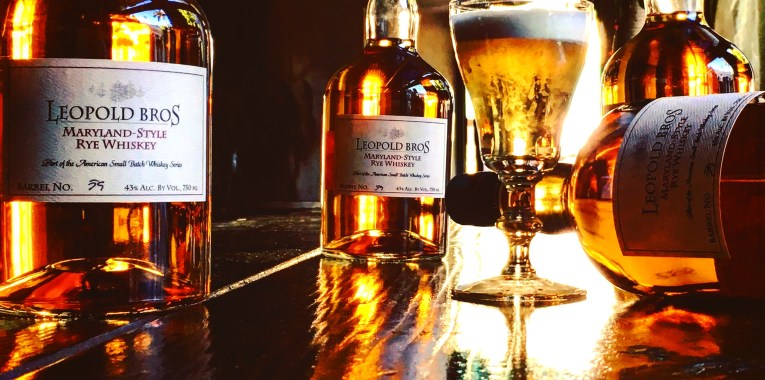
But the boys at Leopold Brothers, are fighting the good fight and trying to recreate the style in the only way they know how: with exceptional quality and attention to detail. While ye olden Maryland Ryes often achieved their more mellow nature and fruit flavors from additives and prune juice, the brothers are following their eco-distilling nature and recreating the flavors throughWight'sMarylandRye3.jpg careful distillation and selection of yeast strains to create a wholly unique product. They’ve even had an old time compound still made exclusively for them, and are working with local farmers to grow late 1800’s style rye, which has a completely different flavor and starch content than it’s modern descendant.
While we’re still waiting on the first batches off the new still, the current bottling shouldn’t be ignored. Young, but light and green. Green as in like biting into a huge green apple, apricot, and stone fruit. All supported by a rich chocolate malt rounding out to a juicy and more mellow finish than your more familiar ryes.

And I’m feeling inspired recently so lets bust out some old tricks with The Santa Anas: Leopold Maryland Rye,Chai Infused Cocchi, Dry Vermouth, Homemade Apricot Bitters and a Smoked Orange Foam.

Alexander Murray and Friends

“Good friends, good books, and sleepy conscience: this is the ideal life.” ~ Mark Twain

I’d personally add good booze into that mix but starting with Twain is never a bad idea, he weaves a good story. But the problem lies in what kind of story are you trying to tell with your whisky? Are we telling a historic tale? That would start with the founding of the Caol Ila Distillery in 1846.  But that’s a little dry.

It could be a business biography. That starts in 2004 with the creation of Alexander Murray. An essential newborn in the world of independent Scotch bottlers they took a different tact. instead of focusing on small, rare bottlings they focusedIMG_0783.jpg on volume. If you’ve ever noticed that the hosue labeled Scotch whisky at Trader Joe’s and Costco was surprisingly good, that’s because it came from these guys. But business is so impersonal.
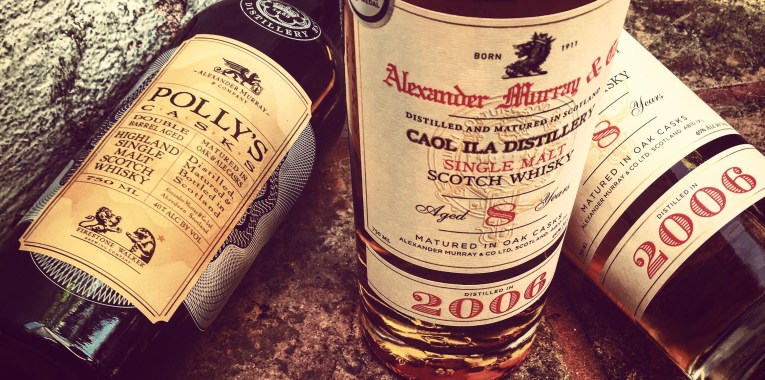
Except it’s not. While moving volume, and checking history the gang at Alexander Murray made friends. And that allowed them to grow and bring out more quality under their own label. Take their 8 Year Old Caol Ila. Some may argue that it’s an unnecessary bottling with the quality the standard issue 12 year has. But they’re like two small town friends who move away to different cities. Same underling base, but a heavier oak presence gives this a more NYC feeling bite versus the original delicate, seaside village feel that Caol Ila usually has. But even more than that’s it’s opened their eyes to larger collaborations.

Yet another friend is David Walker, of Firestone Walker Beer. Working together they took 60 barrels used for aging the Firestone DBA and finished 6-8 year old single malt in them for another 3 months to a year. The resulting ‘Polly’s Cask’ is a complex melding of friendships, even just in the character of the whisky. Beer and Whisky are natural friends, and the barrels linking them here started as ex-Bourbon, turned into beer, and then finally into Scotch barrels. If that’s not a sharing between friends I don’t know what is. The result is an exceptionally nutty malt.

Both are a great example of the best times with friends. An everyday encounter, and a special occasion, too. And as I tell my friends all the time, I don’t care what you drink as long as you drink it with me. 

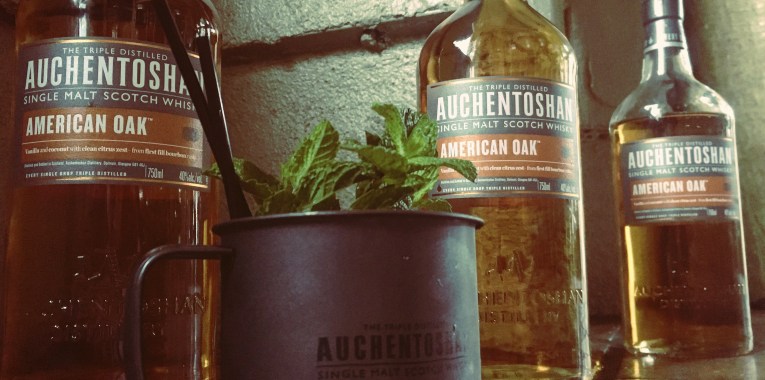
Auchentoshan Three Wood Single Malt Scotch Whisky

Happy accidents are all around us. They often start simple. You wander into a bar, look around, find yourself presented with better than average options, and end up with a glass full of Auchentoshan, which is surprisingly light and delicate, but with enough complexity to be no accident.

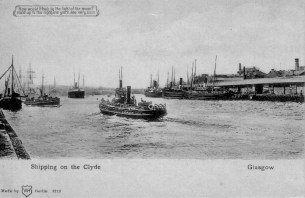
Then there are the not so simple accidents. Like the quirks of history that created the style of whisky now swirling in your glass.  Auchentoshan is one of the last remaining Lowland distilleries in Scotland, a region with a style as unique as it’s Speyside and Islay cousins, yet wholly unusual in scotch making and is fully created by the accident of it’s location. Founded in 1823 by Irish refugees on the outskirts of Glasgow it’s seen the city rise into an industrial complex, the bygone glory days of it’s shipbuilding and engineering prowess, and is still tucked away in it ‘corner of the field’ watching the trade city grow more
cosmopolitan. All of these pieces come together. The shipping and trade gave massive Clyde-Shipping-Glasgow1.jpgaccess to barrels of all kind for excellent aging but more importantly the whisky itself was primed for bigger barrel interaction by the influence of those Irish refugees and their tradition of Triple Distillation. Coming off the stills at a higher proof leaves the raw spirit lighter and more ready to soak in the plethora of barrels floating in and out of the port city.

And then there are the literal accidents. Years ago, the Head Distiller Jeremy Stevens was working on a batch of sherry finished malt. It had already spent time in ex-Bourbon barrels, and had been aging in Olorosso Sherry casks. After the initial dump he felt it need some more time in the sherry wood, ordered the malt to be rebarreled and left for a trip out of the country. When he came back he found that instead of Olorosso it had gone into Pedro Ximenez sherry barrels.Rather than losing his job the distillery discovered one of their most popular expressions: The three wood..

So, the accidents of place, time, history, barrels and communication have granted you a glass of delicate, rich toffee, with candied plums, blackcurrents and a hint of hazelnut. So let’s raise a glass to accidents. May they be few and happy.


Buffalo Trace and Pants

Why do we leave the house? Between digital streaming and the sharing economy everything you could ever want is right there or can be delivered at the push of a button. Human socializing has been digitized and depersonalized. Entertainment can, and will, cater specifically to you, and the Internet will connect you to anyone in the world. So, why go out?

I personally like to believe it has to do with experiencing the world. That to bring back a true story to the digital marketplace enriches yourself and the people you’re sharing with. It still doesn’t explain why we gather to drink fermented beverages, laugh, talk, and be merry. Some things are just for fun. But they should still be an experience.

I like to call it the, “You Put On Pants” Philosophy. For whatever reason you decided to get up of the couch, put on pants, and come to the bar instead of watching Game of Thrones reruns. Let’s make it worth your while. Let’s get you something that can’t be delivered straight to your doorstep. In this case with a whiskey you can’t get anywhere else.

“You Put On Pants Damn It”

Buffalo Trace isn’t hard to come by. Even though the brand was only created in 1999 the Bourbon Boom and the fact that it is a quality whiskey has made it a nearly ubiquitous bottle. What makes this ‘pants worthy’ is its single barrel nature. After tasting through several samples we bought all of the whiskey inside of the barrel. The only way to taste this version of Buffalo Trace is right here with us. It has the familiar backbone but with a massive dollop of orange marmalade, a spicier pop and super rich vanilla.

It’s not an earth shattering difference but it’s enough to stay interesting. Both for you leaving the house and us coming into work. This isn’t our first barrel and it’s by no means our last. So, we’ll hopefully being seeing you through several pairs of pants.