Drinking Poetic: The Hemingway Daquiri

I feel a certain kinship with Hemingway. I’d like to think it’ because we both have an affinity with words but there’s no denying that the legend of Hemingway has been at least as influential as the man himself. And just like the man himself the truth is always more complicated.

Hemingway was, like most people of his time, an equal opportunity drinker. While in contemporary imagination he’s associated with whatever the masculine drink of the time is, his own writing talks about him drinking absinthe, brandy, champagne, wine, beer, and whatever else the local drink of choice was. But to modern day bartenders Hemingway equals rum.

In his later days Hemingway became synonymous with Cuba, Havana, and La Floradita. If you believe bartending myth La Floridita may have been the first bar to serve a Frozen Daiquiri but it is with out doubt the first place to serve the Papa Doble. Which is a drink better known as the Hemingway Daiquiri

la-floridita-bar.jpg

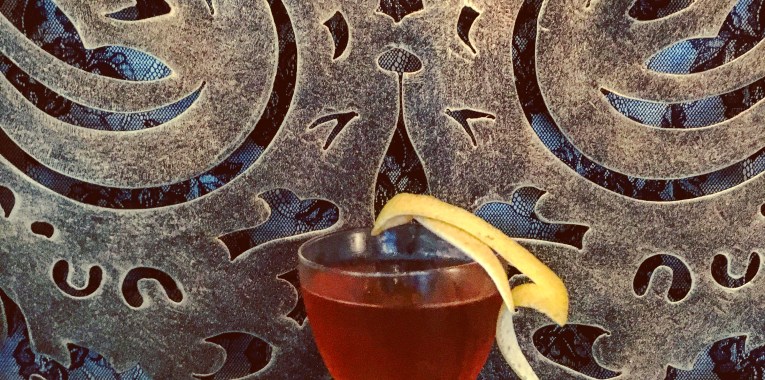
Hemingway was convinced he was diabetic, though it was probably a larger underlying health issue, and insisted on his drinks being sans sugar. He also insisted on them being quite stiff to counteract the pain caused by the same underling condition. In an effort to accommodate the prolific drinking of the Nobel Laureate the Papa Doble was created. Crafted with a double shot of rum per Hemingway’s request, subbing in Maraschino Liqueur for the sweetener, and adding grapefruit juice to make the concoction more palatable. Hemingway probably drank it with Bacardi at the time so we know it was with light rum and the pretty standard recipe these days goes as follows:

speakeasy-hemingway-daiquiri-main.jpg

2 oz Light Rum
1 oz Fresh Grapefruit
.5 oz Maraschino
.5 oz Fresh Lime
.25 oz Simple Syrup

Shake with ice, Double Strain into a stemmed cocktail glass.

For many who do see Hemingway as the pinnacle of the uber-masculine this drink doesn’t jive with their expectations. The drink is citrus and fruit, it’s served up, and despite the adjustments still has a certain sweetness. Also, it ignores the fact the citrus in Cuba is simply different than what we get in the States.

I think this juxtaposition comes from the never-ending misconception that somehow drinks have gender, as well as a misunderstanding of masculinity. In addition it shows a lack of experience with how drinks can have a time and place. They’re not a one-size fits all occasion. I believe it also ties into a basic misunderstanding of rum itself.

“The chief fuddling they make in the island is Rumbullion, alias Kill-Divil, and this is made of sugar canes distilled, a hot, hellish, and terrible liquor.”

Unlike spirits like whiskey, tequila, or cognac the rules for making rum are wide and varied. Rum can also literally be made anywhere. New England used to be the rum capitol of America for Christ sake. So from island to island, distillery to distillery, and drinker to drinker “rum” means something different.

Let’s start with the basic misunderstanding of color as a classification. For much of the world rum is Light, Dark, or Gold. But that doesn’t actually tell us anything about the process being used to make the rum. A much better, but equally challenging, classification can be made using history.

The history of rum is in many ways the history of the sugar trade in the Caribbean, which also ties it deeply to the slave trade. The Triangle Trade would bring slaves to work the sugar plantations in the Caribbean, take sugar and molasses to the colonies, and return to Europe loaded with rum and tobacco ready to start the process all over again.

The life of slaves in the Caribbean was truly torturous. Life expectancy on the plantations was a mere 7-9 years after being abducted. Harvesting and refining sugar cane was an extremely dangerous proposition so who would blame someone trapped in that kind of life for take this by-product, this molasses, and starting to ferment and distilling it. Anything to take the edge off, even if the end result was that, “The chief fuddling they make in the island is Rumbullion, alias Kill-Divil, and this is made of sugar canes distilled, a hot, hellish, and terrible liquor.”

As the trade grew, sailors, and yes this included pirates, had a need for spirits for their journeys and this “Rumbullion” started to become more refined as the disparate cultures brought their own distillation traditions and practices to the islands they controlled. This styles roughly correlate to what islands were colonized by the English, The French, and the Spanish.
JAMAICA_b1d73f88-dc73-4d87-8264-1e8cd9f61290.jpg

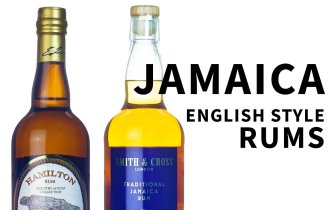
The English style is often labeled as “traditional.” This are the rums made from molasses fermented for 2-3 days and distilled using pot stills. These pot stills are inefficient, meaning they don’t distill to as high a proof as modern column/industrial stills, but they also strip out less flavor leaving behind a lot of the “hugo” or rum funk that is incredibly noticeable in Jamaican style rums. These are typically big, powerful, funky, full flavor rums and many are left at a higher proof.

In contrast, the Spanish style can always be described as “light rum.” And this is wheredownload-1.jpg that confusion comes into play because the use of the word “light” here has nothing to do with color, it’s all about the flavor. “Light rum” is a rum that is lighter in flavor than a traditional pot still rum. Still molasses based but with a shorter fermentation time, often times only a scant 24 hours, and then continuously distilled on column stills. This was a style that was developed in Cuba in the late 19th century and is the style still practiced by Havana Club and Bacardi. These are the majority of the rums on the market. They’re easier and cheaper to make it bulk. But because they carry less flavor it doesn’t matter what color they are or how long you age them they will always be light rum.

download.jpg

Then there’s the French. Always doing things their own way. The French style of Rhum Agricole developed as mainland France moved away from importing sugar due to events like the Haitian slave rebellion and the English navy making the process too problematic. So, they began refining sugar from sugar beets on the mainland. This left the French controlled Caribbean islands with less reason to refine their sugar cane nectar and they began distilling it instead. This results in a grassier, greener spirit that has more in common with Brazilian cacchaca than its traditional or light rum island cousins.

And these are just the baseline styles of traditionally made rums. We haven’t even gotten into blended rums, heavy rums, or god forbid Inlander Rum. Confusion is almost inevitable.

Back to the Papa Doble, when you take into account the fact that this was being made with the Cuban style light rum the double shot request seems less the demands of an alcoholic, and more the demands for more flavor from a man used to massive flavors. The same can be said for the substitution of maraschino for the sweet and the grapefruit juice, all of this meant to soften the edges of that fiery Rumbullion and results in a drink that is flavorful yet relatively dry.

Trust a nerd to use science to try to get drunk like their literary hero.

You’ll notice that the modern recipe above adds back in a touch of sugar. This probably happened to address modern palettes but also as an attempt to balance the inconsistencies of the fresh juice being used. Balancing bright, fresh squeezed lime and grapefruit is always a different story than balancing day old juice. This is where my problems with the drink start to emerge from the literary shadows. Honestly I find it a sugary mess. Maraschino liqueur has a funk of it’s own, but is also relatively sweet and wars with the grapefruit in my opinion. I also find that for a drink that was designed to be dry it comes often comes out too sweet with the balance of the grapefruit and lime often not being balanced. My solution? Kirschwasser.

A true, traditional German Style Kirschwasser grants all of the cherry flavor but none of the extra sweetness of the Maraschino making it an easier drink to balance. Kitschwasser was also another favorite tipple of Hemingway so it keeps it all in the family. I also like something a little punchier so I like to add a splash of a more traditional pot still rum to the mix. My standard recipe for this is:

1 oz Light Rum
.5 oz Over Proof Jamaican
.5 oz Kirschwasser
1 oz Fresh Grapefruit
.5 oz Fresh Lime
.25 oz Cane Syrup

Shake with ice. Double Strain and serve up.

The cane syrup adds just that touch of sweet to balance what is truly a very dry, very funky little sour now.

But being the nerd I am I can’t stop there. While trying to correct the balance issues of the drink I’ve made it more complicated to make in the moment. And it can still be thrown off by one person solera aging your juice bottles so I solved the problem like I solve all problems these days, by throwing a centrifuge at it.

Well, technically it’s clarifying the day old grapefruit juice, creating a cordial out of it and then acid correcting it to lime strength. This means balancing the acids inherent in grapefruit juice to the same as lime juice which balances out at 4g citric and 2g malic acid per liter of juice. This way the balance of sweet to the sour is always exactly what I want it to be, and has the bright consequence of turning this light rum drink into a light looking drink. In this form the Jamaican rum becomes a bit overpowering so the last tweak is subbing in some high proof agricole for a more floral punch.

Trust a nerd to use science to try to get drunk like their literary hero:

1 oz Light Rum
.5 oz Rhum J.M. 100 Proof
.5 oz Kirschwasser
1 oz clarified, lime strength grapefruit cordial

Stir with ice. Strain Up and serve with a Lime Twist.
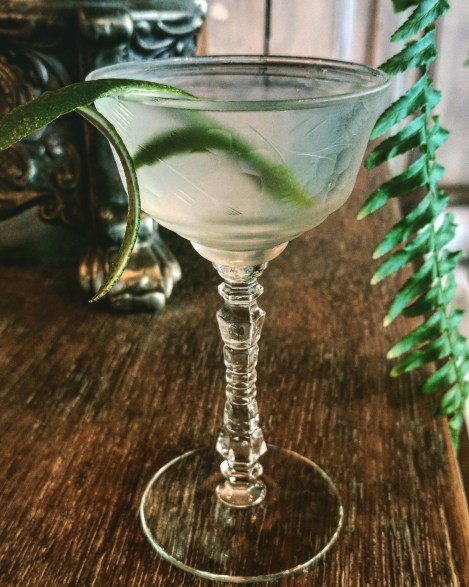
IMG_20171028_160635_882.jpg

Drinking Poetic: West of Brooklyn

I’m sentimental in my head. I say head because I’m less emotionally sentimental and more intellectually sentimental, meaning that I hold on to things because I feel like I’m supposed to. This often means I find myself with collections of stuff that sometimes seem to stick around simply because it’s already stuck around.

Enter The West of Brooklyn, a drink that is now pushing its 6th consecutive year on my cocktail menus.

It certainly wasn’t planned that way and if you had asked me five years ago what drink of mine I’d still be making half a decade later it wouldn’t have been this one. I was young(er) and getting super into bespoke cocktails and was currently working my way through the Neighborhood Series and thought, “I want in on that.”

The Neighborhood Series was lineup of drinks from the Milk & Honey family and friends in New York that gave us some modern classics like the Cobble Hill, The Green Point, and the Red Hook. All of these drinks grew out of one simple fact: The Brooklyn Cocktail is terrible.

The classic Brooklyn Cocktail was first printed in 1910 in Jack’s Manual and is often modernly interpreted as:

2 oz Rye Whiskey (Preferably a Bottled-In-Bond)

.5 oz Dry Vermouth

.25 oz Maraschino

.25 oz Amer Picon

Looking at this you can see that it’s not the Brooklyn’s Fault that it’s terrible. Today we’re missing a vital ingredient: old school Amer Picon.

Amer Picon is a classic bitter orange French liqueur that also has notes of gentian, cinchona, and quinine that is no longer available in the States. But even if you were to get your hands on a bottle of it from France the recipe was changed in the 1970’s reducing the proof and making it sweeter. This means it doesn’t make the same drink. I’ve been fortunate to have classic Amer Picon and a classic Brooklyn thank to Andrew Willet over at Elemental Mixology and it’s a damn tasty drink. And for what it’s worth Andrew believes that CioCiaro makes a Brooklyn that more closely matches the classic.

Looking at this family of drinks and personally loving stirred drinks that add a subtle element of citrus or fruit I set about to add my own Neighborhood Cocktail.

At the time I was just getting started at Areal a mere block from the Pacific Ocean and was living in Venice Beach. I had moved West instead of to NYC where I would have more than likely settled in Brooklyn so before I started I already had a name: The West of Brooklyn. It was only later that I realized that Manhattan is also ‘West of Brooklyn’ but I will retroactively take credit for being that clever.

My base was clearly going to be Rittenhouse BIB Rye but knowing I was never going to get my hands on pre-70s Picon I looked for a more readily available substitute. Bigalett’s China-China had just hit the market so I pulled out a bottle of that and started mixing. I was enamored of Blanc Vermouth at the time so that joined the Bigalett and being in California and also being rather disparaging of maraschino, I looked around for a orange liqueur and ended up with a bottle of Solerno Blood Orange and thought, “That’ll do.”

That pretty much sums up my mentality about this whole drink with this first pass. I didn’t put enough thought into it. It looked like this:

2 oz Rittenhouse BIB Rye

.5 oz Bigalett China-China

.25 oz Blanc Vermouth

.25 oz Solerno Blood Orange

Stir. Served up with a Lemon Zest.

It ended up being a bit of an aggressively blunt instrument but it went on the menu and people seemed to enjoy it. It fit the bitter and stirred category and I let it be. I replaced it on the next printed menu but we had a cocktail board in the bar at Areal with drawings for every drink and our artist had been so pleased with her artwork that she wanted to leave it on the wall. I shrugged and gave it no thought.

809EA2AE-9EF9-4512-98CE-2400E3B9704C

People would continue to order the drink but it wasn’t until I had a customer come in and tell me that he had been in several times over the past months just for the drink because he liked it so much that I realized I had been making the drink for two years. I felt like I should revisit it.

I found the Bigallet was completely taking over the drink, but any attempt to dial it down just caused it to be lost. So I went back to the drawing board looking for a Grand Bitters to take its place and I started playing with the Clementi China Antica. The Clemanti focuses more on the bitter quinine notes without the orange which turned out to be perfect for the drink since I was adding the orange notes with the Solerno. But again any attempt to use less than a half ounce caused it to be lost when butting heads with the power of Rittenhouse so the drink remained a blunt instrument, albeit a drier more whiskey-focused one.

I left it at that an ended up leaving that bar. I honestly thought that would be the end of the drink. But as we were doing R&D for my first menu at Faith and Flower my friend Ryan Wainwright and I were doing an event at Seven Grand LA celebrating the Manhattan and lo and behold the drink came up. The night was being sponsored by Buffalo Trace and Sazerac Rye and suddenly the drink clicked.

In the years since I first got into the LA bar scene Sazerac Rye was highly allocated so trying to use it in a featured menu drink was a touchy proposition and that mentality stuck with me even as the rye became more available. Sazerac is a lighter, less aggressive rye than Rittenhouse with more of a green apple spice, and edges that bleed into ripe fruit. Switching out Sazerac allowed me to dial down the Clemanti Antica and bring up the blanc vermouth making it more true to its family of drinks while leaving it elegant, with a white pepper spice tied with a subtle fruit that has a perceived sweetness before drying on the palette. It now looked like:

2 oz Sazerac Rye Whiskey

.5 oz Dolin Blanc Vermouth

.25 oz Clemanti China Antica

.25 oz Solerno Blood Orange

Stir with ice. Strain into a Nic and Nora glass with a lemon zest.

The drink perfectly fit the summer time Manhattan vibe we were looking for the menu and it was resurrected. And as I sit here doing R&D for the Fall/Winter menu it finally looks like the drink will truly come off the menu for the first time in five years. Until I change it again…

Drinking Poetic (on a Wednesday): Highballs

I’m a whiskey purist. Bourbon, Scotch, Japanese, Barrel Strength, it doesn’t matter, I drink it neat. For years I was determined that not even a drop of water would come between myself and my sweet, sweet barrel aged nectar. What’s changed me? The highball.

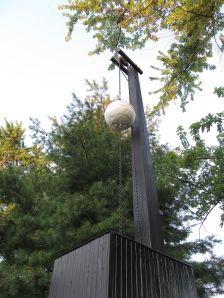
Highball_Signal_Jun_12      The highball is nothing new. It’s a simple class of drinks: a shot of spirit diluted with several ounces of a carbonated beverage on ice. My favorite rationale for where the term “highball” originated from comes from the old railroad days. Along the rail tracks there were “highball” signals where a ball would be hoisted out of a barrel signaling that the track ahead was clear and the trains could travel full speed ahead. A “highball” drink was at the time served in a highball glass with a single lump of ice. As the soda was added to the glass the ice would rise just like the highball signal telling drinkers they could dive in at full speed as well as quickly down the remainder of the drink when their train pulled in.

Like most classic it was simple, easy, and was much abused during the 70s, 80s and 90s becoming barely recognizable but it’s still a class of drinks that people still know the name for.  But the highball that interests me, the undiluted purist, is a straight whiskey soda.

My first highball in Japan was out of a can.

Ask for a Whiskey Highball in the U.S.A and there’s a good chance you’re going to end up with a whiskey and ginger and even this combo wasn’t enough for the sugar loving American palette and has been vastly over shadowed by its cousin the Jack and Coke. But in Japan the Whisky Highball has been elevated to an art form. I had heard the hype but it wasn’t until I visited Tokyo this year that I finally understood.

My first highball in Japan was out of a can.  I would never even consider getting a canned mixed drink from a 7/11 in the States but when you cross the international date line and land in the future and your hotel room isn’t ready for another 7 hours what else are you supposed to do while walking through the city?

From the moment that can touched my lips all I drank for the rest of that trip was highballs. And what struck me everywhere was the balance and the quality.

It was expected in Ginza. It was a random bar that we didn’t know the name of. The bartender knew maybe a handful of English words but when we ordered Suntory Highballs he enthusiastically pulled every Suntory whisky he had from the back bar to try and walk us through which one we actually wanted, and then thoughtfully poured the whisky over hand carved ice, stirred, and topped with soda before continuing on to casually brulee half of a passion fruit for the garnish of another customers drink. But when the highball at the chain ramen shop where you have lunch is just as elegant you know there’s something special happening.

It’s an attention to detail and a respect for the process. Each person who poured me a highball had respect for the process in their own way. Its easy to see, and taste, why highballs are a cultural force in Japan. And with the rise of Japanese Whisky across the world the Japanese are trying to export their highball ethos as well.

Suntory and Nikka have both made moves to position themselves in the highball world. Suntory has even released the Suntory Toki in the states, a blend specifically designed for the taste profile, and price point, of a highball. But the problem for me with the Highball in the States is the soda. Doesn’t matter how good or finally designed your whisky is the moment it is smothered by carbonated water from the gun, or drowned with a bottle of Canada Dry it’s lost it’s edge. There’s just simply a difference in the quality of bubbles.

Its odd to call a machine thoughtful but all good bartending has a certain degree of prep that happens behind closed doors.

Enter the Toki Highball machine. My first thought on hearing about this highball machine was why the hell would I need a machine to make the simplest drink on the planet?! But after my eyes were opened in the Land of The Rising Sun I approached the machine in a new light.

The design and execution of this machine are thoughtful. Suntory was aware of the problems of trying to export their highball style and worked to eliminate as many roadblocks as possible. Not only does the machine have the necessary refillable whisky tank, but also a separate water cooling system. It then carbonates with amazing specificity and will dispense the sparkling water independent of the whisky. My bubbles problem was solved.

It also adds a measure of thoughtfulness back into the process. Its odd to call a machine thoughtful but all good bartending has a certain degree of prep that happens behind closed doors. Whether it’s batching, technique training, or infusion,s a good portion of our job is doing the work out of sight so that the customer can sit at the bar and enjoy a seamless, delightful night out on the town. And the behind the scenes work has definitely been done to bring these highballs from Tokyo to LA.

So rejoice! Tonight is the unveiling of the Toki Highball machine at Faith and Flower. Come see exactly what I mean.

Drinking Poetic: The Ship of Theseus


I compete in a lot of bartender competitions. Not only is it a great tool for advancing my career I also just find it fun. Like really fun. I love the whole shebang. I have a background in theater so I spend a lot of time crafting the oration and spectacle of the presentation trying to meld the drink with the competition performance. But ultimately, those 6-8 minutes presenting make up a fraction of the work that goes into competing. Because it doesn’t matter how great your soliloquy is if the drink doesn’t match up.

IMG_3469

The R&D is where the true spirit, and fun, of these competitions lay. I’m incredibly fortunate to have an amazing collaborator in the form of my lovely, talented, and extremely patient girlfriend and some, if not all, of my best drinks have come out of R&D with her for these competitions. A lot of ideas end up on the cutting room floor only to find themselves resurrected for a cocktail menu down the line. Or sometimes ideas that have been kicking around your head find the absolute perfect outlet in a competition prompt.

That was the serendipitous case with The Ship of Theseus.

One of the cocktail prompts for Heaven Hill’s Bartender of the Year 2017 was to submit a drink based on a classic cocktail. This isn’t an unusual prompt but its one that’s always been difficult for me because, in my experience, drinks based on classics are really just classics with a part replaced. Can those really be called original cocktails?

This problem of identity is something that I would think about late night, several whiskies in while closing the bar and when it came up for the competition my late night musing immediately turned my thoughts to “the Ship of Theseus.”

The original Ship of Theseus isn’t a drink but a philosophical conundrum that has been debated for centuries And it goes like this: Theseus, the classic Greek hero who slew the minotaur, has a ship. On that much everyone can agree. But after slaying the minotaur Theseus returns to port needing a few repairs on the ship and a few replacement crewmembers. He then returns to adventuring and doing more hero things. This of course leads to more repairs and replacements. This time the mast, next time the rudder, this time a first mate that foolishly headed the siren’s call. Eventually every last plank, rivet and crew member of the ship has been replaced. With none of it’s original components intact is this still the ship of Theseus? And if it’s not when did it stop being that original ship? After the first repair? After the 31st?

Let’s make it even more complicated. Lets say the shipwrights doing the repairs saved all of the pieces they replaced and built another ship out of them and the two ships now float side by side in the harbor. Which one is the original and which one is merely ‘inspired by’?

71zCI-rBVbL

While giving this long winded explanation to my girlfriend (have I mentioned how patient she is?) she casually asked if there were any ship based classic drinks which immediately brought up one of my least favorite drinks, the Remember The Maine. It first appears in Charles H. Baker’s 1939 book the Gentleman’s Companion and traditionally looks like this:

2 oz Rye Whiskey

.75 oz Sweet Vermouth

.25 oz Cherry Herring

Dash of Absinthe

Stir on ice and serve up.


Named after the U.S.S. Maine, a battleship sunk under suspicious circumstances of the coast of Cuba who’s sinking was used to insight the Spanish-American War with the battle cry “Remember the Maine, to Hell with Spain.” The drink has always fell flat for me so it seemed like the ideal ship to hit with a few “repairs.”

LWF-Feb-08.jpg

First, the Maine isn’t a true cocktail because it doesn’t contain any bitters so a few dashes of orange bitters were added. Next, the Cherry Herring in the Maine is one of my least favorite ingredients. I find it overly sweet and muddled, so I subbed it out for Kirschwasser, true cherry brandy. This made the drink brighter, more fruit forward and drier. This allowed the vermouth to be swapped to a Chinato style that added in an extra bittersweet quality to balance out the kirsch. Then the base remained rye whiskey, after all you need certain key features to be a ship, but using Rittenhouse BiB adds a depth and a back bone that is more specific than calling out for a “rye.” The drink ended up with an elegance and subtly that the absinthe in the original would have destroyed so the absinthe was dropped in favor of a chartreuse rinse on the glass to lend those floral, herbal notes with out disrupting the ships internal balance.

The new recipe looks like this:

IMG_4524.JPG

1.5 oz Rittenhouse BiB Rye

.5 oz Kirchwasser

.5 oz Alessio Chinato Vermouth

2 dash of Angostura Orange Bitters.

Stir on ice. Strain into a cocktail glass rinsed with

Green Chartreuse.

Garnish with a marasca cherry

Identity Crisis Optional

Both ships now get to float side by side completely distinct. The Ship of Theseus is clearly no longer just a variation of the Remember the Maine but I’d be hard pressed to tell you when that change over happened. It’s a conundrum that deserves a drink of mythic proportions and I think I might have just the perfect one for it.

download.jpg