Whiskey Wednesday: Leopold Maryland Style Rye

Alright nerds, here’s a good one for you today. Maryland Style Rye.
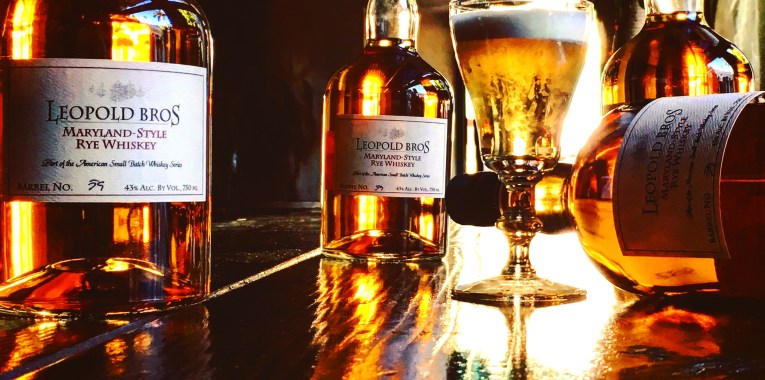
Before the advent of the ‘Great Experiment’ that was Prohibition there were two dominant styles of American Rye Whiskey. The Pennsylvania Style (spicy, dry, and oaky) and Maryland Style, which was more floral, fruit forward and less aggressive. Among the many great things that Prohibition destroyed, Maryland Style Rye was one of them.

But the boys at Leopold Brothers are fighting the good fight and trying to recreate the style in the only way they know how: with exceptional quality and attention to detail. And boy are they fighting hard, you can read about the future here. But as for the pastWhile ye olden Maryland Ryes often achieved their more mellow nature and fruit flavors from additives and prune juice, the brothers are following their eco-distilling nature and recreating the flavors throughWight'sMarylandRye3.jpg careful distillation and selection of yeast strains to create a wholly unique product. They’ve even had an old time compound still made exclusively for them, and are working with local farmers to grow late 1800’s style rye, which has a completely different flavor and starch content than it’s modern descendant.

While we’re still waiting on the first batches off the new still, the current bottling shouldn’t be ignored. Young, but light and green. Green as in like biting into a huge green apple, apricot, and stone fruit. All supported by a rich chocolate malt rounding out to a juicy and more mellow finish than your more familiar ryes.

Whiskey Wednesday: Elijah Craig Check In

Another year and another barrel of Elijah Craig. The very first single barrel I ever picked out for a bar was a barrel of Elijah Craig for Areal a good five years ago. I’ve been fortunate enough to select an Elijah Craig barrel every year since so its arrival is usually a great touchstone for me to reflect on the previous year. A Bourbon New Year as it were. And it’s been a hell of a year.

I left a bar that I ran for nearly five years that promptly closed six months later. I started a new job at Faith and Flower in Downtown LA, competed in the National finals of three major cocktail competitions, traveled to Tokyo, started this wordy blog, and picked out another barrel of Elijah Craig.

Elijah Craig is often the answer to the inevitable question, “What do you drink?’ I’ve talked about it at length here, and here, and during innumerable shifts behind the bar. The basic gist though is that Elijah Craig is one of the semi-mythical early Bourbon distillers that sometime after his death was decreed to be “the Father of bourbon” after he became the first person to char his barrels before aging his whiskey. It’s a completely unsubstantiated claim that makes a good story. So, we all tell the story and then acknowledge that it’s complete nonsense.

The current Elijah Craig brand was introduced by Heaven Hill in 1986 and has gone through multiple changes in its 30-year history but the past year was quite striking. The iconic 12-year old age statement was dropped from the label with the whiskey instead becoming a blend of 8-12 year old. The old school squat bottle was also replaced with a sleeker, taller, more streamlined bottle that I’m personally not a fan of but does actually fit a pour spout .

If you can’t tell, I don’t like change. And that’s not to say anything against the whiskey. It’s still an earthy, massively tanic, barrel forward whiskey that is one of the few bottles that I think works equally well in both mixed drinks and as a neat sipper. Most of these changes were made because there’s not enough whiskey to go around. Especially not old whiskey. Part of me feels like saying so what? Let there not be enough for everyone, don’t change this bottle that I love. Yet, that view is selfish.

Part of the joy of bartending, and indeed the joy of this very blog, is getting to share things that I love with other people. In the end, these changes aren’t for me. I clearly jumped on the train years ago. These changes are for the people seeing Elijah Craig for the first time on a billboard, or a sports arena, or even hearing about it on its recent NPR advertisements. The old Preacher is growing and hanging out with a younger crowd these days and I’m glad to see it.

In the end change isn’t good or bad. How we react to it, how we deal with it, that’s where the emotion comes in. Sometimes, change is just change. And I look forward to seeing what the Preacher and I have to talk about the next time we see each other.

Whiskey Wednesday: Four Roses Al Young’s 50th

Almost every shift I get asked what has to be one of my least favorite questions, “What’s your favorite whiskey?” My response is usually, “That’s like asking a mother to pick her favorite child.” We all know mommy had a favorite but it’s a lot more complicated than it looks at first glance.

Is it a special occasion? What kind of bar am I at? What’s the price of a pour? These are all things that I take into consideration when it comes to what I drink but increasingly when I’m out I find myself ordering Four Roses Single Barrel. Part of this is that the whiskey is damn good, but it’s also the fact that it’s become almost ubiquitous and it’s cost effective. That wasn’t always the case though.

There are a few conflicting stories about the origin of the brand but the one that Four Roses currently promotes is that they were founded by Paul Jones, Jr. who trademarked the name Four Roses in 1888 with a claim of production and sales back to the 1860’s. The name supposedly comes from Jones, Jr. being smitten by an unnamed Southern Belle. He sent her a proposal and she replied that if her answer was “yes” she would arrive at the ball with a corsage of roses on her gown. When she arrived she was wearing not one but four red roses. This legend of romance lead to a romance in a bottle.

After prohibition Four Roses thrived. In the 30’s and 40’s it was the number one selling Bourbon in the United States. In 1943 the brand was purchased be Seagrams who, despite the brands popularity, discontinued the brand in the United States to focus on overseas markets. It quickly became the number one American bourbon in Europe and Asia while at home it became rotgut, blended whiskey, despite Seagrams creating new Bourbon brands in the following decades.

While the Seagrams company might not have been putting out the highest quality brands, they were training some amazing distillers. After Seagrams collapsed in 2000 we began to see the quality that was going on behind the scenes. Because a large part of Seagram’s business was contract distilling and blended whiskey there were a massive amount of recipes being produced at their distilleries that turned out to be absolutely phenomenal drinks on their own. Like Bulliet? That 95% rye mashbill is all made at MGP, the former Seagrams distillery in Indiana. And that Bulliet Bourbon? It was all originally made at the Four Roses.

After the Seagrams collapse Four Roses was purchased by Japanese beer giant Kirin, and while contract distilling remained part of the business this change also allowed Master Distiller Jim Rutledge to win his battle to revive the Four Roses label as an actual Bourbon whiskey.

Rutledge had been with the company since 1966 and had taken over as Master Distiller in 1995. And in 2004 he saw his dream realized as Four Roses was once again sold in the U.S and has quickly reclaimed its reputation of excellence.

Part of that quality again comes from the variety of distillation. Four Roses utilizes two different Bourbon mashbills, both of them high rye recipes, and five different strains of yeast. This allows them to create ten different reciepes each with their own unique characteristics. All ten of these mecipes are blended together for the Four Roses Yellow Label, four of them are used for the small batch, and only a single recipe, the OBSV, is used for my personal favorite Single Barrel.

These bottles have such an ever day, soft spoken elegance that its easy to see why it’s become such a ubiquitous bottle. But these recipe have also allowed some legendary special releases. The latest of which is the Al Young 50th Anniversary Edition.

While Jim Rutledge was the heart of the brand until his retirement in 2015 Al Young has been its face. Al started with the company  only a few years after Rutledge in 1967 and this bottle celebrates his 50 years with the company. Working with current Master Distiller Brent Ellis the bottle is a blend of four recipes: 23 year old OBSV, 15 year old OBSK, 13 year old OESV, and 12 year old OBSF.

The result is a Bourbon that has a lot of fruit, the expected fig and cherry but also a touch of peach and raspberry. The oak is deep, but mellow with a toasted nougat and cinnamon. The bottle is also a throwback design. One of Young’s many hats at Four Roses is as archivist and looking through old ads and press clippings they settled on a bottle design from the year he started.

The end result is a prime example of what has given Four Roses such growth and recognition since it reemerged on the U.S. market. It combines the history, talent, and skill of the company and the people who make it up. Four Roses may still be making blends but this ain’t your granddad’s blend.

Whiskey Wednesday: Tyrconnell’s Long Odds

Every now and then I like to remind myself that Irish Whiskey isn’t spelt “Jameson’s.” I’ve talked about the explosive growth of Irish Whiskey before but here are some quick facts.

While everyone is gaga for Japanese whiskey as a luxury product Irish whiskey is expecting to double its sales by 2020. In 2014 Jameson’s sold 18 million liters in the US alone. The Scots and the Irish will fight until the Sun goes cold over who first created whiskey but there’s no debating the fact that it was Irish monks that tought most of the Western World how to distill. Hell, even the word “whiskey” is an Anglicization of “uisge beatha” which is Gaelic for water of life. The Irish are indelibly linked to whiskey so what’s the problem? It’s a monoculture.

Need proof? In 2014 Jameson’s closest competitor, Bushmill’s, sold a whopping 1.3 million cases. Jameson’s currently accounts for 63% of the global Irish whiskey market. Monocultures are great for business but are incredibly susceptible to full scale collapse. Look at what’s happening to the Chiquita bananas or how the agave industry is actively working to reinvigorate the gene pool with the Bat project.

Irish whiskey has traditionally lived and died with the American market and like so many other things it was ruined by Prohibition. On top of that throw in the Irish War for independence, a civil war, trade disputes with Great Britain, and you end up with an industry made up of over 160 distilleries and 400 brands reduced to a mere two distilleries in the mid-70’s.

The remains of the Irish whiskey industry banded together to form Irish Distillers which was then purchased by Pernod Ricard in the late 80’s. They then began the massive push to get people to drink Irish. It worked and since 1990 Irish whiskey has been the fastest growing spirit in the world. It’s ballooned the industry with 32 new or proposed distilleries across Ireland. Not bad for an industry long sustained by only four distilleries and of those four only one has been in operation longer that 1975.

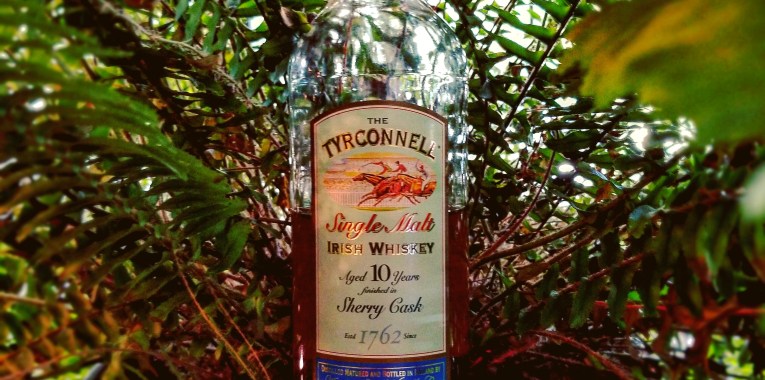
It’s a old industry with new blood and the near death of the industry left many historic brands and styles in the grave. Irish Single Malts and Tyrconnell are great examples. Tyrconnell was the flagship brand of the Old Watts Distillery, It takes it name from a racehorse who won the National Produce Stakes in 1876 at literally  at 100 to 1 odds. It was incredibly popular in the US, there are photos of Yankee Stadium at the turn of the century with Tyrconnell ads on the billboards. But prohibition shuttered the brand and the distillery in 1925. The Brand was revived by the Cooley distillery in the 80’s.

It’s made in traditional Single Malt Style, 100% malted barley and double copper pot still distillation with no peat, and then aged in ex-Bourbon Barrels. The 10 Year Old Madeira Cask Finish is my real jam though. A light, fruit forward whiskey with bitter chocolate, green, tropical fruit, and a incredibly creamy finish. It’s one of those whiskies that slips below the radar while being incredibly excellent. And they’ve gotten to the place where they are now planning on a limited release of a 16-year old Single Malt. And maybe that’s the silver lining to the Jameson’s problem.

All of this growth in the Irish whiskey world is being fueled and often literally paid for by sales of Jameson’s. For many people that’s all Irish whiskey will ever be which leaves a lot of hidden gems to be found flowing from the Emerald Isle. The world has caught on to Bourbon, its caught on the Japanese whisky, hell its even caught on to Taiwanese whiskey, but not Irish. Not yet anyway…

The days of Yamazaki and Weller Antique being undervalued have faded and instead of being sipped and shared it’s now being hoarded and auctioned. And i miss sipping and sharing. And at least with Tyrconnell I still can.

Drinking Poetic (on a Wednesday): Highballs

I’m a whiskey purist. Bourbon, Scotch, Japanese, Barrel Strength, it doesn’t matter, I drink it neat. For years I was determined that not even a drop of water would come between myself and my sweet, sweet barrel aged nectar. What’s changed me? The highball.
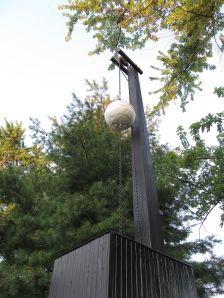
Highball_Signal_Jun_12      The highball is nothing new. It’s a simple class of drinks: a shot of spirit diluted with several ounces of a carbonated beverage on ice. My favorite rationale for where the term “highball” originated from comes from the old railroad days. Along the rail tracks there were “highball” signals where a ball would be hoisted out of a barrel signaling that the track ahead was clear and the trains could travel full speed ahead. A “highball” drink was at the time served in a highball glass with a single lump of ice. As the soda was added to the glass the ice would rise just like the highball signal telling drinkers they could dive in at full speed as well as quickly down the remainder of the drink when their train pulled in.

Like most classic it was simple, easy, and was much abused during the 70s, 80s and 90s becoming barely recognizable but it’s still a class of drinks that people still know the name for.  But the highball that interests me, the undiluted purist, is a straight whiskey soda.

My first highball in Japan was out of a can.

Ask for a Whiskey Highball in the U.S.A and there’s a good chance you’re going to end up with a whiskey and ginger and even this combo wasn’t enough for the sugar loving American palette and has been vastly over shadowed by its cousin the Jack and Coke. But in Japan the Whisky Highball has been elevated to an art form. I had heard the hype but it wasn’t until I visited Tokyo this year that I finally understood.

My first highball in Japan was out of a can.  I would never even consider getting a canned mixed drink from a 7/11 in the States but when you cross the international date line and land in the future and your hotel room isn’t ready for another 7 hours what else are you supposed to do while walking through the city?

From the moment that can touched my lips all I drank for the rest of that trip was highballs. And what struck me everywhere was the balance and the quality.

It was expected in Ginza. It was a random bar that we didn’t know the name of. The bartender knew maybe a handful of English words but when we ordered Suntory Highballs he enthusiastically pulled every Suntory whisky he had from the back bar to try and walk us through which one we actually wanted, and then thoughtfully poured the whisky over hand carved ice, stirred, and topped with soda before continuing on to casually brulee half of a passion fruit for the garnish of another customers drink. But when the highball at the chain ramen shop where you have lunch is just as elegant you know there’s something special happening.

It’s an attention to detail and a respect for the process. Each person who poured me a highball had respect for the process in their own way. Its easy to see, and taste, why highballs are a cultural force in Japan. And with the rise of Japanese Whisky across the world the Japanese are trying to export their highball ethos as well.

Suntory and Nikka have both made moves to position themselves in the highball world. Suntory has even released the Suntory Toki in the states, a blend specifically designed for the taste profile, and price point, of a highball. But the problem for me with the Highball in the States is the soda. Doesn’t matter how good or finally designed your whisky is the moment it is smothered by carbonated water from the gun, or drowned with a bottle of Canada Dry it’s lost it’s edge. There’s just simply a difference in the quality of bubbles.

Its odd to call a machine thoughtful but all good bartending has a certain degree of prep that happens behind closed doors.

Enter the Toki Highball machine. My first thought on hearing about this highball machine was why the hell would I need a machine to make the simplest drink on the planet?! But after my eyes were opened in the Land of The Rising Sun I approached the machine in a new light.

The design and execution of this machine are thoughtful. Suntory was aware of the problems of trying to export their highball style and worked to eliminate as many roadblocks as possible. Not only does the machine have the necessary refillable whisky tank, but also a separate water cooling system. It then carbonates with amazing specificity and will dispense the sparkling water independent of the whisky. My bubbles problem was solved.

It also adds a measure of thoughtfulness back into the process. Its odd to call a machine thoughtful but all good bartending has a certain degree of prep that happens behind closed doors. Whether it’s batching, technique training, or infusion,s a good portion of our job is doing the work out of sight so that the customer can sit at the bar and enjoy a seamless, delightful night out on the town. And the behind the scenes work has definitely been done to bring these highballs from Tokyo to LA.

So rejoice! Tonight is the unveiling of the Toki Highball machine at Faith and Flower. Come see exactly what I mean.
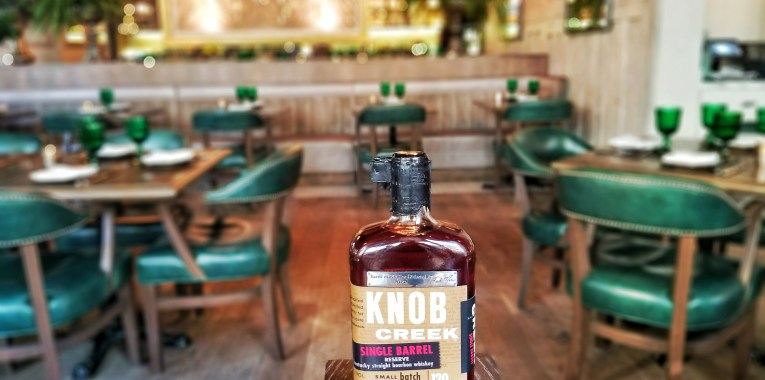
Whiskey Wednesday: Knob Creek 25th Anniversary

Bourbon is an old tradition, dating back hundreds of years to our rugged frontier forefathers and foremothers who proved their American spirit by making a distinct product using brilliant recipes and methods that they would pass down unchanged to us to be poured into a glass for our drinking pleasure today. At least according to the marketing materials  it is… the truth is a bit more complicated.

Although the term “Bourbon” is associated with whiskey as early as the 1820s, “Bourbon” was only declared the native spirit of the United States by Congress 53 years ago with the passing of a 1964 resolution. And the definition of “Whiskey” as a spirit distilled from grain, and Bourbon as a spirit distilled from 51% corn is only 108 years old. President William Howard Taft put the definition in place in 1909 as part of the Safe Food and Drug Administration Act of 1906. Yes, it took him three years to come up with the definition of “Bourbon whiskey.” But with the start of Prohibition a mere 11 years away its questionable how many people would have enjoyed whiskey that lived up to these new regulations. Think about that the next time someone tells you their whiskey is “Pre-Prohibition Style.”

All of this is to say that tradition is long and constantly changing and in the adjusted timeline some landmarks are bigger than they appear at first. Like, for instance, Knob Creek’s 25th Anniversary.

images

Knob Creek was the whiskey child of Booker Noe, grandson of Jim Beam who tookover as Head Distiller of his grandfather’s distillery in 1965. Booker, along with Elmer T. Lee and Jimmy Russell, is credited with the revitalization of the Bourbon market at the end of the 80s with the introduction of now iconic brands of Bourbon. Booker first released Booker’s Bourbon in 1988 to much acclaim, and this was quickly followed up with Baker’s, then Basil Hayden’s and Knob Creek in 1992. These are the heart and soul of the Jim Beam Small Batch collection, which led the way in many respects for the premiumization of Bourbon.  None of these have survived to their 25th year with out some alteration.

Knob Creek is named after the stream that ran alongside Abraham Lincoln’s childhood home in Kentucky and is Booker’s take on  “Pre-Prohibition Style” whiskey. A term that we can now see is as nebulous as those early definitions of whiskey.

In this case it meant a Bourbon whiskey bottled at 100 proof and carrying an age statement of 9 years. Traditional Knob Creek is a deep caramel color, with a nose that carries a lot of oak, along with a touch of maple and baking spice, a super vanilla, white pepper, and dark cherry palette with a earthiness and dustiness that I can only associate with Jim Beam yeast, and a gripping, dry finish that is a bit bracing at 100 proof. It’s iconic. Immutable.

Except it wasn’t. In 2001 Booker, who had continued to oversee the brand well into his 70’s, passed the torch to his son Fred. And shortly after the Bourbon boom that Booker had helped create hit full force.

Knob Creek expanded. In 2010 Knob Creek Single Barrel hit the market. It was a natural expansion, still 9 years old but bottled at 120 proof from a single barrel. Then they began releasing a non age statement Knob Creek Rye in 2012, followed in 2013 by ae008e3717aca1adfe229d4d561643efthe Knob Creek Smoked Maple, a bourbon flavored liquor bottled at 90 proof. Then camethe inevitable. In 2016, just shy of 25 years, Beam Suntory announced that Knob Creek would be dropping its age statement. That same year the Knob Creek 2001 was released; a 13 year, Cask Strength release comprised of the last barrel that Booker Noe laid down before passing the torch to his son.

Jim Beam has followed up with a 25th Anniversary release appropriately named Knob Creek 25thAnniversary. It’s a limited release of 300 barrels, all between 12-13 years old and bottled between 120-125 proof that is exactly what it sounds like: bigger, more intense, Knob Creek.

Whether you’re going by the centuries old “traditional” definition or adhering  to a more modern practice twenty five years is still a milestone worth celebrating in the midst of so much change. Hell, maybe a few more milestones like this will help us truly appreciate that some change is as much a part of Bourbon heritage as all those pre-Prohibition style ways of making it are.

Whiskey Wednesday: Baller American Single Malt

It’s a distinctly American thing to look at a creation of another group or country and say, “Yeah, I can do that.” We’re big fans of adopting ideas from others, filtering through our own cultural lens, and then exporting those back to the rest of the world. The cocktail is just that, and even our quintessentially American Bourbon whiskey has its roots in immigrant traditions being adapted to our local grain sources.

And it’s hard to scream about cultural appropriation of Japanese Whisky when Masataka Taketsuru lifted the blueprint straight from Scotch makers, even going so far as to be told he was to dogmatic about doing things “the Scottish way.’ But adapting and borrowing is exactly what St. George is doing with their Baller Single Malt Whiskey. And they’re totally aware of it. Distiller Lance Winters honestly describes the Baller as “a California take on the Japanese spin on Scotch whisky.” A California take on old world traditions is kind of the St. George trademark.

Jorg Rupf founded St. George Spirits as an eau de vie distillery in 1982 and in the 35 years since then has developed a massive reputation for quality and experimentation. download-1.jpgAlthough the eau de vies are still a major part of the distillery, the portfolio has expanded to include such wide sprawling products as a California Agricole Rum, an Absinthe Verte (which became the first commercially available American Absinthe after the lifting of the 1912 ban), as well as numerous gins and the Hangar One vodkas which were sold to Proximo in 2010.  St. George first entered the whiskey game in 1996 when Jorg hired Lance Winters, a former nuclear scientist and brewer, for a one-month trial. Twenty years later Lance is still experimenting and Jorg is delightfully retired.
The following year, Jorg and Lance began distilling Single Malt Whiskey which had its first release in 2000. Back then no one knew would to do with a Scotch-style American made whiskey. Fast forward 17 years to Lot 16 of the Single Malt and drinkers are almost as confused as to what to do with an American Single Malt but the tide seems to be turning.

Distilleries around the country formed the American Single Malt Commission in 2016 with the goal to “establish, promote, and protect the category of American Single download.jpgMalt Whiskey.” Technically, according to the American government there is no legal definition of what constitutes an ”American Single Malt.” However, this lack of consensus didn’t stop drink giant Remy Cointreau from purchasing the American Malt makers at Westland Distillery in December of 2016. Whether that speaks to a growing awareness of the category, or to an international audience more familiar and accepting of products labeled “Single Malt” remains to be seen.

The uncertainty also hasn’t stopped the whiskey from winning awards either. Both the Westland Malts and the St. George Malt are some of most awarded American Whiskies, with the St. George Malt even appearing in 1001 Whiskies You Must Taste Before You Die as what “might just be the best U.S. single malt available today.” But again, with the category being what it is that’s very nebulous praise.

People are clearly drinking it, and even reveling in the experimentation that this grey category has. And the St. George Baller is a prime example of this experimentation.

Distilled from 100% American barley and distilled on the eau de vie pot stills it is then aged for 3-4 years in ex-Bourbon and French oak wine casks. The whiskey is then filtered through maple charcoal and finished in casks used to aged St. George’s house made umeshu. Umeshu is a Japanese style of plum liqueur, and St. George being St. George they make their own in house entirely from California grown ume. About 1,600 bottles were released in 2016 with about the same on track for a 2017 release. It’s California identity clearly shines through, especially with it being a California only release. It’s certainly intellectually interesting.

The whiskey itself is bottled at 94 proof. The plum is incredibly noticeable on the nose with a touch of white pepper leading into a crisp, sharp taste on the palette with a massive dose of white pepper and spice before finishing with a fruitiness and the expected chocolaty, malt sweetness. Japanese whisky this ain’t. It’s more aggressive and while it’s certainly layered the edges are sharp and noticeable. It does really open up with the addition of water, which is what its makers had in mind. They designed this with whiskey highballs in mind, hence the name baller, which is yet another thing they have in common with their Japanese inspiration.

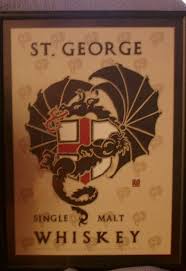
In the end, I think its label, which features the legend of St. George reimagined as a samurai based on an original watercolor made to emulate a woodcut style, best sums up this whiskey. It is an old tradition reimagined through multiple cultural lenses, that is artistically appealing but weather it’s a style that bears fruit is yet to be seen.

Whiskey Wednesday: The Chivas Brothers

Some things seem so ubiquitous, so omnipresent that they become nearly invisible. All of the work, all of the marketing, but most importantly all of the quality that must be present to get them to that pervasive point becomes overlooked and it all just fades into the background. That had been my experience of Chivas Regal until recently.

images.png

No matter how much we preach the gospel of Single Malt Scotch, Blended Whisky is the true king. And if Johnny Walker sits upon the Iron Throne, Chivas Brothers is the King in the North. With the now iconic 12 year blend the market leader in Europe and Asia and over 4.4 million cases of Chivas Regal shipped world wide it’s easy to see how Chivas can be lost in the whisky sea. When everyone is clamoring for the rarest, the newest and the most unique bottlings how could something that sits on nearly every back bar in the world be anything special?

However the history of the brand shows one of evolution, experimentation, massive growth and success.

Chivas traces its roots all the way back to 1801 and small grocery store started by John Forrest in the town of Aberdeen. The Chivas family first became involved in 1836 with James Chivas joining the growing company and by the 1850’s they had responded to demand for luxury whiskey and were bottling their first blends under the name Royal Glen Dee.

Chivas Regal first found a home and an identity in the United States in 1909 with the launch of Chivas Regal 25 year old. The blend became the world’s first true luxury blended whiskey and it was an immediate hit with the New York high society. The brand rode high for several years until WW1 which limited shipping and then the disaster that was Prohibition struck. Almost more devastating to the brand than these events was the selling of the company and offloading its massive whisky stocks, in 1936.

When Chivas Regal was relaunched in the US in 1939 it was introduced as a 12 Year old in an attempt to preserve stocks. The company was then sold again, this time to Seagram’s in 1949. The next year Seagram’s purchased the Milton distillery, renamed Strathisla, which remains the primary malt and spiritual home of Chivas to this day.

Seagram’s took over the Glenlivet Group in 1977 and when Seagram’s went under in 2001 Chivas and the Glenlivet were purchased by Pernod Ricard which consolidated all of their whisky interests, including the Aberlour distillery that was already in their portfolio, under the Chivas Brother’s banner.

The brand has massive stocks to draw on and throughout it’s history hasn’t shied away from experimentation and innovation. For instance, The Royal Salute line was introduced in 1953 to celebrate the coronation of Queen Elizabeth II and is the only line of blended Scotch whiskey that starts at 21 years of age. I’ve been fortunate enough to have the 38 Year Old ‘Stone of Destiny’, named after the legendary coronation stone of the Scottish Kings. It’s full of dark chocolate, dried fruit and a rich finish that rivals many of the high end malts that I’ve had.

IMG_4029.JPG     On a more approachable scale they’ve started producing the Chivas Regal Extra, a Non Age Statement blend designed to recreate the flavors of the original Chivas Regal 25 Year Blend that relies heavily on Olorosso Sherry aging. Then there is the new Mizunara.

The Mizunara is a 12 Year Old blend, but not THE Chivas 12 Year blend, that is finished in Japanese Mizunara Oak. It’s currently a Japanese exclusive but the Chivas Brothers have plans to take it to the global market. Think about that for a moment. Mizunara is some of the most sought after wood in the world right now and Chivas has enough clout and influence to be able to age enough whisky in mizunara casks that their biggest problem with getting into the United States is the difference in bottle sizes between the US and the rest of the world. With all this innovation and history why does it seem to fade into the background of the whiskey drinking consciousness?

download-1.jpg

In a way I think their own history is getting in their way. The whiskey nerds and “trend setters” are all fighting to battle for transparency and in depth disclosure of aging and blend components. Just look at John Glasser and how often Compass Box is chastised for disclosing too much information. Finding information on what actually goes into a bottle of Chivas Regal is impossibly frustrating. And while this lack of information might keep that bottle of Chivas from standing out in an increasingly crowded forest, but it doesn’t stop the liquid in the bottle from being of a quality and taste that has earned its iconic place on that back bar.

Whiskey Wednesday: A Little Russell In Faith

From no Turkey to a Turkey a month it really does seem like I’m filling that Wild Turkey hole. I promise I’m not repeating myself or selling out. I like exploring things I don’t know and I love sharing experiences.

I’ve talked several times in the past about house single barrels, and I’m sure I will many more times in the future. In case you’re unfamiliar with the concept of a what a house single barrel of whiskey is, it’s exactly what it sounds like. It’s an entire barrel of whiskey that has been bottled, labeled, and sold to a single bar or store.  Most bottles of whiskey are a batch of a couple dozen to a couple thousand barrels of whiskey depending on the brand. Each barrel of whiskey ages differently, aging is an organic process after all. The time spent interacting with the oak, where in the warehouse, what the weather was like over the years, all of these contribute to the flavor of the barrel. To create a consistent product these different barrels and flavors are batched together. Single barrels on the other hand celebrate those individual differences.

It’s also a collaborative effort. Sharing the barrel and story with the customer helps them build the story of their evening out on the town, while the actual selection process is a collaboration between the distillers and the account. The distillers have already narrowed down your choices to a mere handful of barrels before you start tasting anything. They’ve already passed the distillers/brands personal taste test and now it’s about trying to match that to not only what you as the buyer likes, but what you think your customers will enjoy. It’s an ever growing relationship.

And if I’m honest it is a way to keep myself and the other bartenders interested behind the bar. It’s a way to make things more personal and break up the monotony of the 369th Old Fashioned order of the week. But anything can become predictable if do it enough, even barrel picks. That’s exactly why this barrel of Russell’s Reserve caught my attention; it had a funk and an tannic note that I wasn’t expecting.

I reached out to Bruce Russell, grandson of the eponymous Jimmy Russell of Russell’s Reserve, as to why that might be and he had this to say, “The thing that I found interesting about your barrel is the fact thatit moved from the bottom floors (floor 2) of warehouse B up to floor 6 (and right by a window on the edge) after about 6 years. It’s the reason why I think your barrel has such a funky, unique flavor profile. Generally if we move barrels it is down in the warehouse. We do that if we find whiskey we really love because moving it down slows down maturation and will keep the whiskey from changing a lot. Moving it up in the warehouse will speed up the process and is usually done early on in maturation to fix a whiskey that didn’t age very much after 2-3 years. I honestly don’t know why they moved your barrel (or the other dozen or so that got moved) when they did. But it definitely gave it a palate that I haven’t seen in any other of the single barrels this year.”

So even the barrels personal journey was a unique story and it certainly seems to have left an imprint on the flavor of the whiskey. Bottled at 110 proof and non chill filtered, the nose is slightly hot, as you’d expect at 110 proof but it also has a dark chocolate and earthy note that carries into the mid palette. Once on the tongue the whiskey displays dark stone fruit, a rich brown sugar quality and a touch of nutmeg, while the finish is all of that vanilla and a hint of white pepper. It definitely has that Wild Turkey funk but it also has its own undeniable off kilter character.

Whiskey Wednesday: Ancient Age

I tend to live my life with a fair amount of snark and irony wrapped around the place where most people keep an actual personality. As such it sometimes becomes hard for me to tell when I stopped ironically appreciating something and start genuinely liking it. Or if that change ever happened.

Example A: Ancient Age.

Ancient Age is a low level or “value” brand. I remember drinking handles of it inAncient-Age.jpg college not because it was phenomenal stuff, but because it was affordable. I moved on as a slight increase in disposable income allowed me to try other things yet here I am unabashedly keeping it in a decanter of honor on my back bar. And I’m not the only one, Ancient Age has a massive cult following for its affordability and quality, at least its quality in comparison to its price. But why?

The brand is relatively old as far as Bourbon brands go. The brand was first introduced in 1946 by Schenley Industries, and has been made at the same distillery for the brands entire life. Both the brand and the distillery have changed hands many times but Ancient Age has always been made at what we now know as the Buffalo Trace Distillery. It is not, however, owned by Buffalo Trace. It is owned by a company known as Age International which is one of those incredibly interesting corners of the Bourbon world that is rarely talked about.

In the 80’s things were not good for brown spirits. Consolidation, shut downs, and sell offs were happening everywhere. Especially if you weren’t really a booze company, like say Nabisco. At the time Nabisco had a subsidiary called Standard Brands, which included Fleischmann’s Distilling. In 1983 Standard Brands was sold to Grand Metropolitan, which a few years later would merge with Guinness to become the behemoth Diageo.

Knowing that Grand Metropolitan already had a successful drinks arm Ferdie Falk and Bob Baranaskas, the CEO and President of Fleischmann’s respectively, resigned and started their own company. Having previous relation with Schenley, Falk approached them and the pair were soon the proud owners of the Ancient Age brand and its home distillery.

The new company was dubbed Age International and they believed that the future success of Bourbon lay outside the U.S., hence the ‘international’. Their interest in foreign markets led them to work with Elmer T. Lee to create Blanton’s Single Barrel, which was originally designed for a Japanese market and just happened to be released in the States as well. This focus on over seas markets is also why there are so many variations of Blanton’s available around the world that aren’t available here at home.

In 1992 Falk and Baranaskas sold the remainder of their shares in the company to their Japanese partners, Takara Shuzo who immediately turned around and sold the distillery to Sazerac while maintaining control of Age International and its brands.

Sazerac continues to distill Blanton’s, Ancient Age, and the other Age International Brands which lead them to develop a separate mashbill to create their own proprietary brands, like the distilleries eponymous Buffalo Trace. So while Buffalo Trace does distill Ancient Age the two Bourbons sit on different branches of the Bourbon Family Tree.

Over the decades there have been several different variations of Ancient Age, my personal favorite being Ancient Ancient Age 10 Year Old for the name alone, but the whiskey shortage has even effected value brands so you’re most likely to come across just standard 80 proof Ancient Age these days.

images.jpg

The bourbon itself is fiery. Despite its name it is a young whiskey where the grains are more predominant that in many of its older siblings. It’s more cereal with the vanilla and caramel taking a backseat with the barrel presence being much less refined. Honestly, this is the kind of whiskey an Old Fashioned Cocktail was designed for. It’s a whiskey that benefits from having its edges softened and it’s hot heart rounded.

In the end, I just like this whiskey. It is what it is and I just have to accept that it’s essentially the Pabst Blue Ribbon of the Bourbon world. Except people aren’t proudly drinking Ancient Age at their back yard hipster BBQs. Though to be fair I can’t remember the last time I actually saw someone drink a Pabst these days. Everything is cyclical. So I’m going to circle it back around and keep pretending I’m fancy even if it’s just Ancient Age in my decanter.