Whiskey Wednesday: O.F.C. 1985 Vintage Bourbon

Spontaneity is not my strong suit. 

Example A: my girlfriend swears by the deals emailed out daily by Scott’s Cheap Flights. Yet every time a deal lands, I have to ask about time frame, logistics, check on available vacation days, and generally stressed about the fact that booking this trip means that we won’t be able to book some other hypothetical trip that doesn’t yet exist and just like that the deal, and the moment, is gone. 

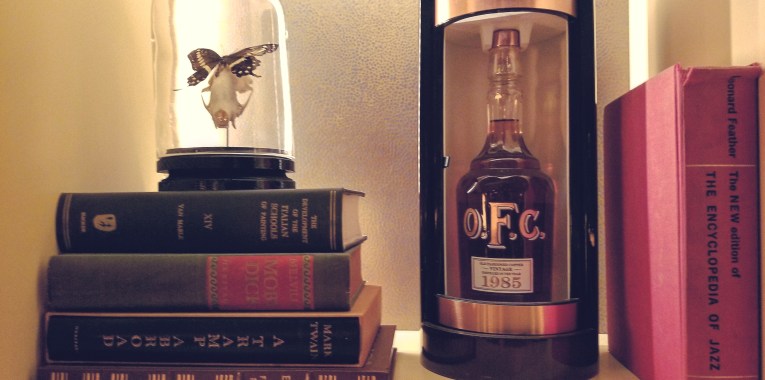
Example B: We received a bottle of the O.F.C 1985 Vintage Bourbon a year ago and I’ve been planning to write about it ever since. So, what the hell is O.F.C. and why has it been on my mind for literally a year? 

O.F.C. stands for Old Fashioned Copper and is the original name for the distillery founded by Col. E.H Taylor in 1869. Col. Taylor was an expert marketer and helped establish the concept of a Bourbon “brand” as well as being one of the major figures behind the passing of the Bottled In Bond act of 1897. 

The distillery itself was sold to another legend, George T. Stagg, in 1878. There’s an apocryphal story that one of the conditions of the sale was that Stagg could keep the initials O.F.C. but he had to change at least one of the words it stood. This is why the distillery is sometimes called the “Old Fire Copper” distillery. Regardless of the veracity of this claim the distillery’s name was officially changed to the George T. Stagg Distillery in 1904. It was the first distillery to utilize climate-controlled aging warehouses when Stagg installed steam heaters in 1886 and was one of only four Kentucky Distilleries granted a license to continue distilling throughout Prohibition.

The distillery changed hands a few more times in the 20th century before finally being purchased by the Sazerac Corporation in 1992 and its named changed once again. Now known as Buffalo Trace it arguably produces some of the most sought after American Whiskey on the market, including bottles named after both Taylor and Stagg as well as the much desired Pappy Van Winkle line. 

The distillery clearly has experience with special releases but even amongst the plethora of rare bottles the O.F.C. stands out. 

 The O.F.C. is less a special release and more of a time capsule. These are all single barrel, vintage dated Bourbons. Each bottle is sourced from a single barrel and marked with the year of distillation. This makes each vintage completely unique with the mashbill and age varying depending on the bottling. Another intriguing fact is that this line up was originally produced only for charity. 
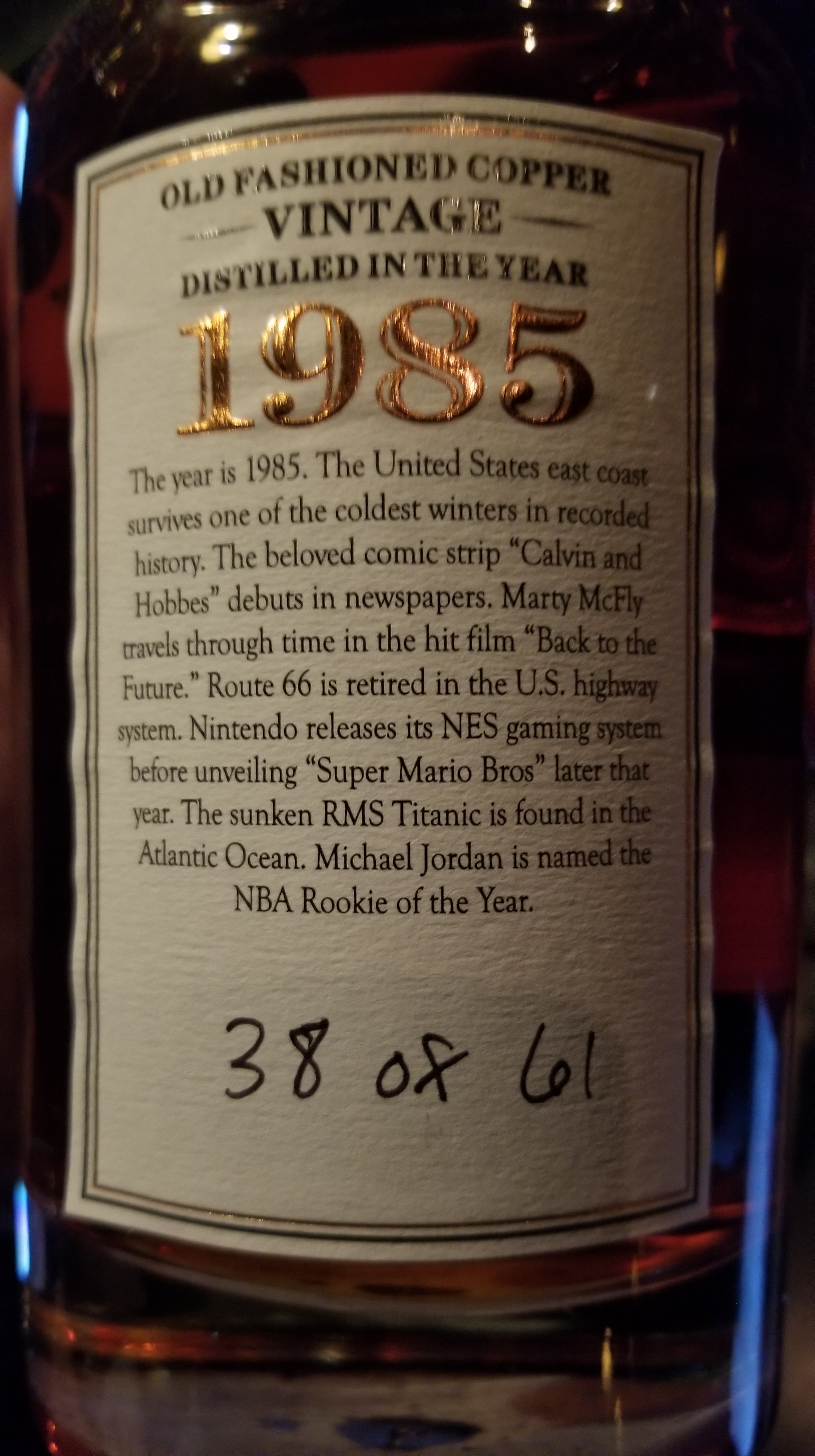
A literal Time Capsule.

The team at Sazerac and Buffalo Trace are just as savvy marketers as Col. Taylor was back in the day. I have to imagine that when they see bottles of their whiskey selling for thousands of dollars on the secondary market that they looked for a way to capitalize on that market value yet still offer an added bonus. The original three releases were only made available to 200 charities, at no cost, to auction off and help raise money for their cause. It was a great way to turn the image of limited whiskey auctions on its head and raise $1.2 million dollars for charity. It also immediately established the O.F.C. line as a super limited, ultra premium bottle. I was silently jealous of the fact that I would never see one of these bottles yet still applauded the move to raise money for worthy causes. But when the second round of releases was made available for retail purchase I leapt at the opportunity. Especially with the vintage being offered was the 1985. It’s not often you have a shared birth year for your whiskey. 

The 1985 Vintage is one of only 61 bottles to come from a barrel which was stored on the second floor of Warehouse Q. Buffalo Trace says that all of the barrels were tasted over time and removed from the barrel before becoming over oaked and since there is no age statement listed on the bottle it’s hard to tell the precise age of the bottle. This isn’t an uncommon practice, Buffalo Trace has done similar things with Eagle Rare 17 and Sazerac 18 so the whiskey isn’t as much as an oak bomb as you might expect. It is certainly old but there’s no official word on if it was a full 33 years in oak before being bottled. With that in mind let’s dive into the glass: 

NOSE: Rich oak, Dried fruit, and vanilla 

PALATTE: Rich vanilla, dark cherry, prune, oak, and a dark earthiness 

FINISH: Bitter chocolate, a touch of tobacco, and a coating lingering sense of time 

Overall this is an excellent example of old American Bourbon whiskey. It is still alive without being over oaked and has a power of flavor to match up to the power of the years it spent asleep in the barrel. The issue, as always, is the price. The bottle comes in at a staggering suggested retail price of $2,500. When the proceeds were going to charity this number wouldn’t have raised peep from me but now it changes the talking points. 

Is this good whiskey? Yes. Is it for everyone? Absolutely not. It is a special occasion, made so by the fact that it is a living time capsule. You are paying for the time and history as much as the whiskey itself. I will argue that experiences are more important than money but  the value is certainly subjective. I for one am going to savor the fact that I get to experience this bottled moment of time and not take it for granted. 

Whiskey Wednesday: A Tale of Two Elmer’s

            I received a text this week from a friend that without preamble said, “Did Elmer T. Lee get worse?”

            My gut reaction was, “Of course not! How dare you besmirch the name of the dearly departed father of modern Bourbon!?” After calming myself with a hefty dram I remembered that despite centuries of tradition whiskey making is a constantly evolving art and barrel aging is by no means an exact science. To add to that, there were claims of “cork taint” by members of the Reddit whiskey community in 2016.  The popularity of Elmer T. Lee has also exploded in recent years so the odds are that it’s younger stock than previous years. By the end of the glass the question was less of an attack and more of a probability.

Son, we’re not hiring today.”

            This could have remained a simple thought experiment but a recent trip to the Liquor Locker left me with a bottle of 2014 Elmer and the ability to do a little compare and contrast. But first a little context.

What exactly is Elmer T. Lee? Elmer T. Lee is both a Single Barrel Kentucky Straight Bourbon, and the deceased former Master Distiller of the distillery we now know as Buffalo Trace. 

“Son, we’re not hiring today.” Is how Col. Albert B. Blanton first greeted Elmer in 1949, but at the instance of his friend at the distillery he showed up to work the next week anyway.  Over the years Elmer grew from a maintenance engineer to the distilleries first Master Distiller. He officially “retired” in 1985 but not before releasing the world’s first Single Barrel Bourbon, Blanton’s, named after the man who didn’t hire him.

After Blanton’s became a hit the distillery honored its Master Distiller emeritus with his own namesake Single Barrel. Elmer was still heavily involved with the distillery and would come in every Tuesday to taste barrels and make selections for his namesake release.

Before Blanton’s, and Elmer, the concept of a “Single Barrel” Bourbon didn’t exist.  Remember, barrel aging isn’t an exact science. Every barrel ages differently depending on where in the rickhouse it sits, the quality of the barrel, the temperature swings over the years, all of these factors contribute to each barrel being a unique specimen But the whole idea of a bottled whiskey is consistency so generally barrels are blended, or batched, together to recreate a specific flavor profile. For a Single Barrel all of the whiskey in the bottle comes from one single barrel and has to stand on its own individual merits. While there will always be some variation, it is a sign of the skill of the distillery to be able to produce quality single barrels that are still consistent.

Both Blanton’s and Elmer share the same DNA. They’re both Buffalo Trace Mashbill #2 which is slightly higher in rye content (about 15%) and are both technically co-owned and produced with Age International. They’re both single barrels and they’re both non-age statement Bourbon’s so we know they’re at least older than four years. But two things separate them from each other: aging and proof.

Drinking is such an individual experience. It’s can be a social activity but the act of tasting is something intrinsically personal.

Blanton’s is always aged in Warehouse H, which was commissioned by Blanton himself. It  is a fully metal clad warehouse which allows for greater heat transfer and, supposedly, more rapid aging. Elmer has no such restrictions on what warehouse it must be aged in which theoretically allows for a larger variation in flavors.

Elmer is also bottled at 90 proof (45% ABV) where as Blanton’s is bottled at 93 Proof (46.5% ABV). While this difference seems small the alcohol is where the flavor is. A few extra proof points can make a world of difference and a whiskey can open up with just a few more drops of water. That isn’t to say that higher proof is always better, just like older doesn’t always mean better, it just means a different flavor profile. Interestingly, Elmer was said to drink his Bourbon at 60 Proof as he felt that was the point when he could taste all the flavor with out the alcohol getting in the way.

Now that all the intellectual foreplay is out of the way, how do they actually taste?

Four Years can really change a bottle.

2014

  NOSE: Oak and Clove

  PALETTE: Earthy, Dark Chocolate, Coffee, Tobacco

  FINISH: Long, slightly damp and musty

2018

            NOSE: Oak, Stone fruit, Vanilla

            PALETTE: Rye Spice, Stone Fruit, Tobacco, Coffee

            FINISH: Light, Spicy

Surprisingly, the 2014 is livelier in the glass, with a bigger spice on the nose and a more rounded midpalette. However, the 2018 carries a darker earthiness, more of the tobacco I associate with Elmer’s and a longer finish. Yet they are both still Elmer. In fact, pouring the two together creates an almost uber-Elmer that is exactly what I expect Elmer to taste like all the time.

Drinking is such an individual experience. It’s can be a social activity but the act of tasting is something intrinsically personal. Where you are at, what time of the year, and how much effort you put into finding the bottle all effects how the spirit tastes. So, back to my friends original question. Did Elmer T. Lee get worse? I’d say no, but it is different. But then again, so am I.

Whiskey Wednesday: Ancient Age

I tend to live my life with a fair amount of snark and irony wrapped around the place where most people keep an actual personality. As such it sometimes becomes hard for me to tell when I stopped ironically appreciating something and start genuinely liking it. Or if that change ever happened.

Example A: Ancient Age.

Ancient Age is a low level or “value” brand. I remember drinking handles of it inAncient-Age.jpg college not because it was phenomenal stuff, but because it was affordable. I moved on as a slight increase in disposable income allowed me to try other things yet here I am unabashedly keeping it in a decanter of honor on my back bar. And I’m not the only one, Ancient Age has a massive cult following for its affordability and quality, at least its quality in comparison to its price. But why?

The brand is relatively old as far as Bourbon brands go. The brand was first introduced in 1946 by Schenley Industries, and has been made at the same distillery for the brands entire life. Both the brand and the distillery have changed hands many times but Ancient Age has always been made at what we now know as the Buffalo Trace Distillery. It is not, however, owned by Buffalo Trace. It is owned by a company known as Age International which is one of those incredibly interesting corners of the Bourbon world that is rarely talked about.

In the 80’s things were not good for brown spirits. Consolidation, shut downs, and sell offs were happening everywhere. Especially if you weren’t really a booze company, like say Nabisco. At the time Nabisco had a subsidiary called Standard Brands, which included Fleischmann’s Distilling. In 1983 Standard Brands was sold to Grand Metropolitan, which a few years later would merge with Guinness to become the behemoth Diageo.

Knowing that Grand Metropolitan already had a successful drinks arm Ferdie Falk and Bob Baranaskas, the CEO and President of Fleischmann’s respectively, resigned and started their own company. Having previous relation with Schenley, Falk approached them and the pair were soon the proud owners of the Ancient Age brand and its home distillery.

The new company was dubbed Age International and they believed that the future success of Bourbon lay outside the U.S., hence the ‘international’. Their interest in foreign markets led them to work with Elmer T. Lee to create Blanton’s Single Barrel, which was originally designed for a Japanese market and just happened to be released in the States as well. This focus on over seas markets is also why there are so many variations of Blanton’s available around the world that aren’t available here at home.

In 1992 Falk and Baranaskas sold the remainder of their shares in the company to their Japanese partners, Takara Shuzo who immediately turned around and sold the distillery to Sazerac while maintaining control of Age International and its brands.

Sazerac continues to distill Blanton’s, Ancient Age, and the other Age International Brands which lead them to develop a separate mashbill to create their own proprietary brands, like the distilleries eponymous Buffalo Trace. So while Buffalo Trace does distill Ancient Age the two Bourbons sit on different branches of the Bourbon Family Tree.

Over the decades there have been several different variations of Ancient Age, my personal favorite being Ancient Ancient Age 10 Year Old for the name alone, but the whiskey shortage has even effected value brands so you’re most likely to come across just standard 80 proof Ancient Age these days.

images.jpg

The bourbon itself is fiery. Despite its name it is a young whiskey where the grains are more predominant that in many of its older siblings. It’s more cereal with the vanilla and caramel taking a backseat with the barrel presence being much less refined. Honestly, this is the kind of whiskey an Old Fashioned Cocktail was designed for. It’s a whiskey that benefits from having its edges softened and it’s hot heart rounded.

In the end, I just like this whiskey. It is what it is and I just have to accept that it’s essentially the Pabst Blue Ribbon of the Bourbon world. Except people aren’t proudly drinking Ancient Age at their back yard hipster BBQs. Though to be fair I can’t remember the last time I actually saw someone drink a Pabst these days. Everything is cyclical. So I’m going to circle it back around and keep pretending I’m fancy even if it’s just Ancient Age in my decanter.

The Beast Arises

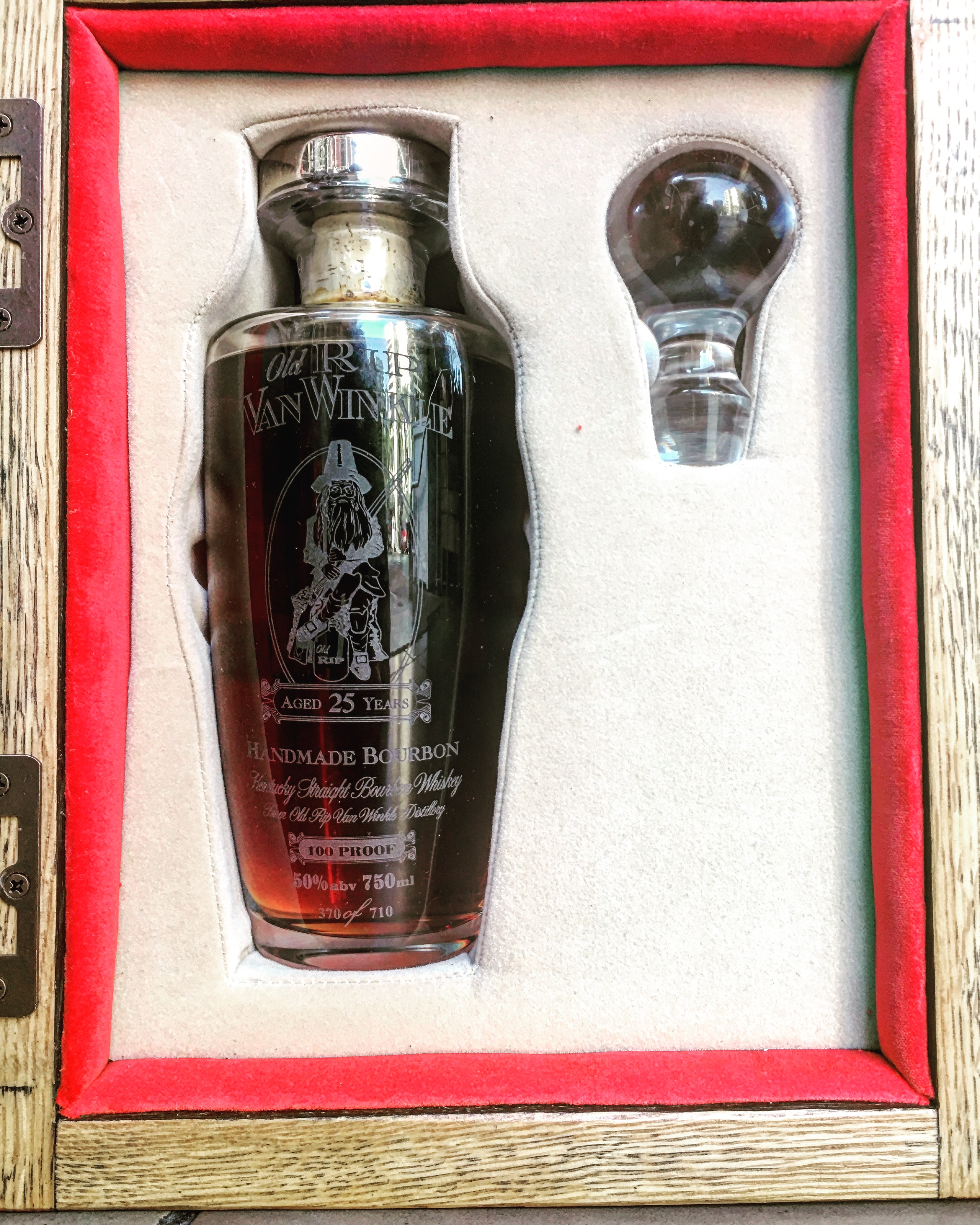
Open Bottle: Old Rip Van Winkle 25 Year Old Straight Bourbon Whiskey


Pappy Mania has struck early this year and for the first time in years even I’m feeling a bit of hype.

The early onset of this yearly bourbon malady is the amazing limited release of an Old Rip Van Winkle 25 Year Old Kentucky Straight Bourbon. What makes it hype worthy is that fact that like the A.H. Hirsch 16 Year Special Reserve this bottle is a piece of history. A gussied up, fancy decanter of liquid history.

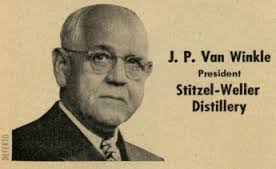
My feelings on Pappy and the bottle hunting that surrounds it are pretty well documented,  but unlike the yearly release of what you could now call the standard Van Winkle’s this bottle is something different. This is actual Stitzel-Weller Bourbon.

Distilled in the Spring and Fall of 1989, the 11 barrels that comprise this release were aged on the lower floors of the metal clad warehouses at Stitzel-Weller that shut

download.jpg
No one has ever seen him look to the right.

down in 1992. But just because the distillery stopped making spirit doesn’t mean the whiskey stopped aging. Leftover stocks continued to rest at the warehouse with some being sold off and some being bottled for various brands but these barrels stayed in the family. In 2002 they were transferred to Buffalo Trace where they aged for another 12 years on the lower floors of one of Buffalo Traces brick warehouses. In 2014 the whiskey was dumped into steel tanks. This isn’t an uncommon practice with older whiskies, the past few releases of Sazerac 18 Year Old Rye have been steel tanked, and it simply halts the oak aging process.  Oxidation can still happen but this is certainly not an aging experiment, nor can it legally be considered aged in steel tanks. It is simply an attempt to keep the whiskey from becoming over oaked and undrinkable.

So what were they doing with the whiskey for the next 2.5 years? They were figuring out how to sell it. Whiskey this old is a massive expense in time, labor, and lost product so it needs to have an appropriate price tag, but you also need to convince people that it’s worth the price tag. It doesn’t seem like that would be a problem with a bottle of Pappy Van Winkle but they pulled out all the stops for this release.

The massive box each of the 710 bottles comes in is made out of the oak staves from the 11 barrels the whiskey aged in. The Glencairn Crystal Studio designed a bespoke decanter, every bottle is signed by Julian Van Winkle, III and it comes with a parchment sheet with the short version of the whisky’s story. It’s a production.

At a mere 710 bottles, the secondary market for this bottle is literally drooling. But what’s interesting to me is that Buffalo Trace, and the Van Winkles, seem to be making steps to try and curb the flipping of this bottle. From what I’m told 9 bottles hit Los Angeles with maybe 30 for the whole state of California. But not a single bottle of those went to an Off Premise Liquor store. Every bottle was sent to a bar, with each bottle number being carefully recorded so that if a bottle does emerge on the Secondary Market they’ll be able to track it back to its source and supposedly punish the seller. While I appreciate the attempt to keep the bottles from becoming mere commodity trading with the secondary market already willing to pay $15,000 I can’t see these bottles actually staying on the shelves of all the bars they were allocated to.

But that’s the story ABOUT the whiskey, what about the whiskey itself? Bottled at IMG_3766.JPG25 years old and 100 proof this Bourbon carries serious weight. The nose is of dried oak, dark coffee, and just a touch of stone fruit. The finish is almost nonexistent but it doesn’t matter because the mid-palette travels for hours. White pepper, caramelized oranges, deep ripe cherry, of course a vanilla and caramel note but what’s interesting is how well this walks the line massive oak flavor without being over oaked. Right when I was expecting it to dive into wet wood and raisins it instead let the pepper burn for another moment before evaporating completely on the tongue. This whiskey is better aged than the standard 23, and I’d say it’s at least as lively as the 20 year old.
I think bottling at 100 proof made a huge difference on the final product. The burn and the massive presence of the mid-palette flavors solved almost all of the complaints I had with the Old Fitzgerald 20 Year Old, which was also Stitzel-Weller whiskey that finished it’s aging at Heaven Hill. There were 12 barrels for that release and the finish was also nonexistent but in comparison the Old Fitz just seemed flabbier. Those extra proof points and the Van Winkle name come with a much heftier price tag though.

In the end, it’s hard for me to separate the whiskey from the history. When I pick up this bottle, when I sell this bottle at the bar, when I manage to sneak a sip of this bottle it’s not the whiskey I’m talking about. It’s the history. The liquid time that is carried over the tongue adds volumes to the value but is it enough added value? I’m not sure, but for the first time in a long time I find myself agreeing with a massive price tag on a massive whiskey. At least at the retail level. But if you have a spare $15,000 hanging around I know someone who might be accepting bribes…

Hancock’s President’s Reserve Single Barrel

I often say that I like surprises, but that’s not really true. What I actually like is discovering new things. It’s safe to say I know a bit about whiskey. Yet I constantly find myself surprised and excited by things that I don’t know. And it is rarely the massive, specialty releases that catch me off guard. It’s the little guys that usually make me sit up and notice. Maybe it’s because they’re unexpected, or maybe it’s just a touch of arrogance. If I haven’t heard of it, who knows what it could be?

It happened just the other week. I got a call letting me know that if I moved fast I might be able to get a case of Hancock’s President’s Reserve. Before that call I might have vaguely recognized the name but couldn’t have told you anything else. So immediately I was intrigued.

The whiskey seems to be named for Hancock Lee, one of the cofounder of Leesburg, Kentucky. But information on Hancock is relatively scarce and the same goes for his namesake whiskey, which is odd in an age where debating the minutia of even the most esoteric of hobbies has become a pastime of it’s own. But what is known is that it’s made by Buffalo Trace using mashbill #2. This put it firmly in the Elmer T. Lee, Blanton’s and Rock Hill Farm family which despite how well known its siblings are the fact that they are related could be part of the reason for it’s obscurity.

When Sazerac purchased what is now known as the Buffalo Trace distillery in 1992 the distillery was already under contract producing whiskey for Age International, a contract that continues to this day. The relationship is complicated but essentially boils down to the fact that Age International owns the labels, and by extension rights to the mashbill, for Blanton’s, Elmer and Rock Hill Farms while Buffalo Trace distills the whiskey and distributes in the Unites States. And the Hancock is no different. So without full control of the label, the success and demand for its sibling single barrel bourbons could be the reason Buffalo Trace doesn’t have much information available.

Incidentally, this arrangement between Buffalo Trace and Age International is why there are two different Buffalo Trace mashbills. Mashbill #2 for the preexisting contracts and mashbill #1 for all their proprietary bourbons and while they don’t publicly disclose the recipes for either they’re pretty similar in the end with mashbill #1 being lighter on the rye.

The liquid itself sits between the taste profile of the Elmer and the Rock Hill Farm. It is lighter in body, and much more mellow at 88.6 proof. There is a nuttiness on the nose that is somewhat overwhelmed by the sweetness of the body with an abundance of vanilla, cinnamon, and oak giving why to a dry, tannic finish. In the end this reminded me more of the now discontinued Ancient Age 10 Year than any of its single barrel counterparts. As it stands there really isn’t anything that differentiates in from the other mashbill #2 single barrels. I’d personally grab it over Blanton’s but with the apparent effort needed to track down a few bottles I’d much rather put in the time grabbing a bottle of Elmer or Rock Hill Farm.

This bottle was a surprise but it doesn’t seem that its scarcity is due to some amazing liquid in the bottle, but rather simple lack of information and knowledge of the brand and with its pricing it certainly isn’t poised to take over the cult following that the Ancient 10 left behind. Then again, it did just win a silver medal at the 2016 San Francisco World Spirits Awards so maybe there’s another surprise around the corner.

Your “Pappy’s” History

Pappy is history. Literally and figuratively.

Figuratively, the time when the whiskey was equal to the hype is long gone. The search and endless discussion of the search for Pappy Van Winkle has become a bigger story then the actual whiskey itself. But for most people it’s still just a name. Rather than focus on the ephemeral qualities that may have lead to Pappy’s preeminent status let’s talk some cold hard historical facts that lead to where we are now.

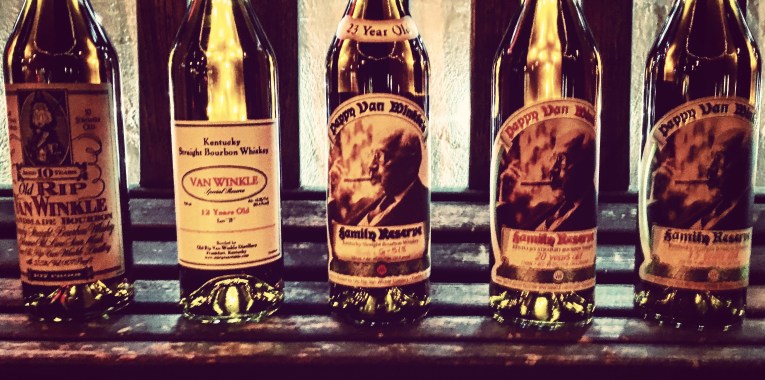
Pappy Van Winkle is a line of Premium Bourbons that in recent years have become the hot ticket item with bottles going for thousands of dollars at auctions and on the secondary whiskey market. The label includes a 15, 20 and 23 year old Bourbon all called “Pappy” as well as several younger variations referred to as “Old Rip Van Winkle” as well as a 13 year old Rye. All of the Bourbons are currently known to be “wheated” Bourbon, meaning that their mashbill is composed of corn, wheat, and barley and as of 2010 all of the whiskey in the bottles has been distilled at the Buffalo Trace Distillery. That wasn’t always the case.

images-2.jpgJulian “Pappy” Van Winkle was a real man. He was involved in the whiskey business well before prohibition. He and his partner, Alex Farnsley purchased a controlling stake in W.L. Weller and Sons in 1908. At the time Weller and sons was strictly a bottler. They distilled nothing themselves but worked very closely with the Stitzel Distillery.

After Prohibition Pappy, ever the shrewd business man, managed to acquire the Stizel Distillery, merged the two operations into the Stizel-Weller Distillery and opened the new distillery on Derby Day in 1935. They begin production on many purchased pre-Prohibition brands including Cabin Still, Rebel Yell and most notably: Old Fitzgerald.

images.jpgPappy’s flagship brand was Old Fitzgerald. His biggest contribution to his namesake Bourbons is his “whisper of wheat.” Every brand that came out of Stizel-Weller was a “Wheated” Bourbon as opposed to the standard mash of corn, rye, and barley. To many this produces a rounder, softer bourbon with more dark fruit and cherry.

Pappy passed away in 1965 when all the cigars and Bourbon caught up to him at the far too young age of 90. His son, Julian Van Winkle, Jr. inherited the business but in 1972 he was forced by stockholders to sell the distillery and brands. He still maintained a bottling plant and resurrected yet another pre-Prohibition brand “OldRip Van Winkle.” No family relation. He continued producing the label sourcing whiskey from what had been the family distillery.

images-1.jpg
Flash forward to 1992, Julian Van Winkle III is now in charge of the family company and the Stizel-Weller Distillery is completely shuttered. The remaining brands and whiskey stocks are sold off (the flagship Old Fitzgerald fell into the hands of Heaven Hill) and Julian II continues to use old stock for new bottlings. Old Rip Van Winkle 15 year was released in 1989 but the first mention of “Pappy Van Winkle Bourbon” appears along with the first edition of the 20 year old in 1995.

However, many of these early bottlings are not Stizel-Weller whiskey. Julian II was back where Pappy had started, as a non-distilling producer. A bottler. He was sourcing whiskey and many of the initial offerings of the “Pappy” lineup, like the first edition of Pappy 23 in 1998 are actually high-rye Bourbon from the Barton Distillery.

But the Van Winkle’s never let facts get in the way of a good story and Pappy began getting rave reviews in the late 90s by picking up steam as the Bourbon revival does. In 2002 the Van Winkle’s partner with the Buffalo Trace Distillery and secure a continuous source for their brands.

In the end, the cold hard fact about why Pappy Van Winkle is considered the best Bourbon in the world is because people keep saying it is.

And In 2007 the New York Times puts the Pappy 20 at the top of their list of
premium and super-premium Bourbons leading the revival of the industry. By the time Anthony Bourdain tweets that he’s considering getting a “full pappy back tattoo” in 2011 Pappy-mania is swinging into fifth gear.

Now when most people ask how they can get a bottle of this coveted whiskey gold the answer is, you can’t. Yet people are still getting bottles, often at massive price hikes. So it’s not that you can’t get a bottle, it’s just that someone else is willing to pay more. To the Van Winkle and Buffalo Trace’s credit they haven’t seized upon the Pappy craze to drastically raise prices but the people they sell the bottles to have. Pappy Van Winkle not only helped fuel the Bourbon Revival but also the secondary Bourbon trading market where bottles are traded and sold, technically illegally, online. That’s a lot for one small whiskey to carry on its shoulders.

but_always_fine.jpgIn the end, the cold hard fact about why Pappy Van Winkle is considered the best Bourbon in the world is because people keep saying it is. And because people keep making money off of saying it is. Those who don’t learn from history are doomed to repeat it. Think about that the next time you see it listed on someone’s menu for $150+ a pour, and maybe find a bartender you trust to help you drink your next history lesson.

Buffalo Trace and Pants

Why do we leave the house? Between digital streaming and the sharing economy everything you could ever want is right there or can be delivered at the push of a button. Human socializing has been digitized and depersonalized. Entertainment can, and will, cater specifically to you, and the Internet will connect you to anyone in the world. So, why go out?

I personally like to believe it has to do with experiencing the world. That to bring back a true story to the digital marketplace enriches yourself and the people you’re sharing with. It still doesn’t explain why we gather to drink fermented beverages, laugh, talk, and be merry. Some things are just for fun. But they should still be an experience.

I like to call it the, “You Put On Pants” Philosophy. For whatever reason you decided to get up of the couch, put on pants, and come to the bar instead of watching Game of Thrones reruns. Let’s make it worth your while. Let’s get you something that can’t be delivered straight to your doorstep. In this case with a whiskey you can’t get anywhere else.

“You Put On Pants Damn It”

Buffalo Trace isn’t hard to come by. Even though the brand was only created in 1999 the Bourbon Boom and the fact that it is a quality whiskey has made it a nearly ubiquitous bottle. What makes this ‘pants worthy’ is its single barrel nature. After tasting through several samples we bought all of the whiskey inside of the barrel. The only way to taste this version of Buffalo Trace is right here with us. It has the familiar backbone but with a massive dollop of orange marmalade, a spicier pop and super rich vanilla.

It’s not an earth shattering difference but it’s enough to stay interesting. Both for you leaving the house and us coming into work. This isn’t our first barrel and it’s by no means our last. So, we’ll hopefully being seeing you through several pairs of pants.

Sazerac Straight Rye Whiskey

What’s in a name? A Sazerac by any other names is a…rye? A cocktail? A Coffee House? A long defunct cognac? Language is a funny thing.

When we say ‘cocktail’ these days it tends to be as a catchall for ‘mixed drink’ but that’s essentially the equivalent of calling all steaks fillets. A cocktail is a very specific type of drink made from spirit, sugar, bitters and water, usually in the form of ice. Or as it’s often called today: an Old Fashioned.sazerac.jpeg

And just like today where you may call for a Elijah Craig Old Fashioned, you would have called for a Sazerac Cocktail, made with cognac from Sazerac-du-Forge et Fils which was imported by the Sazerac House in New Orleans. Being very French the New Orleans drinkers loved to ‘improve’ up their cocktails with just a dash of absinthe and Bam! A Sazerac Cocktail.

But at the turn of the century the phylloxera plaque struck Europe wiping out old vineyards laying waste to innumerable wine and cognac house. As the supply of cognac dwindled, New Orleans drinkers turned to what was readily available to them: Rye Whiskey and gave birth to the Zazerac. Yes, Zazerac with a Z. Language is fun, and by distinguishing the proper names drinkers could quickly indicated whether they wanted the brandy or the whiskey version. Confused? You’re probably not the only one. In the Artistry of Mixing Drinks by Frank Meir published in 1934 he says, “Note. – there is much confusion between the ‘Sazerac’ brandy cocktail and the ‘Zazerac’ cocktail originally made in New Orleans.” So the ‘Zazerac’ name gathers dust while the actual drink gathers steam.

“Note. – there is much confusion between the ‘Sazerac’ brandy cocktail and the ‘Zazerac’ cocktail originally made in New Orleans.”

Time passes and a new Sazerac house rises, this time an American Liquor Company named that owns and distills Buffalo Trace and a myriad of other bourbons, but also an Eponymous Rye Whiskey named: Sazerac. And it’s damn good. Bright, crisp apple, dry rye spice, with a touch of that southern air on the nose. But is it Sazerac? In name only.

In honor of the spirit of the spirit, share a few Sazerac Zazeracs tonight