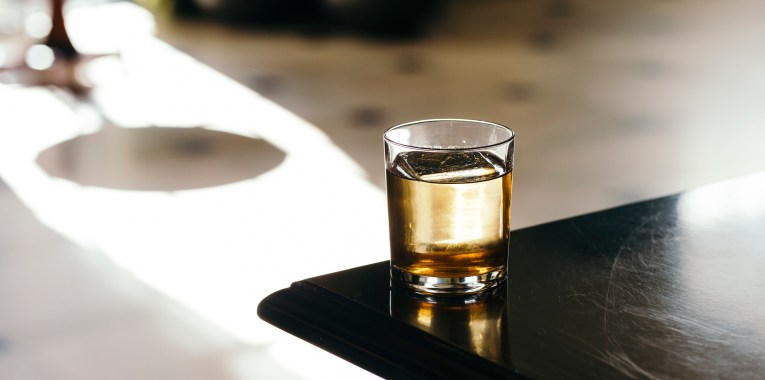
This is the story of a drink that got away from me.
As I’ve said before I tend to turn every drink into a brown, bitter, and stirred variation on a theme. It should therefore come as no surprise that I’ve been trying to play around with some version of a hopped Old Fashioned style drink for at least a few years. Long enough that the idea of using hops in a drink now seems cliché.
The first iteration that almost made a menu was while I was the Bar Manager at Faith & Flower. Dubbed the “Whiskey Icarus” this drink combined a hopped honey, Bernheim wheat whiskey, and Riesling.
I remember the drink being refreshing and surprisingly crisp. With the memory of the drink in my head I brought it into the initial R&D sessions at NoMad. However, I was never able to recreate that remembered flavor. I’m not sure if it was the specific Riesling that was being used, a change in the hops, or a change in production method. This inability to replicate is a prime example of why you should keep detailed notes, especially with liquid R&D.
I couldn’t put the idea down and when I was putting together the One Year Anniversary Menu for NoMad LA I dragged the drink back into the conversation.
It was a Frankensteined drink from the start. The original thread lost and reassembled using existing NoMad syrups and ingredients. I made a homemade apricot and barley tea bitters (which are still one of my favorite ingredients I’ve ever made) Verjus replace the wine, Lapsang Cacao instead of hops, and tried split base after split base. While the initial variations were some of the least liked ideas for the menu there was something about the drink that kept tugging at us. It was intriguing enough that we wanted to figure it out.
The first think that needed to happen was stripping the drink back down to basics. What was the central premise of the drink? A hopped, old fashioned style drink reminiscent of mead.
Once the basic concept was nailed down we started picking out the elements of the numerous variations that we had liked.
The addition of the chocolate from the infused cacao was so nice that we decided to keep it and made a Cascade Hop infused cacao to replace the smoky Lapsang tea.
The bitter, grapefruit notes from the hopes were now overwhelming the subtle stone fruit of the Apricot and Barley Tea Bitters, however the barley helped to reinforce the hop component so the bitters were replaced with a teaspoon of barley tea syrup and to get a touch of that fruit aspect back a quarter ounce of Grand Marnier was added.
Next it was time to address the split base. Out of all of the combinations a split between bourbon and aged genever complimented the original base the best. We swapped bourbon after bourbon looking for something luxurious. The genever was the Boomsa Oude which was rich and malty but light on the barrel and the best bourbon pairing that wasn’t a limited release was the Henry McKenna Bottled in Bond. This was before its gold medal win so we stocked up once it started clearing out.
Because of the split base it didn’t have as heavy of an oak presence and a teaspoon of vanilla was added to compensate.
And then because it’s the NoMad we added aquavit and sprinkled a pinch of fluer de sel on top.
At this point no one was leading the ship and the palate fatigue was strong but this was the most balanced of the new version. You could tell we weren’t quite satisfied with the drink but it made the menu. Renamed the “Cascading Lines” as play on the Cascade hops and the conflux over different threads that had to come together for this drink.
As the drink rolled across the floor in the first week changes and tweaks were inevitable. As we tasted it with fresh palates it quickly became clear that the Grand Marnier was completely unnecessary. The final change happened completely by accident.
As a standard we use White Crème de Cacao. However, during our opening there was a delivery issue and we ended up with a case of Dark Crème de Cacao. After sitting on it for nearly 1.5 years this infusion seemed a perfect opportunity to clear some inventory space. What seemed like a nothing change actually lent a deeper note to the drink that actually let the hops shine in a more balanced way.
The lesson I took away here was the importance of a directed focus and idea during the R&D process. This ended up being the best version of the Cascading Lines but is it the best version of this idea? I’m still hoping to see the Whiskey Icarus on a menu one day.
Cascading Lines :
Tsp Vanilla Syrup (50 Brix)
.25 oz Barley Tea Syrup (50 Brix)
.25 oz Cascade hopped Dark Cacao
.5 oz Henry McKenna Bottled In Bond Bourbon
1 oz O.P. Anderson Aquavit
1 oz Boomsma Oude Genever
Combine all ingredients in a mixing glass.
Short stir with 1×1 ice cubes.
Strain over a large 2×2 ice cube in a large rocks glass and garnish with a pinch of fluer de sel.
Hopped Cacao:
15g Cascade hop pellets
1 liter dark crème de cacao
Vacuum seal.
Let set for 25 minutes.Pass through a chinois and store in a clean glass bottle under refrigeration for up to two (2) weeks.

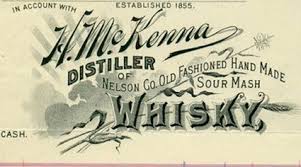 The whiskey produced at McKenna’s Nelson County distillery never carried the name ‘Bourbon’ but it was regarded to be of the highest quality. Newspaper at the time noted that McKenna never sold a drop that wasn’t at least three years old. There was even a bill introduced to Congress in 1892 asking for unlimited bond period on aging whiskey to prevent tax penalties on whiskey aging beyond the bond. This bill was known as “The McKenna Bill.” The next year McKenna passed away at the age of 75.
 Bottled In Bond LA