If the Yamazaki and Suntory represent the old school powers that be in Japanese Whisky, than the Chichibu and Ichiro Akuto represent the new guard.
The Chichibu Distillery is the brainchild of Ichiro Akuto and began operations in February of 2008. It sits just outside of Chichibu City about 100km north-west of Tokyo. And while the distillery is certainly a newcomer to the Japanese whisky scene Ichiro Akuto is anything but.
 Where most of the master blenders and distillers in the Japanese whisky world are rather unassuming and reserved, every interview and Google search for Ichiro is required to use the word ‘rock star’ to describe him. The Akuto family had been making sake in Chichibu since 1626 and transitioned into the sochu and whisky world in 1941 when Ichiro’s grandfather opened the Hanyu distillery. The distillery ended up enjoying considerable success during Japan’s postwar whisky boom.
But as so many of these stories go the 90’s were incredibly unkind to brown spirits and the Hanyu distillery closed in 2000. With the distillery now closed and so little of the produced whisky being sold some hyper aged, delicious, and eventually legendary whisky was about to be bottled.
With Hanyu whisky now a nonrenewable resource Ichiro began releasing the“Playing Card” series in 2005 with the release of the “King of Diamonds.”  Nearly 10 years later there was a complete deck of 52 “Cards” complete with two Jokers. According to interviews Ichiro never meant to release a complete deck. The idea was to originally release four single casks and working with a friend of his, who was also a designer, they struck upon the idea that playing cards had four suits, and so a legend was born.(A legend that sold as a complete set at auction in 2015 for $400,000.) Not as impressive as the individual bottle price of the Yamazaki 50 but still amazing for a collection of whisky that was so unwanted a mere 15 before the sale that the distillery that produced it had shuttered its doors.
The quality and care that went into these bottlings was evident but the supply was clearly limited. So, Ichiro took the funds from those early Playing Card releases and established the new Chichibu Distillery to rebuild his stock. And again he dove into tradition to establish his style. The staff routinely flies to Scotland to learn skills like floor malting, which they’re now doing onsite at Chichibu. They’re also doing their own cooperage on site. Once a year, Ichiro would take his staff to learn from one of two independent coopers in Japan. When the 86 year old cooper, who had no successor, decided to close the cooperage Ichiro purchased all of the machinery and set it up on site at Chichibu. But none of this would mean anything if the whisky was lacking and the bar was certainly set high with the Playing Card series.
 The first Chichibu whisky debuted in 2011, a mere three years after the distillery started operation. Adding to his ‘Whisky Rock God’ persona every bottle that rolls out of Chichibu is labeled as an “Ichiro’s Malt Chichibu” with a sub name describing the release. This first release is appropriately dubbed, “The First”, and the whisky was aged in a combination of ex-Bourbon and Japanese Mizunara oak. Only 2,040 bottles were made available and it cemented Ichiro, and Chichibu, as a major player not just in the history of Japanese Whisky but also in its future. I remember drinking this whisky and being blown away by the delicacy and elegance it presented at a mere three years and at 118 proof. There were nectarines, vanilla, a touch of cinnamon as well as an earthiness, and green apple that fed into the maltiness.
From there Ichiro has moved on to more, I wouldn’t say standard, but more consistent releases. The flagships being “The Peated” utilizing, you guessed it, peated malt, then “The Floor Malting” making use of the afore mentioned on site floor malting, and finally the “On The Way” which is a blend of Chichibu Malts of various years that is ‘on the way’ to Ichiro’s goal of being able to consistently release a 5 year old malt. Which is already being replaced by his goal of being able to produce at 10 and 20 year old malt.
The Ichiro’s Malts show remarkable variety for such a young distillery but they do have a few things in common: a large price tag and limited availability. When you’re looking to introduce people to your brand and expand your clientele few things are larger roadblocks that price and availability. So what’s a young, hip distillery to do to expand stock?
Traditionally malt makers turn to blended whiskies. A small percentage of single malt whiskies blended with grain whisky, light column still whisky made of whatever grain is cheapest. It produces a lighter style whisky and while the Whisky Drinking Elite will turn their noses up at blended whisky this style still rules the Whisky Drinking World. But Ichiro’s Chichibu decided to go another route.
In an effort to produce what he calls, ‘an all world whisky’ Ichiro has built a whisky with a base of Chichibu Malt whisky blended with selections of whiskies from Scotland, Ireland, Canada, and America. All of these world whiskies styles are aged in their country of origin for 3-5 years before receiving an additional 1-3 years of aging on site at Chichibu.
The exact proportions and original distilleries for these other whiskies are kept under wraps but the result is an incredibly intriguing bottle, and not just intellectually speaking.
The nose has a surprising amount of citrus with apricot, meyer lemon, and a touch of  orange weaving through a light sweetness which leads into a large roasted nut, vanilla, white pepper feel, then a touch of tobacco and gingerbread on the tongue that leaves dried tropical fruit and vanilla as it disappears into a medium length finish.
This is the kind of innovation that intrigues me. It approaches an old problem in a new way and manages to produce something that I truly have not encountered before. For something that sounds like it could so easily devolve into a massively muddled mess it manages to hold on to that elegance and refinement that Ichiro’s bottles have become known for. And it’s affordable… by Chichibu standards at least. With a retail price of about $100 I can’t quit say it’s solved the approach-ability in terms of price. But on the flip side compared to many Compass Box releases it’s practically a steal.
In the end Ichiro Akuto and Chichibu represent a new paradigm in the whisky world. Drawing from tradition and past experience to produce something incredibly modern and specific while, hopefully, building towards the future. I just hope that all this innovation and quality eventually allows prices on many of these future whiskies to come back down. So that whiskey world doesn’t become the domain and hobby of just a select few but allows anyone who’s interested to dip their tongue into something more unusual without having to worry about selling their car to afford a bottle.

 Although the eau de vies are still a major part of the distillery, the portfolio has expanded to include such wide sprawling products as a California Agricole Rum, an Absinthe Verte (which became the first commercially available American Absinthe after the lifting of the 1912 ban), as well as numerous gins and the Hangar One vodkas which were sold to Proximo in 2010. St. George first entered the whiskey game in 1996 when Jorg hired Lance Winters, a former nuclear scientist and brewer, for a one-month trial. Twenty years later Lance is still experimenting and Jorg is delightfully retired.
 Malt Whiskey.” Technically, according to the American government there is no legal definition of what constitutes an ”American Single Malt.” However, this lack of consensus didn’t stop drink giant Remy Cointreau from purchasing the American Malt makers at Westland Distillery in December of 2016. Whether that speaks to a growing awareness of the category, or to an international audience more familiar and accepting of products labeled “Single Malt” remains to be seen.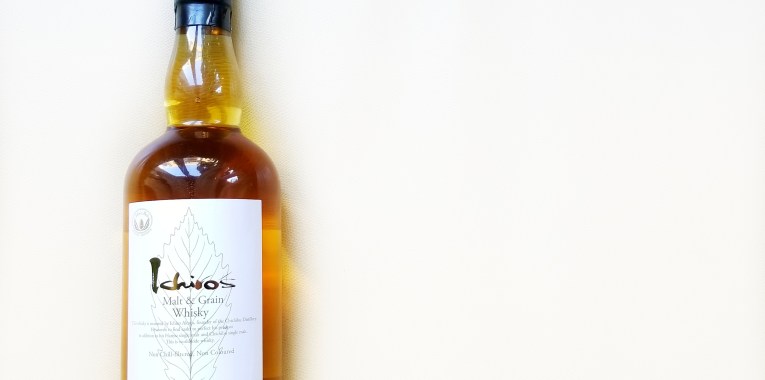

 The cynic in me wants to say that the whole ‘unique experience’ is marketing talk for ‘we can’t get the ingredients to make this anymore.’ That it’s just another way to cash in on the whiskey boom. But looking at how long Don and Willie have been doing this it looks more like to men tired of doing the same thing day in and day out. It has the feel of wanting to find something new, to experience and share it. So what does the millennial in me say? That it’s not a generational thing. That it’s just a human thing.
 Bottled In Bond LA