Whiskey Wednesday: O.F.C. 1985 Vintage Bourbon

Spontaneity is not my strong suit. 

Example A: my girlfriend swears by the deals emailed out daily by Scott’s Cheap Flights. Yet every time a deal lands, I have to ask about time frame, logistics, check on available vacation days, and generally stressed about the fact that booking this trip means that we won’t be able to book some other hypothetical trip that doesn’t yet exist and just like that the deal, and the moment, is gone. 

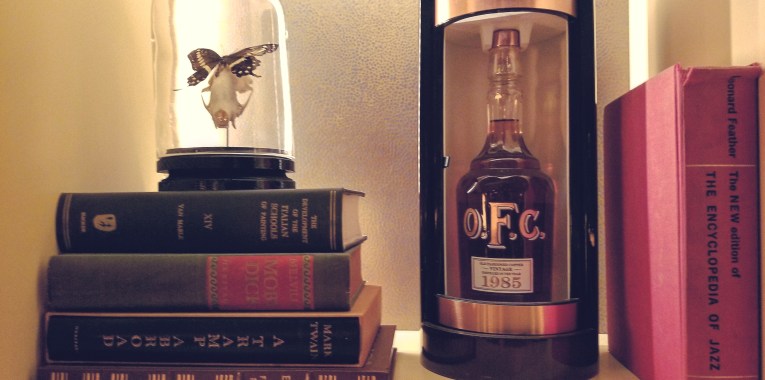
Example B: We received a bottle of the O.F.C 1985 Vintage Bourbon a year ago and I’ve been planning to write about it ever since. So, what the hell is O.F.C. and why has it been on my mind for literally a year? 

O.F.C. stands for Old Fashioned Copper and is the original name for the distillery founded by Col. E.H Taylor in 1869. Col. Taylor was an expert marketer and helped establish the concept of a Bourbon “brand” as well as being one of the major figures behind the passing of the Bottled In Bond act of 1897. 

The distillery itself was sold to another legend, George T. Stagg, in 1878. There’s an apocryphal story that one of the conditions of the sale was that Stagg could keep the initials O.F.C. but he had to change at least one of the words it stood. This is why the distillery is sometimes called the “Old Fire Copper” distillery. Regardless of the veracity of this claim the distillery’s name was officially changed to the George T. Stagg Distillery in 1904. It was the first distillery to utilize climate-controlled aging warehouses when Stagg installed steam heaters in 1886 and was one of only four Kentucky Distilleries granted a license to continue distilling throughout Prohibition.

The distillery changed hands a few more times in the 20th century before finally being purchased by the Sazerac Corporation in 1992 and its named changed once again. Now known as Buffalo Trace it arguably produces some of the most sought after American Whiskey on the market, including bottles named after both Taylor and Stagg as well as the much desired Pappy Van Winkle line. 

The distillery clearly has experience with special releases but even amongst the plethora of rare bottles the O.F.C. stands out. 

 The O.F.C. is less a special release and more of a time capsule. These are all single barrel, vintage dated Bourbons. Each bottle is sourced from a single barrel and marked with the year of distillation. This makes each vintage completely unique with the mashbill and age varying depending on the bottling. Another intriguing fact is that this line up was originally produced only for charity. 
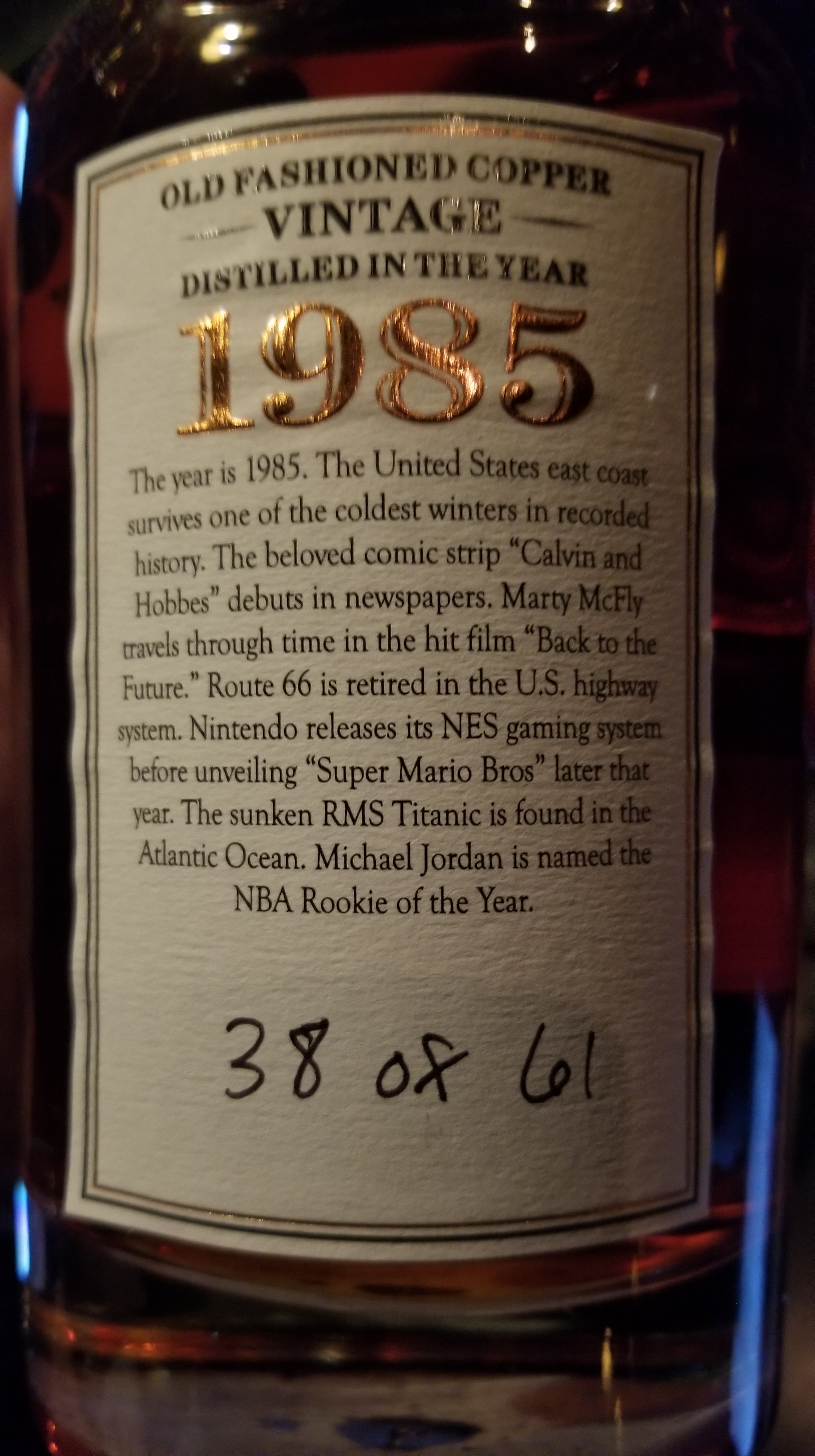
A literal Time Capsule.

The team at Sazerac and Buffalo Trace are just as savvy marketers as Col. Taylor was back in the day. I have to imagine that when they see bottles of their whiskey selling for thousands of dollars on the secondary market that they looked for a way to capitalize on that market value yet still offer an added bonus. The original three releases were only made available to 200 charities, at no cost, to auction off and help raise money for their cause. It was a great way to turn the image of limited whiskey auctions on its head and raise $1.2 million dollars for charity. It also immediately established the O.F.C. line as a super limited, ultra premium bottle. I was silently jealous of the fact that I would never see one of these bottles yet still applauded the move to raise money for worthy causes. But when the second round of releases was made available for retail purchase I leapt at the opportunity. Especially with the vintage being offered was the 1985. It’s not often you have a shared birth year for your whiskey. 

The 1985 Vintage is one of only 61 bottles to come from a barrel which was stored on the second floor of Warehouse Q. Buffalo Trace says that all of the barrels were tasted over time and removed from the barrel before becoming over oaked and since there is no age statement listed on the bottle it’s hard to tell the precise age of the bottle. This isn’t an uncommon practice, Buffalo Trace has done similar things with Eagle Rare 17 and Sazerac 18 so the whiskey isn’t as much as an oak bomb as you might expect. It is certainly old but there’s no official word on if it was a full 33 years in oak before being bottled. With that in mind let’s dive into the glass: 

NOSE: Rich oak, Dried fruit, and vanilla 

PALATTE: Rich vanilla, dark cherry, prune, oak, and a dark earthiness 

FINISH: Bitter chocolate, a touch of tobacco, and a coating lingering sense of time 

Overall this is an excellent example of old American Bourbon whiskey. It is still alive without being over oaked and has a power of flavor to match up to the power of the years it spent asleep in the barrel. The issue, as always, is the price. The bottle comes in at a staggering suggested retail price of $2,500. When the proceeds were going to charity this number wouldn’t have raised peep from me but now it changes the talking points. 

Is this good whiskey? Yes. Is it for everyone? Absolutely not. It is a special occasion, made so by the fact that it is a living time capsule. You are paying for the time and history as much as the whiskey itself. I will argue that experiences are more important than money but  the value is certainly subjective. I for one am going to savor the fact that I get to experience this bottled moment of time and not take it for granted. 
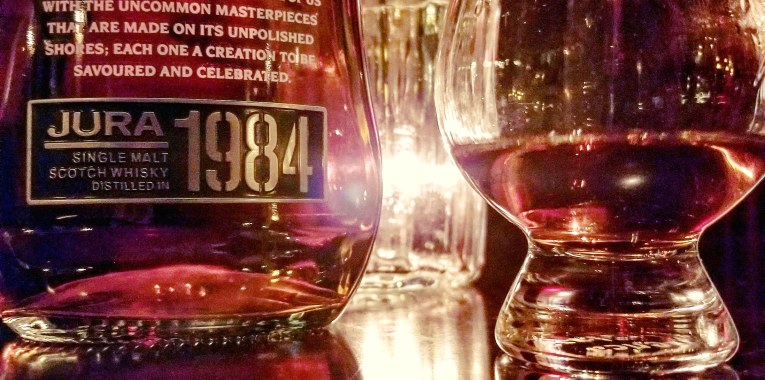
Open Bottle: Nineteen Eighty-Four JURA

“Who controls the past controls the future. Who controls the present controls the past.”

Released in 1949 George Orwell’s masterpiece Nineteen Eighty-Four often feels as alive and resonant as it must have when it was first published. Reading the headlines it feels like doublespeak, Big Brother, and New Speak have leapt from the lexicon of the theoretical into the mundanely of reality.

What was once meant as a cautionary tale has instead become the blueprint for how entire organizations operate.

The world has become vastly interconnected since 1984 and people are starting to realize how small a piece of the global whole they actually are. Some have risen to the challenge and sought to make their corner of that cold, distant expanse warm and welcoming. The seek to grow their communities.

Others, however, have become jealous of their small portion and rather than growing they shrink. They shrink from responsibility, from compassion and not only do they personally shrink they seek to diminish the world around them. To force the world to be smaller, leaving no room for those that are different or for those who seek an equal share in the world in which we must cohabitate.

Not exactly light, whisky sipping, thinking but these are thoughts that are constantly on my mind these days and were brought into sharp focus when presented with a dram of Jura’s 1984 Edition.

The Isle of Jura lies off the North-East shore of Islay, has one road, one pub and one distillery, the eponymous Jura. Orwell described the island as “extremely unget-at-able” which remains very true to this day. It was at the “unget-at-able” locale that Orwell wrote the bulk of Nineteen Eighty-Four while incredibly ill with tuberculosis fro 1947-1948. It’s this act of creative output that Jura is honoring with the 1984 Edition.

Casked in 1984 and bottled in 2014 this 30-year-old single malt was aged in ex-Bourbon, Amoroso (cream) sherry, and Apostoles Oloroso sherry casks. Only 1,984 bottles were released world wide making it a rather limited release. This is a lot of attention to detail to pay homage to an event that happened when the distillery didn’t exist.

The distillery was built in 1810 but fell into disrepair at the end of the 19th century. It wasn’t rebuilt and operational again until 1963. So there is clearly a bit of a marketing gimmick tied into this release, which is nothing new to the spirits world, and unlike most gimmicks this whisky is a phenomenal product.

NOSE: The nose is rich, redolent in those sherry aromas with nutmeg, dark dried fruit, raisins, and a noticeable touch of the sweet.

PALETTE: Deep cherry and candied orange peel. There’s also a hint of roasted peaches with a large dollop of honey and, of course, oloroso sherry.

FINISH: The dram has a medium finish that lingers with a surprising amount of spice for how sweet it starts, leaving the dry baking spices and a touch of dessert.

I don’t care what your marketing angle is as long as it’s true and the product is good. And this product is exceptional. The story being crafted is a bit forced but it is also clearly the result of a small community taking pride in its past and continuing to build for its future.

It is perhaps unfortunate that Orwellian thoughts float through my mind while sipping on this malt but then again the age that we live in requires us to be active participants in the world around us, even when just sipping on a whiskey.

Education is the best tool we have to enact change and I, for one, would not have known that George Orwell wrote Nineteen Eight-Four on Jura with out this bottle. With out this bottle I wouldn’t have spent a week researching and reflecting on the themes of a book I haven’t read since high school. Not only was I researching but I was also reexamining these themes in the light of the modern world and my adult experiences.

We must stand up, we must think for ourselves and not simply walk the party line. We must not become orthodox for, “Orthodoxy means not thinking–not needing to think. Orthodoxy is unconsciousness.”


P.S. VOTE

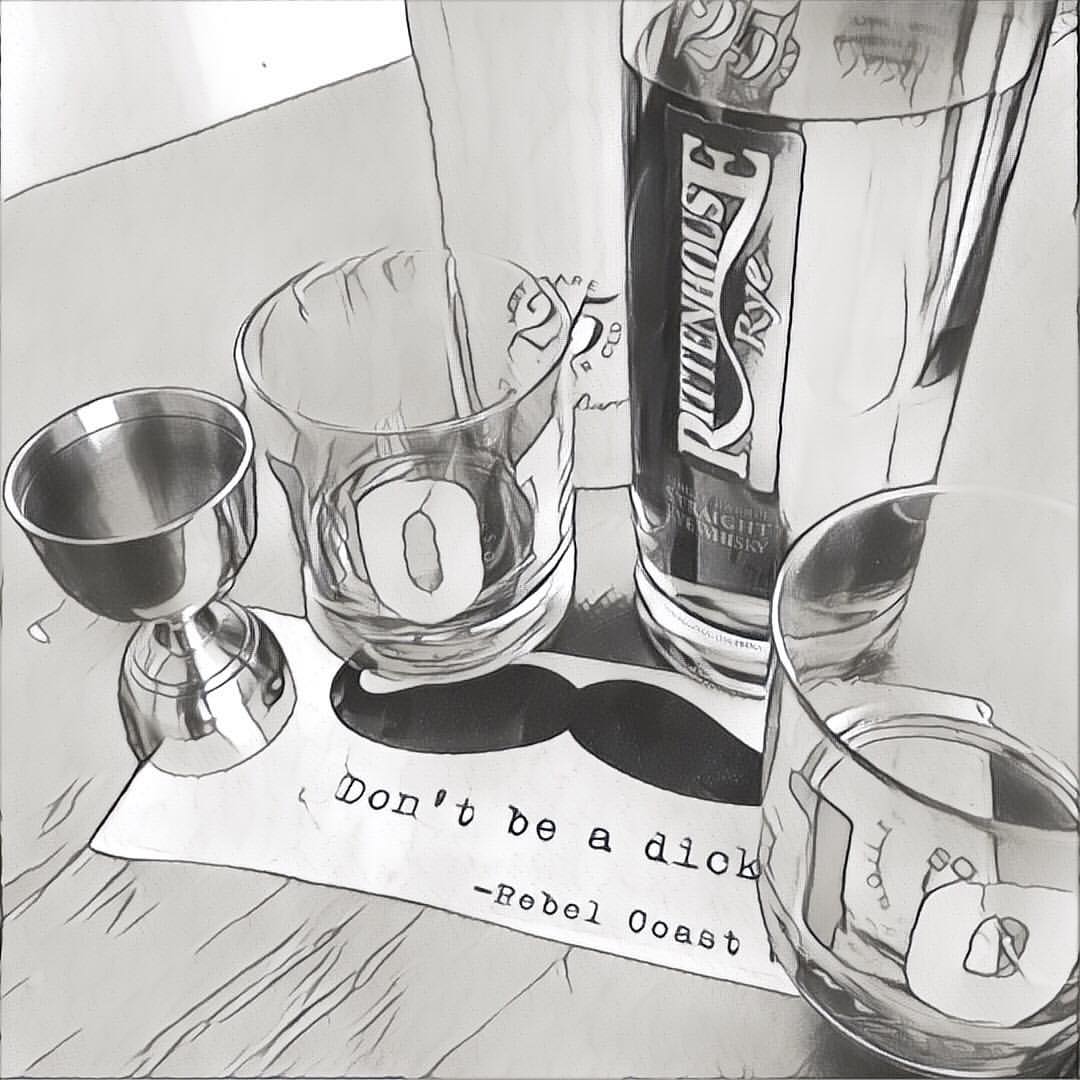
Open Bottle: Rittenhouse Very Rare 25 Year Straight Rye Whiskey

Today I’m either turning 33 or 37, depending on whether you believe my birth certificate or my girlfriend’s mathematical skills.

I’ve been in the service industry since I was 16, been bartending since I was 20, and have been a “craft bartender” and bar manager since I was 25. In a lot of ways my experience behind the bar has shaped me as a person, helped define my personality, and at times threatened to completely consume my life. And it all happened by accident.

While I was out manning an NBC desk the bar world had changed. The Cocktail Revolution was well underway.

It’s easy to look back on that stretch of years and see it as an inevitable progression but it never felt that way. I started waiting tables as a way to make easy cash in high school. From the moment I started taking drink orders I knew I’d rather be taking those orders from behind the bar and making the drinks; bartenders were just inherently cooler. I completely blame early viewing of Roadhouse and Cocktail for this gross misconception, but even when I started doing my best Tom Cruise impression it wasn’t a career. I was just finding a way to pay my bills in college while I figured out what I was really going to do when I grew up.

Skip ahead a few years and my Brian Flannagan impression had been traded for a blend of Aaron Sorkin and Kenneth from 30 Rock. Needless to say that wasn’t a combination that seemed to be working out so when I found myself between jobs I decided to start bartending again until I found what came next. Turned out what came next was bartending.

While I was out manning an NBC desk the bar world had changed. The Cocktail Revolution was well underway and suddenly there was a wealth of information, spirits, techniques, and books that transformed slinging drinks from a job into a profession. Similarly, some health issues transformed my youthful sense of invulnerability into an inevitable sense of my own mortality.

This profession and vulnerability coalesced into the first major purchase of my soon to be overwhelming liquor collection: The Rittenhouse 25 Year Old Straight Rye Whiskey.

Rittehouse25B&W.jpg

I was still reeling from the debt that having a “Real Job” had bestowed but I was alive, financially stable and wanted a bottle of spirit that was older than I was so that I could raise a glass in celebration for hopefully years to come. I had no idea what I was doing when I walked into that BevMo, but thankfully my naiveté was matched by the fact that Pappy Mania hadn’t yet transformed the whiskey world into a wasteland of unattainable whales and unicorns. This perfect confluence meant that a bottle that now goes for north of $1000 had multiples sitting on the shelf at a Santa Monica BevMo for less than $150 each. It was such a crazy time that I turned down buying a bottle for the bar because it was “too expensive” and “would never sell.” I wish I had a time machine to go back and snap up a 6-pack.

As I begin my inevitable transformation into Doug Coughlin I’m going to sit with another dram.

The third release of a series, the 25 Year Old, was preceded by a 21 and 23 year old Single Barrel release. All three releases come from rye distilled in October of 1984, aged on the lowest floors of Rickhouse OO, and were all bottled as 100 proof, non-chill filtered single barrels.

 
NOSE: There’s a touch of spice but it’s mostly a candied walnut, dried fruits and a waft of cedar mixed with the oak.

PALETTE: On the tongue there is a deep nougat, a sense of brûléed fruit, and a massive bag of baking spices. It is surprisingly sweet for a rye but carries a sophistication and stateliness. This is one of those old whiskies that rather than tasting old and oaky, tastes mature and aged.

FINISH: The finish is long and warm. The spice finally finds it’s footing as the rest of the flavors evaporate and evolve.

This is quite simply one of the best bottles of rye I’ve ever had. And what’s amazing is that as my palette, experience, and collection has grown I return to this bottle for a simple pour every year and still feel the same way.

Though to be fair it’s not really about what’s in the glass. This is the prime example of my philosophy that whiskey is meant for drinking. The experiences the led to buying the bottle and the accumulation of everyday until the next pour adds to the poetry in the glass.

As I begin my inevitable transformation into Doug Coughlin I’m going to sit with another dram and share it with those that I can. I may have started this journey by accident but the feeling of growth and community is what’s kept me here.

That and the booze.

And the tips.

But mostly the booze.

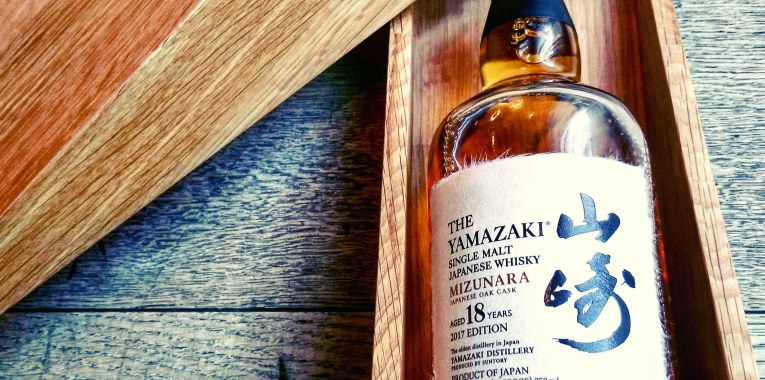
Open Bottle: Yamazaki 18 Year Single Malt Mizunara Cask

In today’s edition of things you’ll never get to taste: Yamazaki 50 Year Old!

            On Friday August 17th 2018 a bottle of 1st edition Yamazaki 50 Year Old, one of only 50 bottles to exist, sold at auction for $312, 519.87. This is now the most expensive bottle of Japanese whisky ever sold at auction, beating the previous record set a mere three months earlier with the sale of bottle of 52-year old Karuizawa and blowing the previous record for Yamazaki set in 2016 out of the water.

But none of these can touch the record for most expensive bottle ever sold at auction, also set in May of 2018, for a bottle of MaCallan 60 Year old. The malt was distilled in 1926, bottled in 1986, featured a label created by Valerio Adami, is one of only 12 bottles in existence, and sold for $1.1 million USD.

Thirsty yet? Wish you could taste what must be the Elixir of Youth? Well, you can’t so lets talk about something absurd that you still might be able to put in your mouth: The Yamazaki Mizunara Cask.

To many drinkers and collectors Yamazaki is the quintessential Japanese whiskey. You can read more about their specific history, here, here, and here. Yet something that’s even more quintessentially Japanese than Yamazaki, kaiju, and anime is mizunara wood.

download-1
Quercus mongolica

Scientifically known as Quercus mongolica, this is a species of oak native to Japan, central and northern China, Korea, eastern Mongolia, and eastern Siberia. The infancy of the Japanese whiskey industry butted up against the outbreak of World War 2 and while imports of European and American oak barrels for aging were drying up whisky consumption was on the rise and became the main drink consumed by the Japanese army. Barrels were needed so the distillers turned to their native oak.

Up until then mizunara had been used primarily in the manufacturing high end furniture and when transferring to whisky making the distillers ran into a few problems. First up, it takes a good 200 years for a mizunara oak to fully mature for a good cask, and it doesn’t grow straight, making it difficult to form proper staves. On top of that, Japanese oak has a higher moisture content than it’s cousins making it more difficult to work with. It’s also more porous meaning the casks are more susceptible to leaking.

Despite all these setbacks it turns out what mizunara really needs to shine is the thing that it’s hardest to give: time. The true flavors of mizunara really start to shine after prolonged ageing. This has lead to it being an essential player in the blended/pure malts that Japanese producers are so found of but also rocketed it into the stratosphere of some of the most sought after style of aged Japanese whisky in the world.

As the world of rare whisky comes to mirror more and more the world of fine art and bottles are becoming collectors pieces to be admired but never enjoyed it’s worthwhile to be reminded that the true joy of a dram is in the drinking and the sharing.

Due to the maturation time needed and the problems of working with the wood itself there aren’t many whiskies that are fully aged in exclusively mizunara but the allure and price tag of whiskies aged in mizunara have led to multiple producers releasing mizunara seasoned releases that carry the name but not the refinement that is so readily apparent in the older Yamazaki releases.

Take for instance their 2017 Yamazaki Mizunara release. The 2017 release is an 18 year old single malt aged exclusively in mizunara oak. Their Chief Blender, Shinji Fukuyo, tasted through hundreds of mizunara aged whiskies and put together this malt that may legally only be only 18 years but is stated to contain at least a small portion of 50 year old malt. Bottled at 96 proof and with a price tag slightly north of $1000 this is certainly not an everyday whisky- but can it clue us into the hype and auction fees of its unobtainable brethren?

NOSE: The nose is rich, fragrant and has a touch of sandal wood and greenery. An undertone of fresh baking spice is also present. The mizunara is already making itself known.

PALATE: A silky texture, with dry red fruit, coconut, citrus marmalade, a sweetness of caramel and a rich texture that is reminiscent of condensed milk with out the heavy feeling.

FINISH: It ends with a decisive spiciness, it’s reminiscent of Japanese incense, the lighter wood notes from the nose return and linger with the baking spice as you exhale.

This is a truly elegant pour of whisky. It is a prime example of how much patience is needed to truly coax the beauty of the mizunara out of the cask and into the glass. When I drink this I understand why Suntory is scouring Japan for old mizunara furniture to turn into more barrels.

I’ll probably never know how this stacks up to the most expensive Japanese whisky ever sold but it will always have something more noteworthy about it than that auction bottle ever will: I can actually drink it. As the world of rare whisky comes to mirror more and more the world of fine art and bottles are becoming collectors pieces to be admired but never enjoyed it’s worthwhile to be reminded that the true joy of a dram is in the drinking and the sharing.

This bottle is by no means commonplace and the price is nothing to scoff at but I can think of at least four places around Los Angeles where this is a bottle that can transport your evening and remind you that patience is sometimes its own reward.

And if you ask nicely I might even tell you where those places are before I drink it all myself.

Whiskey Wednesday: The Declaration of Jim Beam’s 200th Anniversary.

“We hold these truths to be self-evident, that all men are created equal, that they are endowed by their Creator with certain unalienable Rights, that among these are Life, Liberty and the pursuit of Happiness. — That to secure these rights, Governments are instituted among Men, deriving their just powers from the consent of the governed, — That whenever any Form of Government becomes destructive of these ends, it is the Right of the People to alter or to abolish it, and to institute new Government, laying its foundation on such principles and organizing its powers in such form, as to them shall seem most likely to effect their Safety and Happiness.”

There are some words, some achievements, that are worth celebrating, even if their modern iteration doesn’t live up to its ideals in the popular imagination. It’s hard to find a more iconic American brand than Jim Beam. It’s the #1 selling Bourbon in the world and in many ways the Beam story, both that of the family and of the whiskey, parallels the story of America.

download-3.jpgThe story begins with members of the Böhm family, German immigrants who would latter change the spelling of their name to “Beam,” settled in the Kentucky territory in the late 18th century. The family patriarch, Johannes “Reginald” Beam, was a farmer. And like many farmers of the time he started producing corn whiskey as a way of preserving crops. This side venture lead to the first Beam whiskey to start flowing from the Old Tub Distillery in 1795.
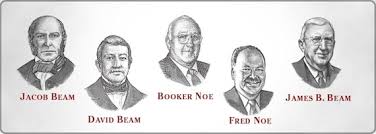
Known as Old Jake Beam Sour Mash, this whiskey proved successful enough that when David Beam took over the family business not only was he able to expand the distribution he was also able to construct a new distillery in Nelson County in 1854. This move came amidst an industrial boom in the country which allowed for modernization of production, and the move to Nelson County allowed for greater use of the massively expanding rail system in the States.

The eponymous James Beauregard Beam over saw the family business both before and after the Great Failed American Experiment of Prohibition. Prohibition interrupted the family production but James was able to rebuild the distillery in 1933 in Clermont, Kentucky in a mere 120 days. It was at this point where “Jim Beam” entered the international lexicon and a member of the Beam family has been at the still, and half the other whiskey stills in the country, ever since.

download-2.jpg

The Beam family has spearheaded this spirit for over 220 years now. However, the actual company hasn’t been owned by a Beam since 1945 when it was purchased by Harry Blum, a Chicago Spirits Merchant. It’s changed hands several times throughout the decades but currently it is a subsidiary of Suntory Holdings known as Beam Suntory. The most American of products is now owned by the second largest international beverage corporation in the world.

Flash back to the mid 90’s. Bourbon wasn’t the hip, award winning, auction breaking behemoth that its turned into today, yet it was still worth celebrating. In 1995 Beam released a 200th anniversary edition decanter and it’s like a little time capsule of Bourbon Past crossed with where Bourbon Future.

Decanters used to be the industry gimmick. When no one wanted to drink Bourbon you made the bottle so irresistible that you had to snatch it up. Compare that to the specialty releases of today where a warehouse surviving a tornado is cause for an award winning bottling.

It was a unique bottling. Bottled at 95 Proof and aged for 75 months, also known as 6.25 years. A higher than standard proof and emphasize on aging, albeit in an archaic ,confusing way. Yet ,the most interesting difference is that there is almost no information about this bottle online. No mashbill info, no tasting notes, and only a smattering of secondary market offerings.

We can assume this was the standard Beam mashbill, which puts us at something like a 76% Corn, 12% Rye, 10% Malted Barley with a #4 Barrel Char.

On the nose there is a farm house quality, along with a dusty oak and touch of sweet caramel. The palette gives way to a familiar barrel char, dark stone fruit, and a lively backbone. The liquid is still very much alive even after 20 years in the bottle. The finish is clean and lingers for just an extra moment and leaves the yeasty, dusty feel that, to me at least, is an indelible part of the Beam DNA. In the end this is a bottle that simply, and eloquently, celebrates the style of whiskey that Jim Beam made, makes, and continues to make.

The Declaration of Independence was a larger enough summer blockbuster that it will inevitably get a sequel. And I hope that this time we truly do mean all humankind are created equal, and that the casting is colorblind.

This is a whiskey made by a family of immigrants, who traveled to a new country, set down roots and became synonymous with one of the most iconic, and living, pieces of Americana to ever exist. A hometown hero on the international stage. I just returned from a trip to the Cook Islands which is in the middle of nowhere South Pacific and they had one bourbon: Jim Beam. Yet, this All American Bourbon isn’t even American owned. To me this doesn’t take away from it’s Americanness, in fact in just speaks to how tightly we are tied to the rest of the world. No matter how much we fight it, there is no “Us” and “Them” any more. We’re all in this together.

As I sit sipping this whiskey musing on the fireworks, hot dogs, and pool side celebrations I can’t help but think that the Declaration of Independence was a larger enough summer blockbuster that it will inevitably get a sequel. And I hope that this time we truly do mean all humankind are created equal, and that the casting is colorblind.

Open Bottle: Chartreuse V.E.P and #1605

If you haven’t noticed America is a little odd. We like doing a lot of things backwards. Like our current administration- or how in most of the world writes the date as day/month/year, which helps explain why May 16, or 16.05, is world Chartreuse Day.

IMG_3595.JPG

If you’re unfamiliar, Chartreuse is a liqueur made by the Carthusian Monks in the French Alps and is often considered bottled magic by many in bartending community. It’s a thing of myth, medicine, and history. It’s history starts in the year 1605.

The Carthusian Monks are an order of working monks, which means that rather then devoting themselves to missionary work they devote themselves to contemplation, prayer, and solitude and maintain that lifestyle by working.  Since the order was founded in 1084 they’ve made many things but the one they have been world famous for making for centuries is Chartreuse.

The production of Chartreuse carries all the mystery you would expect from an organization a thousand years old and devoted to quiet prayer and meditation. The recipe is based on a manuscript thought to be gifted to the monks by Francois Hann

IMG_3613.JPG
Élixir Végétal de la Grande-Chartreuser

ibal d’ Estrées, a cousin of the king at that time, which supposedly contained the recipe for “the Elixir of Long Life.” It was the high time of alchemy and the monks went to work decoding the manuscript of 130 herb and botanicals, yet the first Élixir Végétal de la Grande-Chartreuse didn’t appear until 1737. This seems like quite a gap but keep in mind the world wasn’t as connected as it is these days. Ingredients listed in the manuscript weren’t all native to the French Alps, and once the spice trade brought many of them into circulation it wasn’t a simple matter of following a tried and tested recipe. It was a lot of “a pinch of this” and a “bag of that” things that required balance.

The first Elixir, at nearly 140 proof, was sold as medicine, and is still available in French drugstores as such, and was sold from the back of mules in very limited supplies to the villages around Grande-Chartreuse. However, despite limited availability it proved so popular that the monks set about to create a more “mild” drinkable version. A liqueur of green color, at a mere 110 proof, began to be sold in 1764 and its legend grew from there. A yellow version was introduced in 1838, a defunct “white Chartreuse” was sold from 1886-1900, the monks were forced to flee post

StGermain.JPG
The O.G. St. Germain Cocktail: Green Chartreuse, Grafruit, Lemon, and Egg White

Revolution France and moved operations  to Tarragona for several years before returning to France, and then the V.E.P. (“Viellissement Exceptionnellement Prolongé”) was released in 1963. And this doesn’t account for the varieties available overseas that aren’t available in the United States. Most of which aren’t available because the F.D.A. wants to know what goes into Chartreuse and the monks are understandably closed lipped about a 400 year old recipe. The sales of Chartreuse fund all of the Carthusian Monasteries across the world and the U.S. is the second largest market for Chartreuse in the world. Understandably the company in charge of selling Chartreuse for the monks didn’t want theTTB to pull the product so they have a stalemate. The TTB grandfathered the Yellow, Green, and V.E.P.s into the country with the understanding no other Chartreuse iterations would be imported.

But what makes Chartruese so compelling in the first place? First, is the romance. Who doesn’t love a product made based on an ancient manuscript, containing 130 different botanicals, from a recipe known by only two monks who have taken a vow of silence? It’s the Coca-Cola of the booze world. But, also it’s the complexityIMG_3610.JPG of the spirit.

Chartreuse is made from 130 different botanicals. The Green uses a sugar beet base distillate while the Yellow uses a grape- spirit base (the Yellow also lowers the proof to 80, and uses more saffron and distilled honey as a sweetener). These herbs and botanicals grant a natural complexity but because Chartreuse is created by distillation and maceration it is the only spirit in the world to continue to evolve inside the bottle. Those ingredients continue to interact in unknown ways making old bottles truly unique and sought after.

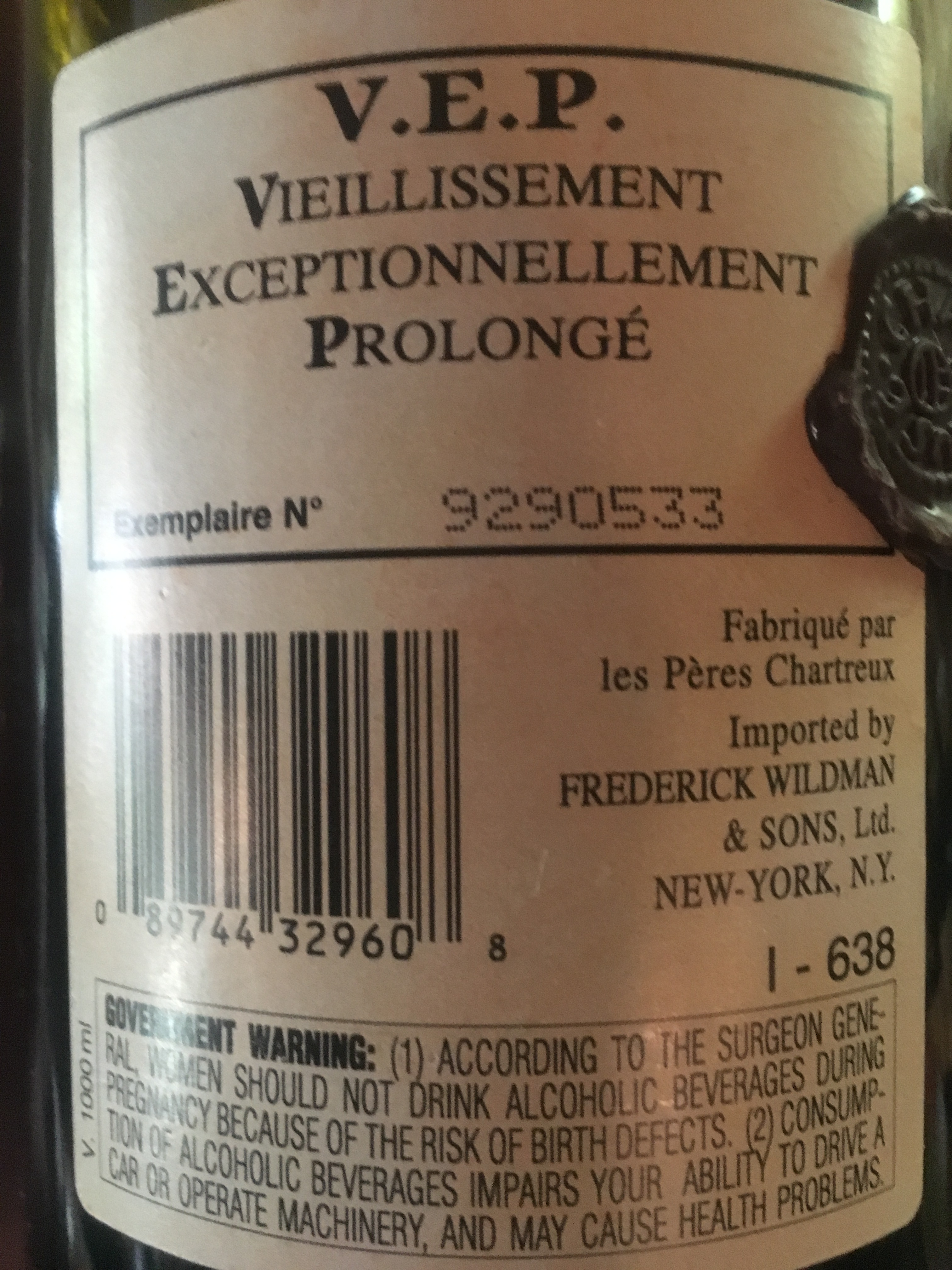
Standard Chartreuse is aged for 3-5 years in the largest liqueur aging cellar in the world (read: ONLY liqueur aging cellar in the world)  The V.E.P.s are aged from 11-20 years and while they carry no age statement you can determine a least the date of the bottling by adding 1084 to the first three digits of the numbered code on the back of the bottle.


IMG_3614.JPG
929 + 1084 = 2013

While the Yellow V.E.P. tends to be the fan favorite (a good friend once described it as “liquid space honey”) I’ve always been partial to the Green, probably because it is 108 proof. My open bottle was released in 2013 and is noticeably richer than the standard Green. Not because there’s a larger oak presence, the barrels are essentially neutral containers at this point, but because the botanicals have had more time to mature. The menthol quality takes a back seat as the warm baking spices ride along the pine and gentian notes to end on a dark, baked fruit note that leaves a sense of weight to the inside of your mouth. Drinking the Green V.E.P. is what I imagine history tastes like: bitter-sweet, earthy, slightly spicy, and heavy with the weight of time.

Chartreuse remains interesting today not just because of it’s history, or because it’s the father of an entire categorization of spirits but because of it’s complexity. And it’s impressive that the spirit can be so well understood and utilized in mixed drinks despite the lack of knowledge of how it’s produced. Sometimes the mystery is the magic and some times that magic creates complexity.

But my absolute favorite thing in the long tale of Chartreuse is that the spirit was so popular and recognizable that the color Chartreuse is actually named after the spirit. That is cultural impact at its finest.


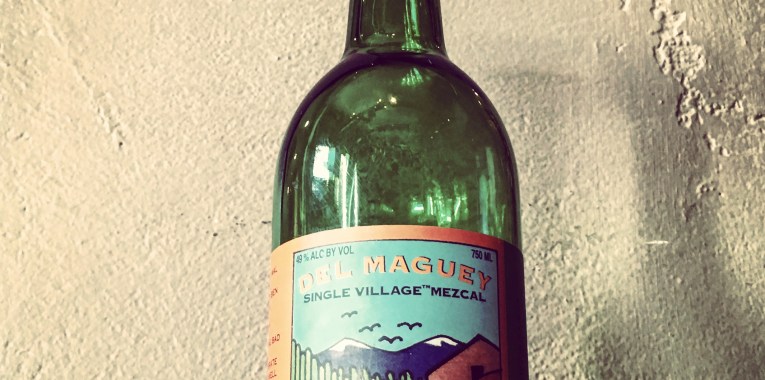
Open Bottle: Del Maguey Barril

Agave is an odd category to me. There is an abundance of good agave products pouring into Los Angeles but unlike whiskey, or even brandy and cognac, I often encounter what feels like an active, willful ignorance from people drinking tequila and mezcal, both in terms of education and general understanding of the spirits..

Requests for mezcal margaritas out number the requests spicy margaritas in my bar these days, but if a customer orders a tequila and I ask them if they’d like a blanco, reposado, or an anejo their eyes glaze over as if I was speaking a foreign language. I can’t imagine what would happen if they requested a mezcal and I asked them if they’d prefer a barril, madrecuiche or a tepezate. And this isn’t me being difficult for the sake of being difficult. These are the same types of questions I ask if someone requests a “whiskey” or a “scotch.” The proliferation, and premiumization, of agave has almost exacerbated the problem. People know that they want it even if they don’t know what “it” is.

If a customer orders a tequila and I ask them if they’d like a blanco, reposado, or an anejo their eyes glaze over as if I was speaking a foreign language.

This isn’t meant to ignore the inroads the category has made. I remember drinking mezcal out of a plastic jug that my collage roommate brought back from Texas and I can still feel that punch in the chest. With the category, and quality, growing so rapidly in the US and Mexico, greater education is needed.

And we wouldn’t be talking about mezcal at all if it weren’t for Del Maguey.

I know it’s hip to hate on the iconic green Del Maguey bottles these days. We’re always looking for what’s new and hip, and at 20 years old Del Maguey is the dinosaur of the mezcal world. But with out them we don’t even get a mezcal category in the U.S.- yet, to most “in-the-know” bartenders that I meet they’re just simply not a cool brand. I blame the Vida for this.

Everyone who’s had mezcal has had Vida. There were no other viable well options for a long time but let’s be honest, the Vida ain’t that great. I still enjoy it more than many other “mixing” mezcals , like say El Silencio, but both of them are stripping out something essential in the process. They may end up being more approachable but they also feel watered down and for the average consumer they end up associating that distinctive green bottle with that level quality.

That’s not to say Del Maguey doesn’t have an eye for quality. The Chichicapa is one of the best mezcals I’ve ever found for mixing and is an invaluable tool to open people’s eyes to the possibilities of what mezcal can taste like and the Santo Domingo Albarradas is to this day one of my favorite sipping mezcals.

But with 21 different products available, some named for the village of production and others for the species of agave they’re not necessarily helping simplify the category. I don’t blame them though. They are just incredibly excited about excellent mezcal and want to share everything they find with drinkers outside of its native village.

Take, for example, the Del Maguey Barril.

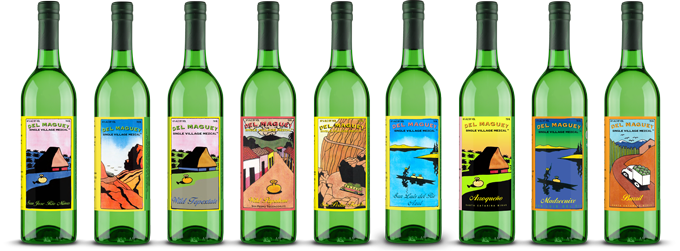
It’s part what’s known as the “Vino de Mezcal” series. It’s a term borrowed from the history of agave. Before there were rules on what made something a “Tequila” or a “mezcal” agave spirits were simply called “Vino de Mezcal.” If you’re wondering why they weren’t called “Vino de Tequila” it’s because technically Tequila is a type of mezcal. But that’s a conversation for another day.VinoDeMezcalSeries680.png

For the Del Maguey lineup “Vino de Mezcal” means limited. It’s mezcal that are very terrior driven but can only be produced in limited quantities. The Barril is a single varietal and literally means “barrel” which describes the size and shape of this particular agave varietal. The plants are all 15-20 years old, were fermented for thirty days and then were twice distilled on a clay still with bamboo tubing by Florencio “Don Lencho” Laureano Carlos Sarmiento, an 80 year old palenquero. A palenquero is a nifty word for “mezcal maker.”

It carries that clay minerality over into the liquid. It’s slightly salty, yet fragrant at the same time. There is a green vibrancy that is earthier rather than fruity while still remaining juicy. In the end, it’s a great example of what the world of mezcal can offer to drinkers of barrel aged spirits. It entices them in with some familiarity but then throws open the doors to what is beautiful about the differences.

How do I know all of this? Through tasting and having conversations with people who know more than me but also because the technical details are all right there on their website. You don’t get to be the granddaddy of your spirits category with out recognizing the education problem on your own.

I certainly don’t claim to be an agave expert. I’m just an enthusiast that is looking for a way to bridge that knowledge gap. I want to find a way to start a conversation that will keep mezcal from just becoming “smoky” tequila. And I’m open to suggestions.