Quarantine Bottle Kill #2: Woodford Reserve Rare Rye

The next victim of the Quarantine Bottle Count is the Woodford Reserve Master’s Collection Rare Rye twins from 2011. Yes, I’ve been sitting on two open 375ml bottles for nine years. Don’t judge me.

Let’s put this into context. Nine years ago rye whiskey was just becoming the hot item after decades of obscurity. And then here lands a pair of Woodford Ryes for $100. It was one of many signals that not only was Rye moving from the bargain category but that distillers and distilleries had been contemplating the move for a while.

The distillate is 100% Rye, probably a blend of malted and unmalted, triple distilled on the Woodford Pot stills and bottled at 92.4 proof. The only stated difference between the bottles is that one was aged in freshly charged new oak, just like Bourbon or American Rye legally must be, and the other is aged in reused Bourbon barrels. This technically makes it a rye “spirit” and not a whiskey.

What’s interesting to me though is that the New Cask is labeled as “Straight Rye Whiskey” with no age statement. Legally, this means that the “New Cask Rye” is a minimum of four years old. And as Woodford clearly says the only difference between the two bottles is the maturation process that means the “Aged Cask” is also four years old. 

Whiskey makers are accustomed to think in the long term. Production is measured in years if not decades but even then it seems a risky move to have distilled a 100% Rye in 2006-2007 even if it was meant to be a limited release. But the demand for rye has only gotten stronger in the past decade, clearly evidenced in Woodford having a dedicated Rye as part of it’s core line up in 2020.

As interesting as all of that backstory is, how does the whiskey actually taste?

AGED CASK RYE
NOSE: Grassy, Bready, with a touch of green apple
PALETTE:  Bright rye, a hint of vanilla and orange, honey
FINISH: Surprisingly Long, with a hint of mint and cinnamon, dry

NEW CASK RYE
NOSE: Tobacco, Honey, Vanilla, and oak
PALETTE: Cinnamon, deep baking spices, ripe apple, and leather
FINISH: Sweet, with a lingering oak and white pepper

Overall, these bottles are an fantastic example of the impact a barrel has on a distillate. The New Cask is 100% a rich, fully embodied rye while the Aged Cask is still young and fiery. It reminds me a lot of Mellow Corn, a personal favorite, but it could benefit from more time letting the flavors integrate.

They both unmistakably taste like Woodford. I’ve talked about this before but to me there is always a slightly undefinable, yet incredibly identifiable, characteristic to Woodford that I can only imagine comes from their Pot Stills. Both of these ryes carry that DNA.

Nine years after their release I’m not as excited by either of these bottles as I was when they first came out. But the world is a different place, the whiskey market is a different place, and I’m a different person.

While they’re not mind blowing whiskies on their own the weight of time evidenced in the aging and the drinking sits heavily with me as the last drops pour from the bottle.

Whiskey Wednesday: Take Off of Taketsuru

Continuing this month’s conversation about Nikka comes the news that Nikka will be discontinuing the Taketsuru 17, 21, and 25 Year old expressions as of March of 2020. While some stocks will remain under “heavy allocation” all three marks will no longer be listed by the company. The Nikka Taketsuru Pure Malt, a Non-Age Statement (NAS) edition that replaced the 12 Year old Taketsuru several years ago, will also be discontinued.  

While the loss of the age statements is lamentable, it falls neatly into the familiar story of aged stocks not being able to keep up with current demand for high end whisky. But the loss of the NAS Taketsuru Pure Malt comes as a bit of a shock. The NAS was originally released in late 2015 and was meant to address the supply issue. Then in 2019 it won Jim Murray’s Japanese Whiskey Of The Year. Add to this the discontinued Nikka Miyagikyo and Yoichi Single Malts in 2015 and the temporary interruption in supply of their Coffey Malt and Grain in early 2019 and the picture of a company struggling to match pace with demand while also seeking to define its core identity emerges. 

So, what exactly is being lost with the Taketsuru’s? 

The Taketsuru line was named after the company founder Masetaka Taketsuru. They have been the core of the Nikka line up for as long as I’ve been familiar with the brand.  They’re also incredibly representative of the Japanese blending style. Every bottle is the Taketsuru line is a Pure Malt which is an old term for Blended Malts. Not to be confused with a Blended Whisky. A Blended Whisky is made up of both single malt and grain whiskey. A Blended Malt is comprised only of Single Malts. In this case the Taketsuru’s are made from a blend of malts distilled at the Yoichi and Miyagikyo distilleries. 

Japanese Whisky makers often think of themselves more as blenders than distillers. They look to layer flavor by creating a blend of whiskies to create consistent and nuanced bottling. Take the Hibiki’s as a prime example. Suntory has repeatedly said that they consider the Hibiki to be the perfect representation of their art, both in terms of distillation but more as a blend. But while the Hibiki contains a fair amount of grain whiskey the Taketsuru line is comprised of big single malts.  

One of the advantages of the centuries old whisky tradition in Scotland is 100s of distilleries that are relatively friendly with each other. This means that if a distiller wanted to make a Blended Malt with a style of malt they didn’t distill themselves there was always another distiller that did who would be willing to sell or trade. When Masataka founded Nikka in 1934 as the Dai Nippon Kaju, Co. there was no one to barter with so if he wanted different styles to create a blend he had to distill them himself. 

This eventually lead to the creation of Nikka’s second distillery, Miyagikyo, outside on Sendai in 1969. This allowed for a greater depth of flavors for blending as well as over doubling the company’s production capability. Miyagikyo is much further south than its sibling Yoichi Distillery granting a different character as the whisky ages. We can expect to see more of this style of whisky from Nikka in the future as a planned expansion on Miyagikyo should be finished in 2021 with production expected to expand by 40%. 

As for the present, the Nikka Taketsuru 17 Year Pure Malt. Award the Best Blended Malt Award by the World Whiskey Awards in 2014 it’s a blend of single malts from both the Yoichi and Miyagikyo distilleries. Aged for a minimum of 17 years this is a powerful whisky. 

NOSE:  Fresh fruit, Cedarwood, Honey
PALETTE: White Pepper, Dried Fruits, Oolong Tea, A hint of smoke
FINISH: Medium to long, rounded smoke and with dark chocolate and leather

The Taketsuru line represents NIkka’s history. It pays homage to its founding father as well as combining the art of both of the company’s distinct distilleries. The loss of the Taketsuru line is the loss of a piece of history but it does open a future. Whisky, and in particular Japanese Whisky, is having an incredibly large moment. Bit even if whisky distilled 25 years ago is being depleted left and right the world, and the flavor, that whisky represents is gone. The challenge now is to find the way to create the spirit that fills the barrel to be bottled in 25 years while still keeping the lights on in the years between. 

Whiskey Wednesday: Nikka Days of Our Lives

I love a good story and Nikka Whisky certainly has a good story. A story of both an excellently crafted whiskey but also a phenomenal story in the life of the company’s founder, Masataka Taketsuru. The month of January is especially important to the story of Taketsuru and his redheaded Scottish wife, Rita. So I thought I’d take some time and look at a few of Nikka’s offerings for the rest of January. 

In 1918 Masataka Taketsuru was sent to Scotland by the Settsu Shuzo company to learn how to make whisky from the Scottish master craftsmen. The goal was to learn from the best, return home, and create a Japanese whiskey that would be on par with the best whiskies being produced in the world. The unexpected consequence was Taketsuru meeting Jessie Roberta Cowan, known as Rita, while teaching Judo to her brother Ramsay. 

In a time when “international” marriages were rare the two fell in love. Takatsuru proposed in September of 1919 and the two were married on January 8, 1920, exactly 100 years ago. After the marriage the two moved to Campbelltown where Taketsusru completed his apprenticeship. The two returned to Japan in November of 1920, partially due to Rita’s encouragement. Taketsuru had expressed a desire to stay in Scotland with his marriage to Rita but she disagreed. “We should not stay in Scotland, she said, “We should head to Japan. Masataka-san is living a big dream, a dream to make whisky in Japan. I want to live your dream together.” 

Upon their return to Scotland the landscape had changed. The post World War II depression had set in and the Settsu Shuzo company was no longer financially able to invest in new projects, like whisky making. When he left the company in 1922 he found a job, through a friend of Rita’s, as a science teacher. The following year he was offered a job at Kotobukiya to make whisky. 

The name Kotobukiya may not be familiar to Western ears but the company it grew into, Suntory, certainly is. While Masataka helped them produce their first whiskies from the brand new Yamazaki Distillery his first wide spread release was essentially a failure and Masataka parted way after fulfilling his ten year contract. 

In 1934 the couple founded the Dai Nippon Kaju, Co., literally the “Great Japanese Juice Company, in Yoichi, Hokkaido. The two said the Yoichi, more than any other place in Japan, reminded them most of Scotland. This endeavor was made possible by investors who were introduced to Taketsuru through Rita. Both of the primary investors had family that had taken private English lessons from Rita. With the help of these investors, and the production of many apple products in the early years, Taketsuru was eventually able to release his own whisky in 1940 winning much acclaim over the years and the company formally being renamed as Nikka Distilling in 1952. 

Sadly, on January 17, 1961 Rita passed away at the age of 64. She was buried on a hill overlooking the Yoichi Distillery and Taketsuru engraved both of their names on the tombstone promising they’d be together forever. 

As much as I love a good whisky making love story, I also love duty free shopping. There is always something unique and quirky to be found. But in a world where Japanese Whisky is in ultra-high demand, and age stated malts are disappearing daily even the unique duty-free offerings are drying up. Which is why, on a recent international trip, I was so surprised to find a bottle I had never seen before, the Nikka Days. 

The Nikka Days was released in 2018 and seems to be a response to all of the factors above that are pressing in on stocks of Japanese Malt. It is a blended whiskey made of lightly peated malt and grain whiskies from both the Yoichi and Miyagikyo distilleries. 

The brand says that it has always stood at the crossroads of between East and West, tradition and innovation. Saying that each day is a journey and an opportunity to learn from previous days, and that this whisky embodies that mentality. Hence the name. 

The whiskey is certainly result of the current journey of the whisky world. So how does it taste? 

NOSE: Apple, Orange Blossom, Vanilla, Melon 
PALETTE: White Chocolate, Toffee, Citrus, a touch of smoke, and fresh apples 
FINISH: Slightly sweet, bright, with a touch of creaminess 

It is certainly fitting that apples are so prominent on the nose and palette of this whisky. Ultimately this is a very serviceable whisky but it stands in the shadow of its history and the massive malts that Nikka is known for. The price point also makes it hard to justify as a day to day sipper but it is worth the journey to spend a few days with if you are traveling. 

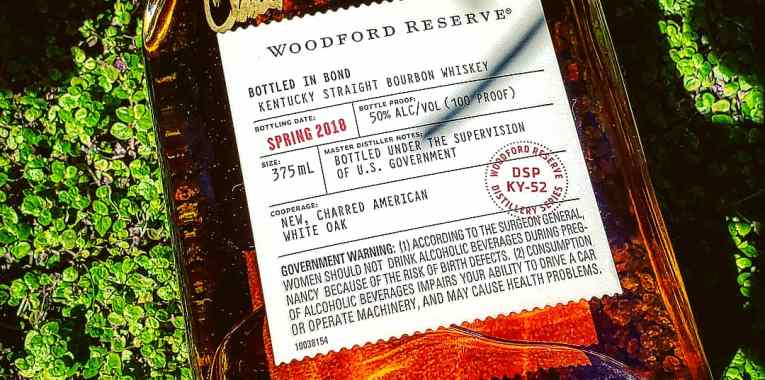
Whiskey Wednesday: Woodford Reserve Bottled-In-Bond

Let’s get meta. 

I run a blog, which you’re currently reading, called Bottled In Bond, LA. I write about bartending, cocktails and spirits, primarily whiskey but occasionally not. I’ve been doing this for a few years now and occasionally old articles will suddenly get a few more views because someone Googled a bottled in bond product that doesn’t exist. You would not believe how many people are looking for a bonded Chartreuse

About a year ago, I noticed a huge spike in an old article about Woodford Reserve. It was getting a Google search almost daily for a month. I became curious, did my own googling, and found a single Reddit post about a Woodford Bottled-In-Bond but not much else. 

After asking around with no clear answers my friend Luke Ford, who works for Woodford, returned from a visit to Kentucky with a .375ml bottle signed by Woodford Master Distiller Chris Morris. A distillery only release of Woodford Reserve Bottled In Bond. 

My natural hoarding instincts took over, it went on the shelf and remained unopened for the past year. But why? I’ve always maintained that whiskey is meant to be drank, to be experienced, and after all the curiosity that lead to me actually receiving a bottle shouldn’t I be curious about what the whiskey actually tastes like? So, I opened it. 

NOSE: Super oak, straw, light stone fruit
PALETTE: Caramel, cinnamon, baked peach pie, with a touch of the metallic pie tin
FINISH: Bright, quick, and surprisingly light for the extra proof 

This bottle tastes exactly like what I would expect a Bonded Woodford to taste like and that is incredibly interesting to me because by all right’s it shouldn’t. 

The Bottled In Bond Act of 1897 states that to be bottled in bond a product must be produced by one distiller at one distillery within in one 6-month distillation “season.” It must also be aged in a federally bonded warehouse for a minimum of four years and bottled at 100 proof. 

It’s the one distillery requirement that makes this interesting. The traditional bottle of Woodford is made up of spirit from two different distilleries. Column Still distillate from the Brown Foreman Distillery in Shively, KY and Pot Still distillate from the Woodford Distillery in Versailles, KY. This bottle only caries the DSP Number, essentially the distillery address, for the Woodford Distillery. Meaning this should legally be only the pot still whiskey. Which to me says there should be a bigger flavor difference. In a way it’s almost impressive that this really does just taste like Woodford. 

Part of what I love about Bonded whiskey is how clear cut it is. You always know the exact distillery, proof, and process whenever a product is bottled in bond. It strips out a lot of the mystery and marketing from a brand. It was an often overlooked mark of quality on affordable whiskey. And yes, the category is seeing a resurgence and premiumization in the past few years, however these are often just upscaled versions of existing brands. They aren’t bad but they are a sign of the times and they are familiar. 

This Woodford Bottled In Bond clearly falls into this ongoing trend but this bottle also raises questions for me. Is the labeling on this very small run inaccurate or have I always overestimated the impact of the column stills on the final Woodford profile? It’s made me think about Woodford in a way that I honestly haven’t in years. I don’t have an answer to these questions but at least it’s something to ponder over the next glass. 

Open Bottle: Rittenhouse Very Rare 25 Year Straight Rye Whiskey

Today I’m either turning 33 or 37, depending on whether you believe my birth certificate or my girlfriend’s mathematical skills.

I’ve been in the service industry since I was 16, been bartending since I was 20, and have been a “craft bartender” and bar manager since I was 25. In a lot of ways my experience behind the bar has shaped me as a person, helped define my personality, and at times threatened to completely consume my life. And it all happened by accident.

While I was out manning an NBC desk the bar world had changed. The Cocktail Revolution was well underway.

It’s easy to look back on that stretch of years and see it as an inevitable progression but it never felt that way. I started waiting tables as a way to make easy cash in high school. From the moment I started taking drink orders I knew I’d rather be taking those orders from behind the bar and making the drinks; bartenders were just inherently cooler. I completely blame early viewing of Roadhouse and Cocktail for this gross misconception, but even when I started doing my best Tom Cruise impression it wasn’t a career. I was just finding a way to pay my bills in college while I figured out what I was really going to do when I grew up.

Skip ahead a few years and my Brian Flannagan impression had been traded for a blend of Aaron Sorkin and Kenneth from 30 Rock. Needless to say that wasn’t a combination that seemed to be working out so when I found myself between jobs I decided to start bartending again until I found what came next. Turned out what came next was bartending.

While I was out manning an NBC desk the bar world had changed. The Cocktail Revolution was well underway and suddenly there was a wealth of information, spirits, techniques, and books that transformed slinging drinks from a job into a profession. Similarly, some health issues transformed my youthful sense of invulnerability into an inevitable sense of my own mortality.

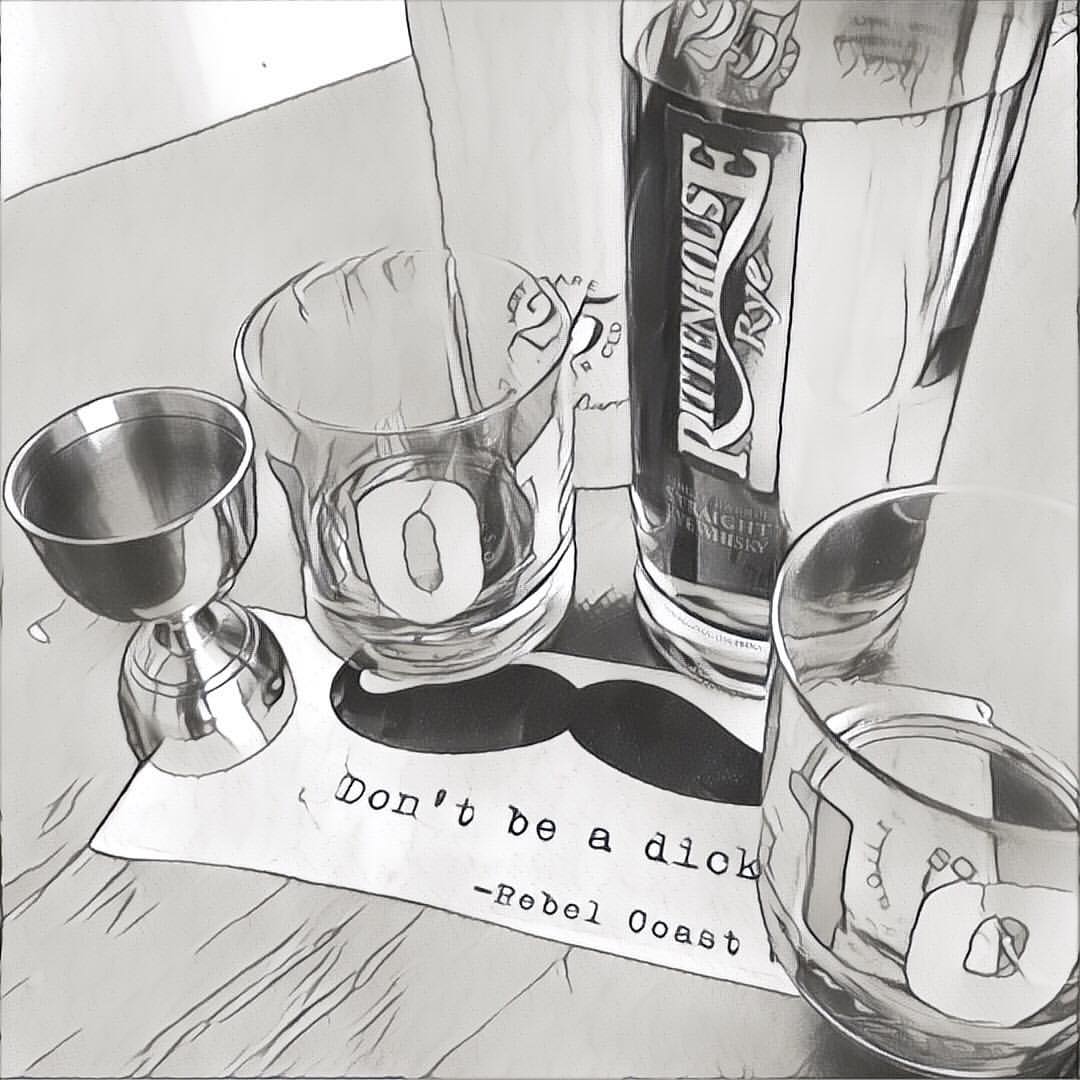
This profession and vulnerability coalesced into the first major purchase of my soon to be overwhelming liquor collection: The Rittenhouse 25 Year Old Straight Rye Whiskey.

Rittehouse25B&W.jpg

I was still reeling from the debt that having a “Real Job” had bestowed but I was alive, financially stable and wanted a bottle of spirit that was older than I was so that I could raise a glass in celebration for hopefully years to come. I had no idea what I was doing when I walked into that BevMo, but thankfully my naiveté was matched by the fact that Pappy Mania hadn’t yet transformed the whiskey world into a wasteland of unattainable whales and unicorns. This perfect confluence meant that a bottle that now goes for north of $1000 had multiples sitting on the shelf at a Santa Monica BevMo for less than $150 each. It was such a crazy time that I turned down buying a bottle for the bar because it was “too expensive” and “would never sell.” I wish I had a time machine to go back and snap up a 6-pack.

As I begin my inevitable transformation into Doug Coughlin I’m going to sit with another dram.

The third release of a series, the 25 Year Old, was preceded by a 21 and 23 year old Single Barrel release. All three releases come from rye distilled in October of 1984, aged on the lowest floors of Rickhouse OO, and were all bottled as 100 proof, non-chill filtered single barrels.

 
NOSE: There’s a touch of spice but it’s mostly a candied walnut, dried fruits and a waft of cedar mixed with the oak.

PALETTE: On the tongue there is a deep nougat, a sense of brûléed fruit, and a massive bag of baking spices. It is surprisingly sweet for a rye but carries a sophistication and stateliness. This is one of those old whiskies that rather than tasting old and oaky, tastes mature and aged.

FINISH: The finish is long and warm. The spice finally finds it’s footing as the rest of the flavors evaporate and evolve.

This is quite simply one of the best bottles of rye I’ve ever had. And what’s amazing is that as my palette, experience, and collection has grown I return to this bottle for a simple pour every year and still feel the same way.

Though to be fair it’s not really about what’s in the glass. This is the prime example of my philosophy that whiskey is meant for drinking. The experiences the led to buying the bottle and the accumulation of everyday until the next pour adds to the poetry in the glass.

As I begin my inevitable transformation into Doug Coughlin I’m going to sit with another dram and share it with those that I can. I may have started this journey by accident but the feeling of growth and community is what’s kept me here.

That and the booze.

And the tips.

But mostly the booze.

Whiskey Wednesday: Decanting Old Fitzgerald Bottled In Bond

Growing old is an interesting proposition.

It’s right there in our language. We GET older, we GROW up whether we like it or not. But these phrases imply a gift. The imply that it is a privilege to age and that we are constantly changing and growing.

Contrast that with the utter fear of aging that our culture exhibits. It’s also right there in our language. We don’t just develop. We deteriorate, mellow, and mature. And at every point along the journey we can’t help but express disbelief at how many chronological ticker marks we’ve accrued. Our own experience is that we are always the oldest that we have ever been, so exclamations like, “I can’t believe 90’s kids can legally drink!” or “Holy Shit, it’s been nearly five years since Old Fitzgerald Bottled-In-Bond was discontinued!” make us feel old and make those older than us roll their eyes at the young ‘uns.

Even in whiskey we want our spirits older, but not too old. Age at a certain point becomes a novelty act, reacting to a new release almost as if to your great-great aunts 97th Birthday, “A 27 Year old Bourbon you say? That’s adorable.” Yet we bemoan the loss of every single age statement, and doubly so when it’s a rocksteady brand that’s stood the test of time yet is still dropped in favor of something new, young, and millennial.

The loss of the Old Fitzgerald Bottled-In-Bond was a loss I felt personally and deeply. While never technically discontinued the Old Fitz was removed from most markets over the past five years in favor of it’s cousin Larceny. Same liquid inside, even still has the Fitzgerald name on the bottle still. It’s technically John E. Fitzgerald’s Larceny, referring to the legend that the original brand was named for.

In short, this tastes like Old Fitzgerald, which is a blessing and a curse

John E. Fitzgerald was a tax bondsman for the U.S. government, which meant that he was one of two people on site at the Old Judge Distillery to have keys to the bonded warehouse. This ensured that there was no theft, since no one could enter the warehouse with out him, and that the government was properly collecting it’s taxes on the whiskey production. However, the workers kept noticing certain honey barrels, the especially tasty ones, were coming up short and that Old Fitz always seemed to have some extra tasty liquid on hand. These barrels became known as “Fitzgeralds” and a brand of whiskey was eventually named after the man and his harmless acts of larceny.

The brand went on to become a working class hero. Bourbon Legend says that the brand was originally sold only to steamships, rail workers, and private clubs. After Prohibition the brand was purchased by Stitzel-Weller, the famed distillery owned by the notorious Pappy Van Winkle. In fact, during his tenure at the Stizel-Weller Distillery Pappy didn’t sell any Pappy. He sold Old Fitzgerald and it was by far their most successful brand. Like all the whiskies made at Stitzel-Weller Old Fitz had that “whisper of wheat” in the mashbill that made their whiskey so unique at the time.

old_fitzgerald_bottled_in_bond_bourbon_large.jpg

During the whiskey dark ages of the 70’s and 80’s the brand was purchased by United Distillers, which through several mergers and acquisitions eventually became the behemoth that is Diageo. United Distillers/Diageo closed the Sitzel-Weller distillery in 1994, moved production of Old Fitzgerald to the Bernheim Distillery. Then in 1999 they sold the Bernheim Distillery, and the Old Fitzgerald brand, to Heaven Hill. Heaven Hill continues to make wheated bourbon and releases it under the Old Fitzgerald name to this day.

ftcyrn5wmsfx.jpg

The story hasn’t changed. The whiskey hasn’t changed. But the age, the label, and the price certainly have. While Larceny is still a very reasonably priced bottle of whiskey it doesn’t carry the massive bang for your buck that the old Bottled-In-Bond did. And by freeing up the Fitzgerald name from a bargain priced Bottled-In-Bond the team at Heaven Hill have been able to make attempts to push the premiumization of the brand. Some of them more successful than others.

They tested the waters with the one off release of John E. Fitzgerald’s 20 Year Old Bourbon which was some of the last whiskey actually distilled at Stizel-Weller which was released to mixed reviews. And now comes the release of the long awaited Fitzgerald Bottled-In-Bond Decanter Series.

The series will be a limited release each Spring and Fall for the next few years. The throw back to the old label name also comes with a throw back to another old Bourbon tradition: fancy decanters. More important than the glassware though is that this is a Bottled-In-Bond whiskey, it’s 11 years old, and it’s got the price tag to prove it with a suggested retail price of $110.

So how does it stack up?
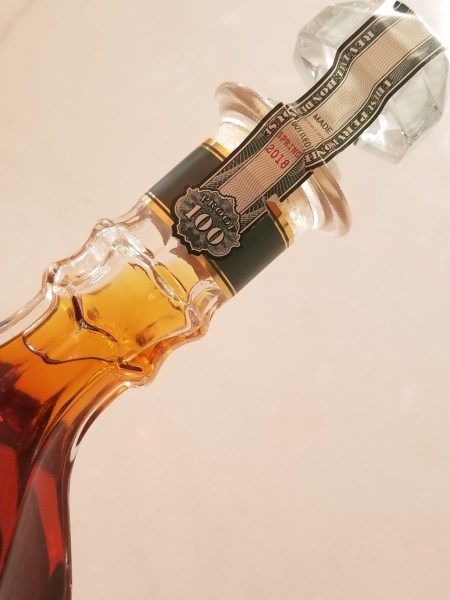
20180602_164023The packaging and labeling are fantastic. It’s like seeing an old friend after the divorce now that they’ve started working out and gotten a haircut. It still looks like them but a cleaner, fitter, more attractive version of them.

The nose has all the oak you’d expect from an 11-year old, but also a touch of apricot and butter. On the mid palette is black pepper, stone fruit, a hint of nuttiness and a slightly thin caramel which leads into an aggressively woody finish that lingers hot and with a slight exhalation of cherry.

In short, this tastes like Old Fitzgerald, which is a blessing and a curse.

On the one hand I’m incredibly happy to have something that tastes like my old timey Bottled-In-Bond back but at the rarity prices it’s not something I would necessarily pick up off the shelf, and it’s certainly not an every day drinker like it used to be. The extra aging has made the product deeper and mellower but it’s also made it richer and pricier. Much like your recently divorced friend it doesn’t seem interested with hanging out with the same crowd it used to.

In the end I’m happy to see the return of Old Fitzgerald in a semi regular release but it does feel like the difference between hanging out with your college buddies and your great-great aunt. The one you want to see every weekend, the other you’ll drop in on at the holidays. Maybe. If the plane tickets aren’t too expensive.

Open Bottle: Chartreuse V.E.P and #1605

If you haven’t noticed America is a little odd. We like doing a lot of things backwards. Like our current administration- or how in most of the world writes the date as day/month/year, which helps explain why May 16, or 16.05, is world Chartreuse Day.

IMG_3595.JPG

If you’re unfamiliar, Chartreuse is a liqueur made by the Carthusian Monks in the French Alps and is often considered bottled magic by many in bartending community. It’s a thing of myth, medicine, and history. It’s history starts in the year 1605.

The Carthusian Monks are an order of working monks, which means that rather then devoting themselves to missionary work they devote themselves to contemplation, prayer, and solitude and maintain that lifestyle by working.  Since the order was founded in 1084 they’ve made many things but the one they have been world famous for making for centuries is Chartreuse.

The production of Chartreuse carries all the mystery you would expect from an organization a thousand years old and devoted to quiet prayer and meditation. The recipe is based on a manuscript thought to be gifted to the monks by Francois Hann

IMG_3613.JPG
Élixir Végétal de la Grande-Chartreuser

ibal d’ Estrées, a cousin of the king at that time, which supposedly contained the recipe for “the Elixir of Long Life.” It was the high time of alchemy and the monks went to work decoding the manuscript of 130 herb and botanicals, yet the first Élixir Végétal de la Grande-Chartreuse didn’t appear until 1737. This seems like quite a gap but keep in mind the world wasn’t as connected as it is these days. Ingredients listed in the manuscript weren’t all native to the French Alps, and once the spice trade brought many of them into circulation it wasn’t a simple matter of following a tried and tested recipe. It was a lot of “a pinch of this” and a “bag of that” things that required balance.

The first Elixir, at nearly 140 proof, was sold as medicine, and is still available in French drugstores as such, and was sold from the back of mules in very limited supplies to the villages around Grande-Chartreuse. However, despite limited availability it proved so popular that the monks set about to create a more “mild” drinkable version. A liqueur of green color, at a mere 110 proof, began to be sold in 1764 and its legend grew from there. A yellow version was introduced in 1838, a defunct “white Chartreuse” was sold from 1886-1900, the monks were forced to flee post

StGermain.JPG
The O.G. St. Germain Cocktail: Green Chartreuse, Grafruit, Lemon, and Egg White

Revolution France and moved operations  to Tarragona for several years before returning to France, and then the V.E.P. (“Viellissement Exceptionnellement Prolongé”) was released in 1963. And this doesn’t account for the varieties available overseas that aren’t available in the United States. Most of which aren’t available because the F.D.A. wants to know what goes into Chartreuse and the monks are understandably closed lipped about a 400 year old recipe. The sales of Chartreuse fund all of the Carthusian Monasteries across the world and the U.S. is the second largest market for Chartreuse in the world. Understandably the company in charge of selling Chartreuse for the monks didn’t want theTTB to pull the product so they have a stalemate. The TTB grandfathered the Yellow, Green, and V.E.P.s into the country with the understanding no other Chartreuse iterations would be imported.

But what makes Chartruese so compelling in the first place? First, is the romance. Who doesn’t love a product made based on an ancient manuscript, containing 130 different botanicals, from a recipe known by only two monks who have taken a vow of silence? It’s the Coca-Cola of the booze world. But, also it’s the complexityIMG_3610.JPG of the spirit.

Chartreuse is made from 130 different botanicals. The Green uses a sugar beet base distillate while the Yellow uses a grape- spirit base (the Yellow also lowers the proof to 80, and uses more saffron and distilled honey as a sweetener). These herbs and botanicals grant a natural complexity but because Chartreuse is created by distillation and maceration it is the only spirit in the world to continue to evolve inside the bottle. Those ingredients continue to interact in unknown ways making old bottles truly unique and sought after.

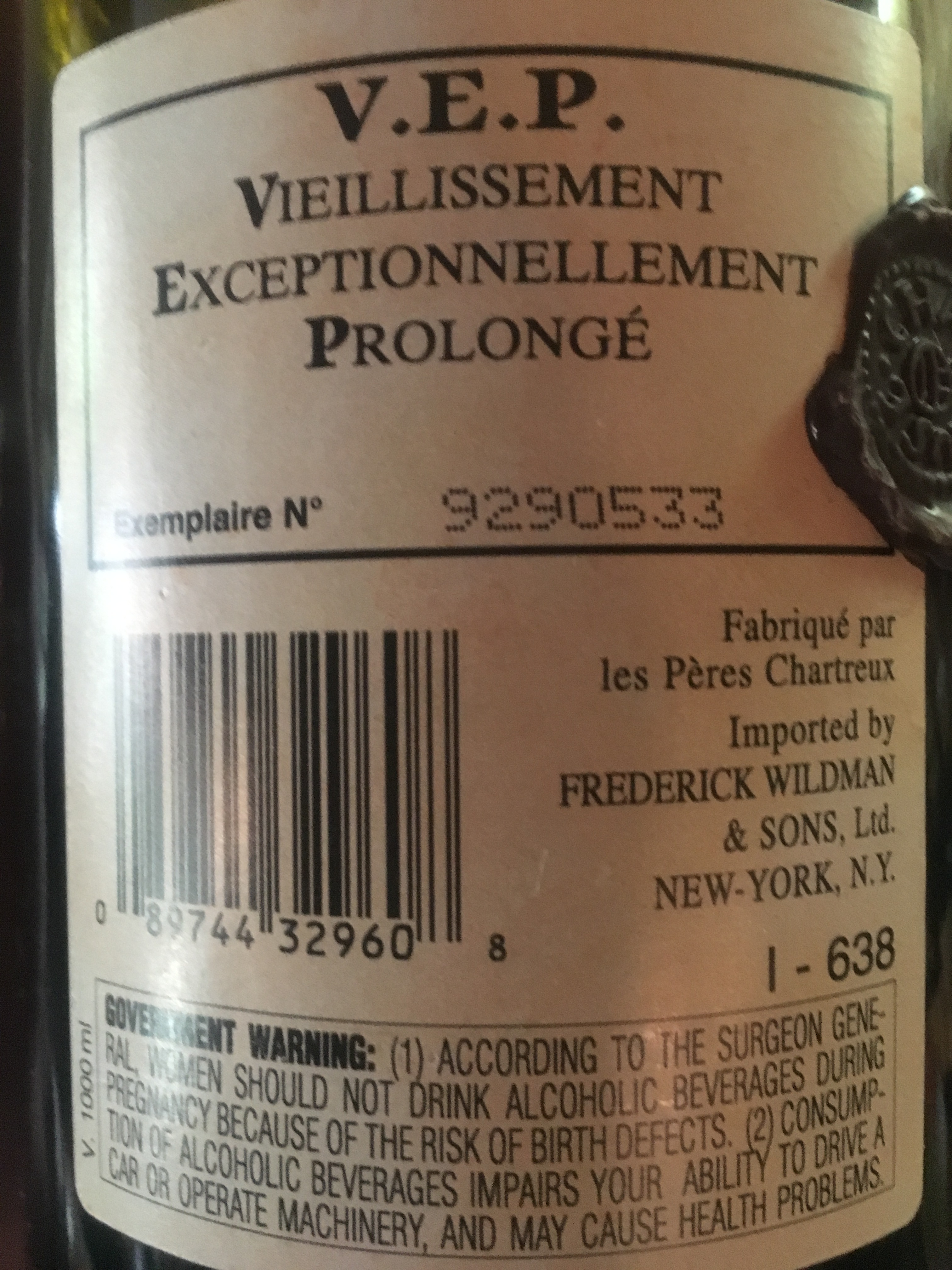
Standard Chartreuse is aged for 3-5 years in the largest liqueur aging cellar in the world (read: ONLY liqueur aging cellar in the world)  The V.E.P.s are aged from 11-20 years and while they carry no age statement you can determine a least the date of the bottling by adding 1084 to the first three digits of the numbered code on the back of the bottle.


IMG_3614.JPG
929 + 1084 = 2013

While the Yellow V.E.P. tends to be the fan favorite (a good friend once described it as “liquid space honey”) I’ve always been partial to the Green, probably because it is 108 proof. My open bottle was released in 2013 and is noticeably richer than the standard Green. Not because there’s a larger oak presence, the barrels are essentially neutral containers at this point, but because the botanicals have had more time to mature. The menthol quality takes a back seat as the warm baking spices ride along the pine and gentian notes to end on a dark, baked fruit note that leaves a sense of weight to the inside of your mouth. Drinking the Green V.E.P. is what I imagine history tastes like: bitter-sweet, earthy, slightly spicy, and heavy with the weight of time.

Chartreuse remains interesting today not just because of it’s history, or because it’s the father of an entire categorization of spirits but because of it’s complexity. And it’s impressive that the spirit can be so well understood and utilized in mixed drinks despite the lack of knowledge of how it’s produced. Sometimes the mystery is the magic and some times that magic creates complexity.

But my absolute favorite thing in the long tale of Chartreuse is that the spirit was so popular and recognizable that the color Chartreuse is actually named after the spirit. That is cultural impact at its finest.


Open Bottle: Del Maguey Barril

Agave is an odd category to me. There is an abundance of good agave products pouring into Los Angeles but unlike whiskey, or even brandy and cognac, I often encounter what feels like an active, willful ignorance from people drinking tequila and mezcal, both in terms of education and general understanding of the spirits..

Requests for mezcal margaritas out number the requests spicy margaritas in my bar these days, but if a customer orders a tequila and I ask them if they’d like a blanco, reposado, or an anejo their eyes glaze over as if I was speaking a foreign language. I can’t imagine what would happen if they requested a mezcal and I asked them if they’d prefer a barril, madrecuiche or a tepezate. And this isn’t me being difficult for the sake of being difficult. These are the same types of questions I ask if someone requests a “whiskey” or a “scotch.” The proliferation, and premiumization, of agave has almost exacerbated the problem. People know that they want it even if they don’t know what “it” is.

If a customer orders a tequila and I ask them if they’d like a blanco, reposado, or an anejo their eyes glaze over as if I was speaking a foreign language.

This isn’t meant to ignore the inroads the category has made. I remember drinking mezcal out of a plastic jug that my collage roommate brought back from Texas and I can still feel that punch in the chest. With the category, and quality, growing so rapidly in the US and Mexico, greater education is needed.

And we wouldn’t be talking about mezcal at all if it weren’t for Del Maguey.

I know it’s hip to hate on the iconic green Del Maguey bottles these days. We’re always looking for what’s new and hip, and at 20 years old Del Maguey is the dinosaur of the mezcal world. But with out them we don’t even get a mezcal category in the U.S.- yet, to most “in-the-know” bartenders that I meet they’re just simply not a cool brand. I blame the Vida for this.

Everyone who’s had mezcal has had Vida. There were no other viable well options for a long time but let’s be honest, the Vida ain’t that great. I still enjoy it more than many other “mixing” mezcals , like say El Silencio, but both of them are stripping out something essential in the process. They may end up being more approachable but they also feel watered down and for the average consumer they end up associating that distinctive green bottle with that level quality.

That’s not to say Del Maguey doesn’t have an eye for quality. The Chichicapa is one of the best mezcals I’ve ever found for mixing and is an invaluable tool to open people’s eyes to the possibilities of what mezcal can taste like and the Santo Domingo Albarradas is to this day one of my favorite sipping mezcals.

But with 21 different products available, some named for the village of production and others for the species of agave they’re not necessarily helping simplify the category. I don’t blame them though. They are just incredibly excited about excellent mezcal and want to share everything they find with drinkers outside of its native village.

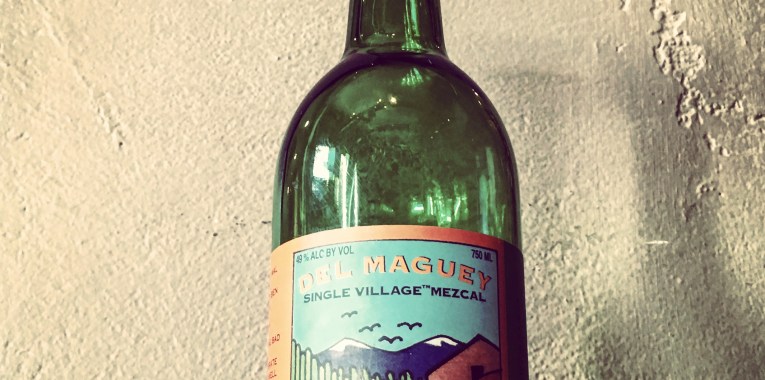
Take, for example, the Del Maguey Barril.

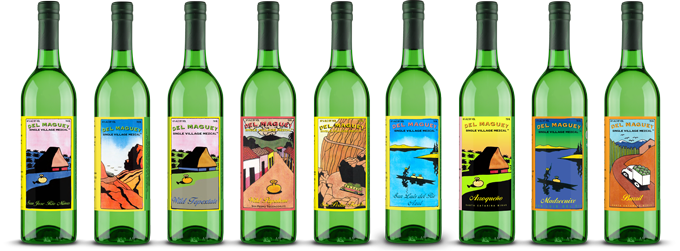
It’s part what’s known as the “Vino de Mezcal” series. It’s a term borrowed from the history of agave. Before there were rules on what made something a “Tequila” or a “mezcal” agave spirits were simply called “Vino de Mezcal.” If you’re wondering why they weren’t called “Vino de Tequila” it’s because technically Tequila is a type of mezcal. But that’s a conversation for another day.VinoDeMezcalSeries680.png

For the Del Maguey lineup “Vino de Mezcal” means limited. It’s mezcal that are very terrior driven but can only be produced in limited quantities. The Barril is a single varietal and literally means “barrel” which describes the size and shape of this particular agave varietal. The plants are all 15-20 years old, were fermented for thirty days and then were twice distilled on a clay still with bamboo tubing by Florencio “Don Lencho” Laureano Carlos Sarmiento, an 80 year old palenquero. A palenquero is a nifty word for “mezcal maker.”

It carries that clay minerality over into the liquid. It’s slightly salty, yet fragrant at the same time. There is a green vibrancy that is earthier rather than fruity while still remaining juicy. In the end, it’s a great example of what the world of mezcal can offer to drinkers of barrel aged spirits. It entices them in with some familiarity but then throws open the doors to what is beautiful about the differences.

How do I know all of this? Through tasting and having conversations with people who know more than me but also because the technical details are all right there on their website. You don’t get to be the granddaddy of your spirits category with out recognizing the education problem on your own.

I certainly don’t claim to be an agave expert. I’m just an enthusiast that is looking for a way to bridge that knowledge gap. I want to find a way to start a conversation that will keep mezcal from just becoming “smoky” tequila. And I’m open to suggestions.