It feels like the quarantine weeks are quickly going up in smoke. That’s probably because half of the home bar is Islay Whisky right now. Is that a forced transition? You bet it is.
I thoroughly enjoy heavily peated whisky. I often use Octomore as an example of just how good a Scotch Whisky can be and it doesn’t get any peatier, or more over proof, than that. Yet for all my love of the smoke finishing a bottle of heavily peated whisky rarely shows up on my list of achievements. That’s because drinking an Islay is a state of mind.
Drinking a good Islay transports me to rocky ocean beach in the evening. The campfire has just sputtered out and there’s a hint of rain in the air. But for now I can see the stars and wonder about my place in the universe.
Unlike its Highland brothers the island of Islay firmly embraces the one trait most people claim to hate about Scotch: the peat. Being aggressively peated, Islay Whiskies have an earned reputation of being an acquired taste. Sipping on a truly great peated whisky cause the taste buds to expand, the mind to slow, and an introspective nature to descend on the evening. At least it does for me.
Millions of drinkers across the globe have acquired this taste which have given Islay Scotch a cult like following. They are devoted but it does make it hard to break into the old boys club.
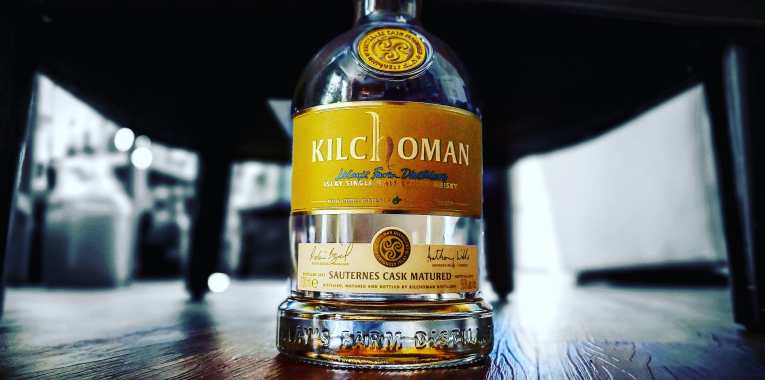
Enter Kilchoman. The first new distillery on Islay in 124 years this distillery, and its whiskies, came out of the barrel swinging. They began production in December of 2005 with their inaugural three year old whisky released in 2009. Since then they have racked up an impressive reputation and managed to take a seat at the clichy Islay table. They are also one of only a handful os Scotch distilleries using traditional floor malting on site as well as growing all of their barley on Islay at local farms.
One of the nice things about being the new kid in the old club is there is no tradition that you must adhere to. This gives Kilchoman a lot of room for experimentation. Like with their Sauterns Cask release. There have been a few different release but this was from their first offering in 2016.
Distilled in 2011 and bottled in 2016 this this 5 year old malt was completely aged in ex-Sauternes wine casks. Now, I clearly have a thing for malts that are finished in wine casks. So, how does a fully wine cask matured malt measure up?
NOSE: Buttery, with a hint of dried oranges and a misting of peat and sea salt PALETE: Sweet apricot, caramel, honeysuckle, baking spices, and a salinity melding with a wonderfully balanced smoke FINISH: Lingering, long clean, with a touch of sweet exhaling into a mouthful of smoke
This is a beautiful dram that is again an adventure and an experience. It transports while drinking. The experience also takes me back to when this bottle was purchased.
It was 2016 on my first ever trip to Europe with my brand new partner who has stayed with me all these years. So much has happened since then but as the last drops slide from this bottle after four years I will cherish every experience this dram has given me and every moment between purchase and completion.
Awards are a fickle thing. Being the “best” is an arbitrary construct that essentially says that something followed the rules really well. Without a larger context the sentence “an Irish Whiskey wins best single malt in the world for the first time” doesn’t carry any meaning even if it is 100% factually accurate. Which it is.
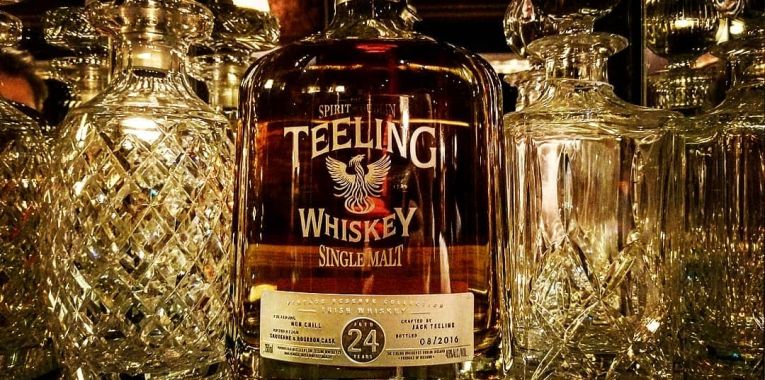
In March of 2019 the World Whiskey Awards, presented by the thedrinksreport.com, announced the Teeling 24 Year Old Irish Single Malt whiskey as the Best Single Malt in the world. Much of the conversation after this announcement was how Ireland had won an upset victory over Scotland, the home of Malt Whisky. Especially since an Irish Whiskey had never won this award before.
But the World Whiskey Awards have only been handed out since 2012. Meaning there haven’t been many opportunities for an Irish Whiskey to make the list. Also, in 2014 the same awards selected a Taiwanese whiskey as the best single malt so there was already precedent for Scotland not being the top dog.
It’s easy to see the headlines as mere clickbait but there’s a deeper story. Ireland isn’t traditionally associated with Single Malt whiskey, for a wealth of historical reasons, so they’re not going to traditionally win single malt whiskey awards. And while Irish Single Malt has been made for centuries if anyone was going to win an award it was probably going to be the Teeling’s.
The Spirit of Dublin
The Teeling family first got into the Irish Whiskey game in 1782 when Walter Teeling established a distillery on Dublin’s Marrowbone Lane, an epicenter of distilling at the time. This original distillery was eventually purchased by William Jameson & Co., cousins of the more famous John Jameson. This original distillery was shuttered in 1923 as economic woes began to systematically destroy the Irish Whiskey industry. In fact, by 1976 every single distillery in the city of Dublin had shut its doors. Then in 2015 Teeling reestablished itself in Market Square, not far from the family’s first distillery.
Now, if you’re paying attention you’re probably asking, “How does a four year old distillery win an award with a 24 year old whiskey?” and the answer reveals another layer.
The new Teeling Distillery was founded by John Teeling and his sons, descendants of good ol’ Walter, and it was not his first time starting new Irish Distillery. In 1985 John purchased an old industrial alcohol production plant in Cooley and began converting it to an actual whiskey distillery. It reopened in 1987 as the Cooley Distillery and was the first “new” distillery in Ireland in at least a decade.
Over the next several years the Cooley Distillery gained a reputation for quality and excellence in style. One of those being a distinctly Irish style of single malts. The Tyrconnell has always been one of my favorites, winning the International Wine and Spirits (IWSC) Gold Medal in 2004. They also gained a cult following with the Connemara, a peated Irish Single Malt, and the distillery quickly became a go to source for the slowly growing segment of drinkers looking for Irish Single Malt. After winning “Distillery of the Year” from the IWSC in 2008 and then the same award from Malt Advocate Magazine in 2010 the distillery was sold to Beam, now Beam Suntory, in 2011.
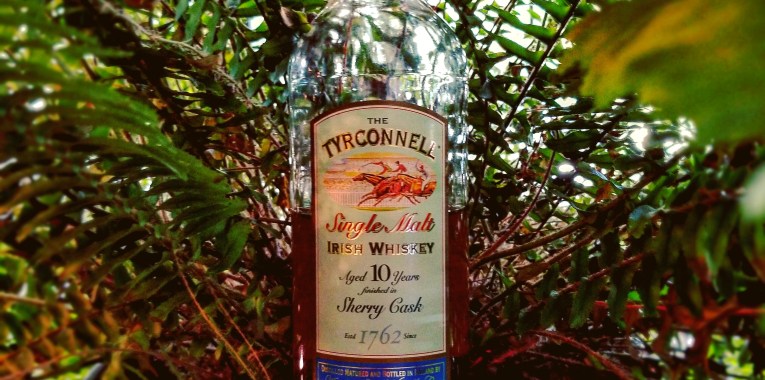
With all of this old Cooley whiskey I assumed that this bottle was old Cooley malt but after talking with people who know more about these things than I do it turns out that this is actually old Bushmill’s Single Malt.
As part of the sale Teeling kept 16,000 barrels worth of whiskey from Cooley and used that stock to establish the new Teeling brand in 2012, quickly followed by the new Dublin distillery three years later.
With all of this old Cooley whiskey I assumed that this bottle was old Cooley malt but after talking with people who know more about these things than I do it turns out that this is actually old Bushmill’s Single Malt. This adds yet another layer to the story as trying to pick apart who distilled, blended, aged, and otherwise had a hand in this whiskey over the years.
Here is a family, accustomed to winning awards winning another award on a whiskey that seems to have a foot in almost every part of the active Irish Whiskey world.
Whatever its providance the whiskey itself is a 24 Year Old Single Malt Irish Whiskey distilled in 1991. It was first aged in ex-Bourbon barrels before being married and further aged in ex-Sauternes casks. How much time it spent in each barrel type is unknown. Only 5000 bottles of 92 proof (46% ABV) non-chill filtered whiskey were produced, meaning that even if it wasn’t the best it’s still one of the rarest and oldest Irish whiskies on the market.
NOSE: Orange Zest, apricot, a slight nuttiness, and a bittersweet chocolate
PALETTE: Honey and malt, bright stone fruit, leather, caramel and a sprinkle of saltiness
FINISH: A long mellow finish that leans into the saltiness and the Sauterne finish
After all that, is this the best Single Malt in the world? I have absolutely no idea. It certainly falls into the rich flavors that I expect from old, indulgent malts yet it also presents a few flavor curve balls and is surprisingly alive which helps it stand out.
This is a malt that is relying on the past while building a future. It’s caught between multiple worlds and you can almost taste the journey it’s been on. Best may be a matter of opinion meant to generate buzz but the more I’ve learned about where this whiskey comes from the more interesting it’s become.
Irish Whiskey is my least favorite category of whiskey.
To be fair that’s only because I think about Canadian Whisky so infrequently that I genuinely forget that it’s a thing. Yet, there are some true gems in the category. Redbreast should be a staple at any bar. Tyrconnell Madeira Cask is one of my favorites bottles of any category, and I can’t count the number of shots of Power’s I’ve had. The problem is that these don’t define the category of Irish Whiskey. Accounting for 82% of sales in the United States Jameson’s Irish Whiskey is essentially the entire category of Irish Whiskey. And Jameson’s just isn’t for me.
Call me elitist, I’m sure part of my distaste for Jameson is it’s ubiquity, but it isn’t very interesting to me. It’s light, forgettable and honestly a little harsh. And while I might love the aforementioned bottles the first two aren’t affordable mixers and trying to convince a Jameson drinker to have a dram of Power’s instead is a lesson in futility. People aren’t cold calling high end Irish whiskey the way they are Japanese, Scotch, or Bourbon so it becomes an afterthought. Which brings me to Bushmill’s.
I got a call from friends at Half Full, The Daily Beast’s Food and Drink section, asking me what I thought about Bushmills. And my answer was, “I honestly haven’t thought about it in a while.” They then asked if I’d be interested in coming on a trip to film a documentary and explore Bushmill’s and I said of course because who doesn’t want an excuse to go to Ireland?
But
beyond the boondoggle of a trip there was a genuine curiosity. Irish Whiskey is
currently the fastest growing spirit category in the world. The industry went
from a measly four distilleries on the whole island in 2013 to 16 distilleries
in production today with another 13 on the way. While these numbers pale in comparison
to the sales and production numbers of Scotch and Bourbon clearly many people
with a lot of money feel that this is not just single brand growth but a
reemerging category. I wanted to see what was giving these people such
confidence.
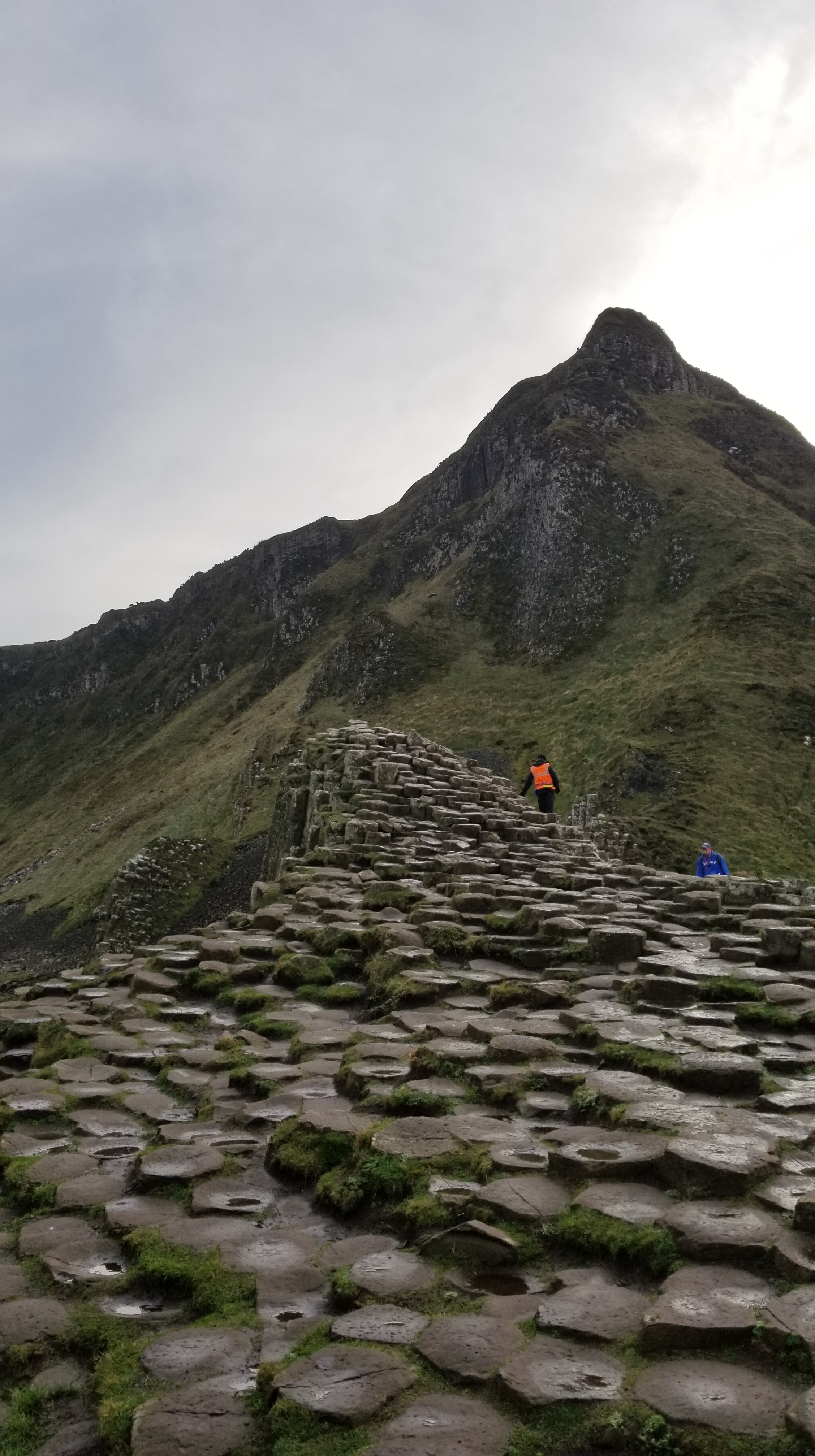
Giant’s Causeway
We spent two days at the Old Bushmills Distillery and the surrounding countryside. The distillery takes its name from the River Bush and all the water used on site comes from the rivers tribute Saint Columb’s Rill. Although the date 1608, the year King James I granted a writ to distill whiskey to Sir Thomas Philips, is emblazoned everywhere, the Bushmill’s Old Distilling Company wasn’t establish until 1784. No matter which date you take as the distillery’s origin Old Bushmill’s is the only distillery in all of Ireland that was in operation before 1974 and was one of the three that kept production alive.
Irish
Whiskey has always been deeply tied to the American market and American
Prohibition tanked the industry. 400 brands made by over 160 distilleries
became three distilleries all owned and operated by a single group, Irish
Distillers, with their purchase of Bushmill’s in 1972. Irish Distillers was
purchased by Pernod Ricard in 1988 with Bushmill’s then purchased by Diageo in
2005. They began a massive ad campaign to gain market share but even the
largest liquor company in the world couldn’t seem to boost the brand and it was
sold to Jose Cuervo in 2014 after Bushmill’s sold 1.3 million liter cases in
the U.S. compared to Jameson’s 18 million.
Everyone loves a good underdog story and while technically
being in second place Bushmill’s was a very clear underdog. A part of me was
hoping I’d find some spark that craft spirit authenticity or other such
nonsense that would make it worth the uphill battle to recommend Bushmill’s
White Label over Jameson’s iconic green bottle. What I found out is that the
White label isn’t what you should be drinking.
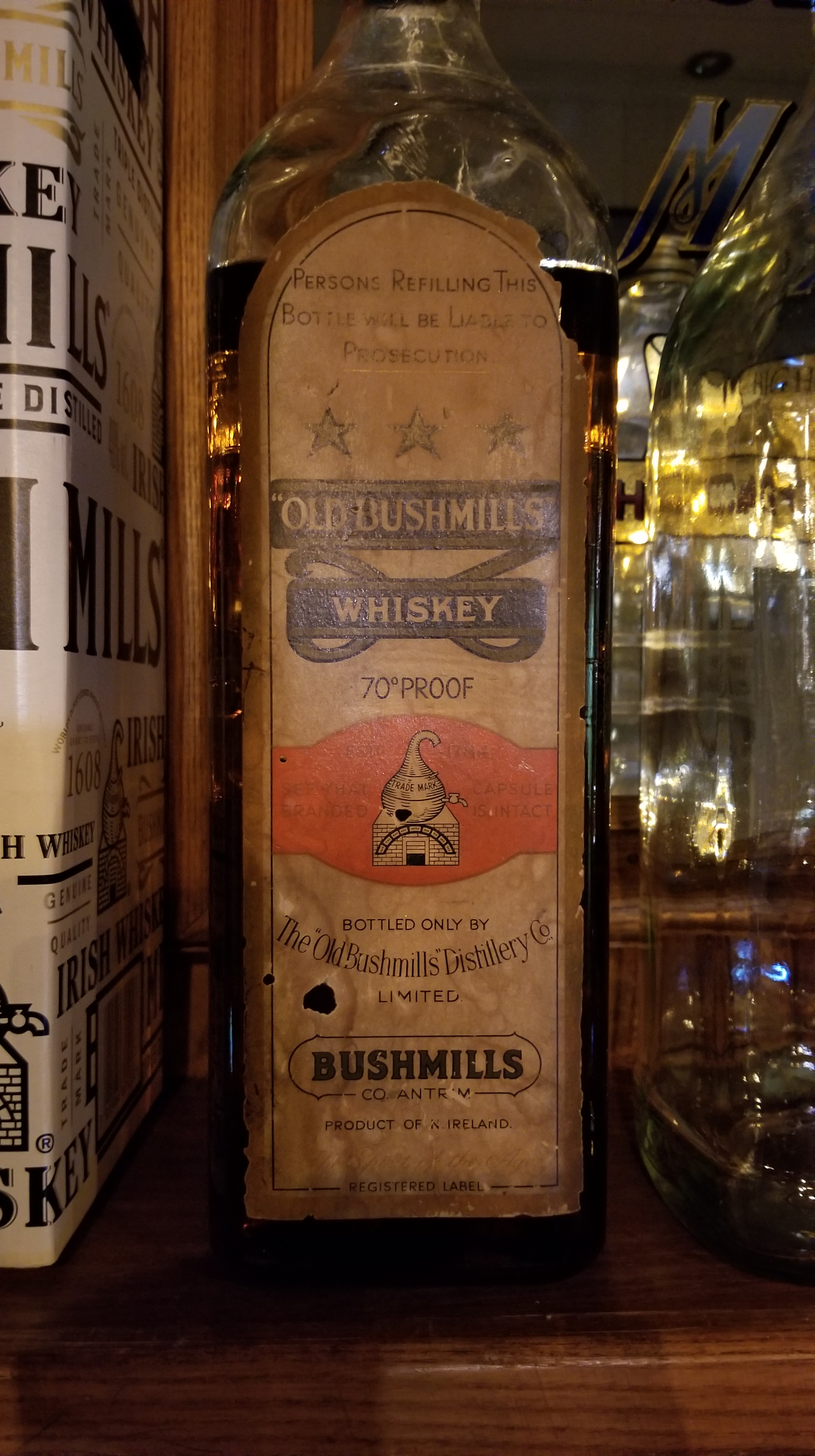
Old Bushmill’s bottle is old.
Bushmill’s
is a single malt distillery. They age grain whiskey on site for blending but
every drop of whiskey that’s distilled at the distillery is Irish Single Malt.
This is unusual because most non-blended Irish whiskey is Single Pot Still,
which is a distillate made up of both Malted and Unmalted Barley. This
style originated as a middle finger to the English who put a tax on malted
barley in 1785. Despite the added expense Bushmill’s has only ever made Single
Malt.
Irish
Single Malt is also distinct from (most) Scotch Single Malt in that it is
triple distilled instead of double distilled. This creates a lighter whiskey as
it’s gone through an additional set of cuts and stripping. This malt forms the
base of all of the blends and single malt line at Bushmill’s . And every bottle
of Bushmill’s is put together by the first female master Blender in all of
Irish Whiskey history. She’s sitting comfortable with over 25 years of
experience tripping across her palette and when she proclaims the 10 year old
single malt to be her personal favorite there’s a weight that goes along with
that statement.
The
10 Year Old fills a very interesting place for Irish Whiskey. It’s affordable,
mixable, and quaffable on it’s own it could honestly be that missing midpoint
for Irish whiskey that bridges the shots and the Super Premium category. Yet
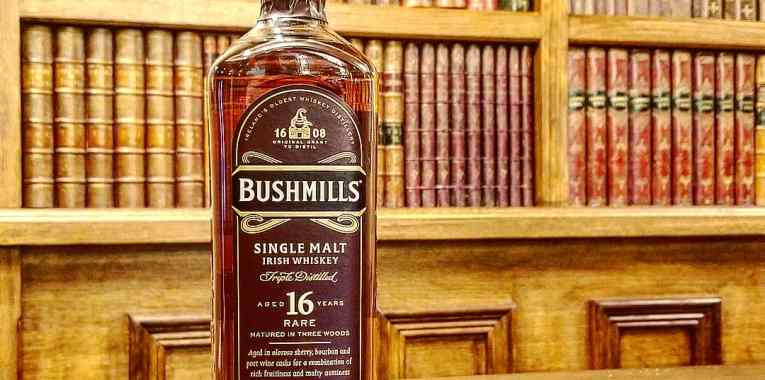
from what I tasted it the true gem of the line is the 16 Year old Single Malt.
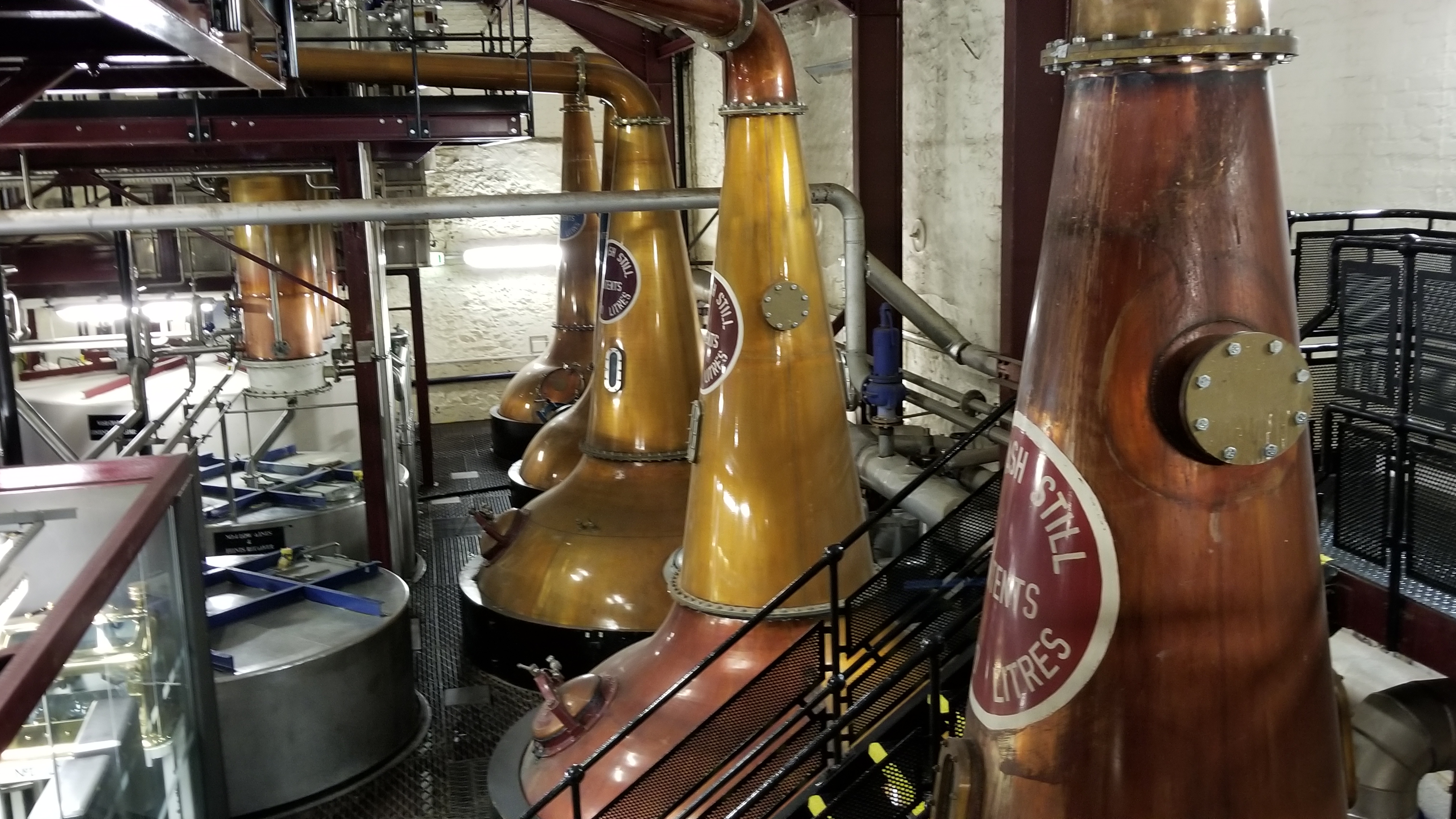
Pot Stills for days.
Aged for a minimum of 16 years a blend of ex-Bourbon and Olorosso barrel aged single malt is blended together and then further aged for an additional 6 months in used port barrels. It was the first thing I was poured after nearly 18 hours of travel and was one of those moments of surprise and disbelief at how good it was. In conversation with Noah Rothbaum, Senior Editor at Half Full, he expressed how it reminded him of the experience of discovering Hibiki 12 years ago before we drank it all-I had to agree with him. But not trusting my jetlagged senses I proceed drink at least a bottle over the next few days and to bring a bottle home for continued research.
NOSE: Dark Fruit, Raisin, Plum, and a touch of vanilla.
PALETTE: Dried Red Fruit, a slightly nutty undertone with a bright sherry through line to cut through the toffee, vanilla, and richness of the malt.
FINISH: Long and lingering, leaving the dried fruit and a slight amount of tannin and spice.
Ultimately I came away from Bushmill’s, and Ireland, with another story. A spirit is ultimately the distillation of the people who make it. A distillation of their culture, their taste, their landscape, and their time. Getting to know them, getting to experience them, ultimately opens doors to experience a spirit they way they do. In the end, Jameson is still my least favorite Irish Whiskey but, like life, whiskey is really shades of grey. A single dominant force can not define either.
Despite being a self avowed fanatic of American whiskey the thing I’ve
found myself writing about and drinking the most recently has been
Japanese whisky. The last time we spoke way back in December I was
drinking poetic about the Hakushu malts and the fact that though they often seem
to be in the shadow of their Yamazaki counterparts the excellence
of their design meant that it wouldn’t be long before they too
disappeared into a puff of Unicorn smoke.
That opinion seems to have be prophetic with the recent announcement
by Beam Suntory of the “partial” discontinuation of both the Hakushu
12 year and the Hibiki 17 year expressions. While the products will
only be officially discontinued in Japan they will only have “limited
availability in the next few years.” This announcement came as a bit
of a surprise to me with the Hakushu because I haven’t seen it have
the same name recognition and brand power as the Yamazaki does in the
States. But when your distillery is only 45 years old its easy to see
how your supply of 12 year old single malt could be tight.
But the real surprise to me was the Hibiki 17.
The house of Suntory have always considered themselves to be blenders
above all else. While the Single Malts may be the high priced auction
house darling the Hibiki line has always been the jewel in Suntory’s
eye.
Meaning “resonance,” the Hibiki line was first released in 1989, 5
years after the first release of Yamazaki 12 year. Originally
comprised of just the 17-year and the 21-year, a 30-year expression
was released in 1997 and the much missed 12-year was introduced in
2009 before being announced as discontinued in 2015.
Think about that for a moment. The Hibiki 12-year appeared on the
market, soared in popularity, became a staple of the bar world, and
then completely vanished all in the space of 6 years. That’s an insane
trajectory for any brand and is perfect evidence that Japanese whisky
is a truly global product at this point.
The Non-Age Statement Hibiki Harmony hit the market slightly before
the disappearance of the 12-year and despite everyone crying, “Foul!”
many of us were willing to give Beam Suntory the benefit of the doubt
for two reasons: 1) the Hibiki 12-year was the only expression to
utilize whisky that was aged in plum wine casks. They hadn’t
projected for the popularity of the expression, so they discontinued it
because 2) the Harmony wasn’t a replacement for the 12-year. It is
meant to be a more accessible version of the 17-year.
The Hibiki line has always been a blend of whiskies from all three
of the Suntory distilleries: Yamazaki, Hakushu, and
Chita. To them it is the confluence of every unique facet of their
operation. It is meant to represent the ideal of the harmony between
people and nature. The 24 facets of the bottle represent the 24
seasons of the Japanese calendar and invoke the comparison of this
balance to the balance of the malt and grain whiskies in the Hibiki
blend that resides inside the bottle.
This attention to detail is part of what has always set the Hibiki
line apart from my disdain of other blends. And yes, you would have
had to be a real prophet 20 years ago to predict the explosive growth
of the segment, and yes, it’s a real shortage. Bars in Japan are
pouring the Harmony just like we are over here. And yes, the rise of
shochu and decrease in whisky drinking in the 80’s led to lower
production. But the line was introduced in the late 80’s when this
downturn was happening and while the 17-year is being officially
discontinued in Japan it’s “limited availability” will continue to
limp on in the United States. This speaks to the power and demand for
premium aged Japanese whisky in the US, but also can’t help but lend
a tinge of cynicism to the disappearance of the 17-year. Its as if stocks
are being pulled at a younger age to go into blends like the Harmony
to cash in on the popularity wave now versus risking a drop in demand later. And if that’s true who could blame them?
In Beam Suntory’s defense, the Harmony is still damn delicious and
their quality has not dropped. They have also consistently stated that
they are ramping up production and that this will be a temporary
hiccup, but how many temporary hiccups have we seen come with a flashy
return and a price hike? (I’m looking at you Old Fitz.)
None of this denies the fact that the Hibiki 17 Year is an amazingly
delicious dram. The nose is full and rich, distinct notes of honey,
with some roasted pear, a touch of smoke and ume plum.
The palette offers a touch of sweetness to go along with the initial
scents with the addition of raisin, oak, and a pithy citrus zest that
carries on to a long finish that turns into an darker
amontillado sherry note with a touch of cacao.
It’s easy to see why this blend is the crown jewel of the Hibiki line,
it’s easy to see how we drank it all out of stock, it’s easy to see
why they may have discontinued this expression to protect the more
award winning 21-year expression, and it’s easy to see why we should
all raise a glass and drink to this resonant whisky and to its equally
evocative moment in time.
Every now and then I like to remind myself that Irish Whiskey isn’t spelt “Jameson’s.” I’ve talked about the explosive growth of Irish Whiskey before but here are some quick facts.
While everyone is gaga for Japanese whiskey as a luxury product Irish whiskey is expecting to double its sales by 2020. In 2014 Jameson’s sold 18 million liters in the US alone. The Scots and the Irish will fight until the Sun goes cold over who first created whiskey but there’s no debating the fact that it was Irish monks that tought most of the Western World how to distill. Hell, even the word “whiskey” is an Anglicization of “uisge beatha” which is Gaelic for water of life. The Irish are indelibly linked to whiskey so what’s the problem? It’s a monoculture.
Need proof? In 2014 Jameson’s closest competitor, Bushmill’s, sold a whopping 1.3 million cases. Jameson’s currently accounts for 63% of the global Irish whiskey market. Monocultures are great for business but are incredibly susceptible to full scale collapse. Look at what’s happening to the Chiquita bananas or how the agave industry is actively working to reinvigorate the gene pool with the Bat project.
Irish whiskey has traditionally lived and died with the American market and like so many other things it was ruined by Prohibition. On top of that throw in the Irish War for independence, a civil war, trade disputes with Great Britain, and you end up with an industry made up of over 160 distilleries and 400 brands reduced to a mere two distilleries in the mid-70’s.
The remains of the Irish whiskey industry banded together to form Irish Distillers which was then purchased by Pernod Ricard in the late 80’s. They then began the massive push to get people to drink Irish. It worked and since 1990 Irish whiskey has been the fastest growing spirit in the world. It’s ballooned the industry with 32 new or proposed distilleries across Ireland. Not bad for an industry long sustained by only four distilleries and of those four only one has been in operation longer that 1975.
It’s a old industry with new blood and the near death of the industry left many historic brands and styles in the grave. Irish Single Malts and Tyrconnell are great examples. Tyrconnell was the flagship brand of the Old Watts Distillery, It takes it name from a racehorse who won the National Produce Stakes in 1876 at literally at 100 to 1 odds. It was incredibly popular in the US, there are photos of Yankee Stadium at the turn of the century with Tyrconnell ads on the billboards. But prohibition shuttered the brand and the distillery in 1925. The Brand was revived by the Cooley distillery in the 80’s.
It’s made in traditional Single Malt Style, 100% malted barley and double copper pot still distillation with no peat, and then aged in ex-Bourbon Barrels. The 10 Year Old Madeira Cask Finish is my real jam though. A light, fruit forward whiskey with bitter chocolate, green, tropical fruit, and a incredibly creamy finish. It’s one of those whiskies that slips below the radar while being incredibly excellent. And they’ve gotten to the place where they are now planning on a limited release of a 16-year old Single Malt. And maybe that’s the silver lining to the Jameson’s problem.
All of this growth in the Irish whiskey world is being fueled and often literally paid for by sales of Jameson’s. For many people that’s all Irish whiskey will ever be which leaves a lot of hidden gems to be found flowing from the Emerald Isle. The world has caught on to Bourbon, its caught on the Japanese whisky, hell its even caught on to Taiwanese whiskey, but not Irish. Not yet anyway…
The days of Yamazaki and Weller Antique being undervalued have faded and instead of being sipped and shared it’s now being hoarded and auctioned. And i miss sipping and sharing. And at least with Tyrconnell I still can.
When you think of whisky and what gives it it’s flavor what springs to mind? Is it the mashbill, the barrel type, the aging location and length? Chances are good terrior didn’t spring to mind but the team at Bruichladdich would like to change that.
Bruichladdich is a distillery that blends history and modernity. Founded in 1881 the distillery was, at the time, the most modern distillery on the island of Islay. It wafted in and out of popularity until the distillery was mothballed in 1994 for being “surplus to requirements.” It gained new life in 2000 when it was purchased by a group of private investors who dismantled and revamped the entire distillery once again making it one of the most modern distilleries on the island. They also brought with them a lot of experience in the wine world including a deep reverence for terrior, a reverence that has survived the distilleries sale to Remy Cointreau.. They also made two great decisions in their early days 1) hiring the legend Jim McEwan to be their master distiller and 2) deciding to actually grow barley on the island of Islay.
Scotch does not require the barley to be Scotch. To be Scotch that barley needs be distilled in Scotland not grown there. This is very reflective of the mentality that terrior doesn’t matter in whiskey. It’s not that distillers don’t care about the quality of the barley but rather that with so many other factors effecting the final product the terrior was way down the scale of importance, especially once the economics of scale set in.
The early days of whisky making were a local affair. A farmer had excess crops, they distilled them to preserve the grain, and sometimes managed to sell some of the spirit for extra profit. Many of these farm distilleries were successful enough to grow into commercial affairs but most did not survive the true industrialization of the spirit industry in the early 19th century. This was when improvements in technology and more interconnected trade allowed whisky making to become a large scale, commercial endeavor.
While there is some evidence that there was barley being grown on Islay before this time the advent of these large distilleries made in commercially unviable. These new distilleries were also all on the coast where they had their own piers or shallows where a flat-bottomed boat could dock. This made it more economic for these distilleries to import cheap grain from the mainland and export whisky.
As these distilleries continued to grow they also out grew the ability of the island to grow enough barley for them. There just simply isn’t enough land to supply all the barley these industrial distilleries need, so the farmers stopped growing the barley and turned to more economically advantageous pursuits.
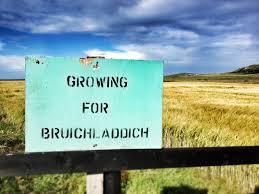
Bruichladdich changed all of this in 2004 when they partnered with a local farmer named Raymond Stewart at Kentraw Farm on Richard Macaeire’s Foreland Estate on the Rhines. Raymond grew barley and Bruichladdich distilled it. The first release of the Bruichladdich Islay Barley was released in 2010. Each release is dated with the year of the barley’s harvest and labeled with which farm it called home.
Some of these releases have been stunners, the 2007 Rockside Farm is something I wish I’d squirreled away a few bottles of, but growing barley on the island of Islay is extremely finicky. The 2009 and 2010 releases of Islay Barley were blends of several farms. Still distinctly labeled but you can’t help but feel that the strong idea of terrior is running into the old problem of supply.
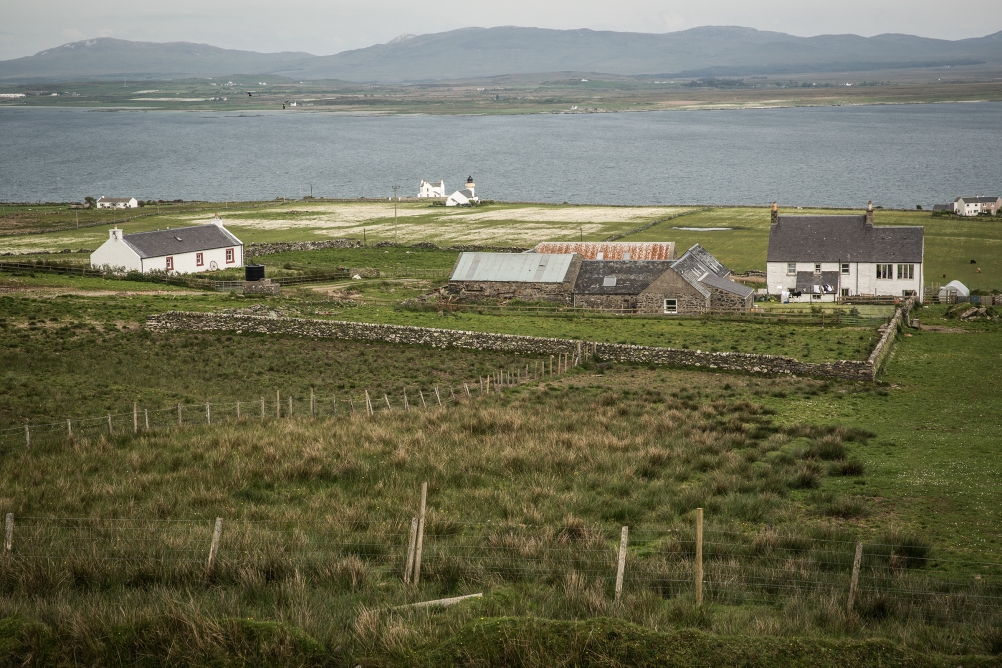
This blend of farms may be a temporary hiccup as the Islay Barley series has expanded. Bruichladdich divides its products into three core lines: Bruichladdich (unpeated whiskey), Port Charlotte (heavily peated whisky), and the Octomore (experimental, cask strength, super heavily peated whisky). The Port Charlotte is also utilizing a blend of farms but the Octomore is not. But then again the Octomore has always been a unique case with all of its barley coming from the farm of Octomore a mere 2 miles from the distillery.
In the end, these are whiskies that are still evolving. Not just with different bottlings from year to year but also in terms of the process of making the whisky. And they are hit or miss. Barring the previously mentioned Rock Hill Farm the Bruichladdich Islay Barley releases have been interesting at least but the Port Charlotte’s have always fallen flat for me. I’m inclined to think that it’s because of the peat adding one more layer of obfuscation between the original barley and the finished whisky. The Octomore Islay barley however is a stunning beauty of a whisky with a layered elegance and subtle floral quality the belies its status as a cask strength monster and is one of the most heavily peated whiskies in the world.
Bruichladdich is the first Scottish distillery to put such a laser sharp focus on the terrior. They are experimenting and finding new boundaries inside of one of the most heavily defined spirits in the world and for that they should be applauded. Whether this experiment continues to grow and leave its own terrior on the whisky world or if it succumbs to the economics of industrial scale production has yet to be seen.
If the Scots are the craftsman of the whisky world, passing down tradition and technique year after year because it works, then the Japanese are the engineers, dissecting and reassembling each component part. The Taiwanese are the artists, free willing and experimental; it’s insane that we can even make that analogy because there is only one distillery in Taiwan and it’s barely into its Tween years.
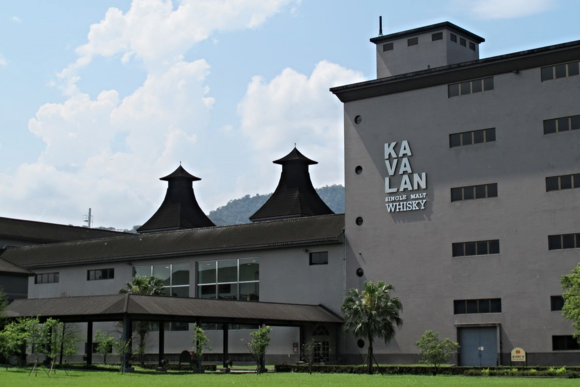
After Taiwan joined the WTO in 2002 Mr. Tien-Tsai Lee, founder of the KingCarbeverage conglomerate, was finally able to enter the whisky world and established the Kavalan distillery in 2005. The distillery takes it’s name from the Taiwanesse aboriginal ethnic group that originally inhabited Yilan county where the distillery is located in northeastern Taiwan. The distillery is built with classic Scottish pot stills and massive technological steps were taken to protect the fermentation and the distillation from the Taiwanese heat. Rather than adhere to how things are done traditionally they have worked to embrace the natural elements of Taiwan, most notably climate, to create something unique in the increasingly crowded whisky landscape.
The distilleries first new make flowed from the stills in early 2006 and the distilleries first whisky, the Kavalan Classic Single Malt, was released in December of 2008. That is a massively fast turn around for a new single malt. For the Scotch and the Japanese you can’t even legally call a product whisky until its aged for a minimum of three years and most distillers in those countries would call a three year old far too immature and unripe for release. This brings us back to the climate.
Almost every year, as reliable as new iPhone releases, someone touts a new aging process that’s a breakthrough that allows for rapid aging, creating the equivalent of a 12-year old scotch in a fraction of the time. In every case the whisky produced by these methods either never materializes or falls vastly short of it’s lofty goals. I’d be just as skeptical of the claims that once the team at Kavalan stopped resisting the humidity and heat of the sub-Tropical Taiwanese environment they were able to rapidly age their product if the whisky in the bottle wasn’t so damn good. As their Master Blender Ian Chang says, “We think of our heat as a sandpaper and our newly made spirit as a rock with edges,”
But it’s not just the unique climate. Kavalan is also exceptionally good at cask management. This cask management truly shines in their Soloist series.
The Soloist series is a lineup of Single Cask, Cask Strength, and Single Malt whiskies and it is these releases that made drinkers sit up and take notice. It is called the Soloist line because every release is like a soloist in a concert where their classic series is the whole orchestra. These releases quickly gained notoriety until in 2015, a mere ten years after breaking ground on the distillery, one of these releases, the Vinho Barrique, won “World’s Best Single Malt” in the World Whiskies Awards.
The Vinho Barrique harnesses the climate and marries it with excellent cask selection. The casks use a shave, toast, and re-char process on old Portuguese wine casks that creates a heavy oak influenced whisky. But rather than produce the heavily tannic, overly woody notes we often see in American quarter casks, instead it’s a finely tuned balance with rich dark berries, plum, and tropical fruit dancing along the edges of the oak’s vanilla and tannin while swimming in the traditional malt backbone of a well aged whisky. Being bottled at cask strength cuts through what could have been a cloying sweetness to instead add a spice note that allows the finish to linger long into the night.
This award and bottling blew the roof off of Kavalan and their prices soon followed. In fact, many of the Soloist series had to be turned into standard issue, non-cask strength releases for the U.S. to keep up with demand even with the distillery expanding in 2015 to become the 9th largest single malt distillery in the world. They’re still experimenting and utilizing that climate and those casks with a new series of single barrel, cask strength, sherry and port cask releases that you’ll probably never casually encounter without a starting price tag of $400+ per bottle.
So what are you likely to encounter? Well, with the Soloists taking a quick intermission the concert continues with the Kavalan Classic that we mentioned before. Keep in mind this is a young distillery, no matter what accolades they’ve accrued, and they’re still playing with their formula. Point in fact, the Classic is an 80 proof bottling for most of the world but to appeal to American palates and American fans of the overproof work, here it’s bottled at a slightly bigger 86 proof.
A blend of ex-Bourbon, ex-sherry, and ex-wine casks all about 4-4.5 years old it doesn’t drink like a young whisky and has a lighter complexion. Stone fruit, a touch of floral sherry, and vanilla with a distinctive toasted malt are all present. But it doesn’t hold a candle to the bonfire that is the Vinho Barrique or really any of the Soloist single barrels. Which is a shame because those bottles are quickly becoming unicorns.
In the end it comes back to our craftsman vs. engineers vs. artists. The artists at Kavalan have produced a few shining masterpieces but they haven’t quite mastered the skill that sets the craftsmen and the engineers apart: blending. The Japanese have been able to set themselves apart by truly understanding and controlling every drop of whisky to blend it together to create art and the Scots have years of tradition that makes it seem a natural talent. Kavalan is just dipping its brush into the wider world of consistency.
Just as the Taiwanese heat seems to speed their whisky more swiftly to maturity, Kavalan itself has sped right into all the major touch stones of the modern whisky world: craft distilling, underdog appeal, rapid growth and awards, price hikes and shortages. No matter where it goes from here there is no denying that Kavalan is true global player.
It’s a distinctly American thing to look at a creation of another group or country and say, “Yeah, I can do that.” We’re big fans of adopting ideas from others, filtering through our own cultural lens, and then exporting those back to the rest of the world. The cocktail is just that, and even our quintessentially American Bourbon whiskey has its roots in immigrant traditions being adapted to our local grain sources.
And it’s hard to scream about cultural appropriation of Japanese Whisky when Masataka Taketsuru lifted the blueprint straight from Scotch makers, even going so far as to be told he was to dogmatic about doing things “the Scottish way.’ But adapting and borrowing is exactly what St. George is doing with their Baller Single Malt Whiskey. And they’re totally aware of it. Distiller Lance Winters honestly describes the Baller as “a California take on the Japanese spin on Scotch whisky.” A California take on old world traditions is kind of the St. George trademark.
Jorg Rupf founded St. George Spirits as an eau de vie distillery in 1982 and in the 35 years since then has developed a massive reputation for quality and experimentation. Although the eau de vies are still a major part of the distillery, the portfolio has expanded to include such wide sprawling products as a California Agricole Rum, an Absinthe Verte (which became the first commercially available American Absinthe after the lifting of the 1912 ban), as well as numerous gins and the Hangar One vodkas which were sold to Proximo in 2010. St. George first entered the whiskey game in 1996 when Jorg hired Lance Winters, a former nuclear scientist and brewer, for a one-month trial. Twenty years later Lance is still experimenting and Jorg is delightfully retired.
The following year, Jorg and Lance began distilling Single Malt Whiskey which had its first release in 2000. Back then no one knew would to do with a Scotch-style American made whiskey. Fast forward 17 years to Lot 16 of the Single Malt and drinkers are almost as confused as to what to do with an American Single Malt but the tide seems to be turning.
Distilleries around the country formed the American Single Malt Commission in 2016 with the goal to “establish, promote, and protect the category of American Single Malt Whiskey.” Technically, according to the American government there is no legal definition of what constitutes an ”American Single Malt.” However, this lack of consensus didn’t stop drink giant Remy Cointreau from purchasing the American Malt makers at Westland Distillery in December of 2016. Whether that speaks to a growing awareness of the category, or to an international audience more familiar and accepting of products labeled “Single Malt” remains to be seen.
The uncertainty also hasn’t stopped the whiskey from winning awards either. Both the Westland Malts and the St. George Malt are some of most awarded American Whiskies, with the St. George Malt even appearing in 1001 Whiskies You Must Taste Before You Die as what “might just be the best U.S. single malt available today.” But again, with the category being what it is that’s very nebulous praise.
People are clearly drinking it, and even reveling in the experimentation that this grey category has. And the St. George Baller is a prime example of this experimentation.
Distilled from 100% American barley and distilled on the eau de vie pot stills it is then aged for 3-4 years in ex-Bourbon and French oak wine casks. The whiskey is then filtered through maple charcoal and finished in casks used to aged St. George’s house made umeshu. Umeshu is a Japanese style of plum liqueur, and St. George being St. George they make their own in house entirely from California grown ume. About 1,600 bottles were released in 2016 with about the same on track for a 2017 release. It’s California identity clearly shines through, especially with it being a California only release. It’s certainly intellectually interesting.
The whiskey itself is bottled at 94 proof. The plum is incredibly noticeable on the nose with a touch of white pepper leading into a crisp, sharp taste on the palette with a massive dose of white pepper and spice before finishing with a fruitiness and the expected chocolaty, malt sweetness. Japanese whisky this ain’t. It’s more aggressive and while it’s certainly layered the edges are sharp and noticeable. It does really open up with the addition of water, which is what its makers had in mind. They designed this with whiskey highballs in mind, hence the name baller, which is yet another thing they have in common with their Japanese inspiration.
In the end, I think its label, which features the legend of St. George reimagined as a samurai based on an original watercolor made to emulate a woodcut style, best sums up this whiskey. It is an old tradition reimagined through multiple cultural lenses, that is artistically appealing but weather it’s a style that bears fruit is yet to be seen.
Some things seem so ubiquitous, so omnipresent that they become nearly invisible. All of the work, all of the marketing, but most importantly all of the quality that must be present to get them to that pervasive point becomes overlooked and it all just fades into the background. That had been my experience of Chivas Regal until recently.
No matter how much we preach the gospel of Single Malt Scotch, Blended Whisky is the true king. And if Johnny Walker sits upon the Iron Throne, Chivas Brothers is the King in the North. With the now iconic 12 year blend the market leader in Europe and Asia and over 4.4 million cases of Chivas Regal shipped world wide it’s easy to see how Chivas can be lost in the whisky sea. When everyone is clamoring for the rarest, the newest and the most unique bottlings how could something that sits on nearly every back bar in the world be anything special?
However the history of the brand shows one of evolution, experimentation, massive growth and success.
Chivas traces its roots all the way back to 1801 and small grocery store started by John Forrest in the town of Aberdeen. The Chivas family first became involved in 1836 with James Chivas joining the growing company and by the 1850’s they had responded to demand for luxury whiskey and were bottling their first blends under the name Royal Glen Dee.
Chivas Regal first found a home and an identity in the United States in 1909 with the launch of Chivas Regal 25 year old. The blend became the world’s first true luxury blended whiskey and it was an immediate hit with the New York high society. The brand rode high for several years until WW1 which limited shipping and then the disaster that was Prohibition struck. Almost more devastating to the brand than these events was the selling of the company and offloading its massive whisky stocks, in 1936.
When Chivas Regal was relaunched in the US in 1939 it was introduced as a 12 Year old in an attempt to preserve stocks. The company was then sold again, this time to Seagram’s in 1949. The next year Seagram’s purchased the Milton distillery, renamed Strathisla, which remains the primary malt and spiritual home of Chivas to this day.
Seagram’s took over the Glenlivet Group in 1977 and when Seagram’s went under in 2001 Chivas and the Glenlivet were purchased by Pernod Ricard which consolidated all of their whisky interests, including the Aberlour distillery that was already in their portfolio, under the Chivas Brother’s banner.
The brand has massive stocks to draw on and throughout it’s history hasn’t shied away from experimentation and innovation. For instance, The Royal Salute line was introduced in 1953 to celebrate the coronation of Queen Elizabeth II and is the only line of blended Scotch whiskey that starts at 21 years of age. I’ve been fortunate enough to have the 38 Year Old ‘Stone of Destiny’, named after the legendary coronation stone of the Scottish Kings. It’s full of dark chocolate, dried fruit and a rich finish that rivals many of the high end malts that I’ve had.
On a more approachable scale they’ve started producing the Chivas Regal Extra, a Non Age Statement blend designed to recreate the flavors of the original Chivas Regal 25 Year Blend that relies heavily on Olorosso Sherry aging. Then there is the new Mizunara.
The Mizunara is a 12 Year Old blend, but not THE Chivas 12 Year blend, that is finished in Japanese Mizunara Oak. It’s currently a Japanese exclusive but the Chivas Brothers have plans to take it to the global market. Think about that for a moment. Mizunara is some of the most sought after wood in the world right now and Chivas has enough clout and influence to be able to age enough whisky in mizunara casks that their biggest problem with getting into the United States is the difference in bottle sizes between the US and the rest of the world. With all this innovation and history why does it seem to fade into the background of the whiskey drinking consciousness?
In a way I think their own history is getting in their way. The whiskey nerds and “trend setters” are all fighting to battle for transparency and in depth disclosure of aging and blend components. Just look at John Glasser and how often Compass Box is chastised for disclosing too much information. Finding information on what actually goes into a bottle of Chivas Regal is impossibly frustrating. And while this lack of information might keep that bottle of Chivas from standing out in an increasingly crowded forest, but it doesn’t stop the liquid in the bottle from being of a quality and taste that has earned its iconic place on that back bar.
Bigger is always better right? Just like the old fashioned way is the best way. Or at least that’s what Aberlour has been banking on the past two decades with their A’bunadh releases.
Despite a history stretching back nearly 140 years Aberlour still feels relatively unknown to the wider world. The distillery was founded in 1879 by James Fleming who built an extremely modern distillery for the time powered by a waterwheel driven by the Lour river . Aberlour literally means “the mouth of the chattering burn” and was supposedly named for the ancient Druids belief that the river actually spoke to them. The water for the distillery is drawn from St. Drostan’s Well, which only adds to the mythic nature of the Aberlour’s waters as the well is named after the 6th century Columbian Monk who supposedly used it as a baptismal site. So, like many Scotch distilleries there is a lot of history, myth, and legend involved.
James Fleming operated the distillery until his death 1895 and then the distillery changed hands over the years, being acquired by S. Campbell & Sons in 1945, before being sold to Pernod Ricard in 1974, who updated and expanded the distillery the following year, finally merging the former Campbell Distilleries with the Chivas Brothers in 2001.
Aberlour is quintessentially Speyside in style and is double cask matured. Unlike the more well known Balvenie line, the Aberlour line isn’t finished in a second style of oak. Instead, the malt is fully matured in ex-bourbon or Olorosso Sherry barrels and once they are finished aging these different barrel styles are batched together. The proportion varies depending on the interation. The 12 Year is 75% Ex-Bourbon, the 16 year is 50/50, and the A’bunadh is 100% Sherry. And while the general line up of Aberlour might be less known the A’bunadh definitely has a cult following. Though it was first released in 2000 the A’bunadh story actually begins with that distillery expansion brought on by their purchase by Pernod Ricard in 1975.
During construction some workers stumbled upon some an 1898 newspaper with a story about the distillery fire that year, wrapped around a bottle of Aberlour from 1898. The workers who discovered the bottle finished off most of the bottle before guilt kicked in and they turned the bottle over to the master distiller, who immediately sent the remainder off to the laboratory for analysis. The A’bunadh is an attempt to recreate the whiskey in that bottle.
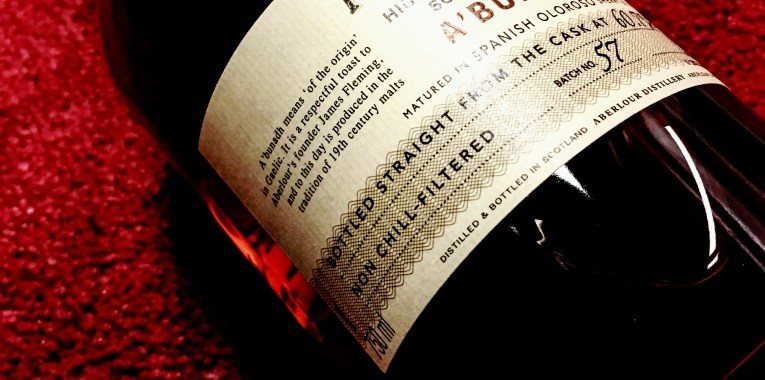
“A’bunadh” means “the original” in Gaelicand if the above story is to be believed this is the style of malt the distillery was making before it’s catastrophic fire in the late 1900s. There is no age statement, each batch is blended together from malts ranging from 5 – 25 years old, is non chill filtered, and bottled at cask strength. It is 100% Olorosso Sherry barrel aged and though there is no age statement , each batch is uniquely numbered allowing whiskey connoisseurs, otherwise known as nerds, to easily track the “best” batches.
2017 saw the release of Batch 58 but I’ve still got a few bottles of the 57 hanging around and it lives up to its predecessors. There is a massive amount of all spice and caramelized orange on the nose. There is a massive amount of that Sherry sweetness, melded with orange, dark fruit, a little bitter chocolate and heavy malt. The finish is long and sustained and with Batch 57 coming in at solid 11.42 proof the mouth is left dry and clean afterwards.
Whether or not the A’bunadh actually is like the original malt distilled at Aberlour is rather irrelevant at this point. It has certainly earned its place in the Single Malt hierarchy and deserves a little more love from those of us not constantly dreaming about our next dram.




 Almost every year, as reliable as new iPhone releases, someone touts a new aging process that’s a breakthrough that allows for rapid aging, creating the equivalent of a 12-year old scotch in a fraction of the time. In every case the whisky produced by these methods either never materializes or falls vastly short of it’s lofty goals. I’d be just as skeptical of the claims that once the team at Kavalan stopped resisting the humidity and heat of the sub-Tropical Taiwanese environment they were able to rapidly age their product if the whisky in the bottle wasn’t so damn good. As their Master Blender Ian Chang says, “We think of our heat as a sandpaper and our newly made spirit as a rock with edges,”
 selection. The casks use a shave, toast, and re-char process on old Portuguese wine casks that creates a heavy oak influenced whisky. But rather than produce the heavily tannic, overly woody notes we often see in American quarter casks, instead it’s a finely tuned balance with rich dark berries, plum, and tropical fruit dancing along the edges of the oak’s vanilla and tannin while swimming in the traditional malt backbone of a well aged whisky. Being bottled at cask strength cuts through what could have been a cloying sweetness to instead add a spice note that allows the finish to linger long into the night.

 Although the eau de vies are still a major part of the distillery, the portfolio has expanded to include such wide sprawling products as a California Agricole Rum, an Absinthe Verte (which became the first commercially available American Absinthe after the lifting of the 1912 ban), as well as numerous gins and the Hangar One vodkas which were sold to Proximo in 2010. St. George first entered the whiskey game in 1996 when Jorg hired Lance Winters, a former nuclear scientist and brewer, for a one-month trial. Twenty years later Lance is still experimenting and Jorg is delightfully retired.
 Malt Whiskey.” Technically, according to the American government there is no legal definition of what constitutes an ”American Single Malt.” However, this lack of consensus didn’t stop drink giant Remy Cointreau from purchasing the American Malt makers at Westland Distillery in December of 2016. Whether that speaks to a growing awareness of the category, or to an international audience more familiar and accepting of products labeled “Single Malt” remains to be seen.

 On a more approachable scale they’ve started producing the Chivas Regal Extra, a Non Age Statement blend designed to recreate the flavors of the original Chivas Regal 25 Year Blend that relies heavily on Olorosso Sherry aging. Then there is the new Mizunara.
 Bottled In Bond LA