Whiskey Wednesday: The Three Chamber Rye

Alright, let’s get this out of the way: I am a Leopold Brothers fan, I’ve been a fan of their work for years. They are one of the best examples of what a mid-sized distillery can offer to the larger spirits world. They’re not trying to grow beyond their capacity and that capacity is often defined by quality standards, not production goals. They once said that what they make is liquid food, and their products back it up.

But with all of those standards and expectations comes a pressure to deliver. Especially when it comes to the Three Chamber Rye.

The Three Chamber Rye journey is one that I have followed for years, for at least as long as I’ve been writing Bottled-In-Bond, LA. In fact it was something that I was able to taste right off the three-chambered still before it had ever been bottled. The pressure of those years since tasting the white dog on my expectations has been enormous but to truly understand why we need a history lesson.

The Three Chamber Rye takes its name from the still used to produce it. While many people these days are familiar with the difference between a pot still and a continuous still, chances are they’ve never heard of a three chamber still. That’s because the last one was decommissioned just after the end of Prohibition. 

But before Prohibition the three chambered still was the tool for making rye whiskey in the United States. We know this because of the Crampton and Tolman papers. These were two reports commissioned by the IRS after the passing of the Bottled In Bond Act of 1897. These papers would become the basis for the standards of identity for what would define a bourbon, a rye, or other spirits aged in wood in the US. Every distillery that was surveyed that produced rye whiskey, except one, used a chamber still.

The three chamber still works much like its name suggests, there are three chambers stacked on top of each other. Each chamber is separated by a valve to prevent wash from each chamber from flowing into the other. The best way to understand how it works though is to start at the end with the third chamber.

This is where the mash from the last run will have ended up as the last stop of the process. Stripped of almost all alcoholic content and essentially stillage, this spent mash is pumped out of the chamber. 

The valves on the other chambers are opened one by one and the mash from chamber two flows down into the third by gravity, the mash from chamber one flows into chamber 2 and the first chamber is refilled from the pre-heating chamber.

Once all of the chambers are filled the steam valve is opened. It rises through the bottom (third) chamber, extracting oils and flavors, passes up into the middle (second) chamber, extracts alcohol and more flavor, continues up into the first chamber continuing its extraction before passing into a heat exchange in the preheater charger to warm the waiting mash without interacting before the vapor passes into a thumper and condenser to become new make. 

Each of these chambers operates at its own temperature, pressure, time, and inefficiencies. Each extracts different flavors and compounds.

If you’re familiar with how a continuous still works this may sound like a more difficult, less efficient version of that. And for many years that’s how this still was considered: as a transitory technology between the pot still and the continuous still.

Todd Leopold’s research into this forgotten technology however, led him to an article about the Hiriam Walker distillery in the 30’s. At the time this distillery was the largest distillery in the world and rather than instill another continuous still the very deliberately had a three chamber still limiting their production numbers. This told Todd that this still must have been producing a whiskey of such a unique flavor that the average consumer would notice its absence. And this led the team at Leopold Bros to commissioning Vendome to make the first Three Chamber Still in 100 years.

I don’t think Vendome would have agreed to make this still for any other distiller, as it was the first still they ever made that they couldn’t guarantee would work, or even not explode. Yet once it was functional and paired with Todd Leopold’s skill as a distiller it became clear that the resulting whiskey, even before being aged, was incredibly unique. The Chamber still essentially worked as an oil extractor. 

By the time the mash hits the third, bottom chamber almost all of the alcohol has been stripped from it. This means that the steam is extracting oils, flavors, and other compounds that it carries into the other chambers that are then slowly mixed with the alcohol being pulled from those chambers before being passed into the condenser to be collected. This allows a lot of time for compounds to interact and to add in compounds that don’t usually have time to exist in more familiar distillations.

The production goes beyond just the technology though. When you look back at production in the late 1800’s you quickly realize that the grains grown then are drastically different from the grains grown now. Over the past 150 years we’ve bred grains to produce more yield, meaning more starch. This is efficiency at the cost of flavor.

To solve this, Leopold Brothers worked with local Colorado farmers to start growing essentially extinct Abruzzi Rye grain. This rye has a starch content of about 60-65% which is much lower than the 75-80% starch content of modern, comercial rye. This unlocked yet another key to the flavor of this bygone whiskey. Add this to the fact that it’s distilled to 100 proof, goes into the barrel at 100 proof, and five years later comes out at 100 proof and you have a whiskey that hasn’t been tasted in literal generations.

I’ve now been fortunate enough to taste this whiskey as a new make straight off the still in the first year of its operation, to be able to taste the first bottled release, and now the first single barrel release. It has a unique character worthy of the wait; floral, fruity, bready, unctious, and heavy.

That term heavy is important because it leads us to the next stage of the conversation. That’s right, we aren’t done yet! While doing more research, and examining the blueprints laid out by the Crampton and Tulman papers, as well as the flow charts of the Hiram Walker Distillery it became clear that this Three Chamber whiskey, this “heavy” whiskey, was a component. Just a part of the standard bottle of rye. It would be blended with “light” whiskey to create a completely separate flavor.

This “light” whiskey would now be what we consider rye whiskey distilled on a continuous still. To truly recreate pre-Prohibition Rye the Three Chamber Rye would have to be blended with a continuous still rye.

Without a Continuous Still of his own, Todd reached out to Nicole Austin of Cascade hollow, formerly George Dickel. If you haven’t heard of Nicole or her work at Cascade Hollow go Google her now. She deserves her own full breakdown for her innovation and creativity as she’s doing for a macro distillery what Todd has done for an independent distillery. (Which is why she happened to have a four year old, experimental, column distilled rye already on hand.)

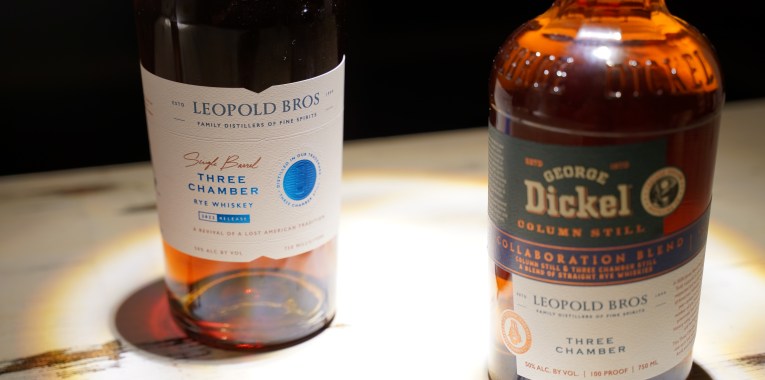
The two were able to collaborate. Not just as individual distillers, but as a mid-sized distillery working with the largest liquor company in the world. They produced a collaboration bottling that equally featured the work of both distillers while recreating a historic flavor profile.

The result is one of the best, most versatile rye whiskeys I’ve ever tasted. It is bright, spicy, weighty, fruity, delicate, and slightly floral. While this is a whiskey to sip it is probably one of the best cocktail Ryes I’ve ever worked with. A Manhattan or Sazerac with the Collaboration Rye is stellar. 

*If only the price were.

As you can imagine recreating a century old style of whiskey, and doing it right, doesn’t come cheap. Getting a bottle of the single barrel Three Chamber Rye is a couple hundred dollars. And depending on where you live getting a bottle of the Collaboration is 100+.

I absolutely believe that the price is worth it for experienced whiskey drinkers. They both explore something new, unexpected, and delicious. I want to open that door to appreciate the complexity of this whiskey to more people. And the easiest way for that is with cocktails. But the price point, for now, is aspirational rather than available.

Leopold Bros might think they’re making liquid food, but with the Three Chamber Rye they’ve made a whole meal.

TASTING NOTES:

Leopold Brothers Three Chamber Single Barrel Rye
NOSE: Malt, Baking Spice, Light Oak, Herbs
PALETTE: Stone fruit, oily, lavender, bright spice, bready
FINISH: Long, floral, roasted peach, tobacco, oak

Dickel and Leopold Bros. Collaboration Rye
NOSE: Dried fruit, citrus zest, rye spice, vanilla
PALETTE: oak, caramelized pear, floral, stone fruit, dill, baking spice
FINISH: Long, honied, spiced apple
Whiskey Wednesday: The Open Story of Uncle Nearest

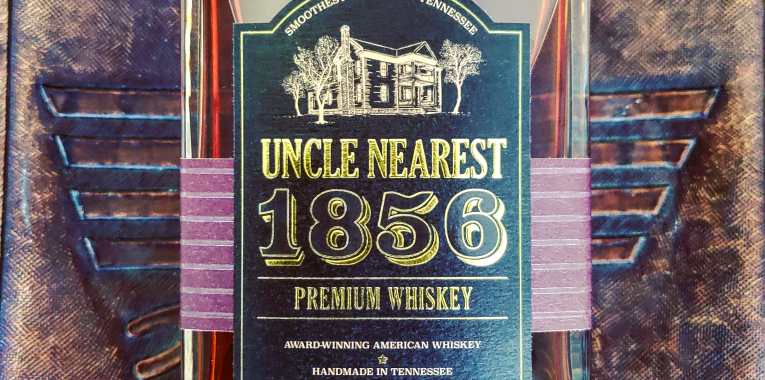
Today is not about depleting old bottles but celebrating something relatively new that honors something very old. A story that was an open secret yet like all open secrets unacknowledged. And being unacknowledged also means it’s a story not told. This is the story of Uncle Nearest.

Nathan “Nearest” Green was a slave in Tennessee during the Civil War. In the 1850’s he was, as horrible as it is to say, owned by a firm that leased him out to a preacher, grocer, and distiller named Dan Call. Now, back in those days to say someone was a distiller often meant that their slaves were distillers. And Nearest was one of the best. In fact, he was so good that when a young Jack Daniel’s came to work for the preacher, Call took him to Nearest reportedly saying that, “Nearest is the best whiskey maker that I know.” Only a few years older than Jack, Nearest is the one that taught him how to distill.

It was also while distilling at Call’s Distillery  in 1856 that biographer Fawn Weaver believes Nearest perfected the Lincoln County Process that became the trademark of Jack Daniel’s Whiskey.

While there are report of small scale charcoal filtration in whiskey distillation in the 1800’s there was nothing like the large scale, deep vats that make up the Lincoln County Process of filtration. This timeline is enshrined in the name of their flagship whiskey.

In 1963 the Emancipation Proclamation took effect and freed exactly zero slaves in Tennessee, The Proclamation only applied to states in open rebellion against the Union and although Tennessee had seceded it was now under Union control with Andrew Jackson as Military Governor. Jackson did free all of the slaves in Tennessee on October 24, 1864. One year later the 13th Amendment to the Constitution of the United States was passed finally abolishing slavery in the United States.

Once he was finally freed Green continued to distill for Call and now Daniel as well. Call and Daniel having founded a distillery venture together in either 1866 or 1875 depending on which documentation you believe. Shortly after, Call retired from the whiskey business for religious reasons leaving Jack in sole control and Uncle Nearest as the first Master Distiller of Jack Daniel’s Tennessee Whiskey.

In the years that followed three of Green’s sons and four of his grandsons worked at the distillery making the Green family instrumental to the early years of Jack Daniel’s. These open secrets finally began to be discussed with a 2016 article in the New York Times. This article, and the lack of real information about Nearest Green, inspired Fawn Weaver to dig deeper into Green’s story. She published a book on his life and much of the information about Green that has been incorporated into the Jack Daniel’s Distillery tours comes from Weaver.

She also founded the Nearest Green Foundation, a non profit dedicated to Green’s legacy and providing scholarships for Green’s descendants. She’s also been instrumental in helping create Uncle Nearest Whiskey which is a fully minority owned venture.

While there are plans underway to construct a distillery in the old farms of the Call distillery the whiskey is currently sourced from around 5 distilleries in Tennessee. Exact sources aren’t revealed but as everyone involved has stated that none of the whiskey is coming from the Jack Daniel’s Distillery we can assume that a fair portion of it is coming from the George Dickel Distillery. I also wouldn’t be surprised if there’s some whiskey coming from Popcorn Sutton

The whiskey then undergoes the Lincoln County Process on a proprietary filtration rig designed by Sherrie Moore, the former Director of Whiskey Operations at Jack Daniel’s who came out of retirement to assist with the Uncle Nearest Project. Uncle Nearest is also working with the Corsair Distillery to distill New Make to their own specifications and recipe for future release.

In a landscape where it often feels like a story is crammed on top of a whiskey to create some sort of marketing narrative it truly is wonderful to see a story leading to the creation of a brand instead of the other way around. Nearest Green is one of the fathers of American Whiskey and it is phenomenal to finally see history truly being told, drank, and winning major awards including most recently 2019 World’s Best from Whisky Magazine’s World Whiskies Awards

NOSE: Grassy, banana, caramel, oak
PALETE: Baking SPice, bready, ripe fruit, a sweet apple and hay
FINISH: Medium with a green burst and a touch of molasses

Quarantine Bottle Kill #9: Elijah Craig 12 Year (From Long Ago In The Before Time)

There’s a sense of static in the air these past few weeks of quarantine. Not of any sense of normal but certainly of familiarity. A sense of sameness and of the world outside the familiar walls drifting away. But also there’s that electrical charge like anything can and could happen at any moment.

The world seems to be looking for answers and I’m sitting here working my way through old booze and writing about it.

It is a way to help keep my sanity. Beyond it being something from the Great Before that I enjoyed it’s also been an avenue for self reflection and rumination.

It’s mental travel.

Placing myself in the place, time, and person that I was when this bottle joined the collection. No spirit allows me to check in with myself and chart my trajectory more than Elijah Craig.

Elijah Craig 12 Year Bourbon was my first true Bourbon love. I’m not going to say that it “got me into whiskey” but it certainly helped expand my understanding of what good Bourbon could be. When I started buying barrels for my program Elijah Craig was the first barrel I bought. And I kept buying barrels. Even after the aged statement was dropped. It is a benchmark Bourbon and the numerous barrels arriving over the years have given me an excuse to examine the years as they pass.

But as time goes on and the age has changed and after so many barrel selections I forgot what old school Elijah tasted like. Was it inflated in my mind? Was the memory of who I was when I discovered it altering the actual liquid? Am I drinking nostalgia flavored whiskey?

So how fortunate was I to discover a bottle of standard issue  Elijah Craig 12 Year Old from 2012 hiding in my closet. This bottle is from when my career shifted from being a bartender to a Bar Manager and when so many of my early influences and opinions crystallized. Here is a liquid opportunity to examine the past.

NOSE: Caramel, Oak, Apricot, Tilled Soil
PALETE: Toffee, Vanilla, Baked Apples, Baking Spices, Earthy and Deep
FINISH: Long, clean, spicy with a hint of white pepper. Drying to a lingering woodyness

This dram is deep and powerful. It is what I have idolized for years. While the NAS Elijah Craig is a very good Bourbon this old 12 Year has a maturity, for lack of a better word, that its descendant does not. 

And while the Elijah Craig Barrel Proof releases are still 12 Years old the much higher proof gives an edge that here is softer and more nuanced.

This is a dram for deep thoughts and late night conversations. It’s also a perfect example that things don’t stay static forever. Eventually all things change.

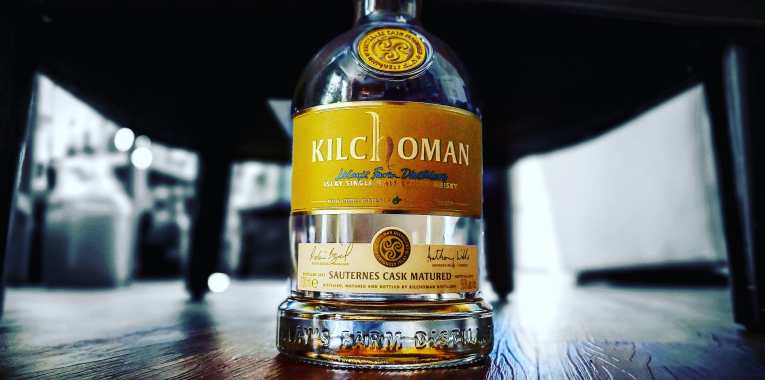
Quarantine Bottle Kill #8: Kilchoman Sauternes Cask Matured (2016)

It feels like the quarantine weeks are quickly going up in smoke. That’s probably because half of the home bar is Islay Whisky right now. Is that a forced transition? You bet it is.

I thoroughly enjoy heavily peated whisky. I often use Octomore as an example of just how good a Scotch Whisky can be and it doesn’t get any peatier, or more over proof, than that. Yet for all my love of the smoke finishing a bottle of heavily peated whisky rarely shows up on my list of achievements. That’s because drinking an Islay is a state of mind.

Drinking a good Islay transports me to rocky ocean beach in the evening. The campfire has just sputtered out and there’s a hint of rain in the air. But for now I can see the stars and wonder about my place in the universe.

Unlike its Highland brothers the island of Islay firmly embraces the one trait most people claim to hate about Scotch: the peat. Being aggressively peated, Islay Whiskies have an earned reputation of being an acquired taste. Sipping on a truly great peated whisky cause the taste buds to expand, the mind to slow, and an introspective nature to descend on the evening. At least it does for me.

Millions of drinkers across the globe have acquired this taste which have given Islay Scotch a cult like following. They are devoted but it does make it hard to break into the old boys club.

Enter Kilchoman. The first new distillery on Islay in 124 years this distillery, and its whiskies, came out of the barrel swinging. They began production in December of 2005 with their inaugural three year old whisky released in 2009. Since then they have racked up an impressive reputation and managed to take a seat at the clichy Islay table. They are also one of only a handful os Scotch distilleries using traditional floor malting on site as well as growing all of their barley on Islay at local farms.

One of the nice things about being the new kid in the old club is there is no tradition that you must adhere to. This gives Kilchoman a lot of room for experimentation. Like with their Sauterns Cask release. There have been a few different release but this was from their first offering in 2016.

Distilled in 2011 and bottled in 2016 this this 5 year old malt was completely aged in ex-Sauternes wine casks. Now, I clearly have a thing for malts that are finished in wine casks. So, how does a fully wine cask matured malt measure up?

NOSE: Buttery, with a hint of dried oranges and a misting of peat and sea salt
PALETE: Sweet apricot, caramel, honeysuckle, baking spices, and a salinity melding with a wonderfully balanced smoke
FINISH: Lingering, long clean, with a touch of sweet exhaling into a mouthful of smoke

This is a beautiful dram that is again an adventure and an experience. It transports while drinking. The experience also takes me back to when this bottle was purchased. 

It was 2016 on my first ever trip to Europe with my brand new partner who has stayed with me all these years. So much has happened since then but as the last drops slide from this bottle after four years I will cherish every experience this dram has given me and every moment between purchase and completion.

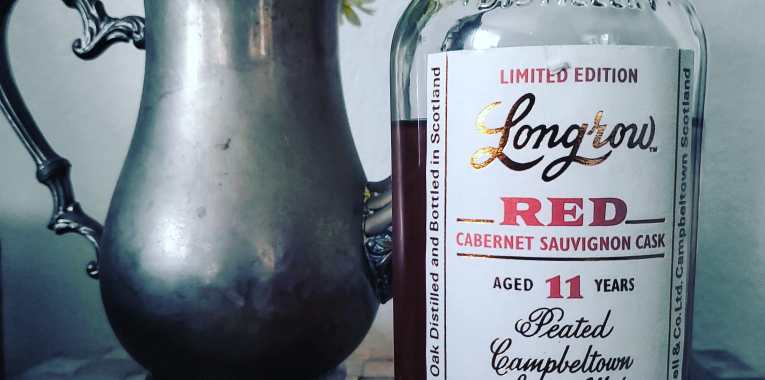
Quarantine Bottle Kill #5: Longrow Red 11 Year Cabernet Sauvignon Cask

Just because we’re in quarantine doesn’t mean that there can’t be a theme. Aside from sparking joy by eliminating bottles from the booze cart that is. So next up on the quarantine bottle list is the cousin to the last, the Longrow 11 Year Red: Cabernet Sauvignon Cask.

For all single malts produced in Scotland the brand must be identified with the distillery. Hence the Macallan whiskey being made at the Macallan distillery, the Jura at Jura, Laphroaig at Laphroaig, and so on. This seems intuitive yet it’s absolutely not how things are done here in the US. While there are a few eponymous distilleries most of them produce dozens of other brands as well. For example, Jim Beam not only produces Jim Beam but Bookers, Knob Creek, Basil Hayden, Old Overholt, and the many variations there of. 

This makes Longrow rather unique as it’s brand but not a distillery. Part of the reason this is allowed under Scottish law is that the brand is intrinsically understood to be produced at Springbank Distillery and the name of the distillery appears on every bottle. Larged embossed letters proudly proclaim “Springbank” above every label. But also, the style of Longrow is drastically different than its cousin allowing for a true separation and not just a label change on the same liquid.

Longrow, unlike Springbank, is heavily peated. There is actually a scientific way to measure the “peatiness” of a Scotch. It’s called Parts Per Million, or PPM, and is used to determine the phenol level after kilning but before distillation. Essentially the longer the malted barley is exposed to the peat fire during kilning the higher the peat and PPM. Longrow clocks in at 50 PPM which means it’s technically even peatier than the notorious peat bomb, Laphroaig which clocks in at 40 PPM.

So, here is a heavily peated Campbeltown Single Malt with less than a hundred casks produced every year at a non eponymous distillery. If that’s not enough to peak your interest then the Cabernet Sauvignon Cask will. Every Longrow Red release spends some of its formative years in a red wine cask, similar to the recently emptied Springbank Burgundy. For this release it spent the first seven years in ex-Bourbon barrels and the last four in a Cabernet Sauvignon cask.

To cap it all off the Red is bottled at Cask Strength clocking in at a whopping 104 proof meaning none of those big flavors are lost.

NOSE: Assertive smoke, raspberry, cherry,
PALETE: Leather, sea salt, smoke, darker fruit, blackberry, a touch of sweetness and a strong tannic backbone
FINISH: Long and dry yet juicy. Reminiscent of sea air with those red fruits returning.

This is a complex little dram. There’s a beautiful salinity that provides the throughline for Longrow while the tannin and the fruit lent from the Cabernet Sauvignon cask shines through at almost every level without being overwhelming. Surprisingly, I actually enjoy this one with a little water in it. The high proof gets in the way of some of the more delicate flavors that I really enjoyed in the Springbank Burgundy that are also present here.

All in all, this bottle actually feels like a perfect quarantine metaphor: subtle yet aggressive, complex yet needing a bit of hydration, and packing a hell of a punch.

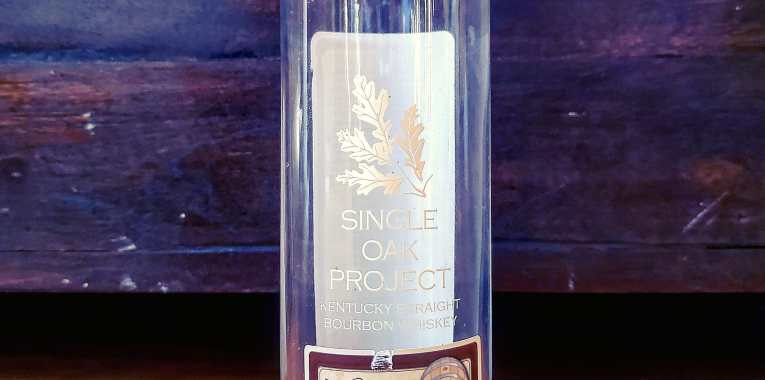
Quarantine Bottle Kill #4: Single Oak Project #156

I’m trying to cut down on the quarantine drinking so today’s bottle is a single 375 of Buffalo Trace Single Oak Project.

The Single Oak Project was a massive Bourbon experiment that was begun by Buffalo Trace in 2011. The goal was to break down the very DNA of Bourbon and be able to catalogue exactly what element imparts what flavor on the final product. It was the Human Genome Project of American Whiskey.

As the name implies the major variable that affects the final flavor of a whiskey is the process of oak aging. And more importantly how the oak interacts with the spirit over time. Ever tree and every barrel is different so the first variable that needed to be controlled was the oak.

Buffalo Trace carefully selected 96 American Oak trees with special attention paid to the grain and growth rings of each tree. These were then turned into oak staves and separated into staves from the top of the tree versus the bottom of the tree. They then varied the seasoning time of the staves. Half were seasoned for 6 months the others for 12 months.

Barrels were assembled using only staves that had been prepared in the exact same way. This produced 192 unique barrels.  These barrels then received either a #3 or a #4 char, the char essentially being how long the interior of the barrel was lit on fire and how deep it penetrated the staves.

They didn’t stop there though. Once the barrels were completed there were a few variables about what they were filled with. The mashbill of the whiskey varied (either a wheated or a rye Bourbon), the entry proof varied (105 or 125 proof) and then the style of ricks they were aged in varied (concrete or wood). 

By their own calculations this produced 1,396 taste combinations spread between 192 bottles. And over the course of four years they released all of these bottles to the public and opened a website where everyone could catalogue their tasting notes. At the end of the project all of the ratings, scores, and tasting notes would be gathered and a “winner” would be declared. Seeing how the project saw it’s final release in 2016 we know that the “winner” was Barrel #80 which has gone into production and will be released after reaching proper maturity in 2025, if we’re all still around by then. 

Barrel 80 was from the bottom half of the tree with an average grain size, seasoned for 12 months, and given a #4 char. The spirit was a rye Bourbon mashbill that entered the barrel at 125 proof and aged in a concrete rick. This is honestly very similar to traditional Buffalo Trace and it makes sense that a crowd source tasting would select something that is similar to an already popular flavor profile.

But of course the real winner of this project is the breadth of knowledge and flavor demonstrated by controlling the minutiae of every aspect of the whiskey making process. And with that in mind it’s still worth finding bottles and tasting through to see what those changes produce.

This bottle of Single Oak Barrel 156 has been on the booze shelf for years which completely defeats its purpose. So lets dive in.

This is another barrel from the bottom half of a tree with coarse grain, staves seasoned for 12 months, and given a #4 char. The spirit was a rye Bourbon base, entered the barrel at 105 proof and aged in a wooden rick. Now, after all that nerdiness here’s what it actually tastes like:

NOSE: Vanilla, Cherry, Heavy Oak, Pepper
PALETE: White Pepper, Tobacco, Leather, Stone Fruit, Rye Spice
FINISH: Dry, Spice, Medium, Earthy

I love the Single Oak Project because I love the minutia and variation.While I can wish that something on one of the more extreme ends of the bell curve had one out for wide production but the wealth of knowledge generated is worth a dram or a bottle.

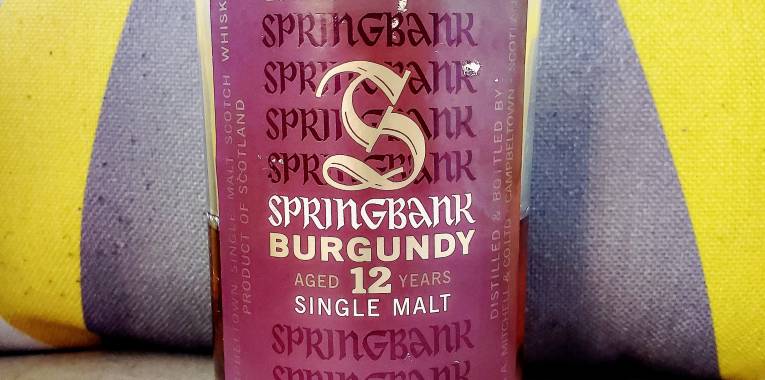
Quarantine Bottle Kill #3: Springbank 12 Year Cask Strength Burgundy

Springbank has always been a fascinating distillery to me. I intellectually love them. They are one of the last great Campbeltown distilleries. Located on Kintyre Peninsula, Campbeltown was once known as “the whisky capital of the world” with 28 distilleries packed into its borders. Today a measly three remain with one of them, Glengyle which produces Kilkerran, only releasing a single malt again starting in 2012.

All of this is to say that there is no Campbeltown “style” but when people refer Campbeltown style they are almost inevitably referring to the Springbank style. Especially since Springbank produces three distinct single malt brands: Longrow (peated), Hazelburn (triple distilled), and the eponymous Springbank.

What’s interesting to me is that the standard Springbank Single Malt isn’t particularly interesting to me. Love the history of the region and I love the nuances that make it a distinct malt but it’s never something I needed to keep a bottle of on the shelf. The Wine Cask finishes however are a different story.

Springbank releases a special edition 12 year old cask strength once or twice a year. These are usually met with great acclaim but the ones that truly peak my taste buds are their wine cask finished releases. The subtly and creaminess of the standard Springbank style plays wonderfully with the tannin and juiciness added from a used wine barrel. There’s also less of the sweetness that is associated with sherry or port cask finishes. Where sherry and port can often become the defining characteristic of a malt, here the red wine melds into the base flavors creating something larger than the sum of its parts while not overwhelming any part of it. 

These bottles tend to sit on my shelves begging for a special occasion and now every night ends up as a special occasion so let’s pour out this 12 Year Old Burgundy Cask.

This special release was bottled in 2016 at 107 proof after being aged in 1st Fill Burgundy Barrels and is everything I love about these style of releases from Springbank.

NOSE: Golden Raisin, Raspberries, Black Currant, Vanilla

PALETE: Plum, Apricot, Sea Salt, Leather, Honey, with a massively creamy mouthfeel

FINISH: Long, dry, slightly peppery, and a lingering oak

This is a truly breathtaking bottle. Literally, the proof, the flavors, the mouthfeel take my breath away on the first sip everytime I come back to it. And now it’s time to take the bottle away. Another sacrifice to social distancing.

Quarantine Bottle Kill #2: Woodford Reserve Rare Rye

The next victim of the Quarantine Bottle Count is the Woodford Reserve Master’s Collection Rare Rye twins from 2011. Yes, I’ve been sitting on two open 375ml bottles for nine years. Don’t judge me.

Let’s put this into context. Nine years ago rye whiskey was just becoming the hot item after decades of obscurity. And then here lands a pair of Woodford Ryes for $100. It was one of many signals that not only was Rye moving from the bargain category but that distillers and distilleries had been contemplating the move for a while.

The distillate is 100% Rye, probably a blend of malted and unmalted, triple distilled on the Woodford Pot stills and bottled at 92.4 proof. The only stated difference between the bottles is that one was aged in freshly charged new oak, just like Bourbon or American Rye legally must be, and the other is aged in reused Bourbon barrels. This technically makes it a rye “spirit” and not a whiskey.

What’s interesting to me though is that the New Cask is labeled as “Straight Rye Whiskey” with no age statement. Legally, this means that the “New Cask Rye” is a minimum of four years old. And as Woodford clearly says the only difference between the two bottles is the maturation process that means the “Aged Cask” is also four years old. 

Whiskey makers are accustomed to think in the long term. Production is measured in years if not decades but even then it seems a risky move to have distilled a 100% Rye in 2006-2007 even if it was meant to be a limited release. But the demand for rye has only gotten stronger in the past decade, clearly evidenced in Woodford having a dedicated Rye as part of it’s core line up in 2020.

As interesting as all of that backstory is, how does the whiskey actually taste?

AGED CASK RYE
NOSE: Grassy, Bready, with a touch of green apple
PALETTE:  Bright rye, a hint of vanilla and orange, honey
FINISH: Surprisingly Long, with a hint of mint and cinnamon, dry

NEW CASK RYE
NOSE: Tobacco, Honey, Vanilla, and oak
PALETTE: Cinnamon, deep baking spices, ripe apple, and leather
FINISH: Sweet, with a lingering oak and white pepper

Overall, these bottles are an fantastic example of the impact a barrel has on a distillate. The New Cask is 100% a rich, fully embodied rye while the Aged Cask is still young and fiery. It reminds me a lot of Mellow Corn, a personal favorite, but it could benefit from more time letting the flavors integrate.

They both unmistakably taste like Woodford. I’ve talked about this before but to me there is always a slightly undefinable, yet incredibly identifiable, characteristic to Woodford that I can only imagine comes from their Pot Stills. Both of these ryes carry that DNA.

Nine years after their release I’m not as excited by either of these bottles as I was when they first came out. But the world is a different place, the whiskey market is a different place, and I’m a different person.

While they’re not mind blowing whiskies on their own the weight of time evidenced in the aging and the drinking sits heavily with me as the last drops pour from the bottle.

Quarantine Bottle Kill #1: Heaven Hill 7 Year Bottled In Bond Bourbon

Sheltering in place has led to a massive spike in booze sales across the United States a the days are now divided into “Coffee Hours” and “Alcohol Hours.” Being forcefully unemployed by the pandemic I’m unable to contribute to that spike and have had to reexamine my hoarding tendencies. My reluctance to open bottles, let alone finish them, has been overtaken by my belief that whiskey is meant to be enjoyed. And if not now, when?

So, join me as I work my way through my bar cart with the great Quarantine Bottle Kill of 2020.

First up is a relative newcomer: Heaven Hill Bottled In Bond 7 Year Old Bourbon. Not to be confused with the Heaven Hill Bottled In Bond 6 Year Old Bourbon which was only available in Kentucky and was discontinued in 2018. One year later this 7 Year hit shelves with an updated label, an extra year of age, and a boosted price tag.

I’ve made no qualms about Heaven Hill being one of my favorite distilleries but their lack of an eponymous bourbon certainly means they have much less name recognition as a distillery than say Jim Beam. The old Heaven Hill 6 Year was one of my favorite bottles to bring back from a Kentucky trip and at $12 was an absurd steal.

Now, what exactly does an extra year and a new label and bottle taste like?

NOSE: Chestnut, dusty leather, vanilla, and oak

PALETTE: Earthy with a strong oak presence. A dusting of baking spices and a hint of tobacco. There’s a slight woodsy quality to it with a surprisingly light punch for a bonded whiskey.

FINISH: Medium and dry with a touch of stone fruit and capped with the oak and vanilla from the nose.

This is quintessential Heaven Hill. In fact, if you told me this was the 6 Year Old bottle I would believe you. Which makes sense as it’s the exact same mashbill only a year older and released a year after the 6 Year was discontinued. You can do the math. And that’s my only real con with this bottle: the math.

$12 would be an absurd price for any quality Bourbon these days.  However, at $40 it enters a very crowded field of more household names like Eagle Rare, Woodford Reserve, and Knob Creek. While this is solid bourbon I’d personally pick up a bottle of Elijah Craig from the same distillery for a lower price tag. 

I am happy to see it on the shelves though if only to help spread the Heaven Hill name. Though if it was still at the old price point I might have been able to stock up for the quarantine instead of having to finish the bottle.

Whisky(ish) Wednesday: A Different Story

I’m not a healthy individual. 

I know I project an air of fitness, health, and confidence but the underlying structure has a flaw. This flaw directly relates to me being a bartender and no it’s not my propensity to drink barrels full of whiskey or my possibly addictive personality. 

I started bartending as a career when I was 25 and like most of us it wasn’t a planned career. I had been in LA for a few years quietly attempting to be a writer. It was going as well as you imagine. I had started my time in LA as an NBC Page, worked the desk of the Chairman of NBC and was currently an Executive Assistant at a large TV Production company but things were stalling. Not just on the career side but in my body. 

It started with blurred vision and dizziness while play volleyball with friends. It happened frequently enough that I spoke to my doctor about it. Being young and fit he assured me it was simply dehydration repeatedly.  

Over the next few months it got worse. I started getting what is known as hyperpigmentation, essentially a really deep tan, but I lived a block from the beach so of course I was tan despite never being in the sun. Then I started to feel constantly exhausted, I started losing a lot of weight, and craving a massive amount of salt. I started getting dizzy and nearly blacking out just walking the few blocks to my car. I lived alone and didn’t talk to anyone about it. I was young. I was invincible. It would pass.  

I started making mistakes at work, which lead to me being let go, which lead to me finally feeling like I had time to go back to the doctor. The story was different now and I was quickly diagnosed with Addison’s Disease. 

Addison’s is an autoimmune disorder that attacks your adrenal glands. If you’ve heard about it at all it’s because JFK had Addison’s. While we usually think about adrenaline in that “Fight or Flight” mentality the hormones produced in the adrenal glands do a lot. They help regulate your circadian rhythm. They maintain proper nutrient density in your blood stream for things like potassium and salt. They help you deal with stress, not even ongoing stress but the minor fluctuations throughout the day. And yes, that familiar adrenal surge that lets us be super human. And like all autoimmune diseases its cause is unknown and it is chronic. 

I was devasted. Here I was unemployed, broke, and alone with my entire sense of self destroyed. No longer was I the invincible, physically fit person I’d always viewed myself as. Now I was this broken thing that would be forever reliant on needing daily medication. A weak mortal whos body couldn’t supply itself with cortisol to survive illness or trauma.  I would forever need to have a syringe and emergency medication in case of a major injury like a car accident, or surgery, or a global pandemic.  

I was so desperate for this to not be the case that when I went for a second opinion, I asked if I might be cancer. My internal headspace was so off that I was hoping my symptoms could be explained by a rare form of cancer. Because cancer at least stood a chance of being cured and I wouldn’t have to live with this forever. 

The story of myself that I told to myself was forever altered. And I wasn’t even aware I was telling it. We all have this story, this set of assumptions, expectations, and ideals that we write about ourselves in our day to day lives. It weaves a story of who we imagine we are and what our future is going to be. But unfortunately, we don’t get to control the editor of that story. And my editor had just deleted the chapter where I could be an action hero or the lone survivor of the apocalypse. 

I think it also deleted a portion of my spontaneity. Everything felt so uncertain. How can you be spontaneous when you need to know how much medication to bring with you for the trip? 

I now had an answer to what was wrong but there wasn’t a “solution.” I didn’t know what to do next. I fell into my safety net of bartending. I had bartended in college but the game had changed. The cocktail revolution and craft beer movement suddenly offered a lot more than the occasional shooters I mixed up at the Irish Pub in Syracuse, NY. There was so much to learn and I threw myself fully into it. The bar manager left two months after I came on board and for some reason they thought it’d be a good idea to offer me his job. I took it and kept letting the momentum of that job, and the next job, and the next job, and this lifestyle drive me forward without a direction. I just a needed to move. 

And still I didn’t talk about it. Despite this now being a daily influence on innumerable choices and actions I kept it to myself.  

I’m talking about it now because for many people, especially in the hospitality world, it does feel like the apocalypse. The story that we’ve told ourselves about our industry, our professions, and ourselves as a community has radically changed. We’ve been given a new story line with no idea how it will resolve. It feels like things will never be the same. And they won’t be. 

There will always be hope that it will be. To this day every time I go to my endocrinologist I hope that the tests come back that my body has magically reset to the before times. That I will suddenly be the person I imagined myself to be. But the test always come back the same. I maintain. And I work towards the next day. 

I’m not saying things will “get better.” Things will eventually be normal though. A new “normal” one that takes this shattering of expectations and builds itself into a new tale. One that has new opportunities, new expectations, and new parameters. It will be life and few things are as sweet as having one more day of life.