
Continuing this month’s conversation about Nikka comes the news that Nikka will be discontinuing the Taketsuru 17, 21, and 25 Year old expressions as of March of 2020. While some stocks will remain under “heavy allocation” all three marks will no longer be listed by the company. The Nikka Taketsuru Pure Malt, a Non-Age Statement (NAS) edition that replaced the 12 Year old Taketsuru several years ago, will also be discontinued.
While the loss of the age statements is lamentable, it falls neatly into the familiar story of aged stocks not being able to keep up with current demand for high end whisky. But the loss of the NAS Taketsuru Pure Malt comes as a bit of a shock. The NAS was originally released in late 2015 and was meant to address the supply issue. Then in 2019 it won Jim Murray’s Japanese Whiskey Of The Year. Add to this the discontinued Nikka Miyagikyo and Yoichi Single Malts in 2015 and the temporary interruption in supply of their Coffey Malt and Grain in early 2019 and the picture of a company struggling to match pace with demand while also seeking to define its core identity emerges.
So, what exactly is being lost with the Taketsuru’s?
The Taketsuru line was named after the company founder Masetaka Taketsuru. They have been the core of the Nikka line up for as long as I’ve been familiar with the brand. They’re also incredibly representative of the Japanese blending style. Every bottle is the Taketsuru line is a Pure Malt which is an old term for Blended Malts. Not to be confused with a Blended Whisky. A Blended Whisky is made up of both single malt and grain whiskey. A Blended Malt is comprised only of Single Malts. In this case the Taketsuru’s are made from a blend of malts distilled at the Yoichi and Miyagikyo distilleries.
Japanese Whisky makers often think of themselves more as blenders than distillers. They look to layer flavor by creating a blend of whiskies to create consistent and nuanced bottling. Take the Hibiki’s as a prime example. Suntory has repeatedly said that they consider the Hibiki to be the perfect representation of their art, both in terms of distillation but more as a blend. But while the Hibiki contains a fair amount of grain whiskey the Taketsuru line is comprised of big single malts.
One of the advantages of the centuries old whisky tradition in Scotland is 100s of distilleries that are relatively friendly with each other. This means that if a distiller wanted to make a Blended Malt with a style of malt they didn’t distill themselves there was always another distiller that did who would be willing to sell or trade. When Masataka founded Nikka in 1934 as the Dai Nippon Kaju, Co. there was no one to barter with so if he wanted different styles to create a blend he had to distill them himself.
This eventually lead to the creation of Nikka’s second distillery, Miyagikyo, outside on Sendai in 1969. This allowed for a greater depth of flavors for blending as well as over doubling the company’s production capability. Miyagikyo is much further south than its sibling Yoichi Distillery granting a different character as the whisky ages. We can expect to see more of this style of whisky from Nikka in the future as a planned expansion on Miyagikyo should be finished in 2021 with production expected to expand by 40%.
As for the present, the Nikka Taketsuru 17 Year Pure Malt. Award the Best Blended Malt Award by the World Whiskey Awards in 2014 it’s a blend of single malts from both the Yoichi and Miyagikyo distilleries. Aged for a minimum of 17 years this is a powerful whisky.
NOSE: Fresh fruit, Cedarwood, Honey
PALETTE: White Pepper, Dried Fruits, Oolong Tea, A hint of smoke
FINISH: Medium to long, rounded smoke and with dark chocolate and leather
The Taketsuru line represents NIkka’s history. It pays homage to its founding father as well as combining the art of both of the company’s distinct distilleries. The loss of the Taketsuru line is the loss of a piece of history but it does open a future. Whisky, and in particular Japanese Whisky, is having an incredibly large moment. Bit even if whisky distilled 25 years ago is being depleted left and right the world, and the flavor, that whisky represents is gone. The challenge now is to find the way to create the spirit that fills the barrel to be bottled in 25 years while still keeping the lights on in the years between.

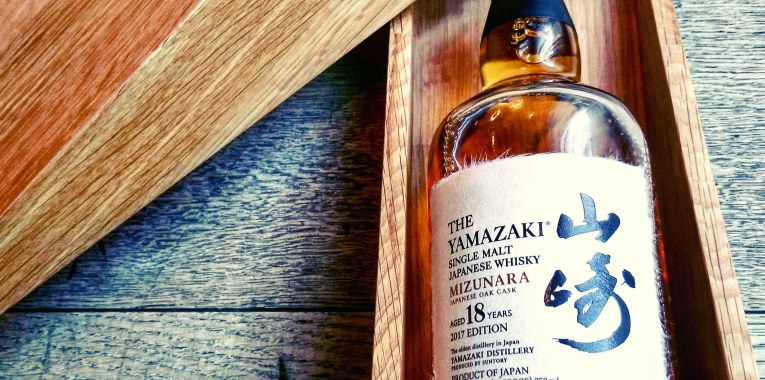



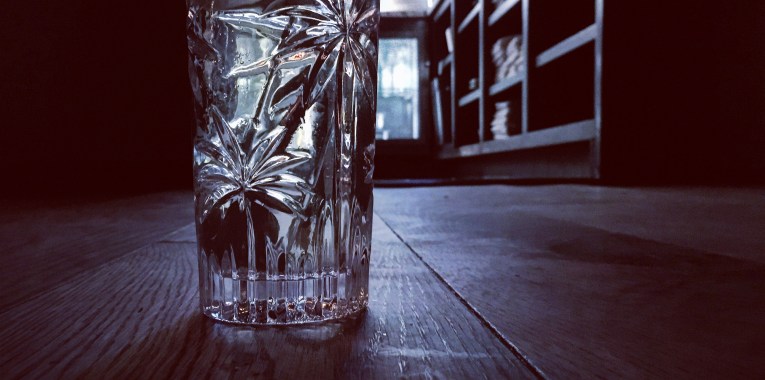
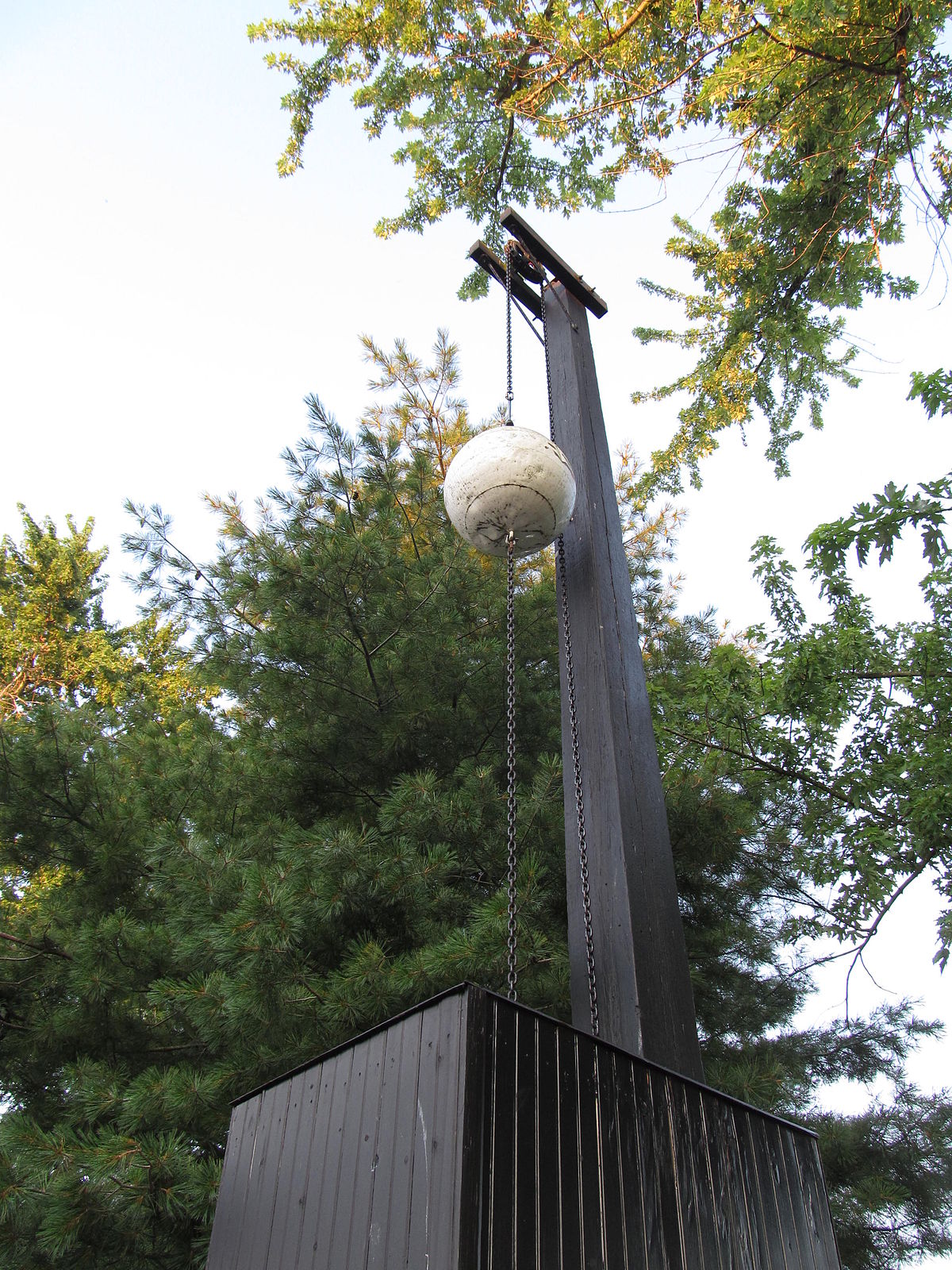 The highball is nothing new. It’s a simple class of drinks: a shot of spirit diluted with several ounces of a carbonated beverage on ice. My favorite rationale for where the term “highball” originated from comes from the old railroad days. Along the rail tracks there were “highball” signals where a ball would be hoisted out of a barrel signaling that the track ahead was clear and the trains could travel full speed ahead. A “highball” drink was at the time served in a highball glass with a single lump of ice. As the soda was added to the glass the ice would rise just like the highball signal telling drinkers they could dive in at full speed as well as quickly down the remainder of the drink when their train pulled in.
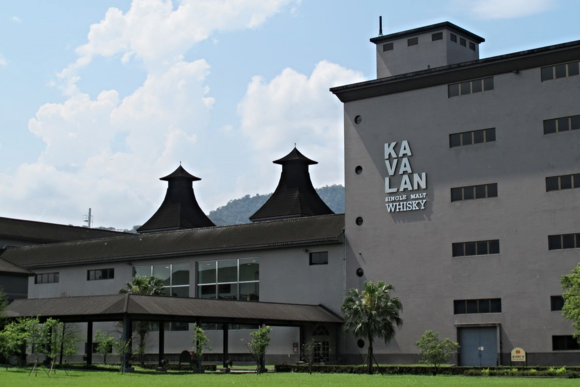
 Almost every year, as reliable as new iPhone releases, someone touts a new aging process that’s a breakthrough that allows for rapid aging, creating the equivalent of a 12-year old scotch in a fraction of the time. In every case the whisky produced by these methods either never materializes or falls vastly short of it’s lofty goals. I’d be just as skeptical of the claims that once the team at Kavalan stopped resisting the humidity and heat of the sub-Tropical Taiwanese environment they were able to rapidly age their product if the whisky in the bottle wasn’t so damn good. As their Master Blender Ian Chang says, “We think of our heat as a sandpaper and our newly made spirit as a rock with edges,”
 selection. The casks use a shave, toast, and re-char process on old Portuguese wine casks that creates a heavy oak influenced whisky. But rather than produce the heavily tannic, overly woody notes we often see in American quarter casks, instead it’s a finely tuned balance with rich dark berries, plum, and tropical fruit dancing along the edges of the oak’s vanilla and tannin while swimming in the traditional malt backbone of a well aged whisky. Being bottled at cask strength cuts through what could have been a cloying sweetness to instead add a spice note that allows the finish to linger long into the night.

 in tradition, both its own and the Scotch Whisky tradition that gave birth to it, so change comes slowly. And while whiskey history is littered with mythological founding fathers modern Japanese Whisky owes it’s life and it’s tradition, to one man: Masataka Taketsuru.
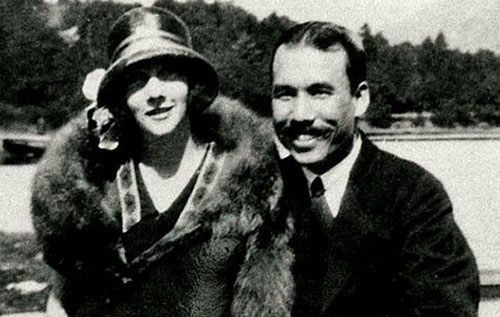 (over objections from both families) and in May of that same year Taketsuru began an apprentice at Hazelburn distillery where he gained a greater understanding of blending whiskey as well as distilling. He and Rita returned to Japan that November with plans to help the Settsu Shozo Company set up the first Japanese Whisky distillery. These plans never came to fruition.
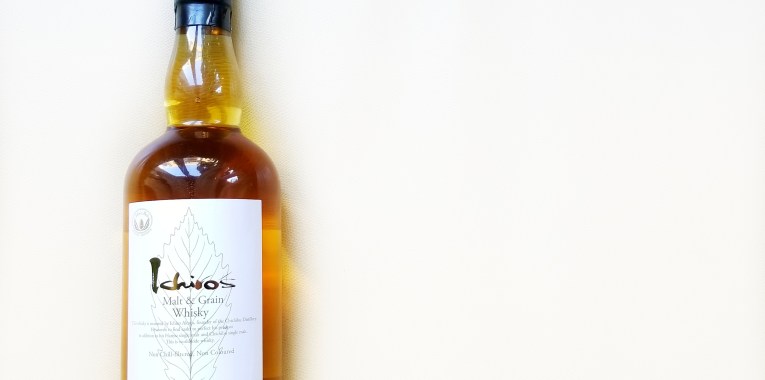
 Where most of the master blenders and distillers in the Japanese whisky world are rather unassuming and reserved, every interview and Google search for Ichiro is required to use the word ‘rock star’ to describe him. The Akuto family had been making sake in Chichibu since 1626 and transitioned into the sochu and whisky world in 1941 when Ichiro’s grandfather opened the Hanyu distillery. The distillery ended up enjoying considerable success during Japan’s postwar whisky boom.
 Nearly 10 years later there was a complete deck of 52 “Cards” complete with two Jokers. According to interviews Ichiro never meant to release a complete deck. The idea was to originally release four single casks and working with a friend of his, who was also a designer, they struck upon the idea that playing cards had four suits, and so a legend was born.(A legend that sold as a complete set at auction in 2015 for $400,000.) Not as impressive as the individual bottle price of the Yamazaki 50 but still amazing for a collection of whisky that was so unwanted a mere 15 before the sale that the distillery that produced it had shuttered its doors.
 The first Chichibu whisky debuted in 2011, a mere three years after the distillery started operation. Adding to his ‘Whisky Rock God’ persona every bottle that rolls out of Chichibu is labeled as an “Ichiro’s Malt Chichibu” with a sub name describing the release. This first release is appropriately dubbed, “The First”, and the whisky was aged in a combination of ex-Bourbon and Japanese Mizunara oak. Only 2,040 bottles were made available and it cemented Ichiro, and Chichibu, as a major player not just in the history of Japanese Whisky but also in its future. I remember drinking this whisky and being blown away by the delicacy and elegance it presented at a mere three years and at 118 proof. There were nectarines, vanilla, a touch of cinnamon as well as an earthiness, and green apple that fed into the maltiness.
 orange weaving through a light sweetness which leads into a large roasted nut, vanilla, white pepper feel, then a touch of tobacco and gingerbread on the tongue that leaves dried tropical fruit and vanilla as it disappears into a medium length finish.
 Bottled In Bond LA