Quarantine Bottle Kill #7: Drouin Pomme Prisonnière

I think the biggest thing people feel they have lost from this whole quarantine is time.

Time lost on their career. Time lost to spend with loved ones. Even the time to simply plan. The future looks so uncertain that it filters back into the present spreading a malaise over each individual moment. And while there are many people hopefully planning for the future, bookings for cruises this fall are up 600%, there is certainly a sense of mourning for the past few months. Of time lost.

The dirty secret is of course that we never had time. Entropy constantly moves us along time’s arrow with the past ever distant and the future never truly more fixed than it is at this moment. All we ever hold in our hands is the present moment with hope and memory creating the expanse.

That’s why physical reminders of the past resonate with us so hard. And for me why spirits and open bottles have so much poetry. I can watch time pass in liquid form behind glass. And when it’s at its end I can reflect on the beginning and everything in between.

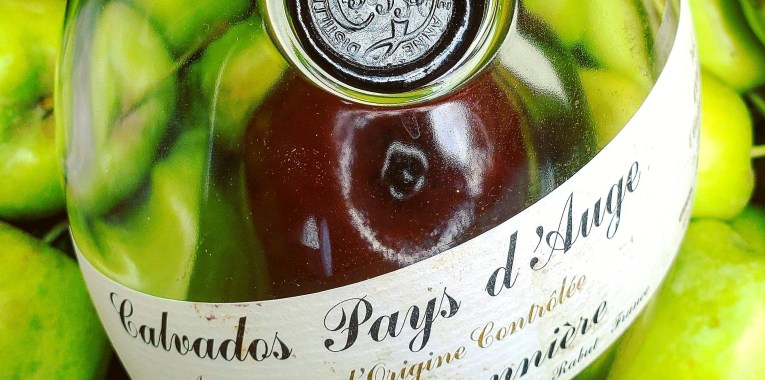
Take this bottle of Christian Drouin Calvados Pomme Prisonnière. It’s the perfect example time in a bottle. And this goes beyond the standard “aged spirit” metaphor.

It starts with an apple tree in spring.

Pink and white flowers cover the trees feeling the spring fever and hoping to be among the lucky 5% that are fertilized and grow into full, ripe, plump apples. During this time is when the carefully trained eyes of the Drouin and Alleaume families place 10-20,000 glass carafes over these budding flowers. Over the next several months the apple grows inside of its prison until in the fall the are harvested, cleaned, and filled with calvados.

Timing here is key. Put the bottle on too early and the flower won’t become fertilized. Put it on too late and you risk the new fruit being too large for the neck of the bottle. And that’s even before the mishaps that can happen during the months of growth. Even with nearly 40 years of experience spread across three generations only about 40% of the bottles are successful, and that’s a marked increase from the 5% success rate from their first attempts.

After that time marches on and the calvados in the bottle evolves and melds with its prisoner. The liquid evolves over time and the apple changes with a life time spent maturing inside a bottle and preserved in Calvados.

All of these facts combine for a pretty remarkable encapsulation of how a spirit, and a bottle, can capture time. But metaphors are truly meaningful when they become personal. No matter how fascinating the process of its creation is, it is its connection to my personal growth that has the true meaning.

This bottle was purchased nearly two years ago on an impromptu vacation in France. My well documented love of apple brandy led us to spend a night in Normandie specifically in Trueville and Deauville, mirror cities with mirror casinos. We had been connected with Herve Pellerin at Christian Drouin who picked us up from the train station on a rainy afternoon, drove us to the distillery and left us in the hands of Guillaume, third-generation Drouin and the brand’s current head distiller. We spent hours talking about distillation, harvest, bottling, and of course Pomme Prisonniere. 

This bottle isn’t a list of facts. It’s an experience. An experience that lead to my first professional gig as a writer by crafting an article for The Daily Beast about this Calvados experience.

So, I will savor the last drops of this bottle while examining these moments of time trapped under memory, while trapped in my home by an unseen virus, and contemplate how to free this Pomme Prisonniere from its glass prison.

NOSE: Cinnamon, apple, clove,
PALETE: Apple, apricot, honey, baking spice, oak
FINISH: Medium, semi-sweet, and a touch floral

Whiskey Wednesday: Blood Oath Pact #5

A couple of months ago I was graciously sent a sample of the new release of Blood Oath Bourbon. Between competitions, menu flips, leaving a job, and much needed vacation travel after leaving said job the sample unfortunately fell by the wayside. But with Halloween nearly upon us I figure it would be appropriate to crack open a little Blood Oath and see what it was about. 

Blood Oath is a brand owned by Luxco, Inc. a beverage producer and marketer based out of St. Louis. In addition to Blood Oath Luxco also produces Ezra Brooks, Rebel Yell, and distributes Yellowstone for Limestone Branch Distillery. While Luxco has sold bourbon for years they’re personal bourbon distillery, Lux Row Distillers, didn’t start production until January of 2018. Although their first year of production outpaced projections none of the whiskey they’ve distilled is old enough to be used for any of their brands meaning the Blood Oath is a sourced whiskey. 

Now, sourced isn’t a dirty word and while I wish Luxco was open about where they sourced the whiskey they at least are open about the fact that Blood Oath is sourced and blended. In fact, Blood Oath boldly claims that they are “loyal to no one family, favoring no one distillery, and bound by no one philosophy.” The cynic in me wants to say that’s marketing speak for “we can’t guarantee a source” but blending is an art form that can produce some spectacular bottlings so let’s take the idea at face value. The Blood Oath isn’t trying to create a consistent bottling but rather a unique, limited, yearly offering. So, what’s in the Blood Oatch Pact this year? 

Pact 5 is a blend of three whiskies a 13 year old rye Bourbon, an 11 year old wheated bourbon, and an 8 year old rye bourbon finished in Caribbean rum barrels. Bottled at 98.6 proof (the temperature of the human body) we don’t know the distilleries or the proportions of the blend but given Luxco’s working relationships it’s not too much, of a leap to assume that a lot of the whiskey comes from Heaven Hill. Also, considering the current state of aged whiskey it’s probably also fair to assume the bulk of the blend is the 8 year. This is noteworthy because it is this rum finish that really sets the Pact 5 apart from the previous four releases of Blood Oath.  

NOSE: Vanilla, Red Apple, Cherry, Brown Sugar

PALETTE: Wet oak, molasses, earthy, candied citrus peel, clove, and a touch of hogo

FINISH: Short to medium, orange, pepper, and oak 

The rum finish is surprisingly apparent once your mind is keyed to look for it. There’s a hint of that funk and brown sugar but without knowing it was a rum barrel I would have thought this was a slightly over oaked release. 

It’s a touch sweet, a little aggressive, and surprisingly oaky all around. It’s a style that’s leaning into heavily oaked, older American whiskies which is certainly on trend. People are looking for flavors that are unique, big, bold, and a heavy barrel influence can make a spirit pop out of the more mellow distillates. 

While the blend is interesting, I personally couldn’t justify the price point. At a suggested MMRP of $99.99 but often appearing on shelves at north of $110 I don’t know that it’s interesting enough to justify the “special occasion” pour of the price tag. This is something I’d rather sip, compare, and enjoy rather than store and dole out during the justifiable times that a 100+ dollar bottle usually enjoys. 

I ultimately find myself wishing I had more context for the Blood Oath. There’s nothing bad with the Pact 5, aside from my hesitation on the price, but I don’t see a through line. I’ve had several of the previous Blood Oath’s and can’t connect the dots between the Pacts. While it’s all well and good to not have a “favorite” I would love to see a point of view that makes this whiskey more than an experiment. 

Whiskey Wednesday: Nikka From The Barrel and to the US

 One of the best things about traveling is seeing what is out there in the world that can’t be seen from home.

When it comes to spirits traveling abroad often means encountering ex-pat style spirits; bottlings like Blanton’s Straight From The Barrel, an Early Times bottled at 37.1 Proof, or the Wild Turkey 13 Year. These are intriguing because they’re both familiar yet unattainable but they don’t fill a void or represent something new. Their appeal is mostly just that they can’t be had at home.

Despite what the name might imply, the whisky itself is not a single barrel expression.

More frustrating to me are those spirits that I discover but have no recourse to obtain at home. These are products that are fundamentally different from the familiar yet still incredibly appealing and often made by companies that already have products in the States. Products like the Giffard Melon, the Etter Apricot Eau-de Vie, and, until this past month, the Nikka From The Barrel Japanese Whisky numbered among them.

At this point it should be very apparent that Japanese whisky is the soup du jour of the whisky world, but instead of talking about the loss of an age statement or product line being discontinued for once we’re actually seeing an expansion of a product. And not a wholly new formulation specifically designed for a market, just an honest to god expansion of availability.

I first came across the Nikka From The Barrel when traveling to France a couple years ago. Not only was I struck but how incredibly flavorful it was but by how ubiquitous it was. I erroneously assumed it was a specialty release only to hear from the bartenders that it was their mixing Japanese whisky.  Keep in mind that this was pre-Toki when the prices were rising and stock plummeting and the ability to make cocktails with Japanese whisky was dwindling. Yet here was an over-proof, affordable, mixable Japanese whisky.  And I couldn’t have it.

Despite what the name might imply, the whisky itself is not a single barrel expression. It is instead a blend, remember the Japanese whisky makers consider themselves more blenders then distillers. This is Single Malts from Nikka’s Yoichi and Miyagikyo Distilleries, as well as grain whisky from Miyagikyo that has been rested and married in an oak barrel for 3-6 months. It is coming from the blending  barrel not a single barrel.

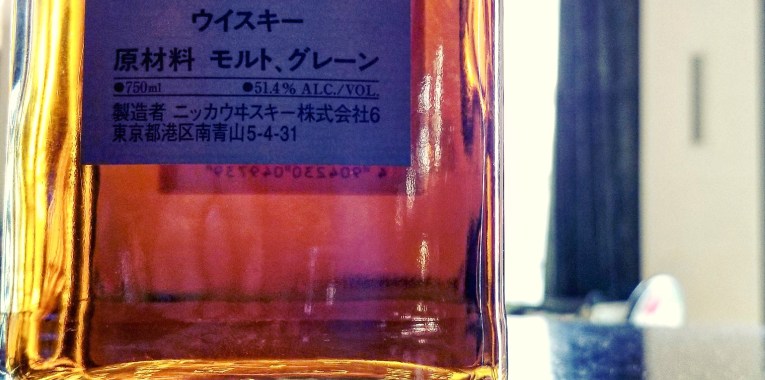
The extra aging allows the whiskies to marry and evolve together before being bottled at near cask strength, a powerful 102.8 proof. This power of proof and flavor is what made the whisky such an amazing value. There is just so much packed into its little bottle. And the bottle is little. Designed to be reminiscent of a “small lump of whisky” to visualize the concentrated power inside the bottle it is packed as 500ml. This is a bottle size so far outside the allowable norms for US production that I think this more than anything is what kept it from our shores for so long.

With its Stateside release, Nikka kept the same bottle design but simply scaled it to a 750ml size. Not quite as elegant and evocative but it’s always been what’s inside the bottle that counts.

So, what’s inside the bottle? The same blend of malt and grain married for 3-6

It’s also proof that global expansion and demand can be gracious and bring you new experiences and treasures, instead of putting up artificial boundaries.

months in oak casks. Still bottled at 51.4% alcohol this is a big hitter.

The Nose carries a hint of fresh, green fruit, with a baking spice overlay and of course a discernable oak note. The alcohol vapors can accidently overpower some of the more subtle notes if you inhale too deeply on the first sniff.

On the palate is a big, full bodied whiskey. The dark baking spice notes leap to the front. Brown sugar, caramel, and the fruit stays fresh and a touch more citrusy than expected from the nose. The distillate is incredibly clean and dry.

The finish is long, drawn out, and the oak lingers after the alcohol has burned off. A few drops of water really does help mellow this whisky and expand the range of flavor.

What’s truly great about this whisky to me is that it’s simultaneously an entry level whisky and yet not. It’s something the evolves over time, much like the person drinking it.

It’s also proof that global expansion and demand can be gracious and bring you new experiences and treasures, instead of putting up artificial boundaries.

Whiskey Wednesday: Four Roses Al Young’s 50th

Almost every shift I get asked what has to be one of my least favorite questions, “What’s your favorite whiskey?” My response is usually, “That’s like asking a mother to pick her favorite child.” We all know mommy had a favorite but it’s a lot more complicated than it looks at first glance.

Is it a special occasion? What kind of bar am I at? What’s the price of a pour? These are all things that I take into consideration when it comes to what I drink but increasingly when I’m out I find myself ordering Four Roses Single Barrel. Part of this is that the whiskey is damn good, but it’s also the fact that it’s become almost ubiquitous and it’s cost effective. That wasn’t always the case though.

There are a few conflicting stories about the origin of the brand but the one that Four Roses currently promotes is that they were founded by Paul Jones, Jr. who trademarked the name Four Roses in 1888 with a claim of production and sales back to the 1860’s. The name supposedly comes from Jones, Jr. being smitten by an unnamed Southern Belle. He sent her a proposal and she replied that if her answer was “yes” she would arrive at the ball with a corsage of roses on her gown. When she arrived she was wearing not one but four red roses. This legend of romance lead to a romance in a bottle.

After prohibition Four Roses thrived. In the 30’s and 40’s it was the number one selling Bourbon in the United States. In 1943 the brand was purchased be Seagrams who, despite the brands popularity, discontinued the brand in the United States to focus on overseas markets. It quickly became the number one American bourbon in Europe and Asia while at home it became rotgut, blended whiskey, despite Seagrams creating new Bourbon brands in the following decades.

While the Seagrams company might not have been putting out the highest quality brands, they were training some amazing distillers. After Seagrams collapsed in 2000 we began to see the quality that was going on behind the scenes. Because a large part of Seagram’s business was contract distilling and blended whiskey there were a massive amount of recipes being produced at their distilleries that turned out to be absolutely phenomenal drinks on their own. Like Bulliet? That 95% rye mashbill is all made at MGP, the former Seagrams distillery in Indiana. And that Bulliet Bourbon? It was all originally made at the Four Roses.

After the Seagrams collapse Four Roses was purchased by Japanese beer giant Kirin, and while contract distilling remained part of the business this change also allowed Master Distiller Jim Rutledge to win his battle to revive the Four Roses label as an actual Bourbon whiskey.

Rutledge had been with the company since 1966 and had taken over as Master Distiller in 1995. And in 2004 he saw his dream realized as Four Roses was once again sold in the U.S and has quickly reclaimed its reputation of excellence.

Part of that quality again comes from the variety of distillation. Four Roses utilizes two different Bourbon mashbills, both of them high rye recipes, and five different strains of yeast. This allows them to create ten different reciepes each with their own unique characteristics. All ten of these mecipes are blended together for the Four Roses Yellow Label, four of them are used for the small batch, and only a single recipe, the OBSV, is used for my personal favorite Single Barrel.

These bottles have such an ever day, soft spoken elegance that its easy to see why it’s become such a ubiquitous bottle. But these recipe have also allowed some legendary special releases. The latest of which is the Al Young 50th Anniversary Edition.

While Jim Rutledge was the heart of the brand until his retirement in 2015 Al Young has been its face. Al started with the company  only a few years after Rutledge in 1967 and this bottle celebrates his 50 years with the company. Working with current Master Distiller Brent Ellis the bottle is a blend of four recipes: 23 year old OBSV, 15 year old OBSK, 13 year old OESV, and 12 year old OBSF.

The result is a Bourbon that has a lot of fruit, the expected fig and cherry but also a touch of peach and raspberry. The oak is deep, but mellow with a toasted nougat and cinnamon. The bottle is also a throwback design. One of Young’s many hats at Four Roses is as archivist and looking through old ads and press clippings they settled on a bottle design from the year he started.

The end result is a prime example of what has given Four Roses such growth and recognition since it reemerged on the U.S. market. It combines the history, talent, and skill of the company and the people who make it up. Four Roses may still be making blends but this ain’t your granddad’s blend.

Whiskey Wednesday: The Darkest (Bowmore) Timeline

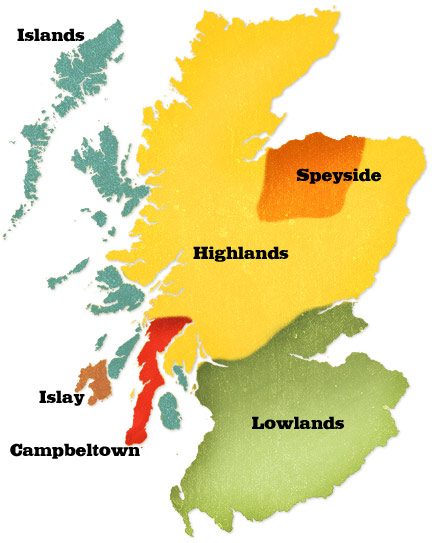
Remember when the regions of Scotland were a thing?  Highlands, Lowlands, Islands, Campbelltown, Speyside, and Islay? For years brand ambassadors and whisky makers preached the golden gospel of the distinct styles of the six regions of Scotland.

ey-region-map

The first problem a lot of people see with this list is that three of the regions are technically just small regions of the other three. Speyside is part of the Highlands, Campbelltown is part of the Lowlands, and Islay is very much an Island. If these three places can have their own unique style why can’t the plot of land down the road have its own style? The truth of the matter is that style is more about the distiller and blender than anything to do with the arbitrary geographical location.

Let’s look at Islay, quite possibly the most distinct and memorable Scotch style. The mere mention of the word Islay causes people’s tastes buds to shiver at the onslaught of peat, smoke, and saltiness of the most famously peated Scotch’s in the world. Yet many of the whiskies coming off the island are completely unpeated. Bunnahabhin is very famously unpeated. Everything coming out of the Bruichladdich distillery that is bottled as “Bruichladdich” is currently unpeated. They have to save up all that smoke for the Octomore. Even amongst the “peat bombs” there is a massive variety of style for such a tiny island.

Lagavulin is like a misty, damp marshland while Laphroig is like a dusty campfire and The Octomore is like smoke gently resting on the briny salt air. And then somewhere in the middle of all this is Bowmore.

Founded in 1779 the Bowmore distillery has been in continual operation except for a brief pause in the World War II to host the RAF Costal Command. It’s never risen to the same height of fame as say, a Laphroig, but they consistently put out great whiskey that seems to walk the line between the styles and practices other distilleries are doing with more flash.

They’re sourcing a good portion of their barley from Islay, similar to Bruichladdich, and they’re giving a the whisky a healthy dose of peat, just like the island island is known for, but they’re also throwing in a fair amount of Sherry barrel aging which is more commonly associated with those Speyside malts on the other side of the country. The Bowmore 15 “The Darkest” hits all these notes perfectly.

It is a 15 year old single malt aged in ex-Bourbon and Sherry barrels for 12 years. The malt is then married together for three years in Olorosso sherry cask that imparts a deep color and melds a gentle smoke together with raisins, dried cherry, and stone fruit with a touch of saltiness and a note of bitter chocolate on the finish. It’s a bottle that can be enjoyed by lovers of peat and lovers of Sherry. Or by lover of Islay or lovers of Speyside malts.

We like easy boxes and categories to help define what we like and don’t like. But just like any complex creation style isn’t about where you come from. It’s about what you make of yourself.

Whiskey Wednesday: Tyrconnell’s Long Odds

Every now and then I like to remind myself that Irish Whiskey isn’t spelt “Jameson’s.” I’ve talked about the explosive growth of Irish Whiskey before but here are some quick facts.

While everyone is gaga for Japanese whiskey as a luxury product Irish whiskey is expecting to double its sales by 2020. In 2014 Jameson’s sold 18 million liters in the US alone. The Scots and the Irish will fight until the Sun goes cold over who first created whiskey but there’s no debating the fact that it was Irish monks that tought most of the Western World how to distill. Hell, even the word “whiskey” is an Anglicization of “uisge beatha” which is Gaelic for water of life. The Irish are indelibly linked to whiskey so what’s the problem? It’s a monoculture.

Need proof? In 2014 Jameson’s closest competitor, Bushmill’s, sold a whopping 1.3 million cases. Jameson’s currently accounts for 63% of the global Irish whiskey market. Monocultures are great for business but are incredibly susceptible to full scale collapse. Look at what’s happening to the Chiquita bananas or how the agave industry is actively working to reinvigorate the gene pool with the Bat project.

Irish whiskey has traditionally lived and died with the American market and like so many other things it was ruined by Prohibition. On top of that throw in the Irish War for independence, a civil war, trade disputes with Great Britain, and you end up with an industry made up of over 160 distilleries and 400 brands reduced to a mere two distilleries in the mid-70’s.

The remains of the Irish whiskey industry banded together to form Irish Distillers which was then purchased by Pernod Ricard in the late 80’s. They then began the massive push to get people to drink Irish. It worked and since 1990 Irish whiskey has been the fastest growing spirit in the world. It’s ballooned the industry with 32 new or proposed distilleries across Ireland. Not bad for an industry long sustained by only four distilleries and of those four only one has been in operation longer that 1975.

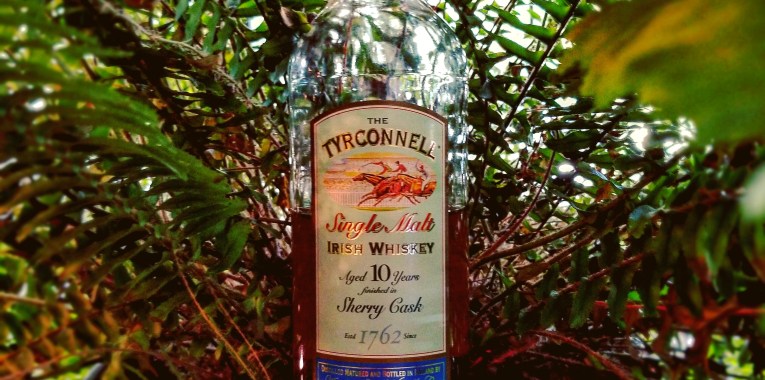
It’s a old industry with new blood and the near death of the industry left many historic brands and styles in the grave. Irish Single Malts and Tyrconnell are great examples. Tyrconnell was the flagship brand of the Old Watts Distillery, It takes it name from a racehorse who won the National Produce Stakes in 1876 at literally  at 100 to 1 odds. It was incredibly popular in the US, there are photos of Yankee Stadium at the turn of the century with Tyrconnell ads on the billboards. But prohibition shuttered the brand and the distillery in 1925. The Brand was revived by the Cooley distillery in the 80’s.

It’s made in traditional Single Malt Style, 100% malted barley and double copper pot still distillation with no peat, and then aged in ex-Bourbon Barrels. The 10 Year Old Madeira Cask Finish is my real jam though. A light, fruit forward whiskey with bitter chocolate, green, tropical fruit, and a incredibly creamy finish. It’s one of those whiskies that slips below the radar while being incredibly excellent. And they’ve gotten to the place where they are now planning on a limited release of a 16-year old Single Malt. And maybe that’s the silver lining to the Jameson’s problem.

All of this growth in the Irish whiskey world is being fueled and often literally paid for by sales of Jameson’s. For many people that’s all Irish whiskey will ever be which leaves a lot of hidden gems to be found flowing from the Emerald Isle. The world has caught on to Bourbon, its caught on the Japanese whisky, hell its even caught on to Taiwanese whiskey, but not Irish. Not yet anyway…

The days of Yamazaki and Weller Antique being undervalued have faded and instead of being sipped and shared it’s now being hoarded and auctioned. And i miss sipping and sharing. And at least with Tyrconnell I still can.

Drinking Poetic: West of Brooklyn

I’m sentimental in my head. I say head because I’m less emotionally sentimental and more intellectually sentimental, meaning that I hold on to things because I feel like I’m supposed to. This often means I find myself with collections of stuff that sometimes seem to stick around simply because it’s already stuck around.

Enter The West of Brooklyn, a drink that is now pushing its 6th consecutive year on my cocktail menus.

It certainly wasn’t planned that way and if you had asked me five years ago what drink of mine I’d still be making half a decade later it wouldn’t have been this one. I was young(er) and getting super into bespoke cocktails and was currently working my way through the Neighborhood Series and thought, “I want in on that.”

The Neighborhood Series was lineup of drinks from the Milk & Honey family and friends in New York that gave us some modern classics like the Cobble Hill, The Green Point, and the Red Hook. All of these drinks grew out of one simple fact: The Brooklyn Cocktail is terrible.

The classic Brooklyn Cocktail was first printed in 1910 in Jack’s Manual and is often modernly interpreted as:

2 oz Rye Whiskey (Preferably a Bottled-In-Bond)

.5 oz Dry Vermouth

.25 oz Maraschino

.25 oz Amer Picon

Looking at this you can see that it’s not the Brooklyn’s Fault that it’s terrible. Today we’re missing a vital ingredient: old school Amer Picon.

Amer Picon is a classic bitter orange French liqueur that also has notes of gentian, cinchona, and quinine that is no longer available in the States. But even if you were to get your hands on a bottle of it from France the recipe was changed in the 1970’s reducing the proof and making it sweeter. This means it doesn’t make the same drink. I’ve been fortunate to have classic Amer Picon and a classic Brooklyn thank to Andrew Willet over at Elemental Mixology and it’s a damn tasty drink. And for what it’s worth Andrew believes that CioCiaro makes a Brooklyn that more closely matches the classic.

Looking at this family of drinks and personally loving stirred drinks that add a subtle element of citrus or fruit I set about to add my own Neighborhood Cocktail.

At the time I was just getting started at Areal a mere block from the Pacific Ocean and was living in Venice Beach. I had moved West instead of to NYC where I would have more than likely settled in Brooklyn so before I started I already had a name: The West of Brooklyn. It was only later that I realized that Manhattan is also ‘West of Brooklyn’ but I will retroactively take credit for being that clever.

My base was clearly going to be Rittenhouse BIB Rye but knowing I was never going to get my hands on pre-70s Picon I looked for a more readily available substitute. Bigalett’s China-China had just hit the market so I pulled out a bottle of that and started mixing. I was enamored of Blanc Vermouth at the time so that joined the Bigalett and being in California and also being rather disparaging of maraschino, I looked around for a orange liqueur and ended up with a bottle of Solerno Blood Orange and thought, “That’ll do.”

That pretty much sums up my mentality about this whole drink with this first pass. I didn’t put enough thought into it. It looked like this:

2 oz Rittenhouse BIB Rye

.5 oz Bigalett China-China

.25 oz Blanc Vermouth

.25 oz Solerno Blood Orange

Stir. Served up with a Lemon Zest.

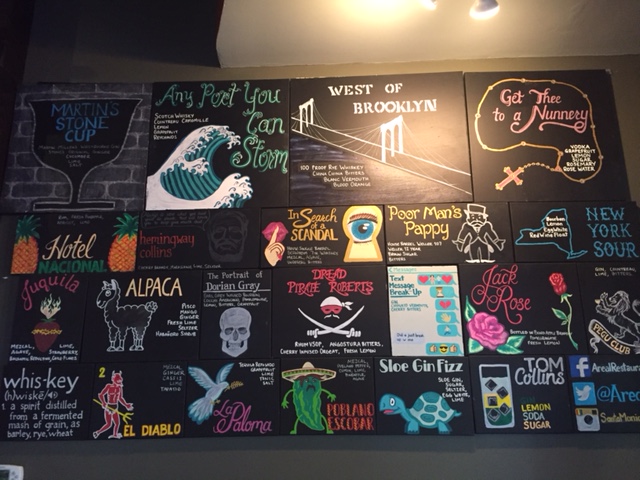
It ended up being a bit of an aggressively blunt instrument but it went on the menu and people seemed to enjoy it. It fit the bitter and stirred category and I let it be. I replaced it on the next printed menu but we had a cocktail board in the bar at Areal with drawings for every drink and our artist had been so pleased with her artwork that she wanted to leave it on the wall. I shrugged and gave it no thought.

809EA2AE-9EF9-4512-98CE-2400E3B9704C

People would continue to order the drink but it wasn’t until I had a customer come in and tell me that he had been in several times over the past months just for the drink because he liked it so much that I realized I had been making the drink for two years. I felt like I should revisit it.

I found the Bigallet was completely taking over the drink, but any attempt to dial it down just caused it to be lost. So I went back to the drawing board looking for a Grand Bitters to take its place and I started playing with the Clementi China Antica. The Clemanti focuses more on the bitter quinine notes without the orange which turned out to be perfect for the drink since I was adding the orange notes with the Solerno. But again any attempt to use less than a half ounce caused it to be lost when butting heads with the power of Rittenhouse so the drink remained a blunt instrument, albeit a drier more whiskey-focused one.

I left it at that an ended up leaving that bar. I honestly thought that would be the end of the drink. But as we were doing R&D for my first menu at Faith and Flower my friend Ryan Wainwright and I were doing an event at Seven Grand LA celebrating the Manhattan and lo and behold the drink came up. The night was being sponsored by Buffalo Trace and Sazerac Rye and suddenly the drink clicked.

In the years since I first got into the LA bar scene Sazerac Rye was highly allocated so trying to use it in a featured menu drink was a touchy proposition and that mentality stuck with me even as the rye became more available. Sazerac is a lighter, less aggressive rye than Rittenhouse with more of a green apple spice, and edges that bleed into ripe fruit. Switching out Sazerac allowed me to dial down the Clemanti Antica and bring up the blanc vermouth making it more true to its family of drinks while leaving it elegant, with a white pepper spice tied with a subtle fruit that has a perceived sweetness before drying on the palette. It now looked like:

2 oz Sazerac Rye Whiskey

.5 oz Dolin Blanc Vermouth

.25 oz Clemanti China Antica

.25 oz Solerno Blood Orange

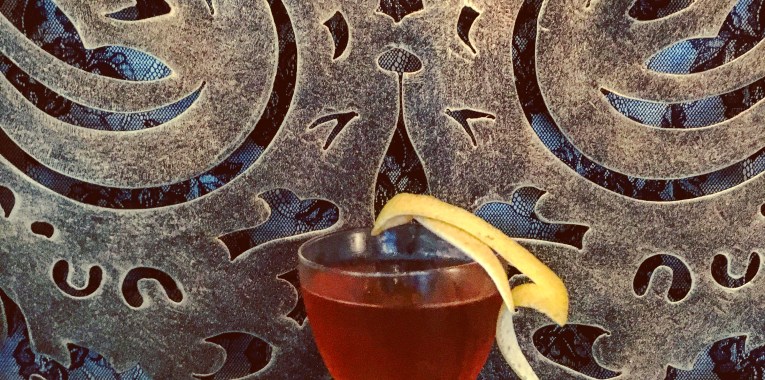
Stir with ice. Strain into a Nic and Nora glass with a lemon zest.

The drink perfectly fit the summer time Manhattan vibe we were looking for the menu and it was resurrected. And as I sit here doing R&D for the Fall/Winter menu it finally looks like the drink will truly come off the menu for the first time in five years. Until I change it again…

Whiskey Wednesday: Unicorns, Whales, and Narwhales

Unicorns are all around. You can see them prancing through the Instagram forest, taunting you with delicious rivulets running down the sides of a glistening Glencairn glass yet the moment you emerge into the fields of the liquor stores they become a distant fable. What happened to these legendary bottles?

The short answer is: they became legendary. As humans we often seem driven to obtain the unobtainable. We strive to climb the highest mountain, to put a man on Mars, and to score a bottle of Pappy Van Winkle for our home bar. Pappy might not be as lofty a goal as the first manned mission to Mars but the spirit is the same. This mentality to obtain the best doesn’t just drive the whiskey market either.

In the world of craft beer the legendary brews are known as ‘whales’ and if you ever wanted to see a brewmaster roll their eyes and grit their teeth ask them

When everyone wants a unicorn what happens to all the workhorses?

about the notorious ‘Whale Hunters.’ These Sudsy Ahabs sail the special event scene, spear the rarest beer on tap, drain the keg and disappear, often without supporting the breweries core beer and usually never to be seen again. They don’t add value to the bar, or even necessarily to the brand, they’re just looking to score something that they feel only they can appreciate before anyone else can be exposed to it.

While the Unicorn and Whale market have certainly spurred growth, especially in the craft scenes, and have been some of the biggest drivers of the infamous Booze Black Market they have an unseen downside. When everyone wants a unicorn what happens to all the workhorses?

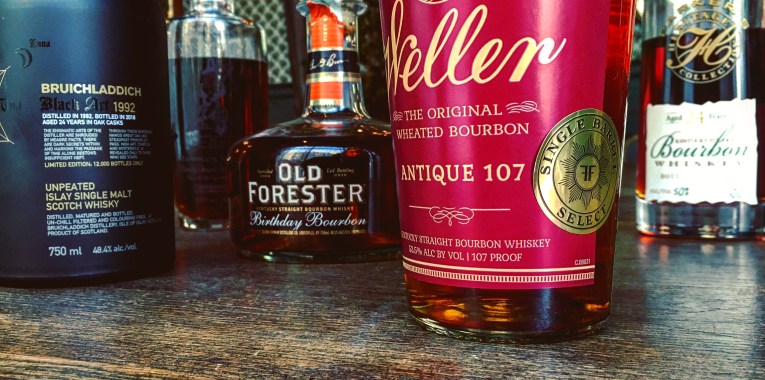
Unicorn bottles like the Pappy’s, or the Parker’s Heritage, or the Old Forester

The current whiskey boom has created a feedback loop where what were once reliable bottles are becoming, maybe not unicorns but certainly narwhales.

Birthday Bourbons are great special occasion bottles but they can’t support a distillery on their own. You need good product, at a good price, that people want to drink frequently yet responsibly. The current whiskey boom has created a feedback loop where what were once reliable bottles are becoming, maybe not unicorns but certainly narwhales.

Take the W.L. Weller line up. Created by William Larue Weller the brand has existed since the 1840’s and enjoyed great popularity at the time. Julian ‘Pappy’ Van Winkle joined the Weller Company as a salesman in 1893 and after W.L. Weller passed away in 1899 Pappy and Alex T. Farnsley purchased the company in 1908. A. Ph. Stitzel had been under contract to produce whisky for the Weller Company and after a merger in 1933 the infamous Stitzel-Weller Distillery opened in 1935. The distillery made W.L. Weller, Old Fitzgerald and many other whiskies (but no Pappy Van Winkle) until it shut down in 1992. The Weller brand was than purchased by Buffalo Trace in 1999 where it is currently made along side it more famous Van Winkle cousins.

IMG_2815.JPG
A.H. Hirsch 16 Year Special Reserve

At face value this story is similar to many other whiskey brands that existed before and after Prohibition. It enjoyed early success, sluggish sales in the middle of the century and has been enjoying rising tides with the rest of the Bourbon industry. But between Stitzel-Weller’s closing in 1992 and today we’ve been struck full force with the Bourbon Boom and Pappy Mania. And once the word got out that Weller was just “young, cheaper Pappy” stocks began to get bought up, and people saw a chance to raise prices.

What was once a great everyday workhorse is slowly becoming something pricy and privileged rather than welcoming and friendly. And I say this as a spoiled man who just received a House Single Barrel of Weller Antique 107. This is going to be an everyday whiskey for myself and for the bar at Faith and Flower but we almost didn’t end up with it because of its Narwhale reputation.

Due to a snafu in the warehouses people who were not myself, or my bar, were able to order cases of our current barrel. And the entire barrel blew out of stock in less than 24 hours. And I first found out about this situation by being linked to a post of someone selling bottles of it on the Secondary Market for $70!

While all the one hand it’s flattering that someone would want to pay so much for a barrel I’ve picked out, it’s also infuriating not only because it feels like someone stole one of my favorite toys but because that’s highway robbery on the price. They weren’t just stealing from me, they’re stealing from the people they’re selling it to as well.

Thankfully we were able to retrieve all of the cases (minus a few missing bottles) and I can continue to wage my war against it becoming a true unicorn by making Old Fashioned Cocktails with it. But where does this unicorn hunt leave us?

Let’s look at the craft beer world again. For the first time in nearly two decades beer growth and consumption is down, not slowing. A gentle decline has emerged. Many analysts point to breweries being bought out by massive conglomerates and to choice fatigue, there are just so many damn options that its exhausting. But they also point out that people aren’t drinking less they’re just moving to other drinks. Like whiskey.

IMG_3196.JPG
Hibiki 17

What if these craft beer drinkers became exhausted not by choice but by the hassle and work needed to get they’re favorite brew, or were so discouraged by never being able to get a thimble of Pliny the Younger that they tried something else, say a workhorse Bourbon. Turns out they liked it and moved into a new category of drinking. What happens when these same problems invade the Whiskey World? How long can we maintain growth in an industry when the goalposts keep moving?

On the other hand, while my philosophy has always been education and approachability, I have felt the sting of working an entire year to craft a bar program that delivers everyday excellence, to then earn that one shinning Unicorn of a bottle and priced it in a way to reward thirsty travelers in their search only to have that one Unicorn Hunter swoop in an annihilate the bottle. It’s a balancing act that we’re all going to have to get better at if we want to keep this Whiskey Boom from going belly up.

Whiskey Wednesday: Islay Barley

When you think of whisky and what gives it it’s flavor what springs to mind? Is it the mashbill, the barrel type, the aging location and length? Chances are good terrior didn’t spring to mind but the team at Bruichladdich would like to change that.

images-1.jpg

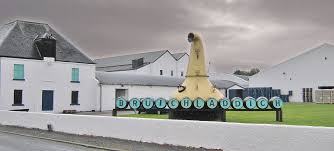
Bruichladdich is a distillery that blends history and modernity. Founded in 1881 the distillery was, at the time, the most modern distillery on the island of Islay. It wafted in and out of popularity until the distillery was mothballed in 1994 for being “surplus to requirements.” It gained new life in 2000 when it was purchased by a group of private investors who dismantled and revamped the entire distillery once again making it one of the most modern distilleries on the island. They also brought with them a lot of experience in the wine world including a deep reverence for terrior, a reverence that has survived the distilleries sale to Remy Cointreau.. They also made two great decisions in their early days 1) hiring the legend Jim McEwan to be their master distiller and 2) deciding to actually grow barley on the island of Islay.

Scotch does not require the barley to be Scotch. To be Scotch that barley needs be distilled in Scotland not grown there. This is very reflective of the mentality that terrior doesn’t matter in whiskey. It’s not that distillers don’t care about the quality of the barley but rather that with so many other factors effecting the final product the terrior was way down the scale of importance, especially once the economics of scale set in.         download-1.jpg

The early days of whisky making were a local affair. A farmer had excess crops, they distilled them to preserve the grain, and sometimes managed to sell some of the spirit for extra profit. Many of these farm distilleries were successful enough to grow into commercial affairs but most did not survive the true industrialization of the spirit industry in the early 19th century. This was when improvements in technology and more interconnected trade allowed whisky making to become a large scale, commercial endeavor.

While there is some evidence that there was barley being grown on Islay before this time the advent of these large distilleries made in commercially unviable. These new distilleries were also all on the coast where they had their own piers or shallows where a flat-bottomed boat could dock. This made it more economic for these distilleries to import cheap grain from the mainland and export whisky.

As these distilleries continued to grow they also out grew the ability of the island to grow enough barley for them. There just simply isn’t enough land to supply all the barley these industrial distilleries need, so the farmers stopped growing the barley and turned to more economically advantageous pursuits.

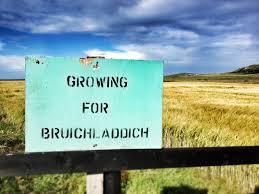
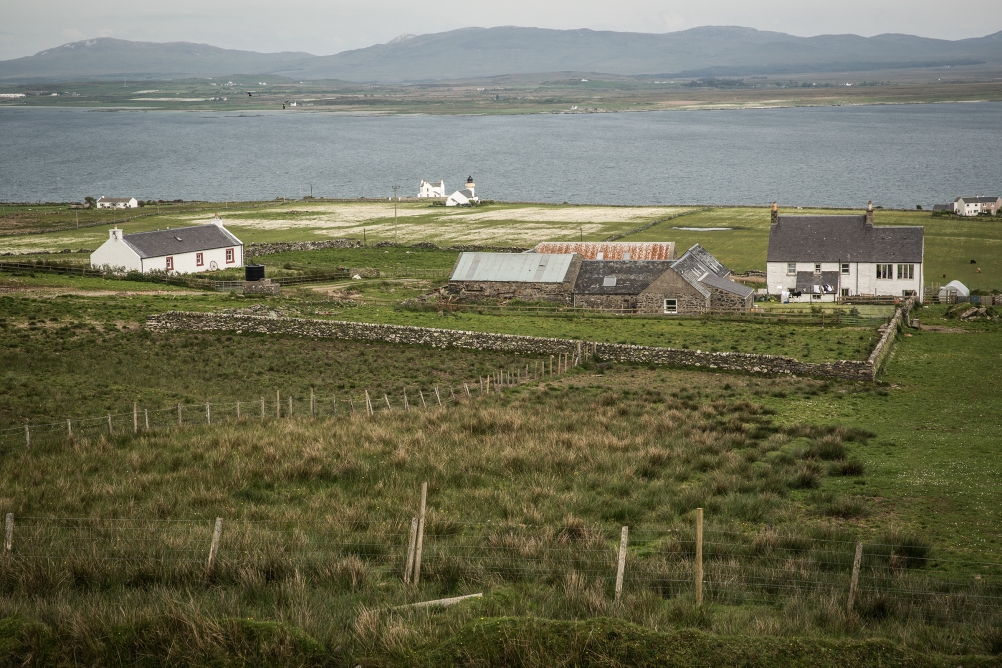
Bruichladdich changed all of this in 2004 when they partnered with a local farmer named Raymond Stewart at Kentraw Farm on Richard Macaeire’s Foreland Estate on the Rhines. Raymond grew barley and Bruichladdich distilled it. The first release of the Bruichladdich Islay Barley was released in 2010. Each release is dated with the year of the barley’s harvest and labeled with which farm it called home.

Some of these releases have been stunners, the 2007 Rockside Farm is something I wish I’d squirreled away a few bottles of, but growing barley on the island of Islay is extremely finicky. The 2009 and 2010 releases of Islay Barley were blends of several farms. Still distinctly labeled but you can’t help but feel that the strong idea of terrior is running into the old problem of supply.

This blend of farms may be a temporary hiccup as the Islay Barley series has expanded. Bruichladdich divides its products into three core lines: Bruichladdich (unpeated whiskey), Port Charlotte (heavily peated whisky), and the Octomore (experimental, cask strength, super heavily peated whisky). The Port Charlotte is also utilizing a blend of farms but the Octomore is not. But then again the Octomore has always been a unique case with all of its barley coming from the farm of Octomore a mere 2 miles from the distillery.

bruichladdich-islay-whisky-_X2A5266.jpg

In the end, these are whiskies that are still evolving. Not just with different bottlings from year to year but also in terms of the process of making the whisky. And they are hit or miss. Barring the previously mentioned Rock Hill Farm the Bruichladdich Islay Barley releases have been interesting at least but the Port Charlotte’s have always fallen flat for me. I’m inclined to think that it’s because of the peat adding one more layer of obfuscation between the original barley and the finished whisky. The Octomore Islay barley however is a stunning beauty of a whisky with a layered elegance and subtle floral quality the belies its status as a cask strength monster and is one of the most heavily peated whiskies in the world.

Bruichladdich is the first Scottish distillery to put such a laser sharp focus on the terrior. They are experimenting and finding new boundaries inside of one of the most heavily defined spirits in the world and for that they should be applauded. Whether this experiment continues to grow and leave its own terrior on the whisky world or if it succumbs to the economics of industrial scale production has yet to be seen.


Whiskey Wednesday: The Art of Kavalan

If the Scots are the craftsman of the whisky world, passing down tradition and technique year after year because it works, then the Japanese are the engineers, dissecting and reassembling each component part. The Taiwanese are the artists, free willing and experimental; it’s insane that we can even make that analogy because there is only one distillery in Taiwan and it’s barely into its Tween years.

6a00e553b3da20883401b8d1223916970c-580wi

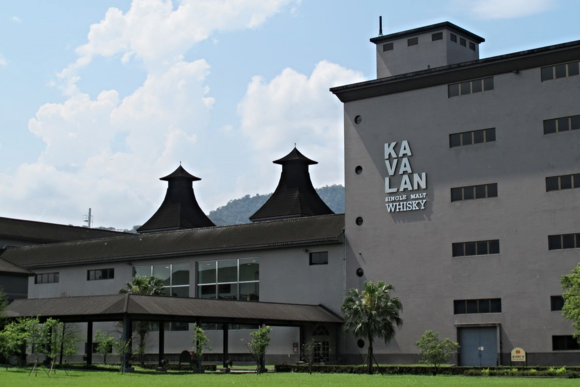
After Taiwan joined the WTO in 2002 Mr. Tien-Tsai Lee, founder of the KingCarbeverage conglomerate, was finally able to enter the whisky world and established the Kavalan distillery in 2005. The distillery takes it’s name from the Taiwanesse aboriginal ethnic group that originally inhabited Yilan county where the distillery is located in northeastern Taiwan. The distillery is built with classic Scottish pot stills and massive technological steps were taken to protect the fermentation and the distillation from the Taiwanese heat. Rather than adhere to how things are done traditionally they have worked to embrace the natural elements of Taiwan, most notably climate, to create something unique in the increasingly crowded whisky landscape.

The distilleries first new make flowed from the stills in early 2006 and the distilleries first whisky, the Kavalan Classic Single Malt, was released in December of 2008. That is a massively fast turn around for a new single malt. For the Scotch and the Japanese you can’t even legally call a product whisky until its aged for a minimum of three years and most distillers in those countries would call a three year old far too immature and unripe for release. This brings us back to the climate.

download.jpg            Almost every year, as reliable as new iPhone releases, someone touts a new aging process that’s a breakthrough that allows for rapid aging, creating the equivalent of a 12-year old scotch in a fraction of the time. In every case the whisky produced by these methods either never materializes or falls vastly short of it’s lofty goals. I’d be just as skeptical of the claims that once the team at Kavalan stopped resisting the humidity and heat of the sub-Tropical Taiwanese environment they were able to rapidly age their product if the whisky in the bottle wasn’t so damn good. As their Master Blender Ian Chang says, “We think of our heat as a sandpaper and our newly made spirit as a rock with edges,”

But it’s not just the unique climate. Kavalan is also exceptionally good at cask management. This cask management truly shines in their Soloist series.

The Soloist series is a lineup of Single Cask, Cask Strength, and Single Malt whiskies and it is these releases that made drinkers sit up and take notice. It is called the Soloist line because every release is like a soloist in a concert where their classic series is the whole orchestra. These releases quickly gained notoriety until in 2015, a mere ten years after breaking ground on the distillery, one of these releases, the Vinho Barrique, won “World’s Best Single Malt” in the World Whiskies Awards.

The Vinho Barrique harnesses the climate and marries it with excellent cask IMG_4520selection. The casks use a shave, toast, and re-char process on old Portuguese wine casks that creates a heavy oak influenced whisky. But rather than produce the heavily tannic, overly woody notes we often see in American quarter casks, instead it’s a finely tuned balance with rich dark berries, plum, and tropical fruit dancing along the edges of the oak’s vanilla and tannin while swimming in the traditional malt backbone of a well aged whisky. Being bottled at cask strength cuts through what could have been a cloying sweetness to instead add a spice note that allows the finish to linger long into the night.


This award and bottling blew the roof off of Kavalan and their prices soon followed. In fact, many of the Soloist series had to be turned into standard issue, non-cask strength releases for the U.S. to keep up with demand even with the distillery expanding in 2015 to become the 9th largest single malt distillery in the world. They’re still experimenting and utilizing that climate and those casks with a new series of single barrel, cask strength, sherry and port cask releases that you’ll probably never casually encounter without a starting price tag of $400+ per bottle.

So what are you likely to encounter? Well, with the Soloists taking a quick intermission the concert continues with the Kavalan Classic that we mentioned before. Keep in mind this is a young distillery, no matter what accolades they’ve accrued, and they’re still playing with their formula. Point in fact, the Classic is an 80 proof bottling for most of the world but to appeal to American palates and American fans of the overproof work, here it’s bottled at a slightly bigger 86 proof.

A blend of ex-Bourbon, ex-sherry, and ex-wine casks all about 4-4.5 years old it doesn’t drink like a young whisky and has a lighter complexion. Stone fruit, a touch of floral sherry, and vanilla with a distinctive toasted malt are all present. But it doesn’t hold a candle to the bonfire that is the Vinho Barrique or really any of the Soloist single barrels. Which is a shame because those bottles are quickly becoming unicorns.

In the end it comes back to our craftsman vs. engineers vs. artists. The artists at Kavalan have produced a few shining masterpieces but they haven’t quite mastered the skill that sets the craftsmen and the engineers apart: blending. The Japanese have been able to set themselves apart by truly understanding and controlling every drop of whisky to blend it together to create art and the Scots have years of tradition that makes it seem a natural talent. Kavalan is just dipping its brush into the wider world of consistency.

Just as the Taiwanese heat seems to speed their whisky more swiftly to maturity, Kavalan itself has sped right into all the major touch stones of the modern whisky world: craft distilling, underdog appeal, rapid growth and awards, price hikes and shortages. No matter where it goes from here there is no denying that Kavalan is true global player.

353da3ccccedcc82-_DSC9542Edit.jpg