One of the best things about traveling is seeing what is out there in the world that can’t be seen from home.
When it comes to spirits traveling abroad often means encountering ex-pat style spirits; bottlings like Blanton’s Straight From The Barrel, an Early Times bottled at 37.1 Proof, or the Wild Turkey 13 Year. These are intriguing because they’re both familiar yet unattainable but they don’t fill a void or represent something new. Their appeal is mostly just that they can’t be had at home.
Despite what the name might imply, the whisky itself is not a single barrel expression.
More frustrating to me are those spirits that I discover but have no recourse to obtain at home. These are products that are fundamentally different from the familiar yet still incredibly appealing and often made by companies that already have products in the States. Products like the Giffard Melon, the Etter Apricot Eau-de Vie, and, until this past month, the Nikka From The Barrel Japanese Whisky numbered among them.
At this point it should be very apparent that Japanese whisky is the soup du jour of the whisky world, but instead of talking about the loss of an age statement or product line being discontinued for once we’re actually seeing an expansion of a product. And not a wholly new formulation specifically designed for a market, just an honest to god expansion of availability.
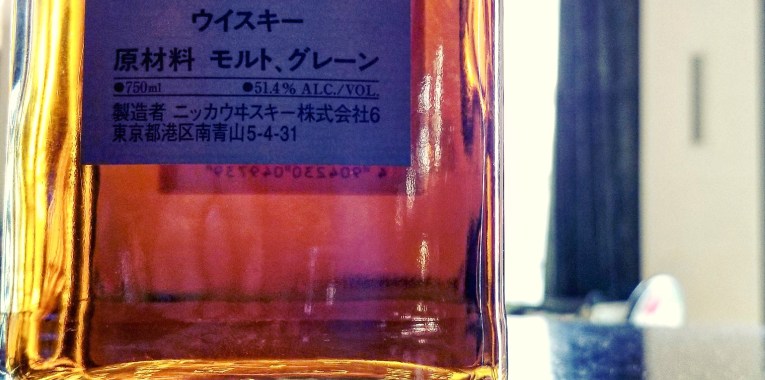
I first came across the Nikka From The Barrel when traveling to France a couple years ago. Not only was I struck but how incredibly flavorful it was but by how ubiquitous it was. I erroneously assumed it was a specialty release only to hear from the bartenders that it was their mixing Japanese whisky. Keep in mind that this was pre-Toki when the prices were rising and stock plummeting and the ability to make cocktails with Japanese whisky was dwindling. Yet here was an over-proof, affordable, mixable Japanese whisky. And I couldn’t have it.
Despite what the name might imply, the whisky itself is not a single barrel expression. It is instead a blend, remember the Japanese whisky makers consider themselves more blenders then distillers. This is Single Malts from Nikka’s Yoichi and Miyagikyo Distilleries, as well as grain whisky from Miyagikyo that has been rested and married in an oak barrel for 3-6 months. It is coming from the blending barrel not a single barrel.
The extra aging allows the whiskies to marry and evolve together before being bottled at near cask strength, a powerful 102.8 proof. This power of proof and flavor is what made the whisky such an amazing value. There is just so much packed into its little bottle. And the bottle is little. Designed to be reminiscent of a “small lump of whisky” to visualize the concentrated power inside the bottle it is packed as 500ml. This is a bottle size so far outside the allowable norms for US production that I think this more than anything is what kept it from our shores for so long.
With its Stateside release, Nikka kept the same bottle design but simply scaled it to a 750ml size. Not quite as elegant and evocative but it’s always been what’s inside the bottle that counts.
So, what’s inside the bottle? The same blend of malt and grain married for 3-6
It’s also proof that global expansion and demand can be gracious and bring you new experiences and treasures, instead of putting up artificial boundaries.
months in oak casks. Still bottled at 51.4% alcohol this is a big hitter.
The Nose carries a hint of fresh, green fruit, with a baking spice overlay and of course a discernable oak note. The alcohol vapors can accidently overpower some of the more subtle notes if you inhale too deeply on the first sniff.
On the palate is a big, full bodied whiskey. The dark baking spice notes leap to the front. Brown sugar, caramel, and the fruit stays fresh and a touch more citrusy than expected from the nose. The distillate is incredibly clean and dry.
The finish is long, drawn out, and the oak lingers after the alcohol has burned off. A few drops of water really does help mellow this whisky and expand the range of flavor.
What’s truly great about this whisky to me is that it’s simultaneously an entry level whisky and yet not. It’s something the evolves over time, much like the person drinking it.
It’s also proof that global expansion and demand can be gracious and bring you new experiences and treasures, instead of putting up artificial boundaries.




 Almost every year, as reliable as new iPhone releases, someone touts a new aging process that’s a breakthrough that allows for rapid aging, creating the equivalent of a 12-year old scotch in a fraction of the time. In every case the whisky produced by these methods either never materializes or falls vastly short of it’s lofty goals. I’d be just as skeptical of the claims that once the team at Kavalan stopped resisting the humidity and heat of the sub-Tropical Taiwanese environment they were able to rapidly age their product if the whisky in the bottle wasn’t so damn good. As their Master Blender Ian Chang says, “We think of our heat as a sandpaper and our newly made spirit as a rock with edges,”
 selection. The casks use a shave, toast, and re-char process on old Portuguese wine casks that creates a heavy oak influenced whisky. But rather than produce the heavily tannic, overly woody notes we often see in American quarter casks, instead it’s a finely tuned balance with rich dark berries, plum, and tropical fruit dancing along the edges of the oak’s vanilla and tannin while swimming in the traditional malt backbone of a well aged whisky. Being bottled at cask strength cuts through what could have been a cloying sweetness to instead add a spice note that allows the finish to linger long into the night.


 inserts, but still makes them available online and they started the

 Although the eau de vies are still a major part of the distillery, the portfolio has expanded to include such wide sprawling products as a California Agricole Rum, an Absinthe Verte (which became the first commercially available American Absinthe after the lifting of the 1912 ban), as well as numerous gins and the Hangar One vodkas which were sold to Proximo in 2010. St. George first entered the whiskey game in 1996 when Jorg hired Lance Winters, a former nuclear scientist and brewer, for a one-month trial. Twenty years later Lance is still experimenting and Jorg is delightfully retired.
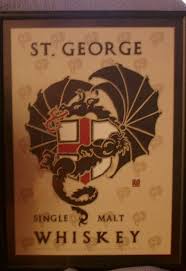 Malt Whiskey.” Technically, according to the American government there is no legal definition of what constitutes an ”American Single Malt.” However, this lack of consensus didn’t stop drink giant Remy Cointreau from purchasing the American Malt makers at Westland Distillery in December of 2016. Whether that speaks to a growing awareness of the category, or to an international audience more familiar and accepting of products labeled “Single Malt” remains to be seen.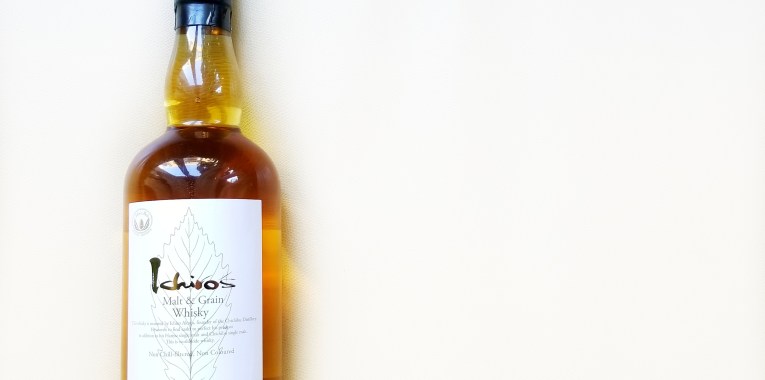
 Where most of the master blenders and distillers in the Japanese whisky world are rather unassuming and reserved, every interview and Google search for Ichiro is required to use the word ‘rock star’ to describe him. The Akuto family had been making sake in Chichibu since 1626 and transitioned into the sochu and whisky world in 1941 when Ichiro’s grandfather opened the Hanyu distillery. The distillery ended up enjoying considerable success during Japan’s postwar whisky boom.
 Nearly 10 years later there was a complete deck of 52 “Cards” complete with two Jokers. According to interviews Ichiro never meant to release a complete deck. The idea was to originally release four single casks and working with a friend of his, who was also a designer, they struck upon the idea that playing cards had four suits, and so a legend was born.(A legend that sold as a complete set at auction in 2015 for $400,000.) Not as impressive as the individual bottle price of the Yamazaki 50 but still amazing for a collection of whisky that was so unwanted a mere 15 before the sale that the distillery that produced it had shuttered its doors.
 The first Chichibu whisky debuted in 2011, a mere three years after the distillery started operation. Adding to his ‘Whisky Rock God’ persona every bottle that rolls out of Chichibu is labeled as an “Ichiro’s Malt Chichibu” with a sub name describing the release. This first release is appropriately dubbed, “The First”, and the whisky was aged in a combination of ex-Bourbon and Japanese Mizunara oak. Only 2,040 bottles were made available and it cemented Ichiro, and Chichibu, as a major player not just in the history of Japanese Whisky but also in its future. I remember drinking this whisky and being blown away by the delicacy and elegance it presented at a mere three years and at 118 proof. There were nectarines, vanilla, a touch of cinnamon as well as an earthiness, and green apple that fed into the maltiness.
 orange weaving through a light sweetness which leads into a large roasted nut, vanilla, white pepper feel, then a touch of tobacco and gingerbread on the tongue that leaves dried tropical fruit and vanilla as it disappears into a medium length finish.
 Suntory founder and first master blender, Shinjiro Torii and Masataka Taketsuru, “The Father of Japanese Whisky”, founded the Yamazaki distillery in 1923. Taketsuru had studied organic chemistry in Glasgow and was found by Torii after he made inquiries to Scotland looking for a whisky expert. Torii was told there was already one fully qualified in his own country and the two worked closely to build the Yamazaki distillery. However, the first whisky produced by the new company, dubbed the Suntory Shirofuda was a resounding failure. The Japanese drinkers preference for lighter, blended whiskies was blamed as well as Taketsuru’s fixation on doing things the “Scottish way.” Taketsuru was shunted away from the distillery to a beer factory where he served out the remainder of his ten year contract before leaving to start the Nikka distilling company, Suntory’s biggest rival.
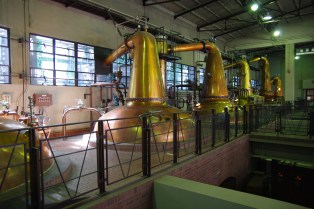 total to 12, which increased capacity about 40%. The added capacity didn’t prevent them from releasing the Non-Age Statement Yamazaki and Hakushu Distiller’s Reserve the following year just as talk of the worldwide whisky shortage began to surface. Also in 2014, Suntory purchased Beam, Inc. (home of the eponymous Jim Beam Bourbon) for $16 billion forming Beam Suntory, the third largest spirit producer in the world. This acquisition greatly expanded Suntory’s distribution lines spreading the already thin stocks of Yamazaki even thinner.
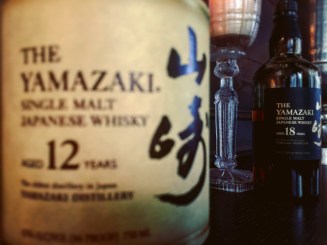 While the 12 year was once the perfect introduction to Japanese malt, before the price and the hype got in the way, it was the Yamazaki 18 year that always stirred my soul. This time roughly 80% Sherry casks with ex-Bourbon and Mizunara making up the other 20%. Here the promise of the 12 year has evolved into a stately elegance. The fruit dries out, turning to raison and apricot with dark chocolate and berries on the tongue with a touch of spice on the long march to the finish.

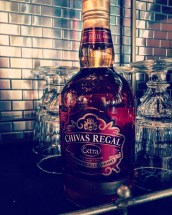 On a more approachable scale they’ve started producing the Chivas Regal Extra, a Non Age Statement blend designed to recreate the flavors of the original Chivas Regal 25 Year Blend that relies heavily on Olorosso Sherry aging. Then there is the new Mizunara.
 Bottled In Bond LA