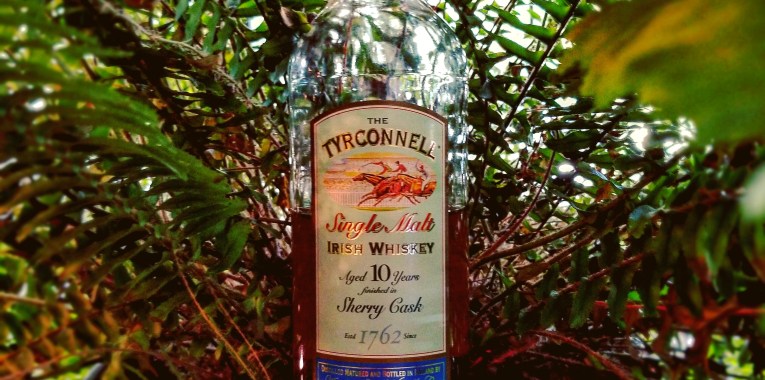
Whiskey Wednesday: Tyrconnell’s Long Odds

Every now and then I like to remind myself that Irish Whiskey isn’t spelt “Jameson’s.” I’ve talked about the explosive growth of Irish Whiskey before but here are some quick facts.

While everyone is gaga for Japanese whiskey as a luxury product Irish whiskey is expecting to double its sales by 2020. In 2014 Jameson’s sold 18 million liters in the US alone. The Scots and the Irish will fight until the Sun goes cold over who first created whiskey but there’s no debating the fact that it was Irish monks that tought most of the Western World how to distill. Hell, even the word “whiskey” is an Anglicization of “uisge beatha” which is Gaelic for water of life. The Irish are indelibly linked to whiskey so what’s the problem? It’s a monoculture.

Need proof? In 2014 Jameson’s closest competitor, Bushmill’s, sold a whopping 1.3 million cases. Jameson’s currently accounts for 63% of the global Irish whiskey market. Monocultures are great for business but are incredibly susceptible to full scale collapse. Look at what’s happening to the Chiquita bananas or how the agave industry is actively working to reinvigorate the gene pool with the Bat project.

Irish whiskey has traditionally lived and died with the American market and like so many other things it was ruined by Prohibition. On top of that throw in the Irish War for independence, a civil war, trade disputes with Great Britain, and you end up with an industry made up of over 160 distilleries and 400 brands reduced to a mere two distilleries in the mid-70’s.

The remains of the Irish whiskey industry banded together to form Irish Distillers which was then purchased by Pernod Ricard in the late 80’s. They then began the massive push to get people to drink Irish. It worked and since 1990 Irish whiskey has been the fastest growing spirit in the world. It’s ballooned the industry with 32 new or proposed distilleries across Ireland. Not bad for an industry long sustained by only four distilleries and of those four only one has been in operation longer that 1975.

It’s a old industry with new blood and the near death of the industry left many historic brands and styles in the grave. Irish Single Malts and Tyrconnell are great examples. Tyrconnell was the flagship brand of the Old Watts Distillery, It takes it name from a racehorse who won the National Produce Stakes in 1876 at literally  at 100 to 1 odds. It was incredibly popular in the US, there are photos of Yankee Stadium at the turn of the century with Tyrconnell ads on the billboards. But prohibition shuttered the brand and the distillery in 1925. The Brand was revived by the Cooley distillery in the 80’s.

It’s made in traditional Single Malt Style, 100% malted barley and double copper pot still distillation with no peat, and then aged in ex-Bourbon Barrels. The 10 Year Old Madeira Cask Finish is my real jam though. A light, fruit forward whiskey with bitter chocolate, green, tropical fruit, and a incredibly creamy finish. It’s one of those whiskies that slips below the radar while being incredibly excellent. And they’ve gotten to the place where they are now planning on a limited release of a 16-year old Single Malt. And maybe that’s the silver lining to the Jameson’s problem.

All of this growth in the Irish whiskey world is being fueled and often literally paid for by sales of Jameson’s. For many people that’s all Irish whiskey will ever be which leaves a lot of hidden gems to be found flowing from the Emerald Isle. The world has caught on to Bourbon, its caught on the Japanese whisky, hell its even caught on to Taiwanese whiskey, but not Irish. Not yet anyway…

The days of Yamazaki and Weller Antique being undervalued have faded and instead of being sipped and shared it’s now being hoarded and auctioned. And i miss sipping and sharing. And at least with Tyrconnell I still can.
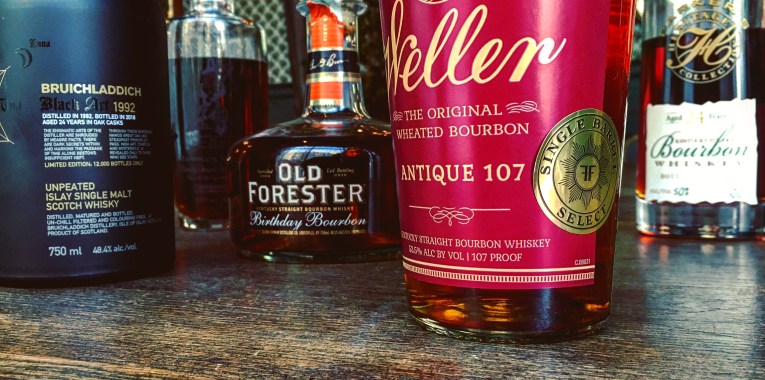
Whiskey Wednesday: Unicorns, Whales, and Narwhales

Unicorns are all around. You can see them prancing through the Instagram forest, taunting you with delicious rivulets running down the sides of a glistening Glencairn glass yet the moment you emerge into the fields of the liquor stores they become a distant fable. What happened to these legendary bottles?

The short answer is: they became legendary. As humans we often seem driven to obtain the unobtainable. We strive to climb the highest mountain, to put a man on Mars, and to score a bottle of Pappy Van Winkle for our home bar. Pappy might not be as lofty a goal as the first manned mission to Mars but the spirit is the same. This mentality to obtain the best doesn’t just drive the whiskey market either.

In the world of craft beer the legendary brews are known as ‘whales’ and if you ever wanted to see a brewmaster roll their eyes and grit their teeth ask them

When everyone wants a unicorn what happens to all the workhorses?

about the notorious ‘Whale Hunters.’ These Sudsy Ahabs sail the special event scene, spear the rarest beer on tap, drain the keg and disappear, often without supporting the breweries core beer and usually never to be seen again. They don’t add value to the bar, or even necessarily to the brand, they’re just looking to score something that they feel only they can appreciate before anyone else can be exposed to it.

While the Unicorn and Whale market have certainly spurred growth, especially in the craft scenes, and have been some of the biggest drivers of the infamous Booze Black Market they have an unseen downside. When everyone wants a unicorn what happens to all the workhorses?

Unicorn bottles like the Pappy’s, or the Parker’s Heritage, or the Old Forester

The current whiskey boom has created a feedback loop where what were once reliable bottles are becoming, maybe not unicorns but certainly narwhales.

Birthday Bourbons are great special occasion bottles but they can’t support a distillery on their own. You need good product, at a good price, that people want to drink frequently yet responsibly. The current whiskey boom has created a feedback loop where what were once reliable bottles are becoming, maybe not unicorns but certainly narwhales.

Take the W.L. Weller line up. Created by William Larue Weller the brand has existed since the 1840’s and enjoyed great popularity at the time. Julian ‘Pappy’ Van Winkle joined the Weller Company as a salesman in 1893 and after W.L. Weller passed away in 1899 Pappy and Alex T. Farnsley purchased the company in 1908. A. Ph. Stitzel had been under contract to produce whisky for the Weller Company and after a merger in 1933 the infamous Stitzel-Weller Distillery opened in 1935. The distillery made W.L. Weller, Old Fitzgerald and many other whiskies (but no Pappy Van Winkle) until it shut down in 1992. The Weller brand was than purchased by Buffalo Trace in 1999 where it is currently made along side it more famous Van Winkle cousins.

IMG_2815.JPG
A.H. Hirsch 16 Year Special Reserve

At face value this story is similar to many other whiskey brands that existed before and after Prohibition. It enjoyed early success, sluggish sales in the middle of the century and has been enjoying rising tides with the rest of the Bourbon industry. But between Stitzel-Weller’s closing in 1992 and today we’ve been struck full force with the Bourbon Boom and Pappy Mania. And once the word got out that Weller was just “young, cheaper Pappy” stocks began to get bought up, and people saw a chance to raise prices.

What was once a great everyday workhorse is slowly becoming something pricy and privileged rather than welcoming and friendly. And I say this as a spoiled man who just received a House Single Barrel of Weller Antique 107. This is going to be an everyday whiskey for myself and for the bar at Faith and Flower but we almost didn’t end up with it because of its Narwhale reputation.

Due to a snafu in the warehouses people who were not myself, or my bar, were able to order cases of our current barrel. And the entire barrel blew out of stock in less than 24 hours. And I first found out about this situation by being linked to a post of someone selling bottles of it on the Secondary Market for $70!

While all the one hand it’s flattering that someone would want to pay so much for a barrel I’ve picked out, it’s also infuriating not only because it feels like someone stole one of my favorite toys but because that’s highway robbery on the price. They weren’t just stealing from me, they’re stealing from the people they’re selling it to as well.

Thankfully we were able to retrieve all of the cases (minus a few missing bottles) and I can continue to wage my war against it becoming a true unicorn by making Old Fashioned Cocktails with it. But where does this unicorn hunt leave us?

Let’s look at the craft beer world again. For the first time in nearly two decades beer growth and consumption is down, not slowing. A gentle decline has emerged. Many analysts point to breweries being bought out by massive conglomerates and to choice fatigue, there are just so many damn options that its exhausting. But they also point out that people aren’t drinking less they’re just moving to other drinks. Like whiskey.

IMG_3196.JPG
Hibiki 17

What if these craft beer drinkers became exhausted not by choice but by the hassle and work needed to get they’re favorite brew, or were so discouraged by never being able to get a thimble of Pliny the Younger that they tried something else, say a workhorse Bourbon. Turns out they liked it and moved into a new category of drinking. What happens when these same problems invade the Whiskey World? How long can we maintain growth in an industry when the goalposts keep moving?

On the other hand, while my philosophy has always been education and approachability, I have felt the sting of working an entire year to craft a bar program that delivers everyday excellence, to then earn that one shinning Unicorn of a bottle and priced it in a way to reward thirsty travelers in their search only to have that one Unicorn Hunter swoop in an annihilate the bottle. It’s a balancing act that we’re all going to have to get better at if we want to keep this Whiskey Boom from going belly up.

Whiskey Wednesday: Changing A Pig’s Nose

Consolidation is the name of the game. Every week there is another story of a small or independent distillery being purchased by a bigger player. Most recently Bacardi purchased a minority stake in Teeling Irish Whiskey, Diageo paid nearly a billion dollars for George Clooney’s Casa Migos Tequila, and Pernod Ricard got into the mescal game with Del Maguey. No matter who the players are it always means some sort of change.

It’s not just a story of international conglomerates snapping up fast rising names either. Look at the recent merger of Spencerfield Spirits and Ian Macleod Distillers. Spencerfield was the brain child of Alex Nicol, the former marketing director of Glenmorangie. The company was built on solid, old school blended whiskey labels, like Sheep Dip and Pig’s Nose. They’ve been having explosive success with its Edinburgh Gins, which have become the #1 craft gin in all of Scotland. Alex had close ties with Ian Macleod, the makers of Tamdhu and Glengoyne, sourcing much of the whiskey for the Pig’s Nose and Sheep Dip blends and using their bottling facilities for their brands. As Spencerfield grew a more formal partnership seemed inevitable.

Compared to the massive deals mentioned above this merger is still a small player but it’s a great case study in what this kind of deals can yield. The Spencerfield Brands gain more direct, consistent access to primary ingredients for their brands, while also gaining access to a larger distribution and marketing network. Ian Macleod then expects the brands to continue to show an increase in performance to justify the money spent bringing them into the fold. And that means increased sales. Which means grabbing the attention of new consumers. Which means change.

The most dramatic example is Pig’s Nose. The brand was originally started in the 1970’s but was revitalized by Alex Nicol and is proof that good whiskey doesn’t need to be expensive, or carry a massive age statement. It just has to be made with care. Bottled at 80 proof and made up of a blend of 40% single malts to 60% grain whiskey, the Pig’s Nose has a massively high malt content for a “non-craft” blended whiskey. It’s name comes from the whiskey being “as soft as a pig’s nose” and is a great workhorse (or work pig) in the bar world. The whiskey has a subtle fruitiness that lends a extra layer onto the malty, butterscotch middle while the whole dram remains round and soft. It’s a great cocktail backbone while still enjoyable on its own. And on top of that it was always affordable. It’s a phenomenal sleeper, an unassumingly delightful whiskey.

However, its biggest struggle has always been that it is unassuming. The packagingimages.jpg reflected the nature of the whiskey with a mellow, retro 70’s design. Simple. Clean, but not terribly exiting. And that’s where the change is happening to Pig’s Nose. The packaging is being aggressively overhauled to turn a few more heads. Nothing inside the bottle is changing, but with new liter bottles and a label that still looks classic yet undeniably more hip. It may seem like a small change but it is one that will get people to look past the outside to actually try the whiskey on the inside and ends up being the first label change in a long time that I actually enjoy.
These small changes happen with every brand purchase and merger. What the change is varies from brand to brand and company to company but over time they accumulate, slowly altering the brand until it’s no longer what it was. Sometimes, like with Pig’s Nose, it’s a positive face lift. Other times, it’s a slow loss of quality, or of personality that leads to the brands identity completely shifting. It’s an ever evolving world of spirits but by watching these changes we can see where to throw support and where to abandon ship because they tides they are always a’ changin’.


download.jpg

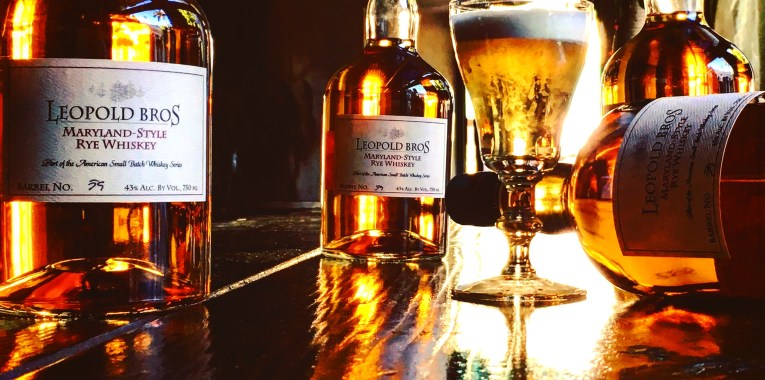
Leopold Brothers Maryland Style Rye

Alright nerds, here’s a good one for you today. Maryland Style Rye.
Before the advent of the ‘Great Experiment’ that was Prohibition there were two dominant styles of American Rye Whiskey. The Pennsylvania Style (spicy, dry, and oaky) and Maryland Style, which was more floral, fruit forward and less aggressive. Among the many great things that Prohibition destroyed, Maryland Style Rye was one of them.

But the boys at Leopold Brothers, are fighting the good fight and trying to recreate the style in the only way they know how: with exceptional quality and attention to detail. While ye olden Maryland Ryes often achieved their more mellow nature and fruit flavors from additives and prune juice, the brothers are following their eco-distilling nature and recreating the flavors throughWight'sMarylandRye3.jpg careful distillation and selection of yeast strains to create a wholly unique product. They’ve even had an old time compound still made exclusively for them, and are working with local farmers to grow late 1800’s style rye, which has a completely different flavor and starch content than it’s modern descendant.
While we’re still waiting on the first batches off the new still, the current bottling shouldn’t be ignored. Young, but light and green. Green as in like biting into a huge green apple, apricot, and stone fruit. All supported by a rich chocolate malt rounding out to a juicy and more mellow finish than your more familiar ryes.

And I’m feeling inspired recently so lets bust out some old tricks with The Santa Anas: Leopold Maryland Rye,Chai Infused Cocchi, Dry Vermouth, Homemade Apricot Bitters and a Smoked Orange Foam.

Alexander Murray and Friends

“Good friends, good books, and sleepy conscience: this is the ideal life.” ~ Mark Twain

I’d personally add good booze into that mix but starting with Twain is never a bad idea, he weaves a good story. But the problem lies in what kind of story are you trying to tell with your whisky? Are we telling a historic tale? That would start with the founding of the Caol Ila Distillery in 1846.  But that’s a little dry.

It could be a business biography. That starts in 2004 with the creation of Alexander Murray. An essential newborn in the world of independent Scotch bottlers they took a different tact. instead of focusing on small, rare bottlings they focusedIMG_0783.jpg on volume. If you’ve ever noticed that the hosue labeled Scotch whisky at Trader Joe’s and Costco was surprisingly good, that’s because it came from these guys. But business is so impersonal.
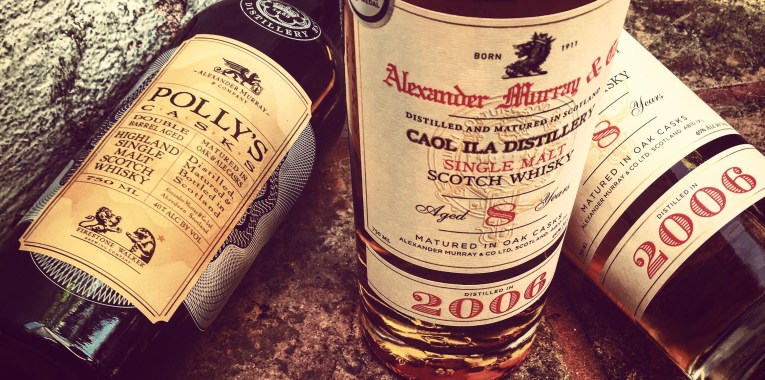
Except it’s not. While moving volume, and checking history the gang at Alexander Murray made friends. And that allowed them to grow and bring out more quality under their own label. Take their 8 Year Old Caol Ila. Some may argue that it’s an unnecessary bottling with the quality the standard issue 12 year has. But they’re like two small town friends who move away to different cities. Same underling base, but a heavier oak presence gives this a more NYC feeling bite versus the original delicate, seaside village feel that Caol Ila usually has. But even more than that’s it’s opened their eyes to larger collaborations.

Yet another friend is David Walker, of Firestone Walker Beer. Working together they took 60 barrels used for aging the Firestone DBA and finished 6-8 year old single malt in them for another 3 months to a year. The resulting ‘Polly’s Cask’ is a complex melding of friendships, even just in the character of the whisky. Beer and Whisky are natural friends, and the barrels linking them here started as ex-Bourbon, turned into beer, and then finally into Scotch barrels. If that’s not a sharing between friends I don’t know what is. The result is an exceptionally nutty malt.

Both are a great example of the best times with friends. An everyday encounter, and a special occasion, too. And as I tell my friends all the time, I don’t care what you drink as long as you drink it with me. 

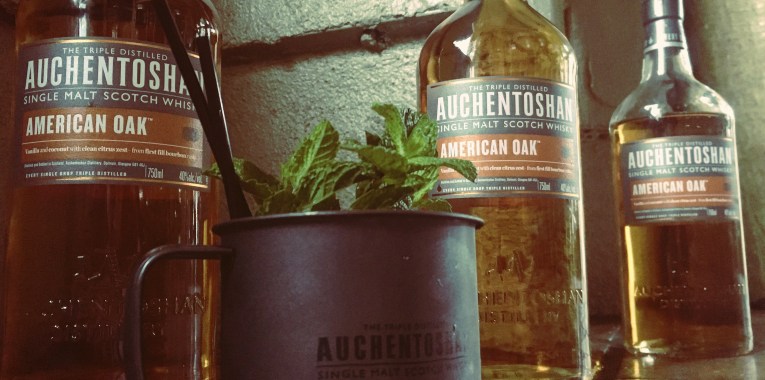
Auchentoshan Three Wood Single Malt Scotch Whisky

Happy accidents are all around us. They often start simple. You wander into a bar, look around, find yourself presented with better than average options, and end up with a glass full of Auchentoshan, which is surprisingly light and delicate, but with enough complexity to be no accident.

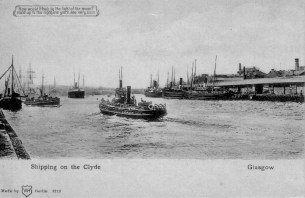
Then there are the not so simple accidents. Like the quirks of history that created the style of whisky now swirling in your glass.  Auchentoshan is one of the last remaining Lowland distilleries in Scotland, a region with a style as unique as it’s Speyside and Islay cousins, yet wholly unusual in scotch making and is fully created by the accident of it’s location. Founded in 1823 by Irish refugees on the outskirts of Glasgow it’s seen the city rise into an industrial complex, the bygone glory days of it’s shipbuilding and engineering prowess, and is still tucked away in it ‘corner of the field’ watching the trade city grow more
cosmopolitan. All of these pieces come together. The shipping and trade gave massive Clyde-Shipping-Glasgow1.jpgaccess to barrels of all kind for excellent aging but more importantly the whisky itself was primed for bigger barrel interaction by the influence of those Irish refugees and their tradition of Triple Distillation. Coming off the stills at a higher proof leaves the raw spirit lighter and more ready to soak in the plethora of barrels floating in and out of the port city.

And then there are the literal accidents. Years ago, the Head Distiller Jeremy Stevens was working on a batch of sherry finished malt. It had already spent time in ex-Bourbon barrels, and had been aging in Olorosso Sherry casks. After the initial dump he felt it need some more time in the sherry wood, ordered the malt to be rebarreled and left for a trip out of the country. When he came back he found that instead of Olorosso it had gone into Pedro Ximenez sherry barrels.Rather than losing his job the distillery discovered one of their most popular expressions: The three wood..

So, the accidents of place, time, history, barrels and communication have granted you a glass of delicate, rich toffee, with candied plums, blackcurrents and a hint of hazelnut. So let’s raise a glass to accidents. May they be few and happy.


Buffalo Trace and Pants

Why do we leave the house? Between digital streaming and the sharing economy everything you could ever want is right there or can be delivered at the push of a button. Human socializing has been digitized and depersonalized. Entertainment can, and will, cater specifically to you, and the Internet will connect you to anyone in the world. So, why go out?

I personally like to believe it has to do with experiencing the world. That to bring back a true story to the digital marketplace enriches yourself and the people you’re sharing with. It still doesn’t explain why we gather to drink fermented beverages, laugh, talk, and be merry. Some things are just for fun. But they should still be an experience.

I like to call it the, “You Put On Pants” Philosophy. For whatever reason you decided to get up of the couch, put on pants, and come to the bar instead of watching Game of Thrones reruns. Let’s make it worth your while. Let’s get you something that can’t be delivered straight to your doorstep. In this case with a whiskey you can’t get anywhere else.

“You Put On Pants Damn It”

Buffalo Trace isn’t hard to come by. Even though the brand was only created in 1999 the Bourbon Boom and the fact that it is a quality whiskey has made it a nearly ubiquitous bottle. What makes this ‘pants worthy’ is its single barrel nature. After tasting through several samples we bought all of the whiskey inside of the barrel. The only way to taste this version of Buffalo Trace is right here with us. It has the familiar backbone but with a massive dollop of orange marmalade, a spicier pop and super rich vanilla.

It’s not an earth shattering difference but it’s enough to stay interesting. Both for you leaving the house and us coming into work. This isn’t our first barrel and it’s by no means our last. So, we’ll hopefully being seeing you through several pairs of pants.

Sazerac Straight Rye Whiskey

What’s in a name? A Sazerac by any other names is a…rye? A cocktail? A Coffee House? A long defunct cognac? Language is a funny thing.

When we say ‘cocktail’ these days it tends to be as a catchall for ‘mixed drink’ but that’s essentially the equivalent of calling all steaks fillets. A cocktail is a very specific type of drink made from spirit, sugar, bitters and water, usually in the form of ice. Or as it’s often called today: an Old Fashioned.sazerac.jpeg

And just like today where you may call for a Elijah Craig Old Fashioned, you would have called for a Sazerac Cocktail, made with cognac from Sazerac-du-Forge et Fils which was imported by the Sazerac House in New Orleans. Being very French the New Orleans drinkers loved to ‘improve’ up their cocktails with just a dash of absinthe and Bam! A Sazerac Cocktail.

But at the turn of the century the phylloxera plaque struck Europe wiping out old vineyards laying waste to innumerable wine and cognac house. As the supply of cognac dwindled, New Orleans drinkers turned to what was readily available to them: Rye Whiskey and gave birth to the Zazerac. Yes, Zazerac with a Z. Language is fun, and by distinguishing the proper names drinkers could quickly indicated whether they wanted the brandy or the whiskey version. Confused? You’re probably not the only one. In the Artistry of Mixing Drinks by Frank Meir published in 1934 he says, “Note. – there is much confusion between the ‘Sazerac’ brandy cocktail and the ‘Zazerac’ cocktail originally made in New Orleans.” So the ‘Zazerac’ name gathers dust while the actual drink gathers steam.

“Note. – there is much confusion between the ‘Sazerac’ brandy cocktail and the ‘Zazerac’ cocktail originally made in New Orleans.”

Time passes and a new Sazerac house rises, this time an American Liquor Company named that owns and distills Buffalo Trace and a myriad of other bourbons, but also an Eponymous Rye Whiskey named: Sazerac. And it’s damn good. Bright, crisp apple, dry rye spice, with a touch of that southern air on the nose. But is it Sazerac? In name only.

In honor of the spirit of the spirit, share a few Sazerac Zazeracs tonight