I’m a whiskey purist. Bourbon, Scotch, Japanese, Barrel Strength, it doesn’t matter, I drink it neat. For years I was determined that not even a drop of water would come between myself and my sweet, sweet barrel aged nectar. What’s changed me? The highball.
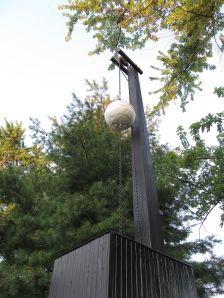 The highball is nothing new. It’s a simple class of drinks: a shot of spirit diluted with several ounces of a carbonated beverage on ice. My favorite rationale for where the term “highball” originated from comes from the old railroad days. Along the rail tracks there were “highball” signals where a ball would be hoisted out of a barrel signaling that the track ahead was clear and the trains could travel full speed ahead. A “highball” drink was at the time served in a highball glass with a single lump of ice. As the soda was added to the glass the ice would rise just like the highball signal telling drinkers they could dive in at full speed as well as quickly down the remainder of the drink when their train pulled in.
Like most classic it was simple, easy, and was much abused during the 70s, 80s and 90s becoming barely recognizable but it’s still a class of drinks that people still know the name for. But the highball that interests me, the undiluted purist, is a straight whiskey soda.
My first highball in Japan was out of a can.
Ask for a Whiskey Highball in the U.S.A and there’s a good chance you’re going to end up with a whiskey and ginger and even this combo wasn’t enough for the sugar loving American palette and has been vastly over shadowed by its cousin the Jack and Coke. But in Japan the Whisky Highball has been elevated to an art form. I had heard the hype but it wasn’t until I visited Tokyo this year that I finally understood.
My first highball in Japan was out of a can. I would never even consider getting a canned mixed drink from a 7/11 in the States but when you cross the international date line and land in the future and your hotel room isn’t ready for another 7 hours what else are you supposed to do while walking through the city?
From the moment that can touched my lips all I drank for the rest of that trip was highballs. And what struck me everywhere was the balance and the quality.
It was expected in Ginza. It was a random bar that we didn’t know the name of. The bartender knew maybe a handful of English words but when we ordered Suntory Highballs he enthusiastically pulled every Suntory whisky he had from the back bar to try and walk us through which one we actually wanted, and then thoughtfully poured the whisky over hand carved ice, stirred, and topped with soda before continuing on to casually brulee half of a passion fruit for the garnish of another customers drink. But when the highball at the chain ramen shop where you have lunch is just as elegant you know there’s something special happening.
It’s an attention to detail and a respect for the process. Each person who poured me a highball had respect for the process in their own way. Its easy to see, and taste, why highballs are a cultural force in Japan. And with the rise of Japanese Whisky across the world the Japanese are trying to export their highball ethos as well.
Suntory and Nikka have both made moves to position themselves in the highball world. Suntory has even released the Suntory Toki in the states, a blend specifically designed for the taste profile, and price point, of a highball. But the problem for me with the Highball in the States is the soda. Doesn’t matter how good or finally designed your whisky is the moment it is smothered by carbonated water from the gun, or drowned with a bottle of Canada Dry it’s lost it’s edge. There’s just simply a difference in the quality of bubbles.
Its odd to call a machine thoughtful but all good bartending has a certain degree of prep that happens behind closed doors.
Enter the Toki Highball machine. My first thought on hearing about this highball machine was why the hell would I need a machine to make the simplest drink on the planet?! But after my eyes were opened in the Land of The Rising Sun I approached the machine in a new light.
The design and execution of this machine are thoughtful. Suntory was aware of the problems of trying to export their highball style and worked to eliminate as many roadblocks as possible. Not only does the machine have the necessary refillable whisky tank, but also a separate water cooling system. It then carbonates with amazing specificity and will dispense the sparkling water independent of the whisky. My bubbles problem was solved.
It also adds a measure of thoughtfulness back into the process. Its odd to call a machine thoughtful but all good bartending has a certain degree of prep that happens behind closed doors. Whether it’s batching, technique training, or infusion,s a good portion of our job is doing the work out of sight so that the customer can sit at the bar and enjoy a seamless, delightful night out on the town. And the behind the scenes work has definitely been done to bring these highballs from Tokyo to LA.
So rejoice! Tonight is the unveiling of the Toki Highball machine at Faith and Flower. Come see exactly what I mean.


 Almost every year, as reliable as new iPhone releases, someone touts a new aging process that’s a breakthrough that allows for rapid aging, creating the equivalent of a 12-year old scotch in a fraction of the time. In every case the whisky produced by these methods either never materializes or falls vastly short of it’s lofty goals. I’d be just as skeptical of the claims that once the team at Kavalan stopped resisting the humidity and heat of the sub-Tropical Taiwanese environment they were able to rapidly age their product if the whisky in the bottle wasn’t so damn good. As their Master Blender Ian Chang says, “We think of our heat as a sandpaper and our newly made spirit as a rock with edges,”
 selection. The casks use a shave, toast, and re-char process on old Portuguese wine casks that creates a heavy oak influenced whisky. But rather than produce the heavily tannic, overly woody notes we often see in American quarter casks, instead it’s a finely tuned balance with rich dark berries, plum, and tropical fruit dancing along the edges of the oak’s vanilla and tannin while swimming in the traditional malt backbone of a well aged whisky. Being bottled at cask strength cuts through what could have been a cloying sweetness to instead add a spice note that allows the finish to linger long into the night.


 inserts, but still makes them available online and they started the

 in tradition, both its own and the Scotch Whisky tradition that gave birth to it, so change comes slowly. And while whiskey history is littered with mythological founding fathers modern Japanese Whisky owes it’s life and it’s tradition, to one man: Masataka Taketsuru.
 (over objections from both families) and in May of that same year Taketsuru began an apprentice at Hazelburn distillery where he gained a greater understanding of blending whiskey as well as distilling. He and Rita returned to Japan that November with plans to help the Settsu Shozo Company set up the first Japanese Whisky distillery. These plans never came to fruition.

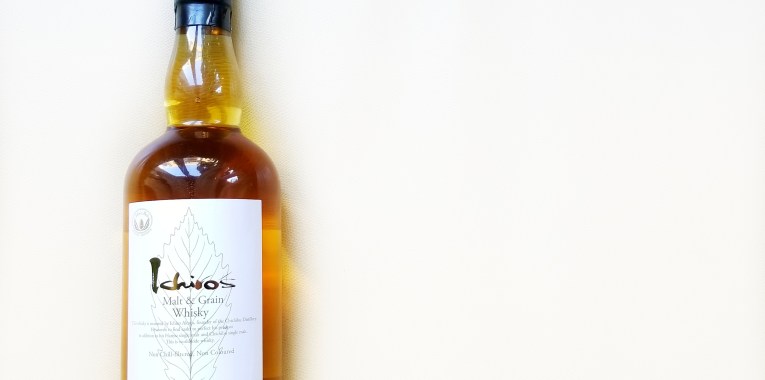
 Where most of the master blenders and distillers in the Japanese whisky world are rather unassuming and reserved, every interview and Google search for Ichiro is required to use the word ‘rock star’ to describe him. The Akuto family had been making sake in Chichibu since 1626 and transitioned into the sochu and whisky world in 1941 when Ichiro’s grandfather opened the Hanyu distillery. The distillery ended up enjoying considerable success during Japan’s postwar whisky boom.
 Nearly 10 years later there was a complete deck of 52 “Cards” complete with two Jokers. According to interviews Ichiro never meant to release a complete deck. The idea was to originally release four single casks and working with a friend of his, who was also a designer, they struck upon the idea that playing cards had four suits, and so a legend was born.(A legend that sold as a complete set at auction in 2015 for $400,000.) Not as impressive as the individual bottle price of the Yamazaki 50 but still amazing for a collection of whisky that was so unwanted a mere 15 before the sale that the distillery that produced it had shuttered its doors.
 The first Chichibu whisky debuted in 2011, a mere three years after the distillery started operation. Adding to his ‘Whisky Rock God’ persona every bottle that rolls out of Chichibu is labeled as an “Ichiro’s Malt Chichibu” with a sub name describing the release. This first release is appropriately dubbed, “The First”, and the whisky was aged in a combination of ex-Bourbon and Japanese Mizunara oak. Only 2,040 bottles were made available and it cemented Ichiro, and Chichibu, as a major player not just in the history of Japanese Whisky but also in its future. I remember drinking this whisky and being blown away by the delicacy and elegance it presented at a mere three years and at 118 proof. There were nectarines, vanilla, a touch of cinnamon as well as an earthiness, and green apple that fed into the maltiness.
 orange weaving through a light sweetness which leads into a large roasted nut, vanilla, white pepper feel, then a touch of tobacco and gingerbread on the tongue that leaves dried tropical fruit and vanilla as it disappears into a medium length finish.
 Suntory founder and first master blender, Shinjiro Torii and Masataka Taketsuru, “The Father of Japanese Whisky”, founded the Yamazaki distillery in 1923. Taketsuru had studied organic chemistry in Glasgow and was found by Torii after he made inquiries to Scotland looking for a whisky expert. Torii was told there was already one fully qualified in his own country and the two worked closely to build the Yamazaki distillery. However, the first whisky produced by the new company, dubbed the Suntory Shirofuda was a resounding failure. The Japanese drinkers preference for lighter, blended whiskies was blamed as well as Taketsuru’s fixation on doing things the “Scottish way.” Taketsuru was shunted away from the distillery to a beer factory where he served out the remainder of his ten year contract before leaving to start the Nikka distilling company, Suntory’s biggest rival.
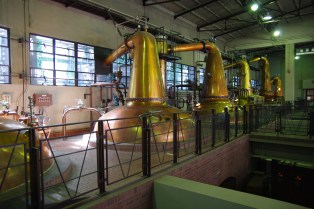 total to 12, which increased capacity about 40%. The added capacity didn’t prevent them from releasing the Non-Age Statement Yamazaki and Hakushu Distiller’s Reserve the following year just as talk of the worldwide whisky shortage began to surface. Also in 2014, Suntory purchased Beam, Inc. (home of the eponymous Jim Beam Bourbon) for $16 billion forming Beam Suntory, the third largest spirit producer in the world. This acquisition greatly expanded Suntory’s distribution lines spreading the already thin stocks of Yamazaki even thinner.
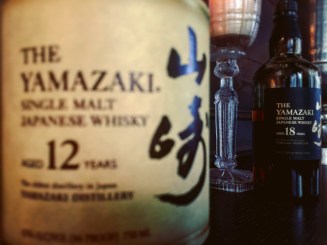 While the 12 year was once the perfect introduction to Japanese malt, before the price and the hype got in the way, it was the Yamazaki 18 year that always stirred my soul. This time roughly 80% Sherry casks with ex-Bourbon and Mizunara making up the other 20%. Here the promise of the 12 year has evolved into a stately elegance. The fruit dries out, turning to raison and apricot with dark chocolate and berries on the tongue with a touch of spice on the long march to the finish.

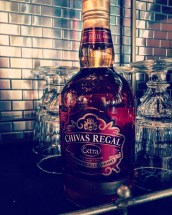 On a more approachable scale they’ve started producing the Chivas Regal Extra, a Non Age Statement blend designed to recreate the flavors of the original Chivas Regal 25 Year Blend that relies heavily on Olorosso Sherry aging. Then there is the new Mizunara.

 reflected the nature of the whiskey with a mellow, retro 70’s design. Simple. Clean, but not terribly exiting. And that’s where the change is happening to Pig’s Nose. The packaging is being aggressively overhauled to turn a few more heads. Nothing inside the bottle is changing, but with new liter bottles and a label that still looks classic yet undeniably more hip. It may seem like a small change but it is one that will get people to look past the outside to actually try the whiskey on the inside and ends up being the first label change in a long time that I actually enjoy.
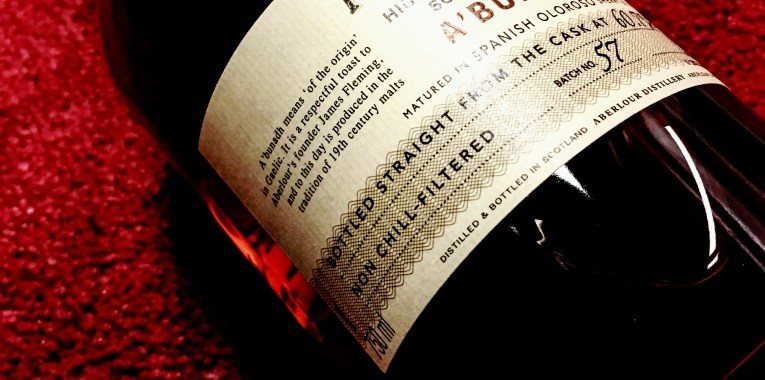
 Bottled In Bond LA