Quarantine Bottle Kill #1: Heaven Hill 7 Year Bottled In Bond Bourbon

Sheltering in place has led to a massive spike in booze sales across the United States a the days are now divided into “Coffee Hours” and “Alcohol Hours.” Being forcefully unemployed by the pandemic I’m unable to contribute to that spike and have had to reexamine my hoarding tendencies. My reluctance to open bottles, let alone finish them, has been overtaken by my belief that whiskey is meant to be enjoyed. And if not now, when?

So, join me as I work my way through my bar cart with the great Quarantine Bottle Kill of 2020.

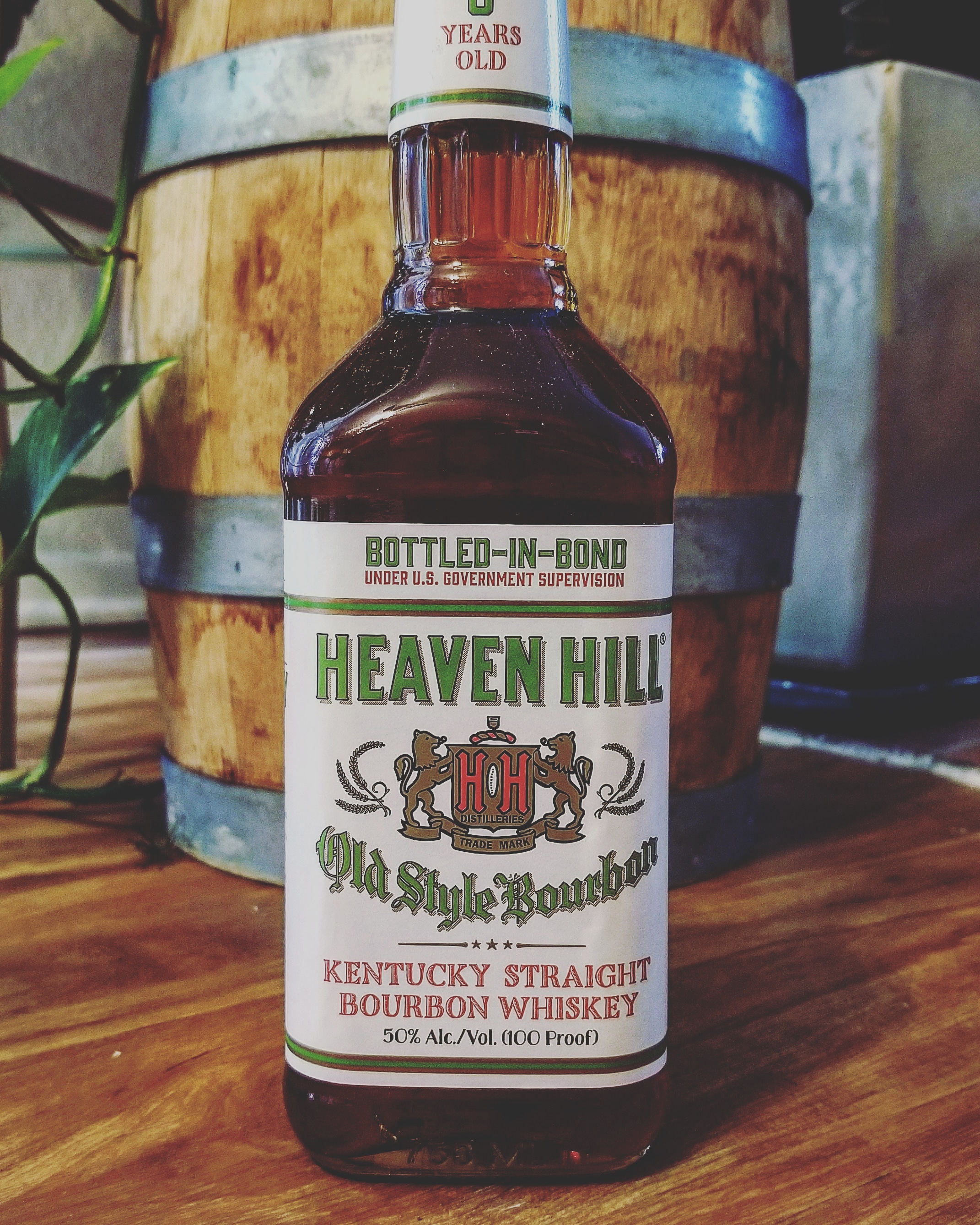
First up is a relative newcomer: Heaven Hill Bottled In Bond 7 Year Old Bourbon. Not to be confused with the Heaven Hill Bottled In Bond 6 Year Old Bourbon which was only available in Kentucky and was discontinued in 2018. One year later this 7 Year hit shelves with an updated label, an extra year of age, and a boosted price tag.

I’ve made no qualms about Heaven Hill being one of my favorite distilleries but their lack of an eponymous bourbon certainly means they have much less name recognition as a distillery than say Jim Beam. The old Heaven Hill 6 Year was one of my favorite bottles to bring back from a Kentucky trip and at $12 was an absurd steal.

Now, what exactly does an extra year and a new label and bottle taste like?

NOSE: Chestnut, dusty leather, vanilla, and oak

PALETTE: Earthy with a strong oak presence. A dusting of baking spices and a hint of tobacco. There’s a slight woodsy quality to it with a surprisingly light punch for a bonded whiskey.

FINISH: Medium and dry with a touch of stone fruit and capped with the oak and vanilla from the nose.

This is quintessential Heaven Hill. In fact, if you told me this was the 6 Year Old bottle I would believe you. Which makes sense as it’s the exact same mashbill only a year older and released a year after the 6 Year was discontinued. You can do the math. And that’s my only real con with this bottle: the math.

$12 would be an absurd price for any quality Bourbon these days.  However, at $40 it enters a very crowded field of more household names like Eagle Rare, Woodford Reserve, and Knob Creek. While this is solid bourbon I’d personally pick up a bottle of Elijah Craig from the same distillery for a lower price tag. 

I am happy to see it on the shelves though if only to help spread the Heaven Hill name. Though if it was still at the old price point I might have been able to stock up for the quarantine instead of having to finish the bottle.

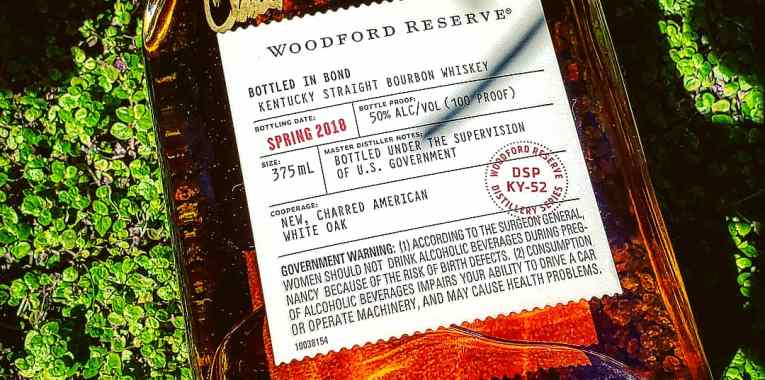
Whiskey Wednesday: Woodford Reserve Bottled-In-Bond

Let’s get meta. 

I run a blog, which you’re currently reading, called Bottled In Bond, LA. I write about bartending, cocktails and spirits, primarily whiskey but occasionally not. I’ve been doing this for a few years now and occasionally old articles will suddenly get a few more views because someone Googled a bottled in bond product that doesn’t exist. You would not believe how many people are looking for a bonded Chartreuse

About a year ago, I noticed a huge spike in an old article about Woodford Reserve. It was getting a Google search almost daily for a month. I became curious, did my own googling, and found a single Reddit post about a Woodford Bottled-In-Bond but not much else. 

After asking around with no clear answers my friend Luke Ford, who works for Woodford, returned from a visit to Kentucky with a .375ml bottle signed by Woodford Master Distiller Chris Morris. A distillery only release of Woodford Reserve Bottled In Bond. 

My natural hoarding instincts took over, it went on the shelf and remained unopened for the past year. But why? I’ve always maintained that whiskey is meant to be drank, to be experienced, and after all the curiosity that lead to me actually receiving a bottle shouldn’t I be curious about what the whiskey actually tastes like? So, I opened it. 

NOSE: Super oak, straw, light stone fruit
PALETTE: Caramel, cinnamon, baked peach pie, with a touch of the metallic pie tin
FINISH: Bright, quick, and surprisingly light for the extra proof 

This bottle tastes exactly like what I would expect a Bonded Woodford to taste like and that is incredibly interesting to me because by all right’s it shouldn’t. 

The Bottled In Bond Act of 1897 states that to be bottled in bond a product must be produced by one distiller at one distillery within in one 6-month distillation “season.” It must also be aged in a federally bonded warehouse for a minimum of four years and bottled at 100 proof. 

It’s the one distillery requirement that makes this interesting. The traditional bottle of Woodford is made up of spirit from two different distilleries. Column Still distillate from the Brown Foreman Distillery in Shively, KY and Pot Still distillate from the Woodford Distillery in Versailles, KY. This bottle only caries the DSP Number, essentially the distillery address, for the Woodford Distillery. Meaning this should legally be only the pot still whiskey. Which to me says there should be a bigger flavor difference. In a way it’s almost impressive that this really does just taste like Woodford. 

Part of what I love about Bonded whiskey is how clear cut it is. You always know the exact distillery, proof, and process whenever a product is bottled in bond. It strips out a lot of the mystery and marketing from a brand. It was an often overlooked mark of quality on affordable whiskey. And yes, the category is seeing a resurgence and premiumization in the past few years, however these are often just upscaled versions of existing brands. They aren’t bad but they are a sign of the times and they are familiar. 

This Woodford Bottled In Bond clearly falls into this ongoing trend but this bottle also raises questions for me. Is the labeling on this very small run inaccurate or have I always overestimated the impact of the column stills on the final Woodford profile? It’s made me think about Woodford in a way that I honestly haven’t in years. I don’t have an answer to these questions but at least it’s something to ponder over the next glass. 

Whiskey Wednesday: Heaven Hill 27 Year Old Barrel Strength

Reinvention is the key to longevity.  No matter how often you hear something being touted as “Old Fashioned” chances are it’s actually an update on an old technique or just straight up marketing. We are constant victims of nostalgia, even the term “Old Fashioned” implies a dissatisfaction with the modern. Yet as much as we glorify the past the only way to truly stand the test of time is by constantly changing.

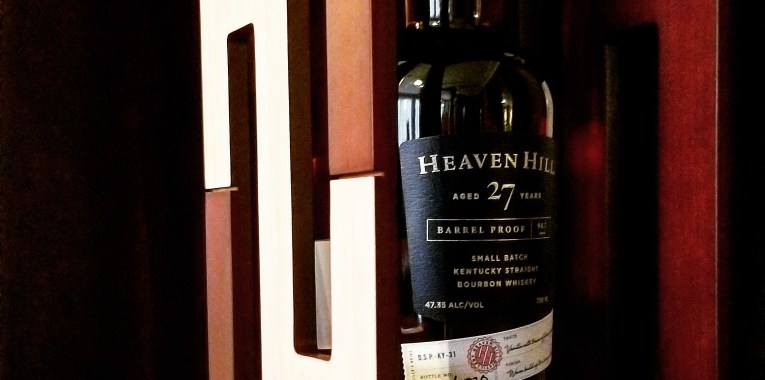
            Take Heaven Hill’s new premium, limited edition release: the eponymous Heaven Hill 27 Year Old Barrel Strength Straight Kentucky Bourbon. Those are a lot of buzz words that add up to a lot of the old being new, just slightly different.

            Let’s start at the top.

Unless you’re from Kentucky, Heaven Hill probably isn’t a brand you’re familiar with. But if you drink Bourbon it’s a distillery that permeates the very fabric of the category. Founded in 1935, Heaven Hill is the 7th largest alcohol supplier in the US, has the second largest inventory of American whiskey in the country, and is the largest, independent, family owned marketer and producer of spirits in the United States.

In an industry that’s built around the cult of personality and legends of the past (Jim Beam, Pappy Van Winkle, Jack Daniel’s, etc.) Heaven Hill built their name on other people’s legends: Elijah Craig, Evan Williams, and Henry McKenna. Hell, their master distiller since the founding of the distillery has always been a member of the Beam family.

However, they’ve never had that flagship, namesake bottle. Outside of a few specialty releases named after William Heavehill, the farmer who owned the land the distillery was built on, the only true bottling to carry the Heaven Hill name is a 6 year old, bottled in bond, Kentucky exclusive. And this bottle perfectly encapsulates the company in my mind.

IMG_20181226_173949_487.jpg

            Heaven Hill kept the bottled in bond designation alive when no one cared and can be directly credited to it’s resurgence with products like Rittenhouse Bottled In Bond Rye. It’s also a 6 year old, straight Bourbon whiskey that ran for $12 dollars a bottle. It is quality at an incredibly affordable price, which is something that Heaven Hill has done well for so long. It also isn’t what the whiskey world is about anymore. These days it’s all about limited, old and rare so it should be no surprise that this little gem has been discontinued in favor of creating a more premium line up.

            Which brings us to the age statement.

            American whiskies, almost as a rule, don’t get this old. The oldest, most consistent age statement caps out at the yearly release of the Pappy Van Winkle and Elijah Craig 23 Year Olds, the latter also being produced by Heaven Hill. Because of the law requiring Bourbon to be aged in brand new oak barrels Bourbon this old just doesn’t taste that good, because it’s often over oaked or overly tannic. There’s also the catch that the Angel’s Share steals a percentage every year meaning there’s less to sell and that’s not taking into account the unpredictable acts of nature. A lot can happen in 27 years.

            At 27 Years Old this batch of a mere 41 barrels were all aged on the 1st or 2nd floors of the Heaven Hill rickhouses where the Angel’s Share is arguably at its most minimal; but with only 2,820 bottles produced that’s still a loss of 75% of the juice.

            This whiskey can also never be replicated due to an act of god. In 1996, the Old Heaven Hill Springs Distillery burnt to the ground taking hundreds of barrels, and gallons upon gallons of aging whiskey with it. These 41 barrels were not only produced at a destroyed distillery, they survived an inferno that took much of its cousin spirit with it. This isn’t just rare because of its age, it’s both rare in addition to its age.

download
Heaven Hill goes up in flame.

The Barrel Strength designation is where things get really weird. There is no legal definition for what “barrel strength” means. In fact the TTB is currently working on a new set of regulations specifically about that designation, but in colloquial use barrel strength is generally expected to mean that the whiskey is bottled at the proof it comes out of the barrel at which is usually well north of 100 proof. It is shocking then to see this barrel proof listed at a measly 94.7.

            This goes back to those 41 barrels on the 1st and 2nd floor. The lower flowers generally allow for more mellow aging that reduces the Angel’s share lost. However, it also creates a naturally lower ABV as the alcohol evaporates faster than the water. This literal loss of alcohol is another reason why you don’t see whiskey this old from Kentucky. One of the perks of not having a template though was that these barrels weren’t selected with the idea of creating consistent flavor profile like most standard bottling. Instead these were the barrels left standing. After everything that was over oaked, overly tannic, too harsh, too soft, etc only 41 barrels were left and when batched together the naturally occurring ABV was 47.35, resulting in a technical Barrel Strength whiskey at an incredibly drinkable 94.7 proof.

            The rest of the words we know. Straight Kentucky Bourbon means that it’s legally 51% corn whiskey, made in the state of Kentucky, aged for a minimum of 2 year in brand new, freshly charred, white oak barrels with no added coloring or flavors.

            That’s a lot to take in for a single bottle. And it’s surprisingly alive. Heaven Hill has released a lot of one-off older whiskies. They’ve got deep, deep store houses yet in my opinion a lot of them have fallen flat. There was always something just off about them whether they were over oaked, or they felt thin because of the proof point. Whatever that missing puzzle piece was they seem to have found it with this bottling.

And in the end this is less about of a single bottle and more a culmination of Heaven hill’s journey over the past three decades. Bourbon has gone from the unwanted step-child of the spirit world to a global commodity and the Heaven Hill brands have evolved to keep pace. They’ve gone from affordable work horse whiskies into some of the most awarded and sought after bottlings in the world. And with this pivot Heaven Hill may have finally found a brand to highlight the gems that are sleeping in those Kentucky hills. I just hope we don’t have to wait another 27 years to see them.


NOSE: The Oak leaps out of the glass, there is a seasoned cedar wood quality with only a mild hint of the vanilla often expected.

PALETTE: Tannic, with a dried orange, and deep baking spice note. The caramel takes a major back seat only slipping out towards the end while the mid a palette is all about that earthy, savory oakyness.

FINISH: Incredibly dry, and a lingering mélange of everything that reminds you of your grandfather: tobacco, cigars, and leather that lasts longer that it’s proof would suggest.

IMG_20181226_173949_487.jpg

Drinking Poetic: The Old Fashioned

“I prefer things the Old Fashioned Way!” said every generation ever as things changed around them.

The Old Fashioned is my favorite cocktail. It appeals to me on such a deeply intellectual level that it rivals the psychic imprint that Lord of the Rings had on me in the third grade. And the imprint this simple drink has had on the world of cocktails is just as deep. But what exactly is an Old Fashioned?

Due to the past 15 years of the Cocktail Resurgence and the dissemination of information on the Internet, most bartenders outside of Wisconsin will tell you that an Old Fashioned is a basic cocktail comprised of Spirit, sugar, bitters, and water/dilution. If they’re particularly good they might ask if you have a preference on Bourbon or Rye but most would balk at the idea of making it with a different spirit or, god forbid!, serving it up instead of on the rocks. Yet all of these are part of the innumerable variables that are a part of the drink’s history.

Over the past 200 years the drink has survived, thrived, been basterdized, been reinvented, reimagined and misunderstood. But why does it work?

An Old Fashioned is quite simply the Ur-Cocktail. The original, OG, never to be replicated, cocktail. Once upon a time, when words and facts still meant something, a cocktail was just one of many mixed drinks families that each had their own rules and regulations for entrance to the family retreats.

The original definition of “cocktail” first appears in a newspaper in Hudson, New York on May 13th, 1806. In answer to the question, “What is a cocktail?” editor Harry Croswell responds, “Cock-tail is a stimulating liquor, composed of spirits of any kind, sugar, water, and bitters—it is vulgarly called bittered sling, and is supposed to be an excellent electioneering potion, in as much as it renders the heart stout and bold, at the same time that it fuddles the head. It is said, also to be of great use to a democratic candidate: because a person, having swallowed a glass of it, is ready to swallow any thing else.” Sounds familiar doesn’t it?

While later generations of bartenders would claim the drink was invented at The Pendennis Club in the 1880s the etymological roots of the drink have always been more believable to me. As you may imagine drinks were made very differently in the early 1800s from how they are now, no matter how “pre-Prohibition” a place claims to be deep down we know it’s not the same. Now imagine that you actually did know what it used to be like and all these new changes, changes like plentiful ice and clean water for making simple syrup, are ruining your favorite drink. So instead of getting it done with all these new age techniques you would ask for your cocktail “the old fashioned way.”

It all starts with that base spirit. Forevermore this drink will be linked to whiskey but it works with any base spirit, any at all.

Over the past 200 years the drink has survived, thrived, been basterdized, been reinvented, reimagined and misunderstood. But why does it work? Why has this drink lasted through the centuries why so many others have disappeared to never be drunk again? This is what triggers my intellectual arousal.

What this drink does is trick our brains. It takes basic tools, and basic culinary science, and polishes the rough edges off of a spirit allowing the heart and magic that is the core of it’s flavor. Unlike a sour or a daisy that seeks to fully incorporate a wide range of flavors into one cohesive whole, essentially masking the alcohol, this seeks to enhance the elements that are already there. It highlights the spirit.

n-POURING-WHISKY-large570.jpg

It all starts with that base spirit. Forevermore this drink will be linked to whiskey but it works with any base spirit, any at all. Into the glass goes a fiery, untamed, uncultured pour of pure unadulterated water of life in what ever form you please. The base is laid and everything that emerges from this drink is birthed from this primordial ethanol ocean.

Bitters.jpgNext is added a few short dashes of bitters. Bitter is an interesting flavor. Science still debates why exactly we taste bitter but the general consensus is that we evolved the capacity as a way to detect poisonous plants. This is also why a little bitter goes such a long way. Our brains are hardwired to recognize the bitter before anything else. It doesn’t matter how mouthwatering delicious something is if it’s going to ultimately kill you. Now couple this with the fact that pure alcohol is actually poison but doesn’t actually taste like anything. What we often recognize as “alcohol” is really just the upfront burn. This touch of bitter is a stage magician. We’re so focused on the bitter that we don’t notice the alcoholic burn that it just slipped past our taste buds.
Sugar.jpg

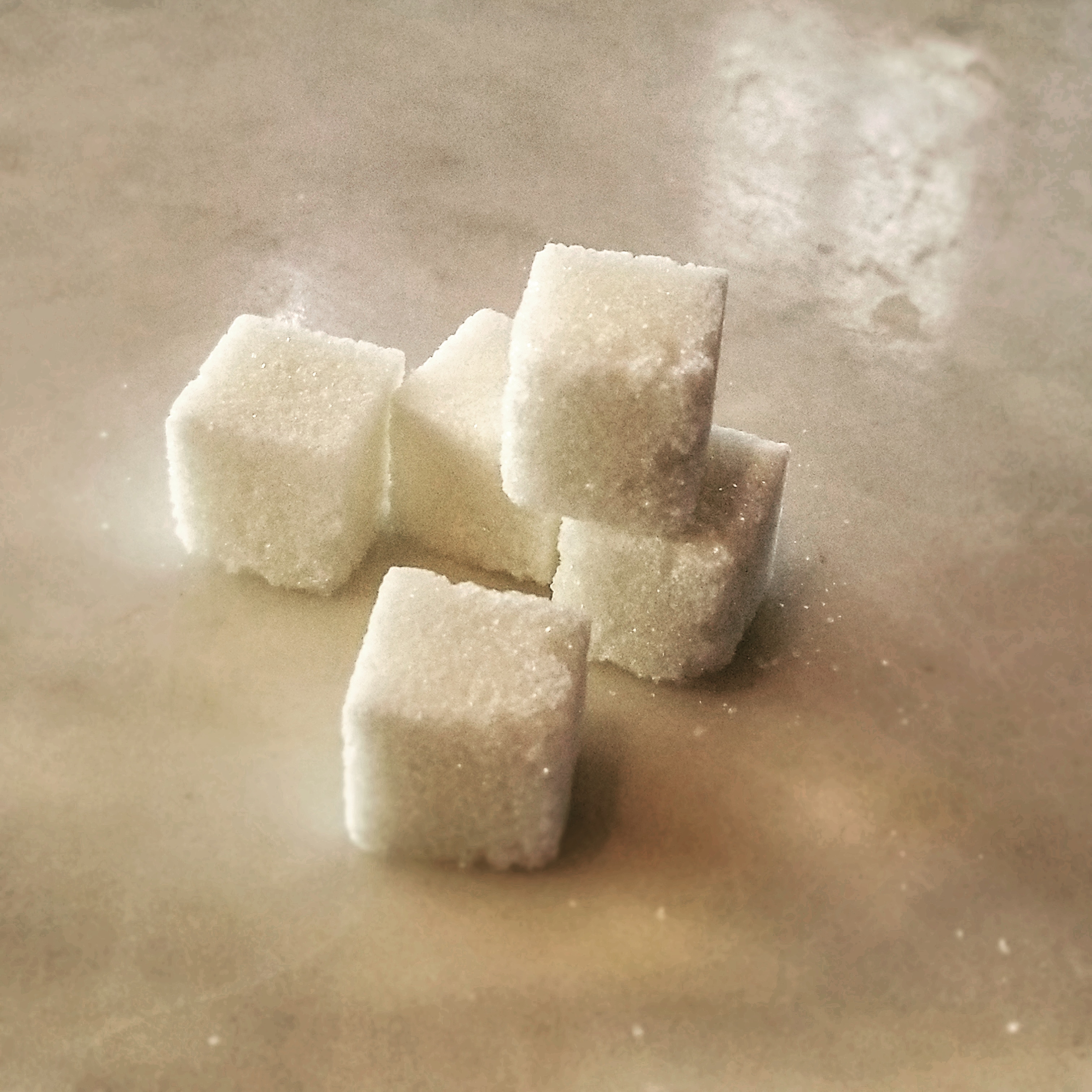
But bitter tastes are unpleasant and while it only takes a splash to fool our monkey brains the end drink shouldn’t taste bitter. This is where a spoonful of sugar helps the medicine go down. A touch of sweetener rebalances the added bitter element. It should not be sweet, it should not be cloying, it should be just enough to balance the flavor scales.

Ice.jpgNext up is dilution. While alcohol itself has no flavor it acts as a great transport for flavor. Ethanol caries those flavors molecules in a magical solution but it keeps them locked up tightly. A little dilution opens those locks and lets the heart, the true flavor burst through.

Then the drink is finished the same way it’s started with a touch of aromatic, these days in the form of expressed citrus oils to enhance the newly awakened flavors but in the drinks proto-form nutmeg was also used. The idea is once again to sneak past that alcohol burn, except this time we’re pulling a fast one on our olfactory sense.

All of this combines for the perfect cocktail. All of the parts are interchangeable. Change the sugar for vermouth and you end up with a Manhattan or a martini. Swap the dash of bitters for a grand bitter like Campari, a bottled form of that bittersweet, and you end up with a negroni or a boulevardier. Or simply take the sugar, turn it into a simple syrup, fully dilute the cocktail and serve it up and you end up with a New Fashioned Cocktail. The very process and innovation that the first drinker shook their fist at and declared that they wanted an Old Fashioned with their muddled sugar cube and ice IN the glass.

So, after all that how do I drink my Old Fashioneds? Intellectually.

But also with a small brown sugar cube soaked with Angostura bitters, just enough to saturate the cube, then dropped into the bottom of a rocks glass. Add a splash of soda water, just enough to allow the bitters soaked sugar to be easily and fully muddled. Add two ounces of Bonded Rye whiskey, a large ice cube, stir, and then express the oil from a small slice of lemon and of orange over the top. Sip, drain, and repeat until the dawn comes.

Whiskey Wednesday: Overholt’s Bond

Bottled in Bond has jumped the shark. Before what’s sure to be Jack Daniel’s latest premium priced bottled in bond hits Duty Free shelves worldwide let’s look back to a much more innocent time when a BiB release truly excited me. A time known as six months ago…

Before we jump in the Short Way Back Machine what exactly does Bottled-In-Bond mean? Well, here’s a link to a video of some fools talking about it, but here’s a quick refresher. The Bottled in Bond Act of 1897 was spearheaded by a group of distillers, lead by Col. E.H. Taylor, to instate a form of quality control on products calling themselves whiskey, as well as to give consumers the confidence that whiskey sold in this new contraption known as a mass produced glass bottle was reliable and un-tampered with.

Working with the U.S. Government they came up with a list of regulations to be labeled as Bottled-In Bond.

  • The spirit must meet all the legal requirements for that spirit.
  • It must be the product of a single distillery in a single distilling season.
  • It must be aged for a minimum of 4 years in a government bonded warehouse.
  • It must be bottled at 100 Proof
  • Every bottle must list the DSP (the distillery identification number) for both the location of distillation and location of bottling.

Follow all these rules and you get a tax break and US government slaps its seal of approval on the bottle in the form of a tax stamp to show that the liquid has not been tampered with after it was bottled.

The bonded warehouse is an interesting thing to note. In the olden days this meant that the warehouse was physically locked and could only be accessed by a tax assessor (see the above tax breaks, to ensure that there was no “unauthorized removal.” This Tax Man had the keys to the warehouse and it could only be opened with their help, which is how we end up with such delightful stories as that of Old Fitzgerald.

Bottled in Bond began to thrive. It was a mark of quality, and a mark of the distiller’s skill. However, after prohibition when stocks and profits were low distillers looked for ways to stretch out the remaining supply and to reduce costs. See: blended whiskey and applejack. The required aging and proof of bottled in bond raised the quality but also the price, and being unable to blend across distilling seasons meant there was less ability to utilize backstock. Brands that were once proudly Bottled-in-Bond began reducing proof and age and slowly disappeared. Most of those that survived have been consolidated under the ownership of Heaven Hill but also lost their premium status and became your “Granddad’s Whiskey” which despite what the current whiskey boom will tell you used to be an incredibly uncool thing to say.

On the flip side, the current whiskey and cocktail boom has reinvigorated interest in Bottled In Bond as a mark of quality and in mixing. This has lead to a rash of reintroduction of Bottled In Bond products but often at a steep mark up, which I believe misses the point and utility of Bottled In Bond. They’re meant to be versatile and approachable. One of the rereleases that got this right was Old Overholt.

Old Overholt is owned by Beam Suntory, which is the parent company of the largest Bourbon producer in the world, Jim Beam. And while Overholt is truly an old brand it doesn’t usually stand out for me.

It’s a barely legal rye, meaning it’s 51% rye in the mashbill, which isn’t necessarily a bad thing. Rittenhouse Rye is also barely legal and is a bottle I can’t live without. But bottled at 80 proof I’ve often found the Overholt to be oily and incredibly earthy. However, this past January Beam Suntory added a Bottled In Bond version of the Overholt, so lets see how it stacks up.

On the nose it smells definitively like a Jim Beam product. I associate this smell with the Jim Beam yeast strains. There is a woodsy, yeasty, nutty quality that carries through almost everything in the Jim Beam lineup. There is also an oakiness and dark wood scent that lingers.

On the palette the oiliness is still very much present, but it’s cut through with a heavy alcohol burn that dries out a vanilla and caramel while complimenting the rye natural spiciness. The finish is surprisingly short, leaving an alcohol tingle and a touch of green apple.

This new Overholt is a vast improvement over the old Overholt. However, this new bottle is undeniably a whiskey drinker’s whiskey. It is mean and uncompromising and honestly tastes a lot like what I would get if I blended the 80 proof Overholt with a bottle of Rittenhouse. Its price point makes it incredibly versatile as well. The new proof boost lets it stand up in cocktails while offering a flavor profile the is unique enough to justify including it on the back bar. Bottled in Bond is clearly becoming a hip term and producing a bonded version of a known branded may help boost sales, but that boost doesn’t mean it has to come with an inflated price tag or loss of character.

Just remember, not every reboot is terrible. And while something may jump the shark it doesn’t negate the quality of everything that came before the leap.

Whiskey Wednesday: Decanting Old Fitzgerald Bottled In Bond

Growing old is an interesting proposition.

It’s right there in our language. We GET older, we GROW up whether we like it or not. But these phrases imply a gift. The imply that it is a privilege to age and that we are constantly changing and growing.

Contrast that with the utter fear of aging that our culture exhibits. It’s also right there in our language. We don’t just develop. We deteriorate, mellow, and mature. And at every point along the journey we can’t help but express disbelief at how many chronological ticker marks we’ve accrued. Our own experience is that we are always the oldest that we have ever been, so exclamations like, “I can’t believe 90’s kids can legally drink!” or “Holy Shit, it’s been nearly five years since Old Fitzgerald Bottled-In-Bond was discontinued!” make us feel old and make those older than us roll their eyes at the young ‘uns.

Even in whiskey we want our spirits older, but not too old. Age at a certain point becomes a novelty act, reacting to a new release almost as if to your great-great aunts 97th Birthday, “A 27 Year old Bourbon you say? That’s adorable.” Yet we bemoan the loss of every single age statement, and doubly so when it’s a rocksteady brand that’s stood the test of time yet is still dropped in favor of something new, young, and millennial.

The loss of the Old Fitzgerald Bottled-In-Bond was a loss I felt personally and deeply. While never technically discontinued the Old Fitz was removed from most markets over the past five years in favor of it’s cousin Larceny. Same liquid inside, even still has the Fitzgerald name on the bottle still. It’s technically John E. Fitzgerald’s Larceny, referring to the legend that the original brand was named for.

In short, this tastes like Old Fitzgerald, which is a blessing and a curse

John E. Fitzgerald was a tax bondsman for the U.S. government, which meant that he was one of two people on site at the Old Judge Distillery to have keys to the bonded warehouse. This ensured that there was no theft, since no one could enter the warehouse with out him, and that the government was properly collecting it’s taxes on the whiskey production. However, the workers kept noticing certain honey barrels, the especially tasty ones, were coming up short and that Old Fitz always seemed to have some extra tasty liquid on hand. These barrels became known as “Fitzgeralds” and a brand of whiskey was eventually named after the man and his harmless acts of larceny.

The brand went on to become a working class hero. Bourbon Legend says that the brand was originally sold only to steamships, rail workers, and private clubs. After Prohibition the brand was purchased by Stitzel-Weller, the famed distillery owned by the notorious Pappy Van Winkle. In fact, during his tenure at the Stizel-Weller Distillery Pappy didn’t sell any Pappy. He sold Old Fitzgerald and it was by far their most successful brand. Like all the whiskies made at Stitzel-Weller Old Fitz had that “whisper of wheat” in the mashbill that made their whiskey so unique at the time.

old_fitzgerald_bottled_in_bond_bourbon_large.jpg

During the whiskey dark ages of the 70’s and 80’s the brand was purchased by United Distillers, which through several mergers and acquisitions eventually became the behemoth that is Diageo. United Distillers/Diageo closed the Sitzel-Weller distillery in 1994, moved production of Old Fitzgerald to the Bernheim Distillery. Then in 1999 they sold the Bernheim Distillery, and the Old Fitzgerald brand, to Heaven Hill. Heaven Hill continues to make wheated bourbon and releases it under the Old Fitzgerald name to this day.

ftcyrn5wmsfx.jpg

The story hasn’t changed. The whiskey hasn’t changed. But the age, the label, and the price certainly have. While Larceny is still a very reasonably priced bottle of whiskey it doesn’t carry the massive bang for your buck that the old Bottled-In-Bond did. And by freeing up the Fitzgerald name from a bargain priced Bottled-In-Bond the team at Heaven Hill have been able to make attempts to push the premiumization of the brand. Some of them more successful than others.

They tested the waters with the one off release of John E. Fitzgerald’s 20 Year Old Bourbon which was some of the last whiskey actually distilled at Stizel-Weller which was released to mixed reviews. And now comes the release of the long awaited Fitzgerald Bottled-In-Bond Decanter Series.

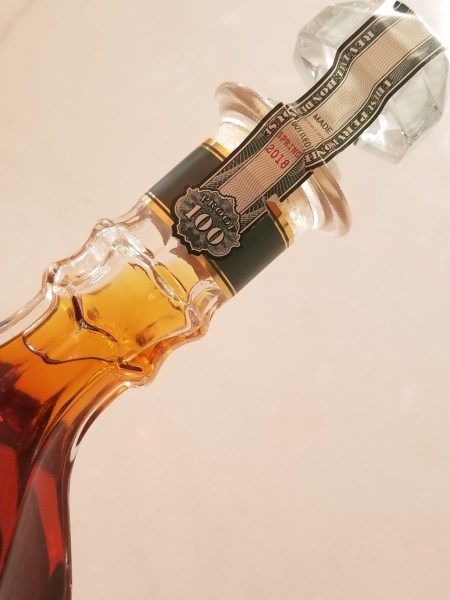
The series will be a limited release each Spring and Fall for the next few years. The throw back to the old label name also comes with a throw back to another old Bourbon tradition: fancy decanters. More important than the glassware though is that this is a Bottled-In-Bond whiskey, it’s 11 years old, and it’s got the price tag to prove it with a suggested retail price of $110.

So how does it stack up?

20180602_164023The packaging and labeling are fantastic. It’s like seeing an old friend after the divorce now that they’ve started working out and gotten a haircut. It still looks like them but a cleaner, fitter, more attractive version of them.
The nose has all the oak you’d expect from an 11-year old, but also a touch of apricot and butter. On the mid palette is black pepper, stone fruit, a hint of nuttiness and a slightly thin caramel which leads into an aggressively woody finish that lingers hot and with a slight exhalation of cherry.

In short, this tastes like Old Fitzgerald, which is a blessing and a curse.

On the one hand I’m incredibly happy to have something that tastes like my old timey Bottled-In-Bond back but at the rarity prices it’s not something I would necessarily pick up off the shelf, and it’s certainly not an every day drinker like it used to be. The extra aging has made the product deeper and mellower but it’s also made it richer and pricier. Much like your recently divorced friend it doesn’t seem interested with hanging out with the same crowd it used to.

In the end I’m happy to see the return of Old Fitzgerald in a semi regular release but it does feel like the difference between hanging out with your college buddies and your great-great aunt. The one you want to see every weekend, the other you’ll drop in on at the holidays. Maybe. If the plane tickets aren’t too expensive.

Whiskey Wednesday: McKenna’s Patience

Bourbon is full of history, tradition, and ancient family recipes.

Except when it’s not. (which is pretty much all the time.)

This call back to the golden days of our frontier forbearers is meant to impart some sort of permanence, stability, and a patriotic appeal to what is actually a relatively new spirit. Bourbon wasn’t defined as a unique product of the United States until the 1950’s. As far as the United States government was concerned the term “whiskey” wasn’t even defined until almost 1907. So, while the “Founding Father’s” of Bourbon were certainly making whiskey, they were following their own rules by making what felt like a good product to them. Most of the regulation like the Bottled In Bond Act were spearheaded by the distillers themselves looking for tighter control and quality of their products.

In the worst case this clarion call to the past is meant to mislead consumers, but even the best intentioned creates a consumer base deathly averse to change. This is antithetical to the alcohol industry needing to be an ever-evolving marketplace.

633175116783425504.jpg
Why would you ever change this glorious label?!

I still remember my first gut reaction of, “Why the hell would you do that” in the modern whiskey world. It was the label change on Henry McKenna Bottled-In-Bond.

Henry McKenna is a name that harkens back to the early days of the Kentucky distilling world. In some circles he’s as highly regarded as George T. Stagg and William Larue Weller, (very well regarded indeed).

McKenna was an Irish immigrant that moved to the Kentucky territory in 1838. Like many Irish immigrants at the time Henry worked on the railroads helping build the country’s early infrastructure. Also like many other immigrants he went into less backbreaking work as soon as he could.

He settled with his wife in Nelson County and by 1855 was a partner in a flour mill. Looking to make use of the spent grains they soon purchased a farm and soon after that were distilling about a barrel a day from the leftovers from the gristing process.

These early whiskies were almost assuredly all wheat but by 1858 the whiskey was had proved popular enough to hire a fulltime distillery manager and had begun distilling corn as well.

images.jpgThe whiskey produced at McKenna’s Nelson County distillery never carried the name ‘Bourbon’ but it was regarded to be of the highest quality. Newspaper at the time noted that McKenna never sold a drop that wasn’t at least three years old. There was even a bill introduced to Congress in 1892 asking for unlimited bond period on aging whiskey to prevent tax penalties on whiskey aging beyond the bond. This bill was known as “The McKenna Bill.” The next year McKenna passed away at the age of 75.

He left the business to his sons who had grown up in the distilling world. They managed the company until the advent of Prohibition forced them to mothball the distillery. But following Repeal James McKenna, a ripe 79, reopened the distillery with a distiller trained by his father’s original distillery manager supposedly keeping the family recipe intact.

James died in 1940 and the family sold the distillery to Seagrams, but not the original recipe. Seagrams marketed and produced Henry McKenna for decades until they dismantled the original distillery in 1976 and sold the brand to Heaven Hill in the early 90’s.

Under Heaven Hill two versions of McKenna are still on the shelves. The 80 proof Henry McKenna and the Henry McKenna 10 Year Bottled In Bond Single Barrel. You get one guess which one I love.

Not only does the Bottled-In-Bond meet all of the bonded regulations, it’s also 10 years old which is ancient in this shifting whisky scene AND it’s a single barrel so there is the possibility that each bottle you dive into will be different, a new variation upon the McKenna theme.

I’m spoiled and was able to purchase to Private Single Barrel a few years ago and haven’t tasted a regularly available bottling in a while. So, how does it stack up to all of that history?

l-s1yona3oobf95c.jpg

The nose is redolent of salted caramel, and the mid palette is all pistachio and pecan drizzled with vanilla and a dry, oaky, tannic finish. There is still a heat, and a rough around the edges quality from the its 100 Proof nature that hasn’t been fully tamed by its ten years in the barrel. It’s a whiskey that you can sip on but feels like it loves to be tossed around in a mixing glass as well, with plenty to offer a cocktail while not losing its identity.

This is most assuredly NOT the whiskey that Henry McKenna was making when he first set out to Kentucky nearly 200 years ago, but it is good modern whiskey. The label change I originally hated has grown on me and I’m sure that its updated look helped introduce it to a modern audience. Trying to stand on tradition alone can often leave us unable to see over the crowd, but perching on it’s shoulders can help show us the stage set for the future.

Leopold of the Future

Today’s post is a sneak preview of a Whiskey Wednesday of the future brought to you by a trip a few days in the past. And it’s going to be about Leopold Brothers which I know is going to turn some of you off but stick with me.

I know I’ve said it before but Leopold Brother’s is my platonic ideal when it comes to craft distilleries. They have no desire, or delusions about becoming the next Jim Beam, they just want to make good product, sustainably. They have a long term approach both to their product planning and even the build out of the distillery. I’ve written before about my love of their Maryland Style Rye, and in the pre-blog days even waxed poetic about how their fruit flavored whiskies don’t suck and am consistently intrigued by the fact that they’re still experimenting with new products despite having nearly 20 SKUs on the market. And this week we got to take a VIP tour of the Denver distillery.

IMG_2941.JPG
In house malting floor


I had been looking forward to this trip f
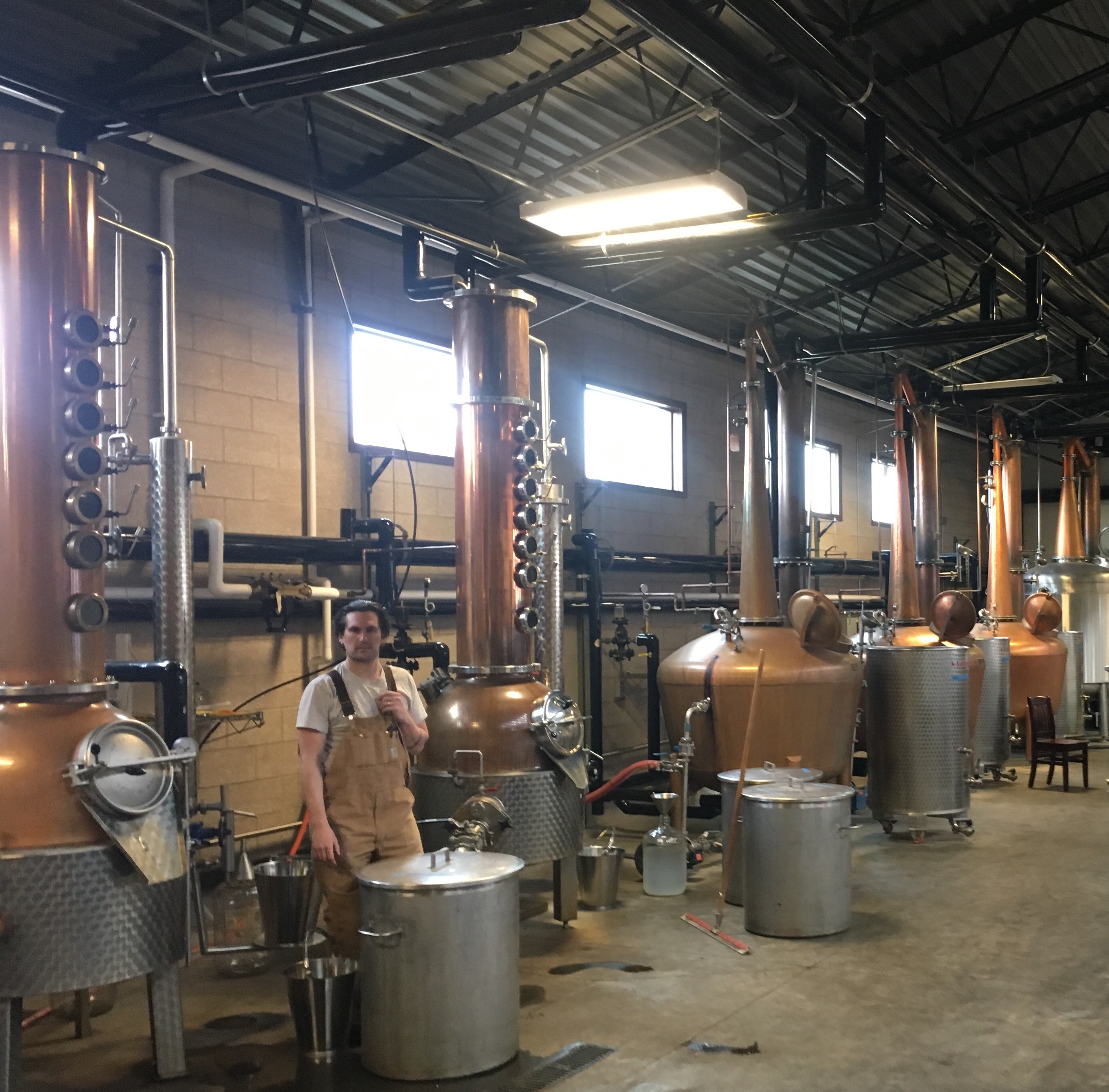
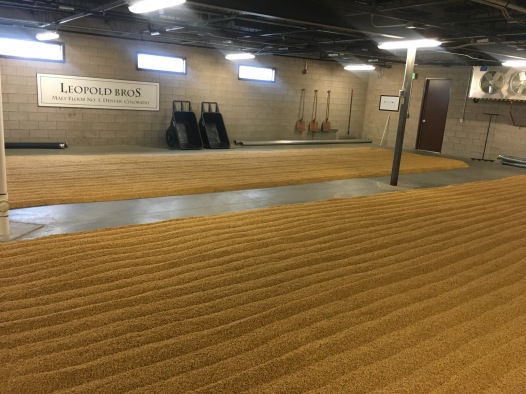
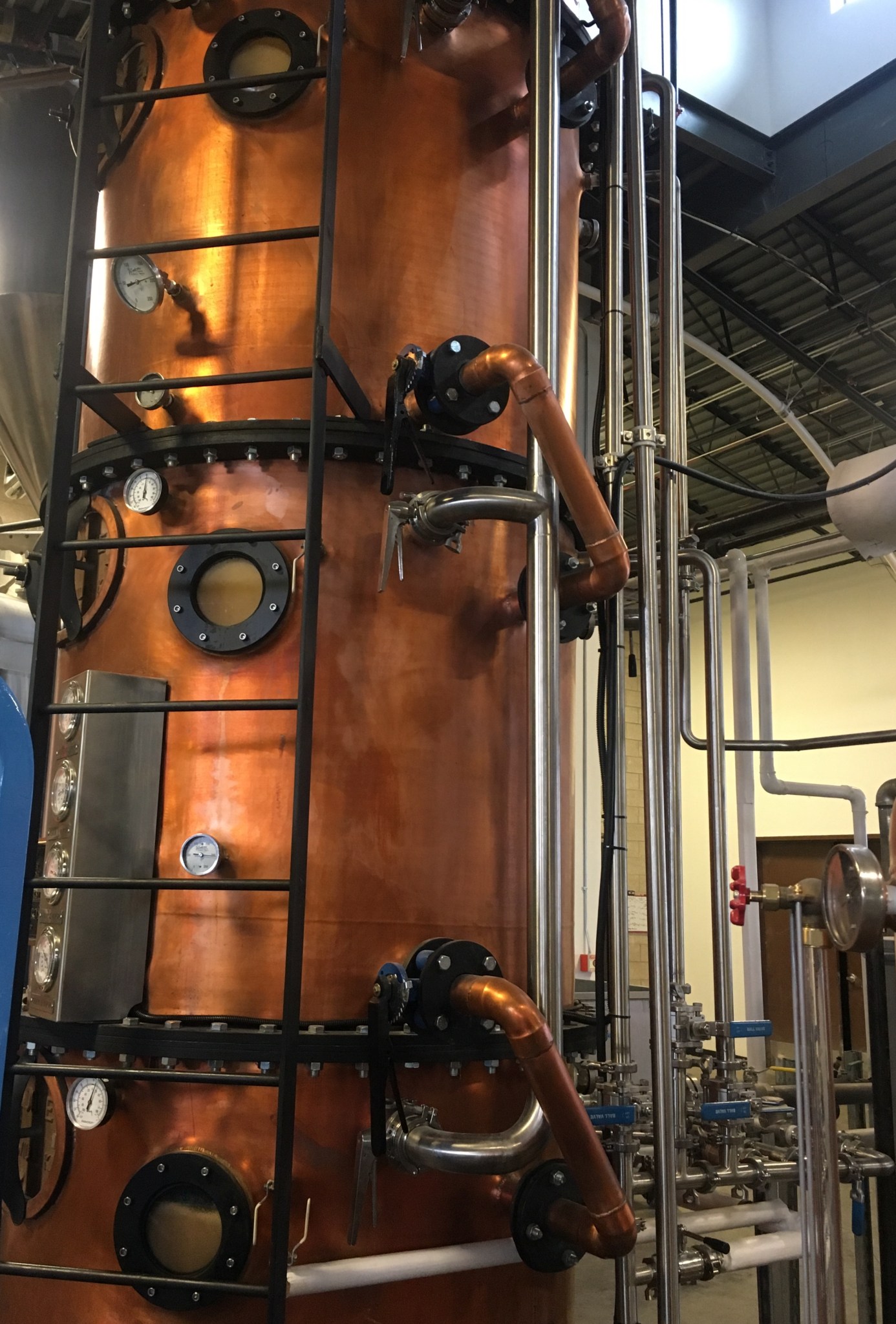
or a few weeks now and I was completely prepared to nerd out about the open air fermentation tanks, the in house malting floor modeled after the ones at the Springbank distillery, and the last hand hammered CARL still to come out of Germany. But the thing that I truly wanted to see was the Vendome Three-Chamber Still made specifically for Leopold Brothers. And it turns out it was in full operation under the eyes of Todd Leopold that day.

FullSizeRender-1.jpgIn distilling history isn’t a simple straight line from the old school pot stills to the modern industrial column/continuous stills used in most major distilleries today. One of the most notable steps along that path was the chamber still. The chamber still allows for distilling on the grain and as a large batch as each chamber is refilled from the chamber above. It’s a continuous batching process. And as each chamber is held at a different temperature, different alcohols boil off in each chamber allowing for more concentration of the good alcohols with less of the bad.
fullsizerender
Three Chamber Still In Action

Its also a difference in terms of contact time. In a column still steam is stripping the alcohol off in a matter of seconds where as in the three-chamber still it’s closer to an hour for each batch. You’re getting alcohol either way but the three-chamber is extracting more flavor. And tasting off the still with Todd that massive flavor is immediately apparent with a massive amount of fruit and a viscosity I’ve never encountered in a white dog.  If this was handed to me blind I’d be more inclined to identify it as a fruit brandy than a grain spirit.

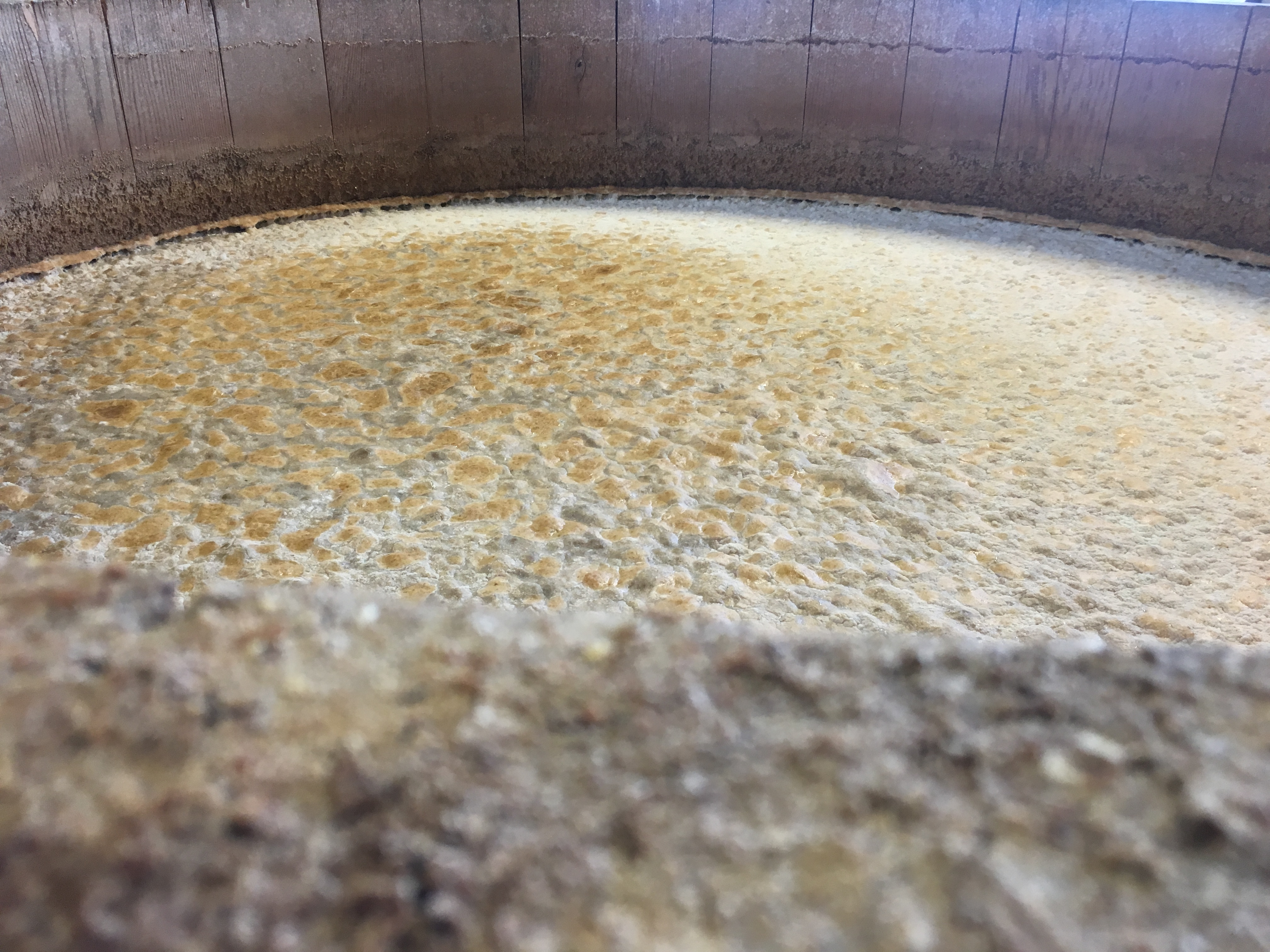
And not all of that flavor is coming from the still. It’s also the type of rye being used. After careful research into what the standard mashbill used in chamber stills was (80% rye 20% malt) the Leopold’s also partnered with local farmers to grow Abruzzi rye more consistent with the style grown in the late 1800’s. The key difference is a lower starch content, which means less output but bigger rye flavor because there is less generic starch sugar overwhelming the rye. Combine this with their low fermentation temperatures and you have a mash that is less stressed, with fewer of the unwanted ethyl acetates, with a lower yield but more massive flavor.

So why did this type of still disappear? The simple answer is efficiency. The Three-Chamber still requires constant watch and tweaking during the distillation process. The batch that was running through the stills while we were there had been started at about 5:30 in the morning and Todd would be be finishing it up around 7:00 that evening. And he could not leave the still. Literally.  The output is also relatively low. The still is only putting out about 4-5 barrels of white dog a day, and while the Leopold still isn’t the largest the yield from even the smallest column still will be magnitudes larger.

IMG_2950.JPG
Open fermentation

Todd’s worry when they were installing this still though was not the efficiency but the flavor. As Todd said, “If MGP rye flavor is 12:00 and this rye came out tasting 12:05 my brother would have killed me.” What convinced Todd that the experiment would pay off was the historical data. Not only were these stills considered standard for rye making at the turn of the century before Prohibition but also Hiram Walker, the largest distillery in the world at the time, had both a three-chamber and a column still. If they were going through the expense to manufacture whiskey on both types of stills there must be a drastic difference in flavor. And he was right, this whiskey is coming out a 6:00It is just a bigger whiskey.

Which unfortunately means it going to need more aging. These flavors need more time to mellow, to integrate and mature so we’re at least another 2-3 years out from being able to fully experience this revived whiskey. But I suppose we could still visit the aging barrels to say our respects to the future deliciousness. And in the barrel house one more surprise was waiting.

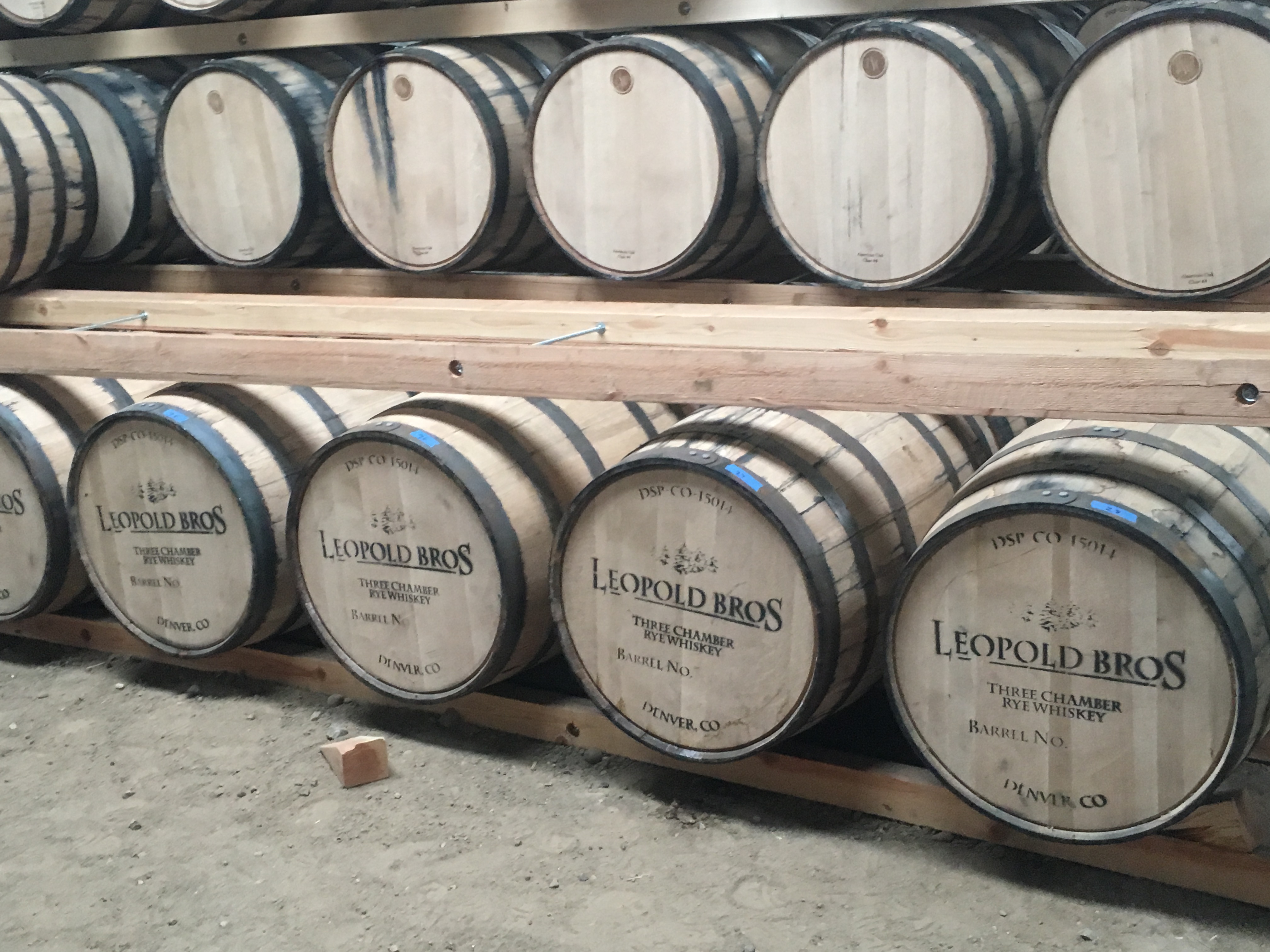
Bottled-In-Bond bourbon barrels.

This is exciting because the proliferation of anything Bottled-In-Bond is cause for celebration but also because once again Leopold Brothers are doing something different. IMG_2956.JPG Their standard barrel entry proof is barely above the required 100 proof for bottled in bond products and four years is older than any other product they currently have on the market, so this barrels are going to need careful monitoring to ensure they will live up to their name. But these barrels hold a very real possibility of creating an incredibly unique bottled-in-bond whiskey  A whiskey that carries the all of the flavors present in the liquid right off the still, evenly matched up with all of the larger barrel notes. 

One of the things I love most about Leopold Brothers is that their experimentation is focused. They are not doing things the old way simply to do them the old way. They are looking how things were done before the need for maximum efficiency, maximum production and maximum profit. It’s about recognizing what changed because a better way was found to recreate the same product versus what was changed to replace a product. As for me, I’m going to keep drinking the Leopold Brother’s current product not only because of what it is but because of the future product will be. 

IMG_2959.JPG

What’s behind Warehouse ‘C’? E.H. Taylor

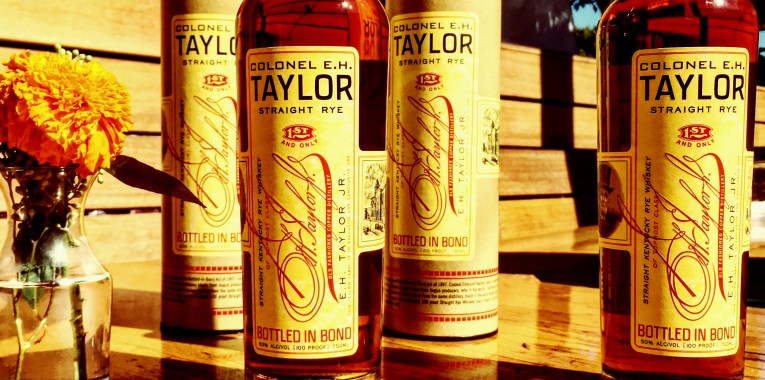
One of my favorite surprises from last year was the E.H. Taylor Bottled-in-Bond Rye.  Not a new brand by any means but revisiting it last year the whiskey stars had aligned and a spice bomb full of deep apple, cherry and a crackling white pepper leapt out of the liquid.  I wasn’t the only one to notice, people drank it up. Literally. And the whiskey devils of supply and demand meant that this years release was in even smaller supply. So, lets go back and revisit again. But first, the history lesson!

Col. E.H. Taylor is an actual whiskey making legend. The descendent of two different l107.jpgpresidents, Taylor purchased a small distillery that he named O.F.C. He modernized the facility with copper stills and climate controlled aging warehouses that are still in use today. Not content there, Taylor was also pushing through one of my favorite pieces of government legislation: the Bottled-In-Bond Act of 1897. It was like the Pure Food and Drug act, but a decade earlier and for booze. The government would guarantee the whiskey met certain minimum quality controls and in return the distillers agreed to a new tax structure. It’s still in effect today but what it mostly means for us now is that the spirit meets all the legal requirements for that type of whiskey, is a minimum of four years old, and bottled at 100 proof. Quality control.

Taylor sold the distillery to George T. Stagg in 1904 and the whiskey brand named after him bounced around in the decades after prohibition until in 2009 it was brought home to O.F.C., now known as Buffalo Trace. They repacked the whole line up as Bottled-In-Bond whiskies in homage to its namesake and it’s all aged in Warehouse C, one of the Warehouses built by Taylor in the 1890s. The rye goes even further and is made from a different mashbill than the regular Buffalo Trace rye. It drops the corn completely and is made from 65% rye and 35% barley  which is why it was such a major spice bomb.

imagesBack to the present. How does the new release match up? The spice is still there, laced with cinnamon, clove and baking spices. The apple is less predominate and it seems to lack the deeper, warmer through line that made it such a surprise last year.  It’s a subtle thing and it’s hard to tell if it’s an actual difference or just a trick of the mind influenced by expectations. Either way it’s still a delightful dram. And when your competition is yourself how can you lose?