The Beast Arises

Open Bottle: Old Rip Van Winkle 25 Year Old Straight Bourbon Whiskey


Pappy Mania has struck early this year and for the first time in years even I’m feeling a bit of hype.

The early onset of this yearly bourbon malady is the amazing limited release of an Old Rip Van Winkle 25 Year Old Kentucky Straight Bourbon. What makes it hype worthy is that fact that like the A.H. Hirsch 16 Year Special Reserve this bottle is a piece of history. A gussied up, fancy decanter of liquid history.

My feelings on Pappy and the bottle hunting that surrounds it are pretty well documented,  but unlike the yearly release of what you could now call the standard Van Winkle’s this bottle is something different. This is actual Stitzel-Weller Bourbon.

Distilled in the Spring and Fall of 1989, the 11 barrels that comprise this release were aged on the lower floors of the metal clad warehouses at Stitzel-Weller that shut
download.jpg
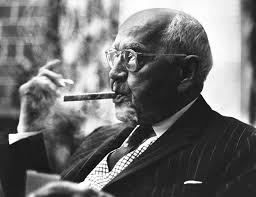
No one has ever seen him look to the right.

down in 1992. But just because the distillery stopped making spirit doesn’t mean the whiskey stopped aging. Leftover stocks continued to rest at the warehouse with some being sold off and some being bottled for various brands but these barrels stayed in the family. In 2002 they were transferred to Buffalo Trace where they aged for another 12 years on the lower floors of one of Buffalo Traces brick warehouses. In 2014 the whiskey was dumped into steel tanks. This isn’t an uncommon practice with older whiskies, the past few releases of Sazerac 18 Year Old Rye have been steel tanked, and it simply halts the oak aging process.  Oxidation can still happen but this is certainly not an aging experiment, nor can it legally be considered aged in steel tanks. It is simply an attempt to keep the whiskey from becoming over oaked and undrinkable.

So what were they doing with the whiskey for the next 2.5 years? They were figuring out how to sell it. Whiskey this old is a massive expense in time, labor, and lost product so it needs to have an appropriate price tag, but you also need to convince people that it’s worth the price tag. It doesn’t seem like that would be a problem with a bottle of Pappy Van Winkle but they pulled out all the stops for this release.

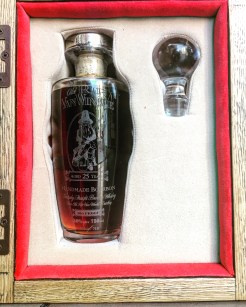
The massive box each of the 710 bottles comes in is made out of the oak staves from the 11 barrels the whiskey aged in. The Glencairn Crystal Studio designed a bespoke decanter, every bottle is signed by Julian Van Winkle, III and it comes with a parchment sheet with the short version of the whisky’s story. It’s a production.

At a mere 710 bottles, the secondary market for this bottle is literally drooling. But what’s interesting to me is that Buffalo Trace, and the Van Winkles, seem to be making steps to try and curb the flipping of this bottle. From what I’m told 9 bottles hit Los Angeles with maybe 30 for the whole state of California. But not a single bottle of those went to an Off Premise Liquor store. Every bottle was sent to a bar, with each bottle number being carefully recorded so that if a bottle does emerge on the Secondary Market they’ll be able to track it back to its source and supposedly punish the seller. While I appreciate the attempt to keep the bottles from becoming mere commodity trading with the secondary market already willing to pay $15,000 I can’t see these bottles actually staying on the shelves of all the bars they were allocated to.

But that’s the story ABOUT the whiskey, what about the whiskey itself? Bottled at IMG_3766.JPG25 years old and 100 proof this Bourbon carries serious weight. The nose is of dried oak, dark coffee, and just a touch of stone fruit. The finish is almost nonexistent but it doesn’t matter because the mid-palette travels for hours. White pepper, caramelized oranges, deep ripe cherry, of course a vanilla and caramel note but what’s interesting is how well this walks the line massive oak flavor without being over oaked. Right when I was expecting it to dive into wet wood and raisins it instead let the pepper burn for another moment before evaporating completely on the tongue. This whiskey is better aged than the standard 23, and I’d say it’s at least as lively as the 20 year old.
I think bottling at 100 proof made a huge difference on the final product. The burn and the massive presence of the mid-palette flavors solved almost all of the complaints I had with the Old Fitzgerald 20 Year Old, which was also Stitzel-Weller whiskey that finished it’s aging at Heaven Hill. There were 12 barrels for that release and the finish was also nonexistent but in comparison the Old Fitz just seemed flabbier. Those extra proof points and the Van Winkle name come with a much heftier price tag though.

In the end, it’s hard for me to separate the whiskey from the history. When I pick up this bottle, when I sell this bottle at the bar, when I manage to sneak a sip of this bottle it’s not the whiskey I’m talking about. It’s the history. The liquid time that is carried over the tongue adds volumes to the value but is it enough added value? I’m not sure, but for the first time in a long time I find myself agreeing with a massive price tag on a massive whiskey. At least at the retail level. But if you have a spare $15,000 hanging around I know someone who might be accepting bribes…
Whiskey Wednesday: The Old Forester’s New Clothes

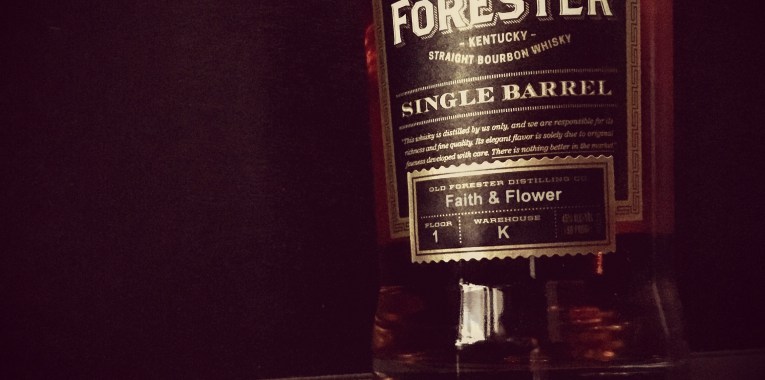
It’s time for the same old song and dance but with a brand new look. The first entry in a new chapter of house single barrels with the first Faith and Flower edition single barrel of Old Forester.

download.jpg

Old forester is an old brand, introduced by Gavin Brown in 1870 as the first bourbon brand sold exclusively in sealed bottles. Being sealed gave consumers assurance that the product hadn’t been tampered with or adulterated which made it the fan favorite of pharmacists who stocked it for its “medicinal qualities”. This reputation probably helped with Old Forester being granted one of six legal licenses to produce medicinal whiskey throughout Prohibition.

Unfortunately, over the century and a half of its existence Old Forester has been over shadowed by the Brown-Forman corporations other whiskies, like Jack Daniels or Forester’s mashbill twin Woodford Reserve. But recently the company has been trying to inject some new life into the old horse.

To kick things off the new Old Forester distillery is slated to open in downtown Louisville this year, And a few years back Old Forester was made the official bourbon for mint juleps at the Kentucky Derby (replacing Brown-Forman’s Early Times whiskey which is not technically a Bourbon) and around the same time they started rolling out their Whiskey Row Collection. The Whiskey Row is a series of Old Forester Bourbons meant to highlight milestones in Old Foresters history and the style of whiskey being made at that point in time. The Whiskey Row series are hence named with a date and a style like the 1870 “Original Batch” or the 1920 “Prohibition Style” and they also came with fancy new bottles and labels that set them apart from the classic Old Forester bottlings. And now all that fancy bottle and label goodness has found its way to the single barrel.

The Old Forester Single Barrel has always been a bit of a rare breed and been at least marginally separated off from the main bottles so it makes sense to align it more closely with its Whiskey Row brethren. The bottle is sleek, black, and just a little sexy.

510BA05C-43B6-4957-BAD0-F3DB91AEA44B.JPG  The single barrel offerings are at a solid 90 proof, one of the things that set them apart from the standard bottles, but the color scheme on the new label is an almost complete palate swap. Where the normal Whiskey Row bottles harken back to the old white/cream style labels of the brands history the new single barrel is jet black with silver lettering. And clearly looking to scratch the whiskey intelligentsia’s need to know everything the rickhouse and floor where the barrel aged are large and center.
 

But packaging doesn’t improve the whiskey in the bottle. So what about the actual whiskey? This inaugural Faith and Flower barrel comes from the first floor of Warehouse K. It’s the classic Old Forester/Woodford

mashibill 78% corn, 12% Rye, 10% barley that can too easily come off as a sweet corn bomb, but here it’s taken on a darker tone. Deep, red, ripe cherry winds its way through the middle of the palette while cinnamon, nutmeg, and woody sweetness lingers on the nose. The finish is medium yet weighty leaving the rough edge of the barrel mingled with the caramel sweetness.

Seeing this single barrel dressed up and tasting like this is like seeing a old friend the you’ve long felt to be predictable suddenly dressed to the nines and just dripping with an heretofore unseen sex appeal. The bones are the same but it’s a reminder that everything, and everyone, has a unexpected side that can make you sit up and take notice.

Whiskey Wednesday: McKenna’s Patience

Bourbon is full of history, tradition, and ancient family recipes.

Except when it’s not. (which is pretty much all the time.)

This call back to the golden days of our frontier forbearers is meant to impart some sort of permanence, stability, and a patriotic appeal to what is actually a relatively new spirit. Bourbon wasn’t defined as a unique product of the United States until the 1950’s. As far as the United States government was concerned the term “whiskey” wasn’t even defined until almost 1907. So, while the “Founding Father’s” of Bourbon were certainly making whiskey, they were following their own rules by making what felt like a good product to them. Most of the regulation like the Bottled In Bond Act were spearheaded by the distillers themselves looking for tighter control and quality of their products.

In the worst case this clarion call to the past is meant to mislead consumers, but even the best intentioned creates a consumer base deathly averse to change. This is antithetical to the alcohol industry needing to be an ever-evolving marketplace.

633175116783425504.jpg
Why would you ever change this glorious label?!

I still remember my first gut reaction of, “Why the hell would you do that” in the modern whiskey world. It was the label change on Henry McKenna Bottled-In-Bond.

Henry McKenna is a name that harkens back to the early days of the Kentucky distilling world. In some circles he’s as highly regarded as George T. Stagg and William Larue Weller, (very well regarded indeed).

McKenna was an Irish immigrant that moved to the Kentucky territory in 1838. Like many Irish immigrants at the time Henry worked on the railroads helping build the country’s early infrastructure. Also like many other immigrants he went into less backbreaking work as soon as he could.

He settled with his wife in Nelson County and by 1855 was a partner in a flour mill. Looking to make use of the spent grains they soon purchased a farm and soon after that were distilling about a barrel a day from the leftovers from the gristing process.

These early whiskies were almost assuredly all wheat but by 1858 the whiskey was had proved popular enough to hire a fulltime distillery manager and had begun distilling corn as well.

images.jpgThe whiskey produced at McKenna’s Nelson County distillery never carried the name ‘Bourbon’ but it was regarded to be of the highest quality. Newspaper at the time noted that McKenna never sold a drop that wasn’t at least three years old. There was even a bill introduced to Congress in 1892 asking for unlimited bond period on aging whiskey to prevent tax penalties on whiskey aging beyond the bond. This bill was known as “The McKenna Bill.” The next year McKenna passed away at the age of 75.

He left the business to his sons who had grown up in the distilling world. They managed the company until the advent of Prohibition forced them to mothball the distillery. But following Repeal James McKenna, a ripe 79, reopened the distillery with a distiller trained by his father’s original distillery manager supposedly keeping the family recipe intact.

James died in 1940 and the family sold the distillery to Seagrams, but not the original recipe. Seagrams marketed and produced Henry McKenna for decades until they dismantled the original distillery in 1976 and sold the brand to Heaven Hill in the early 90’s.

Under Heaven Hill two versions of McKenna are still on the shelves. The 80 proof Henry McKenna and the Henry McKenna 10 Year Bottled In Bond Single Barrel. You get one guess which one I love.

Not only does the Bottled-In-Bond meet all of the bonded regulations, it’s also 10 years old which is ancient in this shifting whisky scene AND it’s a single barrel so there is the possibility that each bottle you dive into will be different, a new variation upon the McKenna theme.

I’m spoiled and was able to purchase to Private Single Barrel a few years ago and haven’t tasted a regularly available bottling in a while. So, how does it stack up to all of that history?

l-s1yona3oobf95c.jpg

The nose is redolent of salted caramel, and the mid palette is all pistachio and pecan drizzled with vanilla and a dry, oaky, tannic finish. There is still a heat, and a rough around the edges quality from the its 100 Proof nature that hasn’t been fully tamed by its ten years in the barrel. It’s a whiskey that you can sip on but feels like it loves to be tossed around in a mixing glass as well, with plenty to offer a cocktail while not losing its identity.

This is most assuredly NOT the whiskey that Henry McKenna was making when he first set out to Kentucky nearly 200 years ago, but it is good modern whiskey. The label change I originally hated has grown on me and I’m sure that its updated look helped introduce it to a modern audience. Trying to stand on tradition alone can often leave us unable to see over the crowd, but perching on it’s shoulders can help show us the stage set for the future.

Whiskey Wednesday: Kentucky Spirit Soars Like A Wild Turkey

Let’s do something different, different for me at least, and talk Wild Turkey and about a single barrel not chosen by me.

Gathering together all of my Whiskey Wednesday posts, my personal whiskey collection, and the bottles I routinely stock at the bar a pretty glaring hole starts to emerge, and that hole is shaped like a damn Turkey. I couldn’t tell you why it’s there either. Wild Turkey seems like it should check all of the high proof, rough around the edges, old school bourbon boxes for me. And it’s made by Jimmy Russell! And yet it’s never close at hand for me. Let’s shake that up.

Wild Turkey was born as a Non-Distilling Producer in 1942. Austin Nichol’s & Co. were a New York based grocery wholesaler. They finally purchased the Ripy Brothers Distillery (then kimgres.jpgnown as the Boulevard Distillery) in 1971 and renamed it the Wild Turkey Distillery. This purchase made sense since the Ripy distillery was where most of the Wild Turkey Whiskey was coming from but it was terrible timing as “white goods” started gaining steam and the bourbon market tanked. The brand and distillery, were purchased by Pernod Ricard in 1980 and then sold to Gruppo Campari in 2009. But through out all of those changes Jimmy Russell has been there, making whiskey.

Jimmy’s career has lasted over 60 years; he started at
the Wild Turkey distillery well before it was the Wild Turkey distillery. In fact,

jimmy-basketball.jpg
Pictured: Jimmy Russell’s mad skills.

his tenure at wild Turkey began 10 years before the 1964 act of Congress that declared Bourbon to be a “distinctive spirit of the United States.” He was named Master Distiller in the late 60’s and is the last living Elder Statesman of Bourbon. He, along with Booker Noe and Elmer T. Lee, were the first generation of rock star distillers. These were distillers that were forcibly evicted from the seat in front of the stills to go travel and spread the good word of Bourbon. And even into his 80s he’s still traveling and distilling. And it’s a family business these days, his son Eddie is the new kid on the block with only 30+ years of distilling experience.

Jimmy Russell is essentially old school Bourbon personified. Yet he doesn’t take himself seriously and no matter who his employers are he makes no qualms about who he is or his opinions. For the past several years when doing tastings and traveling Jimmy would tell everyone at the tastings that he didn’t like low proof young whiskey, while pouring them Wild Turkey’s low proof young whiskies. Guess what Wild Turkey doesn’t mimgres-1.jpgake anymore? Seeing the Wild Turkey 101 Rye return with a vengeance was transcendent moment amidst all of these brands lowering proof and dropping age statements. Yet for all of my love of Jimmy, and his rye, when I drink the Bourbon it’s usually me trying to figure out why I don’t drink the Bourbon.

So naturally the first time Ryan Wainwright plopped this single Barrel of Wild Turkey Kentucky Spirit in front of me at Terrine (now The Ponte) my eyebrow rose skeptically. At 101 proof the Kentucky Spirit is essentially single barrel W

IMG_1854.JPG
Original Drop

ild Turkey 101 Bourbon- so I was expecting an incredibly earthy, slightly musty, hard oak. Instead, it turned out to be a spice bomb of a bourbon, with a dark baking spice, a dark, overripe cherry, with a farm house quality the I feel is coming from the Wild Turkey yeast. The oak and caramel in the barrel are supporting players rather than the main attraction and the proof sits right where it should granting all of the flavor with very little burn. I was genuinely surprised.

But I don’t think I should have been. This barrel taste’s like Jimmy’s bourbon philosophy, chosen by a bartender with a very specific palette. What this barrel says to me is that although Wild Turkey is quite frankly in a slump there is still liquid gold in its warehouses. There is experience, and skill, and craftsmanship that seem to be producing a sometimes muddled bourbon, but when the sun breaks through, damn, does it shine.

Mastering Some Woodford Reserve

It’s easy to write things off, whether it’s because of bad experience, ancillary influences or even just outright familiarity. I haven’t always been as even tempered as I am these days, and there was definitely a time in my career where if I was 10 people deep at the bar and you asked for a big name product I sure as hell didn’t want to sell you that product because haven’t you seen everything else on the bar?! There are so many options and that’s what you’re going with? And because the bar was 10 people deep, and 90% of people don’t care about obscure spirit education, I just stopped carrying those products in an effort to force you to buy what I thought you should be drinking. Woodford somehow ended up in that category.

I’m not quite sure how it ended up there either. Woodford isn’t an old brand name by bourbon standards. It was first released in 1996 by Brown-Forman after they repurchased the mothballed Labrot and Graham Distillery (formally the Old Oscar Pot Distillery) in 1993. Brown-Forman had previously sold off this distillery in 1971 at the beginning of the great bourbon drought where national interest in spirits veered sharply away from what is now so hip. This makes it a brand a good 10 years younger than Blanton’s, Elijah Craig, or even Evan William’s Single Barrel so it doesn’t feel like an issue of over familiarity. If anything it’s just more visible marketing.

For a while I thought it was the rumors that Old Forester and Woodford were the same product. And on a personal level I prefer Old Forester Signature to the Woodford Distillers Select. Both share the same mashbill (72% corn, 18% rye, 10% malted barley) and Brown-Forman is open about the fact that a portion of Woodford is made up of honey barrels from the Shively distillery batched with the 100% pot stilled distillate from the Woodford Distillery, though how much each distillate contributes is unknown. Tasting Old Forester and Woodford side by side there is a clear difference in taste. Old Forester has more of a corn sweetness while there is a metallic quality to Woodford that I’ve always associated, right or wrong, with their pot stills. But this doesn’t hold weight because despite my personal preference for Elmer T. Lee and Rock Hill Farm I’ve never tried to cut Blanton’s out of the line up. I’ve recently come to suspect that the thing I thought was turning me off of Woodford might actually be the thing I actually enjoy: the pot stills.

imgres.jpg            Let me explain. Despite not carrying standard Woodford I’ve always been interested in the Master’s Collection (and the rye but that’s a story for another time). The Master’s Collection is an ongoing series that first began in 2005. It is a once a year release that is always something experimental. It doesn’t always qualify as a bourbon, the mashbill might not meet the required limits or the barrel finishes might be outside the strict bourbon law, but they are always ambitious. And more interestingly they are supposedly whiskey produced only from the pot stills at the prime Woodford Distillery in Versailles, KY.

They might not be everyday whiskies but here has always been some
thing that makes them interesting. This year’s was a brandy cask finish that dialed up the dried fruit. Last year’s was more interesting. Dubbed the 1838 Style White Corn it rather obviously subs in white corn for the more standard yellow corn which ends up creating a softer shortbread cookie, layered under a light lemon with that distinctive metallic Woodford note underneath. And the year before that was a Sonoma-Cutrer Pinot Noir barrel finish that grants a massive tannic, cherry, earthy note.

images.jpg            I’m in love with the idea of all of these yet on the actual liquid hasn’t always lived up to those expectations. But those expectations aren’t always fair. The Woodford name can sometimes influence what you expect to be tasting. For instance, Brown-Forman used to distill the Rittenhouse Rye for Heaven Hill while their production was limited due to a distillery fire in the 90’s. Yet once Heaven Hill moved production back to their own distillery and Woodford released a rye that is pretty obviously a continuation of that Rittenhouse heritage I judged it more harshly simply because of that Woodford name.
So what are we drinking tonight? The standard Woodford Reserve Distiller’s Select. It sits very heavy on the tongue with a rich sense of dry leather, a bit of dark cocoa, definitely vanilla and a hint of cherry. The oak also plays a massive roll lingering on the finish. We’ll stack it up next to a few of the Master’s Collection and see if we can pick out those pot still notes.

Yet if we take all of these experiments side by side with the standard Woodford we can see a distillery, and a whiskey, in a state of constant internal reflection. Despite at one time being the official bourbon of the Kentucky Derby Woodford is not stagnant. And while I might have forgotten about it for a time, it is certainly not something to write off. Rather a piece of the puzzle, another tool that leads to what I truly want from any patron at my bar: genuine curiosity and a desire to explore.

Leopold of the Future

Today’s post is a sneak preview of a Whiskey Wednesday of the future brought to you by a trip a few days in the past. And it’s going to be about Leopold Brothers which I know is going to turn some of you off but stick with me.

I know I’ve said it before but Leopold Brother’s is my platonic ideal when it comes to craft distilleries. They have no desire, or delusions about becoming the next Jim Beam, they just want to make good product, sustainably. They have a long term approach both to their product planning and even the build out of the distillery. I’ve written before about my love of their Maryland Style Rye, and in the pre-blog days even waxed poetic about how their fruit flavored whiskies don’t suck and am consistently intrigued by the fact that they’re still experimenting with new products despite having nearly 20 SKUs on the market. And this week we got to take a VIP tour of the Denver distillery.

IMG_2941.JPG
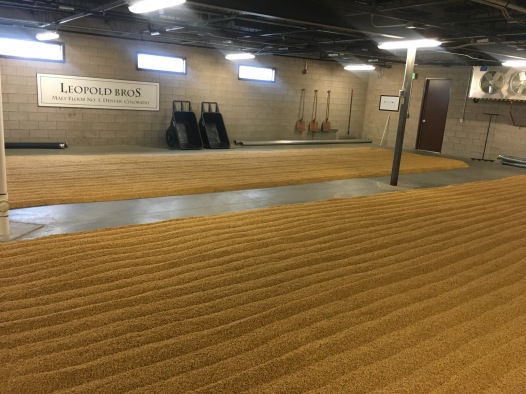
In house malting floor


I had been looking forward to this trip f
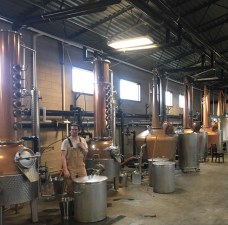
or a few weeks now and I was completely prepared to nerd out about the open air fermentation tanks, the in house malting floor modeled after the ones at the Springbank distillery, and the last hand hammered CARL still to come out of Germany. But the thing that I truly wanted to see was the Vendome Three-Chamber Still made specifically for Leopold Brothers. And it turns out it was in full operation under the eyes of Todd Leopold that day.

FullSizeRender-1.jpgIn distilling history isn’t a simple straight line from the old school pot stills to the modern industrial column/continuous stills used in most major distilleries today. One of the most notable steps along that path was the chamber still. The chamber still allows for distilling on the grain and as a large batch as each chamber is refilled from the chamber above. It’s a continuous batching process. And as each chamber is held at a different temperature, different alcohols boil off in each chamber allowing for more concentration of the good alcohols with less of the bad.

fullsizerender
Three Chamber Still In Action

Its also a difference in terms of contact time. In a column still steam is stripping the alcohol off in a matter of seconds where as in the three-chamber still it’s closer to an hour for each batch. You’re getting alcohol either way but the three-chamber is extracting more flavor. And tasting off the still with Todd that massive flavor is immediately apparent with a massive amount of fruit and a viscosity I’ve never encountered in a white dog.  If this was handed to me blind I’d be more inclined to identify it as a fruit brandy than a grain spirit.

And not all of that flavor is coming from the still. It’s also the type of rye being used. After careful research into what the standard mashbill used in chamber stills was (80% rye 20% malt) the Leopold’s also partnered with local farmers to grow Abruzzi rye more consistent with the style grown in the late 1800’s. The key difference is a lower starch content, which means less output but bigger rye flavor because there is less generic starch sugar overwhelming the rye. Combine this with their low fermentation temperatures and you have a mash that is less stressed, with fewer of the unwanted ethyl acetates, with a lower yield but more massive flavor.

So why did this type of still disappear? The simple answer is efficiency. The Three-Chamber still requires constant watch and tweaking during the distillation process. The batch that was running through the stills while we were there had been started at about 5:30 in the morning and Todd would be be finishing it up around 7:00 that evening. And he could not leave the still. Literally.  The output is also relatively low. The still is only putting out about 4-5 barrels of white dog a day, and while the Leopold still isn’t the largest the yield from even the smallest column still will be magnitudes larger.

IMG_2950.JPG
Open fermentation

Todd’s worry when they were installing this still though was not the efficiency but the flavor. As Todd said, “If MGP rye flavor is 12:00 and this rye came out tasting 12:05 my brother would have killed me.” What convinced Todd that the experiment would pay off was the historical data. Not only were these stills considered standard for rye making at the turn of the century before Prohibition but also Hiram Walker, the largest distillery in the world at the time, had both a three-chamber and a column still. If they were going through the expense to manufacture whiskey on both types of stills there must be a drastic difference in flavor. And he was right, this whiskey is coming out a 6:00It is just a bigger whiskey.

Which unfortunately means it going to need more aging. These flavors need more time to mellow, to integrate and mature so we’re at least another 2-3 years out from being able to fully experience this revived whiskey. But I suppose we could still visit the aging barrels to say our respects to the future deliciousness. And in the barrel house one more surprise was waiting.

Bottled-In-Bond bourbon barrels.

This is exciting because the proliferation of anything Bottled-In-Bond is cause for celebration but also because once again Leopold Brothers are doing something different. IMG_2956.JPG Their standard barrel entry proof is barely above the required 100 proof for bottled in bond products and four years is older than any other product they currently have on the market, so this barrels are going to need careful monitoring to ensure they will live up to their name. But these barrels hold a very real possibility of creating an incredibly unique bottled-in-bond whiskey  A whiskey that carries the all of the flavors present in the liquid right off the still, evenly matched up with all of the larger barrel notes. 

One of the things I love most about Leopold Brothers is that their experimentation is focused. They are not doing things the old way simply to do them the old way. They are looking how things were done before the need for maximum efficiency, maximum production and maximum profit. It’s about recognizing what changed because a better way was found to recreate the same product versus what was changed to replace a product. As for me, I’m going to keep drinking the Leopold Brother’s current product not only because of what it is but because of the future product will be. 

IMG_2959.JPG

Hancock’s President’s Reserve Single Barrel

I often say that I like surprises, but that’s not really true. What I actually like is discovering new things. It’s safe to say I know a bit about whiskey. Yet I constantly find myself surprised and excited by things that I don’t know. And it is rarely the massive, specialty releases that catch me off guard. It’s the little guys that usually make me sit up and notice. Maybe it’s because they’re unexpected, or maybe it’s just a touch of arrogance. If I haven’t heard of it, who knows what it could be?

It happened just the other week. I got a call letting me know that if I moved fast I might be able to get a case of Hancock’s President’s Reserve. Before that call I might have vaguely recognized the name but couldn’t have told you anything else. So immediately I was intrigued.

The whiskey seems to be named for Hancock Lee, one of the cofounder of Leesburg, Kentucky. But information on Hancock is relatively scarce and the same goes for his namesake whiskey, which is odd in an age where debating the minutia of even the most esoteric of hobbies has become a pastime of it’s own. But what is known is that it’s made by Buffalo Trace using mashbill #2. This put it firmly in the Elmer T. Lee, Blanton’s and Rock Hill Farm family which despite how well known its siblings are the fact that they are related could be part of the reason for it’s obscurity.

When Sazerac purchased what is now known as the Buffalo Trace distillery in 1992 the distillery was already under contract producing whiskey for Age International, a contract that continues to this day. The relationship is complicated but essentially boils down to the fact that Age International owns the labels, and by extension rights to the mashbill, for Blanton’s, Elmer and Rock Hill Farms while Buffalo Trace distills the whiskey and distributes in the Unites States. And the Hancock is no different. So without full control of the label, the success and demand for its sibling single barrel bourbons could be the reason Buffalo Trace doesn’t have much information available.

Incidentally, this arrangement between Buffalo Trace and Age International is why there are two different Buffalo Trace mashbills. Mashbill #2 for the preexisting contracts and mashbill #1 for all their proprietary bourbons and while they don’t publicly disclose the recipes for either they’re pretty similar in the end with mashbill #1 being lighter on the rye.

The liquid itself sits between the taste profile of the Elmer and the Rock Hill Farm. It is lighter in body, and much more mellow at 88.6 proof. There is a nuttiness on the nose that is somewhat overwhelmed by the sweetness of the body with an abundance of vanilla, cinnamon, and oak giving why to a dry, tannic finish. In the end this reminded me more of the now discontinued Ancient Age 10 Year than any of its single barrel counterparts. As it stands there really isn’t anything that differentiates in from the other mashbill #2 single barrels. I’d personally grab it over Blanton’s but with the apparent effort needed to track down a few bottles I’d much rather put in the time grabbing a bottle of Elmer or Rock Hill Farm.

This bottle was a surprise but it doesn’t seem that its scarcity is due to some amazing liquid in the bottle, but rather simple lack of information and knowledge of the brand and with its pricing it certainly isn’t poised to take over the cult following that the Ancient 10 left behind. Then again, it did just win a silver medal at the 2016 San Francisco World Spirits Awards so maybe there’s another surprise around the corner.

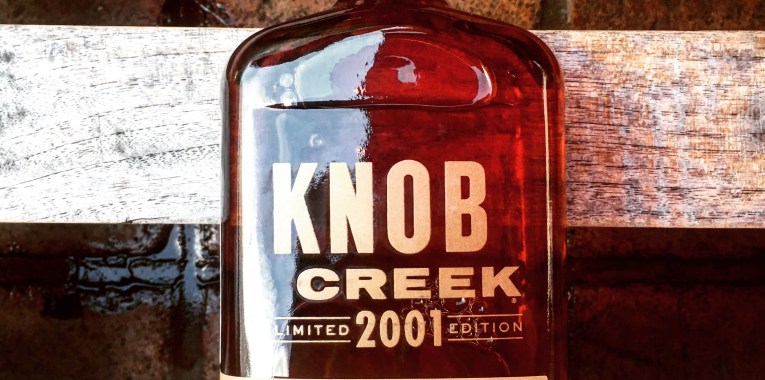
History Along the Knob Creek 2001

History is tricky. It’s written by the winners and often overly romanticized by the survivors as they remember the good and forget the bad in the harsh light of present difficulties. And when you throw alcohol into the mix things can get even murkier. Take the modern obsession with all things Pre-Prohibition. From the style of the bar, to the bartenders uniforms, to the whiskey being poured, at every step of the road the booze industry is proud to be returning things to their turn of the century glory.

Yet, despite the romance of Prohibition speakeasies and Pre-Prohibition style and quality, that “style” and “quality” was all over the map. The quality issue was first addressed with the Bottled In Bond Act of 1897, but even though the term “Bourbon” being used as early as the 1820’s, what made a whiskey a “Bourbon” wasn’t truly codified into law until the Bourbon Act of 1964. So what they hell does “Pre-Prohibition style” even mean? Unregulated? Undefined?

While this elusive style might not mean anything on its own it can serve as inspiration. And if anyone should have an idea of what Pre-Prohibition whiskey tasted like Booker Noe would have been the one. The grandson of Jim Beam and the Master distiller at his grandfather’s distillery since the 60’s, Booker’s pre-Prohibition inspired bourbon, Knob Creek, rolled out in 1992.

log-cabin-KC.gifNamed after the stream that ran along Abraham Lincoln’s childhood home in Kentucky, the bottle was modeled after turn of the century apothecary bottles with the label inspired by the tradition of wrapping bottles in newspaper at the distillery. Knob Creek was originally an age stated 9 Year Old bourbon bottled at 100 proof. The age statement has been dropped in the past few years but the brand still claims extra aging compared to the companies other small batch whiskies. So in this case pre-Prohibition style would seem to mean longer aged and higher proof, which is almost the exact opposite of what those early whiskies would have been.

Knob Creek was one of Booker’s babies. He continued to oversee the brand until he continued another family tradition and handed the title of Master Distiller and production of the brand over to his son Fred Noe in 2001. Which is how we ended up with the aptly named Knob Creek 2001 Limited Edition.

The Knob Creek 2001 was made from some of the last barrels ever laid down by Booker and then finished by Fred. It’s a passing of the torch in bottle form. And this excited the Bourbon nerds, understandably so. The other bottling to come out of the last of Booker’s barrels was last years Booker’s Rye, which turned a lot of heads and was named Jim Murray’s Whiskey of the Year. Those are some big shoes to fill.

images.jpgWhat set the Booker’s Rye apart was the age and a unique mashbill. The Knob Creek 2001 certainly has the age, at 14 years old it clocks in a good five years older than the old 9 year, but there’s no variation on the mashbill, simply different batches. This leaves a through line connecting it to the standard issue Knob Creek because no matter what batch you pick up all of these bottles are unmistakably Knob Creek: powerful, with pistachio, walnut, sweet oak and that unmistakable Jim Beam yeast.
As for the differences, Batch #1 dials up the vanilla, caramel, and maple leaving the middle of the palette sweeter with the barrel and age showing up again on the finish. Batch #3 goes the opposite way with massive, dry tannin, heavy oak, and extremely dry mouthfeel. Batch #2 walks the line between the other two rather well.

In the end this is just bigger, larger, and older Knob Creek. That’s not necessarily my cup of tea but as a changing of the guard it makes sense. Booker was a larger than life figure in the Bourbon world and his impact on the modern industry is arguable as big as his grandfather Jim’s. To me whiskey is bottled time, bottled history. And this bottle is a touch of liquid history. Only time will tell how big a piece of history it really is.

Open Bottle: A.H Hirsch Reserve 16 Year Straight Bourbon Whiskey

I’m absurdly lucky in my line of work. I get to taste things that are often considered legends and even more exciting get to stock them at the bar occasionally. Most of these bottles are outside the scope of being able to feature them on a typical Whiskey Wednesday but they all have a story, and all of them are open. So, I’m going to take advantage of this abundance of good fortune and drink my way through them and let you vicariously drink through me.

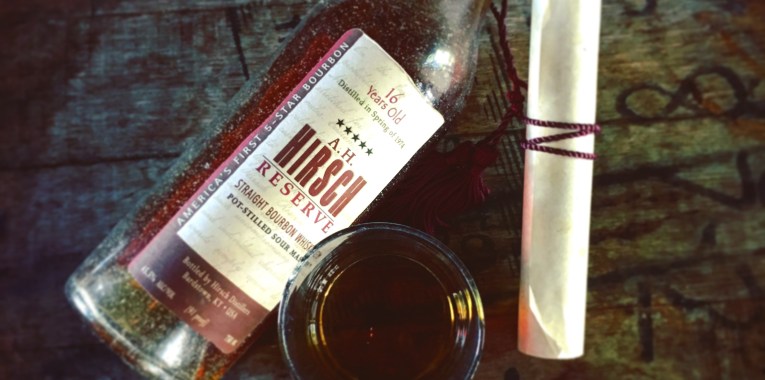
For our first go around we got a real unicorn of a bottle: the A.H. Hirsch 16 Year Straight Bourbon whiskey. This bottle, along with the original Pappy Van Winkle releases, are what kicked off the super premium Bourbon trend. There’s a great book about its full story called The Best Bourbon You’ll Never Taste by Chuck Cowdry so we’ll do the abridged version here.

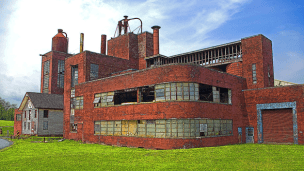
Our story begins in a small farm outside of SchaferstowMichter's Ruins.pngn, PA in 1753. John Sheck was doing what most farmers did at the time and was simply distilling as a way to maximize his harvest and make a little extra cash from excess grain. There was no formula to it. But over the next 163 the family grew this small operation into a full blown distillery until they were forced to close the doors in 1919 due to the beast that was Prohibition.
During Prohibition the distillery and farm was sold to a local farmer who more than likely kept the stills warm with a few runs despite Prohibition and after repeal distilling commenced in full force yet again. The distillery changed hands several times in the next few years before being bought by the Schenley Corporation. Schenley was to the American spirits world of the 1940’s what Diageo is to world spirits today. Which is appropriate since Schenley was sold to Guinness in 1986 and Guiness’ merger with Grand Metropolitan in 1997 was the birth of Diageo.

But well before then the distillery had changed hand yet again, this time to Pennco Distillers, and was now know as the Michter’s Distillery. They had new owners, a new IMG_1970.JPGbrand, and Charles Everett Beam, of the Beam family fame, as master distiller. They were ready to rock and roll. Yet despite having limited success with the Michter’s Sour Mash Whiskey (which may or may not have been pot stilled) and being named a National Historic Landmark in 1980 the demand for Bourbon just wasn’t there. What may have been the oldest distillery in the United States closed its doors for good in 1989 and is now just a collection of abandoned buildings.

What does any of this have to do with Hirsch? In the spring of 1974 A.H. Hirsch was one of the major investors in the distillery. And as you may have heard the ‘70s were not a good time for American whiskey and the distillery was strapped for cash. Rather than invest more money into the distillery Hirsch commissioned Charles Everett Beam to make him a whiskey. It was a different mashbill than the sour mash Michter’s was making at the time. It was a true Bourbon and the run produced a measly 400 barrels. This commission did two things: it gave the distillery a quick influx of cash and gave Hirsch an investment that he could sell no matter what happened to the distillery in the future.

14555129485_c0f8ededa1_b.jpg                  And Hirsch never cashed that investment in. Oddly he left it aging in the warehouses, paying taxes on all 400 barrels until the distillery shuttered. Now sitting at a solid 16 years old, ancient by Bourbon standards at the time, Hirsch finally took position and sold of the stock.

The new owners transferred the whiskey to stainless steel tanks to prevent further aging and started bottling the whiskey, naming it in honor of A.H. Hirsch himself. And in another quirk of the incredibly small whiskey world some of the first bottlings were done by Julian Van Winkle III at the same bottling plant he would latter start bottling another famous whiskey named after his Pappy.

The whiskey hit the shelves at around $50 a bottle, again astronomically high for the time, but it turns out it was damn good. Deep leather and tobacco, with nougat  and dried cherry and orange. It’s literally history in a glass. It can never be recreated. The moment in time, and even the distillery are long gone. Unlike your Pappy Van Winkle’s or George T. Stagg’s this piece of Americana will never come around again.

People loved it. It’s a prime example of the excellence that can come from extra aged American whiskey. The bottle became a legend and definitely fueled the love for old Bourbons, and their price tags.
Once, Preiss Imports discovered the following for Hirsch they pulled the last remaining bottles and repacked them in a massive collectors edition with a more massive price tag. It was still possible to order A.H. Hirsch for your bar. If you were willing to shell out for it.

So does it live up to the hype? It’s impossible to say. This bottle is so wrapped up in its history that I can taste it right there next to the oak and vanilla. Despite Chuck’s claim that it’s the best you’ll never taste it’s still out there. And you should taste the history. But, don’t cling to the past. A.H. Hirsch had it’s moment in time. The next moment is out there.

Old Grand Dad’s Goodbye

It’s been an interesting few months for the “Beam” portion of Beam Suntory.

Back in October the had a full worker strike at Jim Beam, it only lasted a single week before both sides reconciled their differences but it also happened to be the same week that Booker’s Rye was named Jim Murray’s World Whiskey of the Year.

The prestige of that super allocated release, as well as the price tag, seemed to add fuel to Beam’s announcement at the end of last year that standard issue Booker’s Bourbon was going to see a production cut and double in price in 2017. This announcement was met with such backlash that the company quickly back tracked, now saying that the price would more gradually increase over the year with only a $20 increase to start off the year. This about face has left many people disgruntled, feeling that they were some how manipulated into snatching up bottles. As if they were forced into buying the whiskey by the announcement.

Add this to the Maker’s Mark brushfire in 2013 where the same company announced that they’d be cutting the proof of Maker’s Mark to increase supply only to quickly change their tune due to community pushback and you seem to have a company with an inte
rnal struggle between the accountants and the physical producers.

Amidst this kerfuffle yet another beloved friend has bit the dust with out much fanfare: the Grand Dad 114. The lack of a dustup might be proof that the company was right to discontinue this expression of Old Grand Dad but I images.jpgpersonally disagree.

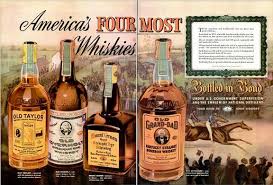
Old Grand Dad is old. Not as in an age statement but in terms a brand. And even if you don’t think you’re familiar with the brand you’re wrong. You just know him by another name: Basil Hayden.

Basil Hayden was part of a great migration into the heart of modern day Bourbon Country. He was, like almost everyone else, a farmer first. He distilled to preserve excess grain, just like his neighbors did, with little thought to mashbill or long term aging.

After the civil war whiskey went industrial and around 1882 Basil’s grandson, Raymond, founded a distillery and named it after his Old-Grand Dad and slapped a portrait of him on the label.

After Hayden’s death the distillery passed into the hands of the Wathen’s who made medicinal Old Grand Dad through-out Prohibition and their company, American Medicinal Spirits, became the backbone for National Distillers after repeal which was one of the largest and most influential bourbon makers in American History.

After Prohibition, when whiskey stocks were nearly non-existent, a higher rye content was added to Oimages-1.jpgld Grand Dad’s mashbill in an effort to make it taste and feel like those ‘old style’ distillers in an effort to appeal to the new drinkers.
Flash forward to the late 80’s, National Distillers merged with Jim Beam and amazingly, the mashbill for Old Grand Dad has seemingly been left unaltered. And they even added to the family by introducing Basil Hayden’s in 1992.

I’ve always loved the 114. 114 proof (duh) it is spicy, powerful, dusty leather and a nutty presence that leaves your mouth bone dry, hunting for more. And even if the claim that Basil was known for making bourbon “with a high rye content” is completely unsubstantiated it is still damn good whiskey.

By now Basil Hayden’s far outshines its older iteration, at least in terms of press and sales. And with supply unable to keep up with demand a family sacrifice has been made. So good by 114.

That’s the history, but what about the future of Old Grand Dad? Well, let’s look back at the little ol’ Maker’s mark fiasco and Booker’s Rye awards.

A few months after Beam Suntory announced that the would in fact not be lowering the proof of Maker’s Mark the suddenly released Maker’s Mark Cask Strength. The release was originally very limited and sold exclusively in small format but proved so successful that it’s a full time release now, for a majorly popular brand that carries a higher price tag and slightly more prestige.

Add that to the success, and price tag, they’re having with super limited releases of major brands like Booker’s it’s hard not to see the super allocated Cask Strength Basil Hayden’s wait in the pipeline. And to not see the massive price tag it’ll carry on the shelves and even more gargantuan one it’ll have on the secondary market.images-2.jpg

This is the dark side of the whiskey boom. What helped fuel this boom was availability and price. Bourbon was unpretentious and everyone could afford a great bottle. Now, value is harder to find and more of the fans are being priced out of something they love. If we’re lucky they’ll go the Maker’s Mark route on this one and turn it into a permanent line extension but who can say? The company itself seems to have a hard time making up its mind.

I can’t tell if the glass is half full or half empty but, for tonight at least, it’s filled with Old Grand Dad 114