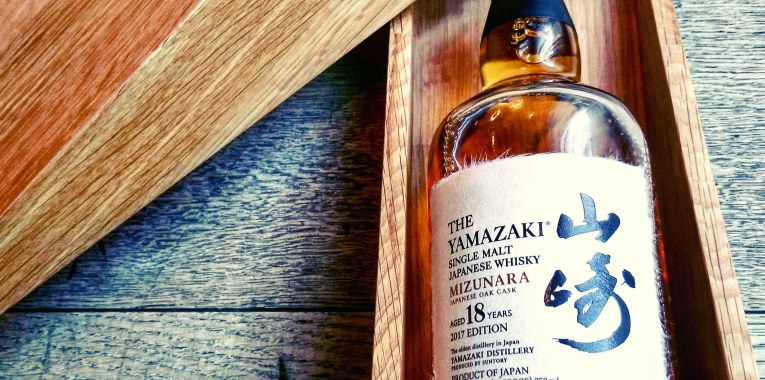
In today’s edition of things you’ll never get to taste: Yamazaki 50 Year Old!
On Friday August 17th 2018 a bottle of 1st edition Yamazaki 50 Year Old, one of only 50 bottles to exist, sold at auction for $312, 519.87. This is now the most expensive bottle of Japanese whisky ever sold at auction, beating the previous record set a mere three months earlier with the sale of bottle of 52-year old Karuizawa and blowing the previous record for Yamazaki set in 2016 out of the water.
But none of these can touch the record for most expensive bottle ever sold at auction, also set in May of 2018, for a bottle of MaCallan 60 Year old. The malt was distilled in 1926, bottled in 1986, featured a label created by Valerio Adami, is one of only 12 bottles in existence, and sold for $1.1 million USD.
Thirsty yet? Wish you could taste what must be the Elixir of Youth? Well, you can’t so lets talk about something absurd that you still might be able to put in your mouth: The Yamazaki Mizunara Cask.
To many drinkers and collectors Yamazaki is the quintessential Japanese whiskey. You can read more about their specific history, here, here, and here. Yet something that’s even more quintessentially Japanese than Yamazaki, kaiju, and anime is mizunara wood.

Scientifically known as Quercus mongolica, this is a species of oak native to Japan, central and northern China, Korea, eastern Mongolia, and eastern Siberia. The infancy of the Japanese whiskey industry butted up against the outbreak of World War 2 and while imports of European and American oak barrels for aging were drying up whisky consumption was on the rise and became the main drink consumed by the Japanese army. Barrels were needed so the distillers turned to their native oak.
Up until then mizunara had been used primarily in the manufacturing high end furniture and when transferring to whisky making the distillers ran into a few problems. First up, it takes a good 200 years for a mizunara oak to fully mature for a good cask, and it doesn’t grow straight, making it difficult to form proper staves. On top of that, Japanese oak has a higher moisture content than it’s cousins making it more difficult to work with. It’s also more porous meaning the casks are more susceptible to leaking.
Despite all these setbacks it turns out what mizunara really needs to shine is the thing that it’s hardest to give: time. The true flavors of mizunara really start to shine after prolonged ageing. This has lead to it being an essential player in the blended/pure malts that Japanese producers are so found of but also rocketed it into the stratosphere of some of the most sought after style of aged Japanese whisky in the world.
As the world of rare whisky comes to mirror more and more the world of fine art and bottles are becoming collectors pieces to be admired but never enjoyed it’s worthwhile to be reminded that the true joy of a dram is in the drinking and the sharing.
Due to the maturation time needed and the problems of working with the wood itself there aren’t many whiskies that are fully aged in exclusively mizunara but the allure and price tag of whiskies aged in mizunara have led to multiple producers releasing mizunara seasoned releases that carry the name but not the refinement that is so readily apparent in the older Yamazaki releases.
Take for instance their 2017 Yamazaki Mizunara release. The 2017 release is an 18 year old single malt aged exclusively in mizunara oak. Their Chief Blender, Shinji Fukuyo, tasted through hundreds of mizunara aged whiskies and put together this malt that may legally only be only 18 years but is stated to contain at least a small portion of 50 year old malt. Bottled at 96 proof and with a price tag slightly north of $1000 this is certainly not an everyday whisky- but can it clue us into the hype and auction fees of its unobtainable brethren?
NOSE: The nose is rich, fragrant and has a touch of sandal wood and greenery. An undertone of fresh baking spice is also present. The mizunara is already making itself known.
PALATE: A silky texture, with dry red fruit, coconut, citrus marmalade, a sweetness of caramel and a rich texture that is reminiscent of condensed milk with out the heavy feeling.
FINISH: It ends with a decisive spiciness, it’s reminiscent of Japanese incense, the lighter wood notes from the nose return and linger with the baking spice as you exhale.
This is a truly elegant pour of whisky. It is a prime example of how much patience is needed to truly coax the beauty of the mizunara out of the cask and into the glass. When I drink this I understand why Suntory is scouring Japan for old mizunara furniture to turn into more barrels.
I’ll probably never know how this stacks up to the most expensive Japanese whisky ever sold but it will always have something more noteworthy about it than that auction bottle ever will: I can actually drink it. As the world of rare whisky comes to mirror more and more the world of fine art and bottles are becoming collectors pieces to be admired but never enjoyed it’s worthwhile to be reminded that the true joy of a dram is in the drinking and the sharing.
This bottle is by no means commonplace and the price is nothing to scoff at but I can think of at least four places around Los Angeles where this is a bottle that can transport your evening and remind you that patience is sometimes its own reward.
And if you ask nicely I might even tell you where those places are before I drink it all myself.


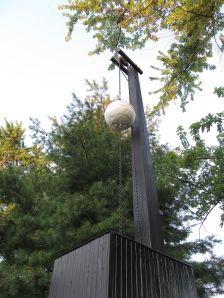 The highball is nothing new. It’s a simple class of drinks: a shot of spirit diluted with several ounces of a carbonated beverage on ice. My favorite rationale for where the term “highball” originated from comes from the old railroad days. Along the rail tracks there were “highball” signals where a ball would be hoisted out of a barrel signaling that the track ahead was clear and the trains could travel full speed ahead. A “highball” drink was at the time served in a highball glass with a single lump of ice. As the soda was added to the glass the ice would rise just like the highball signal telling drinkers they could dive in at full speed as well as quickly down the remainder of the drink when their train pulled in.
 in tradition, both its own and the Scotch Whisky tradition that gave birth to it, so change comes slowly. And while whiskey history is littered with mythological founding fathers modern Japanese Whisky owes it’s life and it’s tradition, to one man: Masataka Taketsuru.
 (over objections from both families) and in May of that same year Taketsuru began an apprentice at Hazelburn distillery where he gained a greater understanding of blending whiskey as well as distilling. He and Rita returned to Japan that November with plans to help the Settsu Shozo Company set up the first Japanese Whisky distillery. These plans never came to fruition.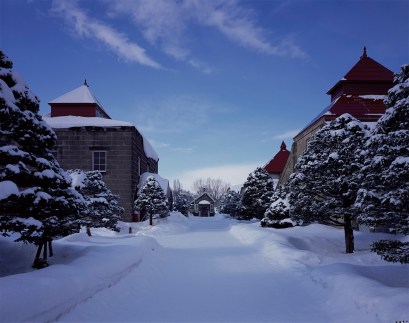


 Suntory founder and first master blender, Shinjiro Torii and Masataka Taketsuru, “The Father of Japanese Whisky”, founded the Yamazaki distillery in 1923. Taketsuru had studied organic chemistry in Glasgow and was found by Torii after he made inquiries to Scotland looking for a whisky expert. Torii was told there was already one fully qualified in his own country and the two worked closely to build the Yamazaki distillery. However, the first whisky produced by the new company, dubbed the Suntory Shirofuda was a resounding failure. The Japanese drinkers preference for lighter, blended whiskies was blamed as well as Taketsuru’s fixation on doing things the “Scottish way.” Taketsuru was shunted away from the distillery to a beer factory where he served out the remainder of his ten year contract before leaving to start the Nikka distilling company, Suntory’s biggest rival.
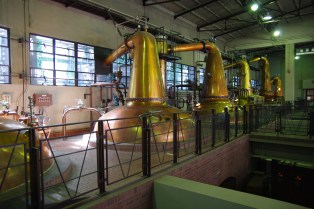 total to 12, which increased capacity about 40%. The added capacity didn’t prevent them from releasing the Non-Age Statement Yamazaki and Hakushu Distiller’s Reserve the following year just as talk of the worldwide whisky shortage began to surface. Also in 2014, Suntory purchased Beam, Inc. (home of the eponymous Jim Beam Bourbon) for $16 billion forming Beam Suntory, the third largest spirit producer in the world. This acquisition greatly expanded Suntory’s distribution lines spreading the already thin stocks of Yamazaki even thinner.
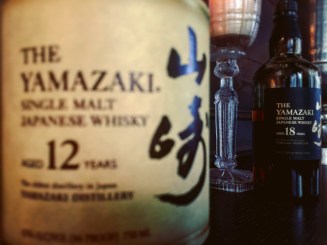 While the 12 year was once the perfect introduction to Japanese malt, before the price and the hype got in the way, it was the Yamazaki 18 year that always stirred my soul. This time roughly 80% Sherry casks with ex-Bourbon and Mizunara making up the other 20%. Here the promise of the 12 year has evolved into a stately elegance. The fruit dries out, turning to raison and apricot with dark chocolate and berries on the tongue with a touch of spice on the long march to the finish.


 But in a world of vanishing age statements and soaring prices I feel it’s hard for the general consumer to not see this as a replacement of a beloved bottle by a younger whiskey at a higher price. That’s not a problem with the Harmony though. That’s just the reality of the whiskey world we now live in.
 Bottled In Bond LA