Whiskey Wednesday: O.F.C. 1985 Vintage Bourbon

Spontaneity is not my strong suit. 

Example A: my girlfriend swears by the deals emailed out daily by Scott’s Cheap Flights. Yet every time a deal lands, I have to ask about time frame, logistics, check on available vacation days, and generally stressed about the fact that booking this trip means that we won’t be able to book some other hypothetical trip that doesn’t yet exist and just like that the deal, and the moment, is gone. 

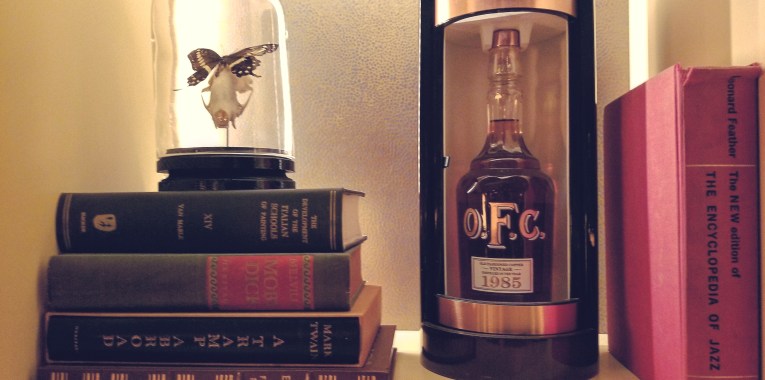
Example B: We received a bottle of the O.F.C 1985 Vintage Bourbon a year ago and I’ve been planning to write about it ever since. So, what the hell is O.F.C. and why has it been on my mind for literally a year? 

O.F.C. stands for Old Fashioned Copper and is the original name for the distillery founded by Col. E.H Taylor in 1869. Col. Taylor was an expert marketer and helped establish the concept of a Bourbon “brand” as well as being one of the major figures behind the passing of the Bottled In Bond act of 1897. 

The distillery itself was sold to another legend, George T. Stagg, in 1878. There’s an apocryphal story that one of the conditions of the sale was that Stagg could keep the initials O.F.C. but he had to change at least one of the words it stood. This is why the distillery is sometimes called the “Old Fire Copper” distillery. Regardless of the veracity of this claim the distillery’s name was officially changed to the George T. Stagg Distillery in 1904. It was the first distillery to utilize climate-controlled aging warehouses when Stagg installed steam heaters in 1886 and was one of only four Kentucky Distilleries granted a license to continue distilling throughout Prohibition.

The distillery changed hands a few more times in the 20th century before finally being purchased by the Sazerac Corporation in 1992 and its named changed once again. Now known as Buffalo Trace it arguably produces some of the most sought after American Whiskey on the market, including bottles named after both Taylor and Stagg as well as the much desired Pappy Van Winkle line. 

The distillery clearly has experience with special releases but even amongst the plethora of rare bottles the O.F.C. stands out. 

 The O.F.C. is less a special release and more of a time capsule. These are all single barrel, vintage dated Bourbons. Each bottle is sourced from a single barrel and marked with the year of distillation. This makes each vintage completely unique with the mashbill and age varying depending on the bottling. Another intriguing fact is that this line up was originally produced only for charity. 
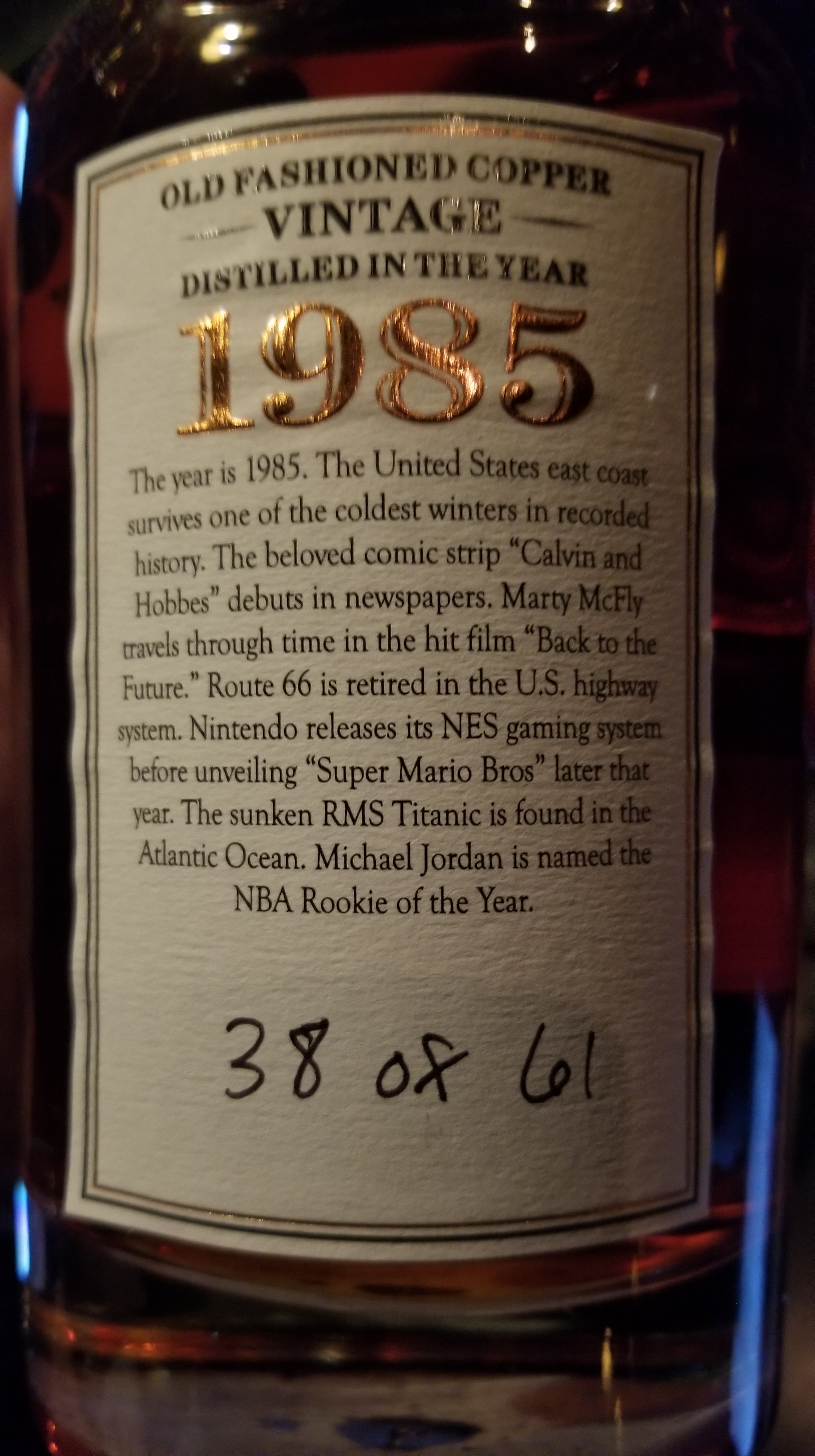
A literal Time Capsule.

The team at Sazerac and Buffalo Trace are just as savvy marketers as Col. Taylor was back in the day. I have to imagine that when they see bottles of their whiskey selling for thousands of dollars on the secondary market that they looked for a way to capitalize on that market value yet still offer an added bonus. The original three releases were only made available to 200 charities, at no cost, to auction off and help raise money for their cause. It was a great way to turn the image of limited whiskey auctions on its head and raise $1.2 million dollars for charity. It also immediately established the O.F.C. line as a super limited, ultra premium bottle. I was silently jealous of the fact that I would never see one of these bottles yet still applauded the move to raise money for worthy causes. But when the second round of releases was made available for retail purchase I leapt at the opportunity. Especially with the vintage being offered was the 1985. It’s not often you have a shared birth year for your whiskey. 

The 1985 Vintage is one of only 61 bottles to come from a barrel which was stored on the second floor of Warehouse Q. Buffalo Trace says that all of the barrels were tasted over time and removed from the barrel before becoming over oaked and since there is no age statement listed on the bottle it’s hard to tell the precise age of the bottle. This isn’t an uncommon practice, Buffalo Trace has done similar things with Eagle Rare 17 and Sazerac 18 so the whiskey isn’t as much as an oak bomb as you might expect. It is certainly old but there’s no official word on if it was a full 33 years in oak before being bottled. With that in mind let’s dive into the glass: 

NOSE: Rich oak, Dried fruit, and vanilla 

PALATTE: Rich vanilla, dark cherry, prune, oak, and a dark earthiness 

FINISH: Bitter chocolate, a touch of tobacco, and a coating lingering sense of time 

Overall this is an excellent example of old American Bourbon whiskey. It is still alive without being over oaked and has a power of flavor to match up to the power of the years it spent asleep in the barrel. The issue, as always, is the price. The bottle comes in at a staggering suggested retail price of $2,500. When the proceeds were going to charity this number wouldn’t have raised peep from me but now it changes the talking points. 

Is this good whiskey? Yes. Is it for everyone? Absolutely not. It is a special occasion, made so by the fact that it is a living time capsule. You are paying for the time and history as much as the whiskey itself. I will argue that experiences are more important than money but  the value is certainly subjective. I for one am going to savor the fact that I get to experience this bottled moment of time and not take it for granted. 

Whiskey Wednesday: A Tale of Two Elmer’s

            I received a text this week from a friend that without preamble said, “Did Elmer T. Lee get worse?”

            My gut reaction was, “Of course not! How dare you besmirch the name of the dearly departed father of modern Bourbon!?” After calming myself with a hefty dram I remembered that despite centuries of tradition whiskey making is a constantly evolving art and barrel aging is by no means an exact science. To add to that, there were claims of “cork taint” by members of the Reddit whiskey community in 2016.  The popularity of Elmer T. Lee has also exploded in recent years so the odds are that it’s younger stock than previous years. By the end of the glass the question was less of an attack and more of a probability.

Son, we’re not hiring today.”

            This could have remained a simple thought experiment but a recent trip to the Liquor Locker left me with a bottle of 2014 Elmer and the ability to do a little compare and contrast. But first a little context.

What exactly is Elmer T. Lee? Elmer T. Lee is both a Single Barrel Kentucky Straight Bourbon, and the deceased former Master Distiller of the distillery we now know as Buffalo Trace. 

“Son, we’re not hiring today.” Is how Col. Albert B. Blanton first greeted Elmer in 1949, but at the instance of his friend at the distillery he showed up to work the next week anyway.  Over the years Elmer grew from a maintenance engineer to the distilleries first Master Distiller. He officially “retired” in 1985 but not before releasing the world’s first Single Barrel Bourbon, Blanton’s, named after the man who didn’t hire him.

After Blanton’s became a hit the distillery honored its Master Distiller emeritus with his own namesake Single Barrel. Elmer was still heavily involved with the distillery and would come in every Tuesday to taste barrels and make selections for his namesake release.

Before Blanton’s, and Elmer, the concept of a “Single Barrel” Bourbon didn’t exist.  Remember, barrel aging isn’t an exact science. Every barrel ages differently depending on where in the rickhouse it sits, the quality of the barrel, the temperature swings over the years, all of these factors contribute to each barrel being a unique specimen But the whole idea of a bottled whiskey is consistency so generally barrels are blended, or batched, together to recreate a specific flavor profile. For a Single Barrel all of the whiskey in the bottle comes from one single barrel and has to stand on its own individual merits. While there will always be some variation, it is a sign of the skill of the distillery to be able to produce quality single barrels that are still consistent.

Both Blanton’s and Elmer share the same DNA. They’re both Buffalo Trace Mashbill #2 which is slightly higher in rye content (about 15%) and are both technically co-owned and produced with Age International. They’re both single barrels and they’re both non-age statement Bourbon’s so we know they’re at least older than four years. But two things separate them from each other: aging and proof.

Drinking is such an individual experience. It’s can be a social activity but the act of tasting is something intrinsically personal.

Blanton’s is always aged in Warehouse H, which was commissioned by Blanton himself. It  is a fully metal clad warehouse which allows for greater heat transfer and, supposedly, more rapid aging. Elmer has no such restrictions on what warehouse it must be aged in which theoretically allows for a larger variation in flavors.

Elmer is also bottled at 90 proof (45% ABV) where as Blanton’s is bottled at 93 Proof (46.5% ABV). While this difference seems small the alcohol is where the flavor is. A few extra proof points can make a world of difference and a whiskey can open up with just a few more drops of water. That isn’t to say that higher proof is always better, just like older doesn’t always mean better, it just means a different flavor profile. Interestingly, Elmer was said to drink his Bourbon at 60 Proof as he felt that was the point when he could taste all the flavor with out the alcohol getting in the way.

Now that all the intellectual foreplay is out of the way, how do they actually taste?

Four Years can really change a bottle.

2014

  NOSE: Oak and Clove

  PALETTE: Earthy, Dark Chocolate, Coffee, Tobacco

  FINISH: Long, slightly damp and musty

2018

            NOSE: Oak, Stone fruit, Vanilla

            PALETTE: Rye Spice, Stone Fruit, Tobacco, Coffee

            FINISH: Light, Spicy

Surprisingly, the 2014 is livelier in the glass, with a bigger spice on the nose and a more rounded midpalette. However, the 2018 carries a darker earthiness, more of the tobacco I associate with Elmer’s and a longer finish. Yet they are both still Elmer. In fact, pouring the two together creates an almost uber-Elmer that is exactly what I expect Elmer to taste like all the time.

Drinking is such an individual experience. It’s can be a social activity but the act of tasting is something intrinsically personal. Where you are at, what time of the year, and how much effort you put into finding the bottle all effects how the spirit tastes. So, back to my friends original question. Did Elmer T. Lee get worse? I’d say no, but it is different. But then again, so am I.

Whiskey Wednesday: Elijah Craig: NoMad Edition

I sat down and did this almost exactly a year ago and it’s time again for the annual arrival of a privately selected Elijah Craig Barrel. This one, like all of them, is special because it is a 100% unique bottling but it’s also the culmination of an insane year.

Elijah Craig is the whiskey I’ve probably written about the most so I’ll skip the folklore and brand history, you can read about those here. Instead I want to get personal and talk about the time since the last barrel rolled into my hands.

I started buying single barrels of whiskey years ago.  Elijah Craig was the first barrel I bought and it lit a fever in me. It was pretty easy to track where I had been working using this as a metric. As time went on as the list of “House Single Barrels” would balloon seemingly overnight. Last year was full of first for me. This year has been about constant change.

20180102_170727
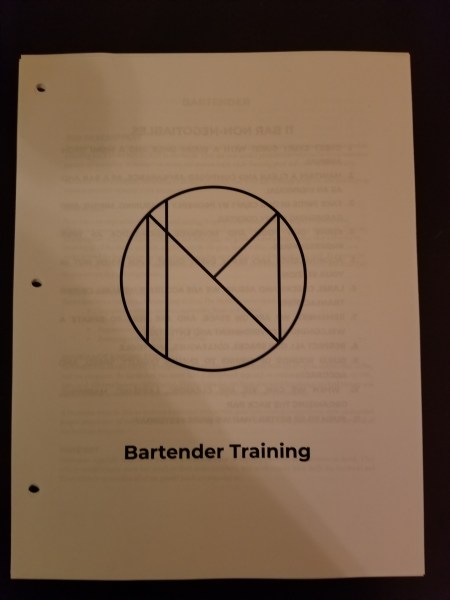
Training Tome

When the last barrel of Elijah Craig showed up to Faith & Flower I already new that in a few months I would be leaving it behind and traveling blocks away to the corner of 7th and Olive as one of the opening bar managers for NoMad Los Angeles. What I didn’t know was what that really meant.

I knew that I was joining a well-established,well-regarded, restaurant and bar team. I knew Leo Robitschek mostly by reputation and I knew the program; Pietro Collina, Nathan O’Neil and the rest of the team in NYC had built one of the most impressive bar programs not just in the country but the world. I knew it was going to be a lot of pressure and an immeasurable amount of work. What I didn’t know was how I fit into the equation.

My partner-in-bar Dave Purcell had already been a part of the team for months before I was brought on and given my crash course in everything NoMad. Three weeks after I started training I had pivoted learning to teaching. We were now training a barstaff that was 55 people large on an opening cocktail menu that was nearly 60+ drinks (not counting house specs on classic drinks) spread across four bars and not enough back bar space.

Every single member of that opening team was a goddamn rockstar and every member of our team, nearly a year later, is a member of that opening squad. It speaks to their professionalism and skill that they have risen above and beyond as the restaurant has constantly changed around them. Constant Reinvention is one of our guiding principles after all.

IMG_20180122_021945_794.jpg
A lot of late night exits.

Our Head Bartenders, who moved across the country from to be a part of this project, are some of the hardest working, most dedicated hospitality professionals I have ever met and I couldn’t imagine a better crew to get this beast off the ground with.

But even after opening I still didn’t know where I fit in. I wasn’t behind the bar and the Head Bartenders embodied the program and the culture so much more deeply than I felt that I did. They had simply been living with it for longer then I had. As far as I could tell I was here to herd a pack of wild bartenders and to help make the NoMad more LA. The first inkling of what that might actually mean happened when the team at Heaven Hill approached me about buying another barrel this year.

I immediately leapt at the idea and pitched it to Dave and Leo. After some debate, and extended tasting sessions, we settled on this bottle that now sits before me. An Eight Year Old Elijah Craig Single Barrel aged on the 6th Floor of Rickhouse “S” outside the Heaven Hill bottling plant in Bardstown, KY.

It has a heavy caramel nose and an upfront sweetness yet also a delightful earthiness and tannic finish that allows it to be sipped on it’s own but also to be built into cocktails which are surely the lifeblood of any NoMad bar.

Elijah Craig has been an integral part of the history of NoMad. The only drink to have never left the menu at NoMad is the Start Me Up, a Whiskey Sour variation with ginger, honey, Strega, rum and of course Elijah Craig. Using this barrel really drives home those whiskey notes in this drink. Here was something that I could contribute to the NoMad lexicon that was still wholly the NoMad and also intrinsically me.

This year also had it’s fair amount of travel, back to Pennsylvania for my Grandmother’s 90th birthday, a trip to the Cook Island’s (look it up it’s a real place) and a chance to return to France with my always more intelligent than me girlfriend.

There were less competitions, opening four bars in less than three months eats up a lot of free time, but I now have a rotovap as part of my tool set and know more about working with sherry than I could have ever imagined. As I sit here sipping this whiskey I am incredibly proud to see the NoMad symbol on its label.

Last year I declared I hate change and this year I find myself wondering if the new norm is constant change. I don’t have an answer to the question but I do look forward to what next year’s barrel of Elijah Craig brings.

IMG_20180706_210048_991.jpg
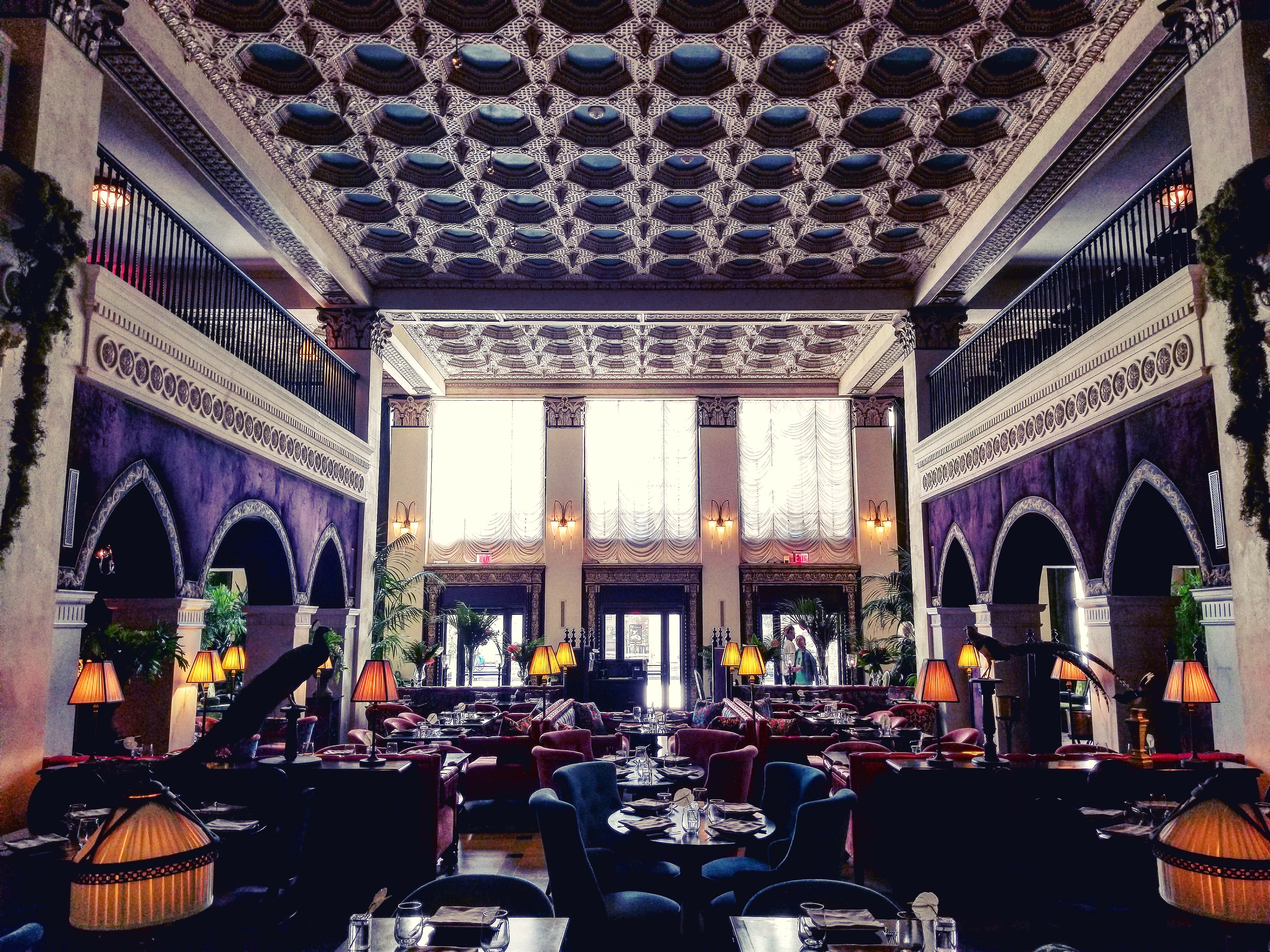
NoMad Los Angeles

Whiskey Wednesday: Elijah Craig Check In

Another year and another barrel of Elijah Craig. The very first single barrel I ever picked out for a bar was a barrel of Elijah Craig for Areal a good five years ago. I’ve been fortunate enough to select an Elijah Craig barrel every year since so its arrival is usually a great touchstone for me to reflect on the previous year. A Bourbon New Year as it were. And it’s been a hell of a year.

I left a bar that I ran for nearly five years that promptly closed six months later. I started a new job at Faith and Flower in Downtown LA, competed in the National finals of three major cocktail competitions, traveled to Tokyo, started this wordy blog, and picked out another barrel of Elijah Craig.

Elijah Craig is often the answer to the inevitable question, “What do you drink?’ I’ve talked about it at length here, and here, and during innumerable shifts behind the bar. The basic gist though is that Elijah Craig is one of the semi-mythical early Bourbon distillers that sometime after his death was decreed to be “the Father of bourbon” after he became the first person to char his barrels before aging his whiskey. It’s a completely unsubstantiated claim that makes a good story. So, we all tell the story and then acknowledge that it’s complete nonsense.

The current Elijah Craig brand was introduced by Heaven Hill in 1986 and has gone through multiple changes in its 30-year history but the past year was quite striking. The iconic 12-year old age statement was dropped from the label with the whiskey instead becoming a blend of 8-12 year old. The old school squat bottle was also replaced with a sleeker, taller, more streamlined bottle that I’m personally not a fan of but does actually fit a pour spout .

If you can’t tell, I don’t like change. And that’s not to say anything against the whiskey. It’s still an earthy, massively tanic, barrel forward whiskey that is one of the few bottles that I think works equally well in both mixed drinks and as a neat sipper. Most of these changes were made because there’s not enough whiskey to go around. Especially not old whiskey. Part of me feels like saying so what? Let there not be enough for everyone, don’t change this bottle that I love. Yet, that view is selfish.

Part of the joy of bartending, and indeed the joy of this very blog, is getting to share things that I love with other people. In the end, these changes aren’t for me. I clearly jumped on the train years ago. These changes are for the people seeing Elijah Craig for the first time on a billboard, or a sports arena, or even hearing about it on its recent NPR advertisements. The old Preacher is growing and hanging out with a younger crowd these days and I’m glad to see it.

In the end change isn’t good or bad. How we react to it, how we deal with it, that’s where the emotion comes in. Sometimes, change is just change. And I look forward to seeing what the Preacher and I have to talk about the next time we see each other.

Whiskey Wednesday: The Art of Kavalan

If the Scots are the craftsman of the whisky world, passing down tradition and technique year after year because it works, then the Japanese are the engineers, dissecting and reassembling each component part. The Taiwanese are the artists, free willing and experimental; it’s insane that we can even make that analogy because there is only one distillery in Taiwan and it’s barely into its Tween years.

6a00e553b3da20883401b8d1223916970c-580wi

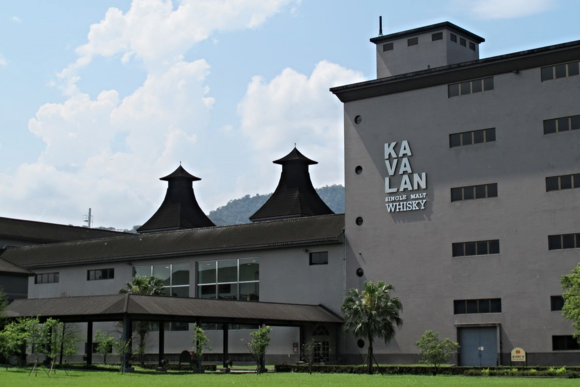
After Taiwan joined the WTO in 2002 Mr. Tien-Tsai Lee, founder of the KingCarbeverage conglomerate, was finally able to enter the whisky world and established the Kavalan distillery in 2005. The distillery takes it’s name from the Taiwanesse aboriginal ethnic group that originally inhabited Yilan county where the distillery is located in northeastern Taiwan. The distillery is built with classic Scottish pot stills and massive technological steps were taken to protect the fermentation and the distillation from the Taiwanese heat. Rather than adhere to how things are done traditionally they have worked to embrace the natural elements of Taiwan, most notably climate, to create something unique in the increasingly crowded whisky landscape.

The distilleries first new make flowed from the stills in early 2006 and the distilleries first whisky, the Kavalan Classic Single Malt, was released in December of 2008. That is a massively fast turn around for a new single malt. For the Scotch and the Japanese you can’t even legally call a product whisky until its aged for a minimum of three years and most distillers in those countries would call a three year old far too immature and unripe for release. This brings us back to the climate.

download.jpg            Almost every year, as reliable as new iPhone releases, someone touts a new aging process that’s a breakthrough that allows for rapid aging, creating the equivalent of a 12-year old scotch in a fraction of the time. In every case the whisky produced by these methods either never materializes or falls vastly short of it’s lofty goals. I’d be just as skeptical of the claims that once the team at Kavalan stopped resisting the humidity and heat of the sub-Tropical Taiwanese environment they were able to rapidly age their product if the whisky in the bottle wasn’t so damn good. As their Master Blender Ian Chang says, “We think of our heat as a sandpaper and our newly made spirit as a rock with edges,”

But it’s not just the unique climate. Kavalan is also exceptionally good at cask management. This cask management truly shines in their Soloist series.

The Soloist series is a lineup of Single Cask, Cask Strength, and Single Malt whiskies and it is these releases that made drinkers sit up and take notice. It is called the Soloist line because every release is like a soloist in a concert where their classic series is the whole orchestra. These releases quickly gained notoriety until in 2015, a mere ten years after breaking ground on the distillery, one of these releases, the Vinho Barrique, won “World’s Best Single Malt” in the World Whiskies Awards.

The Vinho Barrique harnesses the climate and marries it with excellent cask IMG_4520selection. The casks use a shave, toast, and re-char process on old Portuguese wine casks that creates a heavy oak influenced whisky. But rather than produce the heavily tannic, overly woody notes we often see in American quarter casks, instead it’s a finely tuned balance with rich dark berries, plum, and tropical fruit dancing along the edges of the oak’s vanilla and tannin while swimming in the traditional malt backbone of a well aged whisky. Being bottled at cask strength cuts through what could have been a cloying sweetness to instead add a spice note that allows the finish to linger long into the night.

 

This award and bottling blew the roof off of Kavalan and their prices soon followed. In fact, many of the Soloist series had to be turned into standard issue, non-cask strength releases for the U.S. to keep up with demand even with the distillery expanding in 2015 to become the 9th largest single malt distillery in the world. They’re still experimenting and utilizing that climate and those casks with a new series of single barrel, cask strength, sherry and port cask releases that you’ll probably never casually encounter without a starting price tag of $400+ per bottle.

So what are you likely to encounter? Well, with the Soloists taking a quick intermission the concert continues with the Kavalan Classic that we mentioned before. Keep in mind this is a young distillery, no matter what accolades they’ve accrued, and they’re still playing with their formula. Point in fact, the Classic is an 80 proof bottling for most of the world but to appeal to American palates and American fans of the overproof work, here it’s bottled at a slightly bigger 86 proof.

A blend of ex-Bourbon, ex-sherry, and ex-wine casks all about 4-4.5 years old it doesn’t drink like a young whisky and has a lighter complexion. Stone fruit, a touch of floral sherry, and vanilla with a distinctive toasted malt are all present. But it doesn’t hold a candle to the bonfire that is the Vinho Barrique or really any of the Soloist single barrels. Which is a shame because those bottles are quickly becoming unicorns.

In the end it comes back to our craftsman vs. engineers vs. artists. The artists at Kavalan have produced a few shining masterpieces but they haven’t quite mastered the skill that sets the craftsmen and the engineers apart: blending. The Japanese have been able to set themselves apart by truly understanding and controlling every drop of whisky to blend it together to create art and the Scots have years of tradition that makes it seem a natural talent. Kavalan is just dipping its brush into the wider world of consistency.

Just as the Taiwanese heat seems to speed their whisky more swiftly to maturity, Kavalan itself has sped right into all the major touch stones of the modern whisky world: craft distilling, underdog appeal, rapid growth and awards, price hikes and shortages. No matter where it goes from here there is no denying that Kavalan is true global player.

353da3ccccedcc82-_DSC9542Edit.jpg

Whiskey Wednesday: A Little Russell In Faith

From no Turkey to a Turkey a month it really does seem like I’m filling that Wild Turkey hole. I promise I’m not repeating myself or selling out. I like exploring things I don’t know and I love sharing experiences.

I’ve talked several times in the past about house single barrels, and I’m sure I will many more times in the future. In case you’re unfamiliar with the concept of a what a house single barrel of whiskey is, it’s exactly what it sounds like. It’s an entire barrel of whiskey that has been bottled, labeled, and sold to a single bar or store.  Most bottles of whiskey are a batch of a couple dozen to a couple thousand barrels of whiskey depending on the brand. Each barrel of whiskey ages differently, aging is an organic process after all. The time spent interacting with the oak, where in the warehouse, what the weather was like over the years, all of these contribute to the flavor of the barrel. To create a consistent product these different barrels and flavors are batched together. Single barrels on the other hand celebrate those individual differences.

It’s also a collaborative effort. Sharing the barrel and story with the customer helps them build the story of their evening out on the town, while the actual selection process is a collaboration between the distillers and the account. The distillers have already narrowed down your choices to a mere handful of barrels before you start tasting anything. They’ve already passed the distillers/brands personal taste test and now it’s about trying to match that to not only what you as the buyer likes, but what you think your customers will enjoy. It’s an ever growing relationship.

And if I’m honest it is a way to keep myself and the other bartenders interested behind the bar. It’s a way to make things more personal and break up the monotony of the 369th Old Fashioned order of the week. But anything can become predictable if do it enough, even barrel picks. That’s exactly why this barrel of Russell’s Reserve caught my attention; it had a funk and an tannic note that I wasn’t expecting.

I reached out to Bruce Russell, grandson of the eponymous Jimmy Russell of Russell’s Reserve, as to why that might be and he had this to say, “The thing that I found interesting about your barrel is the fact thatit moved from the bottom floors (floor 2) of warehouse B up to floor 6 (and right by a window on the edge) after about 6 years. It’s the reason why I think your barrel has such a funky, unique flavor profile. Generally if we move barrels it is down in the warehouse. We do that if we find whiskey we really love because moving it down slows down maturation and will keep the whiskey from changing a lot. Moving it up in the warehouse will speed up the process and is usually done early on in maturation to fix a whiskey that didn’t age very much after 2-3 years. I honestly don’t know why they moved your barrel (or the other dozen or so that got moved) when they did. But it definitely gave it a palate that I haven’t seen in any other of the single barrels this year.”

So even the barrels personal journey was a unique story and it certainly seems to have left an imprint on the flavor of the whiskey. Bottled at 110 proof and non chill filtered, the nose is slightly hot, as you’d expect at 110 proof but it also has a dark chocolate and earthy note that carries into the mid palette. Once on the tongue the whiskey displays dark stone fruit, a rich brown sugar quality and a touch of nutmeg, while the finish is all of that vanilla and a hint of white pepper. It definitely has that Wild Turkey funk but it also has its own undeniable off kilter character.

Whiskey Wednesday: The Old Forester’s New Clothes

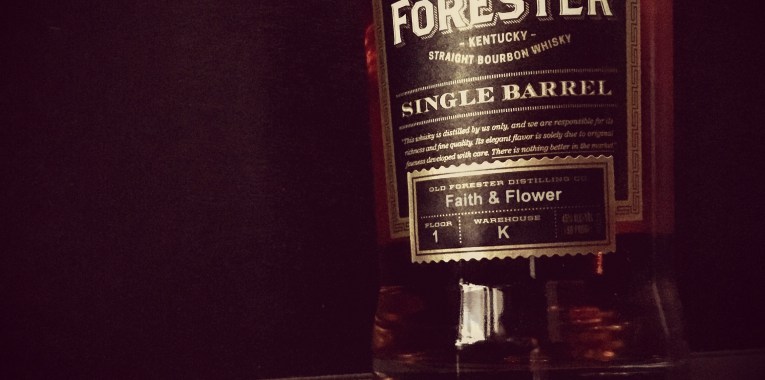
It’s time for the same old song and dance but with a brand new look. The first entry in a new chapter of house single barrels with the first Faith and Flower edition single barrel of Old Forester.

download.jpg

Old forester is an old brand, introduced by Gavin Brown in 1870 as the first bourbon brand sold exclusively in sealed bottles. Being sealed gave consumers assurance that the product hadn’t been tampered with or adulterated which made it the fan favorite of pharmacists who stocked it for its “medicinal qualities”. This reputation probably helped with Old Forester being granted one of six legal licenses to produce medicinal whiskey throughout Prohibition.

Unfortunately, over the century and a half of its existence Old Forester has been over shadowed by the Brown-Forman corporations other whiskies, like Jack Daniels or Forester’s mashbill twin Woodford Reserve. But recently the company has been trying to inject some new life into the old horse.

To kick things off the new Old Forester distillery is slated to open in downtown Louisville this year, And a few years back Old Forester was made the official bourbon for mint juleps at the Kentucky Derby (replacing Brown-Forman’s Early Times whiskey which is not technically a Bourbon) and around the same time they started rolling out their Whiskey Row Collection. The Whiskey Row is a series of Old Forester Bourbons meant to highlight milestones in Old Foresters history and the style of whiskey being made at that point in time. The Whiskey Row series are hence named with a date and a style like the 1870 “Original Batch” or the 1920 “Prohibition Style” and they also came with fancy new bottles and labels that set them apart from the classic Old Forester bottlings. And now all that fancy bottle and label goodness has found its way to the single barrel.

The Old Forester Single Barrel has always been a bit of a rare breed and been at least marginally separated off from the main bottles so it makes sense to align it more closely with its Whiskey Row brethren. The bottle is sleek, black, and just a little sexy.

510BA05C-43B6-4957-BAD0-F3DB91AEA44B.JPG  The single barrel offerings are at a solid 90 proof, one of the things that set them apart from the standard bottles, but the color scheme on the new label is an almost complete palate swap. Where the normal Whiskey Row bottles harken back to the old white/cream style labels of the brands history the new single barrel is jet black with silver lettering. And clearly looking to scratch the whiskey intelligentsia’s need to know everything the rickhouse and floor where the barrel aged are large and center.
 

But packaging doesn’t improve the whiskey in the bottle. So what about the actual whiskey? This inaugural Faith and Flower barrel comes from the first floor of Warehouse K. It’s the classic Old Forester/Woodford

mashibill 78% corn, 12% Rye, 10% barley that can too easily come off as a sweet corn bomb, but here it’s taken on a darker tone. Deep, red, ripe cherry winds its way through the middle of the palette while cinnamon, nutmeg, and woody sweetness lingers on the nose. The finish is medium yet weighty leaving the rough edge of the barrel mingled with the caramel sweetness.

Seeing this single barrel dressed up and tasting like this is like seeing a old friend the you’ve long felt to be predictable suddenly dressed to the nines and just dripping with an heretofore unseen sex appeal. The bones are the same but it’s a reminder that everything, and everyone, has a unexpected side that can make you sit up and take notice.

Whiskey Wednesday: Shooting Turkey Rye in a Single Barrel

I don’t like to repeat myself, but the conversation about the Wild Turkey Kentucky Spirit Barrel a few weeks ago got me thinking. While I might not be a Wild Turkey Bourbon man at heart the rye has always tickled my fancy. I’d like to say that it’s simply because it’s damn good whiskey but that hasn’t always objectively been true.

I touched a bit on the history of Wild Turkey with the post of Kentucky Spirit (You can read about that here) but Wild Turkey’s history feels more tied with the pop culture of past decades that almost any other brand except Jack Daniel’s and Jim Beam.

Wild Turkedownload.jpgy as a brand was said to originate in the 1940’s when an Austin Nichols executive, Thomas McCarthy, brought some choice whiskey along on a wild turkey hunting trip in South Carolina. Enamored with the samples he brought his friends kept asking for more of “that wild turkey bourbon.” More likely it was a marketing approach to appeal to hunters and the rugged, rustic type but every whiskey loves a mythical origin story.
Turkey also appeals to me because it’s been the favored drink of self destructive writers for decades. Hunter S. Thompson was a known lover, Stephen King mentions it with distinction in a few books, and in his biography it’s listed as the drink of choice for perennial hipster literary icon David Foster Wallace.

Yet throughout all this pop culture iconography it’s always the bourbon they’re talking about. The rye always seems to be the unspoken younger sibling despite, at least from personal experience, it being the bartender favorite.

The Wild Turkey Rye is known as being a “barely legal” rye.  At 51% Rye/37% corn/12% barley it meets the bare minimum by law to be considered a rye whiskey. Yet, along with the brand Rittenhouse, it is a rye that kept rye alive in the decades when it was certainly not cool to drink. And it was certainly popular enough that when the 101 proof rye was dropped in 2012 there was enough of an outcry that it was reinstate a mere two years later. And now it might finally have its family champion.

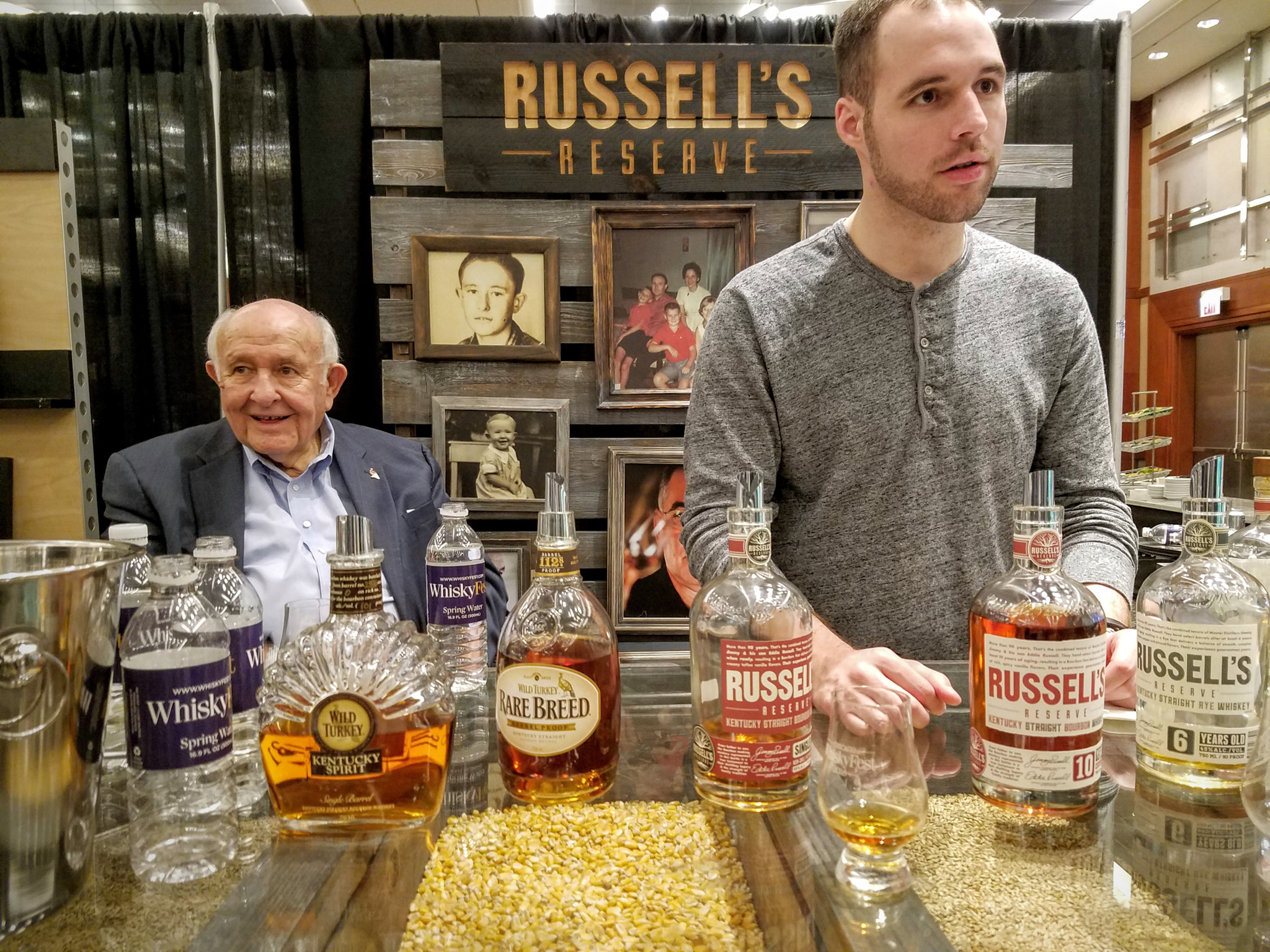
Bruce Russell is the third generation of Turkey Russells and he is the current

WF-16.jpg
Like Grandfather, Like Grandson

driving force behind their rye, at least their high end stuff. While Jimmy Russell has always been unassuming and focused on the fact Wild Turkey makes two products, a Bourbon and a Rye, his son Eddie and grandson Bruce have championed the expansion of the range arguing differentiation through aging.

The idea that certain spots  in certain warehouses yield “honey” barrels is well established in Kentucky whiskey lore even if no one understands why that should be the case. But for Wild Turkey rye that took a new edge with the release of the Russell’s Reserve 6 Year rye and then even more focus with the Russell’s Reserve Single Barrel Rye.

While the single barrel carries no age statement it is clearly considered to be the upper echelon of the Turkey Family Rye. The 6-year was first introduced in 2007, the year after they raised the barrel entry proof from 105 to 115 and four years before the new distillery came online in 2011. This of course means there’s been a fair amount of flux in the production.

The rye itself is a fine example of Kentucky rye. It is all rich tobacco, which makes the old smoker in me shiver, a hint of dill, a full serving of citrus and a baked quality that ties in the darker spices and the heavy vanilla/caramel barrel notes. And it’s bottled at 104 proof which grants it the same oomph as its Wild Turkey 101 sibling.

The problem for me is twofold. 1) pricing and 2) transparency. The pricing hangup is easy for me to explain, I want quality at cost like it used to exist before the “Bourbon Boom” but that’s the old man in me yelling at the local teens to stay off my lawn: it ain’t going to happen. As for Number 2 there’s no denying that Jimmy, Eddie and now Bruce make good, and often great, whiskey but in an age where the consumer is more and more interested in the process of what ends up in their bottle the Russell’s Reserve Single Barrel Rye lacks any discerning features on the label. If a single barrel product is supposed to be different barrel to barrel I want to be able to compare barrels and bottlings, and nothing on the label gives me the ability to do that. There is no barrel number, warehouse ID, or even simply year or batch number. And these aren’t new requests. These are standard industry practices for single barrel and have been since single barrels were introduced in the 80s. Which brings me back around to the why of  why does the Wild Turkey Rye tickle my fancy so?

I think it has to do with placement. There is a wonderful sweet spot that the 101 Proof Wild Turkey Rye hits in flavor, cost, and history. While I can love the flavors and the drive to create more rye that the Russell’s Single barrel presents the balance between those things isn’t there for me yet.

But then again, aren’t we most critical of those we want the love the most?

maxresdefault
I mean if it’s good enough for Aragorn…

Whiskey Wednesday: McKenna’s Patience

Bourbon is full of history, tradition, and ancient family recipes.

Except when it’s not. (which is pretty much all the time.)

This call back to the golden days of our frontier forbearers is meant to impart some sort of permanence, stability, and a patriotic appeal to what is actually a relatively new spirit. Bourbon wasn’t defined as a unique product of the United States until the 1950’s. As far as the United States government was concerned the term “whiskey” wasn’t even defined until almost 1907. So, while the “Founding Father’s” of Bourbon were certainly making whiskey, they were following their own rules by making what felt like a good product to them. Most of the regulation like the Bottled In Bond Act were spearheaded by the distillers themselves looking for tighter control and quality of their products.

In the worst case this clarion call to the past is meant to mislead consumers, but even the best intentioned creates a consumer base deathly averse to change. This is antithetical to the alcohol industry needing to be an ever-evolving marketplace.

633175116783425504.jpg
Why would you ever change this glorious label?!

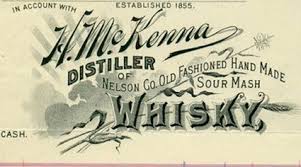
I still remember my first gut reaction of, “Why the hell would you do that” in the modern whiskey world. It was the label change on Henry McKenna Bottled-In-Bond.

Henry McKenna is a name that harkens back to the early days of the Kentucky distilling world. In some circles he’s as highly regarded as George T. Stagg and William Larue Weller, (very well regarded indeed).

McKenna was an Irish immigrant that moved to the Kentucky territory in 1838. Like many Irish immigrants at the time Henry worked on the railroads helping build the country’s early infrastructure. Also like many other immigrants he went into less backbreaking work as soon as he could.

He settled with his wife in Nelson County and by 1855 was a partner in a flour mill. Looking to make use of the spent grains they soon purchased a farm and soon after that were distilling about a barrel a day from the leftovers from the gristing process.

These early whiskies were almost assuredly all wheat but by 1858 the whiskey was had proved popular enough to hire a fulltime distillery manager and had begun distilling corn as well.

images.jpgThe whiskey produced at McKenna’s Nelson County distillery never carried the name ‘Bourbon’ but it was regarded to be of the highest quality. Newspaper at the time noted that McKenna never sold a drop that wasn’t at least three years old. There was even a bill introduced to Congress in 1892 asking for unlimited bond period on aging whiskey to prevent tax penalties on whiskey aging beyond the bond. This bill was known as “The McKenna Bill.” The next year McKenna passed away at the age of 75.

He left the business to his sons who had grown up in the distilling world. They managed the company until the advent of Prohibition forced them to mothball the distillery. But following Repeal James McKenna, a ripe 79, reopened the distillery with a distiller trained by his father’s original distillery manager supposedly keeping the family recipe intact.

James died in 1940 and the family sold the distillery to Seagrams, but not the original recipe. Seagrams marketed and produced Henry McKenna for decades until they dismantled the original distillery in 1976 and sold the brand to Heaven Hill in the early 90’s.

Under Heaven Hill two versions of McKenna are still on the shelves. The 80 proof Henry McKenna and the Henry McKenna 10 Year Bottled In Bond Single Barrel. You get one guess which one I love.

Not only does the Bottled-In-Bond meet all of the bonded regulations, it’s also 10 years old which is ancient in this shifting whisky scene AND it’s a single barrel so there is the possibility that each bottle you dive into will be different, a new variation upon the McKenna theme.

I’m spoiled and was able to purchase to Private Single Barrel a few years ago and haven’t tasted a regularly available bottling in a while. So, how does it stack up to all of that history?

l-s1yona3oobf95c.jpg

The nose is redolent of salted caramel, and the mid palette is all pistachio and pecan drizzled with vanilla and a dry, oaky, tannic finish. There is still a heat, and a rough around the edges quality from the its 100 Proof nature that hasn’t been fully tamed by its ten years in the barrel. It’s a whiskey that you can sip on but feels like it loves to be tossed around in a mixing glass as well, with plenty to offer a cocktail while not losing its identity.

This is most assuredly NOT the whiskey that Henry McKenna was making when he first set out to Kentucky nearly 200 years ago, but it is good modern whiskey. The label change I originally hated has grown on me and I’m sure that its updated look helped introduce it to a modern audience. Trying to stand on tradition alone can often leave us unable to see over the crowd, but perching on it’s shoulders can help show us the stage set for the future.

Whiskey Wednesday: Kentucky Spirit Soars Like A Wild Turkey

Let’s do something different, different for me at least, and talk Wild Turkey and about a single barrel not chosen by me.

Gathering together all of my Whiskey Wednesday posts, my personal whiskey collection, and the bottles I routinely stock at the bar a pretty glaring hole starts to emerge, and that hole is shaped like a damn Turkey. I couldn’t tell you why it’s there either. Wild Turkey seems like it should check all of the high proof, rough around the edges, old school bourbon boxes for me. And it’s made by Jimmy Russell! And yet it’s never close at hand for me. Let’s shake that up.

Wild Turkey was born as a Non-Distilling Producer in 1942. Austin Nichol’s & Co. were a New York based grocery wholesaler. They finally purchased the Ripy Brothers Distillery (then kimgres.jpgnown as the Boulevard Distillery) in 1971 and renamed it the Wild Turkey Distillery. This purchase made sense since the Ripy distillery was where most of the Wild Turkey Whiskey was coming from but it was terrible timing as “white goods” started gaining steam and the bourbon market tanked. The brand and distillery, were purchased by Pernod Ricard in 1980 and then sold to Gruppo Campari in 2009. But through out all of those changes Jimmy Russell has been there, making whiskey.
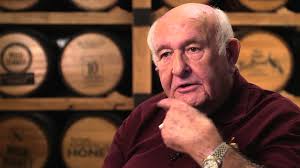
Jimmy’s career has lasted over 60 years; he started at
the Wild Turkey distillery well before it was the Wild Turkey distillery. In fact,

jimmy-basketball.jpg
Pictured: Jimmy Russell’s mad skills.

his tenure at wild Turkey began 10 years before the 1964 act of Congress that declared Bourbon to be a “distinctive spirit of the United States.” He was named Master Distiller in the late 60’s and is the last living Elder Statesman of Bourbon. He, along with Booker Noe and Elmer T. Lee, were the first generation of rock star distillers. These were distillers that were forcibly evicted from the seat in front of the stills to go travel and spread the good word of Bourbon. And even into his 80s he’s still traveling and distilling. And it’s a family business these days, his son Eddie is the new kid on the block with only 30+ years of distilling experience.

Jimmy Russell is essentially old school Bourbon personified. Yet he doesn’t take himself seriously and no matter who his employers are he makes no qualms about who he is or his opinions. For the past several years when doing tastings and traveling Jimmy would tell everyone at the tastings that he didn’t like low proof young whiskey, while pouring them Wild Turkey’s low proof young whiskies. Guess what Wild Turkey doesn’t mimgres-1.jpgake anymore? Seeing the Wild Turkey 101 Rye return with a vengeance was transcendent moment amidst all of these brands lowering proof and dropping age statements. Yet for all of my love of Jimmy, and his rye, when I drink the Bourbon it’s usually me trying to figure out why I don’t drink the Bourbon.
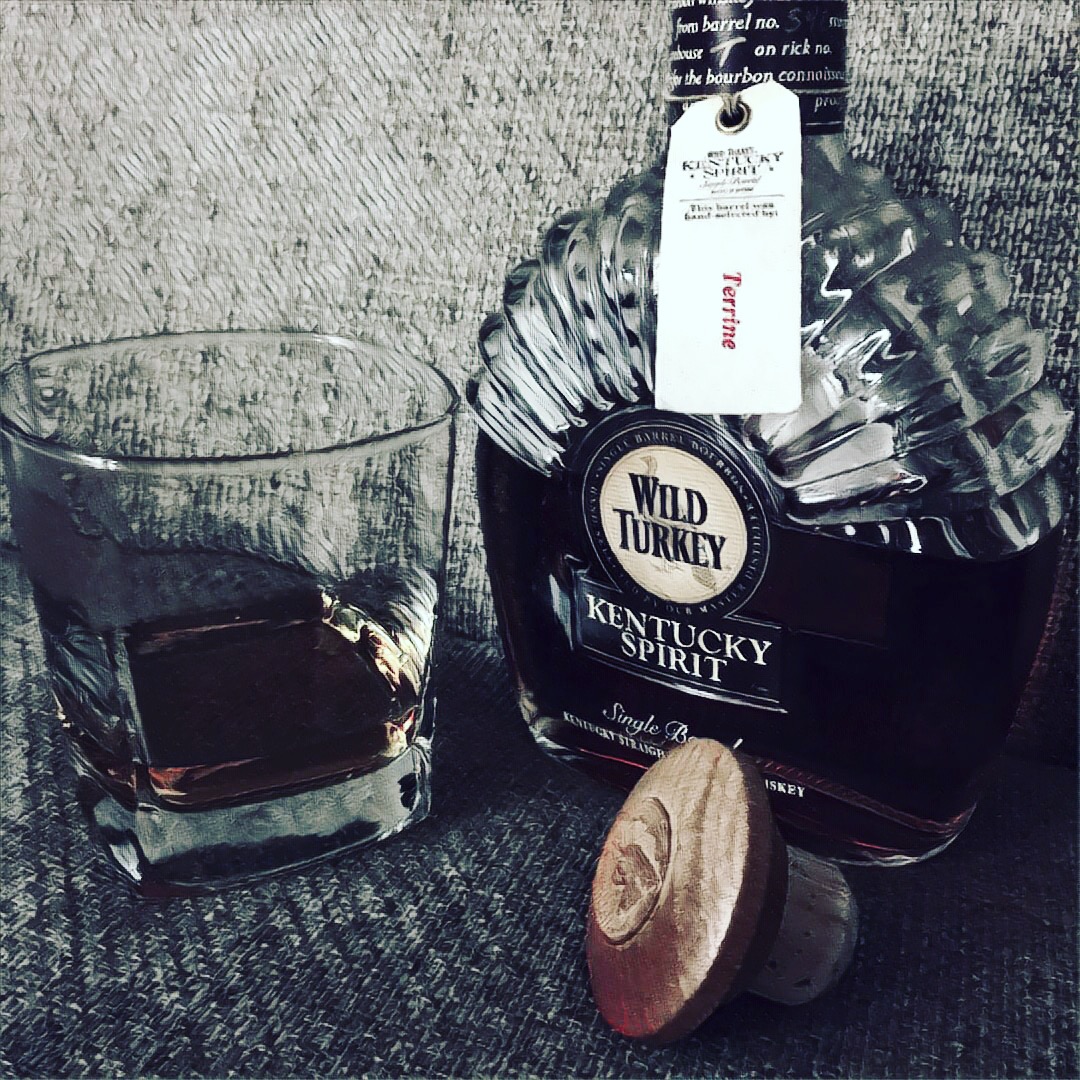
So naturally the first time Ryan Wainwright plopped this single Barrel of Wild Turkey Kentucky Spirit in front of me at Terrine (now The Ponte) my eyebrow rose skeptically. At 101 proof the Kentucky Spirit is essentially single barrel W

IMG_1854.JPG
Original Drop

ild Turkey 101 Bourbon- so I was expecting an incredibly earthy, slightly musty, hard oak. Instead, it turned out to be a spice bomb of a bourbon, with a dark baking spice, a dark, overripe cherry, with a farm house quality the I feel is coming from the Wild Turkey yeast. The oak and caramel in the barrel are supporting players rather than the main attraction and the proof sits right where it should granting all of the flavor with very little burn. I was genuinely surprised.

But I don’t think I should have been. This barrel taste’s like Jimmy’s bourbon philosophy, chosen by a bartender with a very specific palette. What this barrel says to me is that although Wild Turkey is quite frankly in a slump there is still liquid gold in its warehouses. There is experience, and skill, and craftsmanship that seem to be producing a sometimes muddled bourbon, but when the sun breaks through, damn, does it shine.