Whiskey Wednesday: The Declaration of Jim Beam’s 200th Anniversary.

“We hold these truths to be self-evident, that all men are created equal, that they are endowed by their Creator with certain unalienable Rights, that among these are Life, Liberty and the pursuit of Happiness. — That to secure these rights, Governments are instituted among Men, deriving their just powers from the consent of the governed, — That whenever any Form of Government becomes destructive of these ends, it is the Right of the People to alter or to abolish it, and to institute new Government, laying its foundation on such principles and organizing its powers in such form, as to them shall seem most likely to effect their Safety and Happiness.”

There are some words, some achievements, that are worth celebrating, even if their modern iteration doesn’t live up to its ideals in the popular imagination. It’s hard to find a more iconic American brand than Jim Beam. It’s the #1 selling Bourbon in the world and in many ways the Beam story, both that of the family and of the whiskey, parallels the story of America.

download-3.jpgThe story begins with members of the Böhm family, German immigrants who would latter change the spelling of their name to “Beam,” settled in the Kentucky territory in the late 18th century. The family patriarch, Johannes “Reginald” Beam, was a farmer. And like many farmers of the time he started producing corn whiskey as a way of preserving crops. This side venture lead to the first Beam whiskey to start flowing from the Old Tub Distillery in 1795.

Known as Old Jake Beam Sour Mash, this whiskey proved successful enough that when David Beam took over the family business not only was he able to expand the distribution he was also able to construct a new distillery in Nelson County in 1854. This move came amidst an industrial boom in the country which allowed for modernization of production, and the move to Nelson County allowed for greater use of the massively expanding rail system in the States.

The eponymous James Beauregard Beam over saw the family business both before and after the Great Failed American Experiment of Prohibition. Prohibition interrupted the family production but James was able to rebuild the distillery in 1933 in Clermont, Kentucky in a mere 120 days. It was at this point where “Jim Beam” entered the international lexicon and a member of the Beam family has been at the still, and half the other whiskey stills in the country, ever since.

download-2.jpg

The Beam family has spearheaded this spirit for over 220 years now. However, the actual company hasn’t been owned by a Beam since 1945 when it was purchased by Harry Blum, a Chicago Spirits Merchant. It’s changed hands several times throughout the decades but currently it is a subsidiary of Suntory Holdings known as Beam Suntory. The most American of products is now owned by the second largest international beverage corporation in the world.

Flash back to the mid 90’s. Bourbon wasn’t the hip, award winning, auction breaking behemoth that its turned into today, yet it was still worth celebrating. In 1995 Beam released a 200th anniversary edition decanter and it’s like a little time capsule of Bourbon Past crossed with where Bourbon Future.

Decanters used to be the industry gimmick. When no one wanted to drink Bourbon you made the bottle so irresistible that you had to snatch it up. Compare that to the specialty releases of today where a warehouse surviving a tornado is cause for an award winning bottling.

It was a unique bottling. Bottled at 95 Proof and aged for 75 months, also known as 6.25 years. A higher than standard proof and emphasize on aging, albeit in an archaic ,confusing way. Yet ,the most interesting difference is that there is almost no information about this bottle online. No mashbill info, no tasting notes, and only a smattering of secondary market offerings.

We can assume this was the standard Beam mashbill, which puts us at something like a 76% Corn, 12% Rye, 10% Malted Barley with a #4 Barrel Char.

On the nose there is a farm house quality, along with a dusty oak and touch of sweet caramel. The palette gives way to a familiar barrel char, dark stone fruit, and a lively backbone. The liquid is still very much alive even after 20 years in the bottle. The finish is clean and lingers for just an extra moment and leaves the yeasty, dusty feel that, to me at least, is an indelible part of the Beam DNA. In the end this is a bottle that simply, and eloquently, celebrates the style of whiskey that Jim Beam made, makes, and continues to make.

The Declaration of Independence was a larger enough summer blockbuster that it will inevitably get a sequel. And I hope that this time we truly do mean all humankind are created equal, and that the casting is colorblind.

This is a whiskey made by a family of immigrants, who traveled to a new country, set down roots and became synonymous with one of the most iconic, and living, pieces of Americana to ever exist. A hometown hero on the international stage. I just returned from a trip to the Cook Islands which is in the middle of nowhere South Pacific and they had one bourbon: Jim Beam. Yet, this All American Bourbon isn’t even American owned. To me this doesn’t take away from it’s Americanness, in fact in just speaks to how tightly we are tied to the rest of the world. No matter how much we fight it, there is no “Us” and “Them” any more. We’re all in this together.

As I sit sipping this whiskey musing on the fireworks, hot dogs, and pool side celebrations I can’t help but think that the Declaration of Independence was a larger enough summer blockbuster that it will inevitably get a sequel. And I hope that this time we truly do mean all humankind are created equal, and that the casting is colorblind.

Whiskey Wednesday: Hibiki’s Resonant Disappearance

Despite being a self avowed fanatic of American whiskey the thing I’ve
found myself writing about and drinking the most recently has been
Japanese whisky.  The last time we spoke way back in December I was
drinking poetic about the Hakushu malts and the fact that though they often seem
to be in the shadow of their Yamazaki counterparts the excellence
of their design meant that it wouldn’t be long before they too
disappeared into a puff of Unicorn smoke.

That opinion seems to have be prophetic with the recent announcement
by Beam Suntory of the “partial” discontinuation of both the Hakushu
12 year and the Hibiki 17 year expressions. While the products will
only be officially discontinued in Japan they will only have “limited
availability in the next few years.” This announcement came as a bit
of a surprise to me with the Hakushu because I haven’t seen it have
the same name recognition and brand power as the Yamazaki does in the
States. But when your distillery is only 45 years old its easy to see
how your supply of 12 year old single malt could be tight.

But the real surprise to me was the Hibiki 17.

The house of Suntory have always considered themselves to be blenders
above all else. While the Single Malts may be the high priced auction
house darling the Hibiki line has always been the jewel in Suntory’s
eye.

Meaning “resonance,” the Hibiki line was first released in 1989, 5
years after the first release of Yamazaki 12 year. Originally
comprised of just the 17-year and the 21-year, a 30-year expression
was released in 1997 and the much missed 12-year was introduced in
2009 before being announced as discontinued in 2015.

Think about that for a moment. The Hibiki 12-year appeared on the
market, soared in popularity, became a staple of the bar world, and
then completely vanished all in the space of 6 years. That’s an insane
trajectory for any brand and is perfect evidence that Japanese whisky
is a truly global product at this point.

The Non-Age Statement Hibiki Harmony hit the market slightly before
the disappearance of the 12-year and despite everyone crying, “Foul!”
many of us were willing to give Beam Suntory the benefit of the doubt
for two reasons: 1) the Hibiki 12-year was the only expression to
utilize whisky that was aged in plum wine casks. They hadn’t
projected for the popularity of the expression, so they discontinued it
because 2) the Harmony wasn’t a replacement for the 12-year. It is
meant to be a more accessible version of the 17-year.

The Hibiki line has always been a blend of whiskies from all three
of the Suntory distilleries: Yamazaki, Hakushu, and
Chita. To them it is the confluence of every unique facet of their
operation. It is meant to represent the ideal of the harmony between
people and nature. The 24 facets of the bottle represent the 24
seasons of the Japanese calendar and invoke the comparison of this
balance to the balance of the malt and grain whiskies in the Hibiki
blend that resides inside the bottle.

This attention to detail is part of what has always set the Hibiki
line apart from my disdain of other blends. And yes, you would have
had to be a real prophet 20 years ago to predict the explosive growth
of the segment, and yes, it’s a real shortage. Bars in Japan are
pouring the Harmony just like we are over here. And yes, the rise of
shochu and decrease in whisky drinking in the 80’s led to lower
production. But the line was introduced in the late 80’s when this
downturn was happening and while the 17-year is being officially
discontinued in Japan it’s “limited availability” will continue to
limp on in the United States. This speaks to the power and demand for
premium aged Japanese whisky in the US, but also can’t help but lend
a tinge of cynicism to the disappearance of the 17-year. Its as if stocks
are being pulled at a younger age to go into blends like the Harmony
to cash in on the popularity wave now versus risking a drop in demand
later.  And if that’s true who could blame them?

In Beam Suntory’s defense, the Harmony is still damn delicious and
their quality has not dropped. They have also consistently stated that
they are ramping up production and that this will be a temporary
hiccup, but how many temporary hiccups have we seen come with a flashy
return and a price hike? (I’m looking at you Old Fitz.)

None of this denies the fact that the Hibiki 17 Year is an amazingly
delicious dram. The nose is full and rich, distinct notes of honey,
with some roasted pear, a touch of smoke and ume plum.

The palette offers a touch of sweetness to go along with the initial
scents with the addition of raisin, oak, and a pithy citrus zest that
carries on to a long finish that turns into an darker
amontillado sherry note with a touch of cacao.

It’s easy to see why this blend is the crown jewel of the Hibiki line,
it’s easy to see how we drank it all out of stock, it’s easy to see
why they may have discontinued this expression to protect the more
award winning 21-year expression, and it’s easy to see why we should
all raise a glass and drink to this resonant whisky and to its equally
evocative moment in time.

Whiskey Wednesday: A Bitter-Sweet Hakushu

Life is a bittersweet balance. I’ve been hosting Whiskey Wednesday for going on six years now. It’s exposed me to more bottles and drams than I can count, constantly challenged me to stretch my creative muscles, and introduced me to some of the most delightful nerds/people that I’ve ever met.  I’ve grown as a person, a bartender, a writer and a insufferable know it all.

I never would have thought six years ago that these Wednesdays would be something that I would still be doing, let alone have my thoughts and notes for them become so expansive that they would undergo a biogenesis into a blog that people actually read. I also wouldn’t have survived all these years with some semblance of my sanity intact if things had stayed stagnant. Change, experimentation, and misplaced passion have kept me going.

And now it’s time for another change. After today, Whiskey Wednesday continues but it’ll become more abstract. Less about every scattered soul flocking to the bar once a week for a drink, and more about raising a glass from where ever we might be. So, for my last night behind the stick for the foreseeable future lets combine the past and the future and pour some Hakushu.

The Hakushu Distillery was found in 1973, 50 years after Yamazaki, it often seems to live in the shadow of its older sibling. It also lives in the shadow Mt. Kaikoma in the Japanese Southern Alps. This was a deliberate choice made by Keizo Saji, the company’s second Master Blender. He chose the site primarily because of the quality of the water. The naturally granite filtered water leant a subtlety and effervescence to the distillate but the site also offered a distinct microclimate with the surrounding forest and with it sitting at 700m above sea level its definitely one of the highest elevations for whisky distillation in the world. For comparison Scotland’s two highest distilleries, Dalwhinnie and Braeval, both sit around 355 meters above sea level.

All of this combines to create a spirit that is lighter, more delicate, and often more mellow than its Yamazaki counter points. Also, unlike Yamazaki, Hakushu utilizes peated malt. When combined with the distillery and terrior this peat takes on more of recently extinguished early morning, mountainside cooking fire than more maritime and often aggressive smokes of the Scots.

The distillery also takes to heart the Japanese respect for nature. It strives for harmony with its surroundings right down to its aging warehouses. Built into the mountain itself they utilize earthquake safe, single story tacks that are about 13 levels high. This kind of aging space, combined with the high elevation has allowed them to mature a spirit with relatively low barrel influence, especially for the age of the whiskey.

As for the whiskey itself, both Hakushu and Yamazaki import their barley, both the peated and unpeated barley. However, they do grind, mash and ferment on site. They have six pairs of stills at Hakushu with at least 4 different shapes. They then utilize five different type of aging casks while primarily focusing on ex-Bourbon and hogsheads. All of this diversity in barley, stills and barrels allows them to create what they call a combination of 40 different styles of whisky. Keep in mind Suntory’s primary craft, as they see it, is blending. And unlike Scotland where even rivals will trade barrels back and forth to get unique flavors for blends, Suntory was essentially trying to build a category from scratch. If they wanted diversity they had to make it themselves. And 44 years later it feels like Hakushu is finally coming into its own.

It may seem odd to call a 44-year-old operation “young” but when your primary marks are a 12 year and 18 year old single malt a 44 year old distillery may not be an infant but its still most certainly a toddler.  Hell, the first release of Hakushu 12 wasn’t until 1994, a solid 10 years after the release of Yamazaki 12 year. And while the Yamazaki has the experience and the award that come with it the Hakushu is certainly flexing it’s muscle.

Both the 12 year and the 18 year are primarily composed of three styles of distillate: unpeated distillate aged in sherry buts, unpeated distillate aged in hogsheads, and peated distillate aged in ex-Bourbon. These truly show off the complexity and depth of the distillery creating a whiskey that is light, yet powerful. The aroma of smoked pears wafts over a palette that is green, with a touch of citrus and smoke. The 18 draws out more of the stone fruit qualities while adding a touch more sweetness from the extra oak.

In short, Hakushu also knows what they’re doing and while it may stay in the shadows of its mountain forest home it won’t be in the shadows of its Yamazaki brethren.

So, come share a glass with me because it won’t be long before Hakushu catches up to the Yamazaki awards and it disappears like a forest mist of rarity and also because who knows where we’ll both be the next time we can.

Whiskey Wednesday Adjacent: Pick Your Apple Poison

You can always tell what a bar manager’s secret passion is. You’ll look at the backbar and no matter how well curated it is there will always be a collection of bottles that are out of place, an odd amount of variety in an esoteric category. For me, that guilty pleasure is apple brandy.

Bourbon may have become the United States Native Spirit through Congressional Resolution in 1964 but Apple brandy, that New Jersey Lightning, is the real first spirit of the colonies. In the cold New England winters colonists would leave cider outside overnight allowing it to freeze. Since alcohol doesn’t freeze what was left over after this rudimentary distilling, or “jacking”, process was a more concentrated alcoholic apple beverage.

This proto-brandy became known as Applejack and had as large a reputation for causing blindness from poor ‘distilling’ as it did for getting the drinker drunk. But it wasn’t long before industrious businessmen started cleaning things up. Robert Laird was a Continental Soldier who served under George Washington during the Revolutionary War. There are records of Washington requesting Laird’s family recipe for “cyder spirits” which has lead to the claim that Laird supplied Applejack to the Continental Army. After the war Laird founded a distillery in Scobeyville, NJ and which is now the oldest licensed distillery in the United States, receiving License Number 1 from the U.S. Treasury in 1780. But the “cyder spirits” and their hard cider cousins did not fair well under prohibition.

Prior to Prohibition most of the apple orchards in the colonies were not the juicy, edible fruit that we think of today. They were in fact the hard, bitterly sour variety that make excellent cider. Apples are what are known as extreme heterozygotes. Essentially, the latent genetic diversity of the actual seeds means that a tree grown from a seed will bare almost no resemblance to the varietal of the parent tree and more often than not will be completely inedible. These types of apples are known as “spitters.” To create consistent apple varieties a process known as grafting, where a budding branch of the parent tree is implanted into existing rootstock essentially cloning the original tree. There were a few issues with getting active graft to the New World in those early Colonial days which meant that most attempts at growing apple trees were from seeds. And while these spitters were terrible for eating they were perfect for cider.

On the frontier, Cider was actually safer to drink than the water so settlers again turned to cider orchards. And many of these orchards were in fact planted by John Chapman, or as he’s better known, Johnny Appleseed. John Chapman was a real man who bares an actual resemblance to his folkhero self. He did wander the frontier planting apples from seeds, but Chapman was more a shrewd businessman than a carefree vagabond.

Starting in 1872, the Ohio Company of Associates promised potential settlers 100 acres of land if they could prove they had made a permanent homestead in the wilderness beyond Ohio’s first permanent settlement. To prove their homesteads were permanent the settlers were required to plant 50 apple trees and 20 peach trees in three years. This proved they were sticking around because an average apple tree took ten years to bear fruit.

Chapman realized that if he stayed just ahead of the settlers, doing the difficult orchard planting he could sell them for profit to the incoming frontiersmen. And being a member of the Swedenborgian Church his belief system explicitly forbade grafting because the thought it caused unnecessary suffering for the plants. Thus his orchards were grown from seeds and unfit for eating but perfect for cider.

Unfortunately, most of Chapman’s orchards were cut down during Prohibition when FBI officers were targeting cider productions and orchards helping hasten the downfall of America’s cider tradition. Meanwhile, the apple brandy world had consolidated with Laird’s being the only game in town. The drinking populace’s tastes also changed looking for lighter, less flavorful options like vodka and blended whiskey which transformed Applejack into a blend of apple brandy and grain neutral spirit. By 1970 Laird’s had shrunk from three distilleries to its single plant in New Jersey. They even ceased production for several years as the stocks on had were more than sufficient for demand.

Flash forward to 2017 and Apple Brandy and cider are riding a resurgent wave. Craft cider producers have expanded the category and given it respectability. Apple brandy got to come along for the ride and also got it’s own boost from the Cocktail Renaissance. Many classic drinks called for “applejack” and I know personally it helped be ease many drinkers off of drinks calling for “apple pucker.”

The variety of apple brandy these days is rather astounding. From classic French Calvados, to Laird’s New Jersey Bottled-In-Bond, to Germain Robin’s French style California apple brandy, to Copper and Kings new wave distinctly American Apple Brandy made right in the heart of Bourbon Country. They are all as unique as the seeds that they sprang from. Which is why I need so much shelf space for them.

Whiskey Wednesday: Tyrconnell’s Long Odds

Every now and then I like to remind myself that Irish Whiskey isn’t spelt “Jameson’s.” I’ve talked about the explosive growth of Irish Whiskey before but here are some quick facts.

While everyone is gaga for Japanese whiskey as a luxury product Irish whiskey is expecting to double its sales by 2020. In 2014 Jameson’s sold 18 million liters in the US alone. The Scots and the Irish will fight until the Sun goes cold over who first created whiskey but there’s no debating the fact that it was Irish monks that tought most of the Western World how to distill. Hell, even the word “whiskey” is an Anglicization of “uisge beatha” which is Gaelic for water of life. The Irish are indelibly linked to whiskey so what’s the problem? It’s a monoculture.

Need proof? In 2014 Jameson’s closest competitor, Bushmill’s, sold a whopping 1.3 million cases. Jameson’s currently accounts for 63% of the global Irish whiskey market. Monocultures are great for business but are incredibly susceptible to full scale collapse. Look at what’s happening to the Chiquita bananas or how the agave industry is actively working to reinvigorate the gene pool with the Bat project.

Irish whiskey has traditionally lived and died with the American market and like so many other things it was ruined by Prohibition. On top of that throw in the Irish War for independence, a civil war, trade disputes with Great Britain, and you end up with an industry made up of over 160 distilleries and 400 brands reduced to a mere two distilleries in the mid-70’s.

The remains of the Irish whiskey industry banded together to form Irish Distillers which was then purchased by Pernod Ricard in the late 80’s. They then began the massive push to get people to drink Irish. It worked and since 1990 Irish whiskey has been the fastest growing spirit in the world. It’s ballooned the industry with 32 new or proposed distilleries across Ireland. Not bad for an industry long sustained by only four distilleries and of those four only one has been in operation longer that 1975.

It’s a old industry with new blood and the near death of the industry left many historic brands and styles in the grave. Irish Single Malts and Tyrconnell are great examples. Tyrconnell was the flagship brand of the Old Watts Distillery, It takes it name from a racehorse who won the National Produce Stakes in 1876 at literally  at 100 to 1 odds. It was incredibly popular in the US, there are photos of Yankee Stadium at the turn of the century with Tyrconnell ads on the billboards. But prohibition shuttered the brand and the distillery in 1925. The Brand was revived by the Cooley distillery in the 80’s.

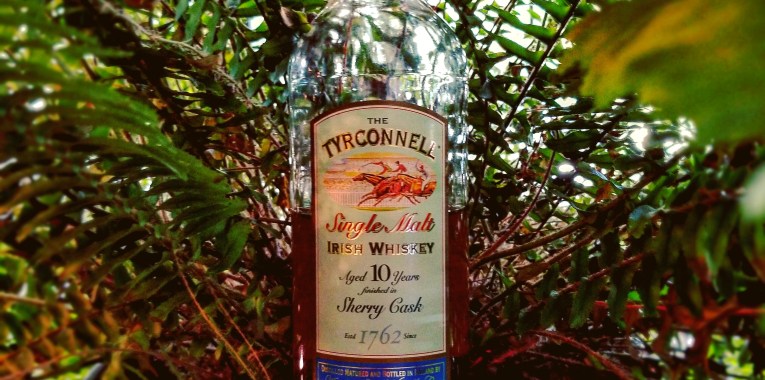
It’s made in traditional Single Malt Style, 100% malted barley and double copper pot still distillation with no peat, and then aged in ex-Bourbon Barrels. The 10 Year Old Madeira Cask Finish is my real jam though. A light, fruit forward whiskey with bitter chocolate, green, tropical fruit, and a incredibly creamy finish. It’s one of those whiskies that slips below the radar while being incredibly excellent. And they’ve gotten to the place where they are now planning on a limited release of a 16-year old Single Malt. And maybe that’s the silver lining to the Jameson’s problem.

All of this growth in the Irish whiskey world is being fueled and often literally paid for by sales of Jameson’s. For many people that’s all Irish whiskey will ever be which leaves a lot of hidden gems to be found flowing from the Emerald Isle. The world has caught on to Bourbon, its caught on the Japanese whisky, hell its even caught on to Taiwanese whiskey, but not Irish. Not yet anyway…

The days of Yamazaki and Weller Antique being undervalued have faded and instead of being sipped and shared it’s now being hoarded and auctioned. And i miss sipping and sharing. And at least with Tyrconnell I still can.

Whiskey Wednesday: Unicorns, Whales, and Narwhales

Unicorns are all around. You can see them prancing through the Instagram forest, taunting you with delicious rivulets running down the sides of a glistening Glencairn glass yet the moment you emerge into the fields of the liquor stores they become a distant fable. What happened to these legendary bottles?

The short answer is: they became legendary. As humans we often seem driven to obtain the unobtainable. We strive to climb the highest mountain, to put a man on Mars, and to score a bottle of Pappy Van Winkle for our home bar. Pappy might not be as lofty a goal as the first manned mission to Mars but the spirit is the same. This mentality to obtain the best doesn’t just drive the whiskey market either.

In the world of craft beer the legendary brews are known as ‘whales’ and if you ever wanted to see a brewmaster roll their eyes and grit their teeth ask them

When everyone wants a unicorn what happens to all the workhorses?

about the notorious ‘Whale Hunters.’ These Sudsy Ahabs sail the special event scene, spear the rarest beer on tap, drain the keg and disappear, often without supporting the breweries core beer and usually never to be seen again. They don’t add value to the bar, or even necessarily to the brand, they’re just looking to score something that they feel only they can appreciate before anyone else can be exposed to it.

While the Unicorn and Whale market have certainly spurred growth, especially in the craft scenes, and have been some of the biggest drivers of the infamous Booze Black Market they have an unseen downside. When everyone wants a unicorn what happens to all the workhorses?

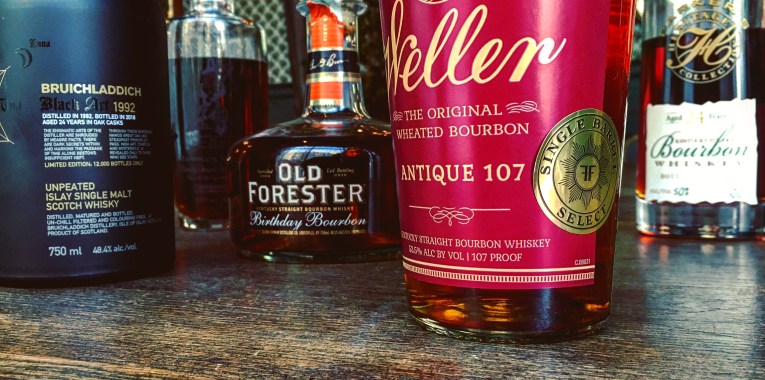
Unicorn bottles like the Pappy’s, or the Parker’s Heritage, or the Old Forester

The current whiskey boom has created a feedback loop where what were once reliable bottles are becoming, maybe not unicorns but certainly narwhales.

Birthday Bourbons are great special occasion bottles but they can’t support a distillery on their own. You need good product, at a good price, that people want to drink frequently yet responsibly. The current whiskey boom has created a feedback loop where what were once reliable bottles are becoming, maybe not unicorns but certainly narwhales.

Take the W.L. Weller line up. Created by William Larue Weller the brand has existed since the 1840’s and enjoyed great popularity at the time. Julian ‘Pappy’ Van Winkle joined the Weller Company as a salesman in 1893 and after W.L. Weller passed away in 1899 Pappy and Alex T. Farnsley purchased the company in 1908. A. Ph. Stitzel had been under contract to produce whisky for the Weller Company and after a merger in 1933 the infamous Stitzel-Weller Distillery opened in 1935. The distillery made W.L. Weller, Old Fitzgerald and many other whiskies (but no Pappy Van Winkle) until it shut down in 1992. The Weller brand was than purchased by Buffalo Trace in 1999 where it is currently made along side it more famous Van Winkle cousins.

IMG_2815.JPG
A.H. Hirsch 16 Year Special Reserve

At face value this story is similar to many other whiskey brands that existed before and after Prohibition. It enjoyed early success, sluggish sales in the middle of the century and has been enjoying rising tides with the rest of the Bourbon industry. But between Stitzel-Weller’s closing in 1992 and today we’ve been struck full force with the Bourbon Boom and Pappy Mania. And once the word got out that Weller was just “young, cheaper Pappy” stocks began to get bought up, and people saw a chance to raise prices.

What was once a great everyday workhorse is slowly becoming something pricy and privileged rather than welcoming and friendly. And I say this as a spoiled man who just received a House Single Barrel of Weller Antique 107. This is going to be an everyday whiskey for myself and for the bar at Faith and Flower but we almost didn’t end up with it because of its Narwhale reputation.

Due to a snafu in the warehouses people who were not myself, or my bar, were able to order cases of our current barrel. And the entire barrel blew out of stock in less than 24 hours. And I first found out about this situation by being linked to a post of someone selling bottles of it on the Secondary Market for $70!

While all the one hand it’s flattering that someone would want to pay so much for a barrel I’ve picked out, it’s also infuriating not only because it feels like someone stole one of my favorite toys but because that’s highway robbery on the price. They weren’t just stealing from me, they’re stealing from the people they’re selling it to as well.

Thankfully we were able to retrieve all of the cases (minus a few missing bottles) and I can continue to wage my war against it becoming a true unicorn by making Old Fashioned Cocktails with it. But where does this unicorn hunt leave us?

Let’s look at the craft beer world again. For the first time in nearly two decades beer growth and consumption is down, not slowing. A gentle decline has emerged. Many analysts point to breweries being bought out by massive conglomerates and to choice fatigue, there are just so many damn options that its exhausting. But they also point out that people aren’t drinking less they’re just moving to other drinks. Like whiskey.

IMG_3196.JPG
Hibiki 17

What if these craft beer drinkers became exhausted not by choice but by the hassle and work needed to get they’re favorite brew, or were so discouraged by never being able to get a thimble of Pliny the Younger that they tried something else, say a workhorse Bourbon. Turns out they liked it and moved into a new category of drinking. What happens when these same problems invade the Whiskey World? How long can we maintain growth in an industry when the goalposts keep moving?

On the other hand, while my philosophy has always been education and approachability, I have felt the sting of working an entire year to craft a bar program that delivers everyday excellence, to then earn that one shinning Unicorn of a bottle and priced it in a way to reward thirsty travelers in their search only to have that one Unicorn Hunter swoop in an annihilate the bottle. It’s a balancing act that we’re all going to have to get better at if we want to keep this Whiskey Boom from going belly up.

Drinking Poetic (on a Wednesday): Highballs

I’m a whiskey purist. Bourbon, Scotch, Japanese, Barrel Strength, it doesn’t matter, I drink it neat. For years I was determined that not even a drop of water would come between myself and my sweet, sweet barrel aged nectar. What’s changed me? The highball.

Highball_Signal_Jun_12      The highball is nothing new. It’s a simple class of drinks: a shot of spirit diluted with several ounces of a carbonated beverage on ice. My favorite rationale for where the term “highball” originated from comes from the old railroad days. Along the rail tracks there were “highball” signals where a ball would be hoisted out of a barrel signaling that the track ahead was clear and the trains could travel full speed ahead. A “highball” drink was at the time served in a highball glass with a single lump of ice. As the soda was added to the glass the ice would rise just like the highball signal telling drinkers they could dive in at full speed as well as quickly down the remainder of the drink when their train pulled in.

Like most classic it was simple, easy, and was much abused during the 70s, 80s and 90s becoming barely recognizable but it’s still a class of drinks that people still know the name for.  But the highball that interests me, the undiluted purist, is a straight whiskey soda.

My first highball in Japan was out of a can.

Ask for a Whiskey Highball in the U.S.A and there’s a good chance you’re going to end up with a whiskey and ginger and even this combo wasn’t enough for the sugar loving American palette and has been vastly over shadowed by its cousin the Jack and Coke. But in Japan the Whisky Highball has been elevated to an art form. I had heard the hype but it wasn’t until I visited Tokyo this year that I finally understood.

My first highball in Japan was out of a can.  I would never even consider getting a canned mixed drink from a 7/11 in the States but when you cross the international date line and land in the future and your hotel room isn’t ready for another 7 hours what else are you supposed to do while walking through the city?

From the moment that can touched my lips all I drank for the rest of that trip was highballs. And what struck me everywhere was the balance and the quality.

It was expected in Ginza. It was a random bar that we didn’t know the name of. The bartender knew maybe a handful of English words but when we ordered Suntory Highballs he enthusiastically pulled every Suntory whisky he had from the back bar to try and walk us through which one we actually wanted, and then thoughtfully poured the whisky over hand carved ice, stirred, and topped with soda before continuing on to casually brulee half of a passion fruit for the garnish of another customers drink. But when the highball at the chain ramen shop where you have lunch is just as elegant you know there’s something special happening.

It’s an attention to detail and a respect for the process. Each person who poured me a highball had respect for the process in their own way. Its easy to see, and taste, why highballs are a cultural force in Japan. And with the rise of Japanese Whisky across the world the Japanese are trying to export their highball ethos as well.

Suntory and Nikka have both made moves to position themselves in the highball world. Suntory has even released the Suntory Toki in the states, a blend specifically designed for the taste profile, and price point, of a highball. But the problem for me with the Highball in the States is the soda. Doesn’t matter how good or finally designed your whisky is the moment it is smothered by carbonated water from the gun, or drowned with a bottle of Canada Dry it’s lost it’s edge. There’s just simply a difference in the quality of bubbles.

Its odd to call a machine thoughtful but all good bartending has a certain degree of prep that happens behind closed doors.

Enter the Toki Highball machine. My first thought on hearing about this highball machine was why the hell would I need a machine to make the simplest drink on the planet?! But after my eyes were opened in the Land of The Rising Sun I approached the machine in a new light.

The design and execution of this machine are thoughtful. Suntory was aware of the problems of trying to export their highball style and worked to eliminate as many roadblocks as possible. Not only does the machine have the necessary refillable whisky tank, but also a separate water cooling system. It then carbonates with amazing specificity and will dispense the sparkling water independent of the whisky. My bubbles problem was solved.

It also adds a measure of thoughtfulness back into the process. Its odd to call a machine thoughtful but all good bartending has a certain degree of prep that happens behind closed doors. Whether it’s batching, technique training, or infusion,s a good portion of our job is doing the work out of sight so that the customer can sit at the bar and enjoy a seamless, delightful night out on the town. And the behind the scenes work has definitely been done to bring these highballs from Tokyo to LA.

So rejoice! Tonight is the unveiling of the Toki Highball machine at Faith and Flower. Come see exactly what I mean.

Whiskey Wednesday: The Art of Kavalan

If the Scots are the craftsman of the whisky world, passing down tradition and technique year after year because it works, then the Japanese are the engineers, dissecting and reassembling each component part. The Taiwanese are the artists, free willing and experimental; it’s insane that we can even make that analogy because there is only one distillery in Taiwan and it’s barely into its Tween years.

6a00e553b3da20883401b8d1223916970c-580wi

After Taiwan joined the WTO in 2002 Mr. Tien-Tsai Lee, founder of the KingCarbeverage conglomerate, was finally able to enter the whisky world and established the Kavalan distillery in 2005. The distillery takes it’s name from the Taiwanesse aboriginal ethnic group that originally inhabited Yilan county where the distillery is located in northeastern Taiwan. The distillery is built with classic Scottish pot stills and massive technological steps were taken to protect the fermentation and the distillation from the Taiwanese heat. Rather than adhere to how things are done traditionally they have worked to embrace the natural elements of Taiwan, most notably climate, to create something unique in the increasingly crowded whisky landscape.

The distilleries first new make flowed from the stills in early 2006 and the distilleries first whisky, the Kavalan Classic Single Malt, was released in December of 2008. That is a massively fast turn around for a new single malt. For the Scotch and the Japanese you can’t even legally call a product whisky until its aged for a minimum of three years and most distillers in those countries would call a three year old far too immature and unripe for release. This brings us back to the climate.

download.jpg            Almost every year, as reliable as new iPhone releases, someone touts a new aging process that’s a breakthrough that allows for rapid aging, creating the equivalent of a 12-year old scotch in a fraction of the time. In every case the whisky produced by these methods either never materializes or falls vastly short of it’s lofty goals. I’d be just as skeptical of the claims that once the team at Kavalan stopped resisting the humidity and heat of the sub-Tropical Taiwanese environment they were able to rapidly age their product if the whisky in the bottle wasn’t so damn good. As their Master Blender Ian Chang says, “We think of our heat as a sandpaper and our newly made spirit as a rock with edges,”

But it’s not just the unique climate. Kavalan is also exceptionally good at cask management. This cask management truly shines in their Soloist series.

The Soloist series is a lineup of Single Cask, Cask Strength, and Single Malt whiskies and it is these releases that made drinkers sit up and take notice. It is called the Soloist line because every release is like a soloist in a concert where their classic series is the whole orchestra. These releases quickly gained notoriety until in 2015, a mere ten years after breaking ground on the distillery, one of these releases, the Vinho Barrique, won “World’s Best Single Malt” in the World Whiskies Awards.

The Vinho Barrique harnesses the climate and marries it with excellent cask IMG_4520selection. The casks use a shave, toast, and re-char process on old Portuguese wine casks that creates a heavy oak influenced whisky. But rather than produce the heavily tannic, overly woody notes we often see in American quarter casks, instead it’s a finely tuned balance with rich dark berries, plum, and tropical fruit dancing along the edges of the oak’s vanilla and tannin while swimming in the traditional malt backbone of a well aged whisky. Being bottled at cask strength cuts through what could have been a cloying sweetness to instead add a spice note that allows the finish to linger long into the night.
 

This award and bottling blew the roof off of Kavalan and their prices soon followed. In fact, many of the Soloist series had to be turned into standard issue, non-cask strength releases for the U.S. to keep up with demand even with the distillery expanding in 2015 to become the 9th largest single malt distillery in the world. They’re still experimenting and utilizing that climate and those casks with a new series of single barrel, cask strength, sherry and port cask releases that you’ll probably never casually encounter without a starting price tag of $400+ per bottle.

So what are you likely to encounter? Well, with the Soloists taking a quick intermission the concert continues with the Kavalan Classic that we mentioned before. Keep in mind this is a young distillery, no matter what accolades they’ve accrued, and they’re still playing with their formula. Point in fact, the Classic is an 80 proof bottling for most of the world but to appeal to American palates and American fans of the overproof work, here it’s bottled at a slightly bigger 86 proof.

A blend of ex-Bourbon, ex-sherry, and ex-wine casks all about 4-4.5 years old it doesn’t drink like a young whisky and has a lighter complexion. Stone fruit, a touch of floral sherry, and vanilla with a distinctive toasted malt are all present. But it doesn’t hold a candle to the bonfire that is the Vinho Barrique or really any of the Soloist single barrels. Which is a shame because those bottles are quickly becoming unicorns.

In the end it comes back to our craftsman vs. engineers vs. artists. The artists at Kavalan have produced a few shining masterpieces but they haven’t quite mastered the skill that sets the craftsmen and the engineers apart: blending. The Japanese have been able to set themselves apart by truly understanding and controlling every drop of whisky to blend it together to create art and the Scots have years of tradition that makes it seem a natural talent. Kavalan is just dipping its brush into the wider world of consistency.

Just as the Taiwanese heat seems to speed their whisky more swiftly to maturity, Kavalan itself has sped right into all the major touch stones of the modern whisky world: craft distilling, underdog appeal, rapid growth and awards, price hikes and shortages. No matter where it goes from here there is no denying that Kavalan is true global player.

353da3ccccedcc82-_DSC9542Edit.jpg

Whiskey Wednesday: Knob Creek 25th Anniversary

Bourbon is an old tradition, dating back hundreds of years to our rugged frontier forefathers and foremothers who proved their American spirit by making a distinct product using brilliant recipes and methods that they would pass down unchanged to us to be poured into a glass for our drinking pleasure today. At least according to the marketing materials  it is… the truth is a bit more complicated.

Although the term “Bourbon” is associated with whiskey as early as the 1820s, “Bourbon” was only declared the native spirit of the United States by Congress 53 years ago with the passing of a 1964 resolution. And the definition of “Whiskey” as a spirit distilled from grain, and Bourbon as a spirit distilled from 51% corn is only 108 years old. President William Howard Taft put the definition in place in 1909 as part of the Safe Food and Drug Administration Act of 1906. Yes, it took him three years to come up with the definition of “Bourbon whiskey.” But with the start of Prohibition a mere 11 years away its questionable how many people would have enjoyed whiskey that lived up to these new regulations. Think about that the next time someone tells you their whiskey is “Pre-Prohibition Style.”

All of this is to say that tradition is long and constantly changing and in the adjusted timeline some landmarks are bigger than they appear at first. Like, for instance, Knob Creek’s 25th Anniversary.

images

Knob Creek was the whiskey child of Booker Noe, grandson of Jim Beam who tookover as Head Distiller of his grandfather’s distillery in 1965. Booker, along with Elmer T. Lee and Jimmy Russell, is credited with the revitalization of the Bourbon market at the end of the 80s with the introduction of now iconic brands of Bourbon. Booker first released Booker’s Bourbon in 1988 to much acclaim, and this was quickly followed up with Baker’s, then Basil Hayden’s and Knob Creek in 1992. These are the heart and soul of the Jim Beam Small Batch collection, which led the way in many respects for the premiumization of Bourbon.  None of these have survived to their 25th year with out some alteration.

Knob Creek is named after the stream that ran alongside Abraham Lincoln’s childhood home in Kentucky and is Booker’s take on  “Pre-Prohibition Style” whiskey. A term that we can now see is as nebulous as those early definitions of whiskey.

In this case it meant a Bourbon whiskey bottled at 100 proof and carrying an age statement of 9 years. Traditional Knob Creek is a deep caramel color, with a nose that carries a lot of oak, along with a touch of maple and baking spice, a super vanilla, white pepper, and dark cherry palette with a earthiness and dustiness that I can only associate with Jim Beam yeast, and a gripping, dry finish that is a bit bracing at 100 proof. It’s iconic. Immutable.

Except it wasn’t. In 2001 Booker, who had continued to oversee the brand well into his 70’s, passed the torch to his son Fred. And shortly after the Bourbon boom that Booker had helped create hit full force.

Knob Creek expanded. In 2010 Knob Creek Single Barrel hit the market. It was a natural expansion, still 9 years old but bottled at 120 proof from a single barrel. Then they began releasing a non age statement Knob Creek Rye in 2012, followed in 2013 by ae008e3717aca1adfe229d4d561643efthe Knob Creek Smoked Maple, a bourbon flavored liquor bottled at 90 proof. Then camethe inevitable. In 2016, just shy of 25 years, Beam Suntory announced that Knob Creek would be dropping its age statement. That same year the Knob Creek 2001 was released; a 13 year, Cask Strength release comprised of the last barrel that Booker Noe laid down before passing the torch to his son.

Jim Beam has followed up with a 25th Anniversary release appropriately named Knob Creek 25thAnniversary. It’s a limited release of 300 barrels, all between 12-13 years old and bottled between 120-125 proof that is exactly what it sounds like: bigger, more intense, Knob Creek.

Whether you’re going by the centuries old “traditional” definition or adhering  to a more modern practice twenty five years is still a milestone worth celebrating in the midst of so much change. Hell, maybe a few more milestones like this will help us truly appreciate that some change is as much a part of Bourbon heritage as all those pre-Prohibition style ways of making it are.

Whiskey Wednesday: Compass Box Directions

There are things that I love and there are things that I intellectually love. There’s a Venn Diagram where these two worlds merge but the edges are blurry and unscientific. Compass Box falls squarely in the grey area of these circles.

Over the past 17 years Compass Box has certainly marketed themselves as the hip, bad boys of the Scotch world while simultaneously pushing for greater education, transparency, and innovation in the category. As in so many things these days, the nerds have become the cool kids.

Founded in 2000 by former Johnie Walker marketing director and fellow American, John Glasser, Compass Box labels themselves as ‘whiskymakers’ a term the fully admit they made up. To them a whiskymaker is someone who “feels a need and an obligation to make things better – to ask questions, to challenge, to experiment.” In a traditional sense what they are is a blending house, not dissimilar to Johnnie Walker. They source whisky, both grain and single malt, from various distilleries throughout Scotland and then blend them together to create something, hopefully, unique and larger than the sum of its parts. Where Compass Box excels though is putting their own spin on the process. However, this personal spin often causes friction with the Scotch powers that be.

In 2005 they were forced to discontinue one of their “Signature Range” blends, the Oak Cross because of the aging process used to create it. Compass box was aging the blend with flat, French Oak staves placed inside the barrel to produce a different flavor, not dissimilar to what Maker’s Mark is doing with Maker’s 46. The Scotch Whisky Association, the trade organization that functions as the defacto Scotch whisky government, felt that this aging process

violated the Scotch Whisky Regulations and in the face of legal action the Spice Tree was discontinued. It was later revived by aging the blend in barrels that had be recoopered to included French Oak barrel heads, instead of barrel inserts. This helped give them an early reputation for innovation, and for standing up to the traditional, closed of Scotch makers.

getimage.jpg

This reputation was solidified in 2015 when they locked horns with the ScotchWhisky Association again, this time over transparency.  Compass Box had been shipping informational cards with their blends fully disclosing the source, style, age, and percentages of all of the component whiskies for their blends. The SWA felt that this violated both UK and EU laws, which state that a whisky may only list the age of the youngest whisky in the blend no matter the proportions. According to the SWA if you add a cupful of three year old whisky to a barrel of 50 year old whisky you now must label that as a three year old whisky. This is why blends like Johnnie Walker Blue will hint that there is 30 year old whisky in the bottle but you’ll never find that number actually on the packaging. Compass Box and John Glasser said, that fine will call it three year old whisky but drinkers want transparency and we want to be able to tell them exactly what makes up our bottle.

In another compromise, Compass Box has backed down from mailing out these images.jpginserts, but still makes them available online and they started the Scotch Whisky Transparency Campaign, which outlines their goals and what exactly they would like to see changed in the regulations.

None of this would be possible with out the whisky though. And John Glasser and Compass Box are excellent blenders. Take the Compass Box Asyla from their Signature Range. “Asyla” is plural for asylum and is a blended whisky, comprised of both grain and malt whiskey. Specifically, 50% Grain Whisky from Cameron bridge aged in first fill bourbon barrels, 5 % Malt whisky from Glen Elgin aged in refill hogshead, 23% malt from Teaninich aged in first fill American and 22% malt from Linkwood aged in First Fill American. Can you see how much the nerd it me loves having that information to pick apart?! The final product ends up leading with a light vanilla fruit from the predominant grain whisky with a floral, grassy, and stone fruit character added from the supporting malts. It’s an immensely approachable everyday whisky that I personally recommend for drinkers of Johnnie Walker almost every time I’m behind the bar and I have been for years. That’s part of the problem though, as I see it at least.

Despite years of bartenders recommending the product, and the whisky nerds geeking out I don’t know who’s actually drinking the whiskey. I can’t recall anyone ever calling for it by name. I often wonder if I’ve bought into what amounts to a marketing gimmick of transparency and rebel attitude. It comes into starker focus when you look at their limited releases. They’re clearly thumbing their noses at the SWA with their “Three Year Extravaganza” release which feature less than 1% of a three year old whisky blended into a malt whisky of “undisclosed age” and their recent “Double Single” flips the traditional blenders script of including only a single rain whisky and a single malt whisky blended together. They’re interesting experiments, and clearly push at limitations but it still feels like they’re exploiting the system.

Compass-Box-Header.jpg

They get to be the white night. Championing for greater transparency and new regulations while a vat amount of the whiskies for their blends from Diageo, the largest liquor conglomerate in the world who has a vested interest in the status quo. Brag to your customers that you’re fighting for their interests, knowing that it’ll probably never happen, and then thumb your nose at the establishment with cheeky releases while charging establishment specialty prices.

But none of this takes away from the fact that I genuinely enjoy their blends. But I’m still not sure where they fall on the Venn Diagram. Because when there’s so much to be said about a whisky company and a mere 5% of it is about the actual liquid in the bottle maybe that’s why I don’t experience calls for specific Compass Box whiskies. Maybe we’re having the wrong conversation.